
WINERIES
Not Just Wine! The Charm of Yamanashi Olives — Fuefuki Olive Oil Maedaya

It goes without saying that Yamanashi Prefecture is Japan's largest wine region. Naturally, its grape production is also the highest in Japan. Other fruits, such as peaches and cherries, are also famous. But did you know that high-quality olives are produced in Yamanashi Prefecture as well?
Contents
When you think of Yamanashi Prefecture, it goes without saying that it is Japan's largest wine-producing region.
As such, its grape production is also the highest in Japan. Other fruits, such as peaches and cherries, are also famous.
However, did you know that high-quality olives are produced in Yamanashi Prefecture?
When thinking of olive production, warm regions like Italy and Spain, or Shodoshima and the Seto Inland Sea region in Japan, usually come to mind. But in fact, high-quality oil is being produced in Yamanashi Prefecture as well. The number of producers has been gradually increasing over the past few years.
One of the pioneers driving this effort is located in Fuefuki City: "Fuefuki Olive Oil Maedaya", where about 500 olive trees are cultivated across a grove of roughly 4,500 tsubo. They handle around 10 different varieties, each with its own characteristics.
We spoke with the representative, Mr. Keisuke Maeda.
He shared with us why he decided to take on the challenge of making olive oil in Yamanashi, the characteristics of each variety, the differences in ripeness, and the production process.
CHAPTER 01
Making Olive Oil in Yamanashi Prefecture
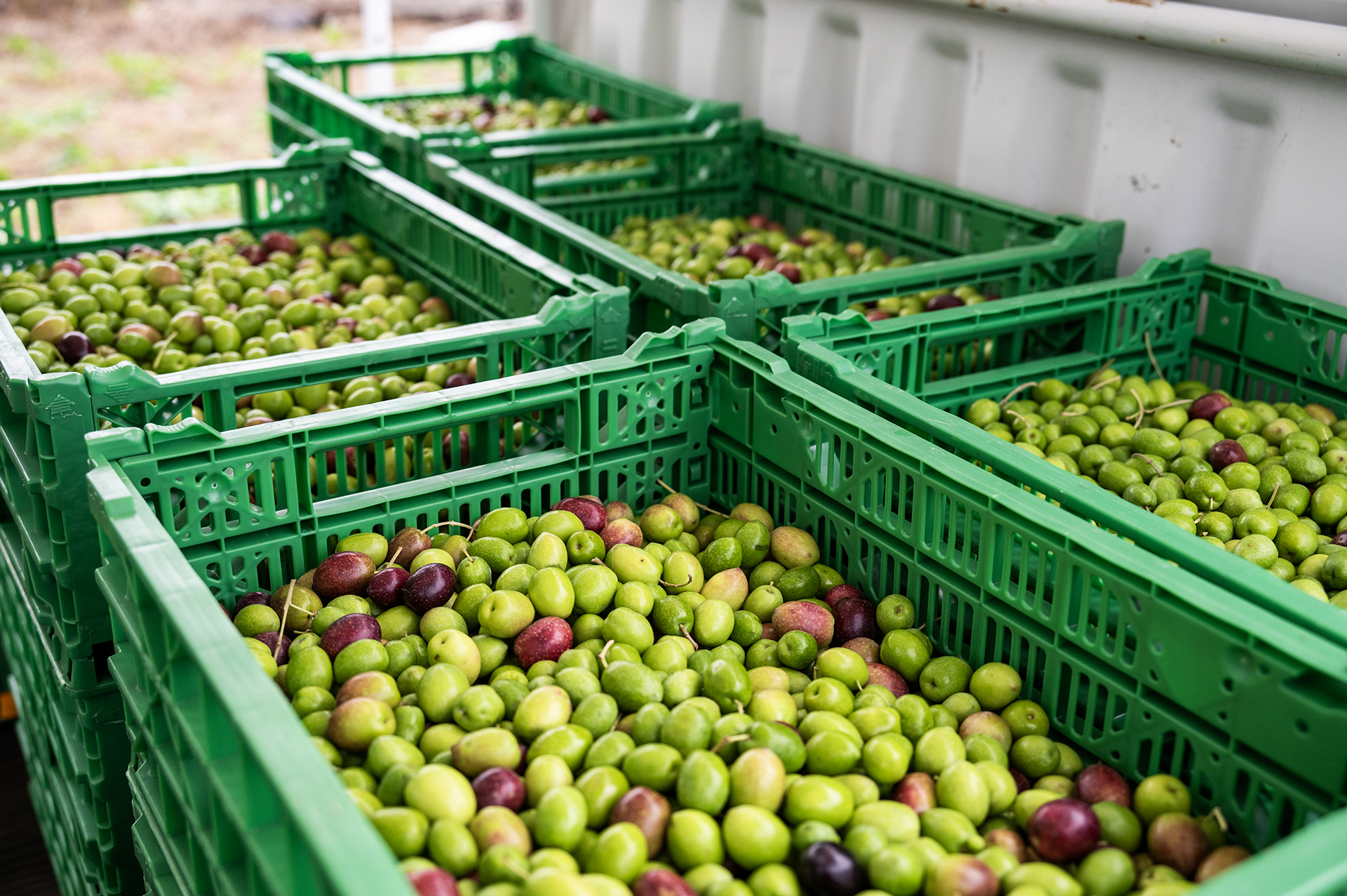
Only 10% of an olive fruit can be turned into oil! In other words, harvesting 100 kg of olives yields a mere 10 liters of oil.
At this point, one can already appreciate why high-quality olive oil is expensive.
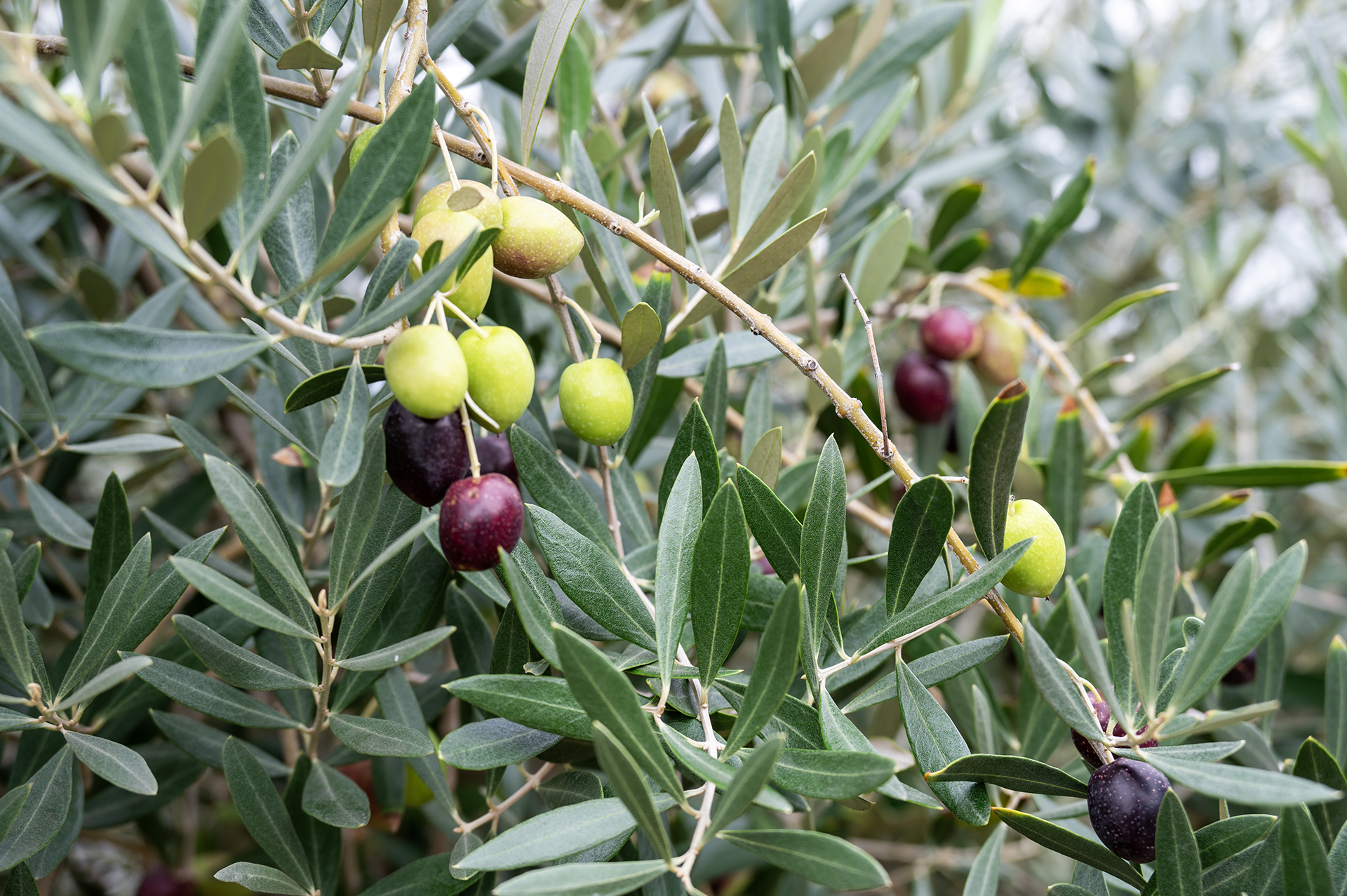
To reiterate, when thinking of olive-producing regions, warm places like Spain and Greece, or relatively colder regions like Tuscany in Italy, are famous. Conventional wisdom holds that olives cannot grow in cold regions where temperatures drop below minus 10 degrees Celsius.
Winters in Fuefuki City get quite cold. When Mr. Maeda first started cultivation, he faced hardships such as saplings dying from the cold.
However, if you can successfully grow them into mature trees, the cold climate offers benefits such as fewer pests and lower susceptibility to anthracnose, making them easier to cultivate.
CHAPTER 02
Similar to Wine? The Olive Oil Production Process
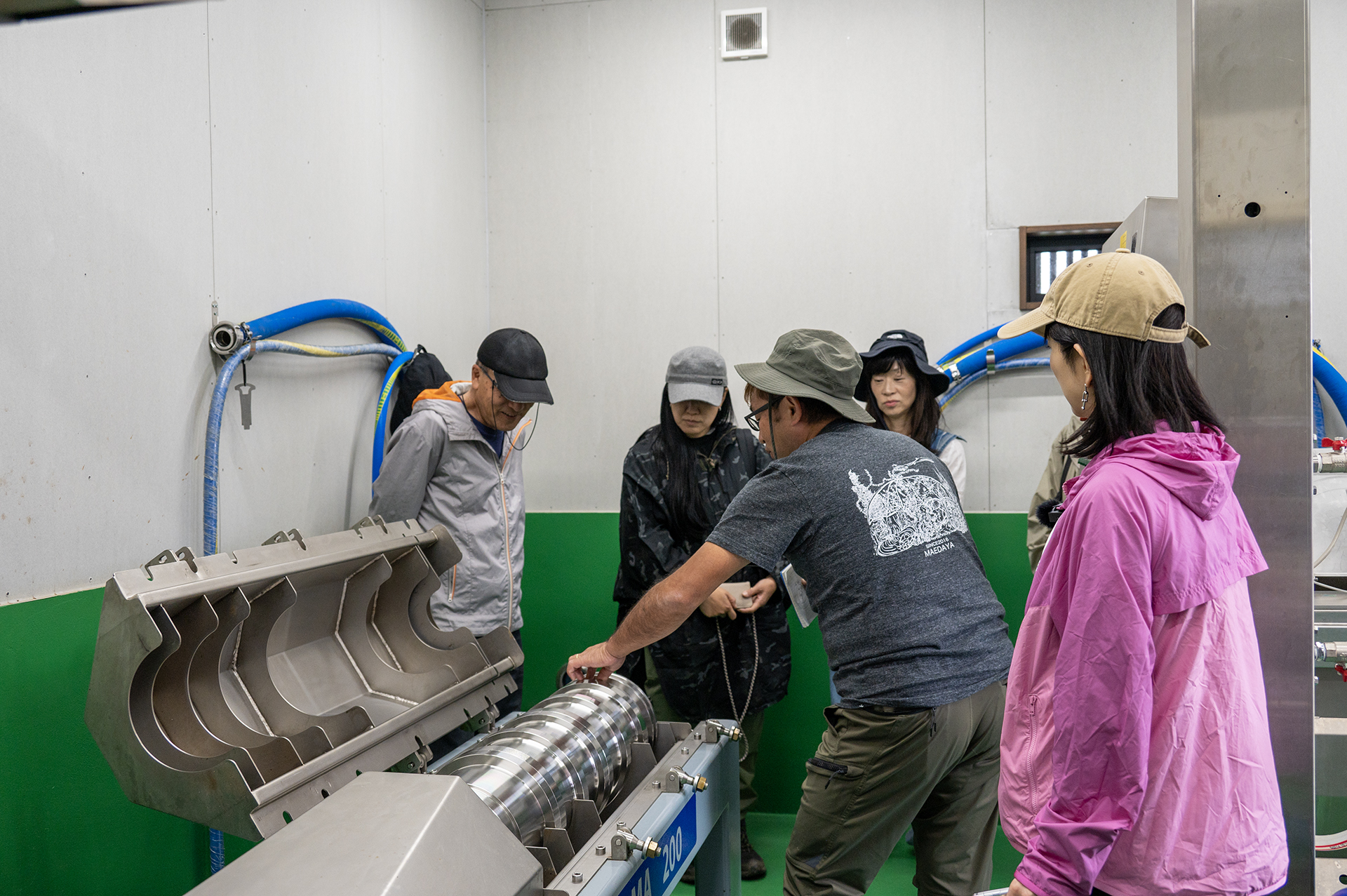
The oil extraction mill has an atmosphere somewhat similar to a winery.
The general process is as follows:
Crushing (crushing whole including pits) → Malaxer (kneading to make oil extraction easier) → Centrifuge (separating into water, oil, and residue) → Press filtration
It really is somewhat similar to winemaking.
Carrying out these steps in an environment below 30°C is called the cold-press method, which is said to be one of the global standards for extra virgin olive oil production.
Incidentally, oil that does not undergo this filtration is treated as Novello, but its shelf life is only two weeks! It is truly precious.
CHAPTER 03
Why Mr. Maeda's Olive Oil Is So High Quality
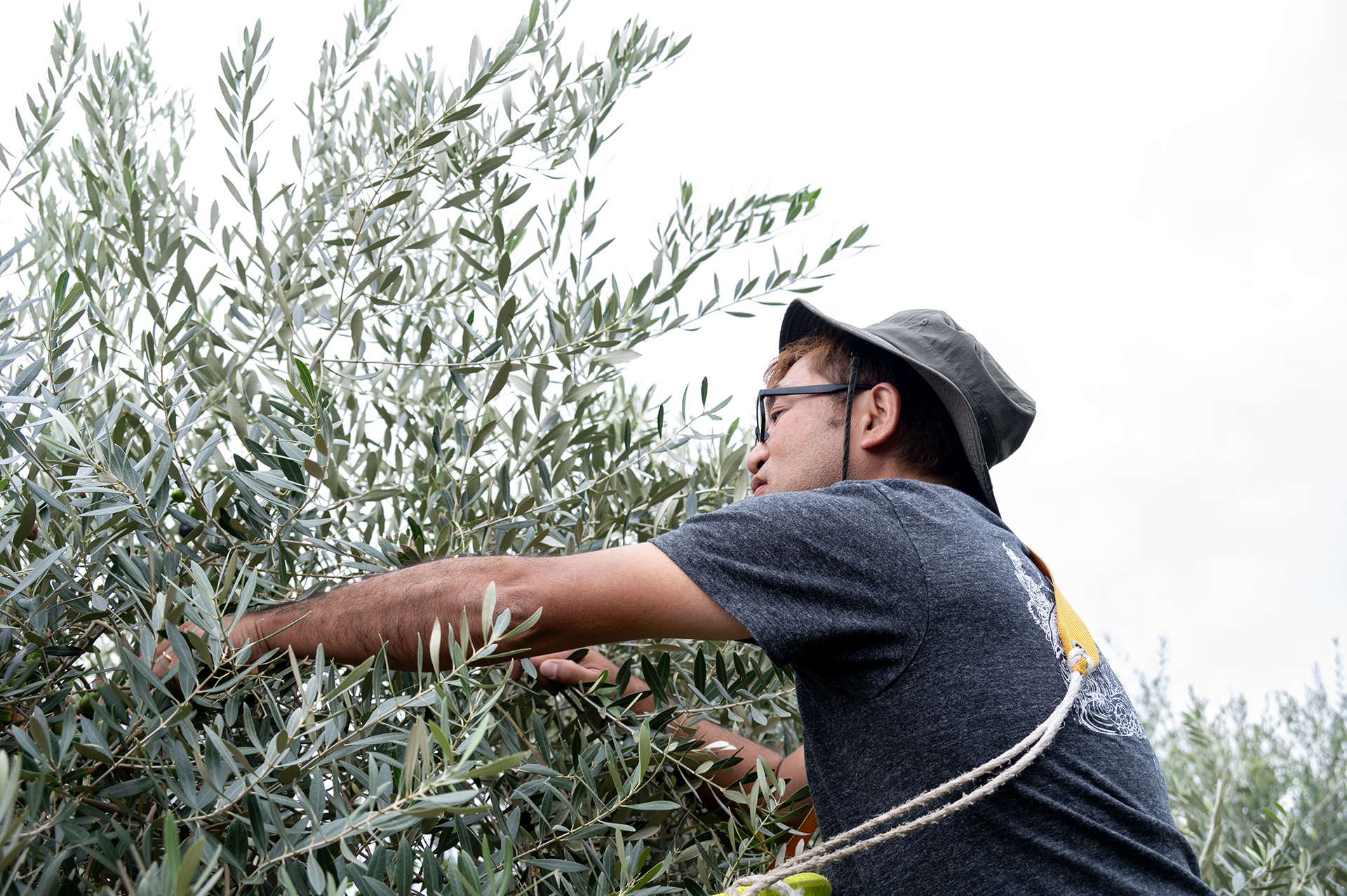
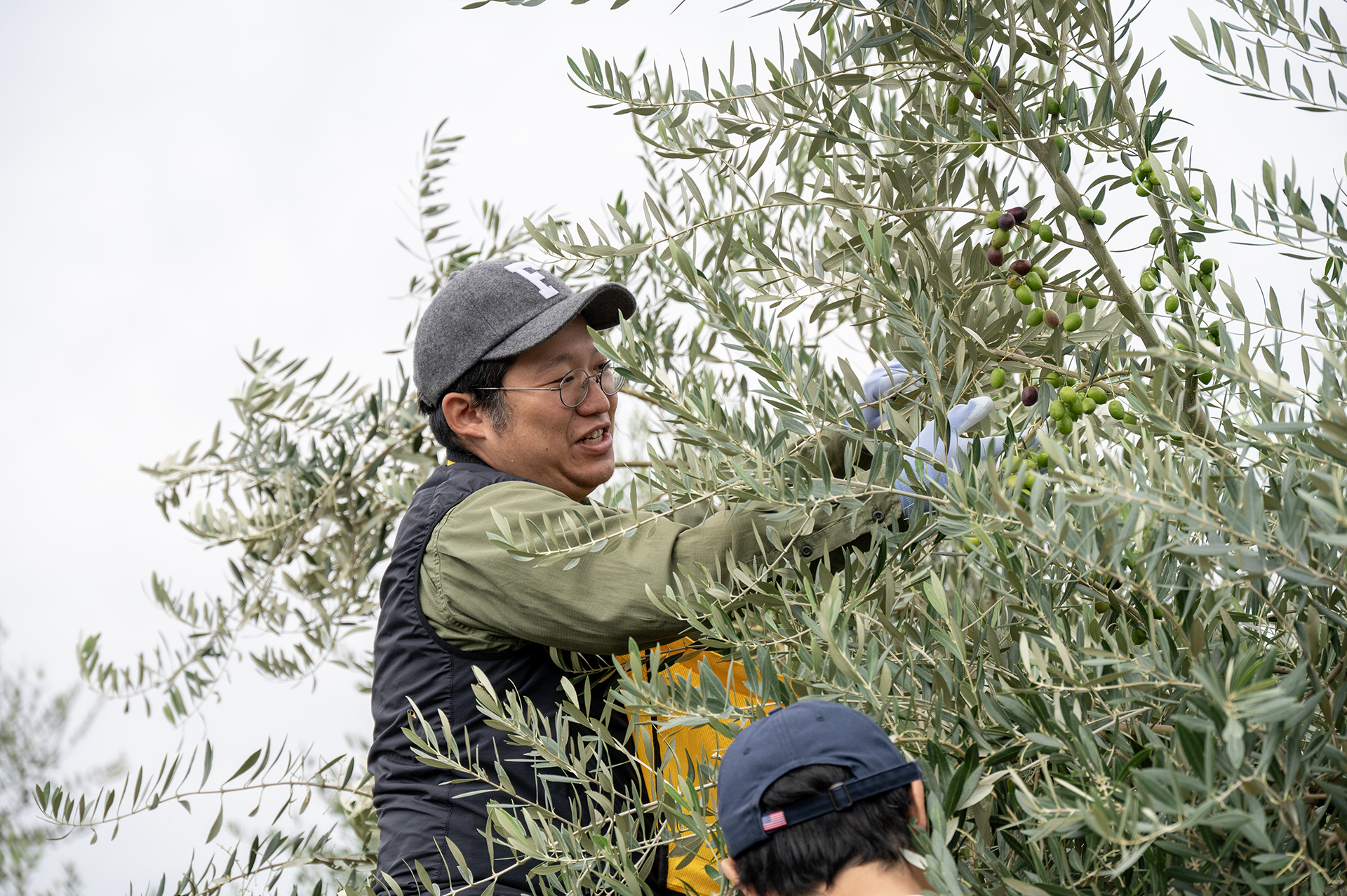
Harvesting is done entirely by hand.
Harvesting is done carefully while wearing gloves.
On large-scale overseas farms, it is common to lay nets on the ground and use machines to knock the fruit down, but Mr. Maeda says, "Just like grapes, polyphenols adhere to the skin of olives, and I want to treasure and use them without washing them."
Therefore, if an olive is dropped on the ground during hand-harvesting, there is a risk of contamination by E. coli and other bacteria in the soil, so he strictly enforces a rule never to pick up or use fallen fruit.
Production that strictly adheres to international standards.
In fact, clear international standards exist for olive oil.
Headquartered in Spain, where about 97% of producing countries belong, the sole global organization in the olive industry is the IOC (International Olive Council) only recognizes products with an acidity level of 0.8% or lower as extra virgin olive oil.
Japan has a very high consumption of olive oil, and a wide variety of products are distributed. However, because Japan is not an IOC member country, it is unfortunately unclear whether all products adhere to these standards.
Mr. Maeda himself holds a qualification as a certified olive oil evaluator and strictly manages these acidity levels.
CHAPTER 04
In Closing
Mr. Maeda's oil receives constant interest not only from general enthusiasts but also from professionals across Japan seeking high-quality domestic olive oil.
During our coverage, we even saw Chef Toshishima of Restaurant SAI, where guests can enjoy "Oku-Yamanashi cuisine" made with carefully selected Yamanashi ingredients and Japanese wine, participating in the harvest.
Fresh olive oil from the autumn 2024 harvest will be released soon.
High-quality Yamanashi olive oil is very precious. If you are interested, be sure to check it out!
Fuefuki Olive Oil Maedaya
RELATED STORYhttps://www.maedaya-olive.com/shopA restaurant where you can enjoy Japanese wine: “Restaurant SAI”Click here for the special feature article:
Chef Toshima's wonderful dishes, featuring Mr. Maeda's olive oil, are paired with Japanese wine.
Please also take a look at the conversation between the two.
 RELATED STORY【前編】Restaurant SAI 燊〜「奥・山梨料理」と日本ワイン、至極のペアリングを堪能する夜〜
About the author
Stories covering the same region, newest first.
- WINE & DININGThe Manns Wines You Think You Know May Be Out of Date — From Volume to Quality: Where Manns Wines Is Today6 MAY 2026Miyuki Isobe
- WINERIESThe People Who Create the “Beginning” of Wine: Visiting Suda Grape Nursery in Yamanashi Prefecture5 JAN 2026Miyuki Isobe
- WINERIESFrom a Winery in Manriki, Yamanashi: Cave an’s Winemaking That Has Mastered the Basics12 DEC 2025Miyuki Isobe
- WINERIESBringing Refreshing Relief to Sweltering Days! Delivered from Heavy Snow Country: Housui Winery23 JUN 2025Miyuki Isobe
- WINERIESBottling Yamanashi's Nature! Asking Naomichi Kondo About Komaen Vineyard's Dedication!21 APR 2025Miyuki Isobe
- WINE & DINING[Part 2] Restaurant SAI 燊 — An Evening Indulging in the Ultimate Pairing of "Oku-Yamanashi Cuisine" and Japanese Wine17 NOV 2024Miyuki Isobe
Wineries in this region
REGIONAL WINERIESRead → Know → VisitWineries in 山梨県. Find somewhere to visit.