
WINE & DINING
The Manns Wines You Think You Know May Be Out of Date — From Volume to Quality: Where Manns Wines Is Today
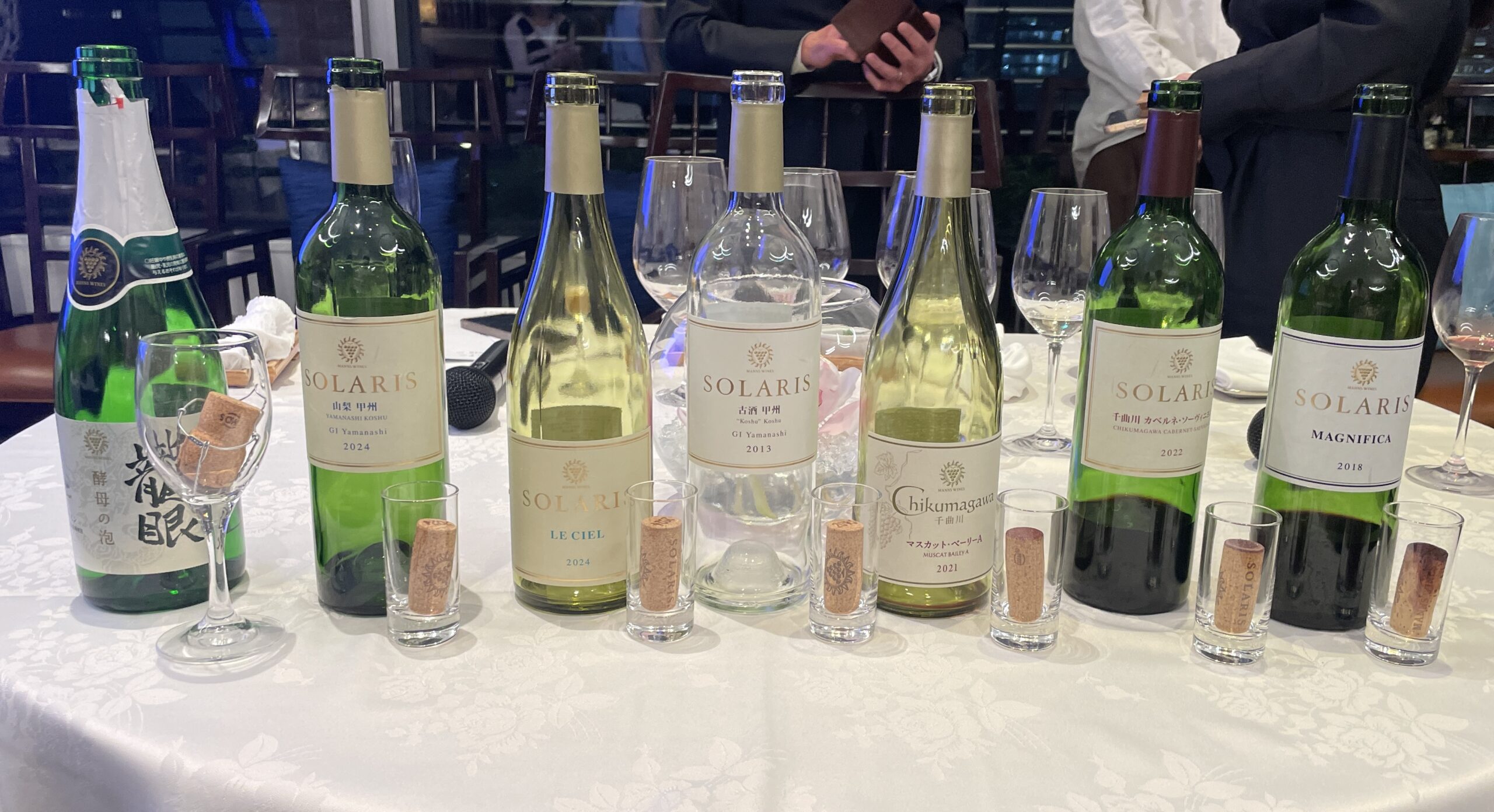
What comes to mind when you hear Manns Wines? Solaris and other high-end labels? A major producer? Affordable everyday wine? Depending on the person, the image may be very different. A press dinner in Tokyo offered a chance to update that picture.
Contents
What image comes to mind when you hear Manns Wines?
Perhaps Solaris and other high-end wines, a major producer, or accessible everyday bottles. The impressions people carry can be very different.
A press dinner held this time at Sichuan Dou Hua Restaurant in the Shin-Marunouchi Building became an opportunity to update those assumptions.
At the start of the evening, Takashi Nagai, Head of Sales and Marketing, told us, “Today, I want to update the image of Manns Wines that you have in your mind.”

From left: Naoki Watanabe (Corporate Sales, Tokyo Metropolitan Area), Takashi Nagai (Head of Sales and Marketing), Dai Shimazaki (Representative Director), Asahi Okano (Corporate Sales and Marketing, SNS/PR)
CHAPTER 01
From Volume to Quality — A Shift in Branding
One of the most striking points for those attending was the major change in direction Manns Wines made between 2007 and 2011.
Previously, much of the company’s sales in table wine came from products dependent on concentrated grape juice and imported raw materials. During this period, however, it reduced those wines to almost zero and shifted toward production centered on grapes grown in Japan.
Sales temporarily fell sharply as a result, but the company did not reverse course. Today, more than 70% of sales come from Japanese wine, and Solaris accounts for roughly 30%.
The price mix has changed as well: about 70% of its wines now sit at ¥2,000 or above. Manns appears to have transformed its position from a “producer that sells volume” into a “winery that delivers value.”
CHAPTER 02
Katsunuma and Komoro — Two Wineries with Different Roles
Manns Wines has two bases: Katsunuma Winery in Yamanashi Prefecture and Komoro Winery in Nagano Prefecture. Each has developed a distinct role shaped by its climate, location, soil, and historical background.
Katsunuma Winery: Supporting the Business
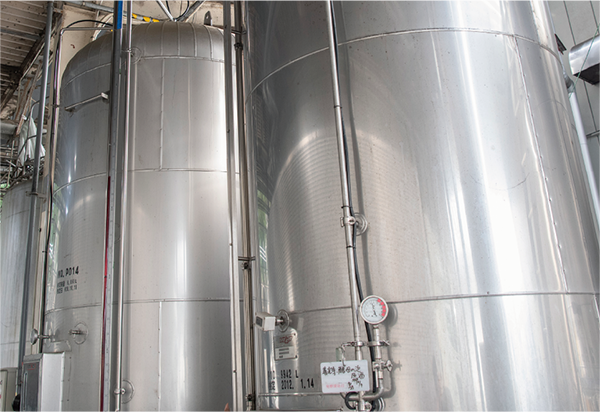
Renovated in 2020 into a bright, modern facility, Katsunuma Winery is a base for distinctly Japanese grape varieties such as Koshu and Muscat Bailey A, while also serving as the company’s center for sparkling-wine production. It handles around 600 tonnes of grapes a year and is known as one of the relatively few wineries in Japan equipped to make sparkling wine by the Charmat method.
This technique conducts the secondary fermentation in a sealed tank, and only a handful of companies in Japan have the necessary equipment. Manns Wines uses the system for key brands including its “Kobo no Awa” series, giving it a notable presence in Japan’s domestic sparkling-wine market.
Sparkling wines made from Japanese varieties such as Koshu, Muscat Bailey A, and even Ryugan combine an easy, approachable character reminiscent of Italian Prosecco with a distinctly Japanese delicacy, earning support from a wide range of drinkers.
Komoro Winery: A Small, Focused Team Making Premium Wine
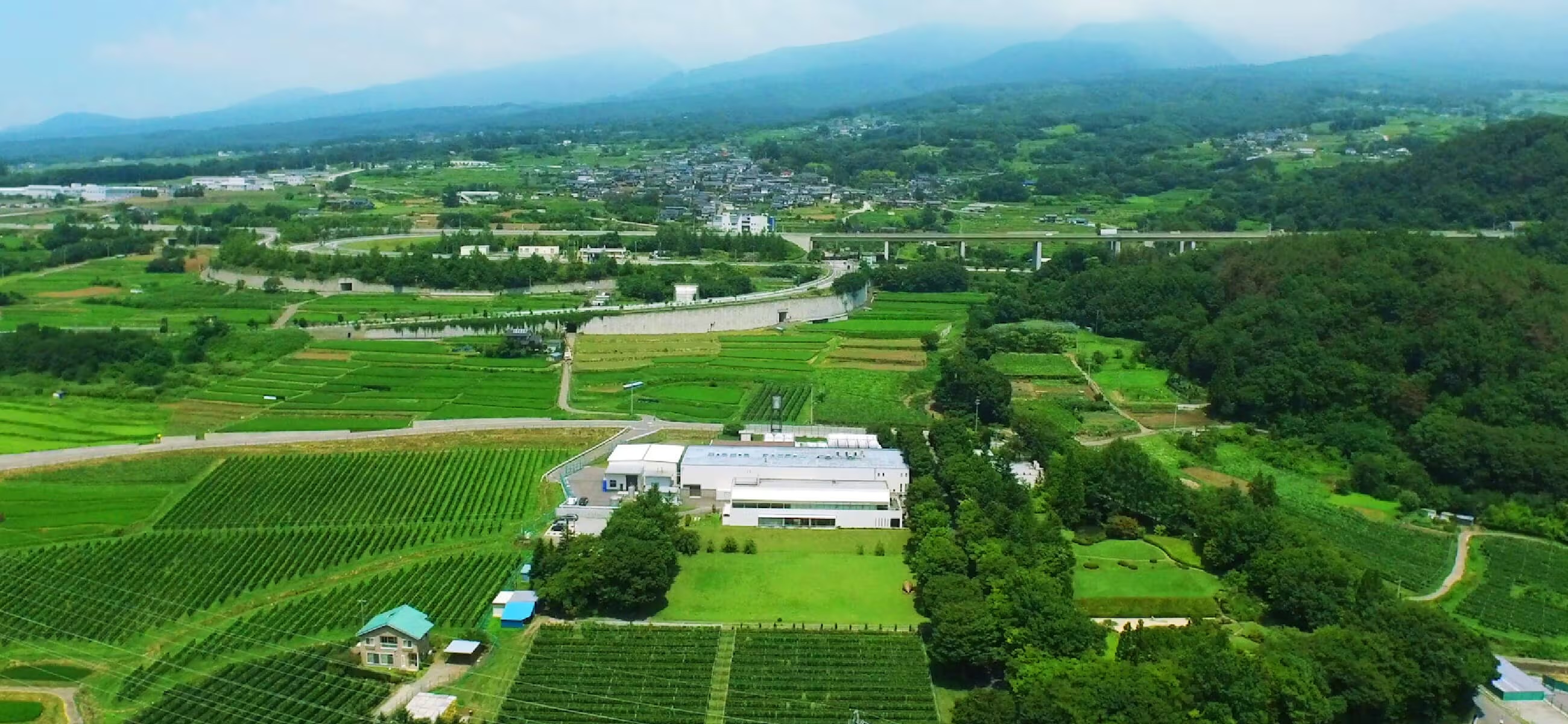
Komoro Winery, by contrast, is the base for premium wines such as Solaris, with a focus on European grape varieties. Making use of its elevation and climatic conditions, the winery places greater emphasis on expressing terroir.
Completed in 1973, Komoro Winery was the first winery in what is now the Chikuma River Wine Valley. It was followed in later years by Villa d’Est Winery and many other distinctive producers.
Konosu on the Higashiyama side, influenced by the Fossa Magna, is famous for geological strata that were once under the sea. From that perspective too, this is a highly distinctive place.
Yet the winery has never relied on the potential of the land alone. In 1988 it suffered severe snow damage. That experience prompted a shift from pergola to vertical trellis training, along with Manns Rain Cut cultivation, green harvesting, careful destemming,
and many other trials and refinements aimed at bringing out the full potential of the grapes.
The premium wine that emerged from this accumulation of work is Solaris.
This division of roles allows Manns Wines to achieve both breadth and depth in the wines it makes and in the way it does business. That balance is one of the company’s defining strengths.
CHAPTER 03
History as an Accumulation of People and Technique
“From volume to quality.” One of the major factors that made this change in direction possible, I believe, is the accumulation of people and technical knowledge built up through the company’s history.
Since its founding in 1962, the company has consistently invested in developing winemakers. Generations of staff have studied in Bordeaux and Burgundy, passing their knowledge on within the company. Representative Director Dai Shimazaki is a clear example. After training at Château Latour, he obtained a French national qualification as an oenologist, and in 1990 graduated at the top of his class in a wine-tasting aptitude qualification at the University of Bordeaux. He is surely one of the best-known Japanese figures in Bordeaux wine circles. He later became the winemaker responsible for Solaris and helped establish an approach to Japanese wine capable of competing internationally.
Another technique, known as “Manns Rain Cut,” is now familiar to many grape growers.
Developed through years of trial and error, it protects fruit from Japan’s heavy rainfall while allowing grapes to ripen fully.
The company has also accumulated less glamorous but essential practices such as yield restriction and rigorous grape selection. Yields for Solaris are kept at levels comparable to — or even lower than — those in renowned French wine regions, making its commitment to quality unmistakable.
The stability and improvement in quality created by this patient accumulation of work may be exactly the asset that allowed Manns Wines to withstand a strategic shift that initially reduced sales.
CHAPTER 04
Experiencing the Completeness of Solaris
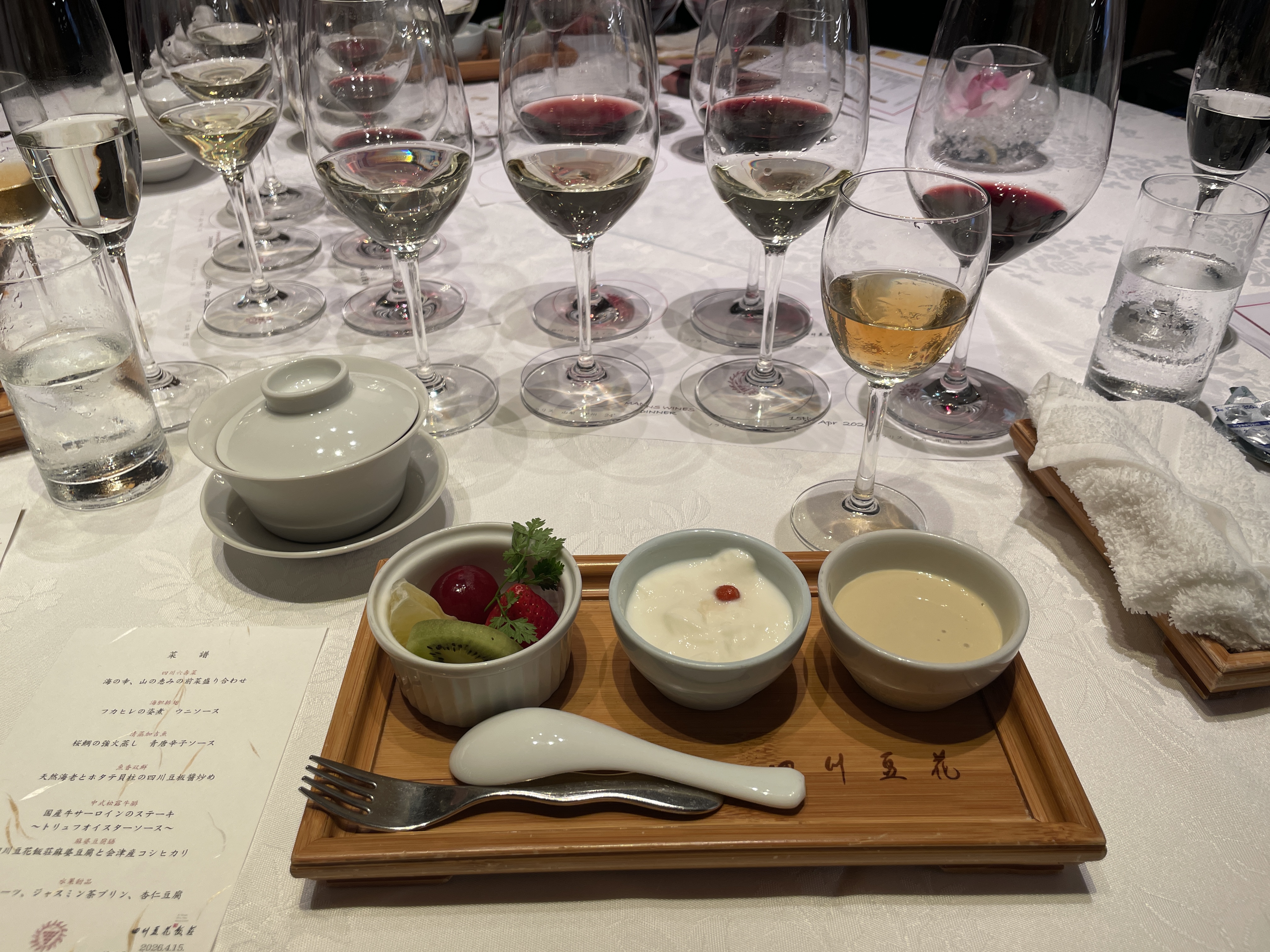
What impressed me most at this seminar was the completeness of Solaris as experienced through the dinner pairings. Many Solaris wines have a commanding presence on their own, but tasting them with food seemed to reveal another layer of what they can do.
A few of the Solaris wines served that evening deserve special mention.
Solaris Aged Koshu 2013 This Koshu spent more than ten years aging in a sealed tank. Koshu is usually associated with fresh, refreshing aromas and a light drinking style rather than long aging. Yet after 11 years, this aged Koshu showed a beautiful, clear golden color, a rich aroma suggestive of sweet-and-sour fruit, and a concentrated sweetness. It also helped draw greater complexity from the spicy Sichuan dishes.
Solaris Chikumagawa Cabernet Sauvignon 2022 There are not many Cabernet Sauvignons in Japan with this degree of seriousness. The deep appearance suggests fully ripe fruit; the palate is concentrated, and the tannins have enough presence to give the wine a firm structure. It felt like the kind of bottle I would happily leave in my own cellar for another ten years.
CHAPTER 05
Where Manns Wines Stands Today: “A Winery That Delivers Value”
Near the end of the seminar, Nagai said, “In terms of volume, we are no longer a major winery.” Indeed, the company’s present production scale is smaller than that of other large producers. Komoro Winery itself operates with only a little over a dozen people — a scale closer to a family winery.
The decision to steer toward refining value rather than pursuing scale now appears to be proving itself through the steady recognition Manns Wines receives from enthusiasts seeking high-quality Japanese wine.
If your image of Manns Wines has not changed in a while, perhaps Solaris is the place to experience what the winery has become today.
About the author
Stories covering the same region, newest first.
- KNOWLEDGEWho Decides What Counts as “Fine Wine”? — The Question Posed by Asia’s No. 1 Sommelier Reeze Choi21 JUN 2026Miyuki Isobe
- WINERIES【Part 2】Hot Springs and Wine: A Stay-at-the-Winery Experience at Domaine de Yunohara3 APR 2026Miyuki Isobe
- WINERIES【Part 1】Hot Springs and Wine: A Stay-at-the-Winery Experience at Domaine de Yunohara2 APR 2026Miyuki Isobe
- WINERIESThe People Who Create the “Beginning” of Wine: Visiting Suda Grape Nursery in Yamanashi Prefecture5 JAN 2026Miyuki Isobe
- WINERIESFrom a Winery in Manriki, Yamanashi: Cave an’s Winemaking That Has Mastered the Basics12 DEC 2025Miyuki Isobe
- WINERIESUnderstanding the Terroir of "Ono", Nagano Prefecture: KIRINOKA Maker's Seminar (Chardonnay Edition)14 SEP 2025Miyuki Isobe
Wineries in this region
REGIONAL WINERIESRead → Know → VisitWineries in 山梨県 / 長野県. Find somewhere to visit.