
WINERIES
The People Who Create the “Beginning” of Wine: Visiting Suda Grape Nursery in Yamanashi Prefecture
Contents
When discussing wine, terms like "terroir," "winemaking," and "vintage" frequently come up. However, regarding the even earlier stage of "what kind of saplings were planted,"there are actually not many opportunities to give it much thought.
This time, we focused on these "saplings" and visited Suda Grape Nursery, which produces grape vines in Ichinomiya-cho, Fuefuki City, Yamanashi Prefecture. What role does this site supporting the "beginning" before wine is made play, and what specific work is carried out there? We spoke with Joji Suda, Representative Director of Suda Grape Nursery.
CHAPTER 01
The Role of the Nursery Business
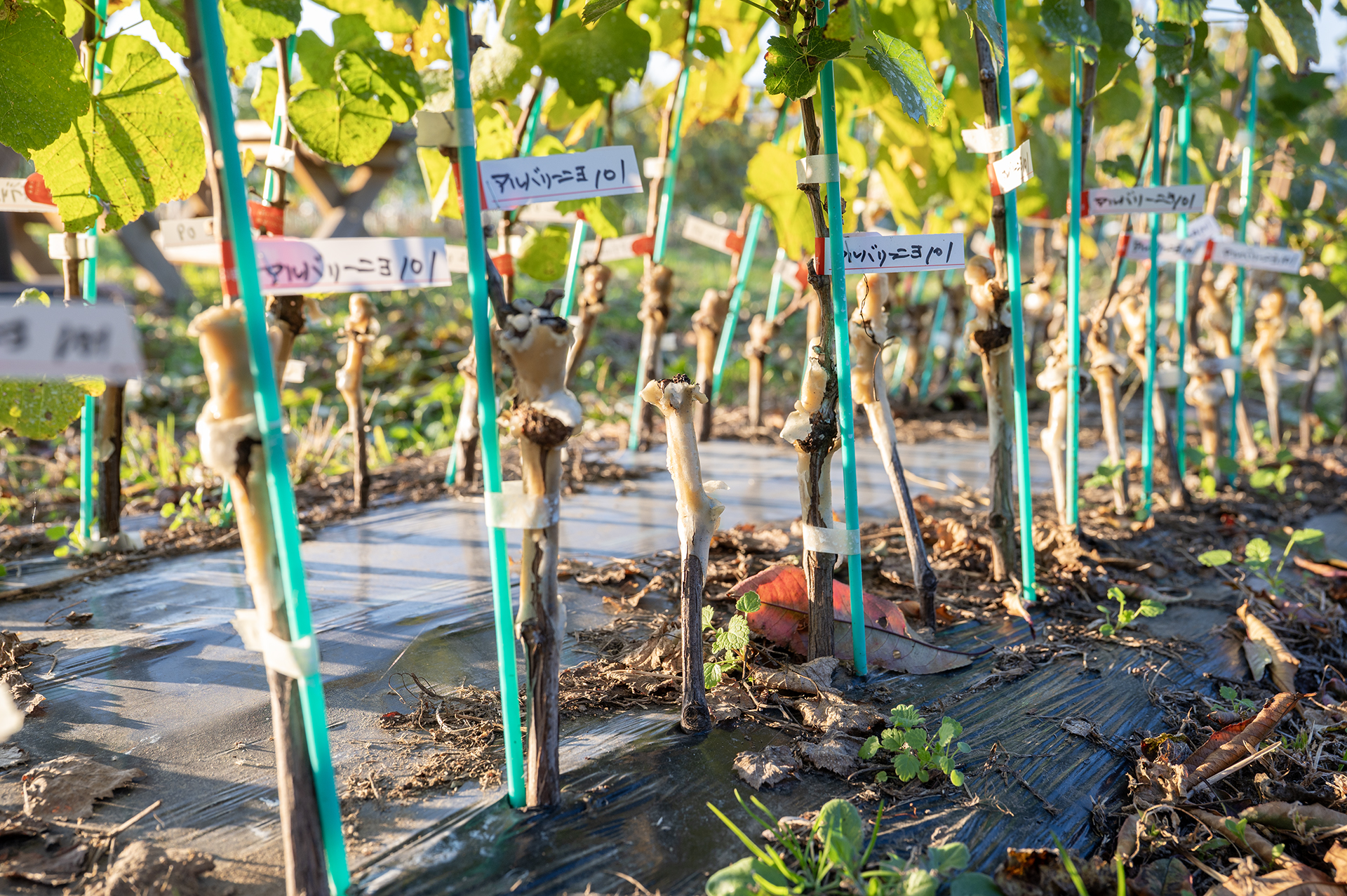
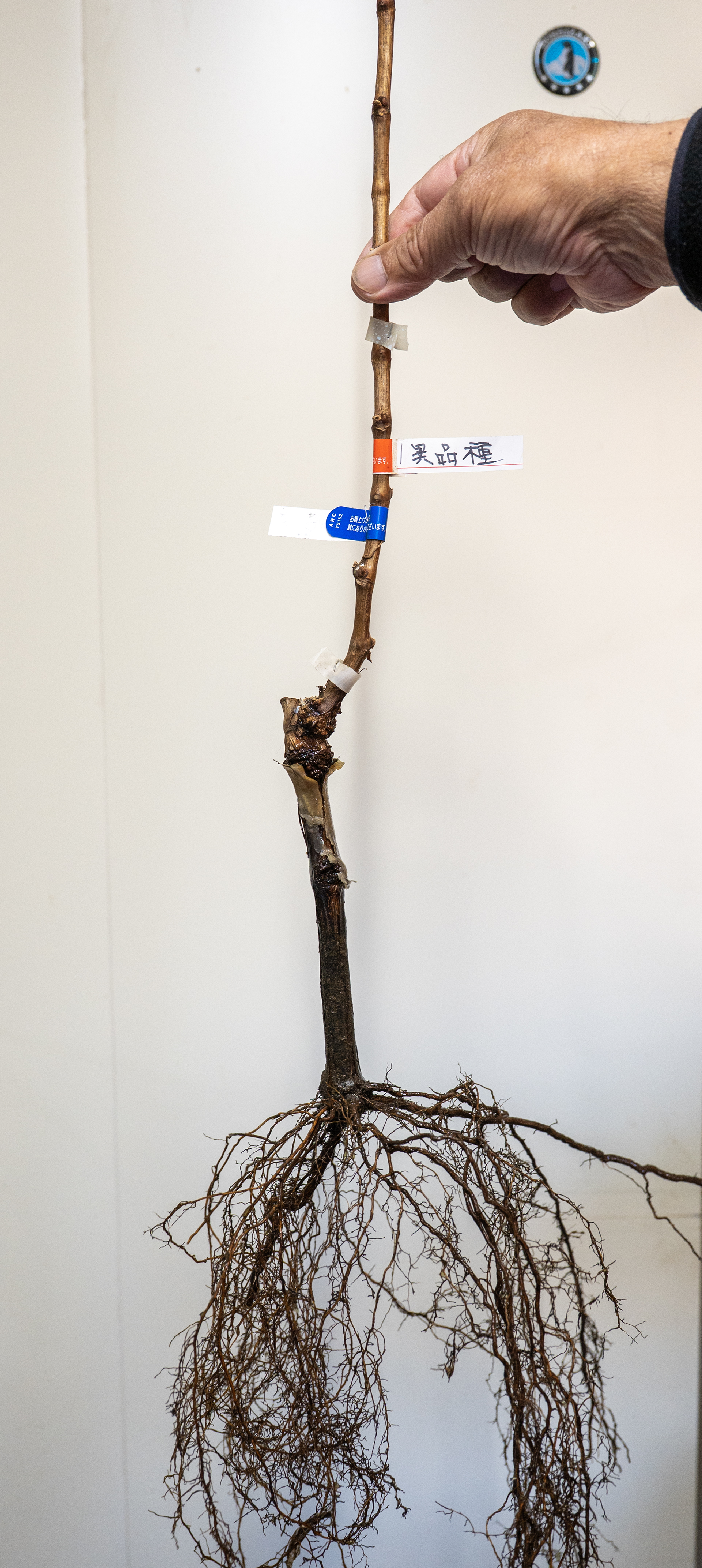
The basic work of a nursery is to take a rootstock (the part that becomes the root) and graft onto it thescion (the branch that bears fruit) of a wine grape variety, cultivate it until it is ready for shipment, and deliver it to wineries and farmers. As you may know, grafting is necessary for resistance to pests and diseases as well as adaptation to soil conditions, serving as the foundation for long-term, stable cultivation.
Mr. Suda originally worked for another nursery producer, but after going independent, he studied in France (including vine nurseries in Burgundy) in 2019. Upon returning to Japan, he adapted the techniques to suit Japan's climate and terroir, and for the grapevine nursery growing method called the 'Suda Method,' hea technical patenthas been granted.
CHAPTER 02
From 'Experience and Intuition' to 'Reproducible' Technology
Much of nursery production relies heavily on intuition and feel gained over years of experience, and results often fluctuate from year to year. That is precisely why Mr. Suda decided to commit to 'nursery production based on scientific evidence.'
Specifically,he studied the plant physiology involved in grafting success (union and take), understood the functions of plant hormones and their required conditions, and restructured the entire process. Furthermore, he visualized fine details such as 'under what temperature conditions, which process, and in what order,' refining it to a level that could be explained externally,a technical patentand successfully established it as such.
"It’s like sheet music in music, or a recipe in cooking. The concept is to transform the black box of artisanal craftsmanship into a blueprint that anyone can replicate." he explained, adding that in 2019 he visited France (including grapevine nurseries in Burgundy) to learn, subsequently adapting these techniques to fit Japan's climate and natural environment.
CHAPTER 03
What Changes When Survival Rates Increase?
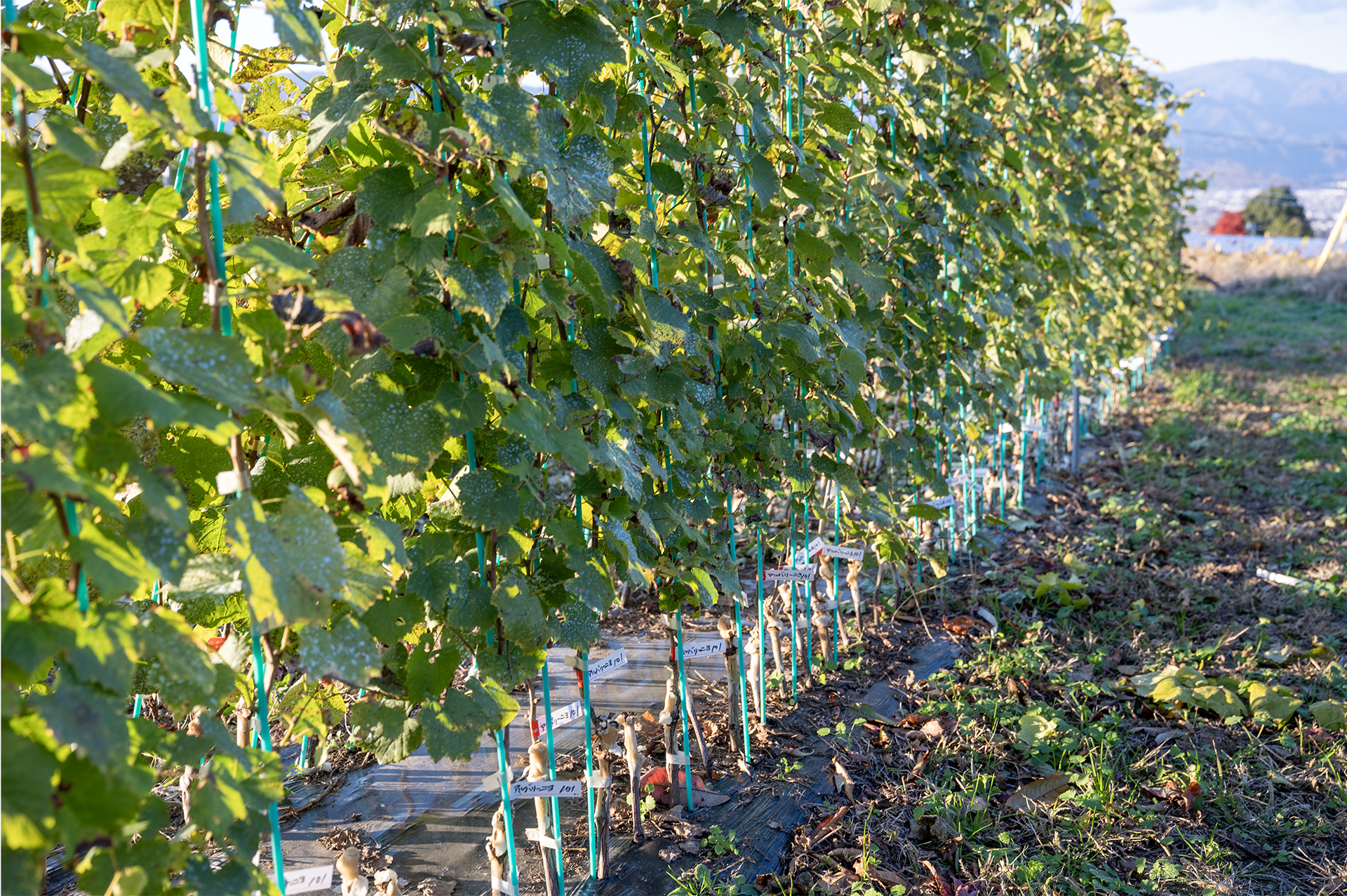
The numbers regarding survival rates were particularly impactful. At Suda Grape Nursery, since the couple took the lead in earnestly tackling the process, they perform grafting on a scale ofabout 30,000 vinesper year.After grafting comes the greenhouse phase, inspection, field planting, cultivation, uprooting, shaping, re-inspection...—there are multiple hurdles, and a certain percentage is lost at every stage.
Even so, the fact that roughly 80% ultimately become ready for shipment represents a massive improvement, especially considering the broader industry standard where previously "only about 30%" would survive. Higher survival rates prevent excessive cost burdens from inflating unit prices, thereby lowering the barrier of vines being "too expensive to plant." What Mr. Suda aims for is not merely his own success, butElevating the entire wine-producing region through a stable supply of nursery vines. This belief is the primary motivation behind efforts to improve vine propagation yields.
At the same time, he is apparently still far from satisfied with the status quo. Saying, "I want to get closer to 100%" and "More research is still needed," his dedication to ongoing effort is clear.
CHAPTER 04
About Grape Varieties, Rootstocks, and Clones
They offer a wide selection of varieties, including Chardonnay, Merlot, Cabernet, Sauvignon Blanc, Albariño, and Koshu lineages.
In addition, his discussion of "Soir Noir" (a cross of Merlot and Pinot Noir), Yamanashi Prefecture's proprietary variety, was also memorable. Soir Noir is likely one of the most watched varieties in Yamanashi right now as an answer to worsening global warming. Suda Grape Nursery produced Soir Noir saplings under contract from Yamanashi Prefecture and distributed them to local wineries. Over the next few years, these will take shape as wine. New varieties represent a field where character is "yet to be defined" in both viticulture and winemaking; even at the nursery stage, they are tied to the region's future, carrying immense expectations. Whether expressed as a single variety or a blend will depend on each winery, but looking forward to tasting wines made from Soir Noir in about three years is truly exciting.
He also shared specific details about the difficulties of introducing overseas clones. Long-term testing is required in quarantine, and if issues like pests or viruses arise, the vines are destroyed. Furthermore, he pointed out that "a vine that is good in Europe isn't necessarily good in Japan," meaning it ultimately must be tested and verified domestically. Traceability is another challenge, with risks of vines getting mixed up or altering in condition during distribution.
Selecting rootstocks is also vital. Recommended rootstocks vary depending on soil conditions (such as drainage and soil characteristics) and regional traits. When the scion and rootstock'scompatibilityis poor in a given combination, grafting can fail from the outset or poor fusion can stall growth, proving that an accumulation of empirical knowledge and proven results is truly indispensable.
CHAPTER 05
The Process from Grafting to Sapling Cultivation
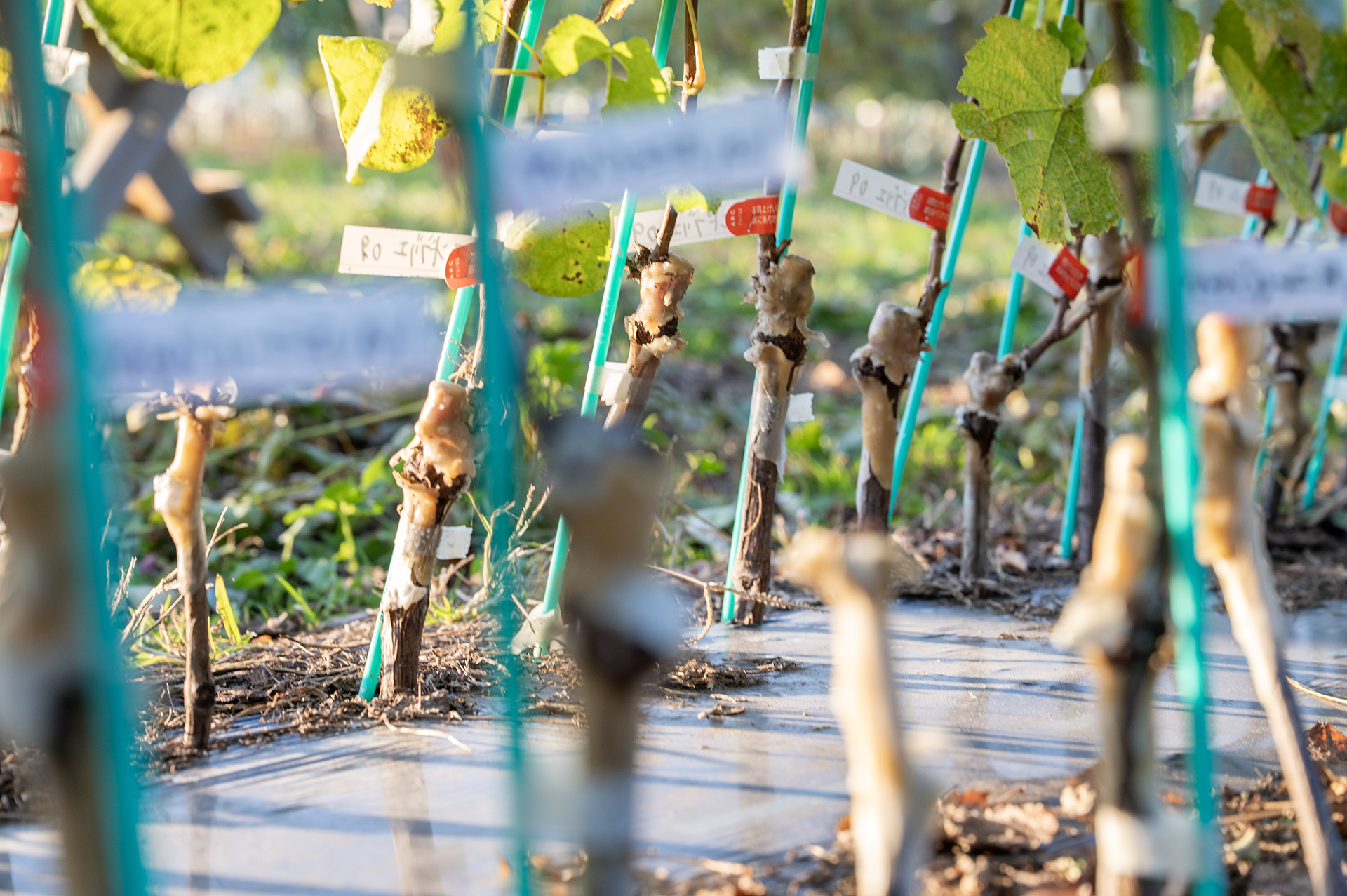
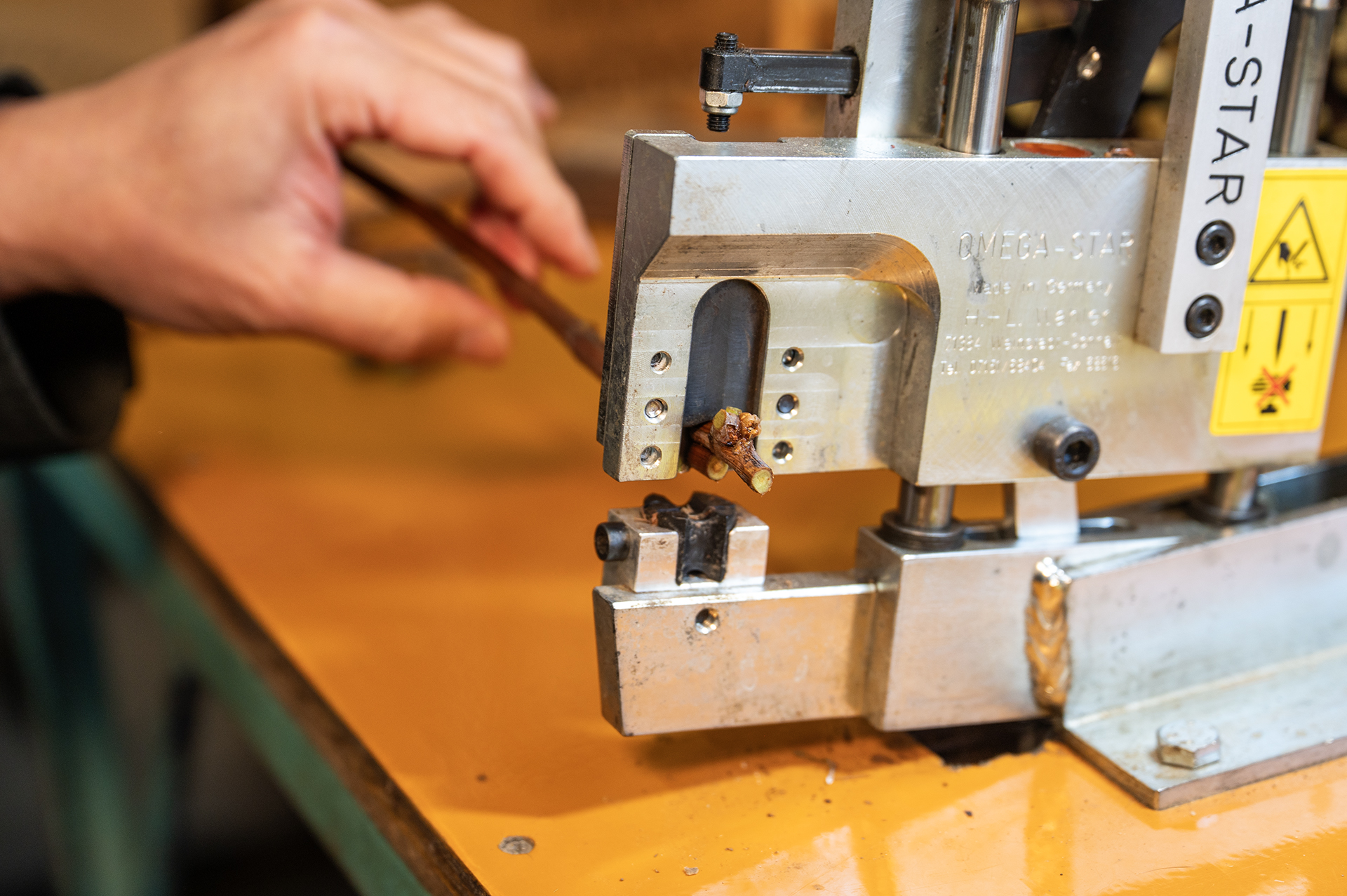
Suda Grape Nursery uses German-made grafting machines that create interlocking omega cuts. Yield considerations begin early with the critical task of matching the scion and rootstock to similar thicknesses, which is then followed by securing and protecting the graft union, and ultimately raising the young vine.
Once the rootstock and scion are joined with the grafting machine, they are immediately secured with a special wax containing hormones and fungicides. This wax prevents drying out and the entry of harmful microbes while promoting healing. They are kept in a greenhouse for a certain period, after which buds sprout and callus tissue forms at the graft union; only after being grown in the field do they finally approach a state ready for shipment.
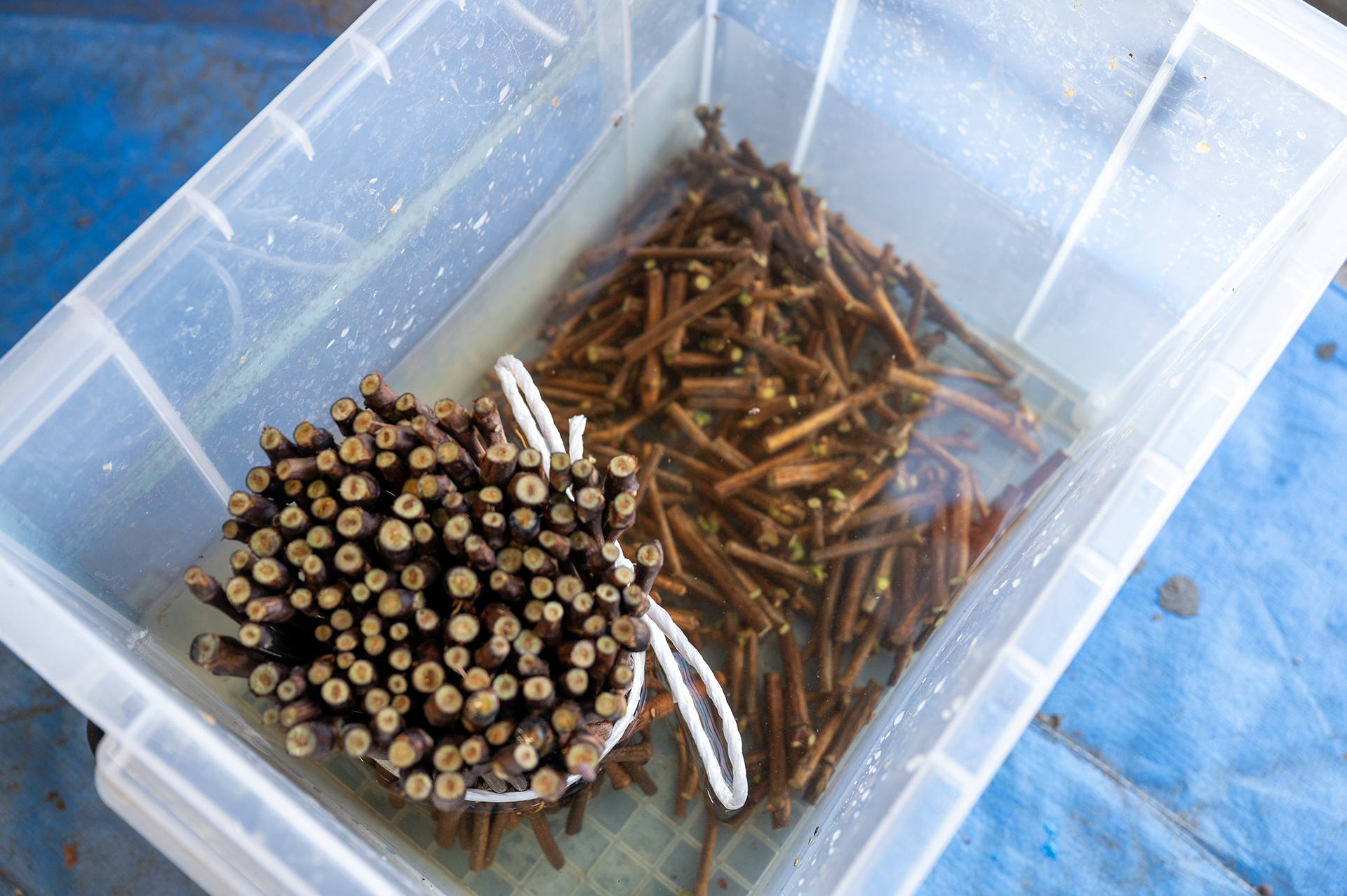
In other words, grafting is merely the starting point. Because risks exist at multiple stages—buds failing to sprout, grafts failing to bond properly and collapsing, or growth not progressing as expected—the nursery operates by preparing significantly more stock than requested, such as preparing 20 plants for an order of 10. This illustrates just how delicate the vine nursery business is, fraught with challenges like demand forecasting based on trends and climate change, and the inherent uncertainties of dealing with living organisms.
CHAPTER 06
Future Challenges
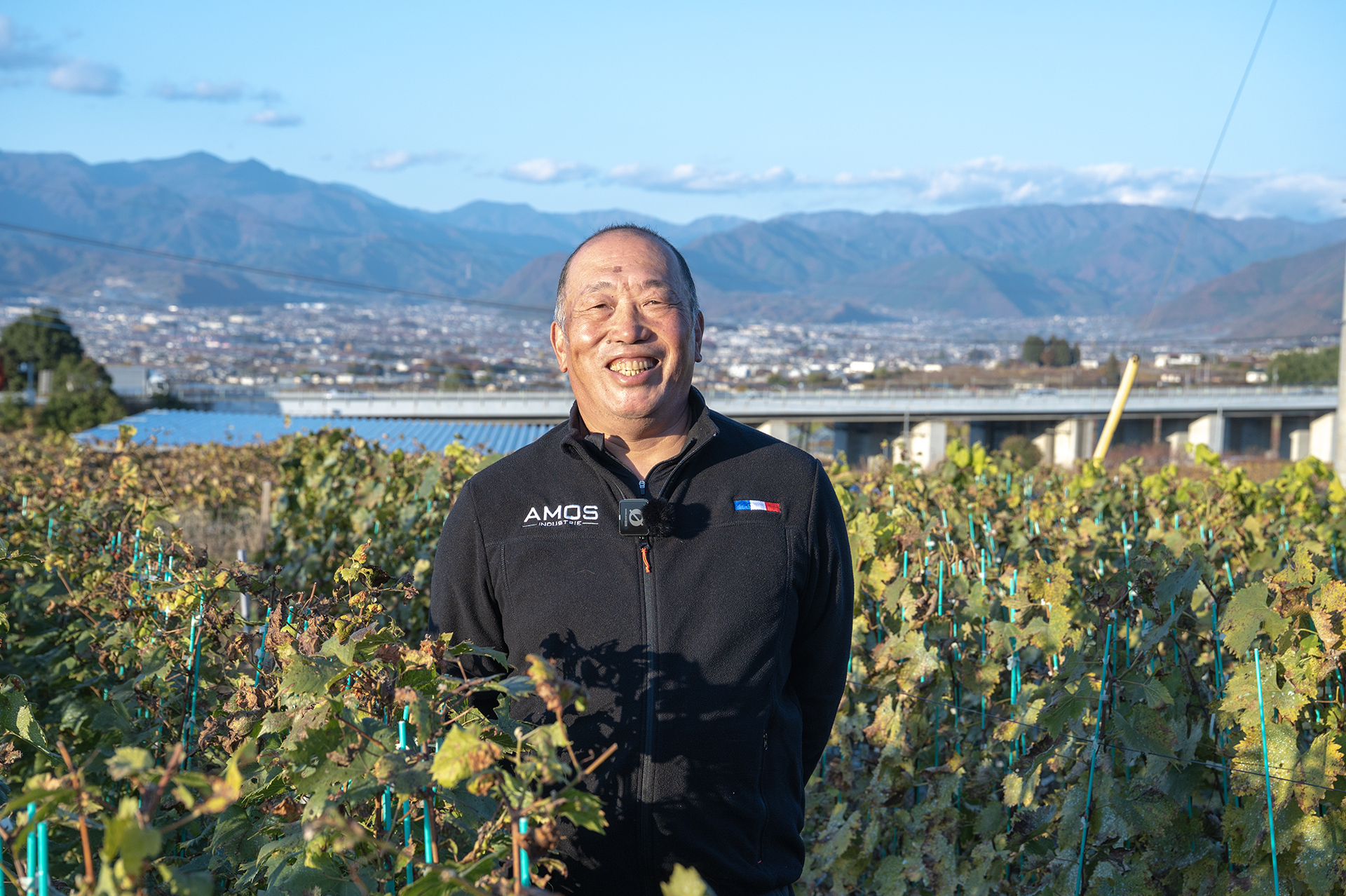
The challenges Mr. Suda highlighted extend beyond technical aspects; as broader social issues, alongside an underlying shortage of nursery stock,a lack of successors and low public awarenessare major factors. Because being a nursery grower is not a widely known profession, it remains a difficult industry for younger generations to enter. To address this, Mr. Suda currently visits fruit horticulture departments at high schools and university classes to teach grafting. Rather than offering a simple hands-on experience, he makes a point of explaining that 'this kind of work exists, and you can make a living doing it.' "I want to produce quality vines for wineries and growers, and ultimately for the people who drink the wine,"he says.
When discussing the character and quality of a wine, how far back do we trace its origins in our minds?
I imagine many of us savor each glass while reflecting on a wide range of factors—winemaking techniques, viticultural practices, the climate of the region and vintage, and the producers themselves.
In addition to these, turning our attention to the grapevine nursery sector might provide an opportunity to reexamine the possibilities and challenges facing Japanese wine as a whole, right from the very ground up.
About the author
Stories covering the same region, newest first.
- WINE & DININGThe Manns Wines You Think You Know May Be Out of Date — From Volume to Quality: Where Manns Wines Is Today6 MAY 2026Miyuki Isobe
- WINERIESFrom a Winery in Manriki, Yamanashi: Cave an’s Winemaking That Has Mastered the Basics12 DEC 2025Miyuki Isobe
- WINERIESBringing Refreshing Relief to Sweltering Days! Delivered from Heavy Snow Country: Housui Winery23 JUN 2025Miyuki Isobe
- WINERIESBottling Yamanashi's Nature! Asking Naomichi Kondo About Komaen Vineyard's Dedication!21 APR 2025Miyuki Isobe
- WINE & DINING[Part 2] Restaurant SAI 燊 — An Evening Indulging in the Ultimate Pairing of "Oku-Yamanashi Cuisine" and Japanese Wine17 NOV 2024Miyuki Isobe
- WINE & DINING[Part 1] Restaurant SAI 燊: An Evening to Relish Supreme Pairings of "Oku-Yamanashi Cuisine" and Japanese Wine17 NOV 2024Miyuki Isobe
Wineries in this region
REGIONAL WINERIESRead → Know → VisitWineries in 山梨県. Find somewhere to visit.