
WINE & DINING
[Part 2] Restaurant SAI 燊 — An Evening Indulging in the Ultimate Pairing of "Oku-Yamanashi Cuisine" and Japanese Wine

Taking its cue from being nestled deep in the mountains even among the Fuji Five Lakes, this restaurant defines "Oku-Yamanashi Cuisine" through the flavors of ingredients obtained exclusively from this globally rare location. By serving a variety of seasonal Yamanashi ingredients through the chef's meticulously crafted dishes, it is already creating a stir among food connoisseurs...
Contents
Deriving its name from being tucked deep in the mountains among the Fuji Five Lakes, this popular restaurant defines the flavor of ingredients obtainable only in this globally rare location as "Oku-Yamanashi Cuisine." Serving a variety of seasonal Yamanashi ingredients through the chef's meticulously crafted dishes, it has quickly captured the attention of gourmets:Restaurant SAI 燊.
Here is the second part of our coverage of the pairing course served on an autumn night, featuring olive oil from "Fuefuki Olive Oil Maedaya".
 RELATED STORY【前編】Restaurant SAI 燊〜「奥・山梨料理」と日本ワイン、至極のペアリングを堪能する夜〜
From here on, we bring you the long-awaited main dishes.
At the end, you will also find a conversation between producer Keisuke Maeda and chef Masaya Toshima.
CHAPTER 01
Oku-Yamanashi Cuisine×Japanese wine A Day at the Table <Part 2>
Seventh Course Koshu Wine Beef from Kobayashi Farm. Raised in northern Kai City with clear air, high-quality water, and a feed containing polyphenol-rich grape pomace, Koshu Wine Beef is said to resist oxidation and have very little gaminess. This lean red meat was slowly roasted over a wood fire.
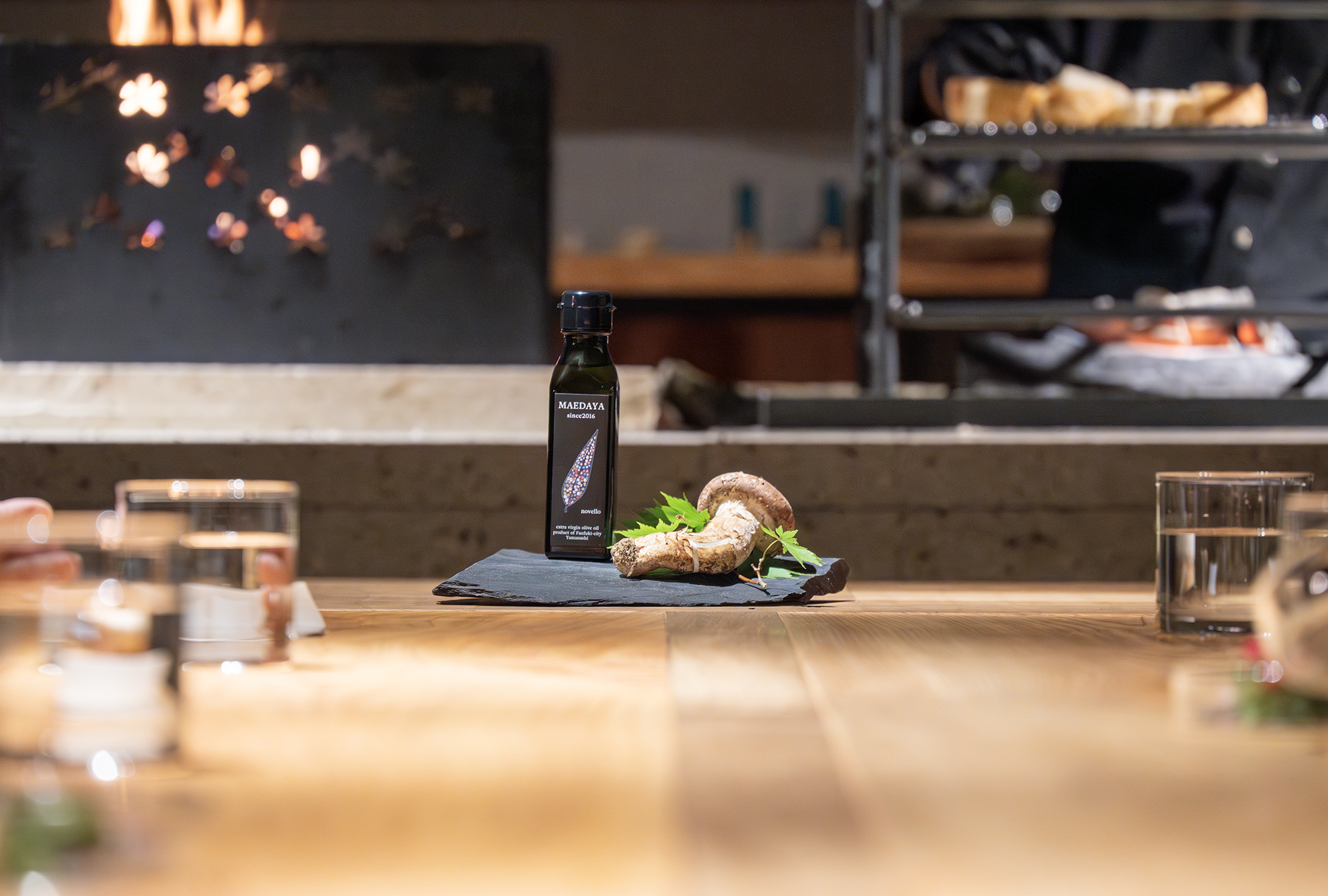
The vegetables served alongside the meat were garland chrysanthemum and watercress. As expected from Yamanashi Prefecture with its pristine water, the watercress has a sharp bitterness and a rich, delicious flavor. Simple, with just novello olive oil and Parmigiano-Reggiano, it makes an ideal palate cleanser between bites of meat.
Two types of wine were served for the main course.
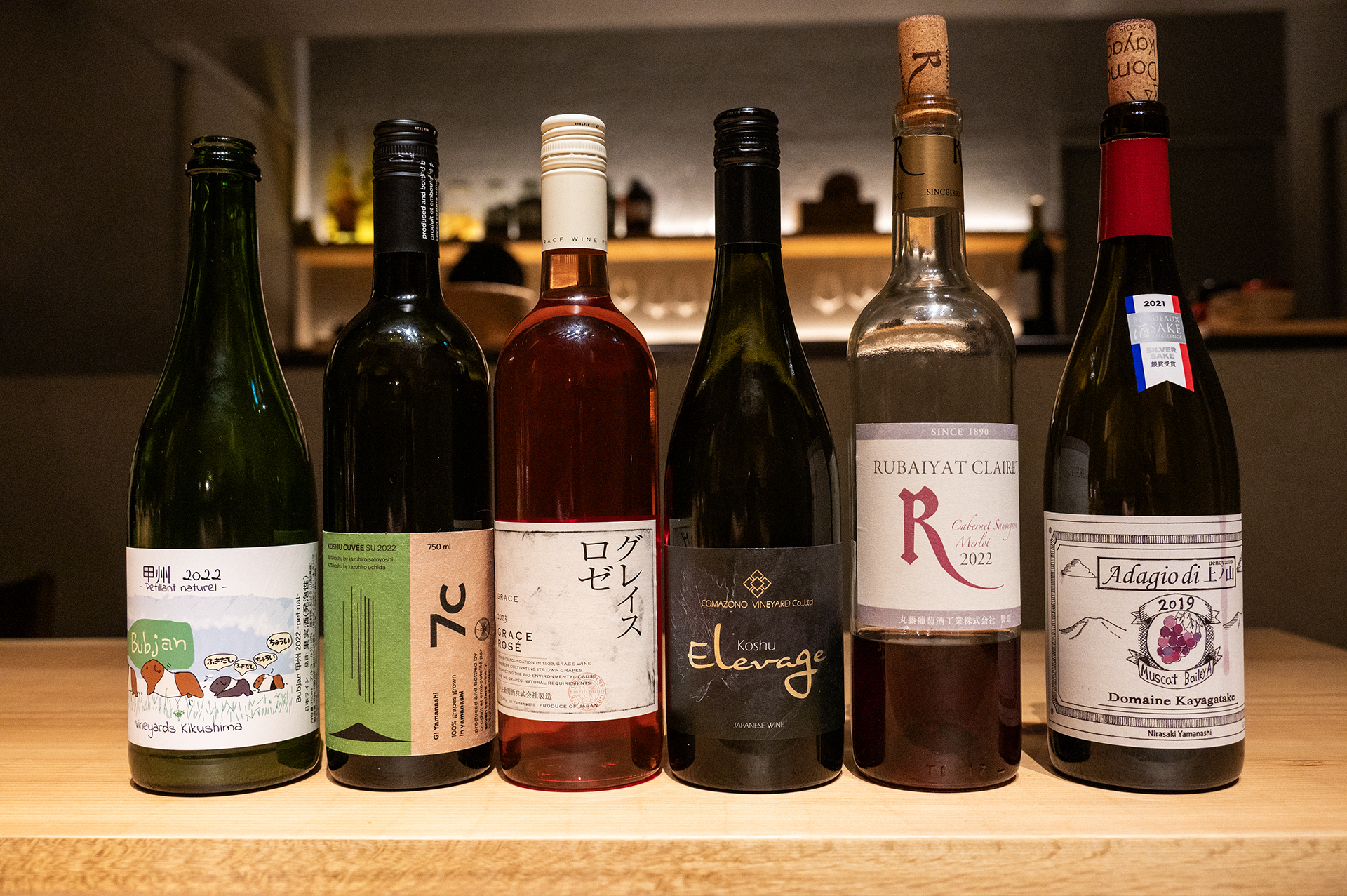
Marufuji Winery / Rubaiyat Clairet 2022 This red wine, crafted from Cabernet Sauvignon and Merlot harvested from estate vineyards in Katsunuma Town, Yamanashi Prefecture, has a vivid hue just as its name suggests. You can clearly feel its solid fruitiness. With subtle oak aromas and spicy notes, it is a perfect match for the fragrant, wood-roasted lean beef.
Domaine Kayagatake / Adagio di Uenoyama 2019 A luxurious red that lets you directly experience highly ripened Muscat Bailey A. A satisfying, full-bodied bottle fitting for the main course, making for a deeply gratifying pairing.
Eighth Course I realized that no matter how full you are from the main courses, when the final dish is this wonderful, it can be polished off with complete ease.
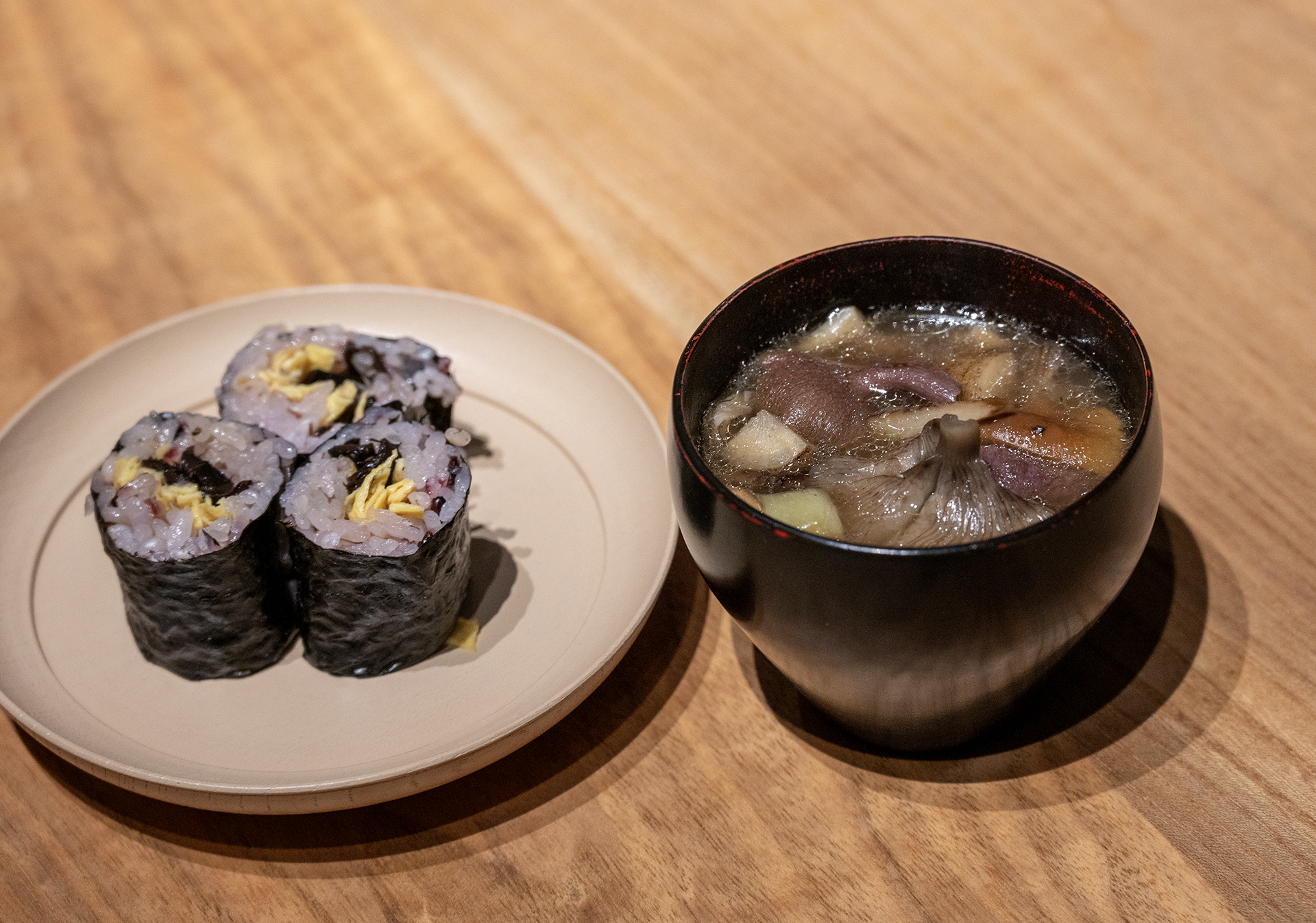
A roll of sweet-simmered koudake mushroom, accompanied by a mushroom soup featuring seven types of mushrooms in total: amitake, hana-iguchi, naga-take, naga-take modoki, murasaki-take, kishimeji, and shougenji. The base is a consommé broth made from wild boar and venison.
Because even the stem bases are slow-cooked into the soup rather than discarded, the umami is incredible. It is a deeply comforting bowl.
All the mushrooms were gathered by Chef Toyoshima himself, who enters the mountains almost every morning as part of his life's work. Sharing in them feels like having the taste of the land served to you directly.
"I feel like this single bowl has extended my life by a year," said Mr. Maeda. Indeed, it is profoundly delicious.
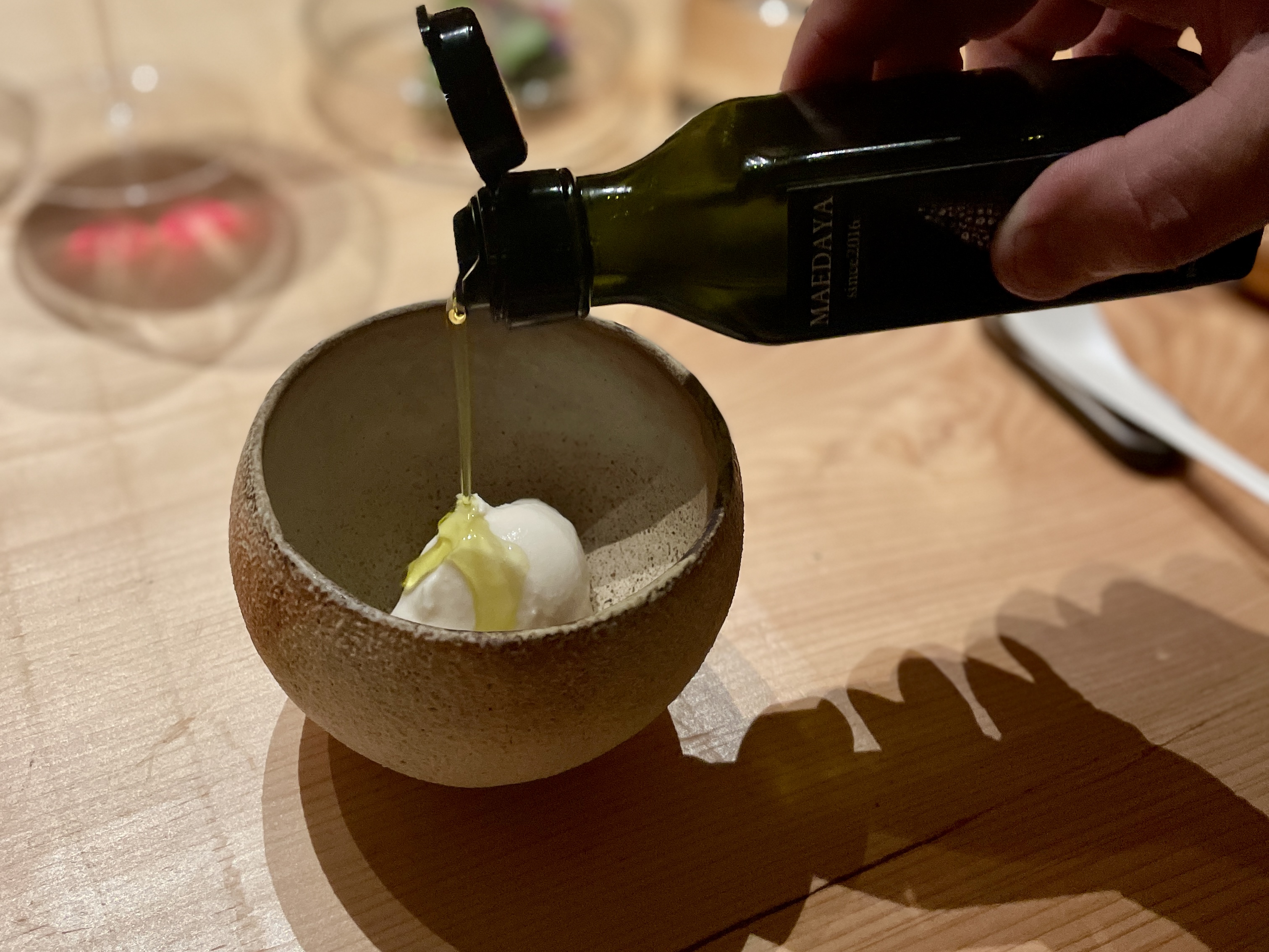
Ninth Course Served with the remark, "Mr. Maeda might scold me for this," was Yatsugatake yogurt drizzled with Maedaya's Novello. According to Mr. Maeda, the solidification temperature of oleic acid is 7°C, so he instructs that it must always be handled at room temperature and never put in the refrigerator. Even so, Chef Toyoshima took the plunge and tried it out of a desire to "combine the green aroma of olives with milk from cows that fed on Yatsugatake pasture, expressing a lush green meadow!" It was a combination where both the acidity of the yogurt and the bitterness and fresh greenness of the olive oil stood out beautifully. Even Mr. Maeda himself seemed thoroughly convinced by its deliciousness.
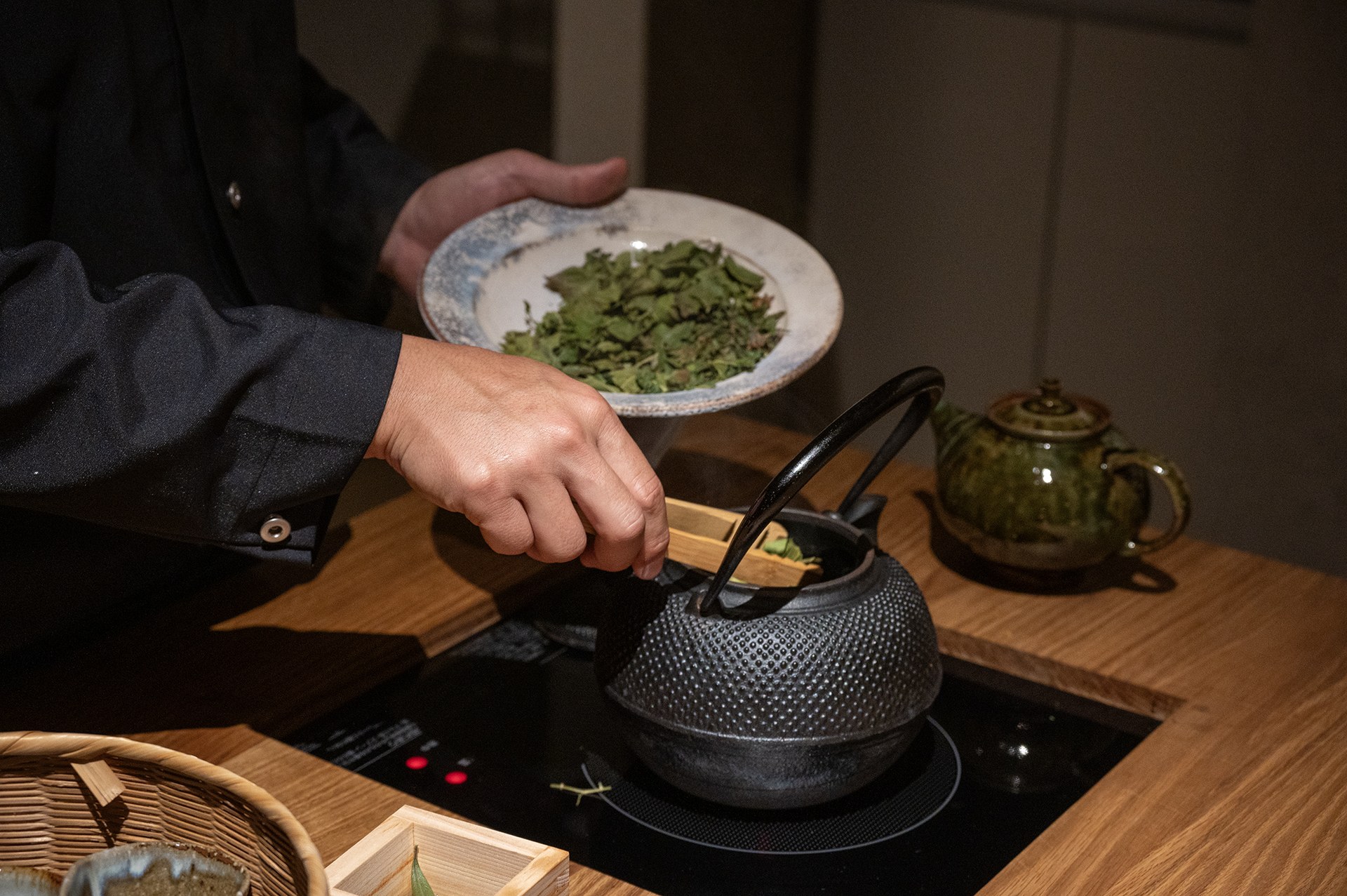
Tenth Course Finally, we drank tea brewed carefully in Nambu ironware using wild herb tea leaves from around Lake Saiko. To the very end, everything was sourced from Yamanashi Prefecture.
CHAPTER 02
About the Drink Pairings
All alcohol served that evening, including the beer, was from Yamanashi Prefecture.
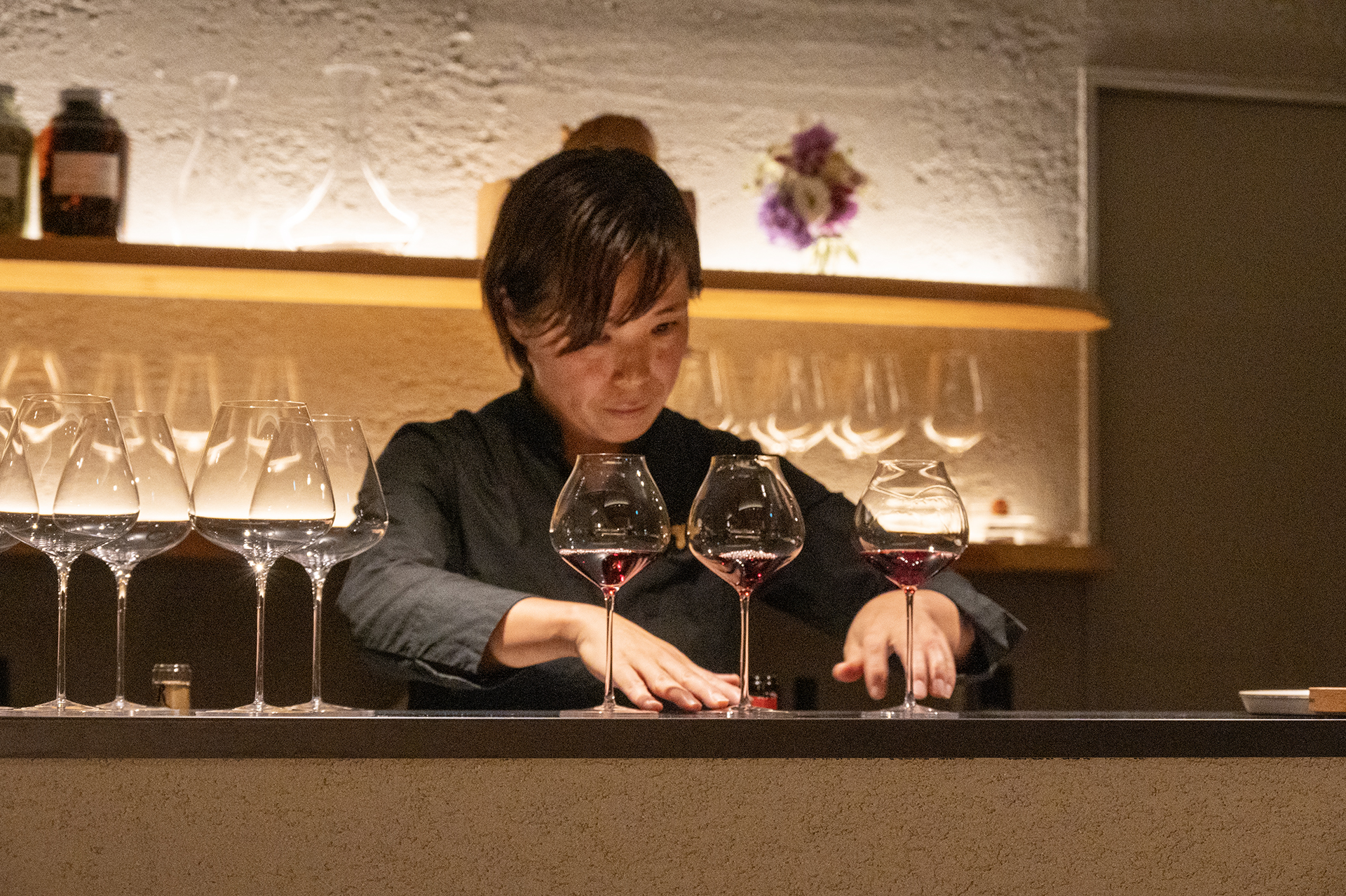
Sommelier Mr. Nagahara selected high-quality wines for us.
As mentioned above, this wine pairing was superb, but Restaurant SAI 燊 also offers unique non-alcoholic pairings.
If guests near your table are enjoying the non-alcoholic options, you will surely want to try the non-alcoholic pairing yourself on your second visit.
CHAPTER 03
Producer Keisuke Maeda × Chef Masaya Toyoshima's Concept of "Deep Yamanashi Cuisine"
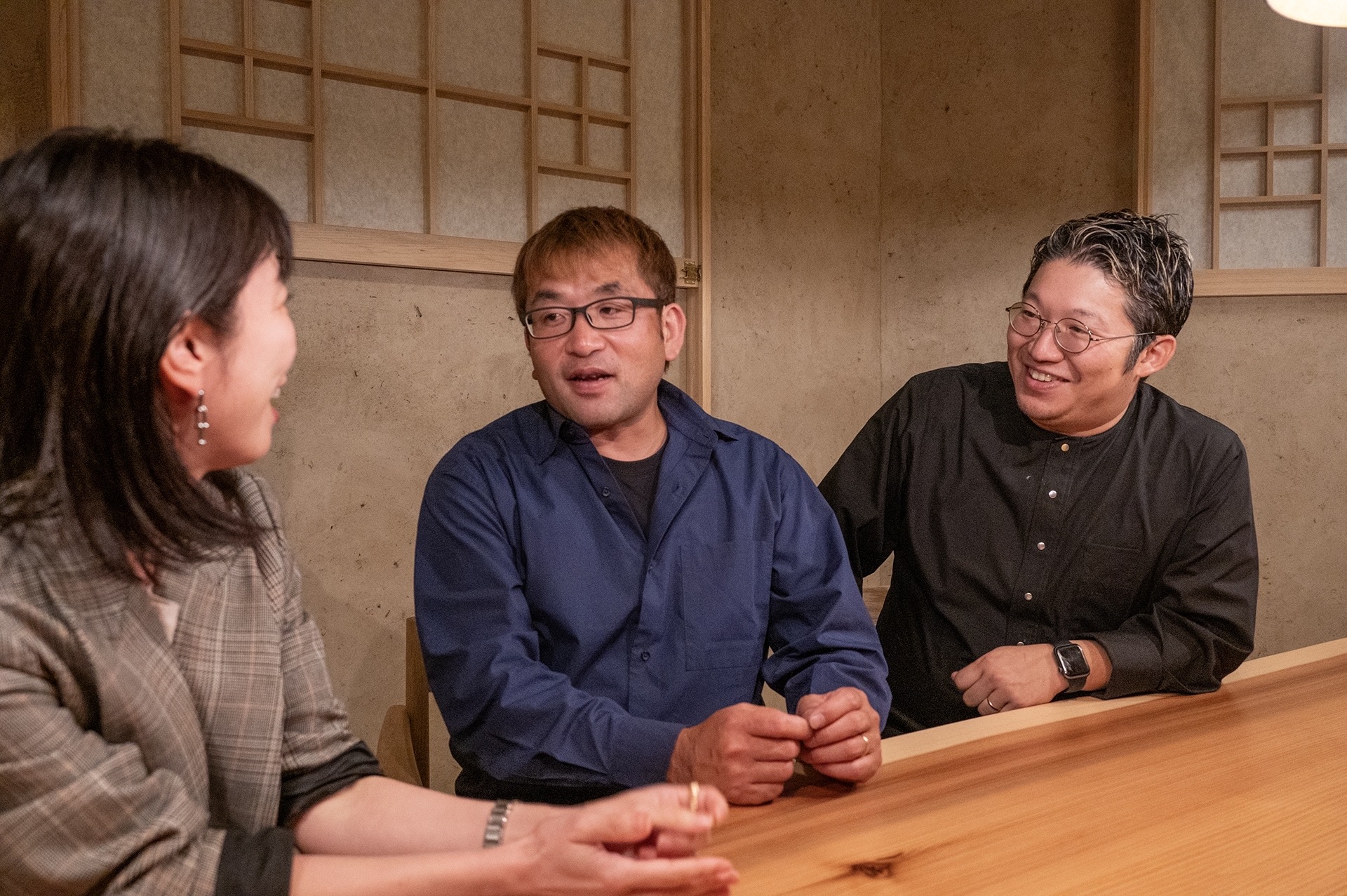
Looking back on today's wonderful experience, NIHON WINE.JP navigator Isobe...Fuefuki Olive Oil MaedayaWith Mr. Keisuke Maeda andRestaurant SAI 燊an interview with Chef Masaya Toshima.
Isobe: Thank you both so much for today's wonderful array of dishes.
This experience completely changed my impression of olive oil.
Oil is, naturally, 'oil,' so you expect it to be oily, greasy, or slimy, sometimes feeling heavy and rich. But the oil I tasted today—strange as it may sound—didn't feel like 'oil' at all.
Maeda: That's right. Actually, as an oil's oxidation level rises, that greasy feeling starts to develop.
The oils you tasted were extra virgin olive oils with an oxidation rate of 0.8% or less, or freshly made top-pour Novello, so rather than oil, it is practically 'olive juice.'
Toyoshima: I absolutely wanted to use this special oil. When expressing the wild game I hunted myself or the ingredients I harvested through my dishes, a high-quality oil from the same region like this is essential. I am truly delighted.
Isobe: Mr. Maeda, as a producer, how was tonight's meal?
Maeda: It was truly delicious. To use a musical analogy, olive oil is like a single instrument. While it can produce a sound on its own, when there are various other instruments and a conductor present, it can create a rich, multi-layered, wonderful harmony. Today, under Chef Toyoshima's conducting, I got to witness that kind of experience firsthand.
Isobe: Chef Toshima, while you are a fine conductor, I hear you also go out to gather the instruments (ingredients) yourself.
Toshima: I feel that unless I go to the fields myself, I can't fully connect with the producers' passion and intentions. Only by shedding preconceived notions and experiencing things directly can I truly feel convinced and form a clear vision of what kind of music I should create.
Isobe: So that's why you're heading into the mountains first thing tomorrow morning.
Toshima: Yes, because the mushrooms are waiting for me.
What kind of music will he play tomorrow?
I hope many people who share a sensibility for loving wine will experience it for themselves.
* For details regarding reservations and menus, please contact the restaurant directly.
RELATED STORY【前編】Restaurant SAI 燊〜「奥・山梨料理」と日本ワイン、至極のペアリングを堪能する夜〜RELATED STORYhttps://restaurant-sai.com/RELATED STORYhttps://www.maedaya-olive.com/Reporting from Mr. Maeda's olive grove! He even showed us around the oil mill.
 RELATED STORYワインだけじゃない!山梨県産オリーブの魅力〜笛吹オリーブオイル前田屋〜
About the author
Stories covering the same region, newest first.
- WINE & DININGThe Manns Wines You Think You Know May Be Out of Date — From Volume to Quality: Where Manns Wines Is Today6 MAY 2026Miyuki Isobe
- WINERIESThe People Who Create the “Beginning” of Wine: Visiting Suda Grape Nursery in Yamanashi Prefecture5 JAN 2026Miyuki Isobe
- WINERIESFrom a Winery in Manriki, Yamanashi: Cave an’s Winemaking That Has Mastered the Basics12 DEC 2025Miyuki Isobe
- WINERIESBringing Refreshing Relief to Sweltering Days! Delivered from Heavy Snow Country: Housui Winery23 JUN 2025Miyuki Isobe
- WINERIESBottling Yamanashi's Nature! Asking Naomichi Kondo About Komaen Vineyard's Dedication!21 APR 2025Miyuki Isobe
- WINE & DINING[Part 1] Restaurant SAI 燊: An Evening to Relish Supreme Pairings of "Oku-Yamanashi Cuisine" and Japanese Wine17 NOV 2024Miyuki Isobe
Wineries in this region
REGIONAL WINERIESRead → Know → VisitWineries in 山梨県. Find somewhere to visit.