
Contents
Nice to meet you.
[Wine, Food, People (Wine Shokunin)] Miyuki Isobe here.
In this column, as a wine- and cooking-loving homemaker, I will come up with pairings of Japanese wine and home cooking to share with all of you.
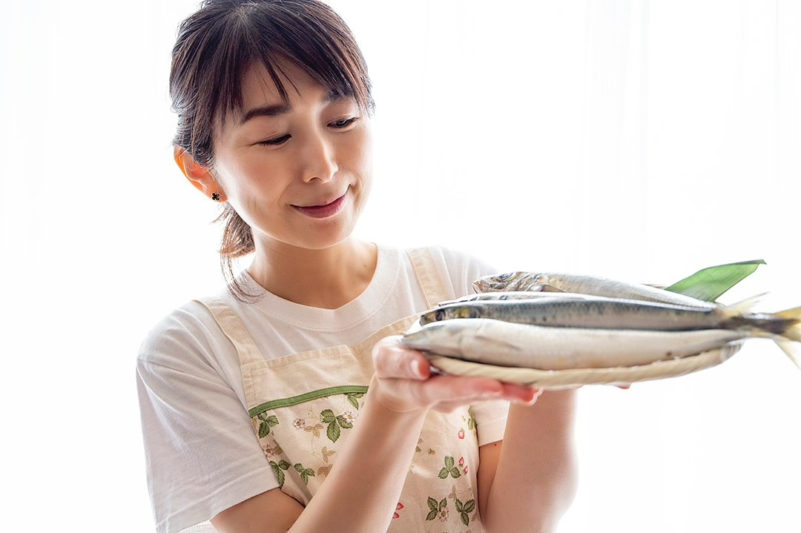
From the rainy season to early summer, horse mackerel (aji) and sardines (iwashi) are in season and delicious, aren't they?
These blue-backed fish are highly nutritious and relatively affordable, making them a great staple for home dining tables.
They are also wonderfully versatile in the kitchen—whether grilled, simmered, served raw as sashimi, steamed, or made into fish balls—so during this time of year, whenever I find good ones, I buy them and eagerly eat them up.
Just one thing. Haven't you heard that raw fish doesn't pair very well with wine?
To be sure, pairing sashimi with sake might seem like the classic standard.
As someone who wants to serve wine at everyday meals, I wanted to get to the bottom of this!!!
So this time, I explored pairings between fresh raw fish and wine.
From here, we will start by actually going to Toyosu Market to buy the fish, moving on to prep work (filleting the fish), and finally testing the pairings.
Please join me in experiencing this process!
(For those thinking, "That's too long!")
If you want to know how to select good fish → "Finding the Fish First"
If you want to see how to fillet horse mackerel → "Filleting Horse Mackerel"
If you want to see how to butterfly sardines by hand → "Let's Butterfly Sardines by Hand"
If you want to know how to fillet larger fish → "Filleting Meji Tuna"
If you just want to check the wine pairings → "Checking White Wine x Bluefish Pairings" "Checking Red Wine x Tuna Pairings" — please check these out.
CHAPTER 01
First, Finding the Fish
When you think of fish, Toyosu Market comes to mind. More than 600 varieties of seafood gather here from all across Japan and around the world.
As someone whose hobby is walking around Toyosu Market, I had wholesale fish pros teach me directly about what's currently in season and how to pick good horse mackerel.
In this June to July season, sardines, horse mackerel, red squid, and bonito are said to be at their best.
It's true that we often hear terms like "Tsuyu-iwashi" (rainy season sardines) or "Nyubai-iwashi."
And this time, from among those options, I purchased horse mackerel, sardines, and meji tuna from Aomori!
Key Points for Selecting Quality Horse Mackerel
・Firm, springy belly
・Bright red color inside the gills when lifted
・Plump, rounded shape
CHAPTER 02
A Thorough Guide to Filleting Horse Mackerel
Since I managed to buy some good fish, let's start prepping it right away.
We will do the most common method: filleting into three pieces (sanmai-oroshi).
It's a versatile technique useful for all sorts of dishes—sashimi, simmered fish, deep-frying, marinating—so it's definitely worth learning.
It's not that difficult, but once you master it, it's a skill for life. Plus, it's a total crowd-pleaser—an intangible bridal asset, if you will.
Now, people talk about "feminine charm" and all that... cute nails and soft, curled hair are lovely, sure. But beyond that, I personally think understated skills like this matter even more.
It's the perfect way to set yourself apart from the girls who make pork ginger or omelet rice and say, "I cook quite a lot, tee-hee!"
Ah, I got sidetracked.
Give it a try—it's surprisingly easy once you get going!
CHAPTER 03
Let's Try Hand-Opening Sardines
Next up, sardines.
You could fillet them with a knife just like the horse mackerel, but sardines have tons of bones pointing in all kinds of artistic directions. If you cut them with a knife, picking out the remaining bones actually becomes more of a hassle.
That's why hand-opening is so convenient.
Since they're nice and fatty, the spine glides right out, which feels super satisfying.
Oh, and if you have pretty nails, make sure to put on gloves before trying this!
CHAPTER 04
Filleting a Young Bluefin Tuna (Meji-maguro)
I also picked up some young bluefin tuna (meji-maguro) from Aomori because it looked delicious.
Even with larger fish like young tuna, as long as they have a similar body shape, the filleting method is basically the same as for horse mackerel.
For fish with different shapes like flounder, flatfish, or sea robin, we'll tackle those another time.
For larger fish, having a fish scaler and a toothbrush handy to clean away the blood around the spine makes things much easier.
A truly magnificent and exceptionally fresh meji-maguro (young Pacific bluefin tuna).
It has just the right amount of fat—not too much, not too little—allowing the flavor of the red meat to come through, exactly the way I like it.
This really builds up my anticipation for pairing it with red wine.
Come to think of it, my fish mentor once said, "When the fish is in great condition while you're prepping it, that alone gets you excited."
Maybe a Pinot Noir... Ah, I want to drink red wine so badly.
I am thoroughly excited.
CHAPTER 05
Checking the Compatibility of White Wine and Blue Fish
Time for the tasting at last!
I'm going to check the compatibility between fresh fish and wine.
I was excitedly prepping the sashimi, thinking, "Finally, I get to drink and eat!"
Wait, blind? The president has hidden the wine labels!
I panicked a bit, but this certainly allows me to evaluate the pairing purely without any bias.
So, I am taking this fresh fish and wine pairing test very seriously!
<青魚×白ワインのまとめ>
This time, wines ① and ② were Koshu.
To my embarrassment, I was so nervous about it being a blind tasting that I didn't realize it until I saw the labels, but the bitterness I felt on the finish was indeed the refreshing, grapefruit-like citrus characteristic of Koshu.
Even among the Koshu wines, the sur lie version felt easier to pair.
Both created a taste as if citrus were added to the flavor of the fish, expanding the range of flavors in the mouth with just one dish—perhaps a pairing unique to wine.
Wine ③, the Chablis, was also gorgeous and delicious.
Wines Paired
- Japanese wine Soryu Winery Citrus Scent
- Japanese wine Shikishima Winery Koshu Sur Lie
- France Chablis
Marinated Horse Mackerel Recipe
<材料>
- Horse mackerel, filleted
- White wine vinegar
- Salt
- Black pepper
- Olive oil
- Baby greens
- Pink peppercorns
- Lemon
Since horse mackerel skin peels off much easier after soaking in vinegar, the key is to start with filleted fish that still has its skin on.
Generously sprinkle salt over the horse mackerel and let it sit for 15 minutes, then thoroughly pat dry.
After 15 minutes, rinse the salt off the fish using regular vinegar. (Using wine vinegar here would be a waste, so I use grain vinegar or rice vinegar.)
Soak the fish in white wine vinegar for about 20 minutes.
Peel off the skin and slice the fish diagonally.
Combine with baby greens and sliced lemon, sprinkle with a pinch of salt, and drizzle with olive oil.
Finally, grind over some black pepper and scatter a few pink peppercorns.
Washing the fish thoroughly, drawing out the moisture, and adding acidity completely eliminates any fishy odor. Doing so makes it easier to pair not just with Koshu, but with a wide variety of wines.
By the way, regions famous for delicious wine vinegar often overlap with renowned wine-producing areas.
CHAPTER 06
Testing the compatibility of red wine and tuna
<マグロ×赤ワインのまとめ>
In both cases, the grape variety was Pinot Noir.
The dashi-like savory depth and balanced acidity of Hiroshima Miyoshi's TOMOE Pinot Noir gently complement the subtle acidity of the lean tuna and the rich umami of the medium-fatty tuna. The presence of the soy sauce on the tuna also plays a significant role.
The weight of the wine's body was also just right, standing up well without overpowering the tuna's flavor.
As for the French Pinot Noir, it was Rouget Père et Fils' Hautes-Côtes de Nuits Rouge 2016!
A wine with an intensely gorgeous aroma of red berries that leaves you completely enchanted.
With its impressive aromatic volume and pleasant tannins, I found myself wanting a bit more fat content in the pairing.
If pairing with tuna, I felt it would be wonderful with extra-fatty tuna (otoro), or perhaps enjoyed alongside meat.
Paired wines
- Japanese wine: Hiroshima Miyoshi Winery TOMOE Pinot Noir
- France, Burgundy: Hautes-Côtes de Nuits
So with that, I got to enjoy some wonderful wine today as well!
While one option is to add acidity or fat to the fish to eliminate any fishiness and make it easier to pair with wine, I realized that with a white wine like Koshu that has a refreshing citrus acidity, the wine itself can act as a substitute for marinating, making it easy to enjoy throughout the meal.
As for red wine, rather than worrying about fishiness, the key point is finding the right balance between the fat content of the fish and the weight of the wine.
I hope you all enjoy pairing sashimi and Japanese wine at your own dinner table!
In this relaxed way, my seasonal exploration of wine and food will continue.
About the author
Stories covering the same region, newest first.
- WINE & DININGEnjoy a wide variety of Japanese wines! A new izakaya has opened where you can savor Kochi ingredients such as "straw-roasted bonito tataki with salt" alongside Japanese wine!2 MAY 2025Miyuki Isobe
- WINE & DININGRight by Shibuya Station! Drink, buy, and enjoy Japanese wine! ~WINE SHOP nico Shibuya~11 NOV 2024Miyuki Isobe
- WINE TOURISMJapanese Wine Featured at Hong Kong Food & Beverage Industry Trade Show! RESTAURANT and BAR HONG KONG Report!!23 SEP 2023Miyuki Isobe
- WINERIESWorld-Astonishing Quality! An Interview with Takashi Yokomachi of Vinoble Vineyard8 AUG 2023Miyuki Isobe
- WINERIESThe World's Best Sauvignon Blanc Born in Miyoshi City, Hiroshima Prefecture! ~Vinoble Vineyard~6 JUN 2022Miyuki Isobe
- WINE & DININGEnjoying the Ultimate Japanese Wine Pairing at Gaienmae's JULIA8 FEB 2022Miyuki Isobe
Wineries in this region
REGIONAL WINERIESRead → Know → VisitWineries in 広島県. Find somewhere to visit.