
WINERIES
The World's Best Sauvignon Blanc Born in Miyoshi City, Hiroshima Prefecture! ~Vinoble Vineyard~
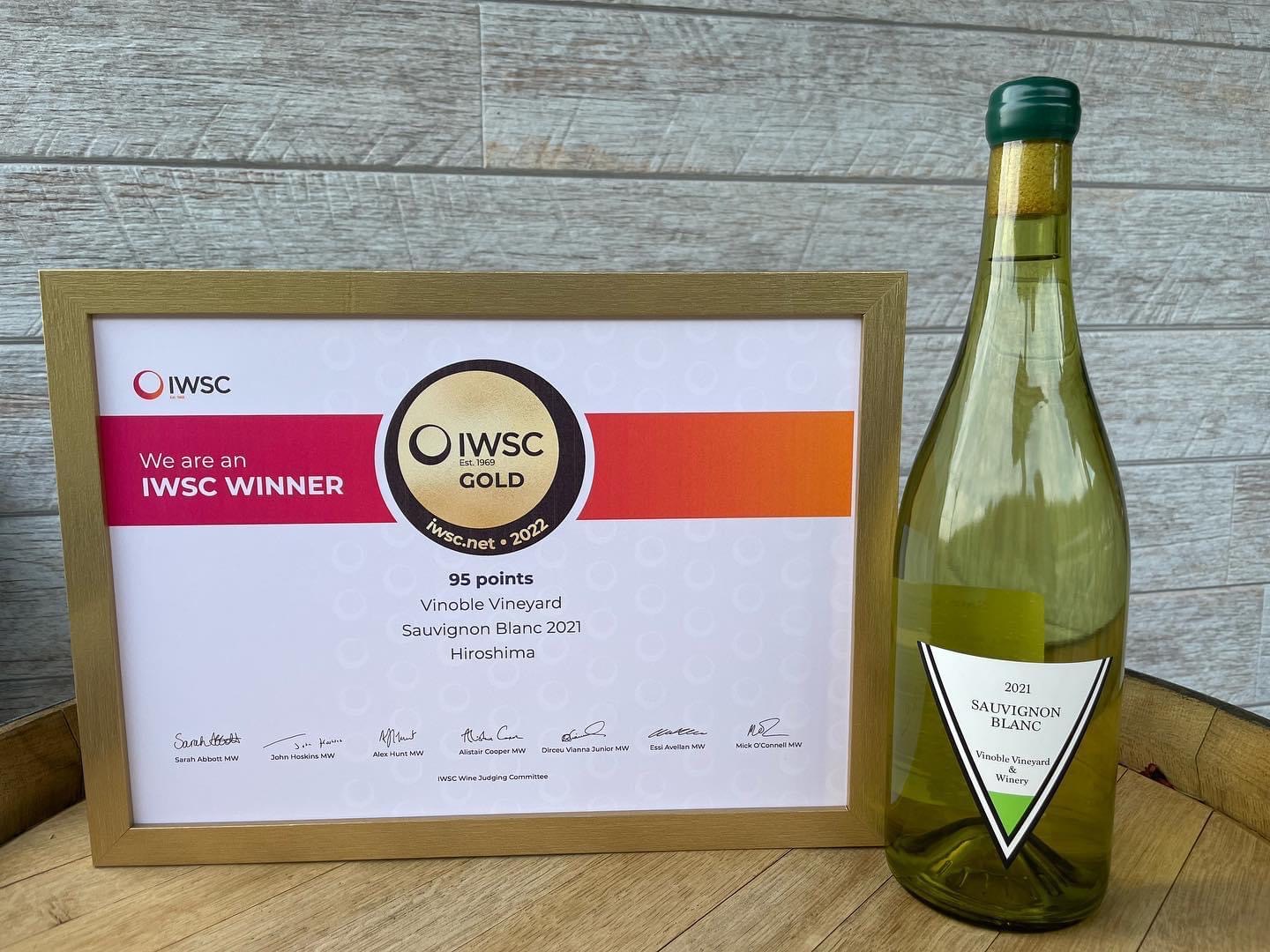
Three Japanese wines won gold medals at IWSC 2022 (International Wine & Spirit Competition 2022), announced on May 23.
Contents
At the IWSC 2022 (International Wine & Spirit Competition 2022), announced on May 23, three Japanese wines won gold medals.
★Hokkaido Wine (Hokkaido) / Kitajima Vineyard ~No.7~ Kerner 2019
★Hombo Shuzo Chateau Mars Hosaka Hinojyo (Yamanashi) / Hosaka Hinojyo Cabernet & Merlot Late Harvest 2018
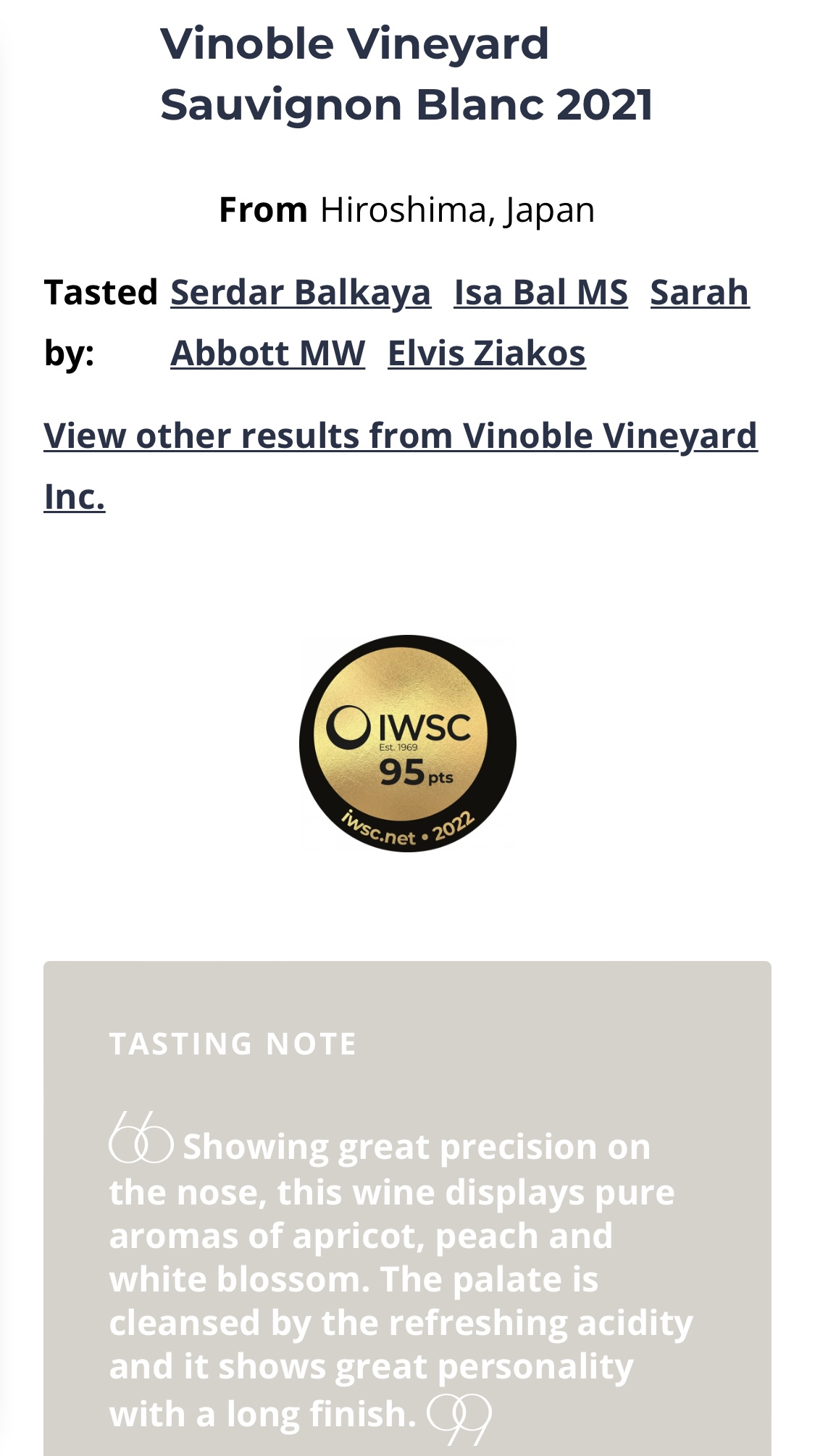
★Vinoble Vineyard (Hiroshima) / Sauvignon Blanc 2021
Congratulations to all the winning wineries!
The IWSC (International Wine & Spirit Competition) is one of Europe's largest wine competitions, held annually in the UK.
One particularly noteworthy aspect of this year's awards is that a wine from Vinoble Vineyard, a new winery that just opened in 2021, took home a gold medal.
Only two wineries received a gold medal for Sauvignon Blanc: Vinoble Vineyard and a winery in Marlborough, New Zealand.
Both earned a score of 95 points.
In other words, a Sauvignon Blanc with the highest score in the world was born right here in Japan!
CHAPTER 01
About Takashi Yokomachi, creator of the world's top Sauvignon Blanc

Although his own winery only opened last year, Mr. Yokomachi is actually already a well-known figure in the industry.
After graduating from the Department of Fermentation Science at Tokyo University of Agriculture, he studied winemaking at Miyoshi Winery in Hiroshima Prefecture (also located in Miyoshi City) and Katsunuma Jozo, and went on to provide winemaking consultancy to numerous wineries.
He also serves as the Senior Managing Director of Lagphase, a grape vine nursery company.
Today, grapes originating from mother vines cultivated by Lagphase are reportedly grown at wineries all across Japan, producing wonderful wines.
When I visited the winery and asked, "What is cultivated in this vineyard?"
I was bewildered when the answer came back not just by variety, but by clones: "Three clones of Cabernet Sauvignon, six clones of Merlot, two of Syrah, two of Shiraz, Pinot Noir 114, 115, 667, 777, 828, 943, UCD 5, 6, Abel, mv6, plus Calera clones and California clones..."
He is somewhat famous in the industry as a true clone enthusiast.
Produced with meticulous, obsessive care, Mr. Yokomachi's grapes have received high praise and are supplied to several wineries, including Okuizumo Winery, where they are transformed into popular wines. Some of you may have seen wines bearing the name "yokomachi."
We spoke with Takashi Yokomachi, the winemaker behind this remarkable achievement.
CHAPTER 02
Interview with Takashi Yokomachi
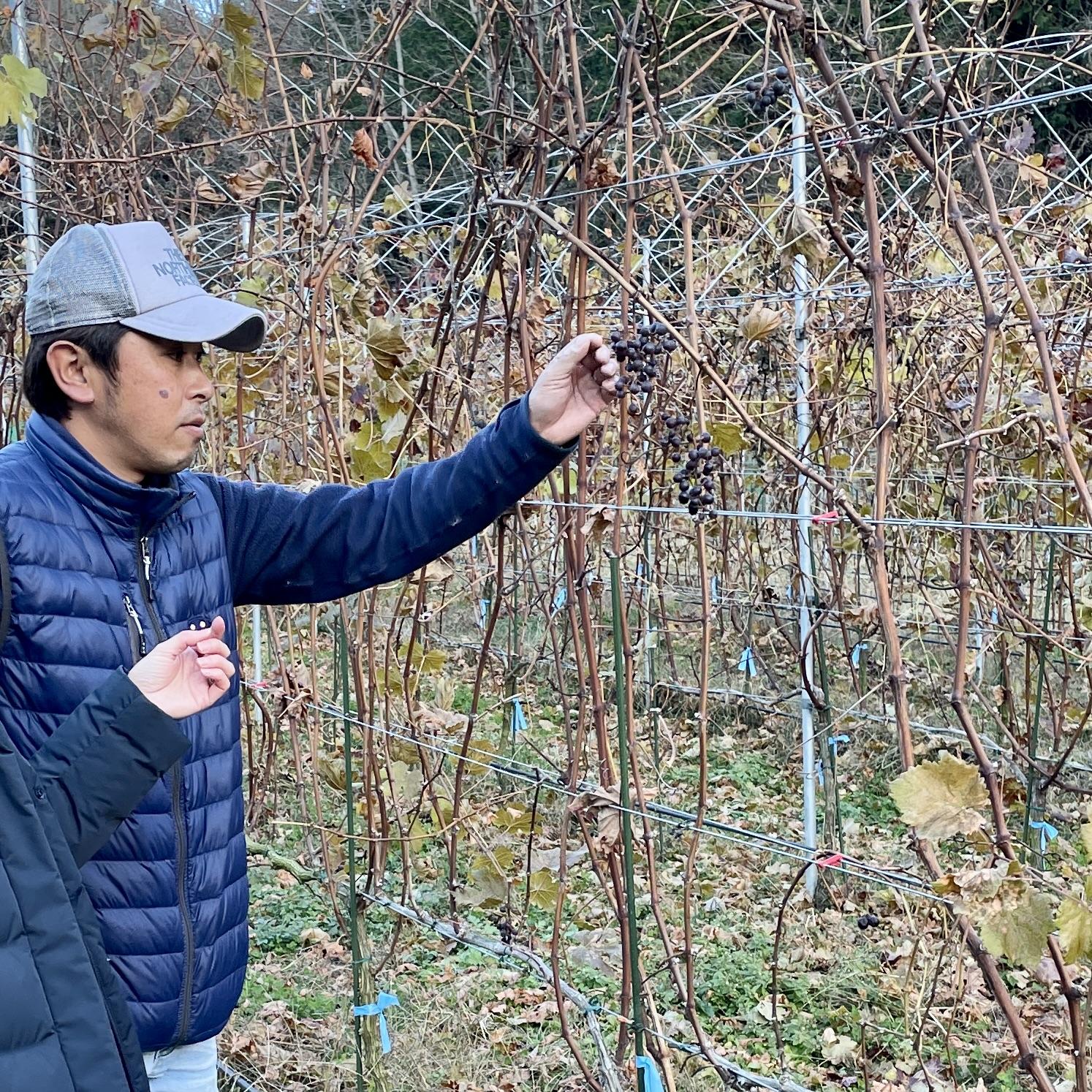
--- Please tell us how you feel about winning the award!
Before the official announcement, I received an email from the IWSC secretariat notifying me of the Gold award, and the moment I saw it, I got goosebumps.
However, it was so surreal that I had several staff members around me look at it too, and only then did the joy really sink in.
Now, with a flood of orders coming into our online shop, it feels even more real.
I have long recognized that winning Gold at the IWSC is one of the hardest achievements in wine competitions, and this time hoping it would serve as an opportunity to let many people know about our winery, as well as wanting to know how my wine is evaluated and where it stands on the world stage,
I entered for these two reasons.
--- How was the award-winning Sauvignon Blanc produced?
Last year, we had typhoons around Obon and in early autumn, resulting in a lot of rain and making grape growing quite difficult. However, we compensated by employing various creative techniques during winemaking.
We used three types of active dry yeast across three separate tanks to monitor differences in aroma, experimented with wild yeast, and tried barrel fermentation.
As for pressing, we tested many approaches—whole-cluster pressing, destemming and crushing, overnight skin contact, and so on.
Ultimately, adjusting the proportions, we blended them into a single wine, resulting in a finished product with a well-balanced richness of flavor and body.
--- Regarding Mr. Yokomachi's commitment to and the characteristics of his Sauvignon Blanc
I love the expressive aromas typical of Marlborough Sauvignon Blanc, so I am aiming for that direction, but rather than making an exact copy, I hope to successfully express a sense of Japanese identity within it.
Since aroma is crucial for this grape variety, sound fermentation and aging are absolute prerequisites to properly bring it out in the wine. From a viticultural approach as well, by using agricultural chemicals at the right time and in the proper manner, I work to cleanly express 3MH (a compound found in varieties like Sauvignon Blanc and Koshu that gives wine its characteristic aroma).
However, trying to express 3MH inevitably requires early harvesting, which carries the risk of making the wine feel thin in body. To prevent this and bring out a clean mid-palate, I use techniques like splitting the harvest into two pickings. Thanks to these efforts, I feel our Sauvignon Blanc over the past year or two has gained more depth and richness in flavor.
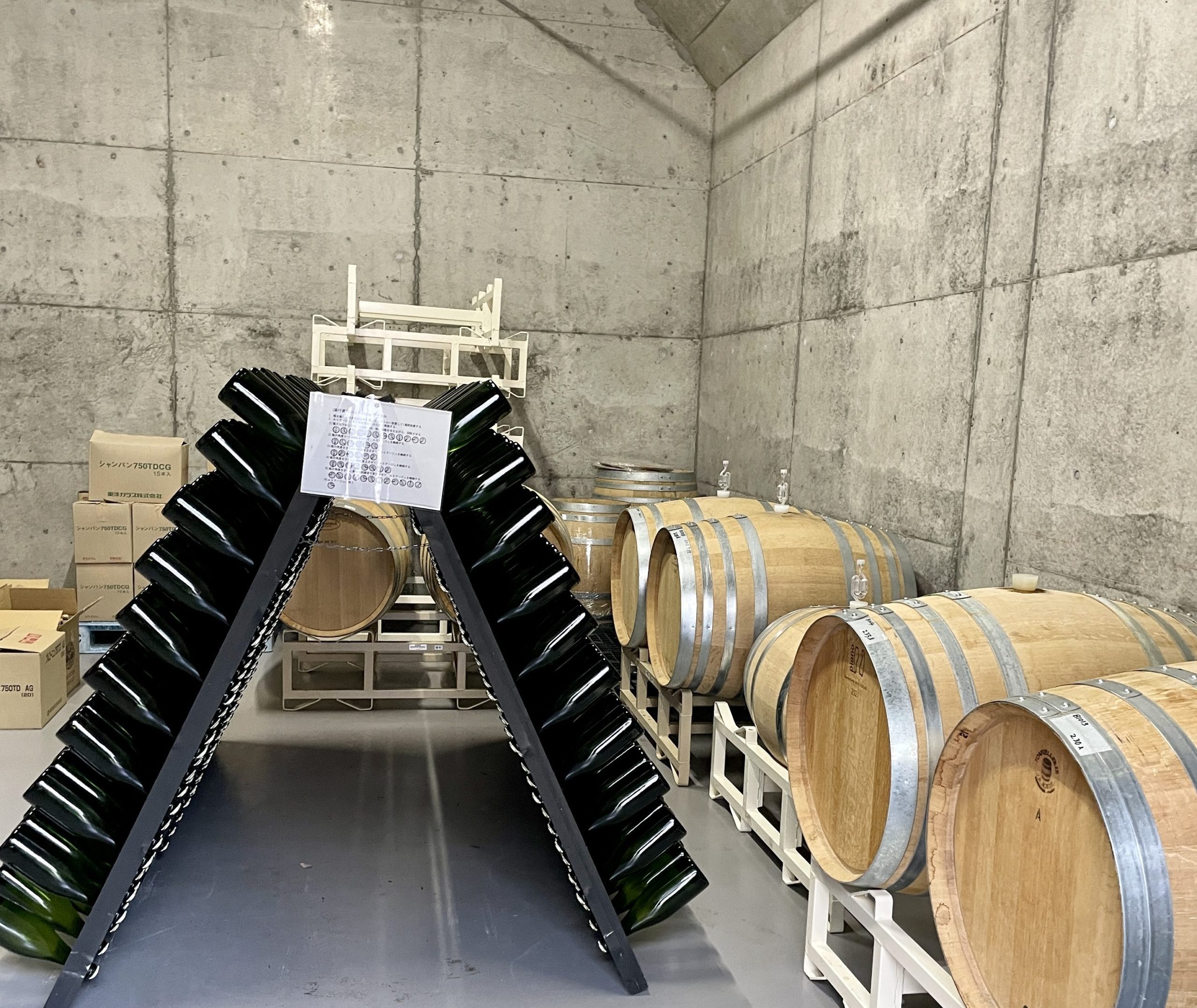
--- What kind of people would you like to drink your wine, Mr. Yokomachi?
First, people who are used to drinking traditional Grand Vins. My wines aim for that style of winemaking, so I want discerning long-time wine lovers to know that Japanese Sauvignon Blanc and Pinot Noir can hold their own in comparison.
On the other hand, I would also love for people who don't usually drink wine to choose it when opening a bottle for a special occasion like an anniversary. Since it's made in an orthodox style, I think it works well as an entry point for wine beginners.
I would love for it to be"a special bottle for celebratory occasions"enjoyed as such.
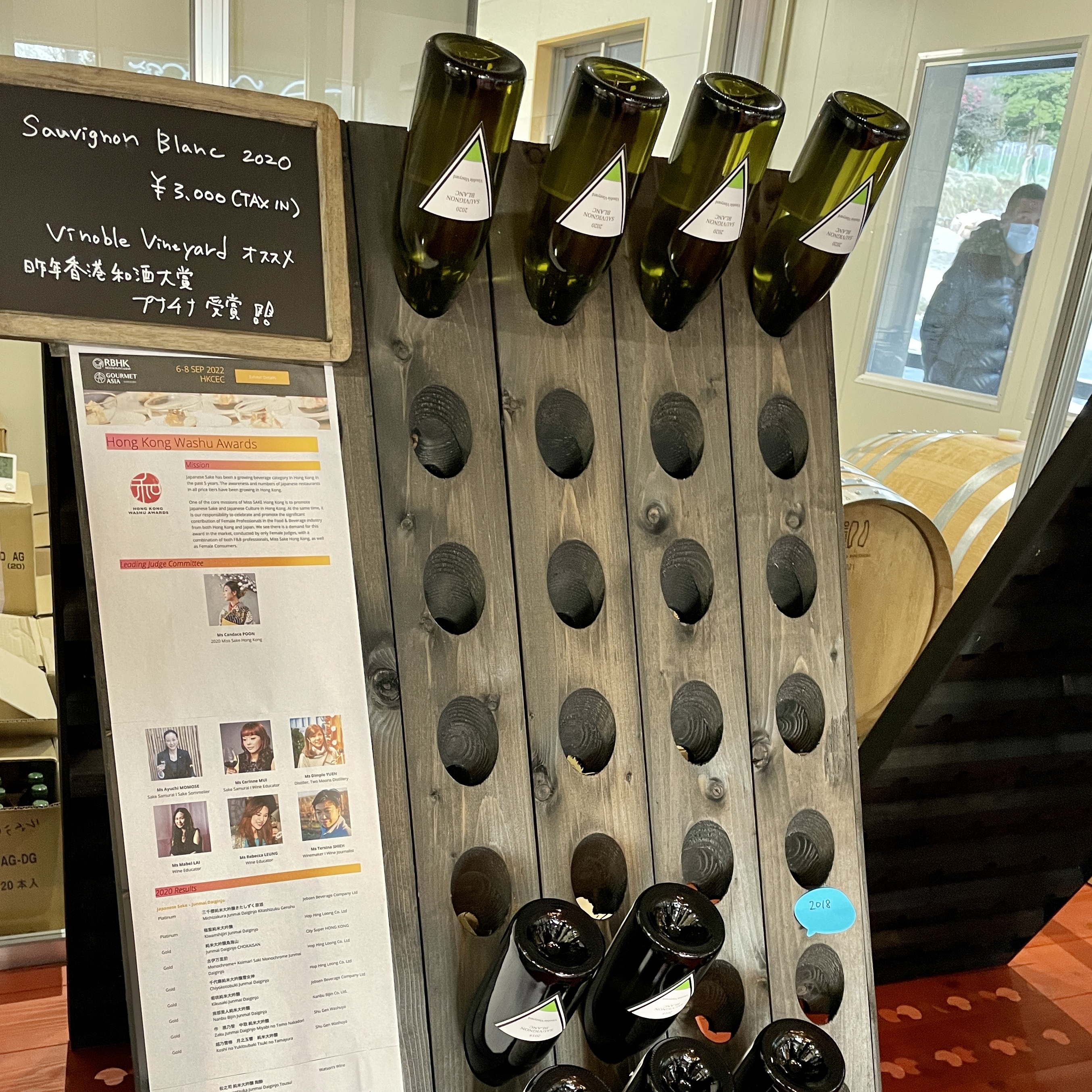
CHAPTER 03
What Mr. Yokomachi aims for
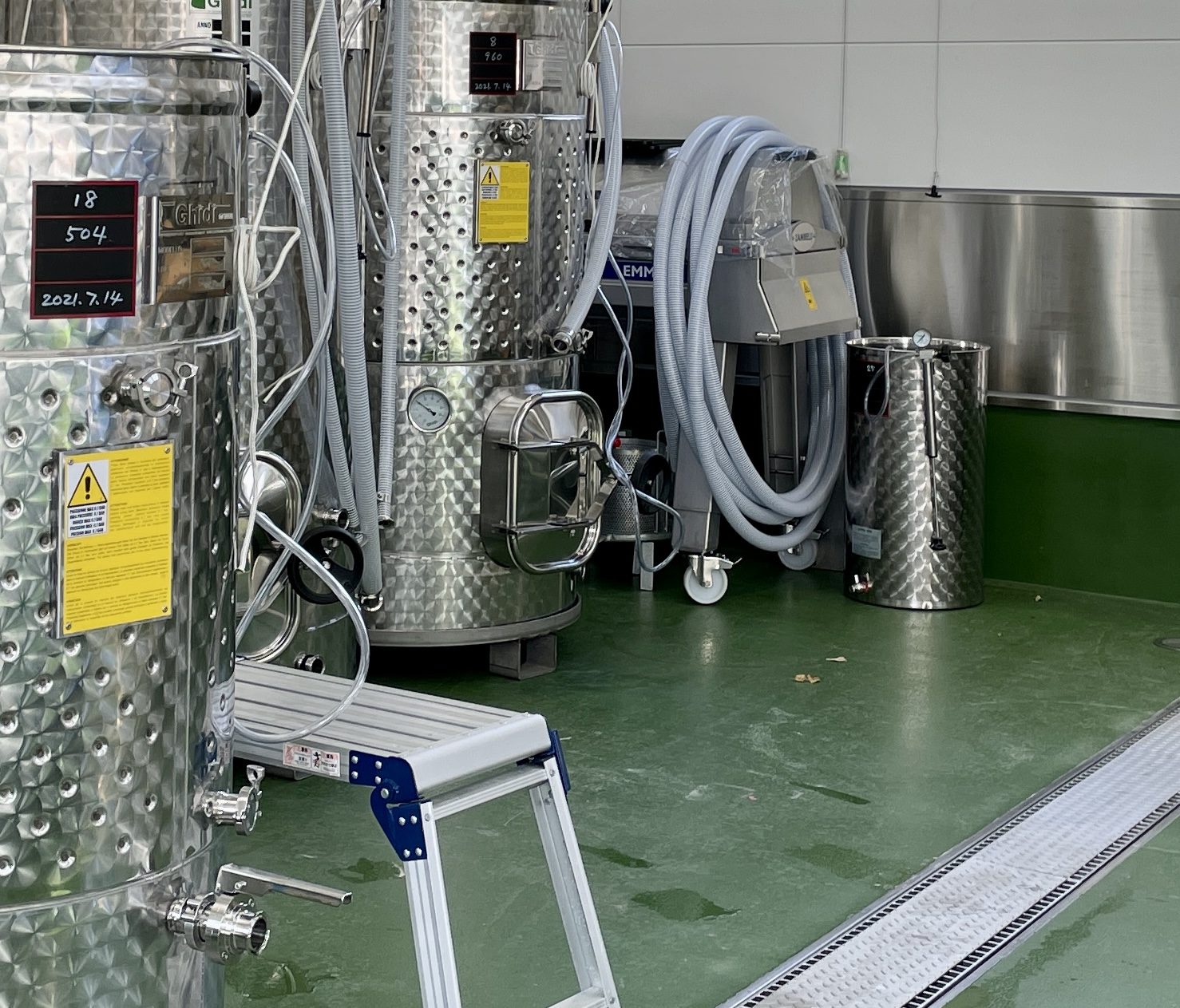
Mr. Yokomachi approaches winemaking with sincere dedication, meticulously taking care with every step of the process—from grape clones to vinification methods and winery equipment.
Having achieved such impressive results just one year after establishing his own winery, we also asked him about his plans for the future.
"While I am naturally delighted with this award, setting that aside,
ultimately, my commitment to growing great grapes in order to produce great wine remains completely unchanged."
He also shared,"Since I've established a winery here in Miyoshi, I want to craft the ultimate noble rot wine someday."
Because Miyoshi City in Hiroshima Prefecture is situated in a basin, a mystical, dense fog described as a "sea of fog" blankets the region from late autumn to early spring.
Wine lovers will undoubtedly be reminded of regions like Sauternes.
Noble rot grapes cannot be cultivated just anywhere, as they are heavily influenced by nature; even when blessed with favorable weather and location, there will still be years when they can and cannot be produced, making it an extraordinarily difficult endeavor.
We eagerly look forward to the day when we will be able to taste Mr. Yokomachi's ultimate noble rot wine.
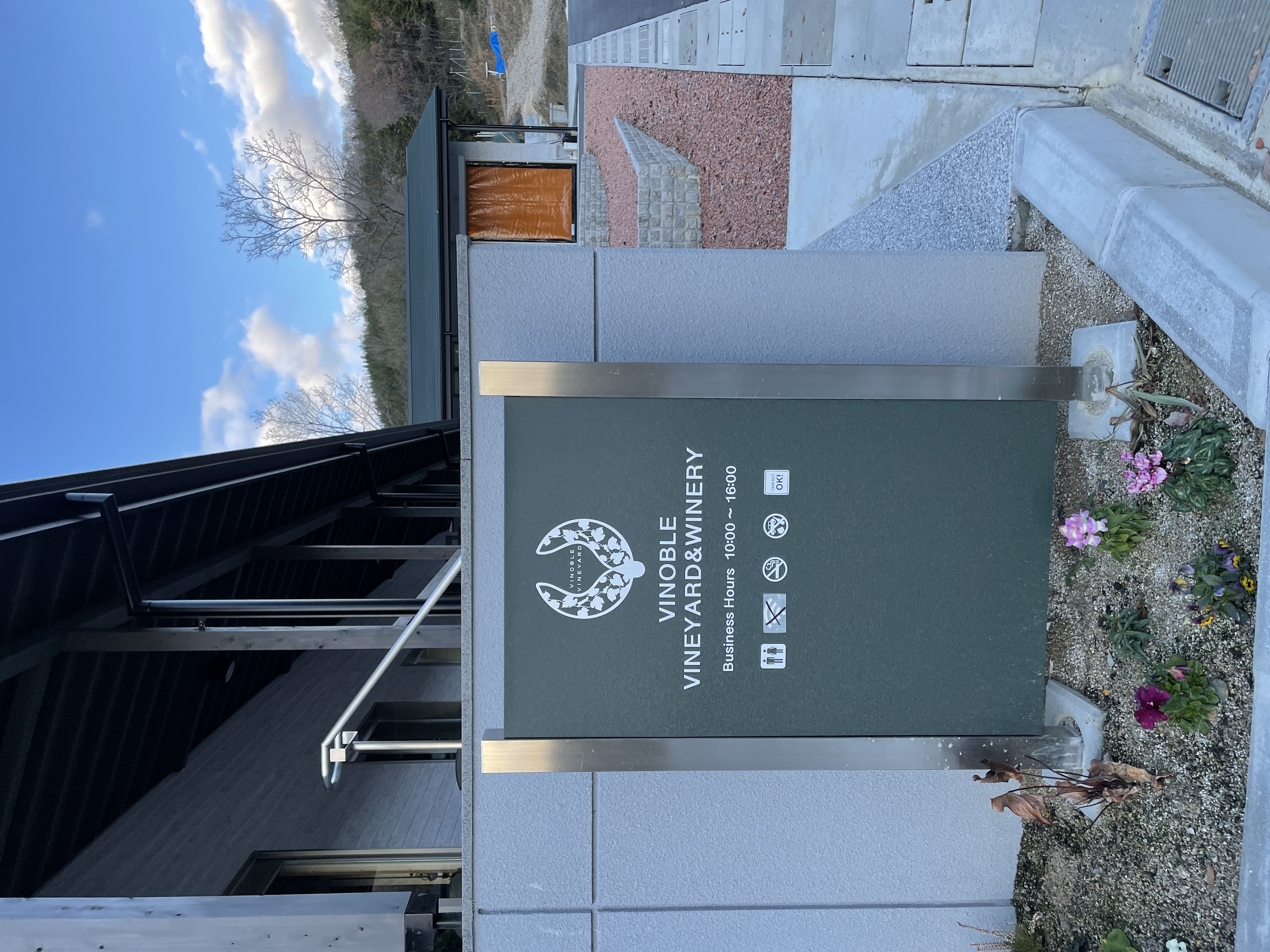
This winery was opened in Miyoshi City, Hiroshima Prefecture in 2021 by owner and winemaker Takashi Yokomachi.
While many people may associate Hiroshima Prefecture with the warm climate of the Seto Inland Sea, Miyoshi City is located in the northeastern part of the prefecture and has an inland climate.
With the significant diurnal temperature swings characteristic of a basin, it is a region said to be well-suited for grape cultivation.
<公式サイト> http://vinoble-vineyard.jp
<Related Articles>
About the author
Stories covering the same region, newest first.
- WINE & DININGEnjoy a wide variety of Japanese wines! A new izakaya has opened where you can savor Kochi ingredients such as "straw-roasted bonito tataki with salt" alongside Japanese wine!2 MAY 2025Miyuki Isobe
- WINE & DININGRight by Shibuya Station! Drink, buy, and enjoy Japanese wine! ~WINE SHOP nico Shibuya~11 NOV 2024Miyuki Isobe
- WINE TOURISMJapanese Wine Featured at Hong Kong Food & Beverage Industry Trade Show! RESTAURANT and BAR HONG KONG Report!!23 SEP 2023Miyuki Isobe
- WINERIESWorld-Astonishing Quality! An Interview with Takashi Yokomachi of Vinoble Vineyard8 AUG 2023Miyuki Isobe
- WINE & DININGEnjoying the Ultimate Japanese Wine Pairing at Gaienmae's JULIA8 FEB 2022Miyuki Isobe
Wineries in this region
REGIONAL WINERIESRead → Know → VisitWineries in 広島県. Find somewhere to visit.