

The author first met Mr. Minoru Numata several years ago when attending a seminar he held as an educator. Up until then, my primary focus had been on "systematic learning," but listening to his talk (lecture), nothing was more refreshing than the way the world of Japanese wine suddenly came into view from a multifaceted perspective.
Contents
I first met Minoru Numata a few years ago when I attended a seminar he gave as an educator.
Up until then, my primary focus had been on 'learning systematically,' but listening to his lecture suddenly revealed the world of Japanese wine from a multifaceted perspective, which felt extraordinarily fresh. His talks were also filled with plenty of humor—making me chuckle, nod in agreement, and think deeply—keeping me completely engaged. Having taken his time to prepare, Mr. Numata finally opened
in 2024. The crowdfunding project launched with the goal of 'creating a one-of-a-kind domestic Pinot Noir' raised over 8 million yen, exceeding its initial target by more than four times. This clearly shows the high expectations surrounding his Pinot Noir. In this article, through another fulfilling lecture held at
, I will share the story of the winery covered during the session and my experience tasting this 'highly anticipated Pinot Noir.'
CHAPTER 01
About Minoru Numata, Representative of Kirinoka Vineyards & Winery
His background includes working for a wine importing company, completing practical training overseas as a winemaker, and working as a sommelier. He is particularly well known for his logical tasting approach, honed through his experience as a wine competition judge.
WSET Certified Level 4 Diploma / Japanese Wine Master (Japanese Wine Examination Level 1) / Graduate Diploma in Viticulture and Oenology, Lincoln University, New Zealand / Society of Wine Educators Certified Wine Educator (CWE) / J.S.A. Certified Sommelier / Bourgogne Wine Board (BIVB) Certified Educator / Edo Sobmelier / Best Japanese Judge at the 2008 Japan Wine Challenge

CHAPTER 02
What Kind of Place Is Kirinoka?!
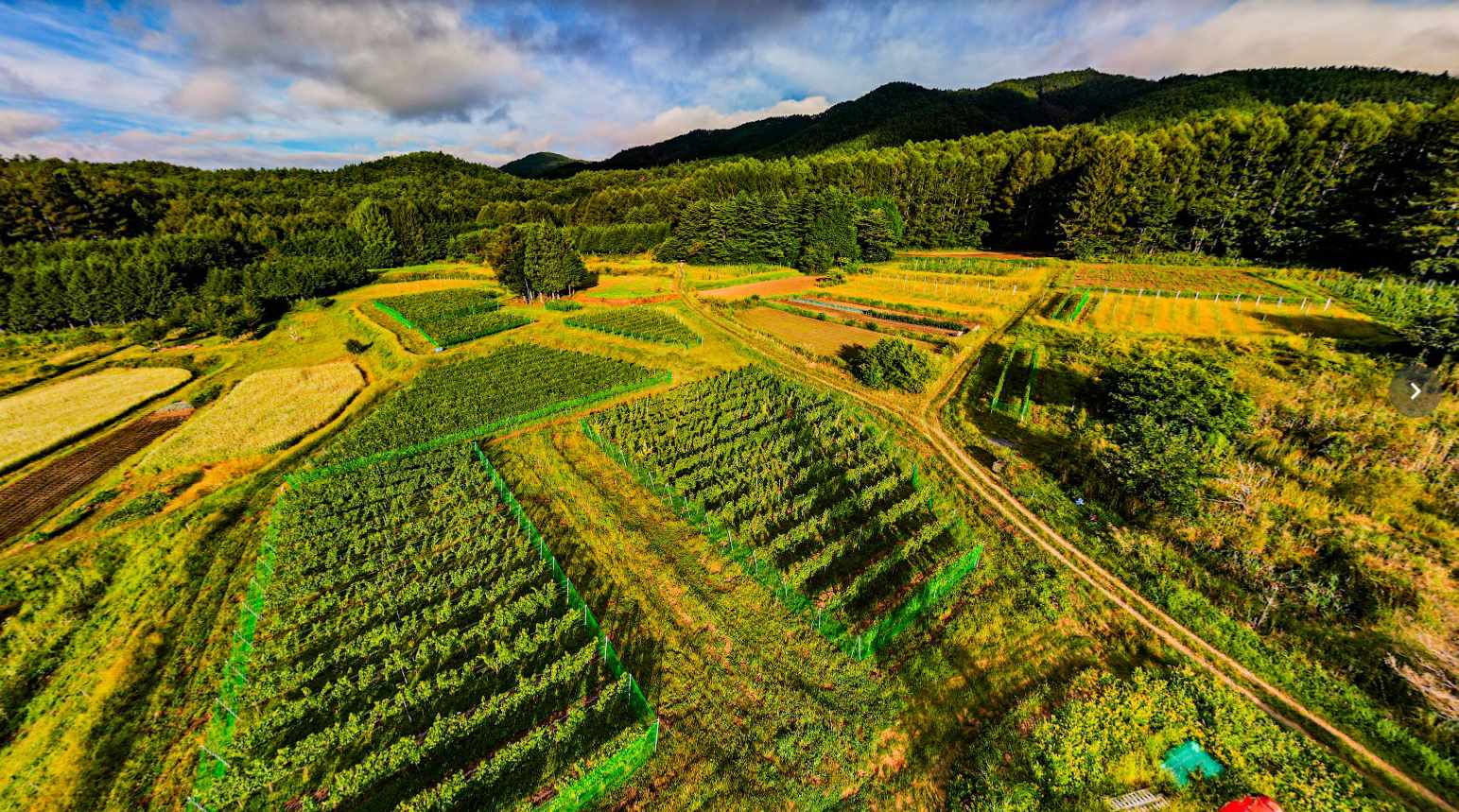
The vineyard covers approximately 3.5 hectares.
On the main south-facing slope, where land reclamation of abandoned farmland began in 2020, Pinot Noir and Chardonnay are primarily cultivated.
Ono Station sits at an elevation of 850 meters. Kirinoka, located in a basin extending to the left and right from there, sits at 830–870 meters—about 100 to 159 meters higher than Shiojiri (700 m).
“In the early morning, a vineyard shrouded in fog resembles San Francisco in summer. As the sun rises and time passes, the fog ascends as well. Likening that sight to smoke rising from incense, it is also expressed as 'Kirinoka' ,” he says.
Ono Station is located in Ono, Tatsuno Town, adjacent to Shiojiri City, Nagano Prefecture.
The winery is about a 15- to 20-minute drive from Shiojiri, and Ono Station on the Chuo Line Tatsuno Branch line is the closest station, situated just a 5-minute walk away.
For wine lovers for whom tasting is an absolute must, a winery accessible by train is a major attraction.
It is a 15-minute walk to the vineyard.
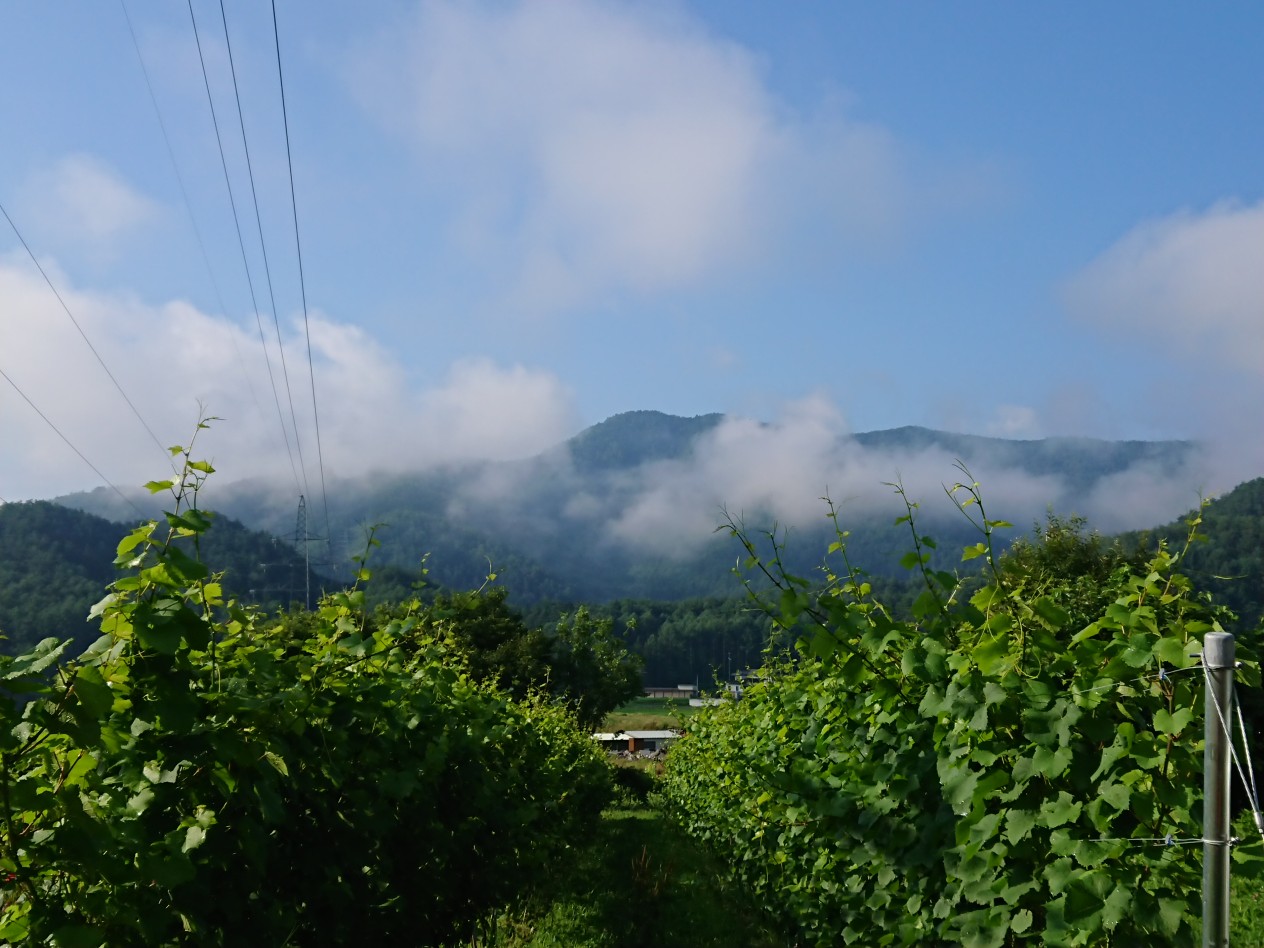
Nearby stands Ono Shrine, which has been known as a key transportation hub since the Heian period and boasts over a thousand years of history. It is the Ninomiya (second-ranked shrine) after Suwa Taisha.
Furthermore, inside the vineyard is a small forest containing a shrine. Having a torii gate within a vineyard is a rare sight indeed.
Being a basin, it is a location with significant temperature fluctuations between day and night. It is characterized by cool temperatures and low rainfall.
Lake Suwa is nearby, but because westerly winds blow through this area, moisture from the lake is directed eastward, leaving the vineyard unaffected.
To the west lie the Central Alps, which shed moisture from the westerly winds (air), making the region dry.
Under these conditions, creating rows perpendicular to the south-facing slope achieves high sunlight exposure and excellent drainage.
In Pinot Noir cultivation, where risks of gray mold and fruit splitting in autumn are high, good drainage is the single most important factor, meaning they considered not only soil conditions but also the direction of water runoff.
Additionally, this location is situated on the watershed between the Pacific Ocean and the Sea of Japan, inherently exposed to both northerly and southerly winds.
When a typhoon approaches the Pacific side during the autumn harvest season, there is concern that northerly winds might blow and knock off grape clusters, but Mount Kiritobo acts as a protective shield to minimize damage.
Kirinoka's Geology and Soil
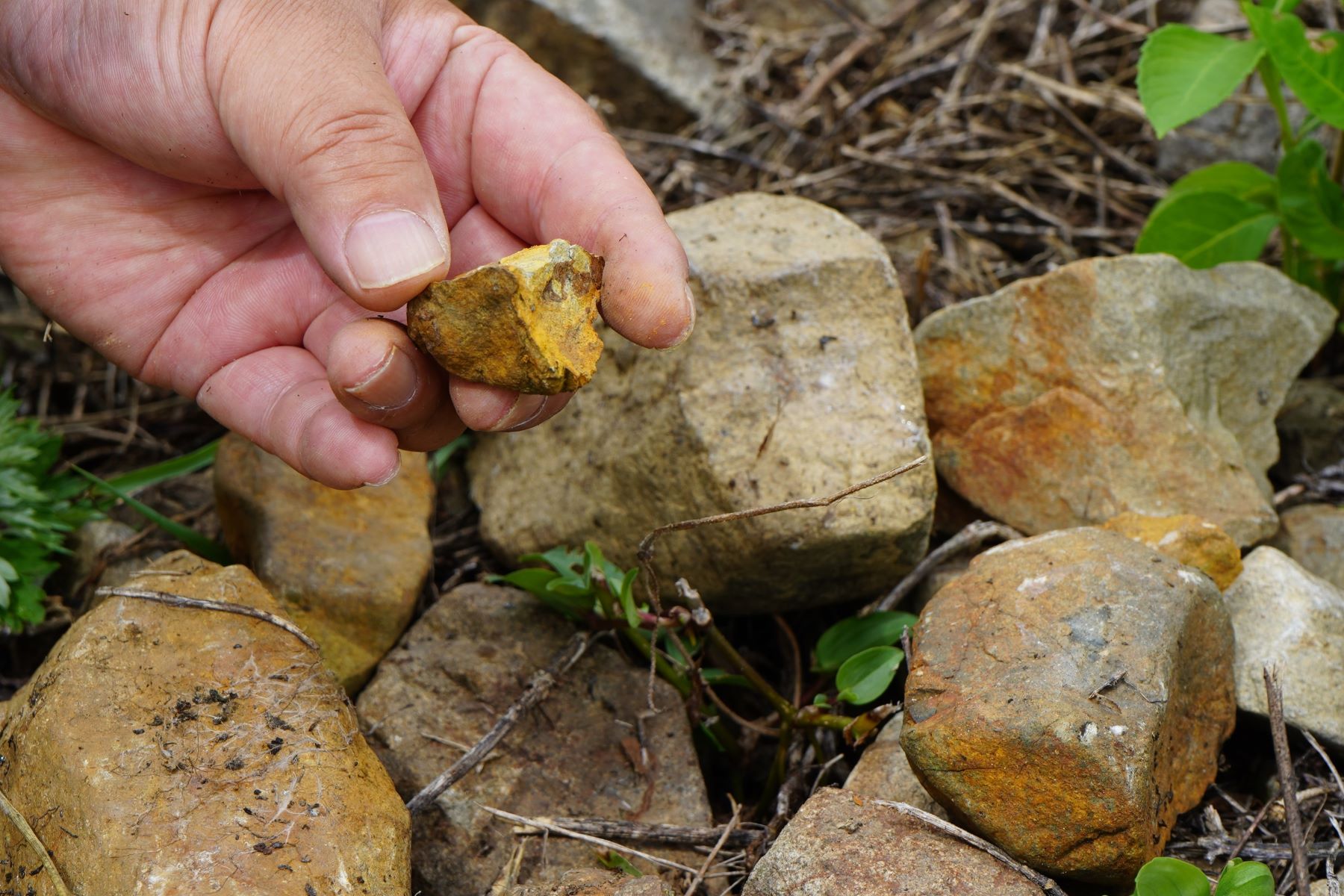
Topographically, it is an alluvial fan formed by relatively recent sediment washed down from the mountains.
Despite being far from the sea, the area features marine soil.
Its feature is low acidity, ranging from weakly acidic to weakly alkaline. Although volcanic ash sits on top, meaning the surface soil is not identical to the underlying geology, understanding the nature of this foundational soil is extremely important.
“Grapes cultivated in alkaline soil produce wine with higher acidity”—this is a point learned repeatedly from his lectures.
As for the specific advantages, a lower pH allows for a reduced amount of SO2, making microbial stability easier to achieve.
Furthermore, higher acidity enhances aging potential.
Additionally, during cold maceration, a pH below 3.5 is said to offer the advantage of easier anthocyanin extraction.
While high acidity is not necessarily always “good,” it demonstrates that this land was chosen based on chemical principles.
CHAPTER 03
Various Cultivation Initiatives
Cultivating Mainly Five Clones
Kirinoka's Pinot Noir clones were meticulously selected by him for this site to match the style of wine he aims to create.
The primary clone is 777, which yields wine with moderate tannins and an approachable character.
Others include MV6, 115, Aibel, and UCD5 (Pommard). Knowing the flavor profile of each clone well, he blends them when making the wine.
Sunflower Cultivation
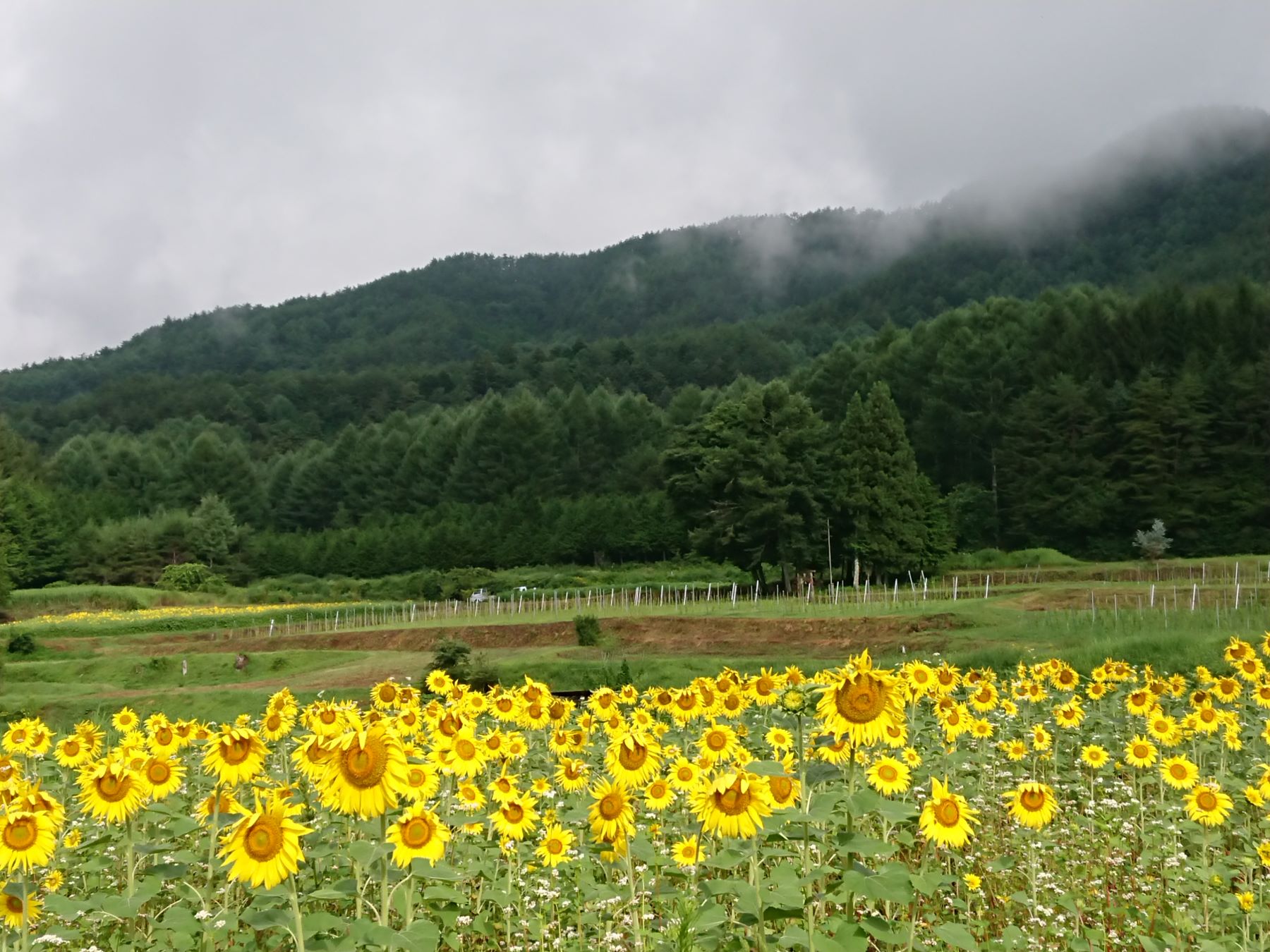
In fact, sunflowers are planted not only for their visual beauty, but because they serve a clear purpose.
Phosphate is an essential nutrient for plant growth.
Because Japanese soils are volcanic, they contain high levels of aluminum, which naturally binds with phosphorus in the soil.
Once bound, the valuable phosphate becomes difficult for plants to absorb.
Therefore, sunflowers are planted for their ability to return phosphate to the soil.
Have you ever seen mustard planted in the vineyards of Napa, California, or Burgundy?
Canola and mustard perform a similar function.
Dijon, for instance, is well known as a famous mustard-producing region.
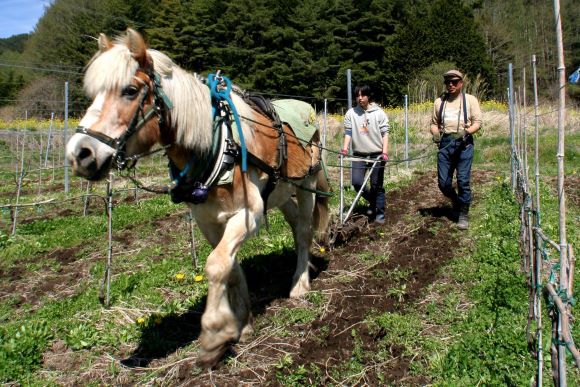
Horse Plowing
For about two days in the spring, we plow the vineyard with horses.
Compost added during the winter increases microorganisms, which naturally raises carbon dioxide levels as well. However, we want to introduce oxygen into the soil.
Walking the horses provides just the right amount of weight—something hard to achieve with a tractor—to soften the soil.
CHAPTER 04
Tasting Kirinoka Pinot Noir in a Challenging Comparative Tasting!
Now, it is finally time to taste the Kirinoka Pinot Noir born from the environment described above.
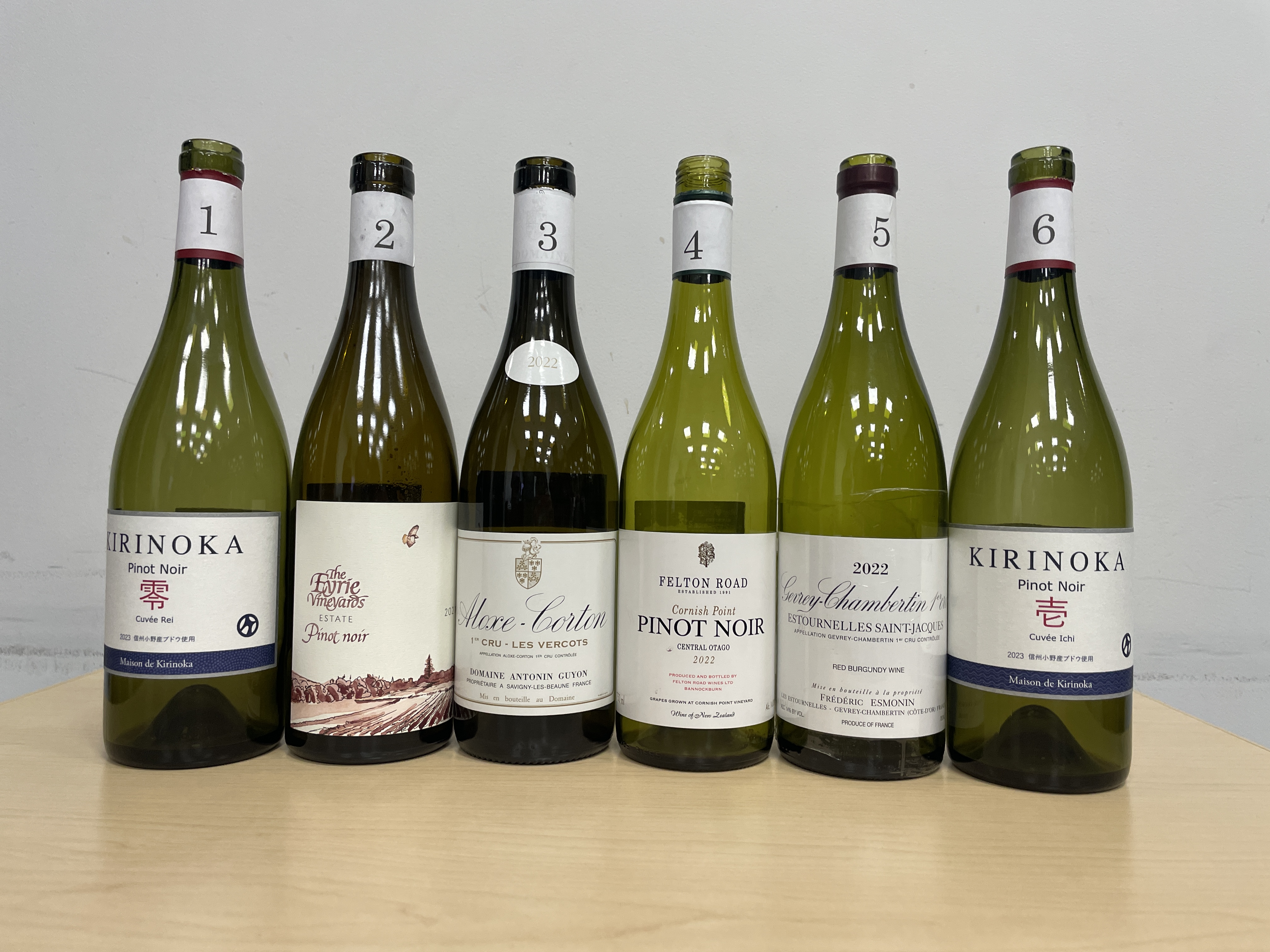
・Kirinoka Pinot Noir Zero
・Kirinoka Pinot Noir Ichi
These were made in almost the exact same way, with the only difference being the size of the barrel. Zero used 300L barrels and Ichi used 228L barrels, both 100% new oak.
The other four wines are listed below, making a total of six Pinot Noirs to compare:
・Aloxe-Corton 1er Cru Les Vercots
・Gevrey-Chambertin 1er Cru Estoumelles Saomt Jacques
・Estate Pinot Noir (Oregon North Willamette Valley Dundee Hills)
・Pinot Noir Cornish Point (South Island Central Otago Bannockburn)
Although served blind, I immediately recognized that two of the wines were Japanese wine.
This was not because of the commonly cited traits of "Japanese wine character" such as being "thin," "light," "wholesome," or having "umami."
Zero had aromas of dried leaves, dried flowers, red fruit, chocolate, cacao, and spices. It had a firm fruit flavor, along with a weight likely stemming from its complexity and alcohol content. At the same time, its acidity was sharp and poised.
Ichi initially had the most reserved aroma among all the wines, but over time, sweet aromas reminiscent of raspberries and blueberries emerged. The fruitiness was balanced, giving an overall very elegant impression, accompanied by vibrant acidity.
Although the only difference in winemaking was barrel size, the characters of these two items are completely distinct.
For anyone considering purchasing them, I recommend selecting carefully rather than assuming "they are probably almost the same."
Incidentally, although 2023 was excessively hot for Kirinoka, the grapes were said to be superb, reaching 24 Brix and a pH of 3.3.
In any case, achieving this level of quality in just the third year of producing Pinot Noir is remarkable.
Furthermore, considering that these vines will age and there will be more opportunities for trial and error in winemaking—such as adjusting the ratio of new oak—it seems this is a producer Pinot Noir lovers won't want to take their eyes off.

CHAPTER 05
In Conclusion
I reflected on why, alongside wines from France, Oregon, and New Zealand, I instantly knew which ones were Kirinoka.
To repeat, it was not because of the frequently cited traits of "Japanese wine character" like being "thin," "light," "wholesome," or having "umami." Nor was it because they "lacked volume."
While it is true that I am accustomed to drinking Japanese wine, out of all the bottles, they were the most "devoid of anything off-putting," "elegant," and "delicate," aligning with "the balance I prefer" and "what I anticipated."
When writing in a setting like this, personal preferences like "what I prefer" might ordinarily matter very little. However, it may simply be that it matched what I envisioned and expected of "what he expresses," based on the explanations of Kirinoka I have heard, the goals aimed for, the passion conveyed, and his character known through them.
This represents the "Kirinoka identity" at present.
The wine itself may well continue to evolve in the future.
If that is an "expression" of the terroir, the potential of the grapes, and the winemaker's philosophy, then one should certainly try a bottle from a man who has staked his life on creating a "one-of-a-kind Pinot Noir that can compete on the world stage."
About the author
Stories covering the same region, newest first.
- KNOWLEDGEWho Decides What Counts as “Fine Wine”? — The Question Posed by Asia’s No. 1 Sommelier Reeze Choi21 JUN 2026Miyuki Isobe
- WINE & DININGThe Manns Wines You Think You Know May Be Out of Date — From Volume to Quality: Where Manns Wines Is Today6 MAY 2026Miyuki Isobe
- WINERIES【Part 2】Hot Springs and Wine: A Stay-at-the-Winery Experience at Domaine de Yunohara3 APR 2026Miyuki Isobe
- WINERIES【Part 1】Hot Springs and Wine: A Stay-at-the-Winery Experience at Domaine de Yunohara2 APR 2026Miyuki Isobe
- WINERIESUnderstanding the Terroir of "Ono", Nagano Prefecture: KIRINOKA Maker's Seminar (Chardonnay Edition)14 SEP 2025Miyuki Isobe
- WINE & DININGZenkoji Special Viewing × Nagano Wine "Drops of God" Premium Dinner Tour Was Held!15 FEB 2025Miyuki Isobe
Wineries in this region
REGIONAL WINERIESRead → Know → VisitWineries in 長野県. Find somewhere to visit.