
WINERIES
【Part 1】Hot Springs and Wine: A Stay-at-the-Winery Experience at Domaine de Yunohara
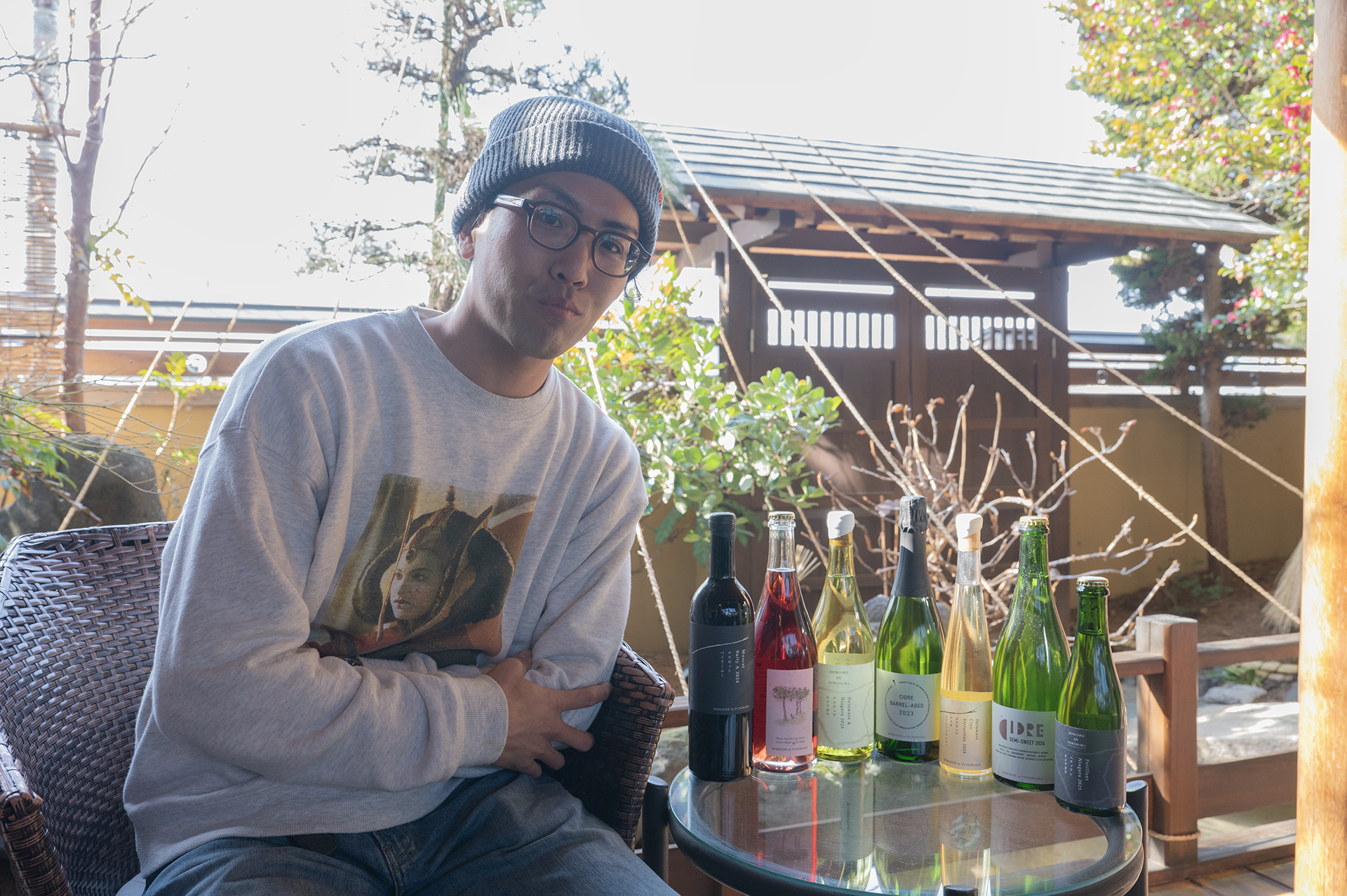
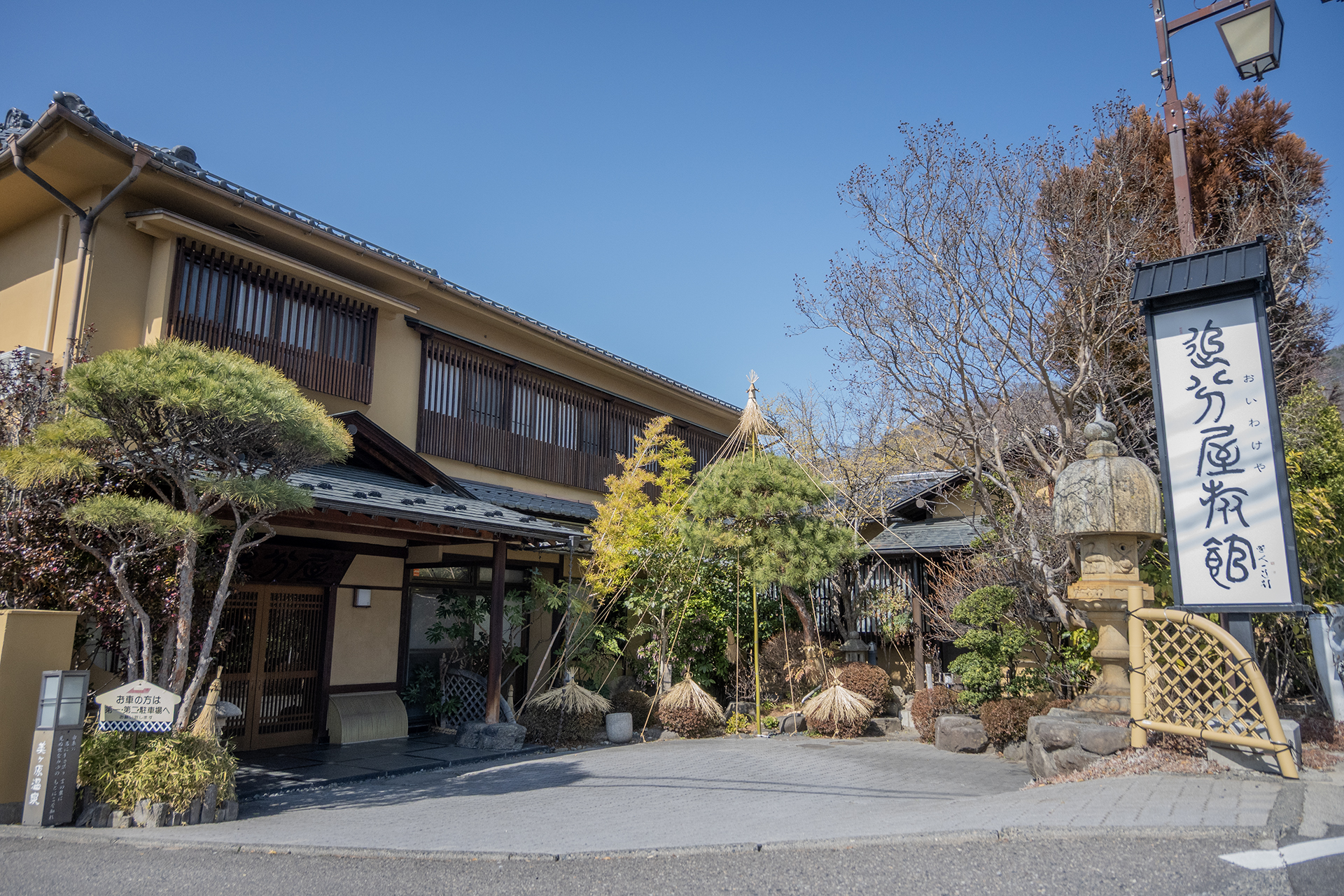
Oiwakeya Ryokan in the Utsukushigahara Onsen area of Matsumoto, Nagano, is a refined hideaway for adults: comfortable Japanese-modern rooms, meals featuring Shinshu food and drink, and soft, mildly alkaline hot-spring water. But did you know the ryokan also runs its own winery?
Contents
- 01A New Kind of Value in a Hot-Spring Resort with Roots in the Nara Period
- 02Easy Access — Just 20 Minutes by Bus from Matsumoto Station
- 03A Walk Through the Vineyard and a Tour of the Winery
- 04“Putting in the Work to Stay Classic” — Yoshida’s Approach to Winemaking
- 05A Ryokan × Winery Dinner Where Shinshu Ingredients Meet Wine
Oiwakeya Ryokan, in the Yamabe district of Matsumoto, Nagano, within the Utsukushigahara Onsen area, is exactly the kind of quiet hideaway that appeals to adults who appreciate quality: comfortable Japanese-modern rooms, meals featuring food and sake from Shinshu, and soft, mildly alkaline hot-spring water. But did you know that Oiwakeya Ryokan also operates a winery?
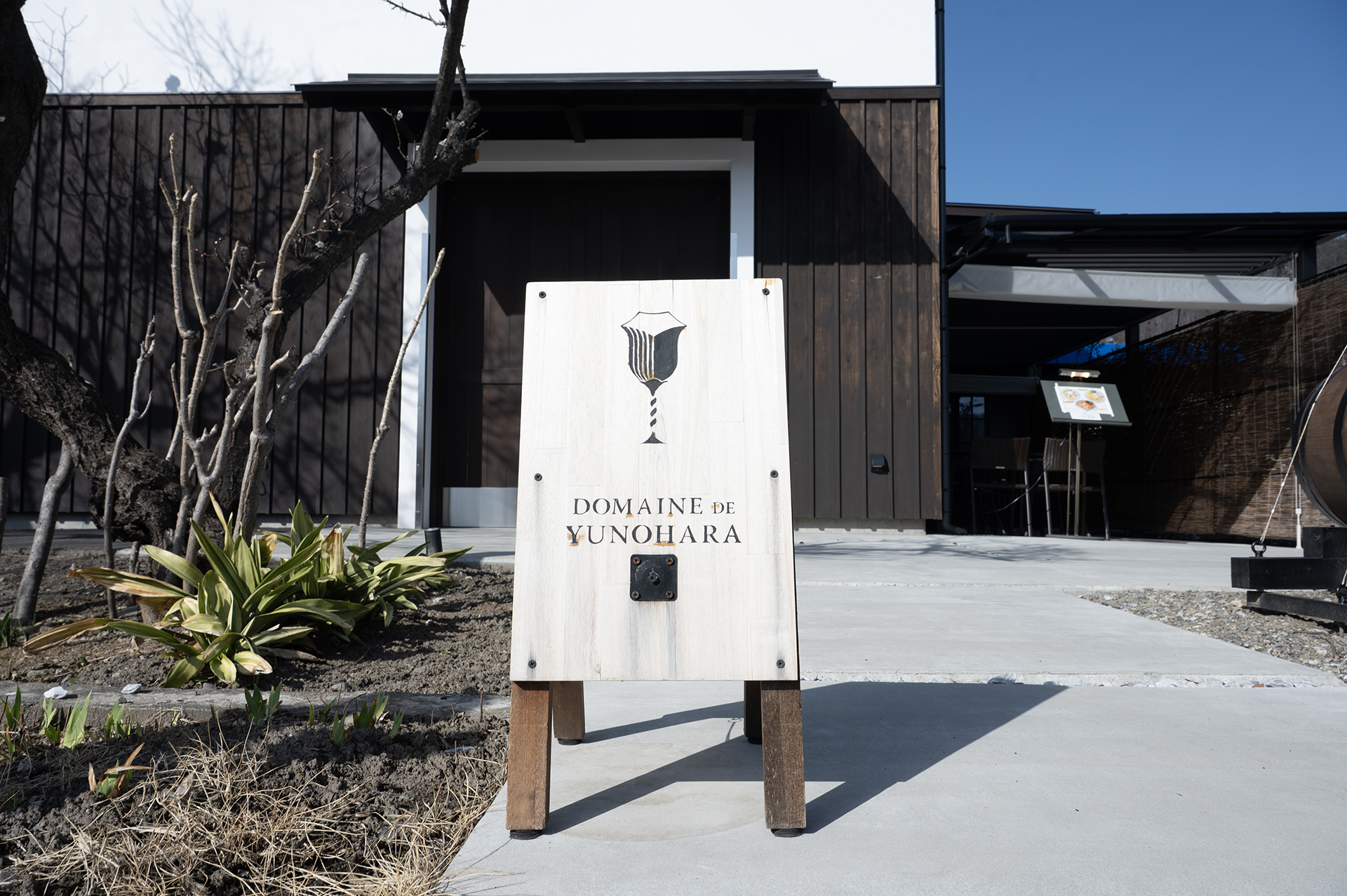
Domaine de Yunohara has its winery on the ryokan grounds, while its roughly one-hectare estate vineyard is planted with a wide range of grapes including Pinot Noir, Chardonnay, Cabernet Sauvignon, Merlot, Delaware, and Niagara.
In other words, this is a winery where you can stay overnight. And it comes with hot springs.
For wine lovers, that means no need for the familiar debate over who has to be the designated driver. It is a winery you can visit by car and stay at. And because it sits in a well-known hot-spring area, public transportation is convenient too.
CHAPTER 01
A New Kind of Value in a Hot-Spring Resort with Roots in the Nara Period
The history of these hot springs stretches back to the Nara period, and during the Edo period the area is said to have served as a place of convalescence for the lord of Matsumoto Castle.
The water is clear, colorless, soft on the skin, and retains warmth well; it also seems to have qualities that would please anyone looking for a beauty soak.
The new dimension added to this deeply warming hot-spring destination is precisely the winery called “Domaine de Yunohara.”
The winery built its production facility on the ryokan grounds and even established its own vineyard within the hot-spring district, growing grapes here as well. The project began during the pandemic, when guest numbers fell and President Hidetoshi Hanaoka began looking for a new source of value. The ryokan had already put considerable effort into serving Shinshu wine, and Yamabe itself is a place with deep roots in grape growing in Shinshu. Those factors led to the decision to begin making wine.
This time, I traveled by public transportation for a one-night, two-day stay to experience Domaine de Yunohara for myself.
CHAPTER 02
Easy Access — Just 20 Minutes by Bus from Matsumoto Station
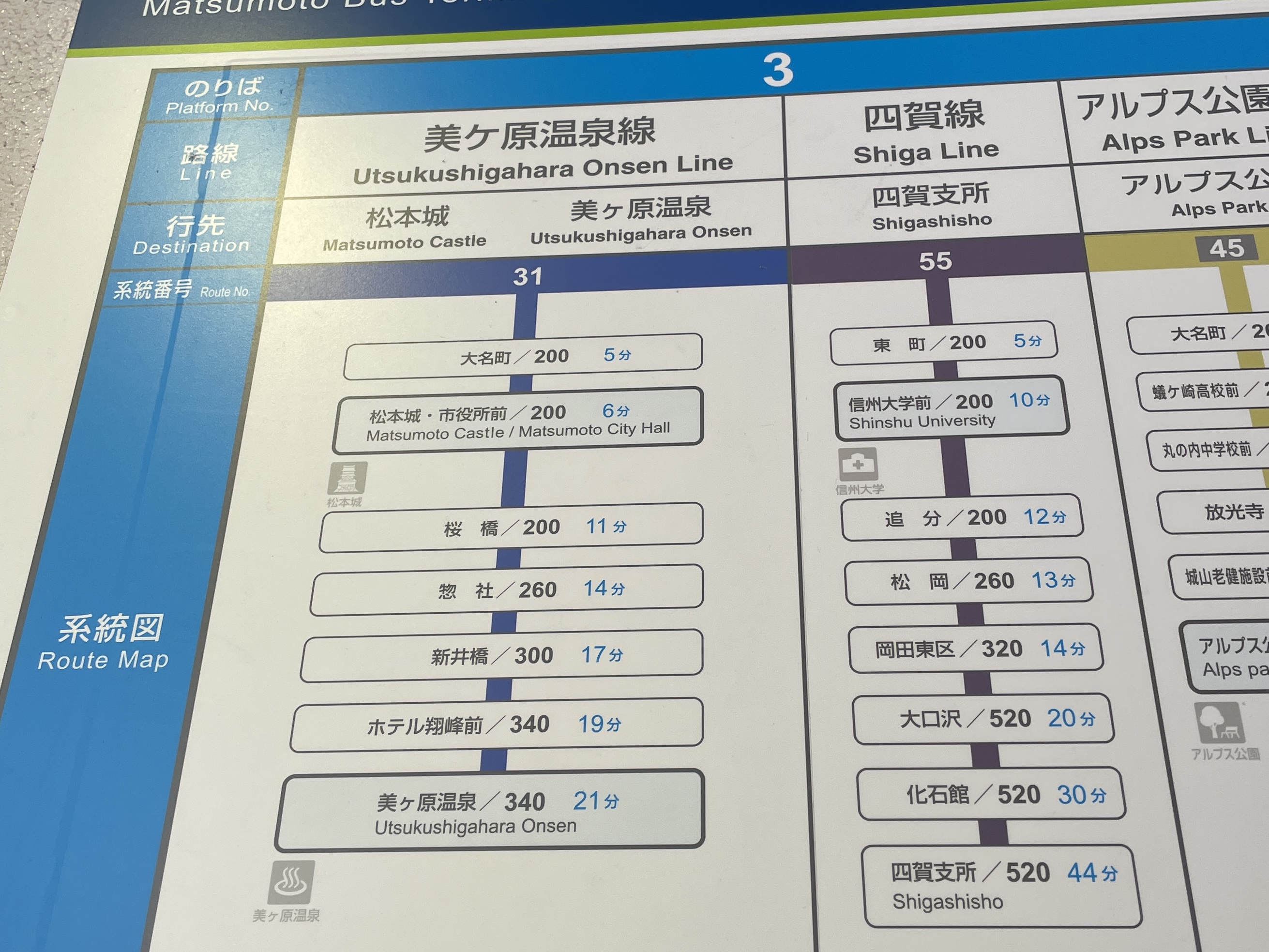
Although Yamabe feels wonderfully close to nature, the bus for Utsukushigahara Onsen gets you there from Matsumoto Station in only about 20 minutes. Leave through the station’s East Exit, also known as the Castle Exit, and board at the bus terminal in front of Alpico Plaza. It is the type of bus where you take a numbered ticket when you get on.
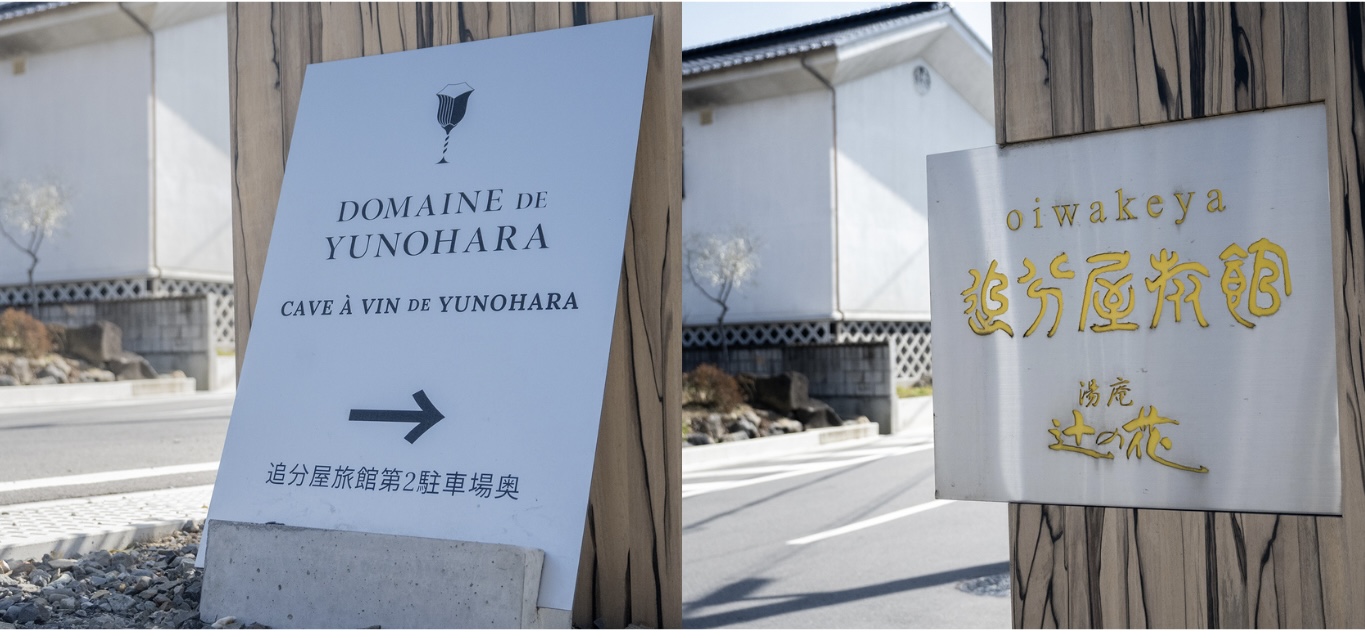
Get off at the Utsukushigahara Onsen bus stop and walk for a few minutes through air that already feels distinctly satoyama. Soon, Oiwakeya Ryokan comes into view. The stylish sign and Japanese-modern entrance make it easy to recognize.
CHAPTER 03
A Walk Through the Vineyard and a Tour of the Winery
After checking in, my first recommendation is to take a walk through the vineyard.
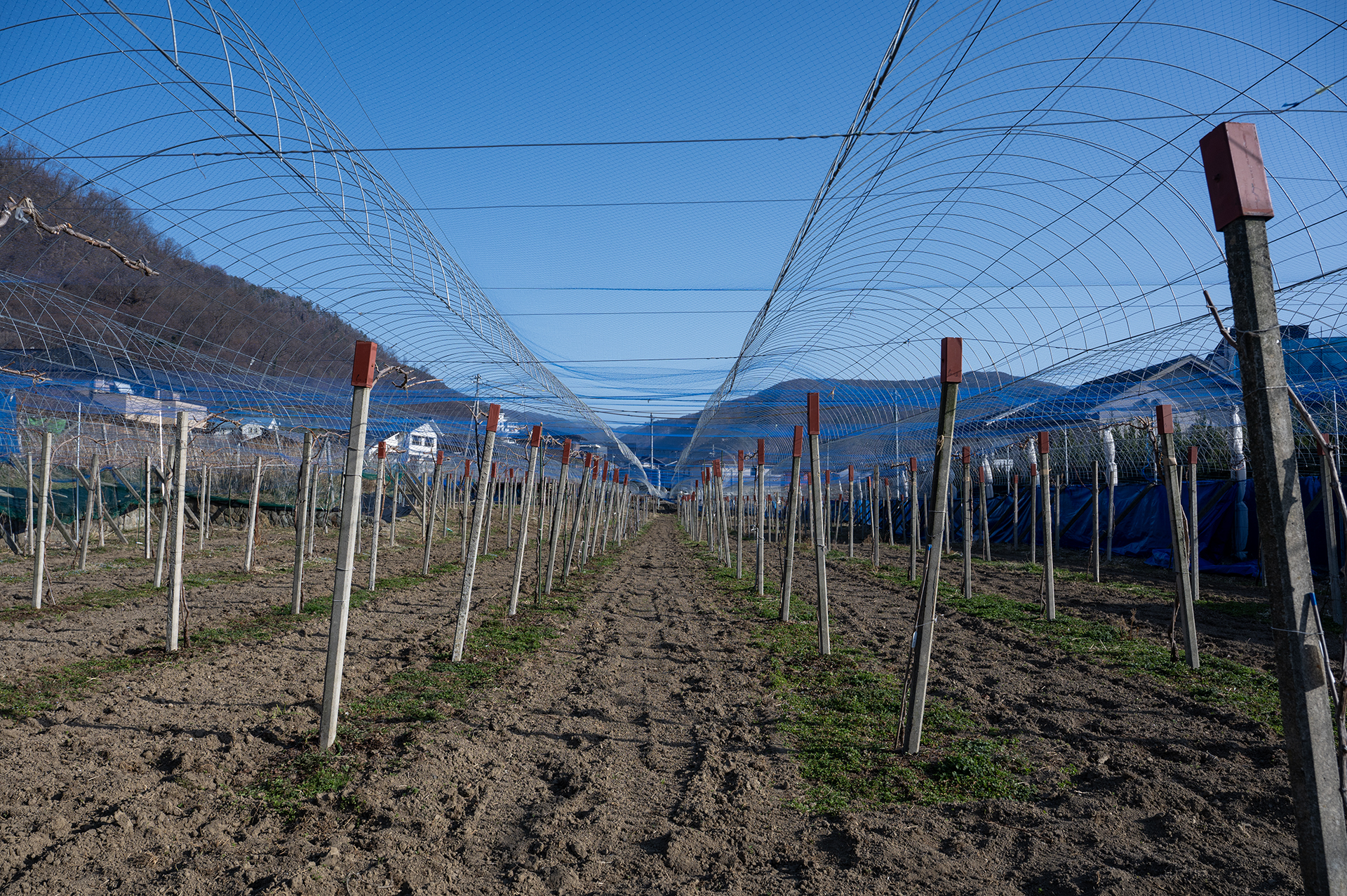
Walk five or six minutes from the ryokan and vineyards suddenly appear naturally in the landscape, with Chardonnay and Pinot Noir among the varieties growing there. The training method is not uniform: pergola and vertical trellis systems are selected and used according to what best suits each grape variety.
Compared with Shiojiri, where sandy, gravelly soils are common, this area is surrounded by forest and has very hard clay soil. Yoshida hopes that this firmness encourages the vines to push their roots deeper.
Another particularly intriguing point is the possible influence of geothermal heat in a hot-spring area. “The extreme summer heat probably plays a part too, but I feel the geothermal heat may be bringing harvest dates forward,” Yoshida told me.
During winter, the soil is also dug deeply and carefully amended with organic matter — another sign of the meticulous work going into these vineyards.
CHAPTER 04
“Putting in the Work to Stay Classic” — Yoshida’s Approach to Winemaking
After the vineyard, I was shown around the winery. For head winemaker Kento Yoshida, the key is simple: “Do nothing unnecessary. Express the taste of the grapes as they are.”
But the more you listen, the clearer it becomes that “doing nothing unnecessary” does not mean taking shortcuts. There is a great deal of work involved. The Delaware currently in production, for example, is being made as a skin-fermented orange wine. It was barrel-fermented with wild yeast and has an appealing sweet-and-tart aromatic character. I was even given the chance to taste a Pinot Noir that was still in the middle of aging. It already showed elegant, floral perfume and lively acidity, and I am very curious to see how it develops from here. (Release is planned for this winter.)
The same care and labor go into the cider. Cider Barrel Aged 2023 won a silver medal at the American GLINTCAP competition. Five apple varieties are blended and aged in barrel for 12 months, followed by a secondary fermentation in bottle and disgorgement. It even goes through dosage — a step that is still unusual in Japan even for wine. And yes, it is very good.
CHAPTER 05
A Ryokan × Winery Dinner Where Shinshu Ingredients Meet Wine
After touring the winery, take your time warming up in the hot spring before heading to dinner. The kaiseki course, served in a private dining room from the opening dishes through dessert, makes generous use of ingredients from Shinshu, and the Japanese-modern table setting is beautiful as well. At a ryokan with its own winery, naturally, expectations for the pairings are high.
We began with a rosé sparkling wine from USHIYAMA VINEYARD. Its sharply defined acidity is particularly striking and immediately wakes up the appetite. Take venison heart, for example. Against its iron-rich, gamey character, the acidity and bubbles of the rosé sparkling wrap around the dish and create an enjoyable marriage.
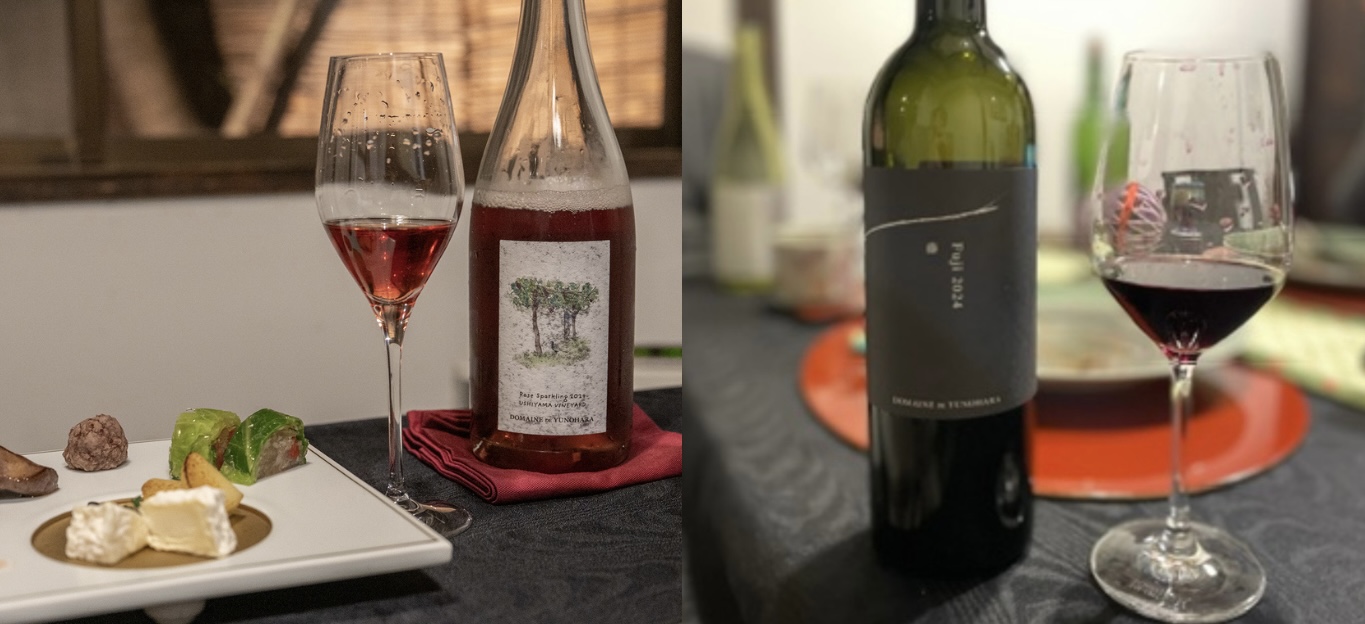
For the main dish of Shinshu beef braised in red wine, the pairing was “Fuji 2024,” a red made from 100% wild grapes. Its acidity remains clearly defined, while barrel aging brings a rounded texture; together, those qualities lift the savory depth of the meat.
In addition to the kaiseki course itself, guests can apparently order an extra “marriage set” to explore the wine pairings even further. In French cuisine, this kind of additional pairing experience is often built around cheese, so it is especially interesting to see the idea expressed through Shinshu ingredients. Better still, the marriage set changes with the seasons and is developed through repeated tasting sessions by the sommeliers and producers. It is a professional proposal worth experiencing for yourself.
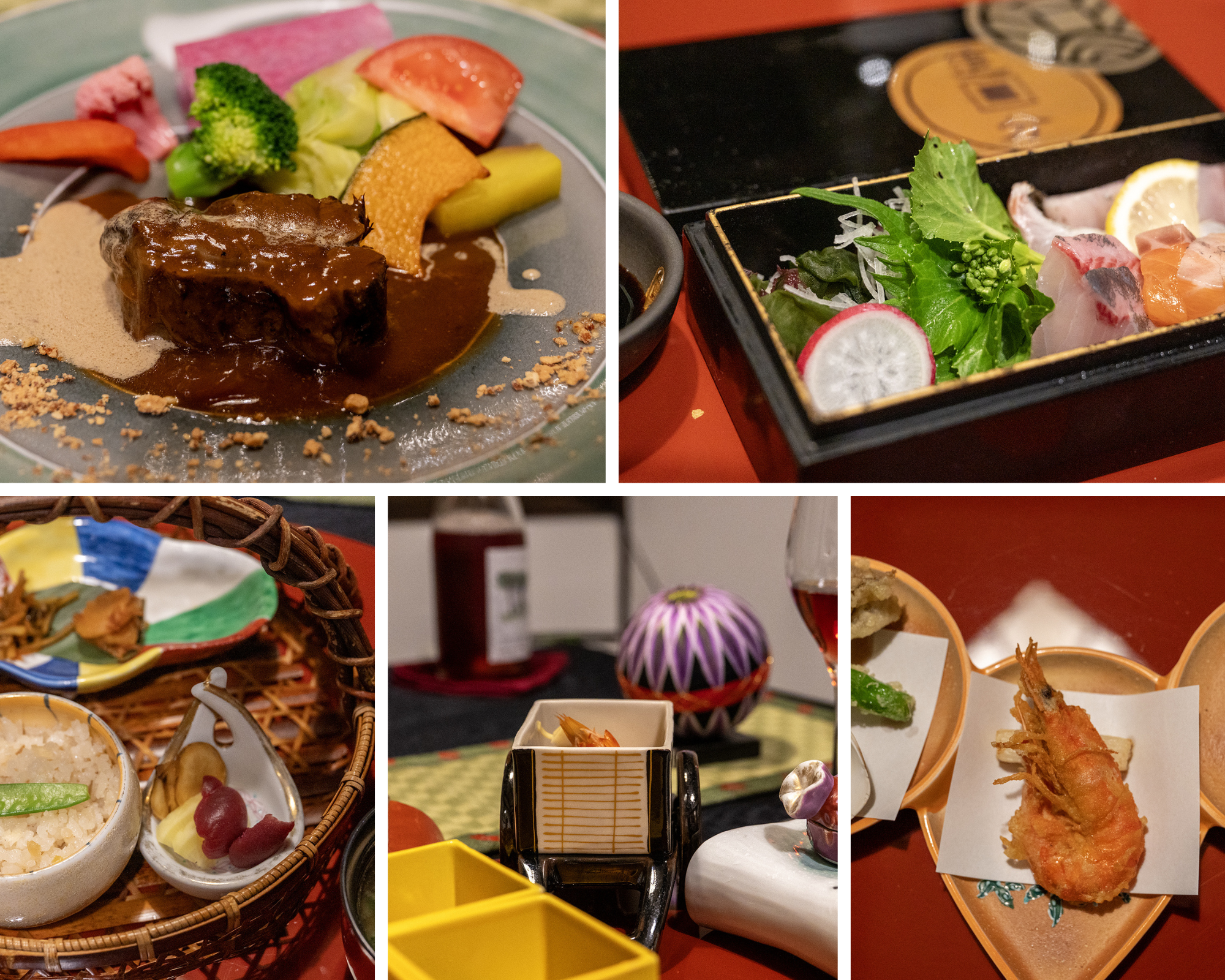
The kaiseki course is generous on its own, and adding the marriage set will leave you very well fed. But if you still feel you have not had quite enough to drink, you can buy Shinshu wine from the wine corner and continue enjoying it in your room. And when you return after dinner, a small late-night snack is waiting so you can enjoy a final nightcap.
There was so much to experience that day one alone has already taken me past 2,000 Japanese characters. The journey continues in Part 2.
RELATED STORY【後編】温泉とワイン、滞在型ワイナリー「ドメーヌ・ド・ユノハラ」体験レポートInformation is current as of our visit in March 2026. For details and reservations, please contact the ryokan or winery directly.
Oiwakeya Ryokan website
https://www.oiwakeya.com/
Domaine de Yunohara
https://shop.oiwakeya.com/?srsltid=AfmBOopZMIX4Dx6cRdXeealwuG8NNNBZqY-EyfT_EX80IHxENqJ8tRXC
About the author
Stories covering the same region, newest first.
- KNOWLEDGEWho Decides What Counts as “Fine Wine”? — The Question Posed by Asia’s No. 1 Sommelier Reeze Choi21 JUN 2026Miyuki Isobe
- WINE & DININGThe Manns Wines You Think You Know May Be Out of Date — From Volume to Quality: Where Manns Wines Is Today6 MAY 2026Miyuki Isobe
- WINERIES【Part 2】Hot Springs and Wine: A Stay-at-the-Winery Experience at Domaine de Yunohara3 APR 2026Miyuki Isobe
- WINERIESUnderstanding the Terroir of "Ono", Nagano Prefecture: KIRINOKA Maker's Seminar (Chardonnay Edition)14 SEP 2025Miyuki Isobe
- WINE & DININGZenkoji Special Viewing × Nagano Wine "Drops of God" Premium Dinner Tour Was Held!15 FEB 2025Miyuki Isobe
- WINERIESCan a World-Class Pinot Noir Be Born? — Kirinoka Vineyards & Winery —6 JAN 2025Miyuki Isobe
Wineries in this region
REGIONAL WINERIESRead → Know → VisitWineries in 長野県. Find somewhere to visit.