
WINE & DINING
Cheesemaking Gentle on the Environment, Animals, and People: Mirasaka Fromage
Hello, everyone. I am Miyuki Isobe, "Wine, Food, and People" (wine-shoku-nin). Japanese wine is now produced all across the country, with remarkable advances in cultivation and winemaking techniques, and as a food pairing for it, Japanese natural cheese has also recently received high…
Contents
Nowadays, Japanese wine is produced across the country, with remarkable advancements in both cultivation and winemaking techniques. As a food pairing, Japanese natural cheese has also been gaining high acclaim in global competitions in recent years, developing much like Japanese wine.
The fact that you can enjoy the terroir of various regions is another way it closely resembles wine.
The other day, in Mirasaka, Miyoshi City, Hiroshima Prefecture,at the cheese workshop "Mirasaka Fromage,"I had the pleasure of paying a visit.
As a workshop that produces numerous award-winning cheeses at competitions both in Japan and abroad, many of you are likely already familiar with them.
To tell you the truth, I love their cheeses and yogurts so much that I order them by mail without fail every single year.
Having studied cheese and regularly enjoying natural cheese paired with wine, I visited feeling relatively well-prepared with prior knowledge. Yet, standing there in person, I was deeply moved by the environment where the cows and goats live and by Mr. Matsubara's commitment, and I felt truly comforted.
I would love to share this experience with all of you who love wine and cheese.
Please be sure to watch the video message from Mr. Masanori Matsubara, representative of Mirasaka Fromage, mountain dairy farmer, and cheesemaker.
CHAPTER 01
Dedication to Mountain Dairy Farming
One of the greatest characteristics of Mirasaka Fromage israising cows and goats through mountain dairy farming (yamachi rakunou) and crafting cheese from their milk.
It is a complete fermier style (farmhouse cheesemaking).
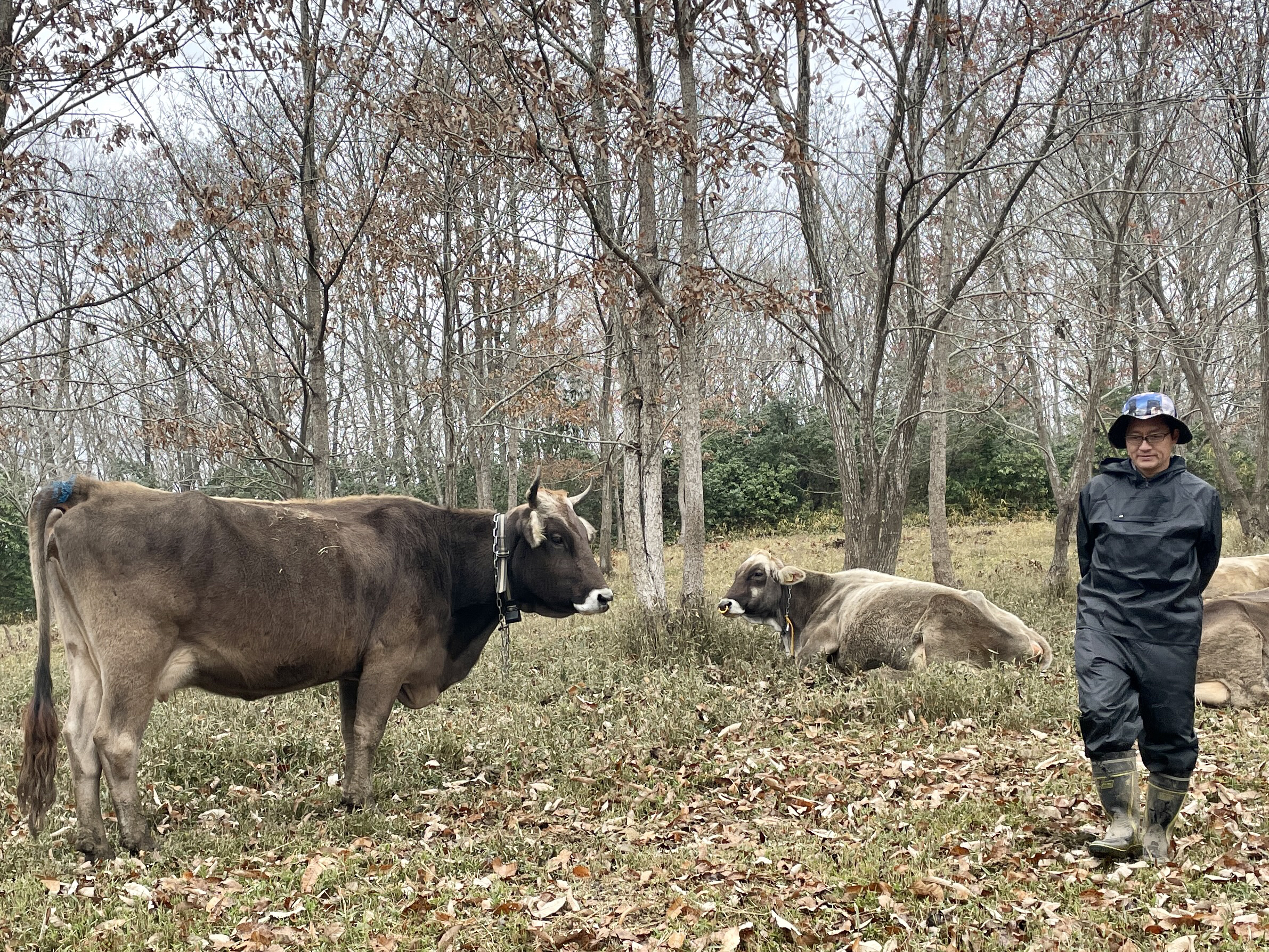
Mountain dairy farming refers to raising livestock through natural mountain grazing. Their roughly 120 cows and goats are never tied up in barns; instead, they live on the vast, gently sloping mountains of Mirasaka, freely grazing on grass, walking through the hills, resting in the shade of trees, and spending their days at leisure.
Perhaps because of this, they are extremely gentle. They do not run away when you approach, and even when they walk up to you, strangely enough, you feel no fear whatsoever.
What I also noticed was the difference in scent.
When visiting a farm, one usually encounters that distinct smell mixed with barn waste and animal odor. Here, however, there was no such odor coming from the cows or goats at all.
They relieve themselves right on the mountain pastures. The waste decomposes astonishingly fast, so the odor never fills the air.
Their waste decomposes to become nutrients for the soil, growing fresh grass for feed, which then enables the cows and goats to yield delicious milk.
It is a truly complete circular dairy farming system.
Nowadays, eco-friendly practices and SDGs have brought attention to agriculture that considers the global environment and ecosystems. Yet as Mr. Matsubara says, "Originally, a hundred years ago, all dairy farming was in this style."
When you think about it, this may simply be what is naturally meant to be.
CHAPTER 02
Before Mr. Matsubara Started Mountain Dairy Farming
Even though this was the natural way long ago, only about 2% of all dairy farming in Japan today practices natural grazing.
About 67% of Japan's land is forested.
It is calculated that if even just 10% of that forest land could be used for grazing, cows and goats could live happily, yielding high-quality, stress-free milk worth around one trillion yen.
That said, starting mountain dairy farming out of nowhere in Japan is no easy task.
Capital is required to purchase mountains and livestock, and to raise that capital, a proven track record is needed.
To turn his vision of mountain dairy farming into reality, Mr. Matsubara studied dairy farming in the United States and Australia before traveling to France to train in cheesemaking.
Upon returning to Japan, he opened Mirasaka Fromage, bought mountain land and cattle, and launched his long-cherished mountain dairy farm.
Stepping onto Mr. Matsubara's farm, I could feel how quiet it was and how peacefully and happily the animals live, which brought a profound sense of calm to my own heart.
In this video footage as well, you can see cows wandering naturally into the frame, showing how freely they live without fear of humans.
By the way, as I was filming, a few curious cows gathered around me, keeping a very close watch.
CHAPTER 03
100% Grass-Fed Milk
Raised here are Brown Swiss cattle and Alpine goats.
Both aredairy breeds native to the mountainous regions of Europe.
What is particularly remarkable is that they are not fed concentrated feed (high-protein grain-based feed).
"Giving them concentrated feed taxes their bodies to yield a lot of milk temporarily, but it only shortens the animals' lifespans. Raising them purely on grass results in very small milk yields, but we can treasure their bodies and allow them to live long, happy lives,"says Mr. Matsubara.
One can truly feel his deep love for the animals.
Indeed, no matter how delicious it might be, even we humans couldn't eat short ribs or fatty tuna every single day.
That precious grass-fed milk is rich and of extraordinary quality.
It makes complete sense that the cheeses and yogurts made from it are so delicious and gentle in flavor.
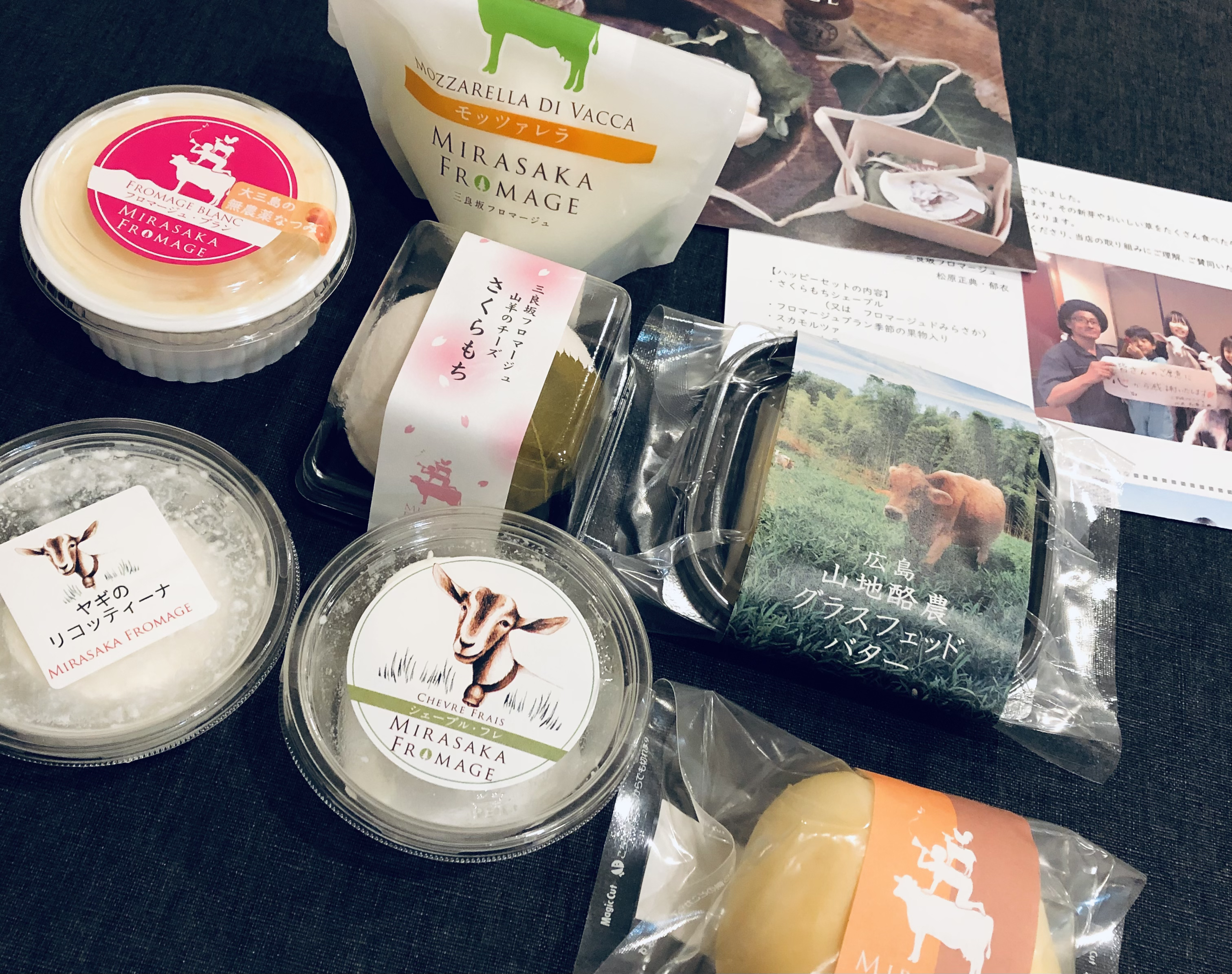
【Mirasaka Fromage Grass-Fed Butter】
https://mfromage.net/items/5ef95d7bdf62a92e6cba9215
While their cheeses are wonderful, what I personally consider a hidden masterpiece is this grass-fed butter.
I order it periodically along with cheese; it melts smoothly, feels light, and delivers rich milky umami all the way through the finish—a truly moving creation that amazed me by how different it was from any butter I had tasted before.
I feel that butter crafted from the milk of cows raised in such a healthy environment is completely stress-free for the person enjoying it as well.
Because it is so delicious, I feel it would be a waste to use it in cooking; I exclusively place it on thick slices of toast to fully savor the flavor of the butter.
CHAPTER 04
Cheese Flavors That Express the Four Seasons
With cows and goats raised in such a rich natural environment, does their milk change with the seasons?
As explained in the video, the naturally growing vegetation differs entirely across seasons—fresh spring shoots and young grass, summer grass, autumn and winter fallen leaves—so the quality of milk from cows and goats eating them varies accordingly.
And the cheeses made from that milk naturally express a diverse range of flavors throughout the four seasons.
While mass-market products are typically made to maintain a consistent taste whenever you eat them, farmhouse (fermier) cheeses offer the opposite fascination—the joy of embracing the subtle variations of flavor that follow the natural course of nature.
It makes you want to taste them with every passing season.
In addition, Mr. Matsubara crafts cheeses designed to celebrate special events.
For instance, in the year the Hiroshima Carp won the league championship, a red cheese made with sweet-and-spicy chili peppers was sold, and at Christmas, customers could enjoy a "Käse Stollen" created in collaboration with a German pastry chef.
CHAPTER 05
Awards at Competitions and Beyond
As mentioned at the beginning, Mirasaka Fromage's cheeses have won numerous awards at competitions both in Japan and internationally.
Regarding these honors, cheesemaker Mr. Matsubara says, "I'm grateful for the awards. Cheese is a luxury item and comes with a corresponding price tag. That is why I believe we must create products worthy of that value. Of course, I want people to enjoy our cheese, but I also hope it serves as an opportunity for more people to take an interest in the current state of Japanese dairy farming, to realize that this style of farming exists in regional areas, and to discover the charm of natural cheese."
Today, he frequently conducts training for new farmers and receives consultations regarding mountain lands that have become difficult to manage.
This workshop visit filled me with excitement for a future where Mr. Matsubara's style of dairy farming—kind to the environment, animals, and people alike—spreads to more people, creating more opportunities to experience true, meaningful richness.
【Award-Winning Cheeses】
https://m-fromage.com/free/awards
【Mirasaka Fromage】
https://m-fromage.com/
★ Bonus ★
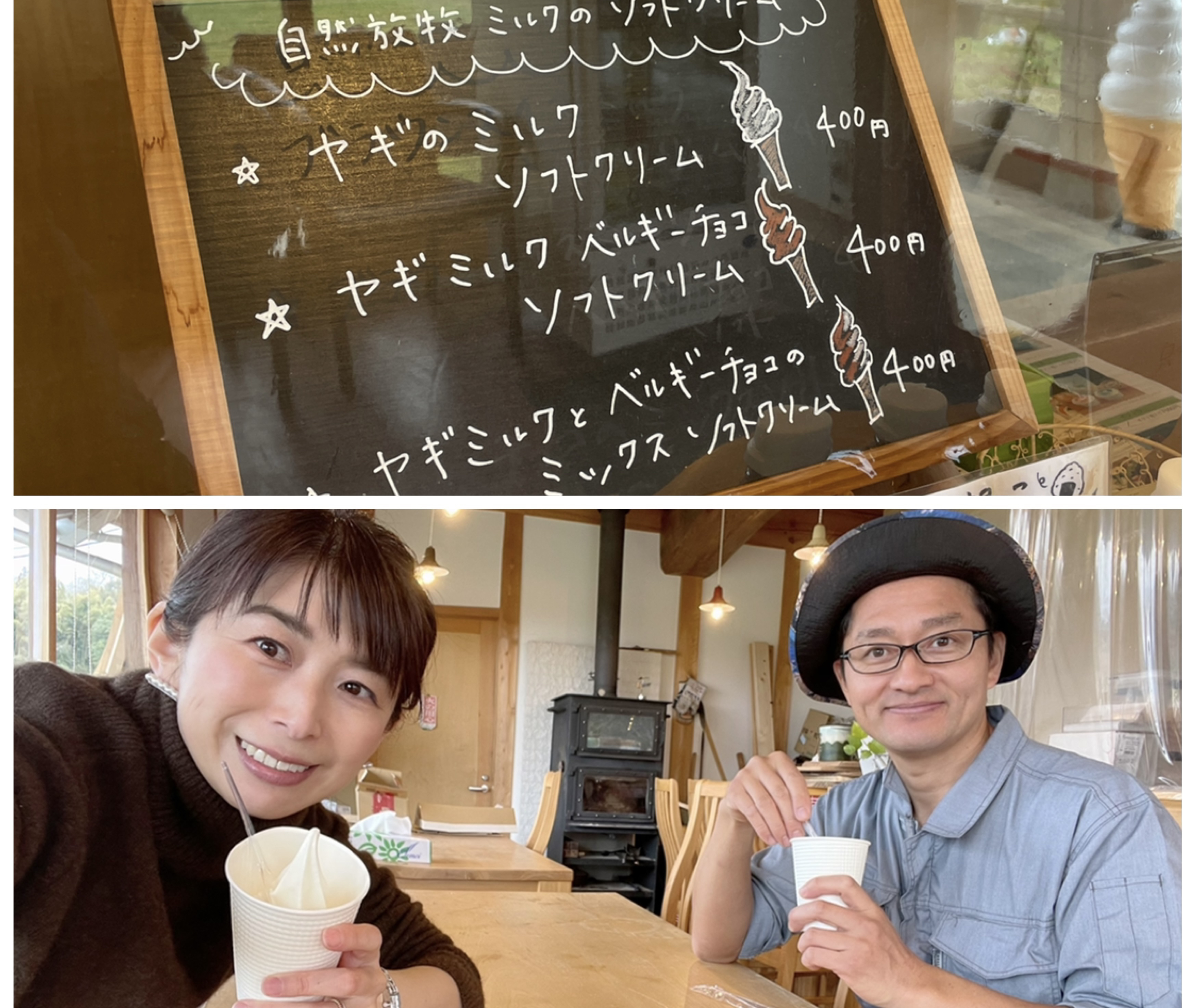
In addition to cheese and yogurt, the shop sells fresh goat milk soft-serve ice cream that you can enjoy right on the spot.
It had none of the characteristic odor of goat milk, offering a delightfully sweet, rich, and refreshing milky flavor.
Apparently, making ice cream from freshly milked milk eliminates the goat odor.
However, when made into cheese, the goat aroma emerges once again. How fascinating.
Thank you for the wonderful treat!
About the author
Miyuki Isobe
Stories covering the same region, newest first.
- KNOWLEDGEExploring the History of Japanese Wine: The Beginnings of Japanese Wine in Ibaraki and Yamanashi4 JAN 2023Miyuki Isobe
- WINE TOURISMStay at a Winery! Cave d'Occi "TRAVIGNE" Stay Report ~ A Journey to the Niigata Wine Coast ~ [Part 2]3 APR 2022Miyuki Isobe
- WINERIESNo Car Needed! Tour 5 Wineries on Foot! ~A Journey to the Niigata Wine Coast~ [Part 1]22 MAR 2022Miyuki Isobe
- WINE & DININGEnjoying the Ultimate Japanese Wine Pairing at Gaienmae's JULIA8 FEB 2022Miyuki Isobe
- WINERIESAn Old Yet New Winery: Visiting Iwanohara Vineyard9 AUG 2021NORIZO
Wineries in this region
REGIONAL WINERIESRead → Know → VisitWineries in 新潟県. Find somewhere to visit.