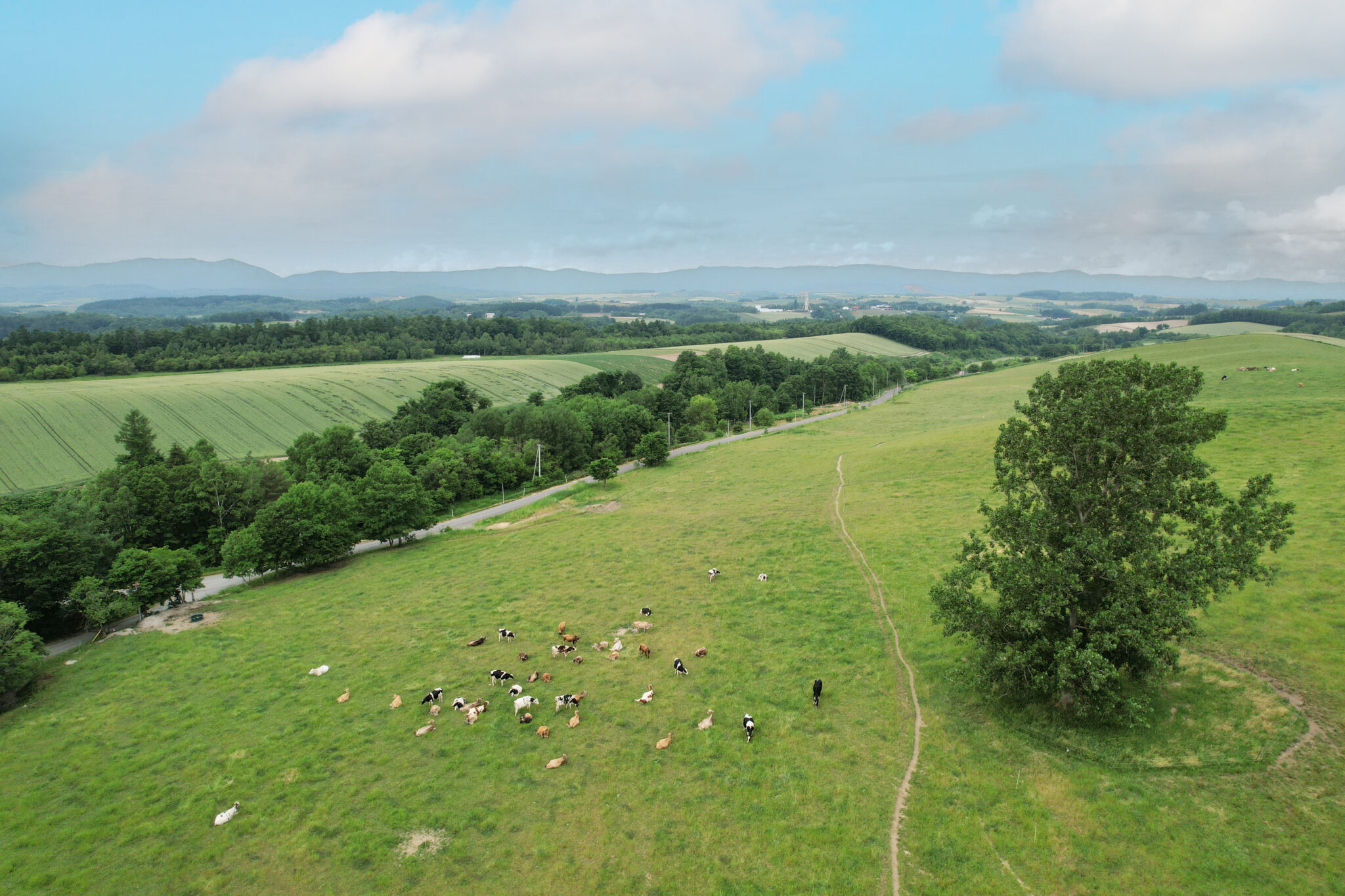
Mercian Corporation announced its "Japanese Wine Support Business" on April 20. The first practical example of this initiative is a new undertaking taking shape in Biei, Hokkaido.
It is a vineyard development carried out jointly by Biei Farm, renowned for its pasture-based dairy farming and cheese production, and Mercian.
The details of the project were shared in a talk session format featuring Mr. Takahiro Nishikawa, Representative Director of Biei Farm Co., Ltd., and Mr. Takayuki Tamura of the Japanese Wine Support Business.
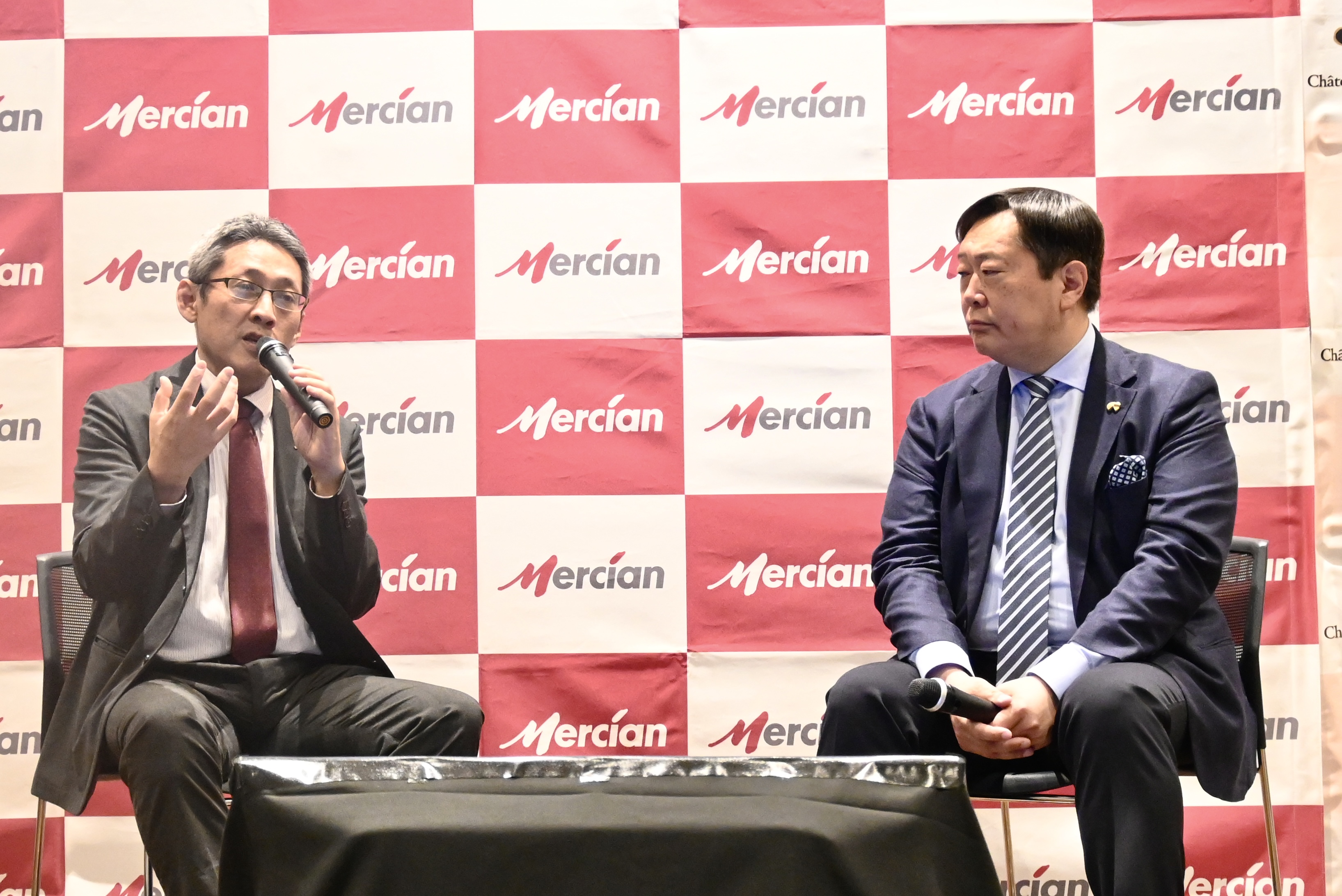
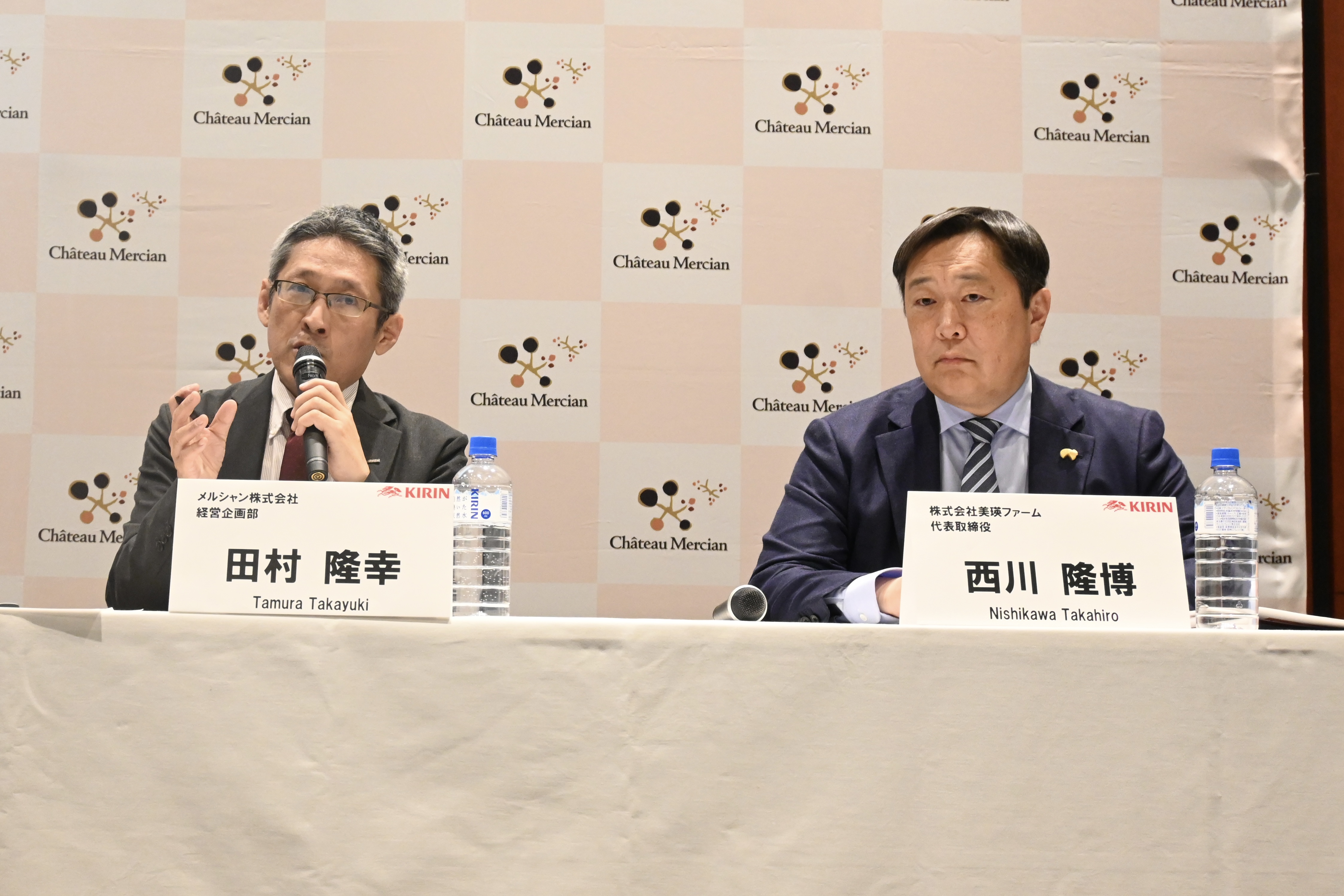
(From left) Mr. Takayuki Tamura of Mercian Corporation, and Mr. Takahiro Nishikawa of Biei Farm Co., Ltd.
VIRON's baguettes, Biei Dairy Farm's cheese: a commitment to creating the best products from the best ingredients
Mr. Takahiro Nishikawa, who heads Biei Farm, is also the business operator behind "VIRON," the upscale boulangeries with locations in Shibuya and Marunouchi.
When it comes to VIRON, it is famous for its high-quality baguettes made using 100% French "Rétrodor" flour and strict attention to water hardness, reflecting Mr. Nishikawa's philosophy: "Create the best things from the best materials."
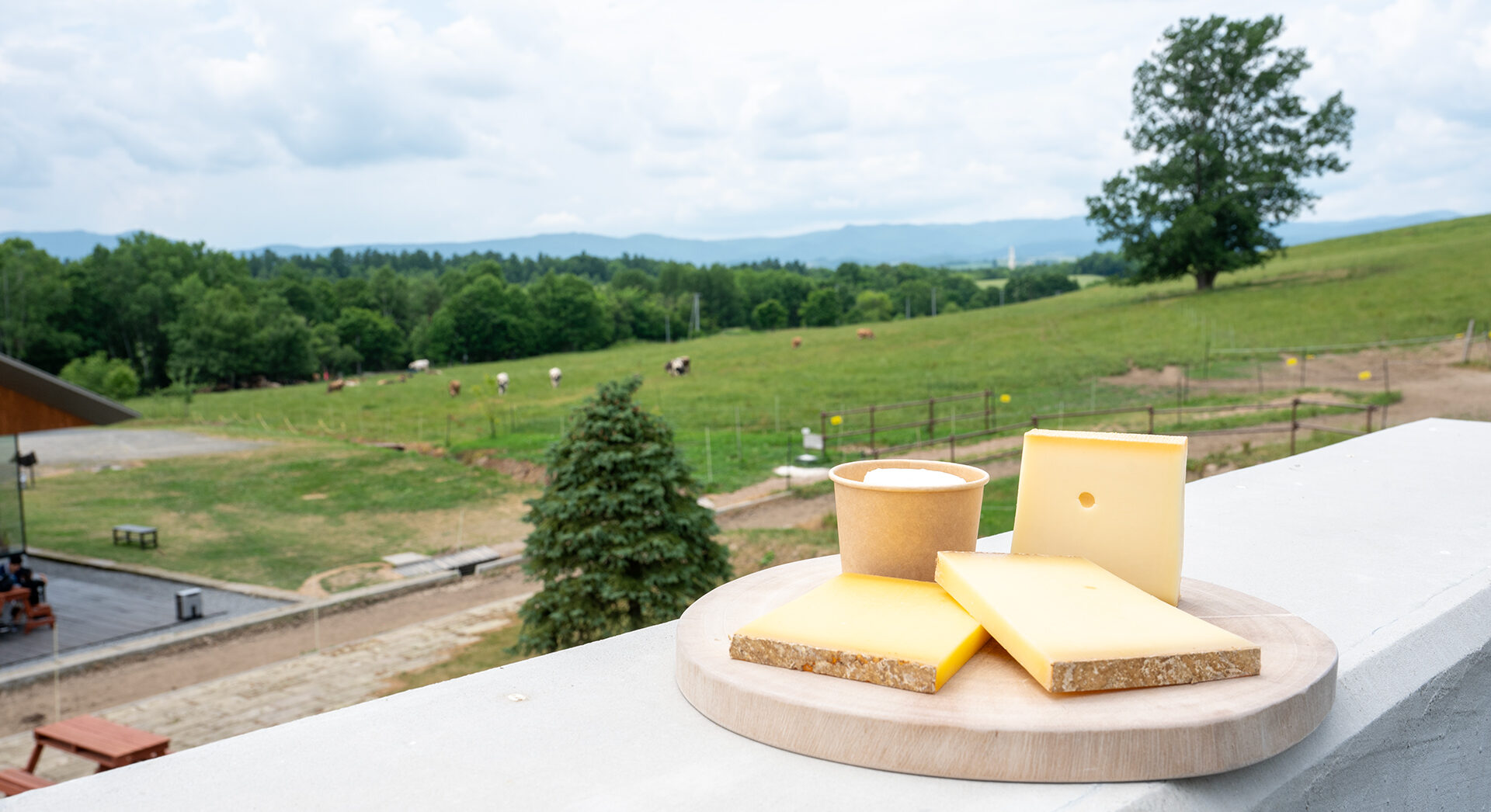
The same applies to cheese: grazing dairy cows in the snow-covered land of Hokkaido, they produce authentic cheese using that milk.
Many people might already be familiar with the famous French hard cheese "Comté." This AOP-designated cheese is traditionally crafted from the milk of Montbéliarde cows in the Franche-Comté region of France.
At Biei Dairy Farm, they became the first in Japan to raise purebred Montbéliarde cattle, using their milk to create long-aged cheeses. Some are even aged for 55 months using summer milk! Even among authentic Comté cheeses, such a gem would be hard to come by.
Made with the finest raw materials nurtured in Biei by artisans trained in France, the cheese has earned widespread acclaim, including top prizes in competitions.
And the next frontier Mr. Nishikawa set his sights on was wine.
"After bread and cheese, wine was the natural next step. Unfortunately, I hardly drink alcohol myself." Even so, understanding top-tier flavors, studying the lands that give birth to them, and researching grape varieties, he mapped out a vision unique to Biei.
What was needed for a "vineyard from scratch"
However, once he actually began to take steps forward, he ran into the barrier of experience and know-how.
He wanted to plow using horses. He wanted high-density planting like in Burgundy. He wanted to plant Savagnin to pair with their own cheeses and produce Vin Jaune. He wanted to build an auberge so visitors could enjoy them right on this land—the concept grew increasingly concrete. Yet, when it came time to actually implement it, where and how should they plant? How should the soil be prepared? What distribution channels exist for securing vine saplings? "Right before starting, I realized that without an expert to oversee this, it would be difficult," he recounted.
That was when he reached Mercian's consulting team.
For Mercian as well, most previous support cases involved being consulted after the grapes were already growing, and consultant Mr. Fujino had long voiced: "We want you to consult us before planting the grapes. In the end, that leads to greater efficiency."
True to those words, this project features the consulting team's involvement right from the earliest stages, including vineyard layout, vine selection, and material procurement.
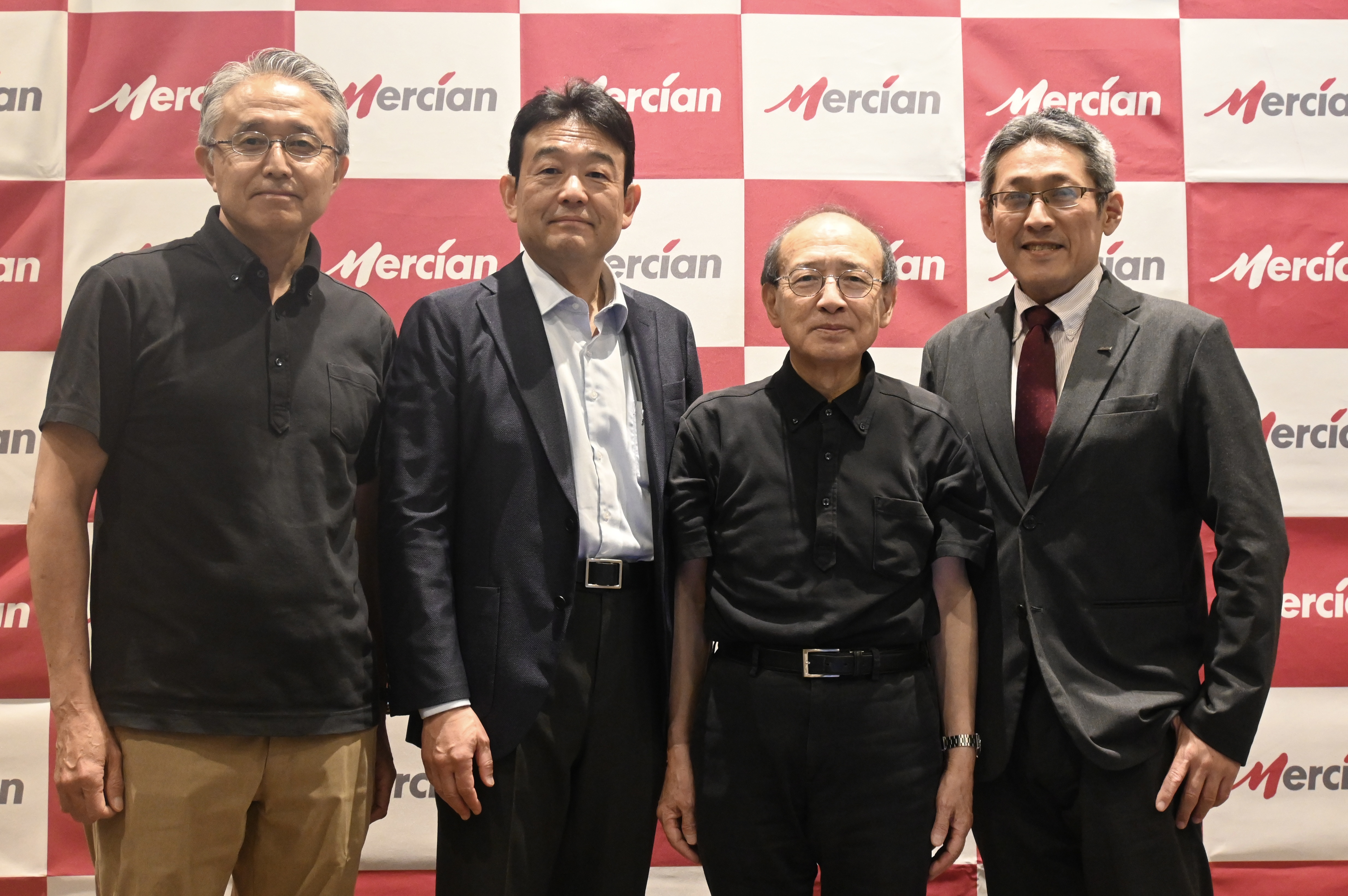
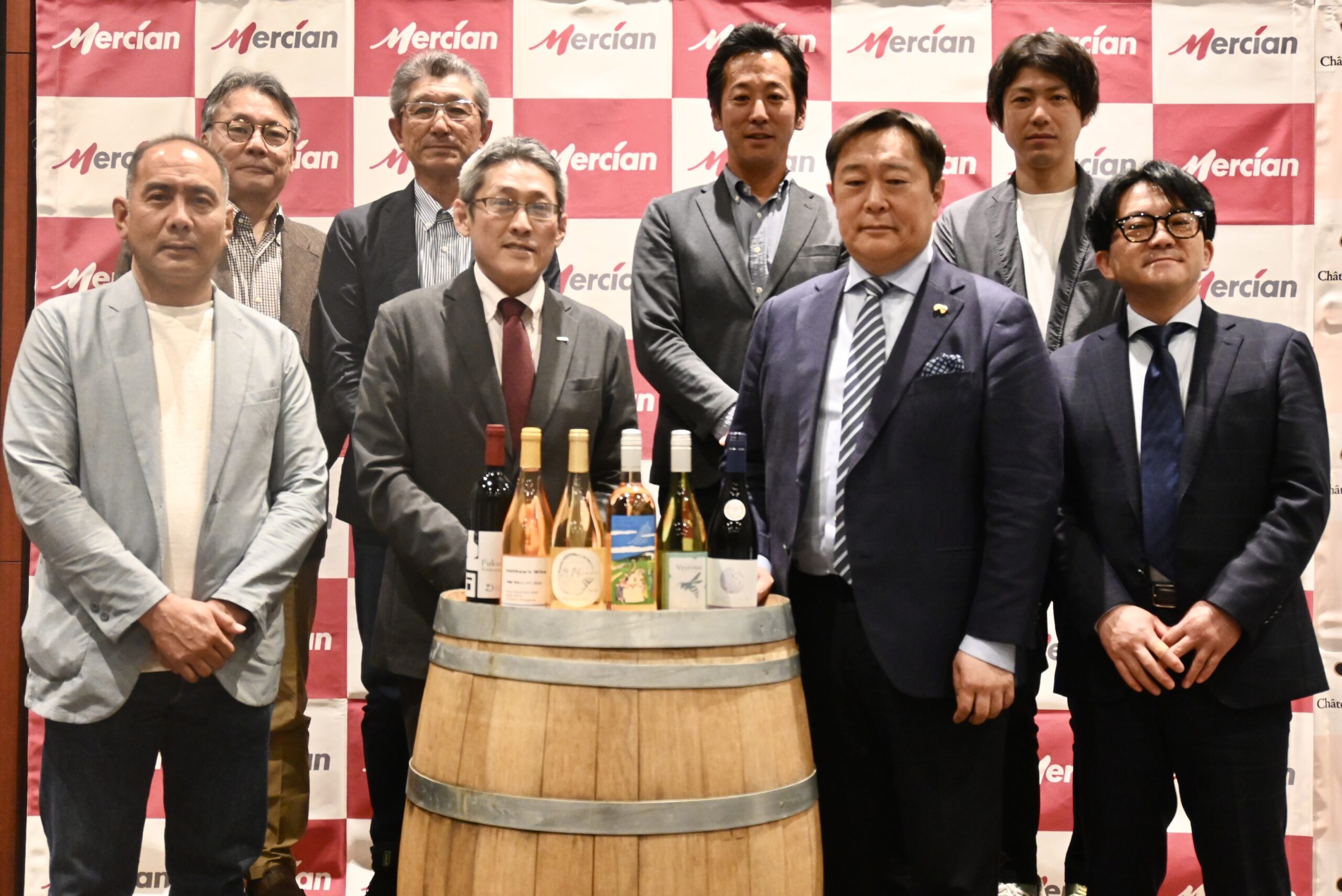
Members of the Japanese Wine Support Business: (from left) Mr. Atsushi Otaki, Mr. Akihiko Yamaguchi, Mr. Katsuhisa Fujino, Mr. Takayuki Tamura
A vineyard as a "grand experiment"
What Mr. Nishikawa aimed for was high-density planting and horse tillage, reminiscent of Burgundy. In Hokkaido, where land is relatively abundant, this approach is rarely taken.
Faced with this, Mercian was reportedly cautious at first.
Winemaking is by no means an easy endeavor. For that reason, not just in this case but across numerous inquiries, they often explain the difficulties and gauge the prospective client's resolve.
Through repeated explanations and multiple on-site surveys, Mr. Tamura realized that this project might help discover solutions to the current challenges Hokkaido faces. For instance, "problems such as crown gall disease unique to cold climates, or the tendency in many Hokkaido vineyards where vines grow large while yields remain stagnant. If that's the case, by keeping vines smaller and planting densely, wouldn't it be possible to achieve both efficiency and quality?" It was thoughts like these that led them to commit to providing support.
Finally, planting of the vines will begin in May.
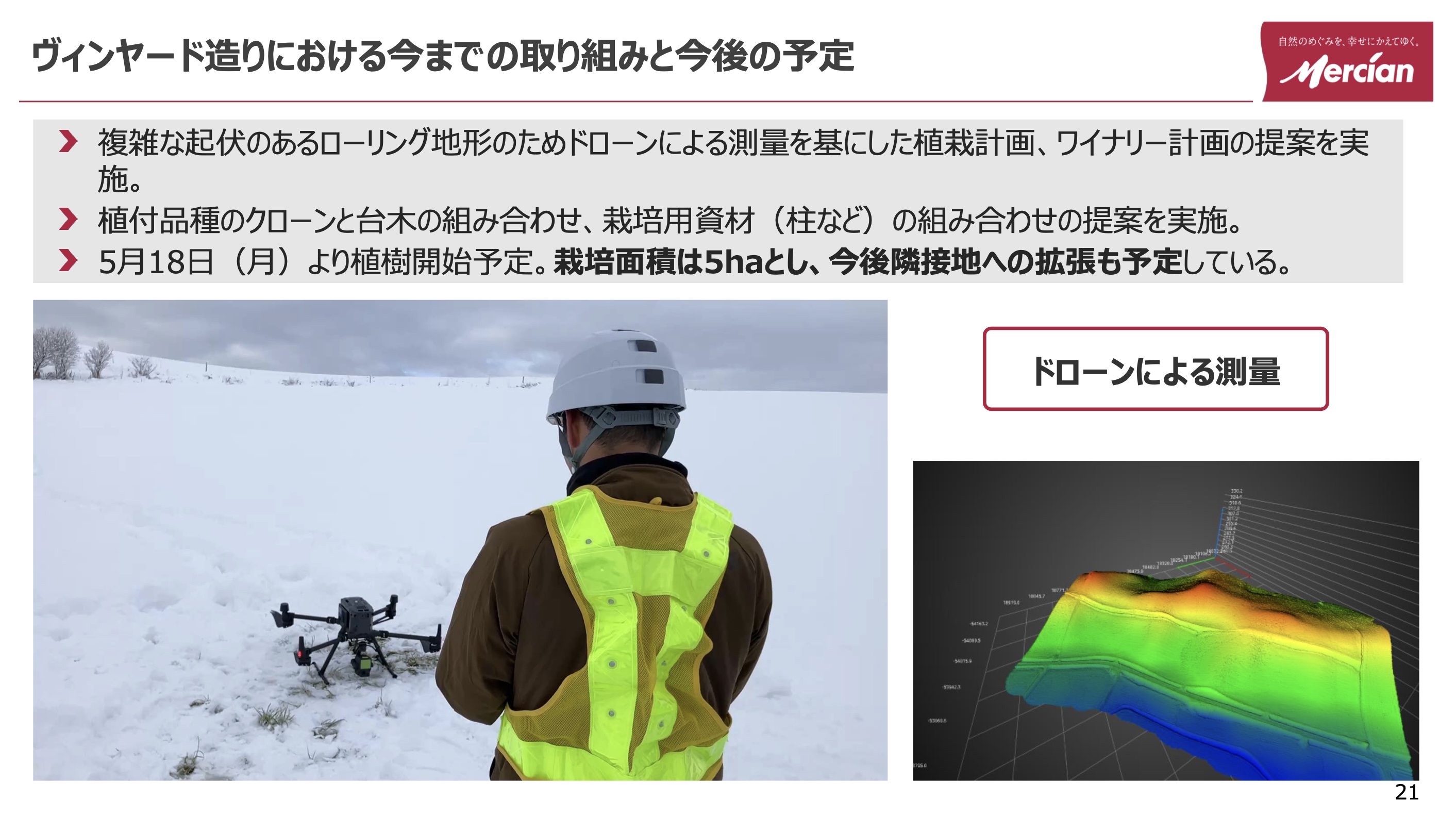
They plan to develop a 5-hectare vineyard as Phase 1 across the hills owned by Biei Farm, and to do so, they reportedly used drones to survey the land, seeking to understand the topography and decide on the optimal layout with an eye toward vineyard orientation and future winery construction.
"This incurred considerable costs as well, but looking ahead to developing restaurants, an auberge, and breads made with wheat harvested here, I believe it was a necessary step at this stage."
The initial investment amounts to approximately 55 million yen. Utilizing subsidies and other resources, they are taking on the challenge of "creating the best products unique to Biei" to holistically convey the abundance of this land.
As Mr. Nishikawa himself stated, "I consider this a grand experiment," and if successful, it can be expected to serve as a catalyst for generating insights that could ripple through to other regions as well.
A role not only to "create" but also to "connect"
Going beyond conventional technical guidance, this initiative involves engagement across the entire supply chain, including selecting and procuring saplings, introducing local materials, and optimizing equipment and supplies. It is truly a concrete example of the "hub function" advocated by the newly announced "Japanese Wine Support Business."
Mr. Nishikawa commented, "We didn't know what to buy from where. Having them decide that with us made a tremendous difference." Resolving issues that could not be solved individually by connecting wineries with suppliers, and even wineries with each other, will serve as a vital role leading to the development of the entire industry.
Toward a sustainable future for the Japanese wine industry
Until now, Japanese wine has been supported by the efforts of individual wineries.
On the other hand, as reported in " Mercian Fully Launches Its Japanese Wine Support Business! ~Expectations for a Framework of Mutual Industry Support~," there are currently many wineries facing issues such as business management and succession.
Amidst these circumstances, moves to share technology and knowledge and build lateral connections—as seen in Mercian's new undertaking—are precisely what the next stage of the Japanese wine industry requires.
From the accumulation of individual efforts toward maturity as a wine-producing region. Japanese wine may now be at that very turning point.
 RELATED STORY【前編】メルシャン、日本ワイン応援事業を本格展開!〜産業として支え合う仕組みへの期待〜