
WINE & DINING
"Green Onions × Wine"!? Exploring How Long Green Onions Pair with Wine!
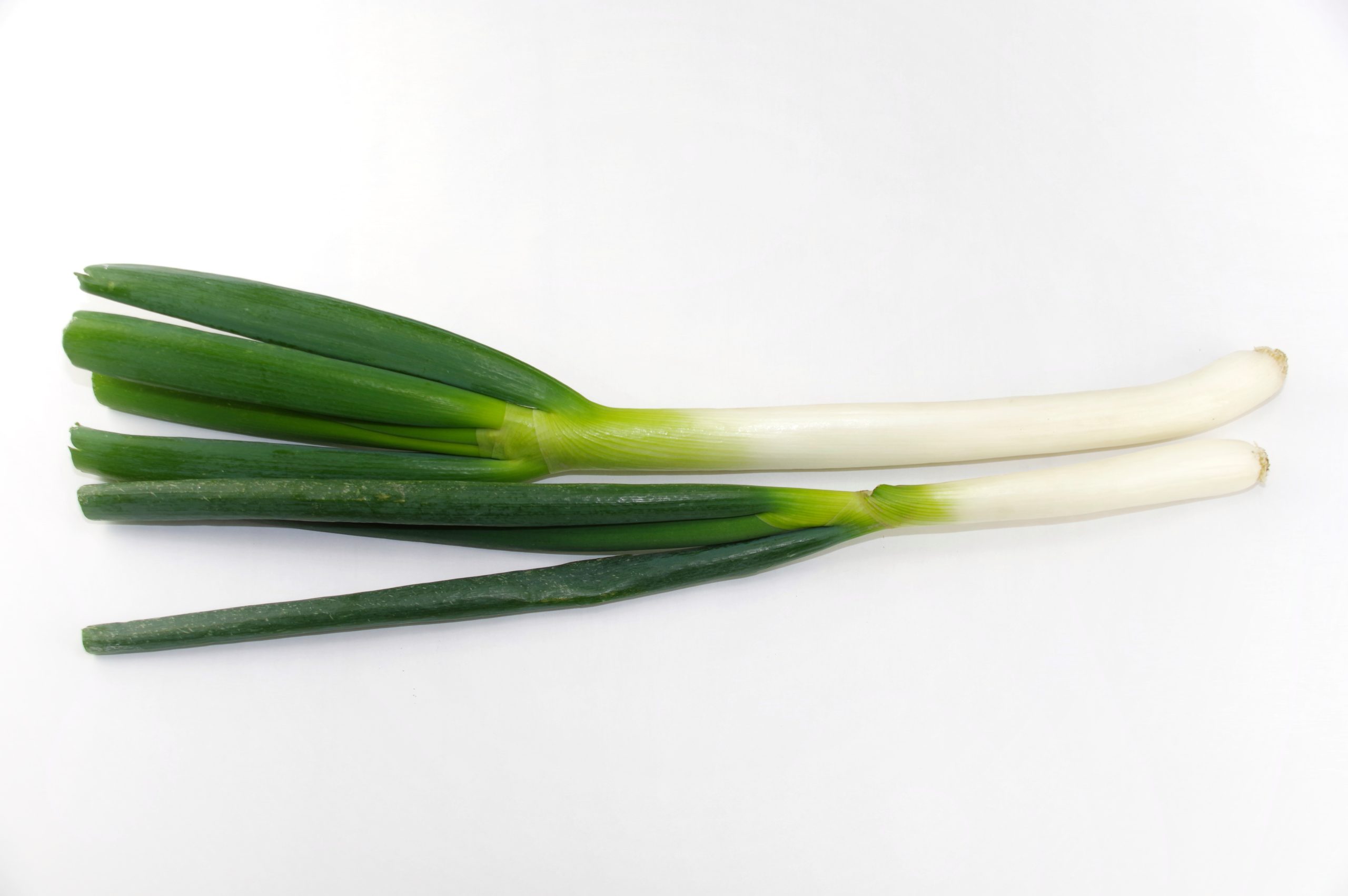
While preparing a lavish meal for wine pairing is great, you might want to keep your pairings assimple as possible.
There is a recommended ingredient for those looking for a pairing like that.
That ingredient is "negi" (long green onion).
Here, we would like to explain the tips for "Wine × Negi" pairings.
Negi and Wine Go Well Together
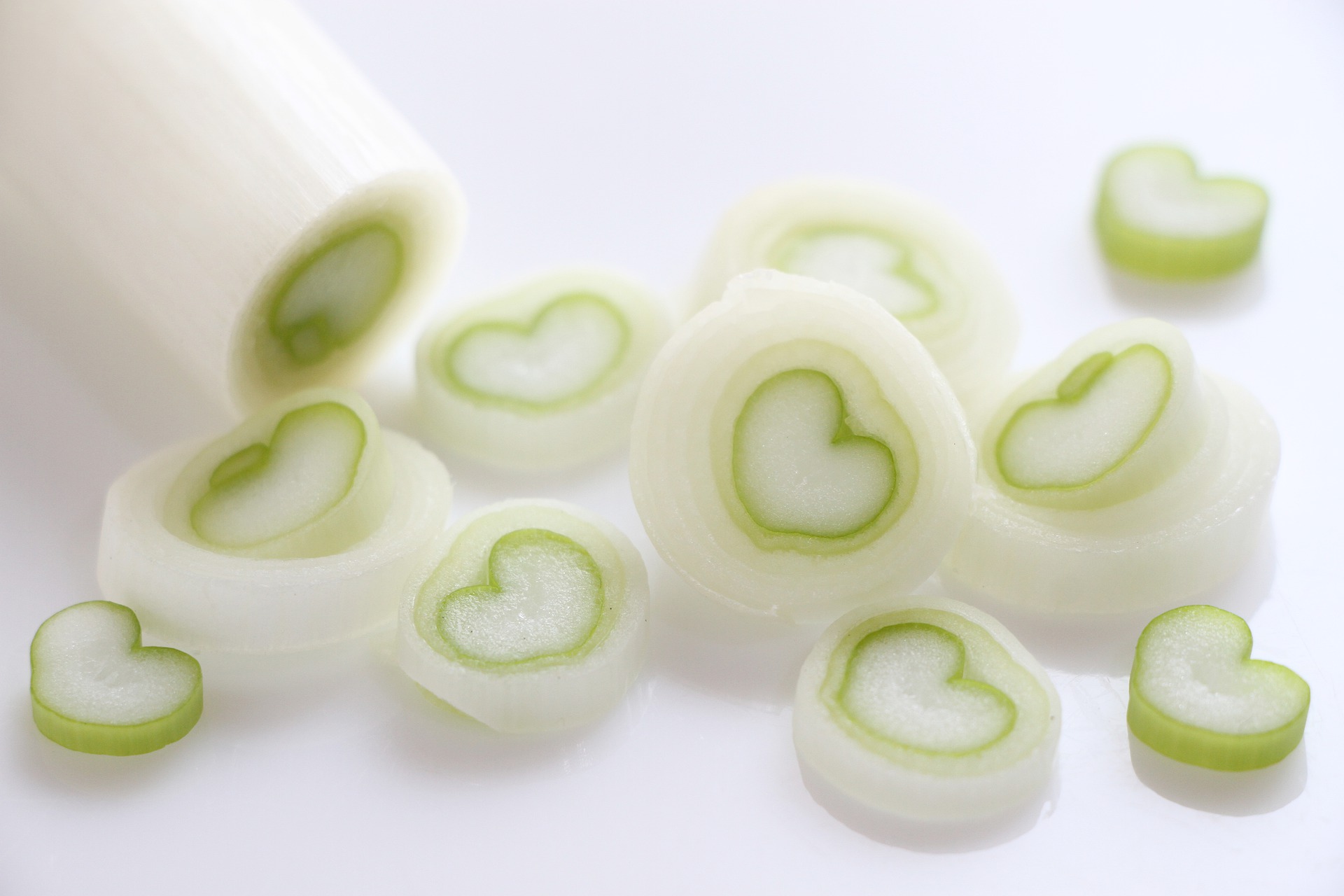
When you think of negi,“Pungent with a distinct odor”are their defining characteristics.
Because of this, you might have the impression that green onions are difficult to pair with wine.
While biting into a raw green onion and following it with wine will obviously yield disappointing results,“the variety of green onion,” “the cooking method,” and “the choice of wine”simply by paying close attention to these, they will pair surprisingly well.
Let's look at each of these points.
For the variety of green onion, “nebuka-negi” (long white green onion) is recommended
Green onions can be broadly divided into two main categories.
Those are…
- Nebuka-negi (long white green onions)
- Ha-negi (green leaf onions)
(For this article, Western leek varieties have been excluded, focusing on green onions that are easily accessible in daily life)
“Nebuka negi” refers to long scallions with white stems, while “ha negi” refers to slender scallions that are mostly green leaf.
To put it simply, the white scallions commonly seen in supermarkets are nebuka negi, while green scallions like Kujo negi, often used as a condiment, are ha negi.
When pairing with wine in particular, nebuka negi is ideal because it has a larger edible portion and a satisfying texture. (For simplicity, we will refer to nebuka negi as “negi” from here on.)
However, rather than thin, spindly ones, thick and impressive varieties such as "Senju negi (Fukaya negi)" or "Kaga negi (Shimonita negi)" are recommended.
Furthermore, nebuka negi harvested during its peak season from November to February increases in sugar content, making its affinity with wine even better.
We encourage you to look out for nebuka negi during this season and give pairing a try.
Making Negi Delicious Through Cooking
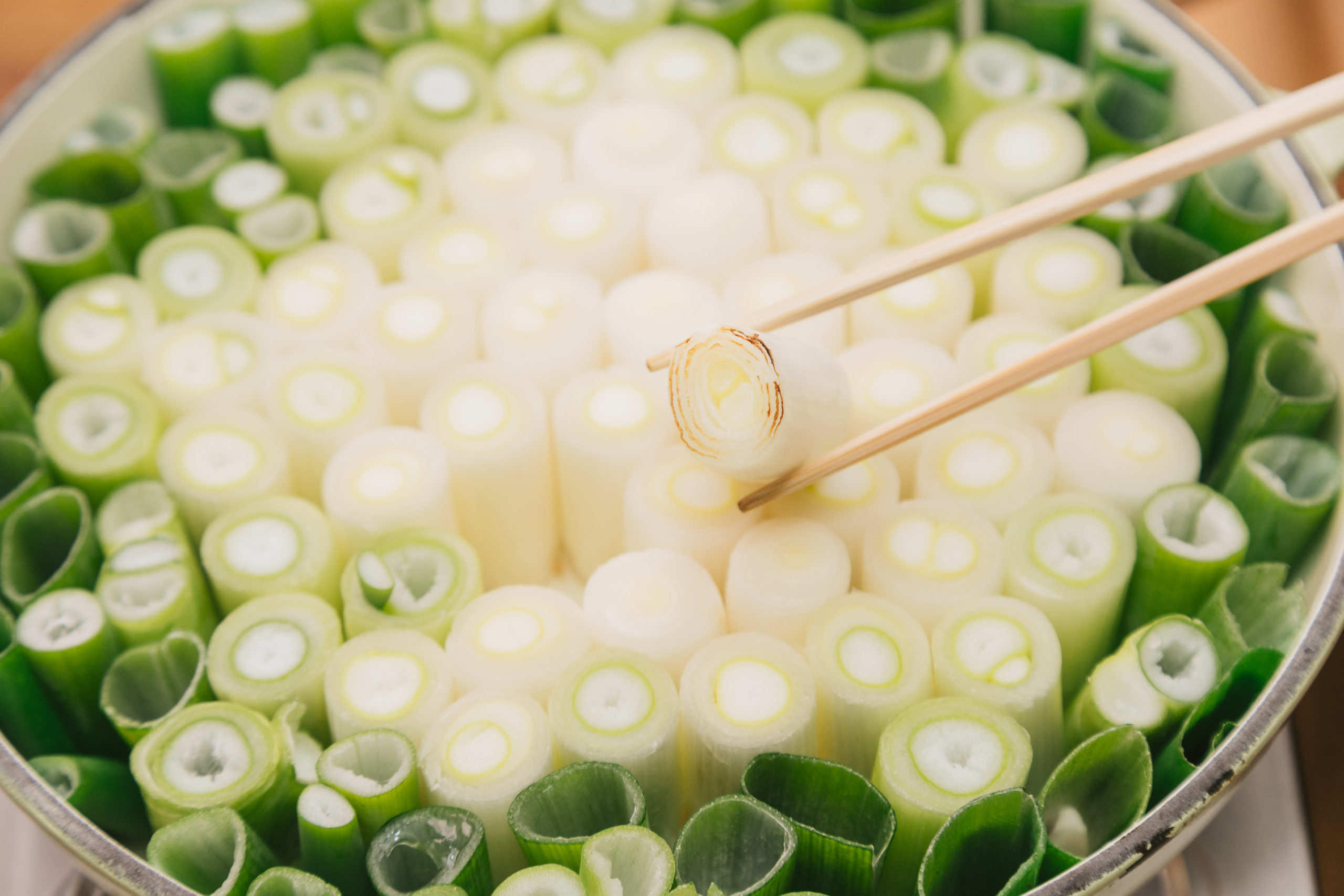
If there is a reason negi might clash with wine,The unique odor and pungency of green onions may be the cause.
First, the main source of the odor in Allium plants is said to be volatile alkyl disulfides associated with the smell of sulfur, and under certain conditions, polysulfides are suggested to be responsible for foul odors.
In addition, the characteristic pungency and odor of green onions are caused by a pungent compound called allicin (allyl sulfide).
When pairing wine with green onions, it is desirable to tone down these elements to some extent.
To begin with, disulfides are volatile, and allicin is both volatile and water-soluble, so soaking them in water or heating them causes them to break down.
Furthermore, since allicin turns into sweet components when heated, going through a cooking process involving heat removes the bitterness and unpleasant odor, transforming it into "sweet and delicious".
Simply soaking green onions in water will reduce their odor and pungency, but it will not increase their sweetness. Therefore, heating them is recommended when considering wine pairings.
Selecting a White Wine with Reductive Elements
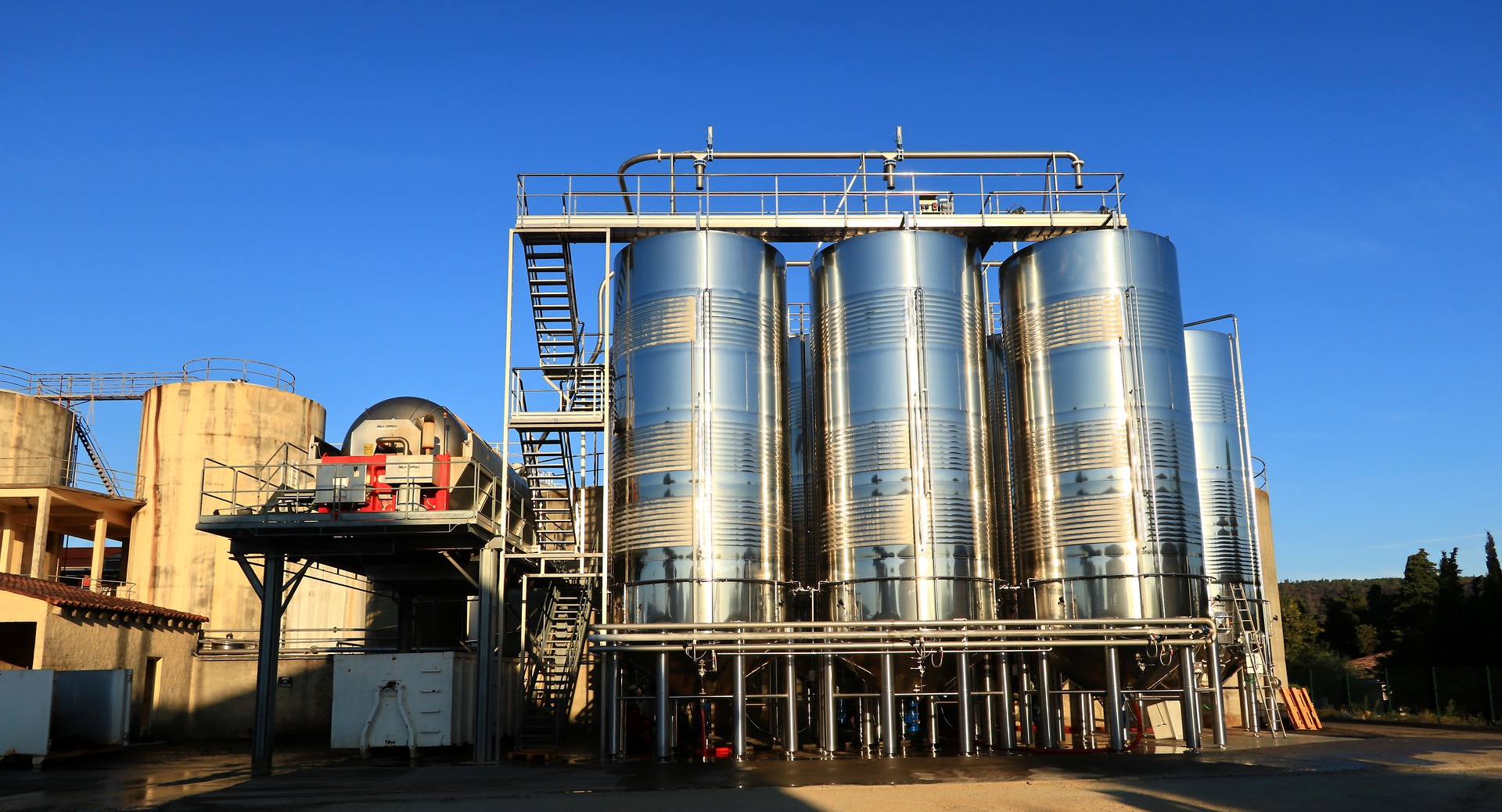
Once the long onion is cooked,Next comes choosing the wine.
How the long onion is prepared will change the wine selection, but since the goal this time is to pair it as much as possible withthe onion in its natural state, we will choose a wine that is alsoleaning toward the onion.
First, cooked long onion takes on a smooth, luscious texture and a pronounced sweetness.
When that happens,a white wine with sweet aromaticswould be ideal.
However, a white wine that is overly heavy (where fruit-derived sweetness stands out but the overall flavor is flat) won't make for a sophisticated pairing.
Therefore, while keeping those elements in mind and considering the key ingredient of "negi" (green onion),a wine that exhibits reductive (sulfur-like) characteristicsis what I would like to choose.
Reductive odors are also known as sulfurous odors and are famous for influencing a wine's flavor profile.
Fermentation of nitrogen-deficient must, extremely reductive winemaking, or long-term storage under screw caps...
However, if reduction goes too far, producing intensesulfur odors, garlic, or cooked vegetables left sitting outthat are considered off-flavors,that is something best avoided.
When it comes to Japanese wine,I recommend wines made from international varieties vinified solely in stainless steel tanks and sealed with a screw cap.
A wine that combines fruity sweetness with reductive nuances will likely allow you to appreciate its excellent compatibility with green onions even more.
Senju Negi Tempura × <Arc-en-Vigne Chardonnay 2018>
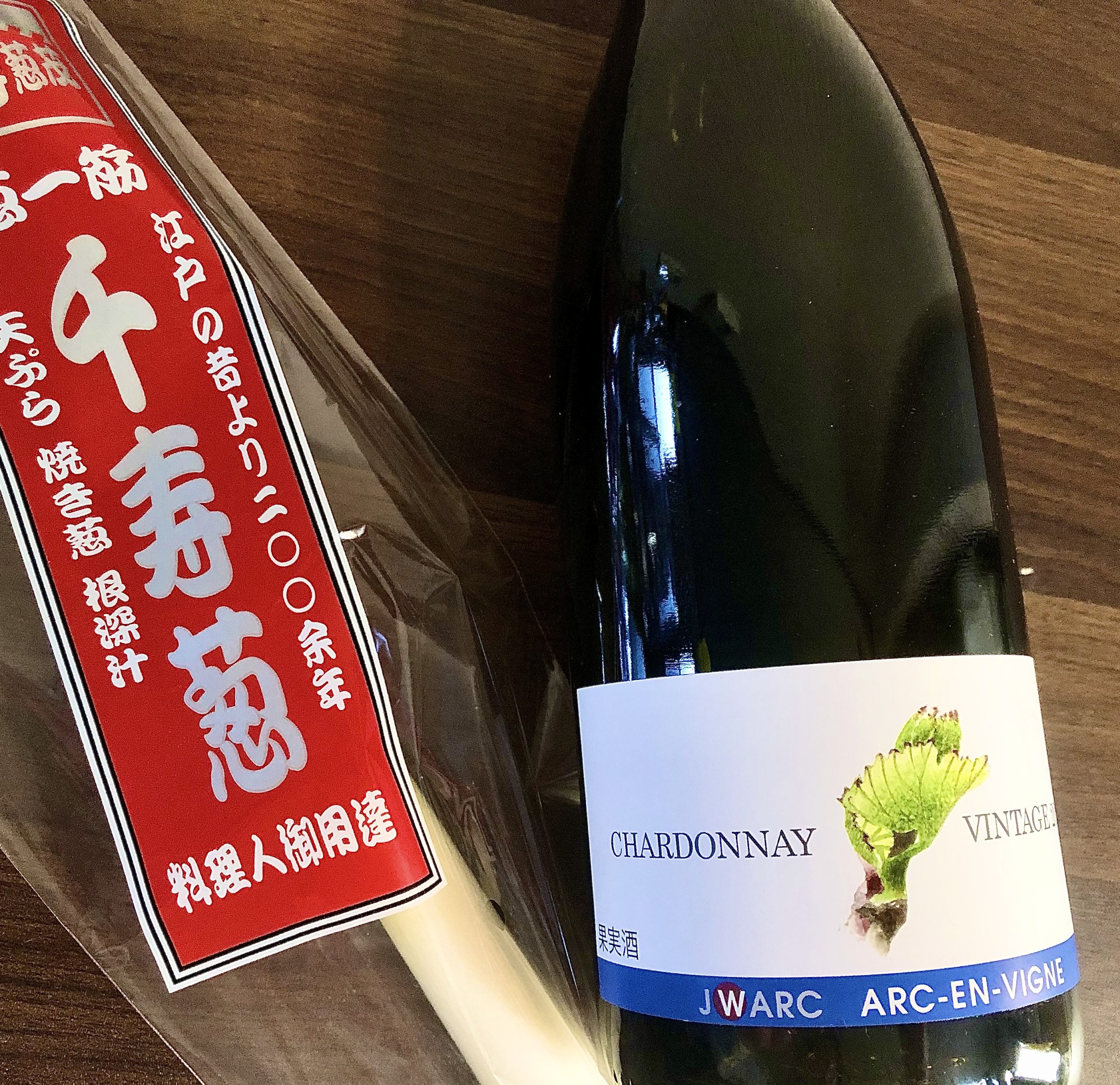
Taking into account the elements mentioned above, this time I tried a“Wine × Green Onion”pairing.
First, the green onion I chose is considered a premium brand among long green onions,“Senju Negi.”
Though Fukaya Negi and Koshizu Negi are also well known, this variety was developed to fit the food culture of the Kanto region, where the white stalk of the onion is primarily consumed.
And the wine is“Arc-en-Vigne Chardonnay 2018.”
This screw-cap white wine was bottled after about six months of sur lie aging in stainless steel tanks.
While fresh, it has also undergone over two years of bottle aging, soit should be a perfect match for the green onions.
Now,Time for the pairing.
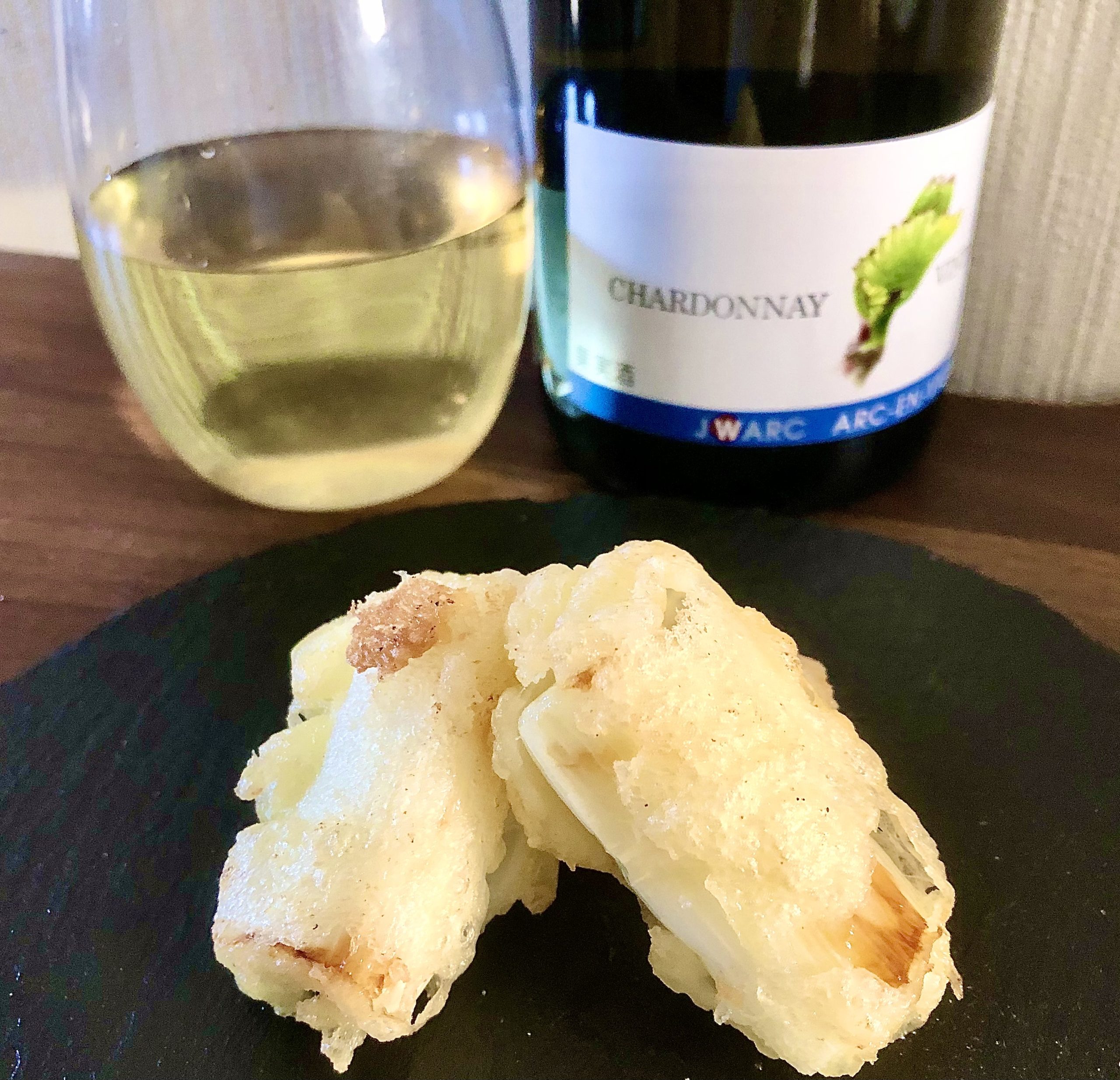
I prepared the Senju Negi as tempura to bring out its natural sweetness.
On a TV Tokyo network program a while back, Senju Negi was introduced as:“sweeter than a mango,”and true to those words, it is remarkably sweet and extraordinarily…delicious.
On the other hand,〈Arc-en-Vigne Chardonnay 2018〉 also features notes of citrus, apple, and pineapple, alongside a reductive nuance and sharp acidity. This allows it to form an exquisite pairing without clashing with the sweetness or flavor of the Senju Negi.
The subtle touch of lingering bitterness from the 〈Arc-en-Vigne Chardonnay 2018〉 in the finish is another great point that cleanses the palate.
While a dish like this would naturally pair well with sake or beer,I personally recommend pairing it with a white wine like the 〈Arc-en-Vigne Chardonnay 2018〉.
Turning Green Onions, Usually a Supporting Role, into a Feast
Generally speaking, green onions area vegetable that usually plays a supporting role.
Aside from restaurants with a special focus on green onions, few people plan home-cooked menus featuring green onions as the main dish (setting aside green onion fans, farmers, and French cuisine enthusiasts).
However, once you adopt the idea of pairing green onions on their own with wine...before you know it, the green onion alone becomes a feast in its own right.
Although it takes a little prep work,“Green Onions × Wine”makes for quite a stylish pairing, wouldn't you say?
If this piques your interest, please give it a try at home.
References
About the author
Stories covering the same region, newest first.
- KNOWLEDGEWho Decides What Counts as “Fine Wine”? — The Question Posed by Asia’s No. 1 Sommelier Reeze Choi21 JUN 2026Miyuki Isobe
- WINE & DININGThe Manns Wines You Think You Know May Be Out of Date — From Volume to Quality: Where Manns Wines Is Today6 MAY 2026Miyuki Isobe
- WINERIES【Part 2】Hot Springs and Wine: A Stay-at-the-Winery Experience at Domaine de Yunohara3 APR 2026Miyuki Isobe
- WINERIES【Part 1】Hot Springs and Wine: A Stay-at-the-Winery Experience at Domaine de Yunohara2 APR 2026Miyuki Isobe
- WINERIESUnderstanding the Terroir of "Ono", Nagano Prefecture: KIRINOKA Maker's Seminar (Chardonnay Edition)14 SEP 2025Miyuki Isobe
- WINE & DININGZenkoji Special Viewing × Nagano Wine "Drops of God" Premium Dinner Tour Was Held!15 FEB 2025Miyuki Isobe
Wineries in this region
REGIONAL WINERIESRead → Know → VisitWineries in 長野県. Find somewhere to visit.