
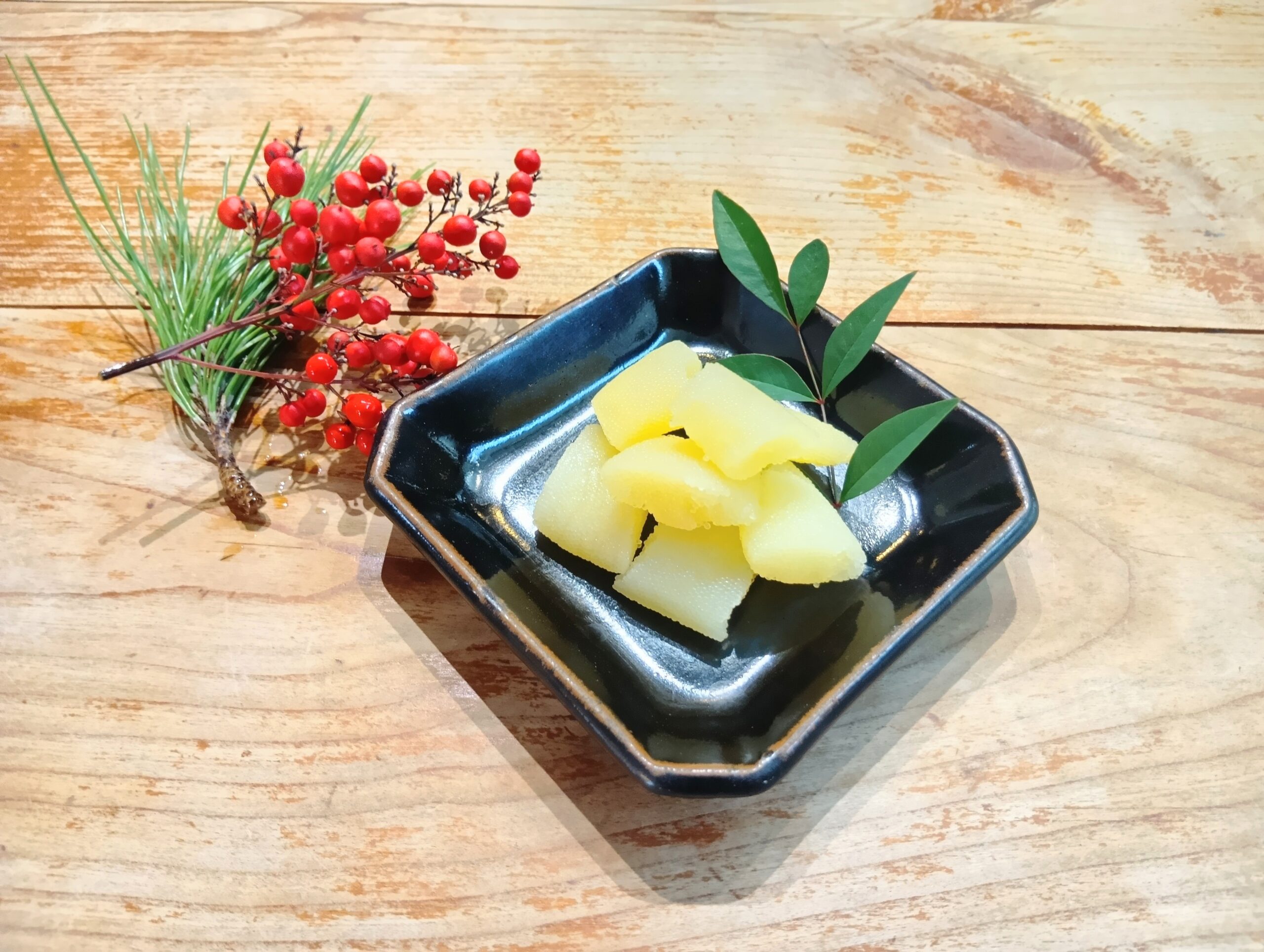
New Year in Japan means osechi cuisine. Osechi includes many different dishes, but few feel more distinctly “New Year” than kazunoko, or herring roe.
Osechi is traditionally divided into five categories—celebratory appetizers, kuchitori, grilled dishes, vinegared dishes, and simmered dishes. Kazunoko belongs to the celebratory category and is considered an auspicious food symbolizing prosperity for future generations.
Some people, however, may buy a little too much kazunoko for New Year and find themselves with leftovers.
Culinary expert Kinuko Oda has created wine-friendly recipes using kazunoko.
They are simple preparations designed to pair with Japanese white wine made from Koshu, a variety that can work particularly well with herring roe. Give them a try.
How Well Do Wine and Kazunoko Pair?

Kazunoko and wine are generally said to be a difficult pairing.
One reason is that herring roe is rich in DHA and EPA, which can contribute to fishy aromas. It is also said that when oxidized DHA and EPA interact with iron contained in wine, those fishy impressions can become easier to perceive.
※ This topic is explained in more detail in the following article.
https://nihonwine.jp/enjoy-nihon-wine/kazunoko/
That does not mean every wine in the world is incompatible with kazunoko.
Here are two factors worth considering when pairing herring roe with wine:
- Wine made with little or no added sulfites
- Wine with relatively low iron content
As discussed in the article above, research on seafood-and-wine combinations reportedly found that among tested solutions, only carbonyl compounds generated by the oxidation of DHA and EPA to which sulfites had been added produced values associated with a fishy smell.
It is also thought that combining oxidized EPA and DHA (peroxides) with iron in wine can make fishy aromas easier to perceive. That suggests choosing wines in which these factors are less pronounced when pairing with kazunoko.
Finding wines made without sulfites, however, may require visiting a specialist shop or a trusted online retailer, which can make the pairing feel somewhat difficult to approach.
Red wine also tends to contain somewhat more iron, although this varies by type, so white wine is generally recommended.
From that perspective, a high-quality white wine that is fresh and refreshing yet complex—and especially one born from the same broader culinary culture—makes Japanese white wine a particularly attractive choice.
Turn Leftover Kazunoko into a Wine Snack

Unless you are an acknowledged kazunoko fanatic, chances are you do not eat much herring roe outside the New Year season.
Some people may also find themselves with an awkward amount of desalinated kazunoko left over after preparing New Year dishes and wonder what to do with it.
Drawing on the “kazunoko × wine” points above, we paired leftover herring roe preparations with white wine made from Koshu.
These kazunoko dishes by culinary expert Kinuko Oda are designed to pair with Japanese white wine.
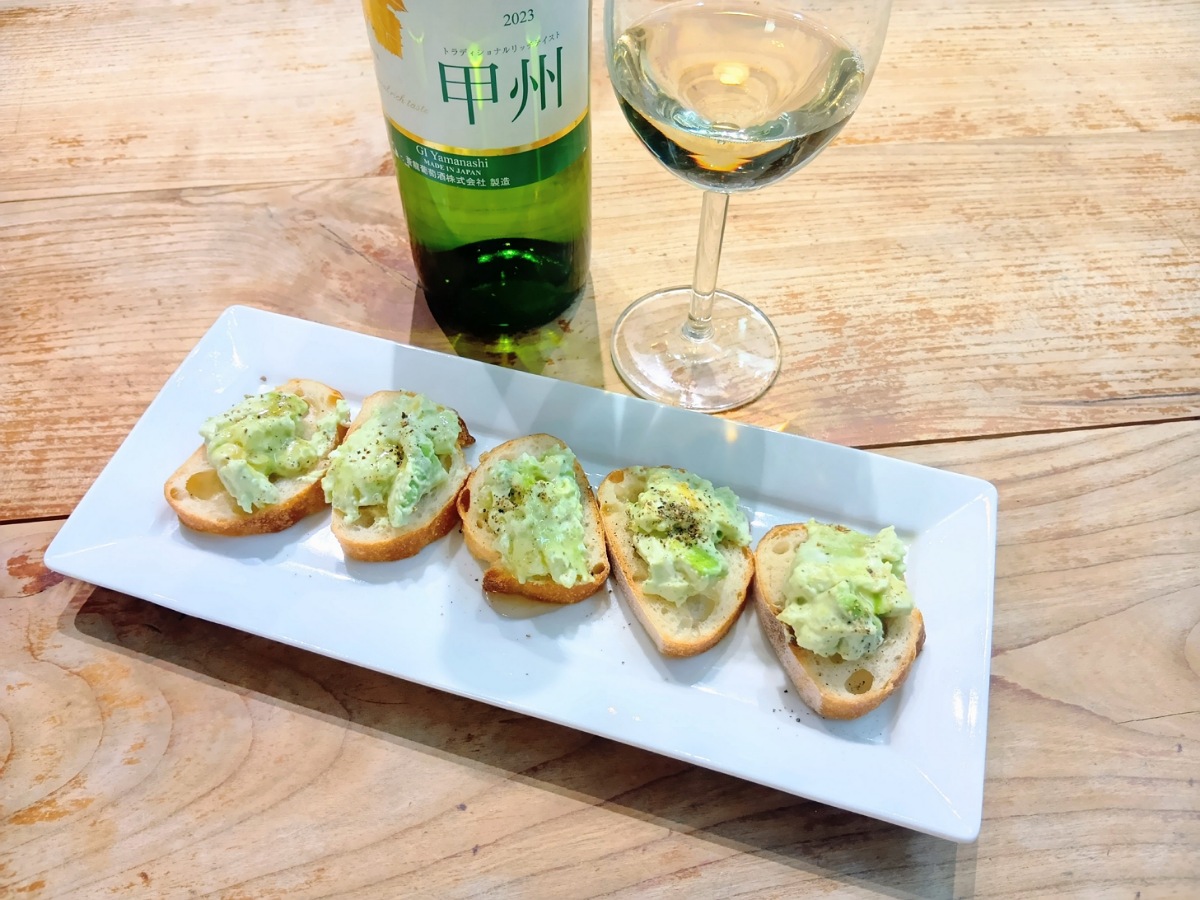
Kazunoko and Avocado Dip
Ingredients
Kazunoko, desalinated … 1 piece
Avocado … 1/2
Cream cheese … 50 g
Black pepper … to taste
Honey … 2 tsp
Baguette slices
Method
1. Roughly chop the kazunoko. Peel and pit the avocado, then cut it into cubes.
2. Mix the ingredients from step 1 with the cream cheese and black pepper, spoon onto baguette slices, and drizzle with honey.
This dish uses the natural saltiness of kazunoko while adding a spicy accent.
The avocado and cream cheese provide a smooth, creamy texture, contrasted by the distinctive popping bite of the herring roe.
The Koshu is made using the sur lie method, so it combines freshness with complexity, umami, and notes such as toast. That makes it a good match for mellow ingredients such as cream cheese.
Kazunoko with Herb Sauce

Ingredients
Kazunoko, desalinated … 1 piece
A
Black olives, roughly chopped … 2
Parsley, finely chopped … 2 tsp
Dill, finely chopped … 2 tsp
Capers, roughly chopped … 1 tsp
Olive oil … 1 tbsp
Soy sauce … 1/2 tsp
Salt and pepper … to taste
Method
1. Cut the kazunoko into easy-to-eat pieces and arrange on a plate.
2. Mix the ingredients for A and serve alongside the kazunoko.
The sauce combines herbs, black olives, and capers seasoned with olive oil, salt, and pepper.
Serving it with kazunoko creates a completely different impression from the usual New Year preparation.
It also pairs well with Koshu and is ideal as a snack with an evening glass of wine.
Enjoy Kazunoko × Wine Even More
You may have expected to finish all your kazunoko over New Year.
But if some remains and you are simply eating it without much thought, why not adapt it specifically for wine and turn it into a proper wine snack?
Use these recipes as inspiration the next time you have leftover kazunoko.
Reference

Culinary Expert / Molecular Nutrition Advisor
Olive Oil Sommelier
Kinuko Oda
As a culinary expert and olive oil sommelier, Oda has created numerous tapas and home-style dishes designed to highlight the individual character of wine.
She currently focuses on small-group events centered on wine and tapas.
Rather than complicated theory, she values food that can be recreated at home and is “genuinely delicious,” explaining the pleasures of wine in accessible language for beginners.
Drawing on molecular nutrition, she is also known for practical ideas that help people care for their bodies while enjoying wine, and for proposing “wine time that leaves both mind and body feeling lighter” for adult audiences.