
WINERIES
Prioritizing the Growing Environment to Achieve Natural Winemaking — Musashi Winery
Contents
Musashi Winery is located in Ogawa Town, Saitama Prefecture, about an hour from Ikebukuro Station.
It has earned a reputation for crafting exceptionally delicious wine from Shokoshishi grapes.
We interviewed Yuzo Fukushima, the representative director, about his dedication to viticulture and winemaking.
CHAPTER 01
Pesticide-Free, Fertilizer-Free Viticulture
In Mr. Fukushima's vineyards, which span about 4.5 hectares, nine varieties are currently grown: Shokoshishi, Yamasouvignon, Merlot, Petit Manseng, Chardonnay, Delaware, Albariño, Sémillon, and Petit Verdot.
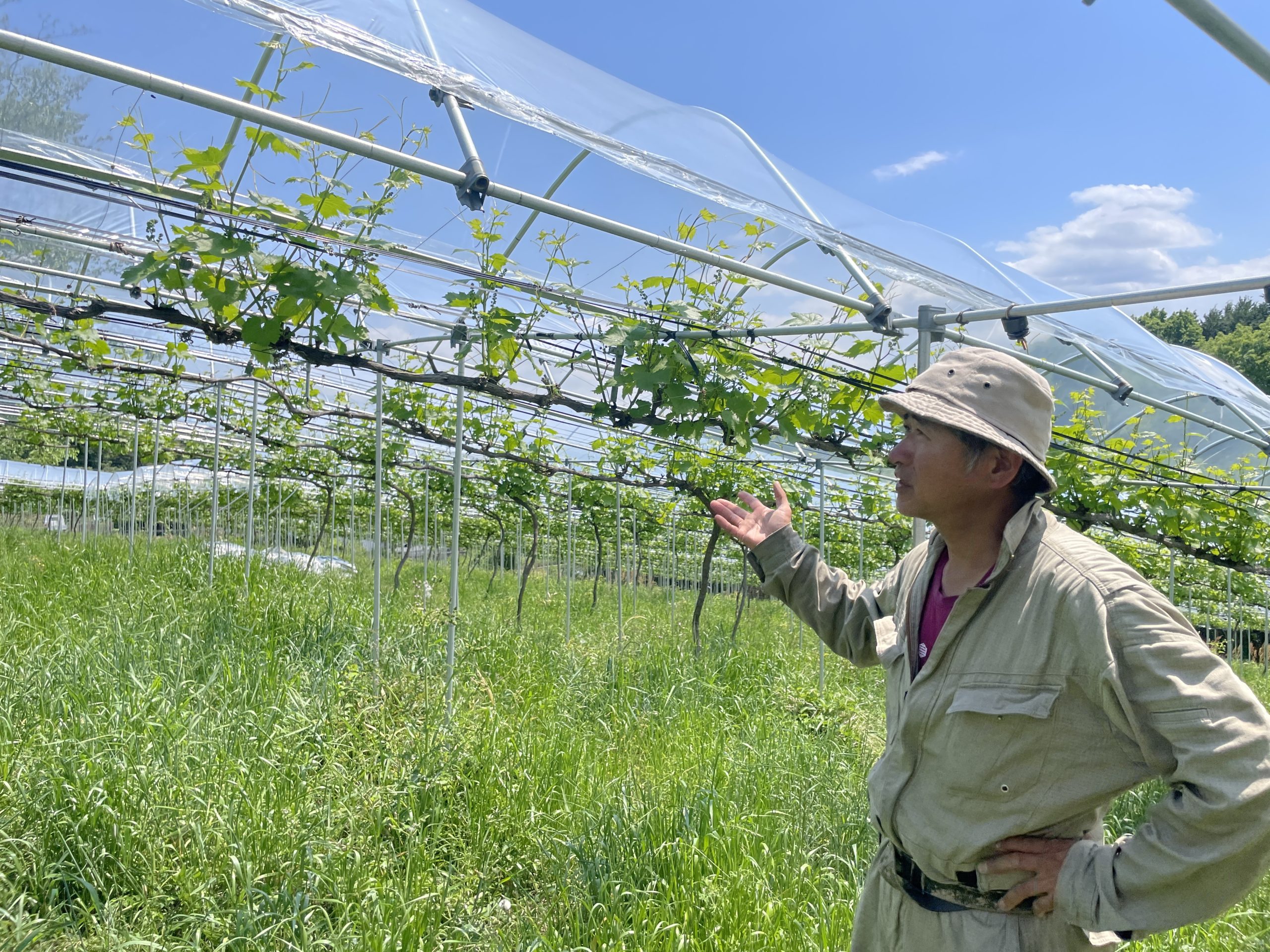
On this day, we were invited into the Shokoshishi vineyard, which accounts for just under two hectares of the total area.
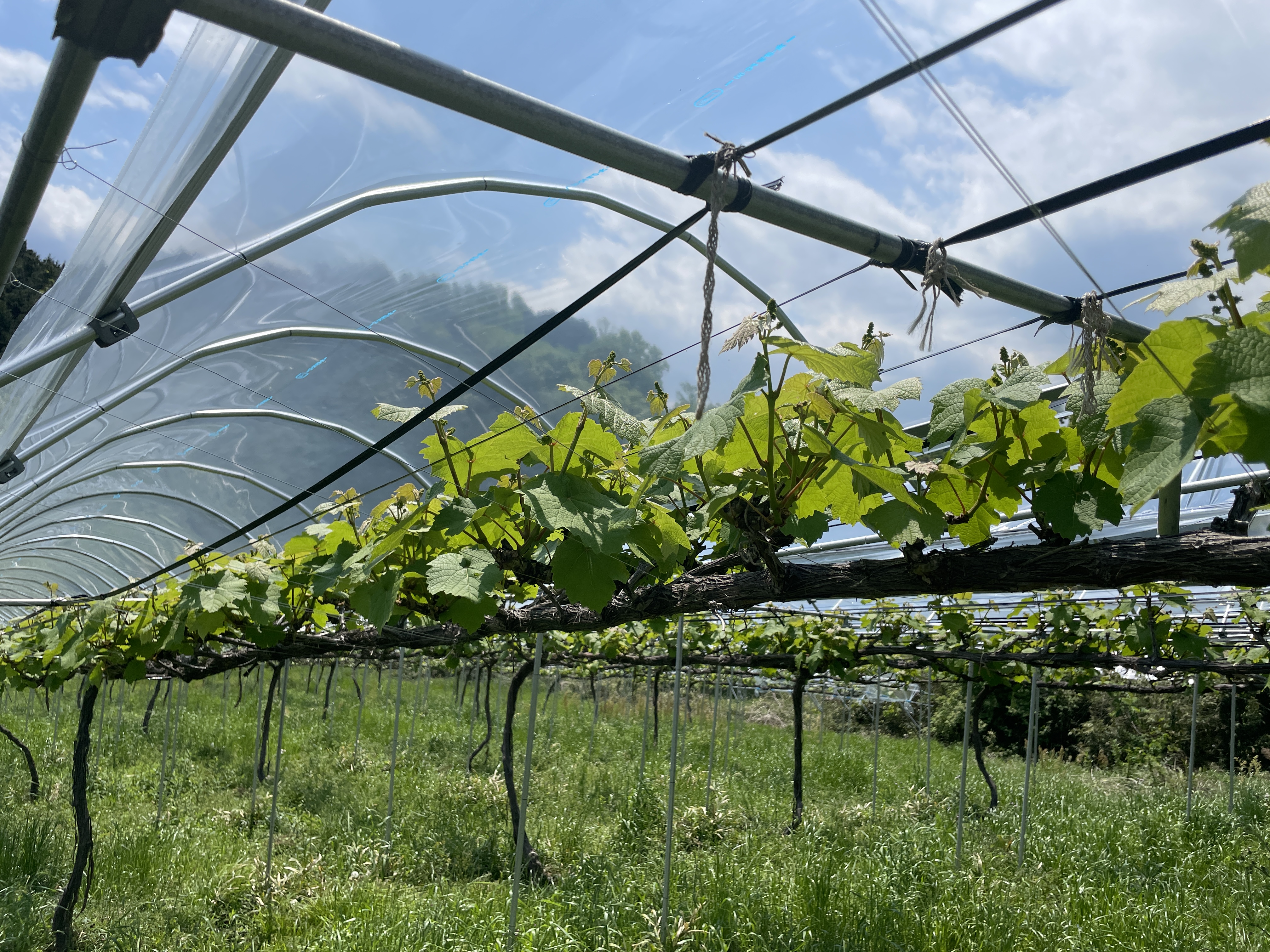
The vines are trained on overhead trellises with rain covers installed.
Weeds grow thick underfoot, some reaching up to knee height.
Mr. Fukushima's core philosophy in grape growing is "don't do anything unnecessary."
"Nitrogen, phosphorus, and potassium are called the three major plant nutrients, but these chemical elements aren't present in plant growth hormones. In other words, they aren't essential—though applying them might boost vigor a bit."
Because of this, Mr. Fukushima's basic viticultural approach is not to trim shoots, to remove lateral buds, and not to tip shoots.
He believes that alone is enough.
For the same reason, he does not disturb the soil.
He uses no fertilizers; removing lateral buds stimulates the secretion of growth hormones that cause shoot tips to lengthen, following a natural process.
Disease, however, remains a constant concern.
Since moisture—meaning rain—is the primary cause of disease, he decided that preventing rain contact would be sufficient, leading to the installation of rain shelters.
Covering the overhead trellises properly prevents rain from hitting the grape clusters.
If rain is completely blocked, disease hardly occurs. That is the logic.
Another reason for choosing overhead trellis training is the way the roots spread.
He lets the shoots extend up the slope without tipping them. The roots extend just as far as the shoots grow.
That is why he uses overhead trellises instead of vertical shoot positioning, allowing the shoots to stretch as far as they can.
Believing human intervention should be kept to a minimum, he says:
"I don't use fertilizers or pesticides. But because I use rain shelters, strictly speaking I can't call it 'natural cultivation.' I describe it as pesticide-free, fertilizer-free cultivation."
CHAPTER 02
A Commitment to Characterful Japanese Barrels
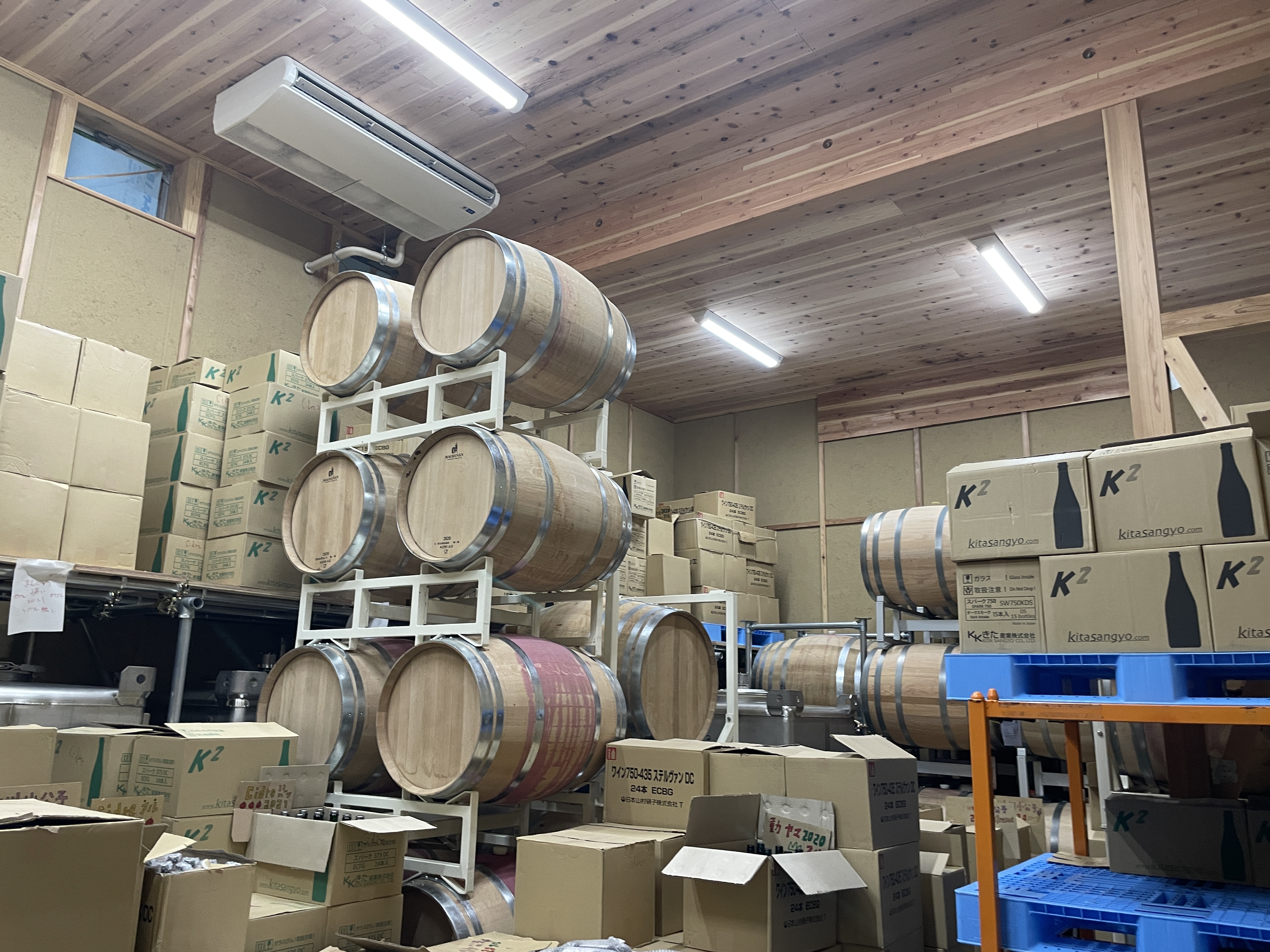
Inside the winery, the walls are made of rare earthen plaster.
They offer excellent breathability and humidity regulation, creating a comfortable natural circulation of air.
It is an ideal environment for Mr. Fukushima's winemaking, which relies solely on indigenous yeasts.
The room is surely comfortable for humans and microorganisms alike.
What also caught our attention were the various barrels.
In addition to familiar French oak, there wereMizunara (Japanese oak), cedar, and cypressamong others.
"Going forward, I want to use Japanese wood as much as possible. I'm also interested in barrels made from cherry blossom and chestnut wood," he says.
Being able to enjoy such a diverse range of barrel variations is another unique feature of Musashi Winery.
CHAPTER 03
On sunny days, be sure to enjoy tastings on the terrace!
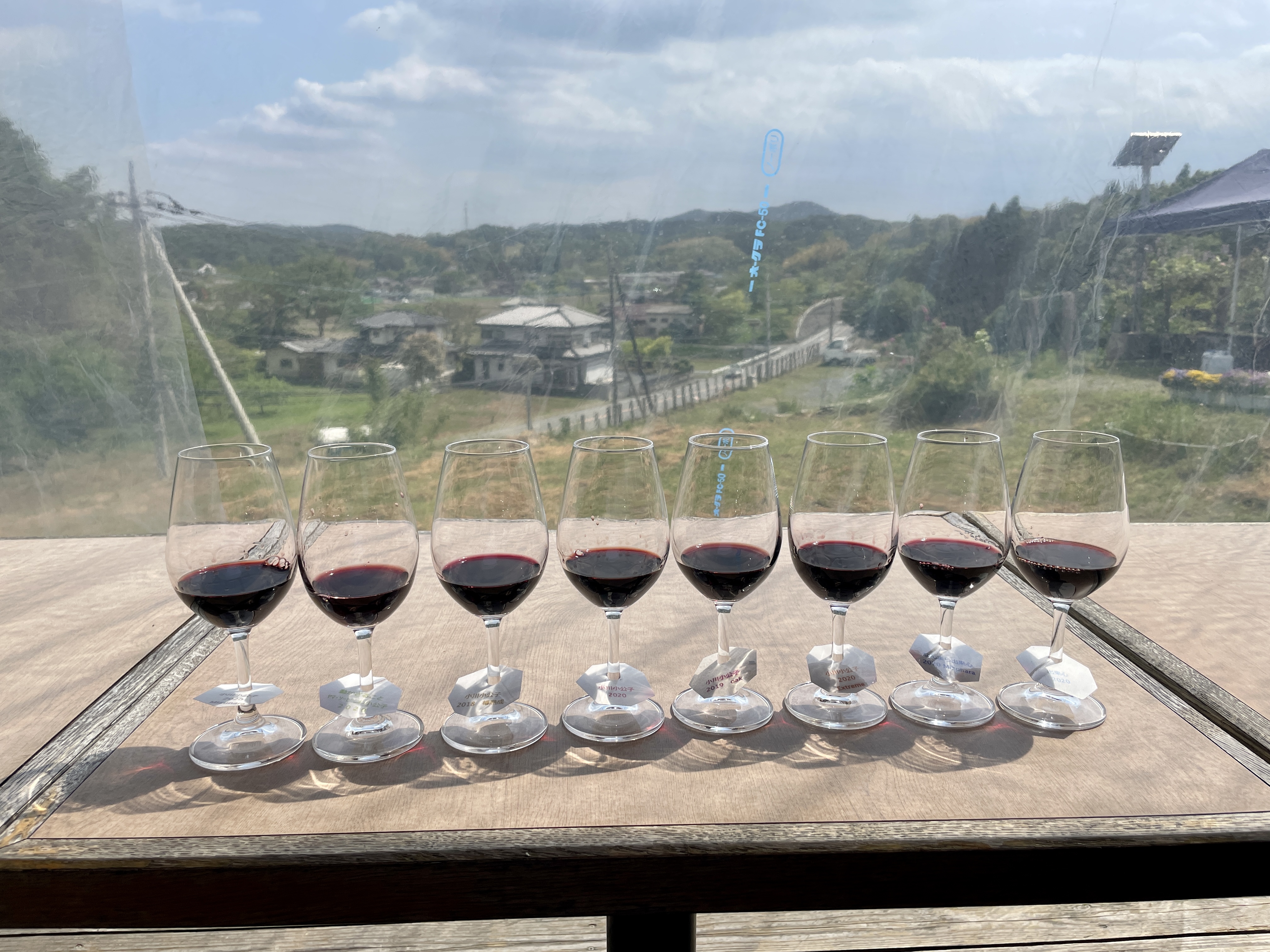
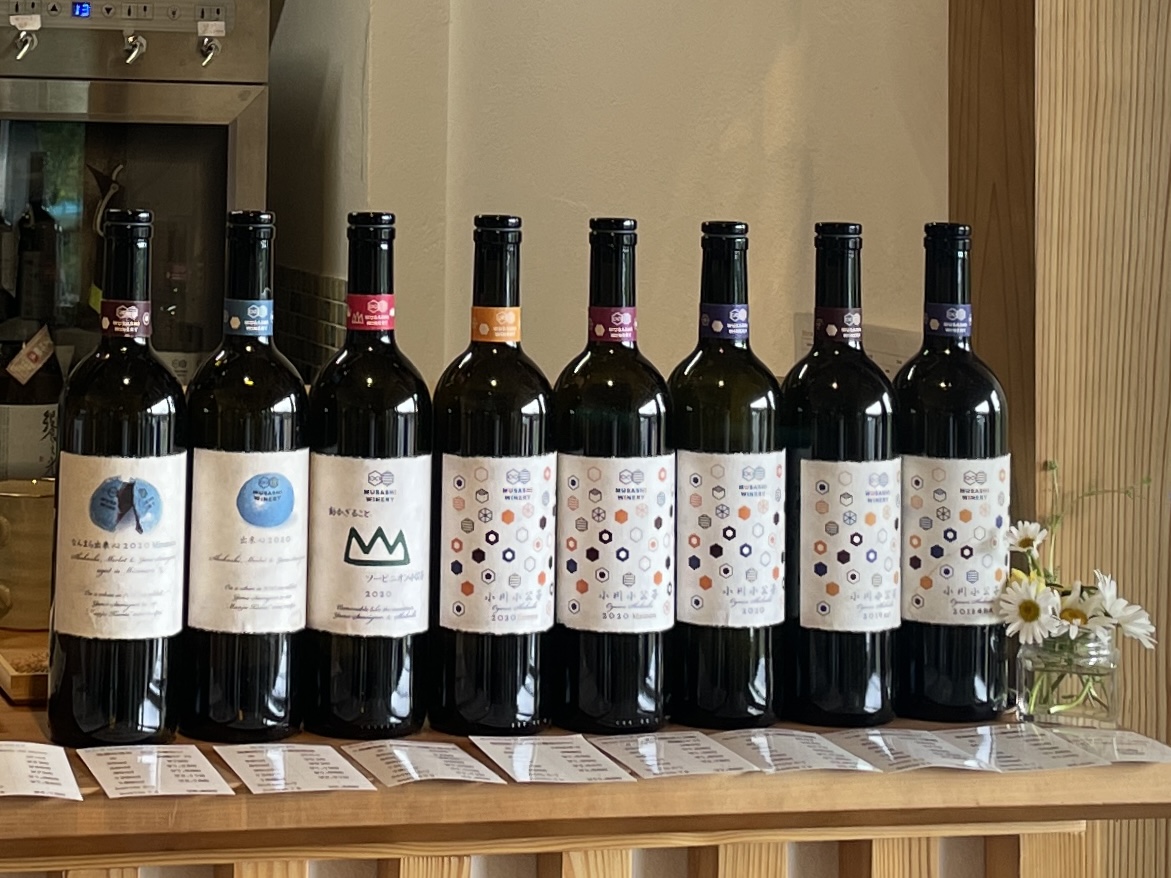
At Musashi Winery, you can taste around 10 different types of wine.
From the terrace of the winery sitting on a hill, you can enjoy an expansive view and a pleasant breeze.
On this day, we tasted and compared several different styles of Shokoshi.
CHAPTER 04
Koji is the key! Mr. Fukushima's miso is also wildly popular!
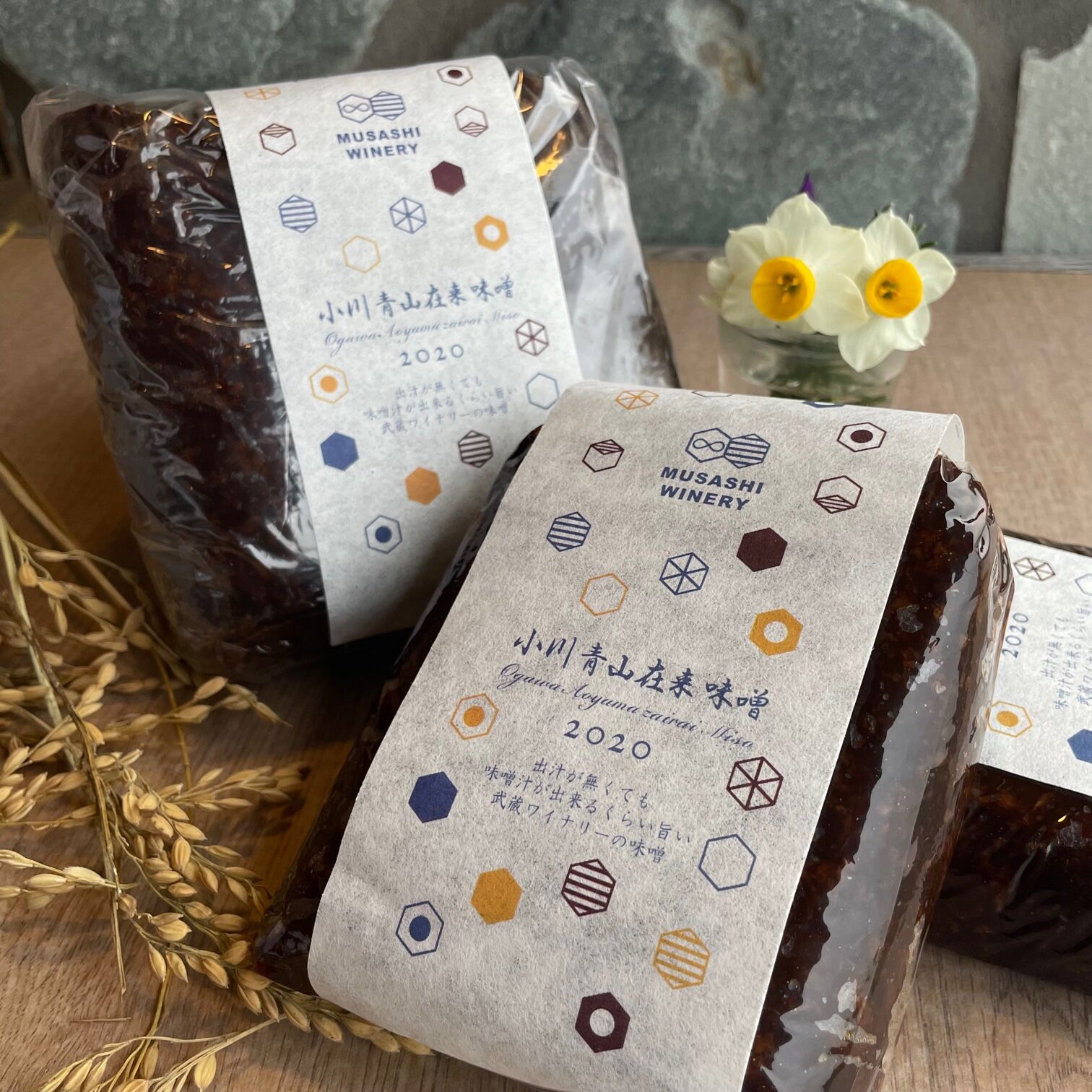
At the shop, alongside wine, a hidden gem made by Mr. Fukushima is miso that needs no dashi stock, which is extremely popular.
Simply put, his koji is outstanding; he is truly a master at koji-making.
Based on the principle of how koji mold penetrates rice, he carefully adjusts the moisture content so that the mold grows all the way to the center of the grain.
He drains the rice to match its natural moisture level, which allows him to craft delicious miso with a robust, rich flavor.
CHAPTER 05
In closing: Lunch at Musashi Ton-nery is highly recommended
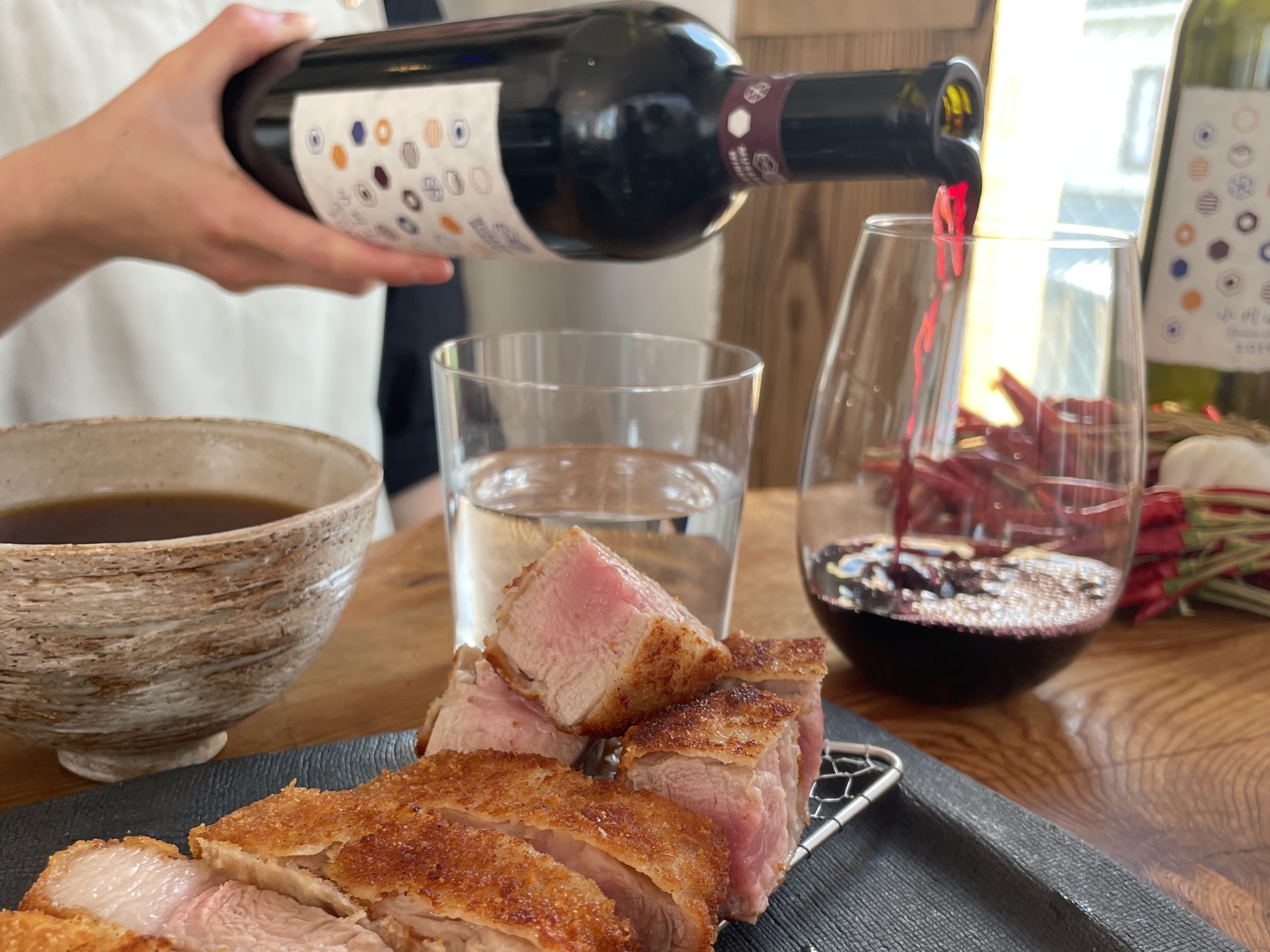
In front of Ogawamachi Station is "Musashi Ton-nery," where you can enjoy tonkatsu that pairs perfectly with Musashi Winery wines.
The tonkatsu features local pork from Kamikawa Town in Kodama District, Saitama Prefecture; the side vegetables are organic produce from Ogawa Town; the rice is locally grown, pesticide-free Isehikari; and the miso soup uses Mr. Fukushima's homemade miso mentioned above.
All seasonings are completely free of chemical additives.
In every way, you can enjoy a meal crafted from carefully selected, safe ingredients that are as organic and additive-free as possible.
Wines crafted through eco-friendly cultivation and winemaking methods, alongside tonkatsu that is organic yet thoroughly satisfying and rich.
When visiting the winery, this kind of high-quality lunch comes highly recommended.
<Recommended Reading>
RELATED STORYhttps://nihonwine.jp/winery_intro/musashiwinery/<武蔵ワイナリーHP>
https://musashiwinery.com/
About the author
Stories covering the same region, newest first.
Wineries in this region
REGIONAL WINERIESRead → Know → VisitWineries in 埼玉県. Find somewhere to visit.