
Facing a Changing Climate, Unlocking the Potential of Koshu: The Challenge of Suntory Tomi no Oka Winery
Contents
It has been 90 years since its founding in 1936. Suntory Shinshu Shiojiri Winery is renewing its equipment inside its historic buildings and pursuing winemaking suited to the times. In Part 1, we looked at its history and evolution.
 RELATED STORY90年の歴史の先にあるもの〜サントリー信州塩尻ワイナリーの原点〜
The other site we visited this time was Suntory Tomi no Oka Winery in Kai City, Yamanashi Prefecture.
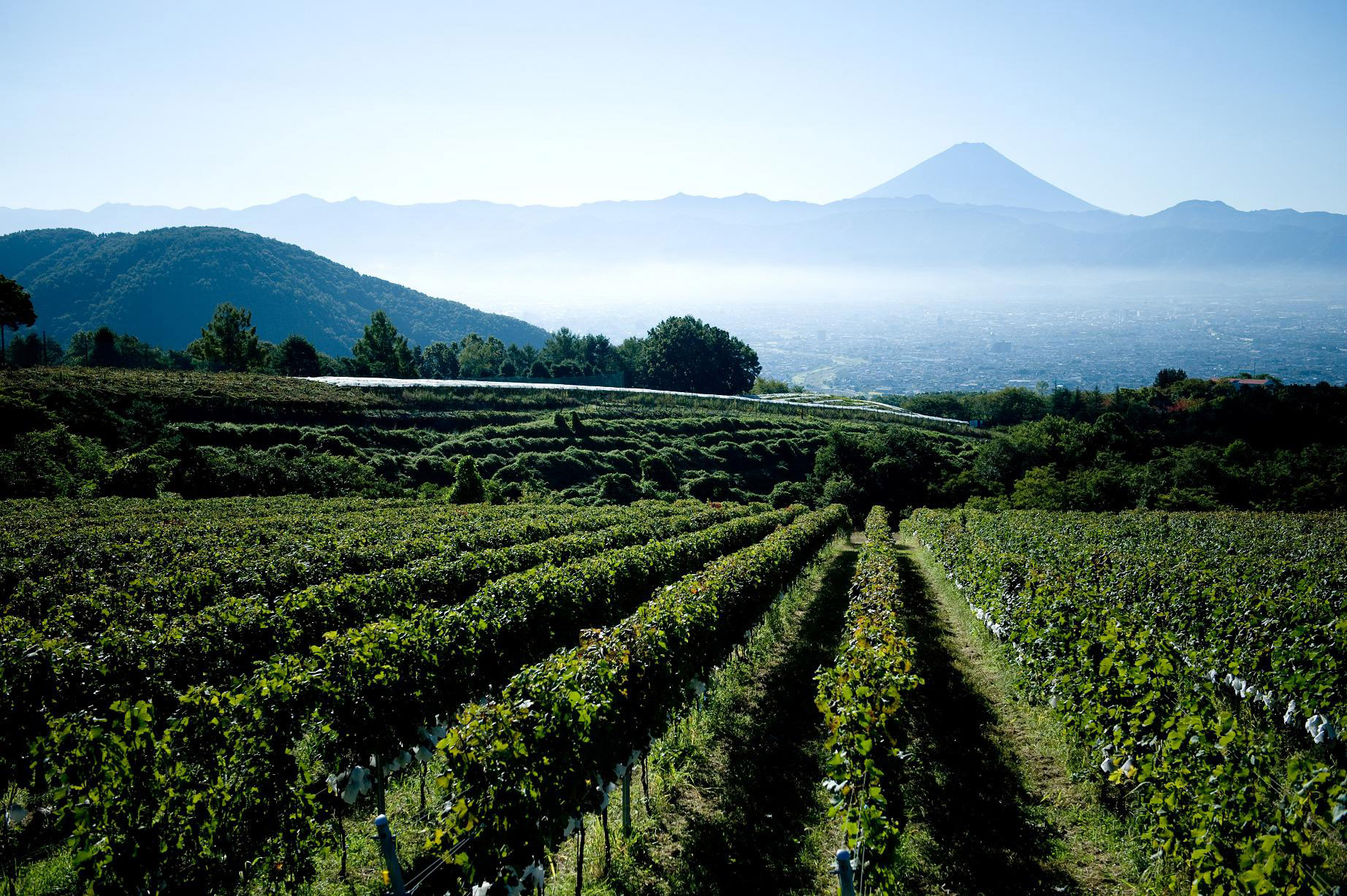
Vineyards spread across hills with views of Mount Fuji and the Southern Alps. Here, alongside viticultural research that looks ahead to climate change, work continues to broaden the potential of Koshu, a grape variety native to Japan.
From site selection and growing methods to the selection of grape lineages and on to vinification, we reported on the future of Japanese winemaking that Tomi no Oka Winery is aiming for.
CHAPTER 01
Broadening the Potential of Koshu: Challenges in the Vineyard
Koshu is one of the varieties on which Tomi no Oka Winery has focused particularly in recent years.
Many people may associate Koshu with a delicate, light style. What Suntory is aiming for, however, is a Koshu that keeps those qualities while holding its own alongside the wines of the world.
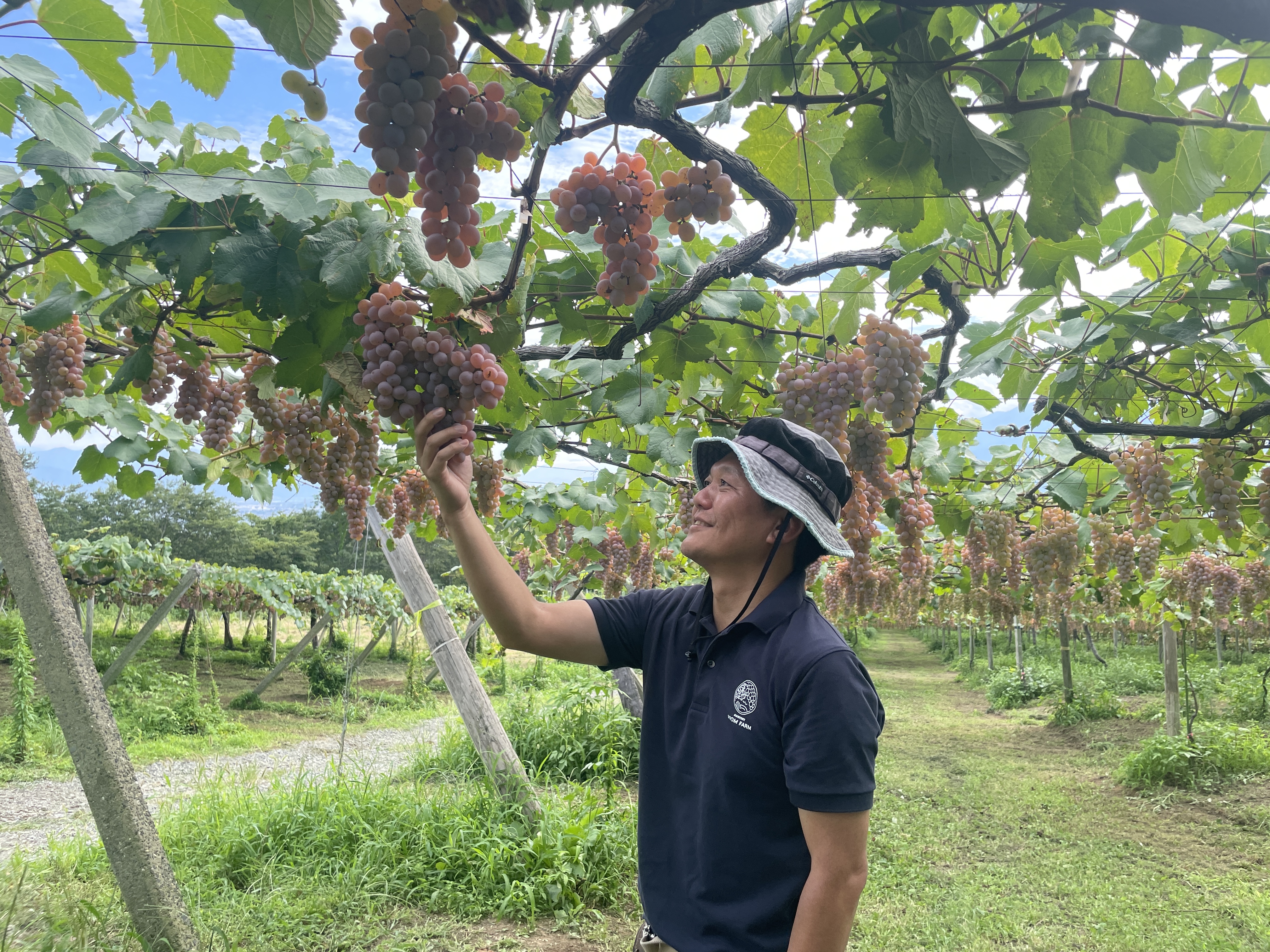
Since around 2014, Suntory has been rethinking where it grows Koshu. Rather than being bound to its existing vineyards, it has been planting on sites with better drainage, where the grapes can reach greater ripeness.
It has also cooperated from the outset with the selection of superior Koshu lineages that Yamanashi Prefecture has been working on since 2012.
Even within Koshu, yield and fruit characteristics differ from lineage to lineage. Suntory selects and plants lineages that, even if relatively low-yielding, accumulate sugar readily and give concentrated flavour.
Harvest timing is then judged carefully, assessing the ripeness of the grapes not by sugar level alone but according to the style of wine being aimed for.
In the vineyard, several Koshu clones are also being grown on a trial basis.
Even within the same variety, there are said to be differences in how the bunches set, in yield and in the character of the fruit. The aim is not necessarily to narrow things down to a single superior clone. Clones with rich fruit, clones that accumulate sugar readily and others are each grown so that their different strengths are put to good use, and the team is exploring which combinations suit the wine it has in mind.
Neither for growing methods nor for clones is there a search for one right answer; choices are made by reading the character of the grapes and the vineyard. That accumulation underpins Koshu winemaking at Tomi no Oka Winery.
CHAPTER 02
Expanding the Vineyards and Growing Koshu in Different Areas
For its Koshu, Suntory has now extended its company-managed vineyards across Yamanashi and Nagano prefectures, growing the grapes in ways that draw on the character of each site.
Four areas were introduced during this visit: Tateshina in Nagano Prefecture, and Futaba, Minami-Alps and Toyotomi in Yamanashi Prefecture.
Tateshina is a cool area at an elevation of about 800 m. Its clay soils are another feature, and a taut, firm style of Koshu is expected from it.
In Minami-Alps, meanwhile, there are about 10 ha of vineyards. Within the vineyards alone there is an elevation difference of about 100 m, and because Mount Kita blocks the late-afternoon sun, night-time temperatures fall, creating an environment in which acidity is readily retained.
In Futaba, the grapes grow plump and ripe, reminiscent of Tomi no Oka Winery, while warm Toyotomi yields Koshu with an even richer flavour.
Although it is all Koshu, the grapes take on different characters depending on where they are grown. According to Suntory, its estate and company-managed Koshu vineyards total about 18.5 ha. As the young vines mature, harvest volumes are expected to increase.
This diversification of growing areas broadens the range of expression of Koshu, and also builds up experience of cultivation under different climatic conditions.
CHAPTER 03
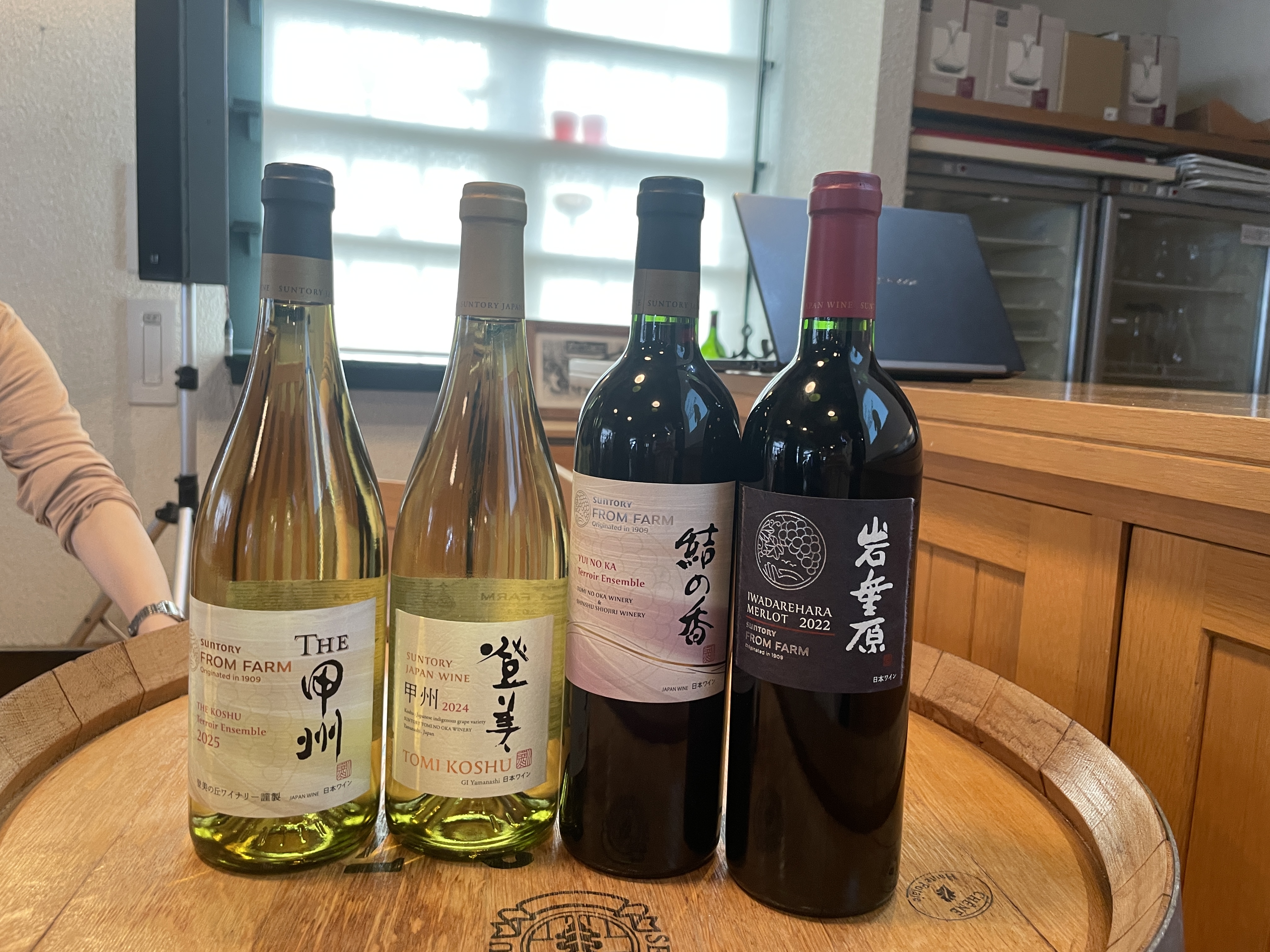
“THE Koshu Terroir Ensemble 2025”
The new product born of these many years of work is “THE Koshu Terroir Ensemble 2025.”
Its defining feature is that it blends Koshu grown in the four company-managed vineyards introduced above: Tateshina, Futaba, Minami-Alps and Toyotomi.
The harvest spans about two months, from around the end of August in warm Toyotomi to around the end of October in cool Tateshina.
What Suntory consistently aims for is to harvest fully ripe Koshu in each area. According to the explanation given during our visit, the sugar level of the grapes used averages around 18.5 to 19 degrees, a high level for Koshu.
The taut character of the cool sites and the rich fruit of the warm ones: by combining them, the aim was a layered aroma that no single area could provide, and a flavour that is both lively and concentrated.
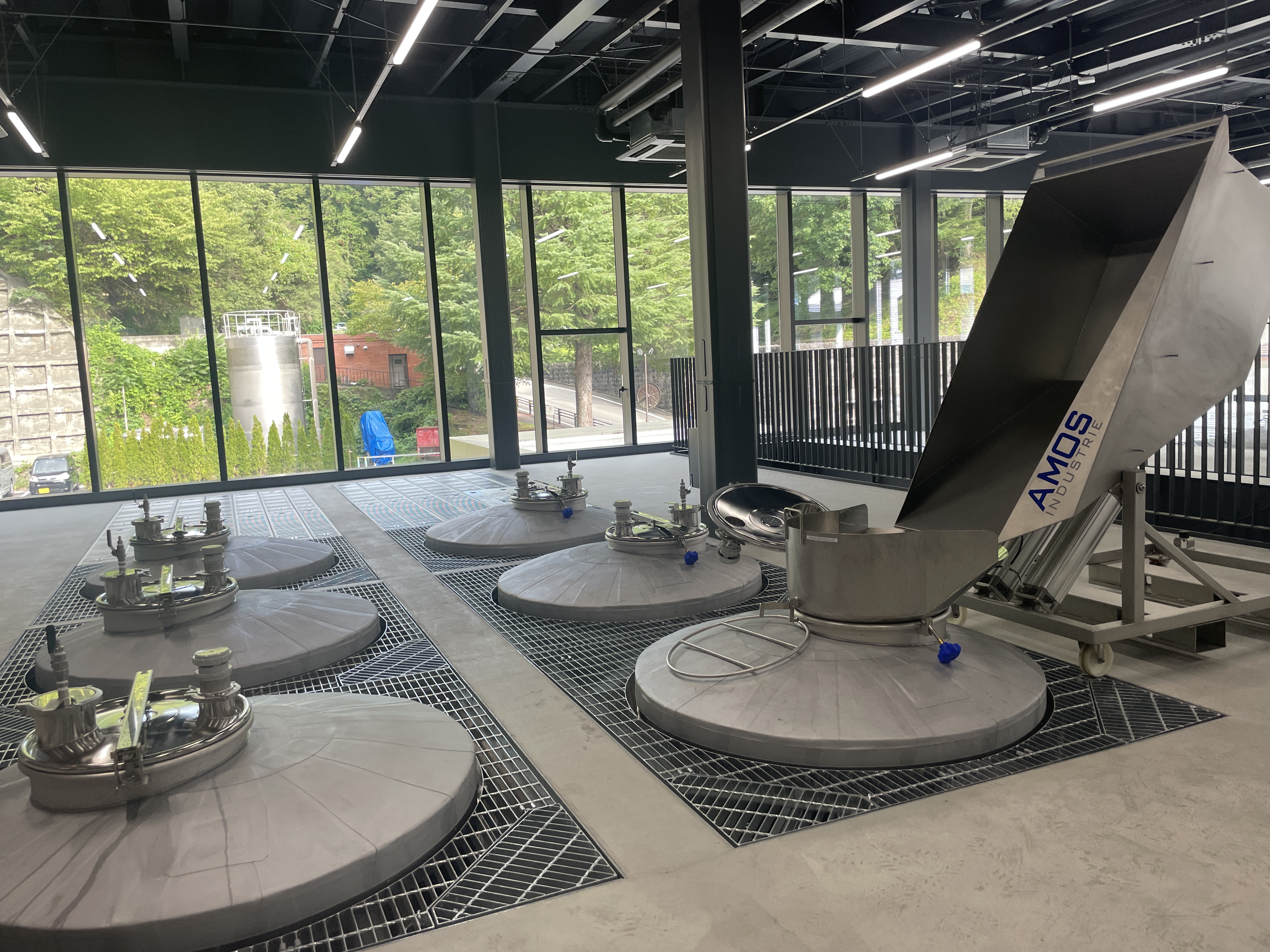
This wine was made in the newly built winemaking facility at Tomi no Oka Winery.
Just as equipment is being renewed at Shinshu Shiojiri Winery, investment in new facilities is also under way at Tomi no Oka Winery.
From site selection to clonal research, vineyard management and vinification: by handling everything in-house, the team can judge the right harvest time for each parcel of grapes and shape them into the wine it is aiming for.
“THE Koshu Terroir Ensemble 2025” can be seen as a product that lets consumers actually taste the results of Suntory's expansion of, and research into, Koshu cultivation.
CHAPTER 04
Towards the Future of Japanese Wine
On this trip we visited two Suntory sites: Shinshu Shiojiri Winery and Tomi no Oka Winery.
At Shinshu Shiojiri Winery, we saw a team carrying forward 90 years of history while renewing its winemaking equipment and working on soil research.
At Tomi no Oka Winery, new wines that combine the characters of different growing areas are emerging as the team reassesses the best sites for Koshu and studies clones and training systems.
What the two wineries had in common was that, while valuing the skills and experience built up over the years, they are not bound by established methods and keep making choices in pursuit of better wine.
As climate and growing conditions change, what kinds of grapes will be grown and what kinds of wine made? Suntory's efforts to find the answer will surely help lead winemaking in Japan.
About the author