
Full-Length Press Conference Video Included! What the Co-Creation of Suntory, Manns Wines, and Mercian Asks About the Future of Japanese Wine: A 3-Year Roadmap and Challenges
Contents
- 01In an Era of Over 500 Wineries, Purchasers Are Decreasing
- 02From "Cities" to "Regions" Over 3 Years: Gradually Expanding Touchpoints
- 03Can Japanese Nouveau Bring In New Drinkers?
- 04The Challenge of Quality Disparities Hidden Behind "Diversity"
- 05How to Overcome the "Price Barrier" of Japanese Wine
- 06Turning the Co-Creation of Three Companies into an Industry-Wide Movement
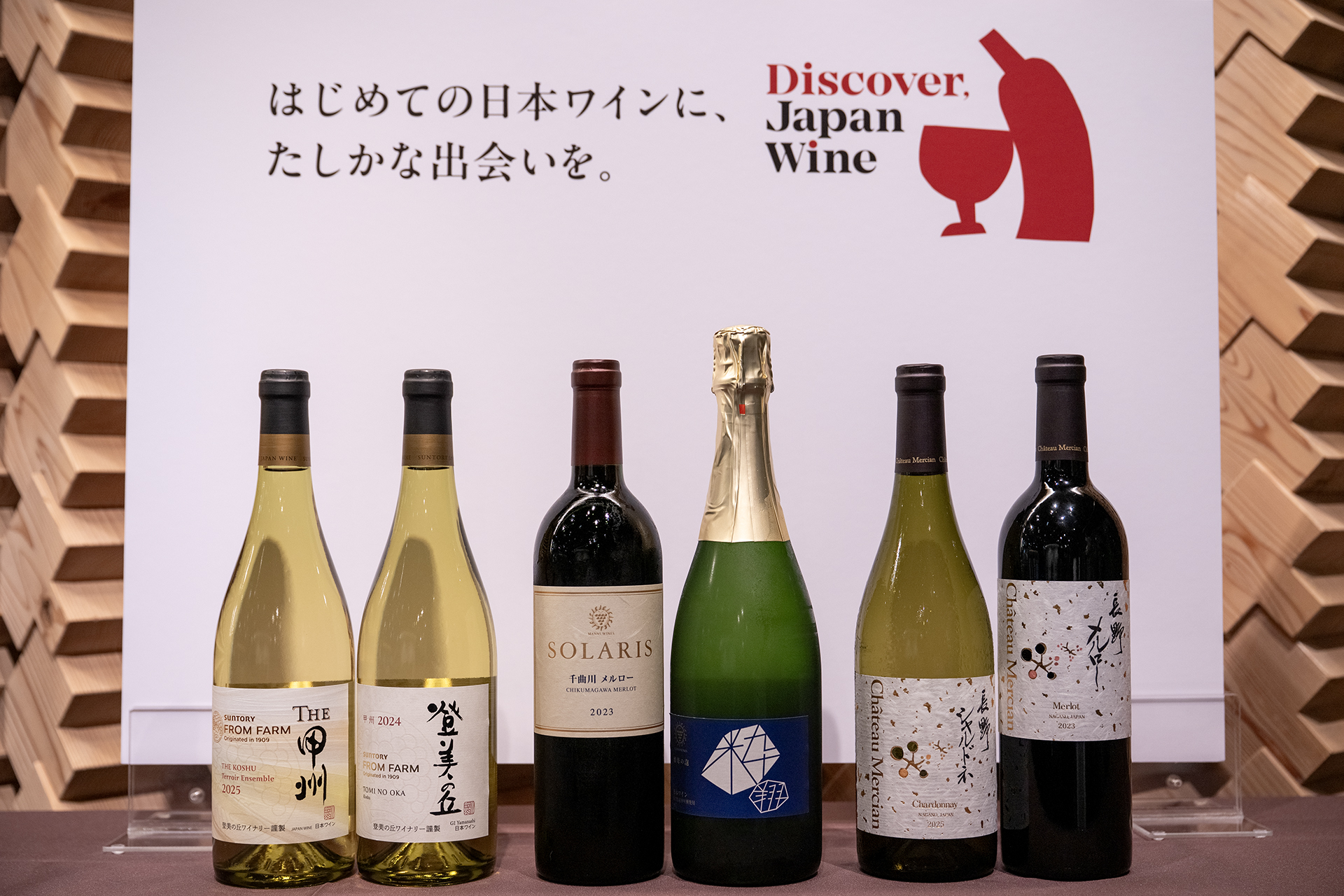
On October 21, 2026, a joint launch conference for the Japanese wine co-creation project "Discover, Japan Wine" was held in Marunouchi, Tokyo.
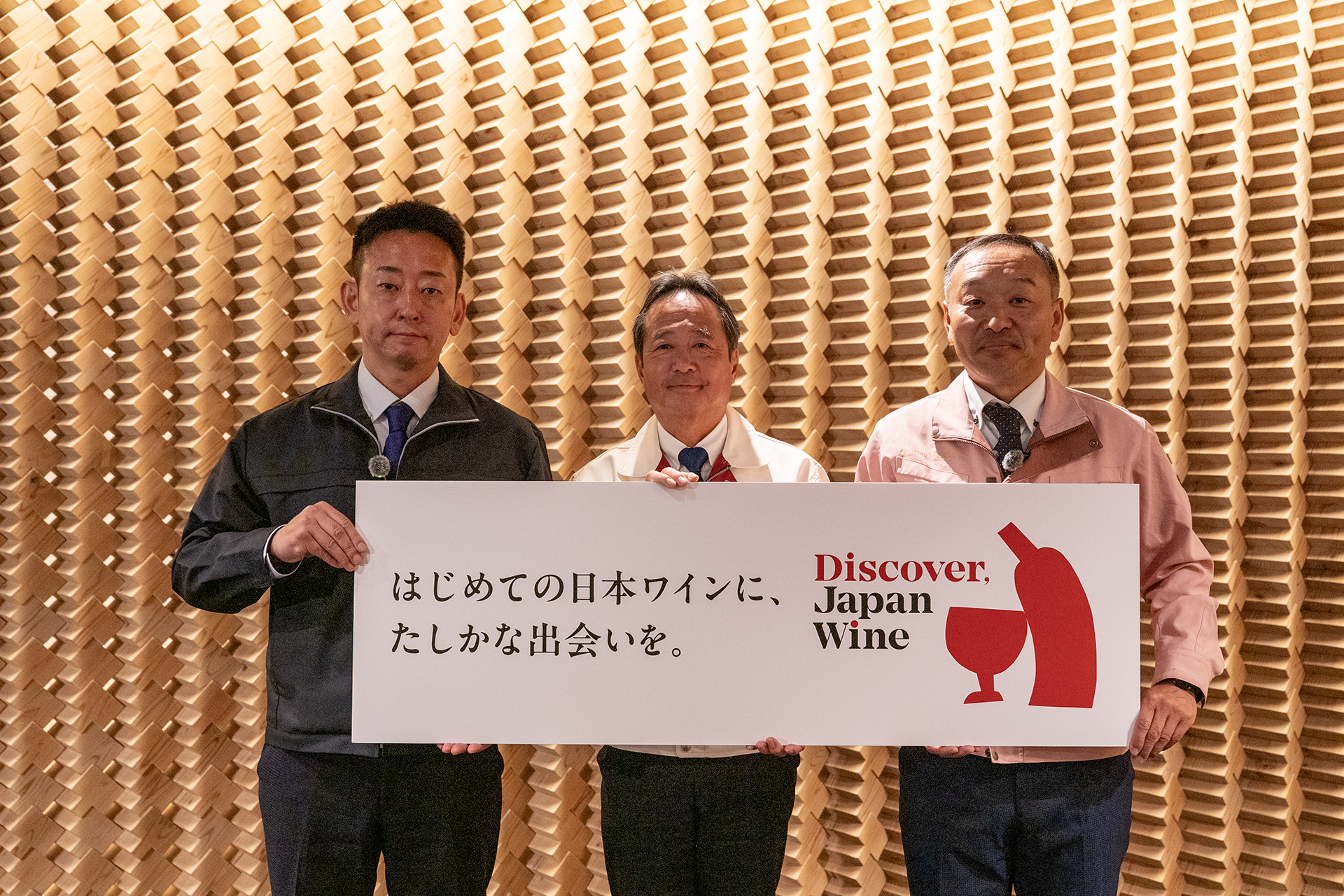
Three companies—Suntory Ltd., Manns Wines Co., Ltd., and Mercian Corporation—announced that they are transcending corporate boundaries to work toward expanding new drinkers of Japanese wine.
The quality of Japanese wine is improving, and its acclaim both domestically and internationally continues to rise. New wineries have been established all across the country, and the diversification of producing regions, grape varieties, and styles has also progressed.
However, contrary to that growth, the domestic Japanese wine market is stagnating. Even as wineries multiply, drinkers do not... Sharing this awareness of the problem, the three companies are rolling out new initiatives.
Under the slogan "A Reliable Encounter for Your First Japanese Wine," they set a target to increase the influx of new Japanese wine purchasers to 150% of the 2025 level by 2028.
 RELATED STORY「新たな飲み手を!」サントリー、マンズワイン、メルシャンが日本ワインの普及へ共同プロジェクト「Discover, Japan Wine」発足!
Below is a recording of the seminar "Changes and Challenges in the Japanese Wine Market" by Hironori Kobayashi, Head of Château Mercian Business Division at Mercian Corporation, along with the details of the Japanese wine co-creation project "Discover, Japan Wine." Also included is the talk session themed around "The Future of Japanese Wine Envisioned Beyond Competition by Three Winemakers."
CHAPTER 01
In an Era of Over 500 Wineries, Purchasers Are Decreasing
According to the announcement, the number of domestic wineries has increased by more than 200 over the past 10 years, reaching 519 in 2025. Export volume has also expanded by approximately 3.5 times over this decade.
On the other hand, domestic sales volume has trended downward in recent years following a growth phase up until around 2016. The number of purchasers has also declined from approximately 3.05 million in 2020 to about 2.16 million in 2025.
Even though producers are increasing, drinkers are not.
What the three companies cited in common is a lack of "touchpoints" with consumers. People have no opportunities to learn about Japanese wine. They do not know what it tastes like. They do not know where they can drink it.
Even if quality improves, if its appeal does not reach consumers, it will not lead to market expansion.
CHAPTER 02
From "Cities" to "Regions" Over 3 Years: Gradually Expanding Touchpoints
It was announced that the project will advance initiatives in stages from three perspectives: "Urban Areas," "Restaurants," and "Producing Regions." Let us look at each phase.
【Phase 1 in 2026: Creating touchpoints in urban areas】
Participate in "Marunouchi Japanese Wine Weeks 2026" hosted by Mitsubishi Estate to deliver that "first glass" to workers and visitors in Marunouchi through wine offerings and events at restaurants.
Additionally, each company's winery events will be held in November, such as "Manns Wine Festa Katsunuma," "Château Mercian Katsunuma Marché," and "Tomi no Oka Winery Harvest Thanksgiving."
【Phase 2 in 2027: Theme of diversifying touchpoints】
A central pillar will be cultivating a culture around Japanese primeur (shinshu). The vision is to nurture a custom of celebrating autumn in Japan with nouveau Japanese wine, similar to Beaujolais Nouveau.
Furthermore, by collaborating with diverse cultural areas such as music, art, wellness, and travel, touchpoints will be broadened beyond conventional wine enthusiasts.
Efforts to convey the charm of Japanese wine at restaurants will also be strengthened, aiming to create an environment where consumers can casually try a glass and choose their next bottle.
【Phase 3 in 2028: Deepening connections with producing regions】
Through wine tourism aiming for symbiosis with local communities, the goal is to turn the interest sparked in urban areas into visits to producing regions, fostering continuous fans.
The intent is not to limit these initiatives to just the three companies, but to broaden the circle of participation to other wineries, restaurants, and distributors.
CHAPTER 03
Can Japanese Nouveau Bring In New Drinkers?
After the conference, we asked a few questions about points of interest.
First, regarding the nouveau strategy, which is the priority measure for 2027. We asked Mr. Kobayashi of Mercian Corporation about the fact that Beaujolais Nouveau is not as popular as it once was, as well as the difficulties from a distribution standpoint.
Mr. Kobayashi explained that nouveau is positioned as a "catalyst" to spark encounters with Japanese wine, and that the initial goal is to increase touchpoints through events and promotions. He stated that at this point, no specific targets for increasing nouveau production have been set.
Attention will be on whether nouveau can serve as a catalyst leading to ongoing consumption of Japanese wine.
CHAPTER 04
The Challenge of Quality Disparities Hidden Behind "Diversity"
While over 500 wineries have been established across the country, the reality is that variations in quality do exist. If the very first bottle someone tastes fails to meet consumer expectations, it could affect the impression of Japanese wine as a whole. Wouldn't this also make it difficult to realize the slogan "A Reliable Encounter for Your First Japanese Wine"?
Therefore, we asked Mr. Shimazaki of Manns Wines Co., Ltd. about elevating the overall baseline of quality led by the three industry leaders.
In his reply, while sharing an awareness of the challenge regarding quality disparities, he indicated a policy of focusing on creating touchpoints with consumers in this particular project. The thinking is that quality improvement is a challenge that should be addressed in separate frameworks, such as by individual wineries or industry associations.
Increasing new drinkers while ensuring the quality that meets their expectations. Achieving both will likely be expected of the entire industry.
CHAPTER 05
How to Overcome the "Price Barrier" of Japanese Wine
In popularizing Japanese wine, price is also a major challenge. In striving to acquire new customers, how do they perceive the feedback that "Japanese wine is expensive"?
In his response, Mr. Miyashita of Suntory Ltd. spoke of the importance of conveying value that matches the price, rather than simply lowering prices.
Particularly memorable was his remark: "We want to make Japanese wine something that Japanese people can feel proud to drink."
How to communicate the value of Japanese wine and lead to satisfaction with its price. We look forward to future efforts in this regard.
CHAPTER 06
Turning the Co-Creation of Three Companies into an Industry-Wide Movement
The fact that three competing companies have shared the challenges of the overall Japanese wine market and taken action together toward solving them should have a tremendous impact on the industry.
There are limits to what individual wineries can achieve on their own when it comes to nurturing the Japanese wine market. That is why it is of great significance that these three companies, with their wealth of experience, distribution networks, and reach, join hands.
However, this project alone will not solve every challenge.
The key will be how encounters with consumers sparked by nouveau can lead to ongoing purchases. Furthermore, how far understanding regarding the quality and price of Japanese wine can be expanded. And whether the circle of collaboration can be widened to other wineries, restaurants, distributors, and producing regions.
Its true value will be tested over the next three years.
This project can be described as a major first step toward contemplating the future of Japanese wine across the entire industry and broadening touchpoints with new drinkers.
About the author