

RAW WINE, the hugely popular natural-wine event that drew around 1,600 people last year, returned to Tokyo this year.
Its second edition was even bigger. Held over two days, May 10–11, the event welcomed a total of about 2,000 wine lovers, filling the venue with tremendous energy.
Nearly 100 wineries exhibited this year, including 11 Japanese wine producers.
Here we introduce RAW WINE and share some scenes and voices from the event.
What Is RAW WINE?
The global natural-wine festival RAW WINE was founded in 2012 by Master of Wine Isabelle Legeron as a trade marketplace connecting growers, winemakers, importers, and consumers with the goal of promoting and developing natural wine.
Traveling through cities including London, Paris, New York, Montreal, Shanghai, and Tokyo, it brings together lovers of low-intervention wine with producers working organically, biodynamically, and naturally.
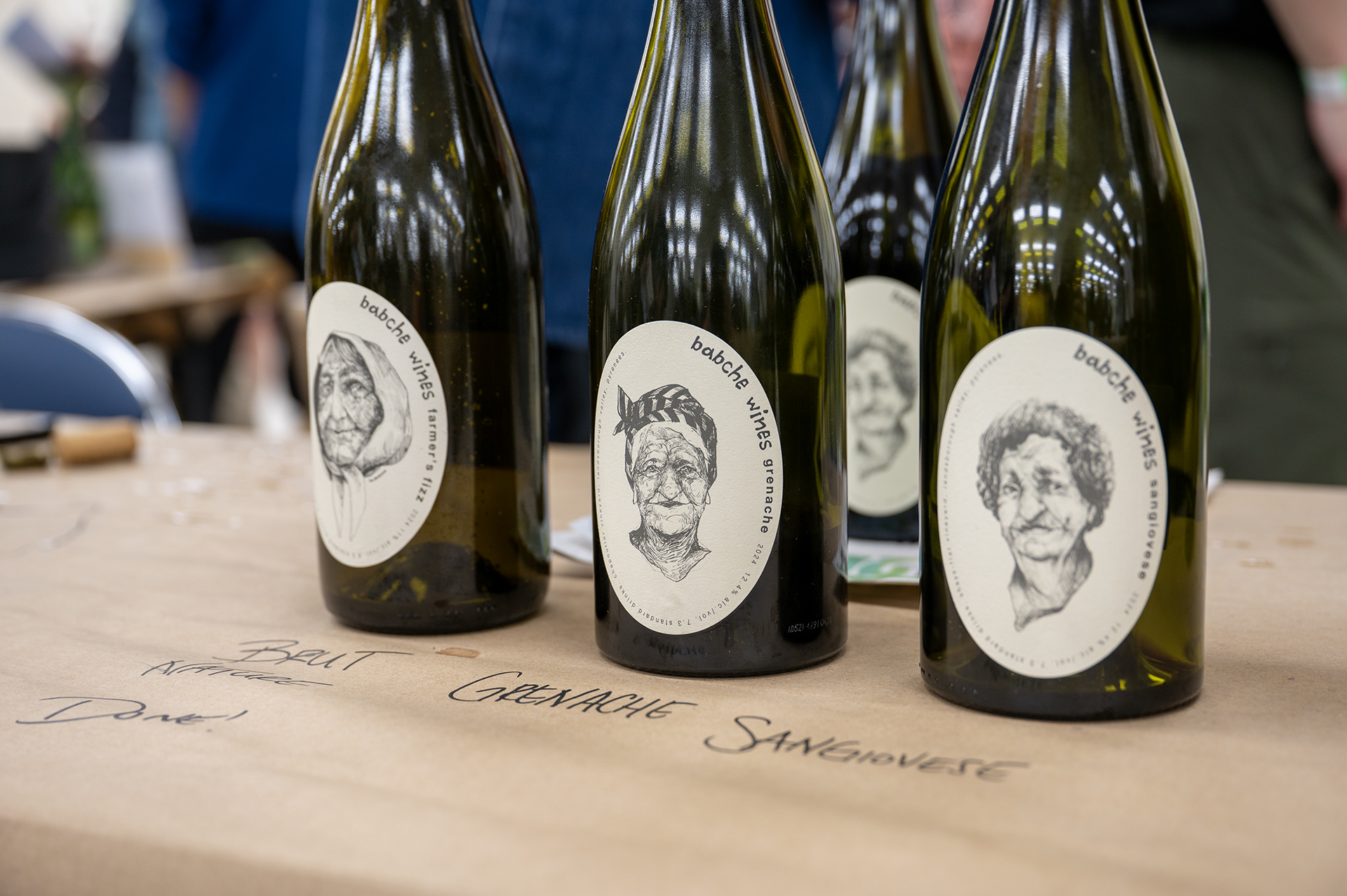
Rules for Wines Exhibited at RAW WINE
Wines shown within the RAW WINE community contain only minimal additives, if any.
Some are made without additives at all. Even when sulfites are added, the amounts are far below EU limits, and information on total sulfite use is disclosed for every wine.
RAW WINE sets ten standards, including hand harvesting, not blocking malolactic fermentation, limiting total sulfites to a maximum of 70 mg/l regardless of color or style, and avoiding sterile filtration.
Interviews with Wine Professionals
At the RAW WINE venue, we asked several knowledgeable participants about natural wine, how to enjoy it, and recent trends in the category.
🍇 “If you have healthy grapes, human intervention can be kept to a minimum. That is what ‘natural’ means to us.” — Haruyuki Yano (GRAPE REPUBLIC, Yamagata)
Haruyuki Yano, head winemaker at GRAPE REPUBLIC in Nanyo, Yamagata, is committed to organic viticulture that trusts the inherent power of the soil and grapes, and to winemaking with as little human intervention as possible.
“If you have healthy grapes, human intervention can be kept to a minimum. That is what ‘natural’ means to us.”
He says that for natural wine to become rooted as a culture rather than consumed as a passing trend, “we should value a balanced middle ground within the range of possibilities.”
🌍 “We simply listen to the vineyard and capture its voice in the bottle. We don’t add anything unnecessary.” — James Audas (DAS JUICE, Australia)
James Audas, winemaker at notable Australian producer DAS JUICE, also exhibited at RAW WINE Tokyo.
“We simply listen to the vineyard and capture its voice in the bottle. We don’t add anything unnecessary.”
He also speaks highly of Japanese wine, saying, “Pinot Noir from Hokkaido is at a level that can stand alongside famous Pinots from around the world.”
🍷 “‘Onozukara shikaru’—the state of something simply being as it is. I think the sensitivity to accept that is at the heart of Japanese natural wine.” — Hozumi Iwai (Iwaido / wine instructor)
Hozumi Iwai works as a sommelier and wine instructor based in Nagano and Tokyo. In 2022 he opened the wine shop Yudasaka Iwaido Saketen in Shimosuwa, Nagano, and is also popular as an instructor introducing the appeal of natural wine at wine schools.
His Tsukiji standing wine bar, Shubidoba, where guests can enjoy natural wine, also has many fans.
So what does “natural wine” mean to him?
“‘Onozukara shikaru’—the state of something simply being as it is. I think the sensitivity to accept that is at the heart of Japanese natural wine.”
Rather than treating differences in flavor caused by climate or vintage as “flaws,” Iwai says the real pleasure of natural wine lies in appreciating them as the “voice of nature.”
Seminar by Japanese Wine Producers
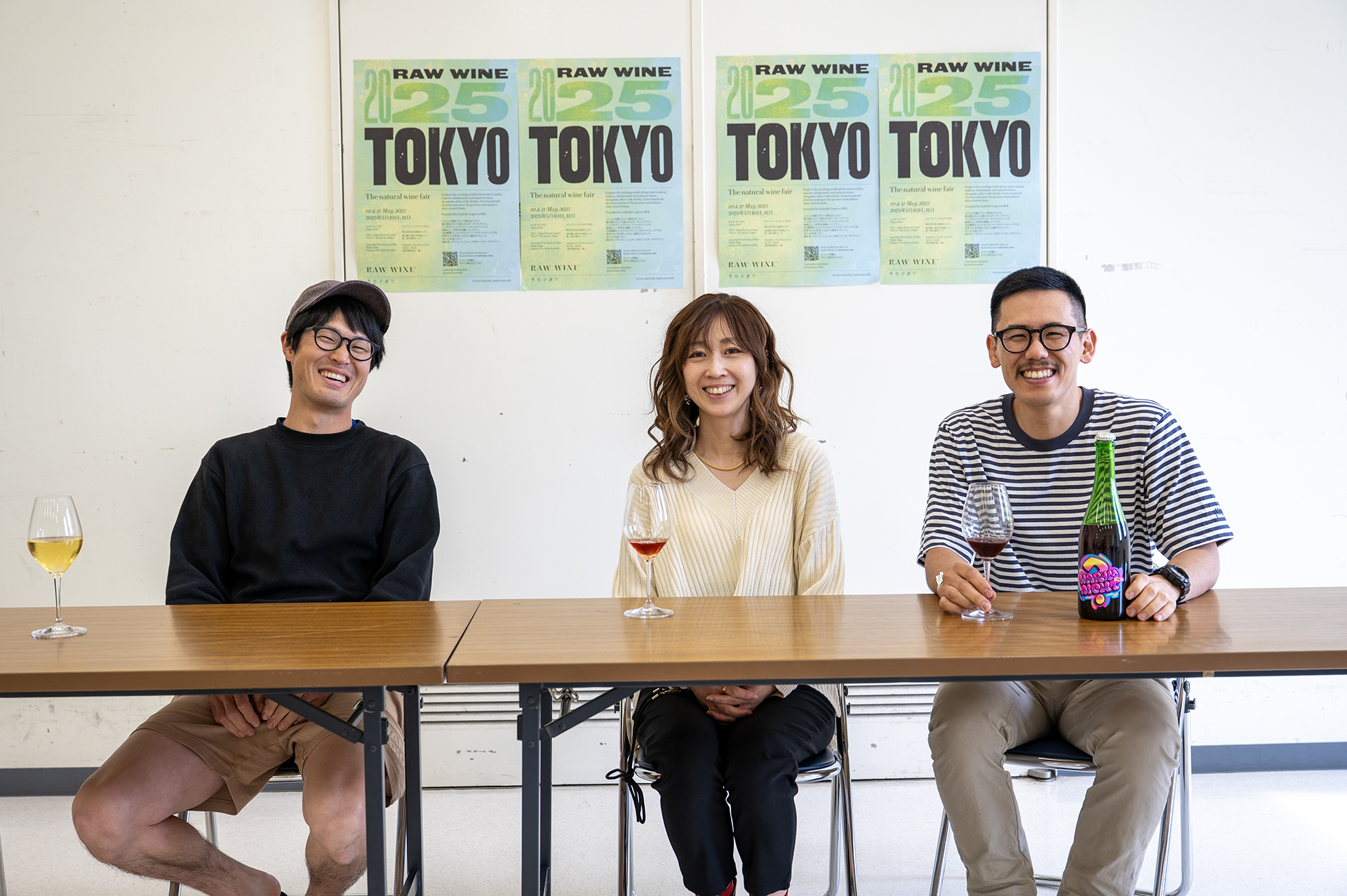
A seminar titled “Challenges of Natural Winemaking in Japan” was also held with Mr. Inoshita of Natan Winery, Haruyuki Yano of GRAPE REPUBLIC, and Mr. Sakamoto of SHINDO WINES.
The hour-long discussion went far beyond natural wine, including the experiences that first led each producer toward winemaking and plenty of insight into their love of wine.
Sake Appears Too: Have You Heard of the Growing “Bio Sake” Movement?
Sake was another point of interest. Producers from the Bio Sake community also exhibited this year.
Bio Sake is described as an umbrella term for sake brewed by making use of agricultural products grown in harmony with the natural environment, together with local water, soil, climate, and other natural conditions.
The community defines “Bio Sake” as meeting at least one of the following conditions:
・Certified under Japan’s Organic JAS standard
・Made from ingredients produced with as little pesticide and chemical fertilizer as possible, using production methods that harness natural forces
We were able to taste many such sakes at the event.
Here are a few of the participating producers.
“In our case, we brought sake made with organically grown rice and produced through natural methods.
By ‘natural methods,’ we mean initiatives such as reducing environmental impact in yeast addition and the brewing process; specifically, we have brought our CO2 emissions to zero.
Awareness of Bio Sake is still low, so we wanted to take part in a setting like this.” (Takenosuke Yasufuku, President, Kobe Shushinkan Breweries Ltd.)
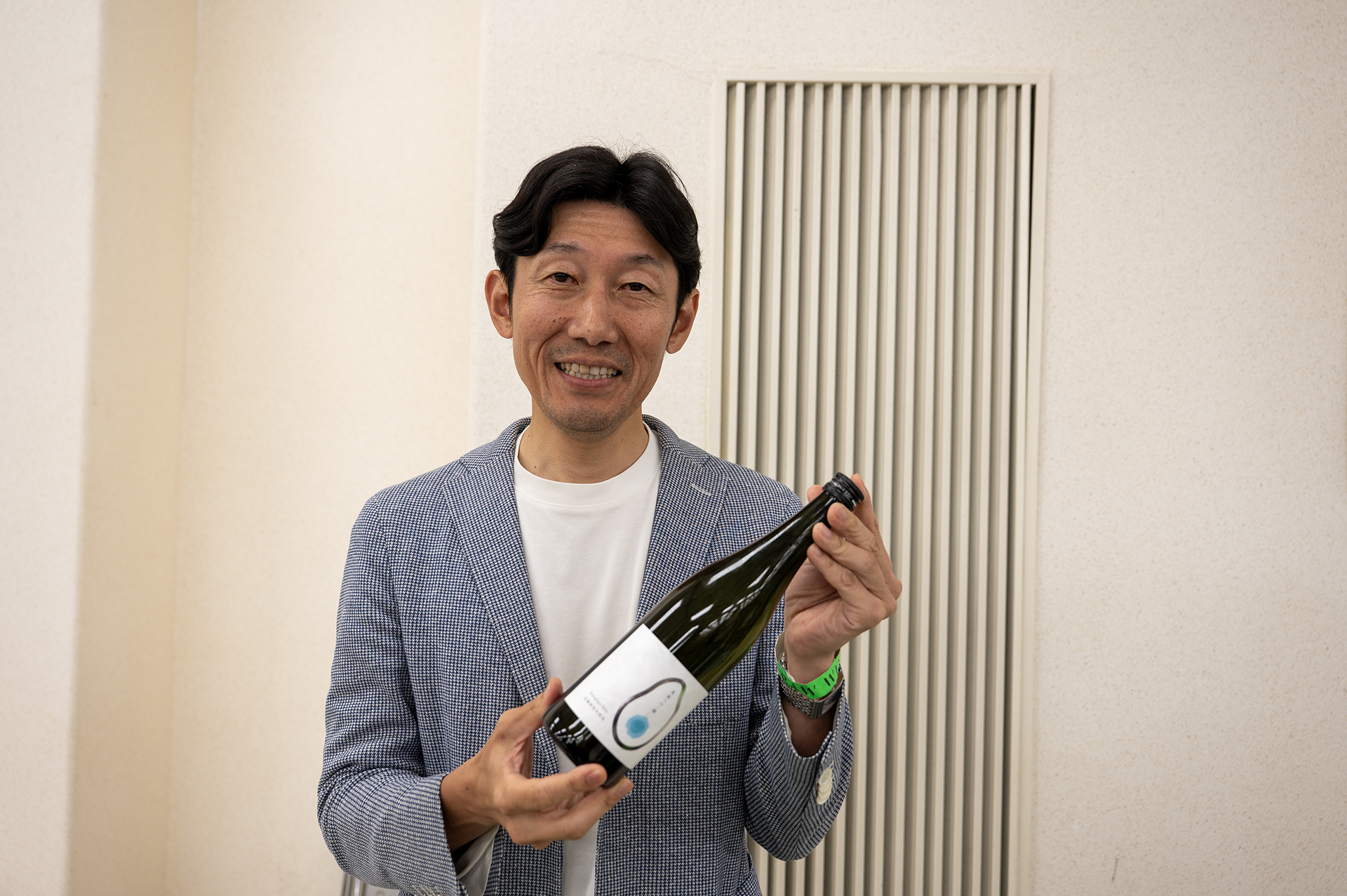
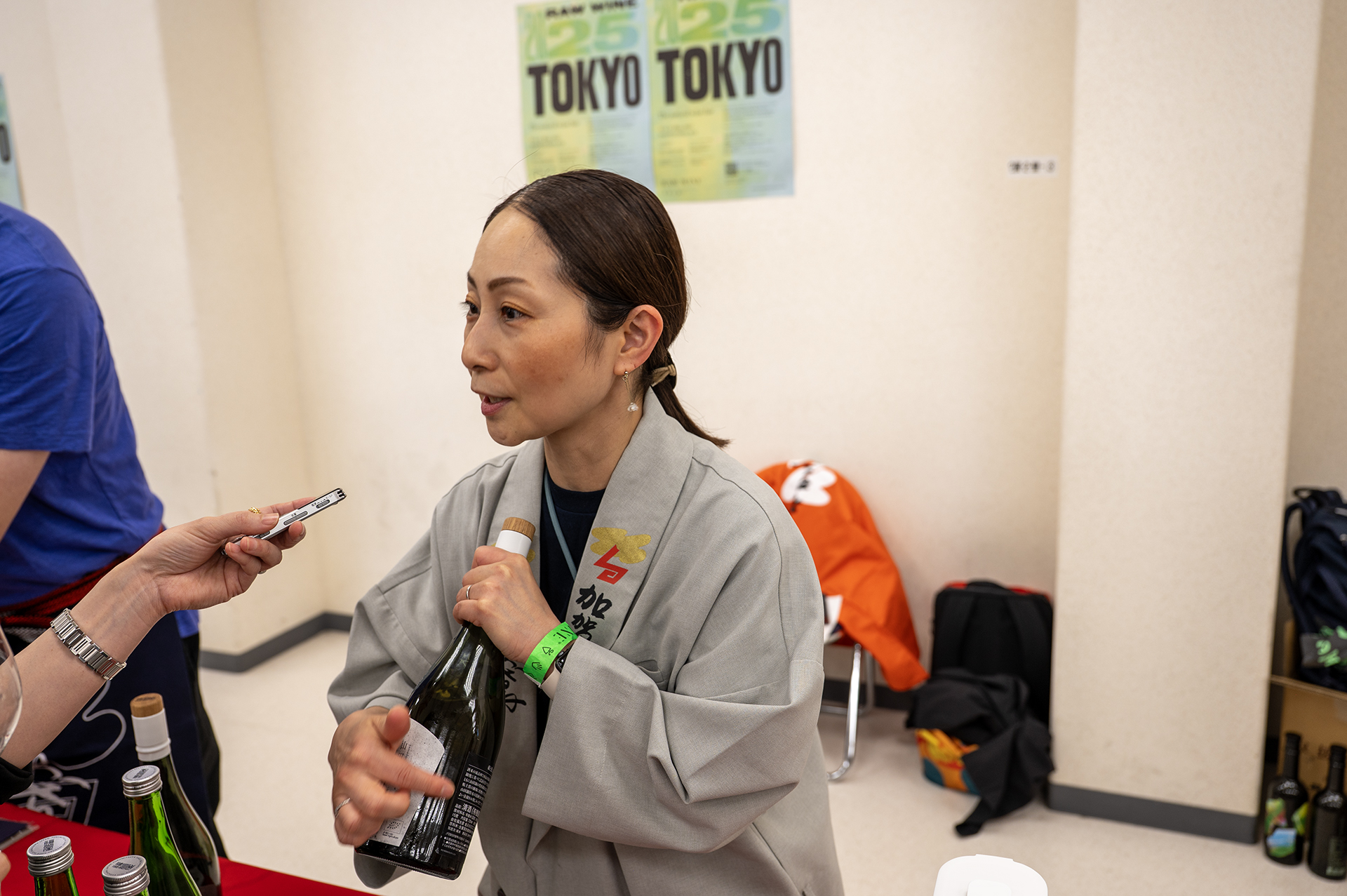
From Fukumitsuya in Kanazawa, known for its Kagatobi brand, bottles carried an ORGANIC shoulder label along with logos showing that the sake had obtained organic certification in Japan, the United States, and the EU.
“This is made with organically grown rice from certified organic paddies and brewed at a certified organic sake brewery. Naturally, we do not use anything unnecessary during production either.” (Ayumu Matsumae, Fukumitsuya, Kanazawa)
Interest in natural wine continues to grow.
There is no single way to enjoy it: approaching nature with an open mind is part of the pleasure.
It feels certain that the number of fans will continue to increase.