

Niagara is popular not only with Japanese-wine fans but also with people who are new to wine.
This white grape produces wines characterized by the distinctive aromas and fruit sweetness associated with American Vitis labrusca grapes, together with refreshing acidity.
Its sweet, unmistakable flavor and fresh acidity are excellent with richly flavored food. This time, we propose summery pairings of Niagara with recipes inspired by festival food stalls.
The recipes were created by culinary expert Kinuko Oda to pair with sparkling Niagara.
Niagara Is Also Recommended for Wine Beginners

Niagara is a grape variety originating in New York State near Niagara and is used both for wine and as a table grape.
Its Vitis labrusca “foxy” aroma once led some drinkers of more traditional wines to avoid it, but today that same scent is increasingly appreciated as part of the grape’s individuality.
Niagara wines are known for aromas reminiscent of grape juice, grape-flavored candy, and tropical fruit.
Some winemakers use techniques that suppress the distinctive aroma, while many others deliberately emphasize it as an attractive expression of Niagara itself.
Niagara is often made as a medium-sweet rather than dry wine, and because it works well with bubbles, sparkling versions are common too.
The wine used here is Otaru Niagara Sparkling from Hokkaido Wine, a slightly sweet sparkling wine.
It clearly expresses the sweet, tropical aromas typical of labrusca grapes, and that powerful floral fruitiness is the wine’s greatest charm.
The attack is intensely sweet, yet firm acidity remains, making the finish surprisingly clean.
It feels like an easygoing adult drink that you want to serve thoroughly chilled on a hot summer day.
Recommended Recipes for Niagara
Niagara combines sweetness and lightness with sharp acidity, making it especially good with dishes that have relatively assertive flavors or distinctive character.
Because the grape itself is aromatically unique, it can work well with equally individual food, including dishes reminiscent of summer festival stalls.
Culinary expert Kinuko Oda therefore adapted two classic festival-style foods to work with Niagara.
These are distinctive recipes for enjoying the grape in a more grown-up way.
Squid with Miso Butter and Balsamic Finish
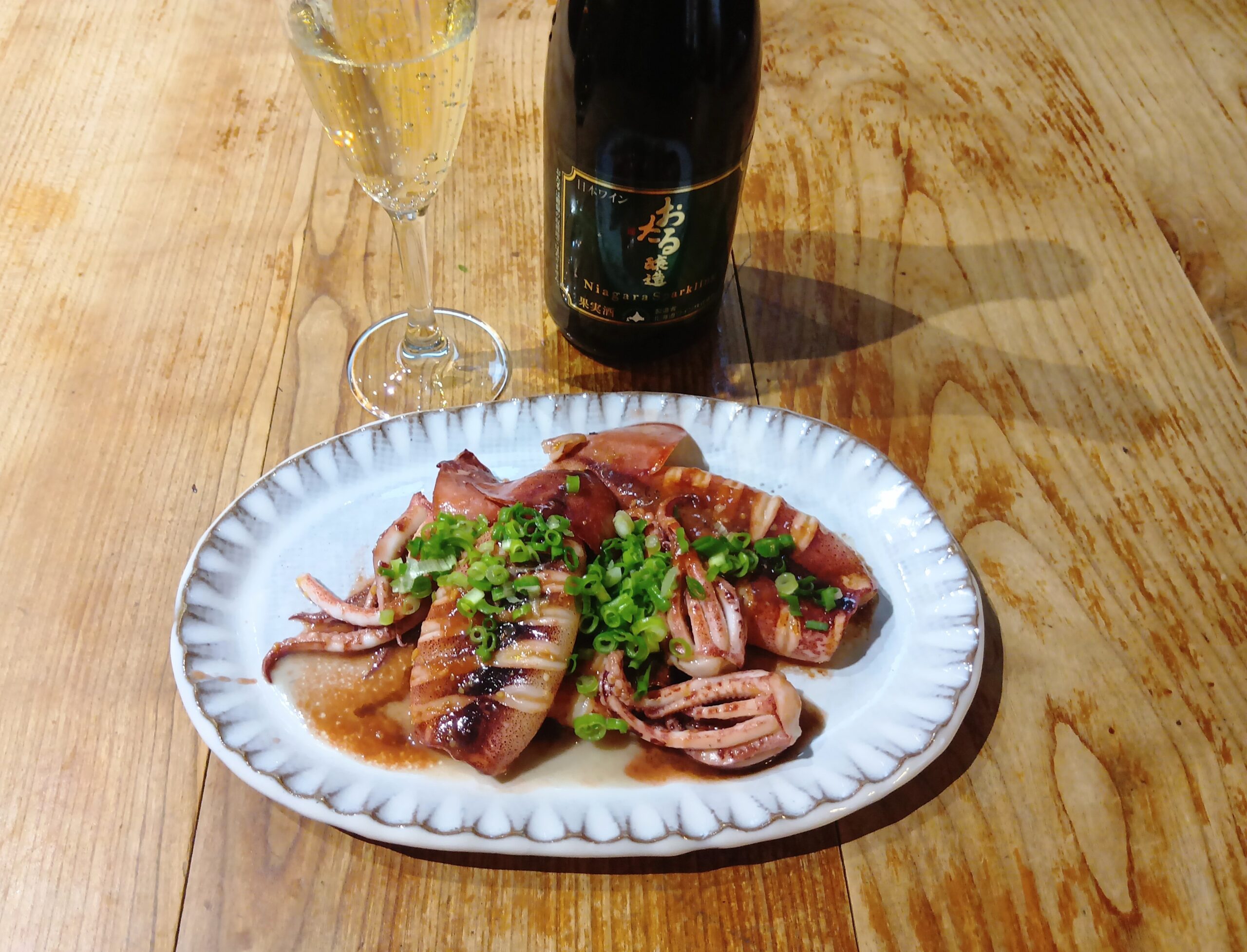
- Ingredients — Serves 2
◦ Squid, thawed or cleaned: 2–4 small squid, bodies and tentacles
◦ Butter: 10 g
Seasoning mixture:
◦ Miso: 1/2 tbsp
◦ Mirin: 1/2 tbsp
◦ Soy sauce: 1/2 tsp
• To finish
◦ Balsamic vinegar: 1 tsp
◦ Finely sliced green onion: a little
- Method
- Clean the squid and score the surface diagonally.
- Heat butter in a frying pan and quickly sear the squid over high heat.
- Add the mixed miso, mirin, and soy sauce all at once and quickly coat the squid.
- Transfer to a plate and finish with a drizzle of balsamic vinegar.
- Point
★The squid is seared quickly in butter and coated with miso and mirin. Balsamic vinegar is added specifically with wine pairing in mind. Sweet-savory grilled squid can be delicious in a more rustic style, but this version refines the flavors to make the dish more wine-friendly.
- Pairing
★Niagara’s sweetness and freshness match the squid’s umami. The wine’s sweetness stands up to the rich butter and miso, creating a pairing with a generous impression.
The squid’s slightly sticky texture and the wine’s smooth mouthfeel also come together well. Sweetness is added to the squid’s savory flavor and remains on the finish, making the combination especially satisfying.
Pork and Clam Yakisoba with Spice and Oyster Sauce
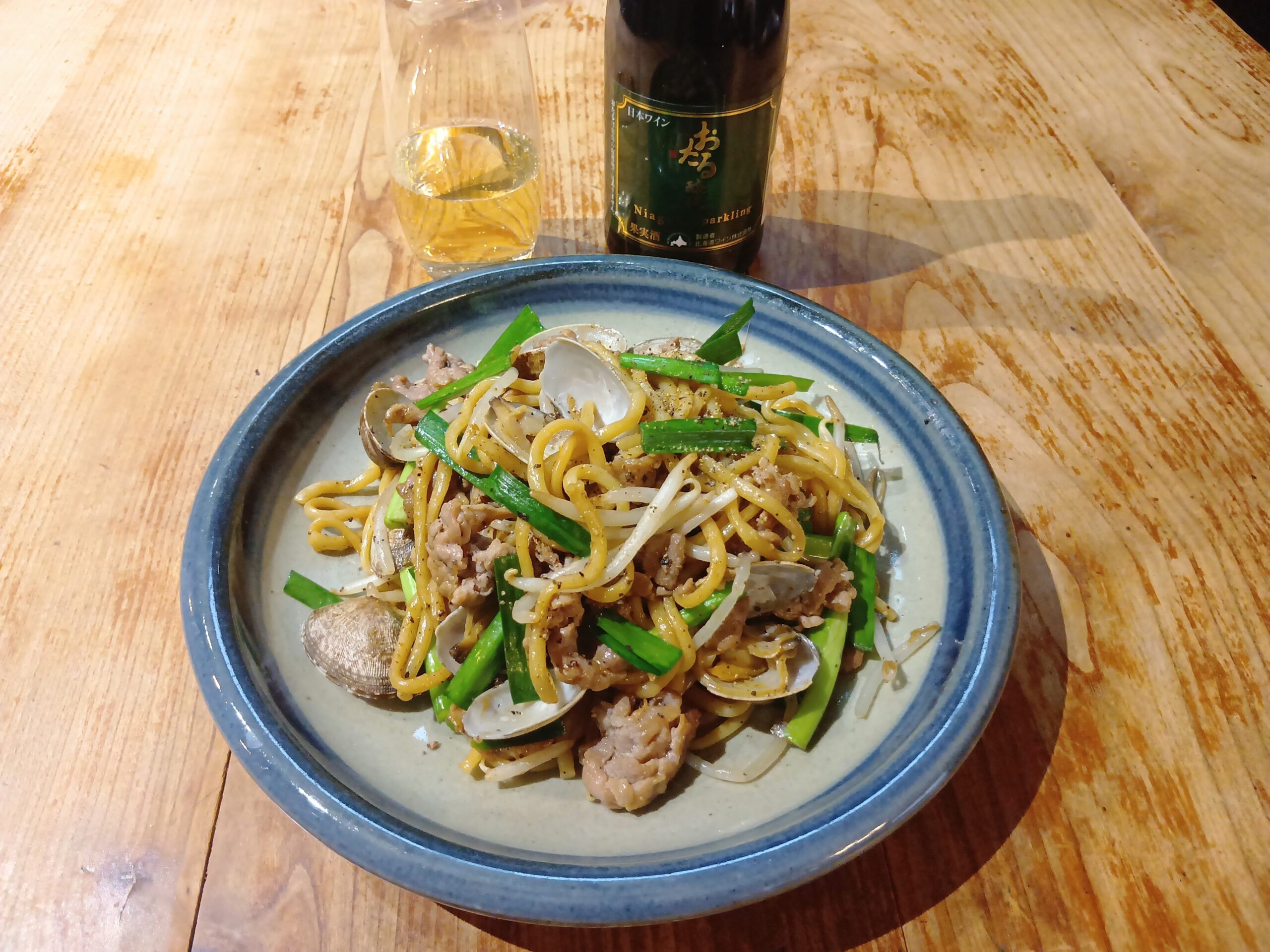
- Ingredients — Serves 2
◦ Yakisoba noodles: 2 portions
◦ Thinly sliced pork: 150 g
◦ Clams: 200 g, purged of sand
◦ Bean sprouts: 1/2 pack
◦ Garlic chives: 1/2 bunch
◦ Sesame oil: 1 tbsp
• Seasoning mixture
◦ Worcestershire sauce: 2 tbsp
◦ Oyster sauce: 1 tbsp
◦ Soy sauce: 1 tsp
• To finish
◦ Ground sansho and coarsely ground black pepper: to taste
- Method
- Heat sesame oil in a frying pan, stir-fry the pork, then add the clams and cook.
- Add the noodles and 70 ml water and stir-fry over high heat while combining with the other ingredients.
- Pour in the seasoning mixture, add bean sprouts and garlic chives cut into 3 cm lengths, and quickly toss everything together.
- Transfer to plates and finish with ground sansho and coarsely ground black pepper.
- Point
★Pork and clams are cooked together in a preparation inspired by Portuguese cuisine, combining pork stock with seafood umami in a way that works well with Niagara. Using both oyster sauce and Worcestershire sauce provides enough sauce flavor without making the dish excessively heavy. Black pepper and sansho add an important spicy accent.
- Pairing
★Niagara’s sweetness adds richness to the complex flavors of the yakisoba. The strong aroma of garlic chives and the spice of black pepper and sansho are wrapped in the wine’s sweetness, creating a precise balance rather than becoming overwhelming. Niagara’s sharp acidity refreshes the finish, keeping the combination from becoming too heavy while still making it a highly satisfying summer dinner.
Conclusion
Niagara can produce wines with enough sweetness and freshness to be satisfying even on their own.
Some people imagine its distinctive aroma makes pairing difficult, but it is surprisingly versatile. It works particularly well with food that has spice, bitterness, or a slightly unusual flavor profile, so it is worth experimenting.
Niagara wines taste especially good well chilled.
Why not enjoy summer with these recipes and a glass of sparkling Niagara?
Reference

Culinary Expert / Molecular Nutrition Advisor
Olive Oil Sommelier
Kinuko Oda
As a culinary expert and olive oil sommelier, Oda has created numerous tapas and home-style dishes designed to highlight the individual character of wine.
She currently focuses on small-group events centered on wine and tapas.
Rather than complicated theory, she values food that can be recreated at home and is “genuinely delicious,” explaining the pleasures of wine in accessible language for beginners.
Drawing on molecular nutrition, she is also known for practical ideas that help people care for their bodies while enjoying wine, and for proposing “wine time that leaves both mind and body feeling lighter” for adult audiences.
★ Cooking Class Information