

Muscat Bailey A is one of Japan’s signature red-wine grape varieties.
The dark-skinned grape was created by Zenbei Kawakami, founder of Iwanohara Vineyard, and is capable of producing high-quality wine.
The appeal of Muscat Bailey A goes beyond drinking it as wine: the grape can also be “eaten,” and its wine works beautifully as an ingredient in cooking.
This time, we present two easy recipes using Muscat Bailey A that can be enjoyed at home.
Both were created by culinary expert Kinuko Oda and are designed to pair with spring-like rosé wine.
Rosé Is a Great Way to Enjoy Muscat Bailey A

Muscat Bailey A is a grape variety created by crossing Bailey with Muscat Hamburg, and it is Japan’s most widely received red-wine grape by volume.
It is known for sweet-and-tart aromas reminiscent of strawberry, candy, cotton candy, and ume plum, together with refreshing and generally gentle acidity.
Depending on the quality of the grapes and the winemaking approach, however, the wine can also show complex notes of spice, herbs, chocolate, and aromas and flavors derived from oak aging. Its ability to produce many different styles is part of the variety’s appeal.
For this feature, we prepared a rosé made from 100% Muscat Bailey A.
Its vivid cherry-red color, reminiscent of Bordeaux rosé, gives the wine a distinctly spring-like appearance.
The wine offers charming red-fruit and cotton-candy-like flavors, good concentration, refreshing acidity, and pleasant tannins that evoke a spring breeze.
Muscat Bailey A rosés are often elegant overall and do not overwhelm food, making them versatile partners at the table.
Recommended Spring Recipes Using Muscat Bailey A
Wine made from Muscat Bailey A is also extremely useful in cooking.
Its refreshing acidity and concentrated fruit add complexity to food, making it a high-quality cooking wine as well.
Culinary expert Kinuko Oda created two preparations for us: a Muscat Bailey A-based sauce and a dessert.
Both recipes are easy to reproduce at home, so give them a try.
Choco Bucky Parfait
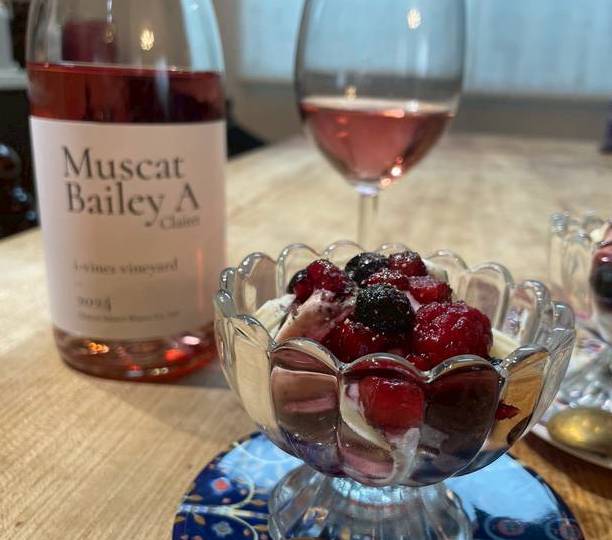
- Ingredients — Serves 2
Chateraise “Choco Bucky” ice cream bars … 2
Frozen mixed berries … 3 tbsp
Red wine … 80 ml
Soy sauce … 1/2 tsp
Honey … 1 tsp
Black pepper … to taste
- Method
1. Thaw the frozen mixed berries.
2. Put the red wine in a saucepan and reduce it by half. Add the soy sauce and honey and simmer briefly again. Leave to cool.
3. Roughly cut each Choco Bucky bar into about four pieces and place in serving dishes. Top with the mixed berries, pour over the sauce from step 2, and finish with black pepper.
- Point
★Reduce Muscat Bailey A wine, then add soy sauce and honey for a mitarashi-style sauce. A finishing touch of black pepper makes the pairing with wine even better. The familiar Chateraise “Choco Bucky” becomes a slightly more grown-up dessert.
- Pairing Comment
★Black pepper is the key to bringing the dessert closer to the wine. Soy sauce acts as a bridge, allowing ingredients that might otherwise seem difficult to pair with Muscat Bailey A to come together without clashing. The wine’s acidity gives the parfait a refreshing finish, while Muscat Bailey A’s flavor and complexity add extra layers to the dessert.
The Karaage with Ume-Butter Wine Sauce
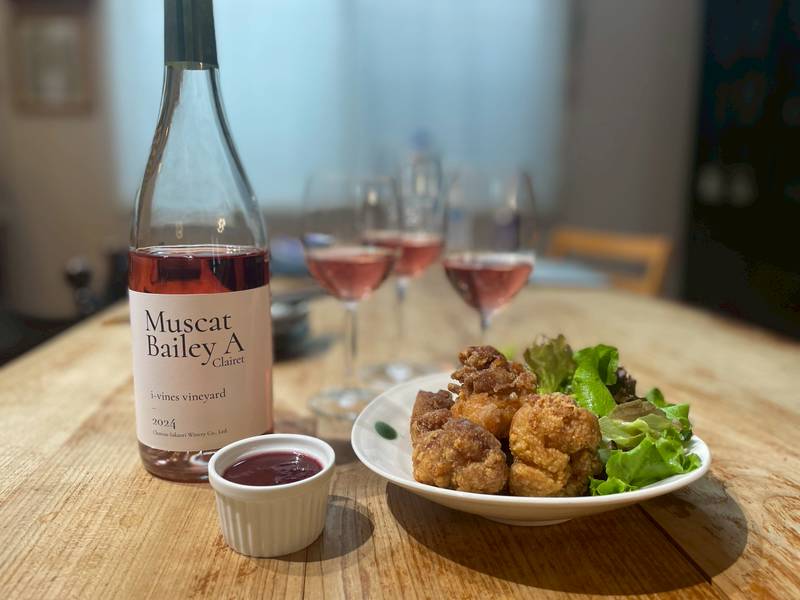
- Ingredients — Serves 2
Ajinomoto Frozen Foods “The Karaage” … 1 bag
Leaf lettuce … 3 leaves
Red wine … 80 ml
Umeboshi … 1
Butter … 10 g
Mirin … 1 tsp
- Method
1. Put the red wine in a saucepan and reduce it by half. Add the mashed umeboshi and mirin, then cook briefly.
2. Remove from the heat, add the butter, and stir until melted by the residual heat.
3. Microwave The Karaage according to the package directions, then arrange it on a plate lined with leaf lettuce.
4. Pour the sauce from step 2 over the karaage.
- Point
★This sauce combines Muscat Bailey A wine with salted butter and mirin. The ume flavor harmonizes with Bailey A’s acidity and fruit. Because the wine is reduced, the result is a richly flavored sauce.
- Pairing Comment
The key to the pairing is the harmony between the tartness of ume and the sweet-tart character of Muscat Bailey A. The combination stays refreshing, while the butter in the sauce leaves a subtle richness. Pairing the wine with the full-bodied sauce also extends its finish. It is a grown-up karaage sauce that wine lovers will appreciate.
Conclusion
Muscat Bailey A has a good balance of fruit and acidity with relatively restrained tannins, making it approachable even for people who are new to wine.
If you use Muscat Bailey A wine as a cooking ingredient, you can also enjoy pairing the finished dish with the wine without overthinking the combination.
If you would like to experience Muscat Bailey A to the full, try these recipes and pairings.
Reference

Culinary Expert / Molecular Nutrition Advisor
Olive Oil Sommelier
Kinuko Oda
As a culinary expert and olive oil sommelier, Oda has created numerous tapas and home-style dishes designed to highlight the individual character of wine.
She currently focuses on small-group events centered on wine and tapas.
Rather than complicated theory, she values food that can be recreated at home and is “genuinely delicious,” explaining the pleasures of wine in accessible language for beginners.
Drawing on molecular nutrition, she is also known for practical ideas that help people care for their bodies while enjoying wine, and for proposing “wine time that leaves both mind and body feeling lighter” for adult audiences.