
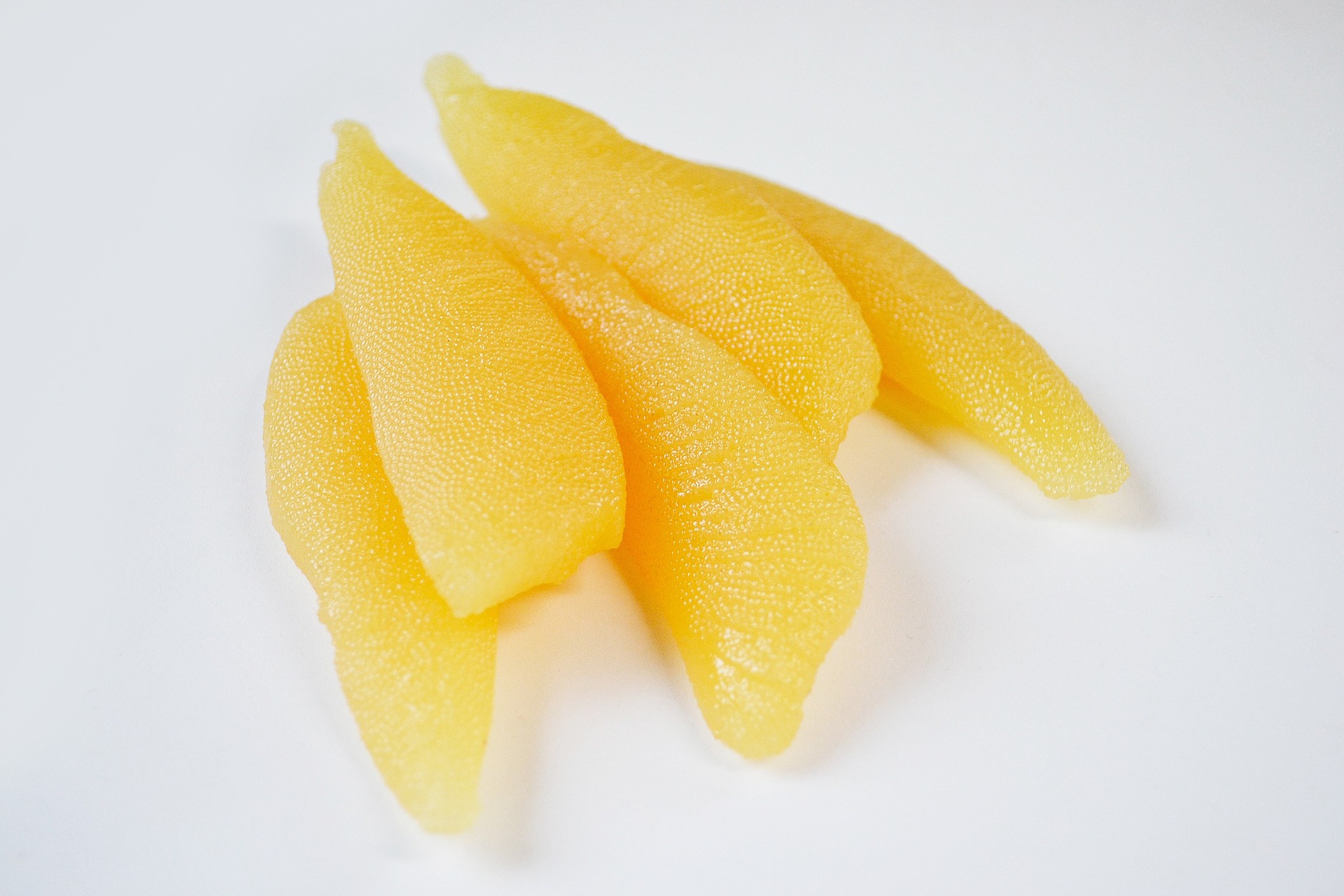
A processed food with the unique flavor of fish roe and an irresistible popping texture: "kazunoko" (herring roe).
It is one of the ingredients loved by Japanese people, enjoyed in New Year's osechi dishes, as sushi toppings, or in Matsumaezuke.
However, this kazunoko.
Its compatibility with wine is extremely poor, and some people even go so far as to view it as a "natural enemy"...
Here, we would like to examine whether the theory that "there is no wine that goes with kazunoko," which has almost become a sort of urban legend, is actually true.
The Specifications of Kazunoko
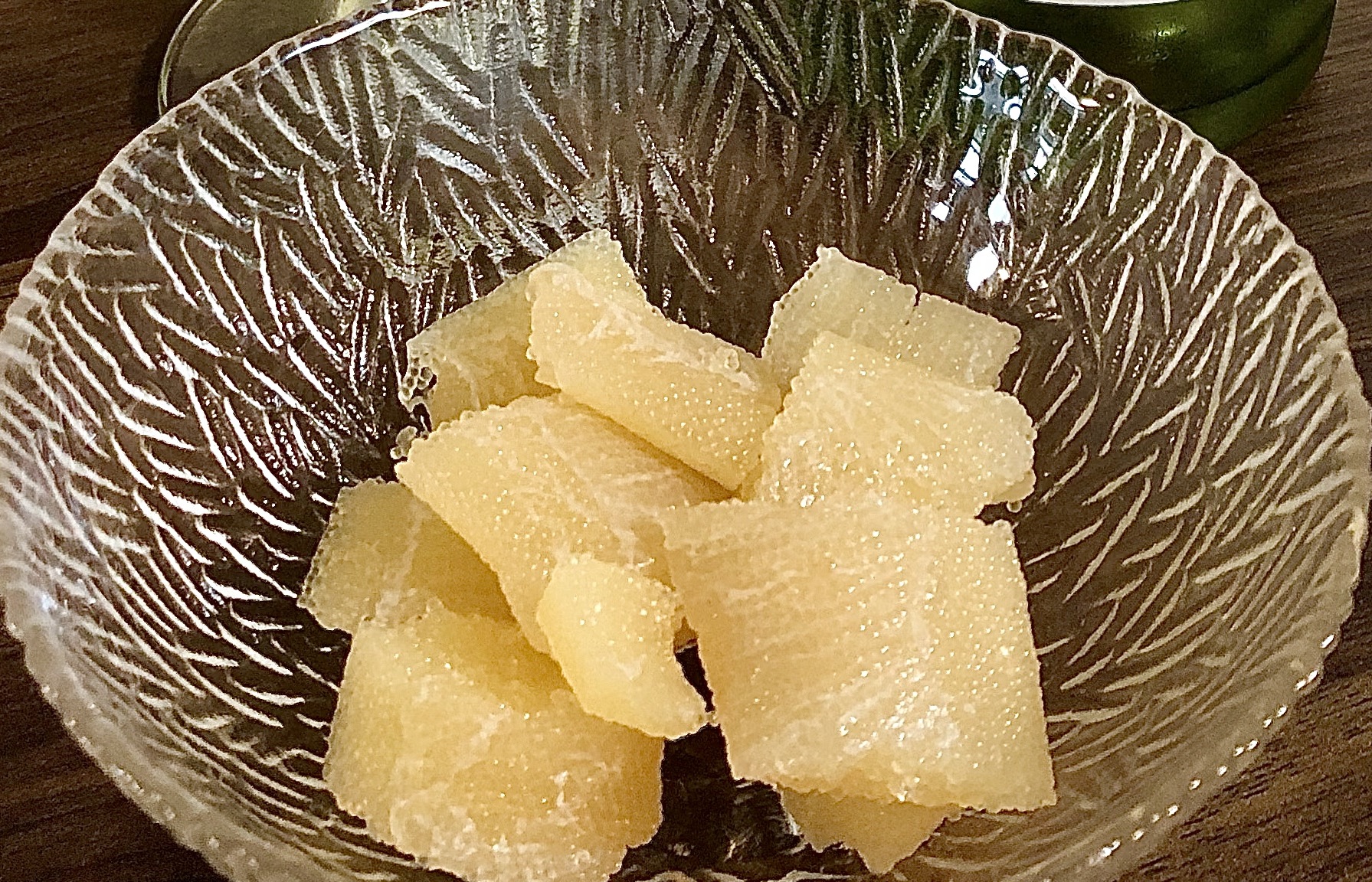
Before thinking about kazunoko and wine, let's first check the specifications of kazunoko.
Kazunoko is herring roe, a highly nutritious ingredient packed with the nutrients essential for herring to grow.
According to Kato Suisan Co., Ltd., excluding moisture, kazunoko consists of 82% protein and 14% lipids (72% of which are phospholipids), and the proportion of EPA and DHA within its lipids is actually higher than that of tuna toro.
Not only does it have excellent functional benefits such as anti-obesity effects, blood sugar improvement, and blood lipid improvement, but purines of concern are also extremely low compared to pork liver, eel, spinach, etc. (up to ~50 mg of total purines per 100 g), making it one of the body-friendly foods.
Despite these great aspects of kazunoko, one factor to pay attention to when examining its compatibility with wine is "EPA and DHA."
The secret behind why wine and kazunoko are said not to go together seems to lie in this EPA and DHA...
The Theory That DHA, EPA, and Sulfites Clash
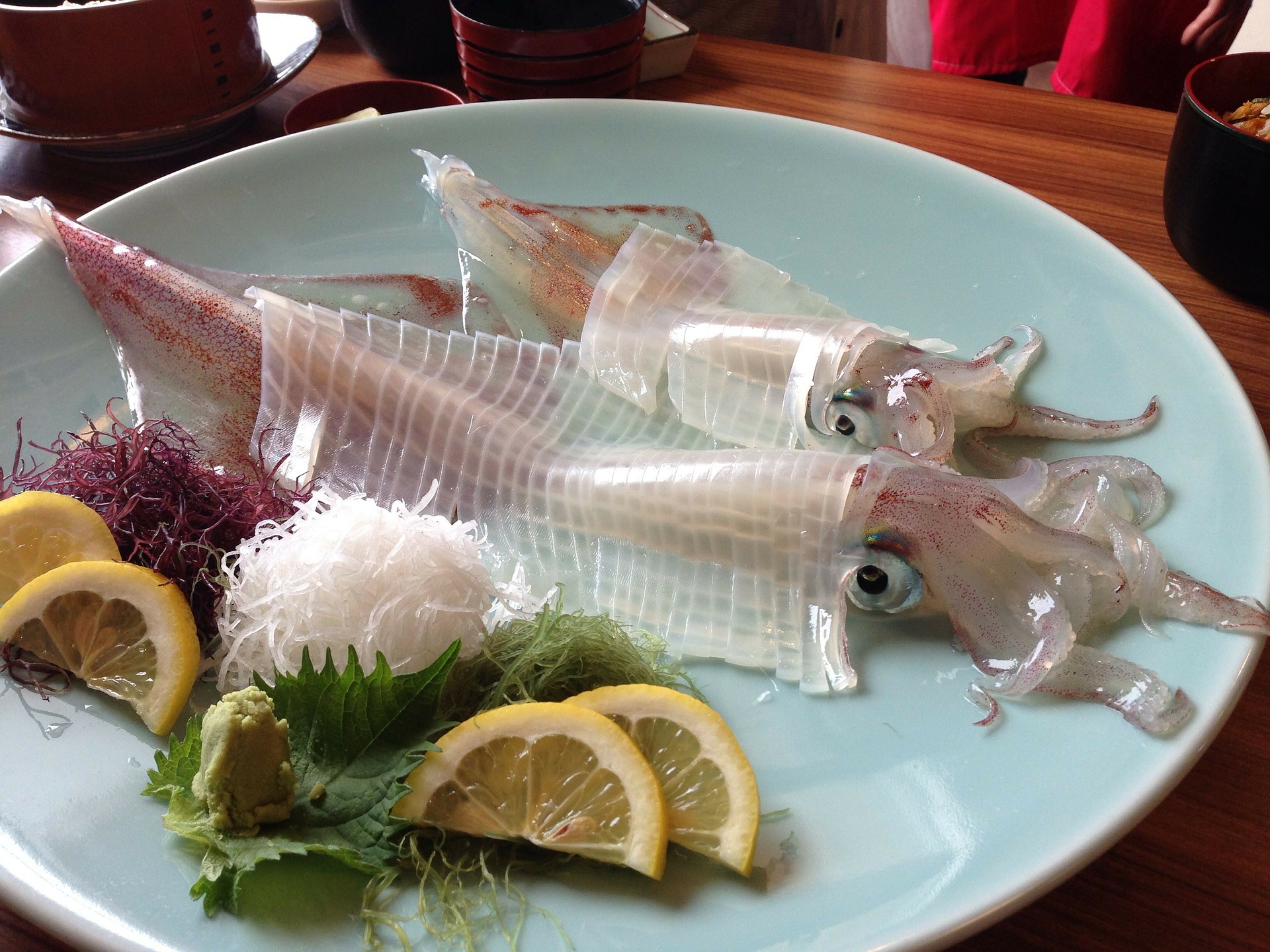
Previously, joint research was conducted by the National Research Institute of Brewing and the Japan Sake and Shochu Makers Association to verify the compatibility of white wine and sake with seafood.
First, the cause of fishy odors in seafood is DHA and EPA.
These are known as polyunsaturated fatty acids, and carbonyl compounds generated by the oxidation of DHA and EPA are considered to be the cause of fishy odors.
This research is a bit complex for beginners so we will skip the details, but according to the researchers, sulfites, citric acid, malic acid, etc., were each added to sake and wine, and then DHA was added to examine values such as bitterness and odor.
As a result, it was suggested that only the solutions with added sulfites produced values indicating noticeable odor and bitterness.
Although it was ultimately suggested that sulfites are not the sole factor, sensory evaluations conducted with panelists pairing grilled horse mackerel rich in DHA and EPA with both sulfite-added wine and wine without added sulfites revealed that the wine with added sulfites had poorer compatibility.
Since kazunoko is also rich in DHA and EPA, and most wines contain sulfites, this may be why they are perceived as poorly matched...
The Theory That Iron Content Is the Factor

Why is the pairing of kazunoko and wine so problematic?
Another theory is that "the iron content in wine spoils its pairing with seafood."
This is quite a well-known story, so many people may already know it.
This was discovered through research by Mr. Tamura of Mercian, who studied how fishy odors are perceived when oxidized EPA and DHA (peroxides) clash with iron; in summary, "when the iron contained in wine combines with the oxidized EPA and DHA (peroxides) present in seafood, fishy odors become more noticeable."
However, according to Mr. Tamura, "With fresh seafood that has not oxidized, fishy odors are less perceptible. Additionally, using olive oil or butter, or sprinkling lemon juice or seasonings, neutralizes the fishy odor itself, making it easier to pair with wine."
Even so, obtaining completely fresh kazunoko is likely difficult, and it is hard to believe that many people crave kazunoko so much that they would prepare it with bold culinary twists... (Would anyone go that far just to pair it with wine?)
If that is the case, as an approach, the idea of "adjusting the wine to suit the kazunoko..." might be the right one.
What Elements Make a Wine Suit Kazunoko?

Sulfites and iron.
If a wine clears these two points, its compatibility with kazunoko might improve.
First, regarding sulfites: if we focus solely on that, naturally we would want to choose vin nature.
Organic or biodynamic wines would also be fine, but the addition of sulfites is permitted to a fair degree, and from an enological perspective, additives are also allowed to some extent. (However, because sulfites are always produced during fermentation, they are actually contained in all wines.)
Nevertheless, since it is known that sulfites generally disappear within a few months even if added before bottling, wines that have undergone a certain degree of aging are considered to have virtually no free sulfites remaining (the sulfites that actually function to protect the wine).
Besides, many vin nature bottles suffer from quality issues...
Next is iron content.
While not entirely certain, it is said that due to vineyard environments, overseas wines might contain more iron than Japanese wines.
Of course, this might not apply to every single case, but Japan has soft water, and because pergola (trellis) cultivation is used, the vines are less susceptible to soil dust, leaving little room for iron uptake.
While no wine has zero iron, varieties like Koshu and Muscat Bailey A may be easier to pair with seafood compared to foreign wines.
Pairing Grace Gris de Koshu 2015 with Kazunoko
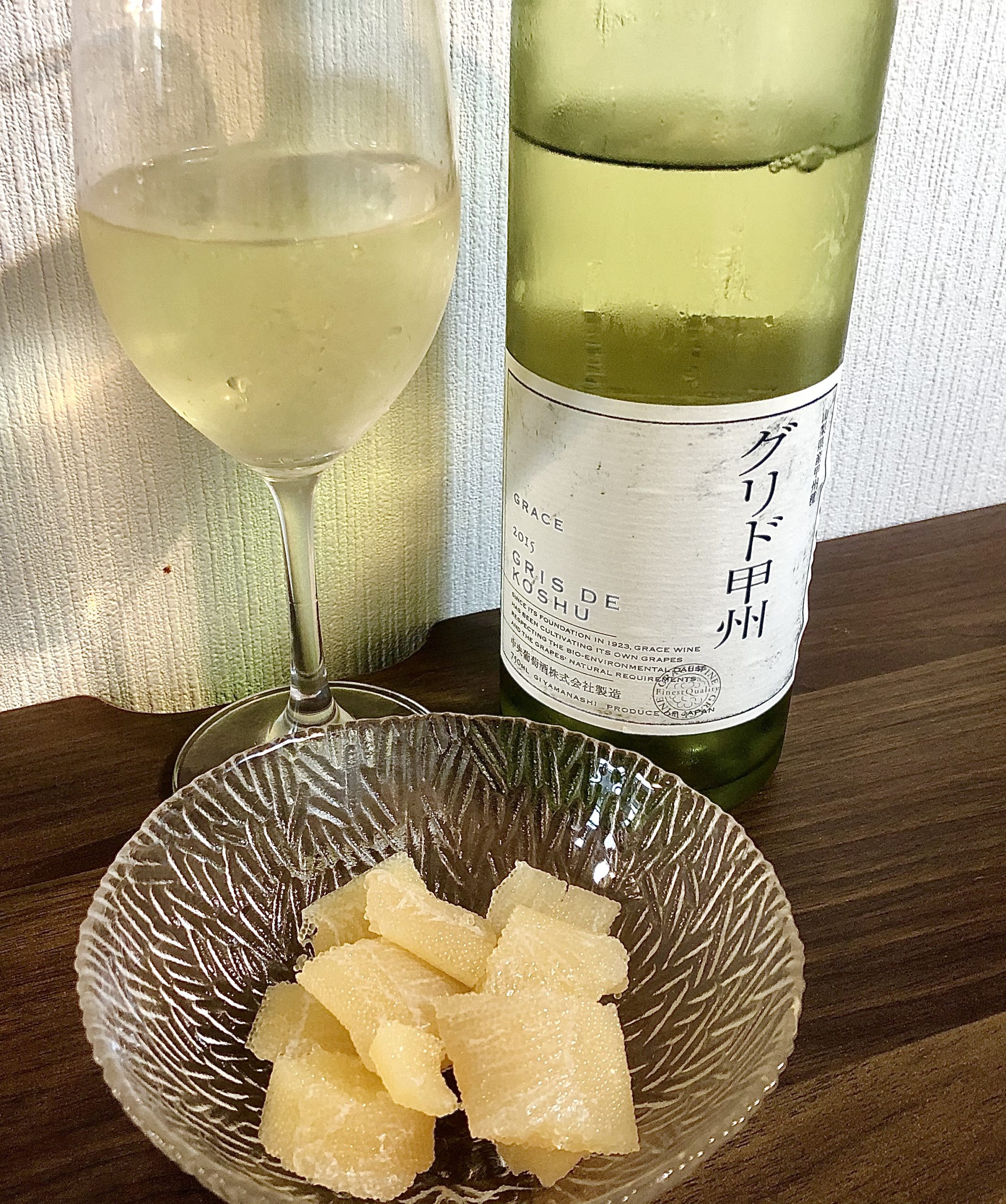
After considering wines that pair with "kazunoko" based on various factors, I concluded (arbitrarily) that Koshu would indeed be best...
Not overly aromatic, with gentle aromas; aged to a certain degree and believed to have almost no free sulfites; and available at an affordable price...
Satisfying these conditions, I paired kazunoko with Grace Gris de Koshu 2015 from Grace Wine (Chuo Winery).
Despite being a white wine, it maintains youthful, fresh aromas and flavors, and also offers an appealing, substantial palate characteristic of gris grapes.
Now, first, a simple pairing with plain kazunoko without any toppings.
The moment the kazunoko and wine blended in my mouth, I felt a flash of dread: "Uh-oh... an unpleasant fishiness and bitterness might be coming..." Yet it turned out to be a pleasant pairing, leaving a rather refreshing finish in the aftertaste.
Raising the bar even higher, I tried a version topped with bonito flakes; unexpectedly, the flavors of bonito flakes, kazunoko, and "Grace Gris de Koshu 2015" melded together into a complex and enjoyable pairing. (There was no fishiness whatsoever!)
Afterward, I also tested its pairing with sake, but in a strange turn of events, the sake's alcohol presence and aromatic elements were too dominant, making the pairing palate-fatiguing.
Taste is a personal matter so I won't force it, but personally, the victory went to "kazunoko × wine."
Searching for Elements That Work!

Wine and kazunoko.
It turned out that, depending on the approach, it doesn't have to end in a "worst-case result."
Naturally, what constitutes the "criterion of success" in pairing varies from person to person, but rather than outright rejecting various combinations, having an "open-minded attitude of meeting halfway" might be what matters.
Drilling the classic pairings found in wine textbooks and restaurants into your head is important.
However, once you have learned them, instead of clinging rigidly to that knowledge, taking on the challenge of the "next step" is key.
Isn't this precisely the true thrill of wine pairing?
This time it was kazunoko, but next time I'm thinking of trying it with another formidable opponent for wine: natto.
It is not hard to imagine that it will be a fierce battle, however...
References
Iron in Wine Is a Cause of Unpleasant Fishy Aftertaste in Combinations of Seafood and Wine