

When it comes to times of the year with the most opportunities for drinking, the year-end and New Year holidays are prime examples.
Many people probably get more excited than usual and find themselves unintentionally drinking too much…
While it is said that alcohol is the best of all medicines (especially wine), that is only the case if moderate drinking is maintained.
Precisely because it is a season when drinking tends to increase, let us take another look and learn about "intoxication."
What Does Getting Drunk Mean?
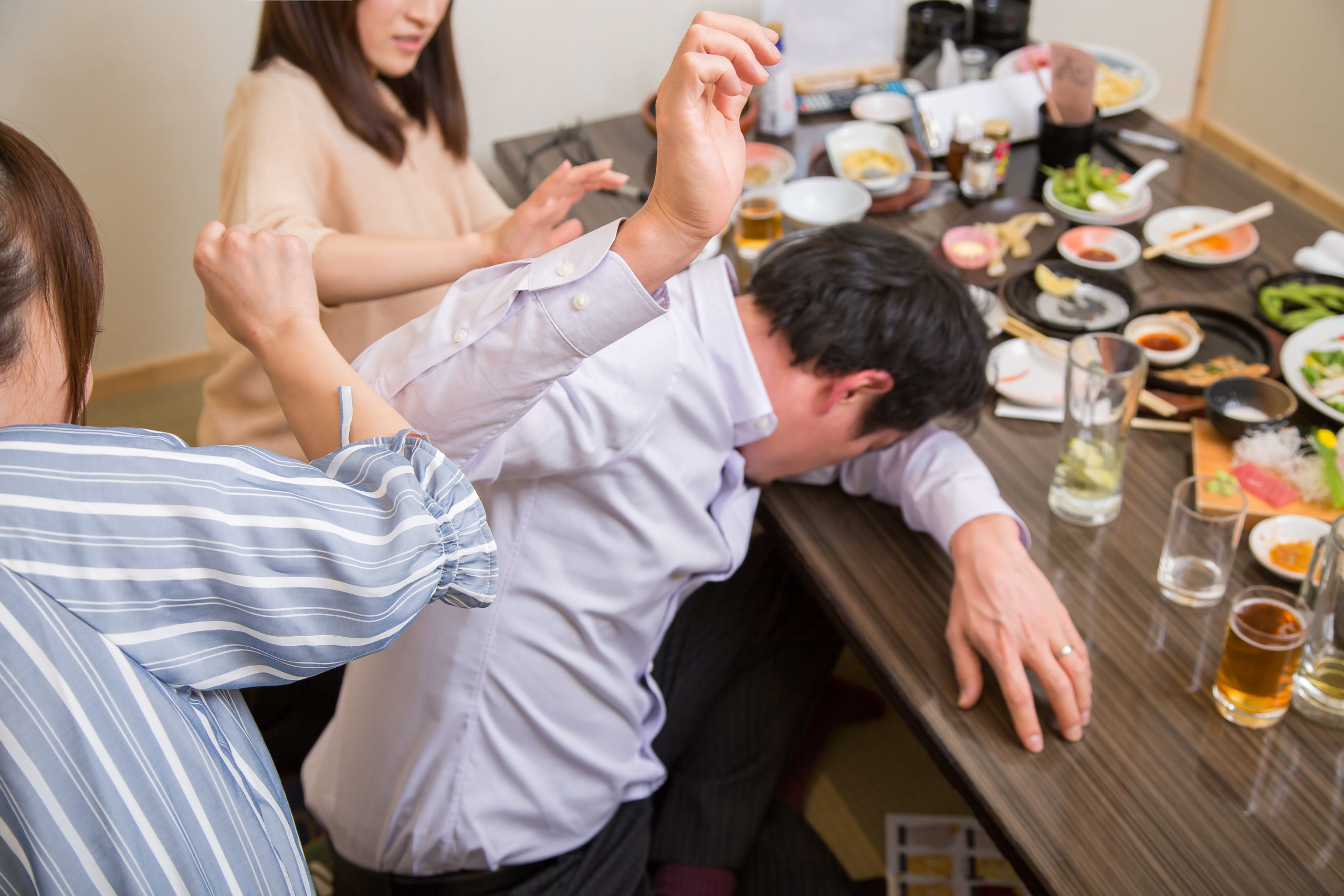
To begin with, what kind of state is "getting drunk"?
Intoxication happens like this:
- Consuming alcoholic beverages
↓ - Alcohol is transported by blood to the brain
↓ - Enters nerve cells
↓ - Nerve cells are paralyzed by alcohol
Basically, that is the condition.
In the early stages of intoxication, the sympathetic nervous system is paralyzed, causing capillaries to dilate and blood pressure to drop.
Then, your face becomes flushed, and because sensory nerves are dulled due to paralyzed nerve cells, your body loses strength, leading to a state where you can feel an indescribable sense of euphoria…
This is likely what is commonly known as "tipsy."
However, some heavy drinkers cannot stop at being tipsy and continue drinking even more.
When that happens, they enter stages like this:
Next-Level Drunkenness
It would be fine if you could keep things fun with a moderate amount of drinking, but as mentioned earlier, consuming a lot of alcohol affects various nervous functions.
For example, parts of the brain that govern reason, such as the frontal lobe, become deactivated, leading into dangerous territory where one acts purely on instinct, says foolish things, or becomes unruly…
Motor nerves are naturally paralyzed as well, resulting in a state of "dead drunkenness" where one might walk in directions contrary to their own intentions.
Incidentally, the state of "feeling good" is said to correspond to a blood alcohol concentration of around 0.02%, and if the concentration rises higher than that, it leads to states like inebriation or stupor.
Furthermore, exceeding 0.4% leads to a coma… which could bring about the worst possible outcome.
In the past, we often heard news of people drinking excessively at Coming-of-Age Day ceremonies or 20th-birthday celebrations and falling into comas (and likely still do today), but in any case, drinking too much brings nothing but harm and zero benefit.
Stopping at moderate drinking might be difficult, but let us make a habit of keeping it in moderation.
The Path of Alcohol in the Body and Hangovers
What path does alcohol follow once it enters our bodies?
Basically, although alcohol is excreted through breath, sweat, and urine, most of it is broken down and detoxified through the primary alcohol metabolic pathway in the liver.
- Alcohol
↓ - Alcohol dehydrogenase
↓ - Acetaldehyde
↓ - Aldehyde dehydrogenase
↓ - Acetic acid
↓ - Acetyl-CoA
↓ - Fatty acids, cholesterol, energy, etc.
↓ - Water, carbon dioxide
This is the general primary pathway of alcohol breakdown. *There is also breakdown via MEOS (microsomal ethanol oxidizing system bypass pathway).
Incidentally, because acetaldehyde is a toxic substance, it was previously thought that hangovers were caused by this remaining unmetabolized the next morning.
However, various studies show that acetaldehyde is already gone from the body by the time a hangover occurs, and the severity of hangovers varies even with equivalent amounts of alcohol, so the acetaldehyde theory seems to be viewed critically nowadays.
On the other hand, attention is currently drawn to the congener (impurities or trace substances) theory regarding what is contained in the alcohol consumed, depending on the type of alcoholic beverage.
Additionally, there is the inflammation theory, involving conditions like gastritis caused by alcohol.
Even so, if the amount of alcohol consumed is unimaginable from the perspective of someone who cannot drink, getting a hangover is only natural.
Once again, it is important to keep moderate drinking in mind.
*Incidentally, among aldehyde dehydrogenases, people with weak activity of "ALDH2," which acts when aldehydes are at low concentrations, are said to have a constitution that is weak with alcohol; genetic tests can reportedly reveal whether you have a high or low tolerance for alcohol. If you are curious, why not give it a try?
Smart Ways to Drink Alcohol

We have explained intoxication and the basics of the pathways of alcohol breakdown and detoxification.
Even so, despite understanding everything in theory, many people surely find their limiters coming off and going out of control when delicious wine and fun friends gather together.
Even if told "No overdrinking!", people who drink will drink.
Therefore, let us share ways to at least slow down the rise in blood alcohol concentration.
The conclusion, while super basic, is that because a portion of alcohol is immediately absorbed from the stomach, eating food beforehand and drinking slowly are key points.
First, carbonated alcoholic beverages promote alcohol absorption in the stomach, so intoxication is said to set in faster.
Some people say, "Drinking Champagne gives me a hangover," but this is caused by carbonated alcohol being easy to drink, leading to chugging too much. (Simply overdrinking.)
However, because stronger drinks are absorbed more quickly in the stomach, it is recommended to start with beer and then slowly enjoy drinks like wine afterwards.
Also, while it is said to be good to consume milk or yogurt beforehand to create a mucosal lining in the stomach, experimental results have also challenged this, making it questionable.
Rather, it is more effective to drink while enjoying appetizers like Asian clams or oysters, which are rich in ornithine and taurine that enhance liver function, as well as protein-rich foods.
By the way, appetizers made with tomatoes, which are rich in vitamins and amino acids that build proteins, are said to be very effective in preventing bad drunkenness.
By all means, please enjoy alcohol while being mindful of your body, even during fun drinking parties.
Remember About "Intoxication"
For people who love alcohol, a life without alcohol is unthinkable.
While it is great to be passionate about drink brands, niche knowledge, and socializing over drinks, it is also important to learn once again about what it means to "get drunk."
During the year-end and New Year holidays, and indeed just before drinking, why not take a moment to recall this talk about "intoxication"?