
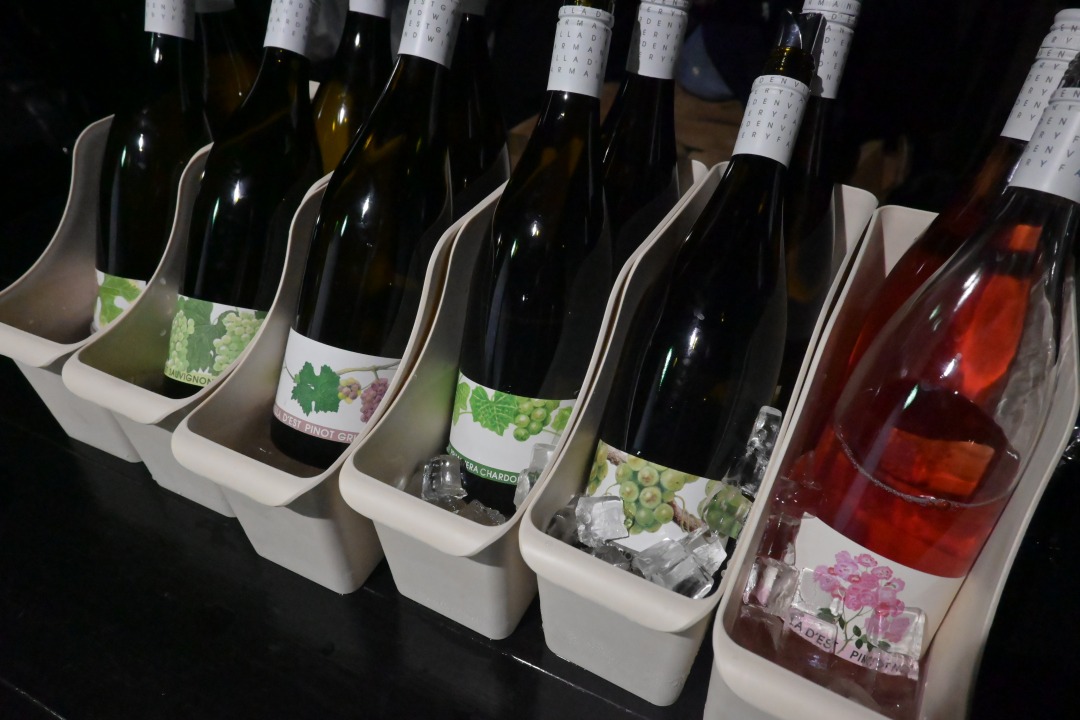
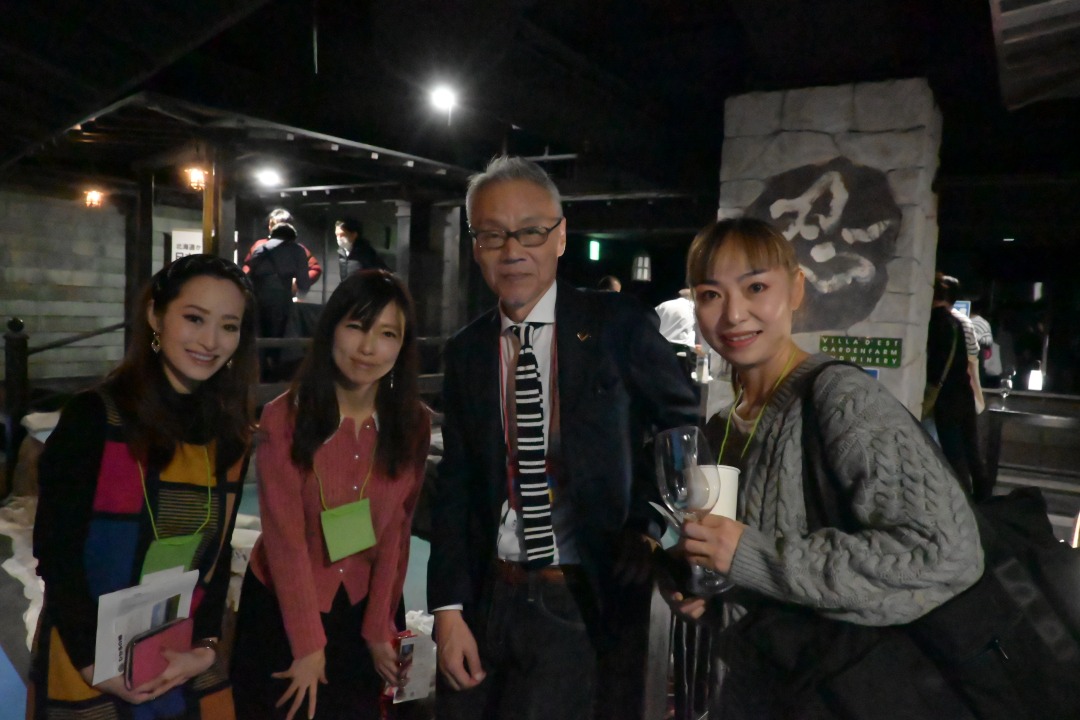
A recent anniversary event for Villa d'Est Winery in Nagano and its sister winery Arc-en-Vigne was held at the creative restaurant “NINJA TOKYO” near Tokyo Station (organized by Japanese-wine specialist trading company CruX Co., Ltd.).
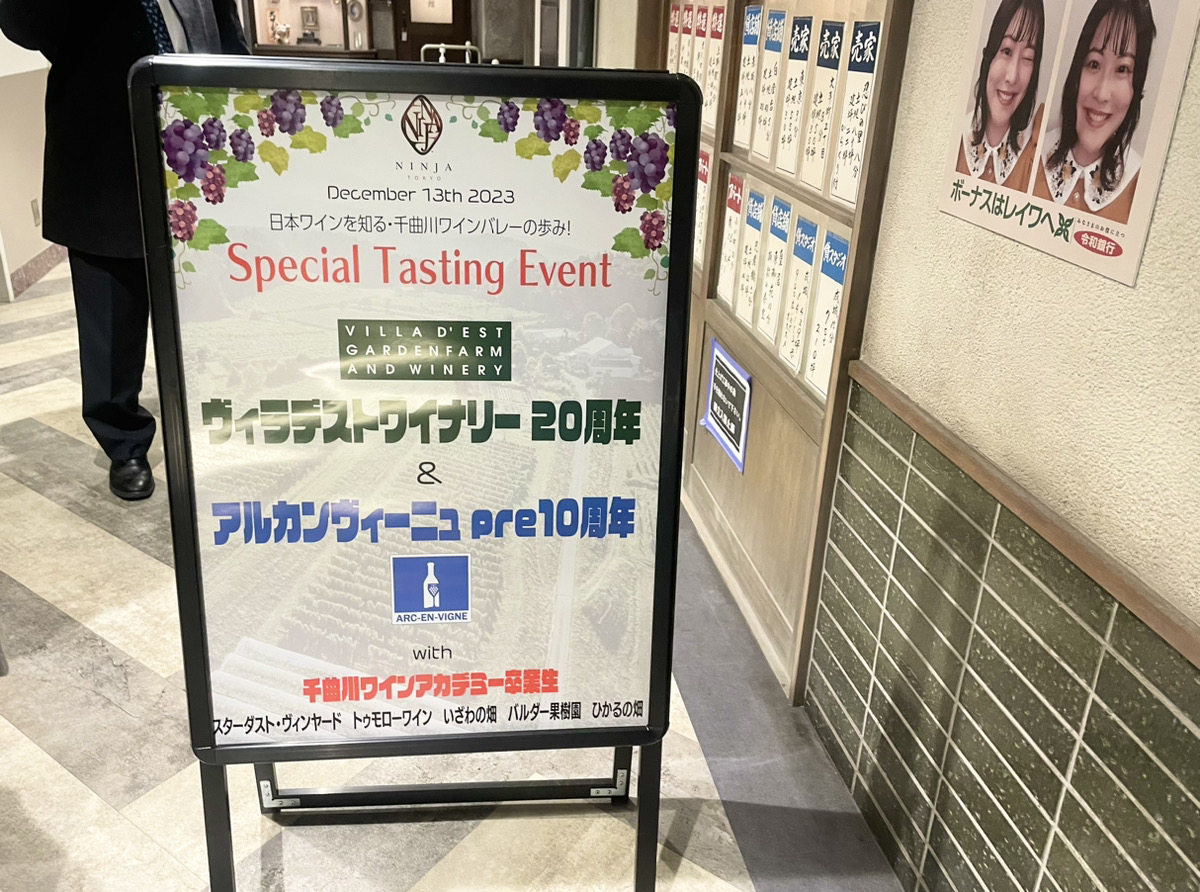
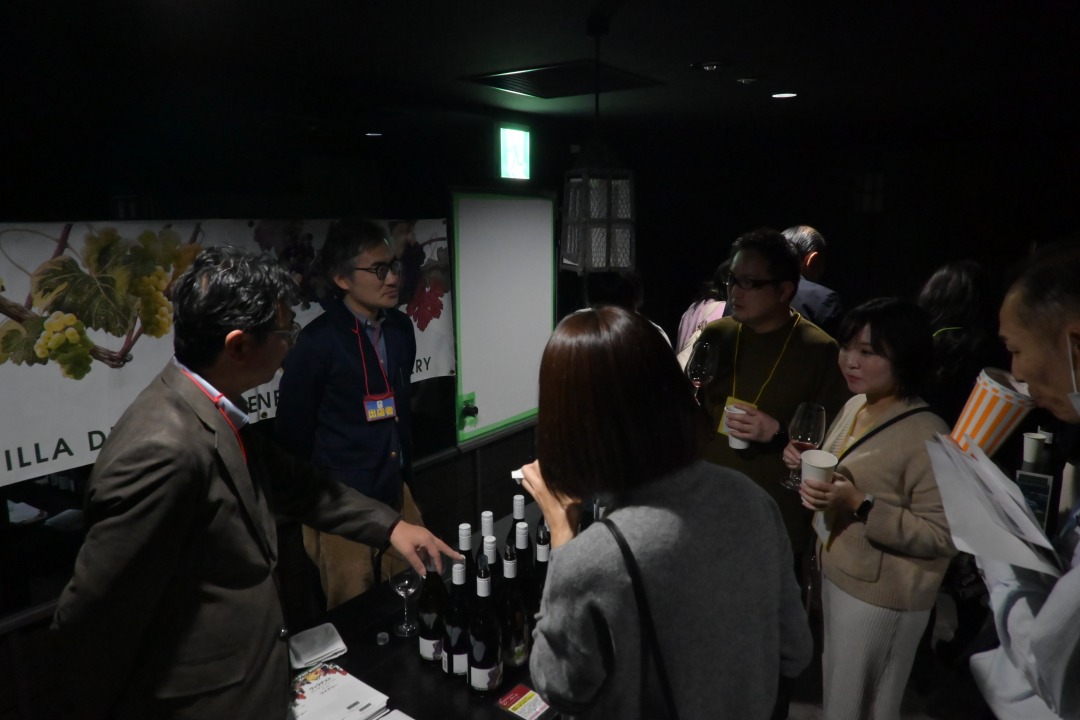
The venue featured booths where visitors could taste several wines from Villa d'Est Winery and Arc-en-Vigne, including rare bottles that are almost impossible to buy in Tokyo. There were also five booths offering wines made from grapes grown by graduates of the Chikumagawa Wine Academy, the viticulture, winemaking and winery-management school operated by Arc-en-Vigne. It was a rare opportunity to compare the terroirs of the Chikuma River area through wine.
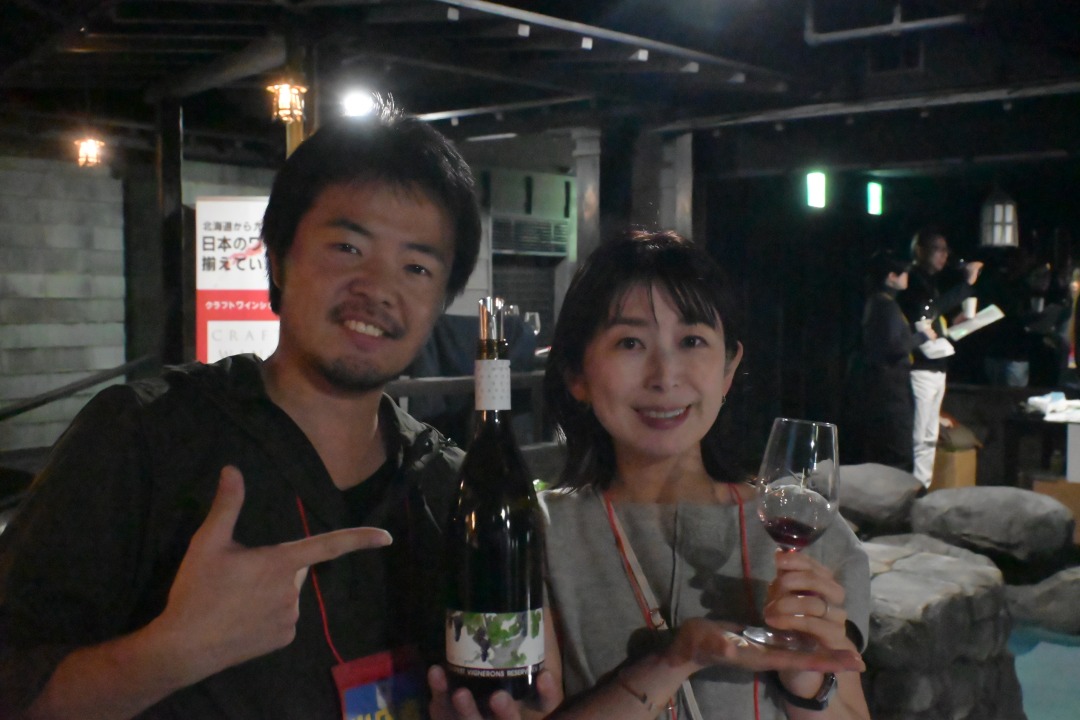
Every booth remained crowded right up until closing time. Here is our report on this event, which concluded as a great success.
The event begins with a greeting from head winemaker Chou Konishi
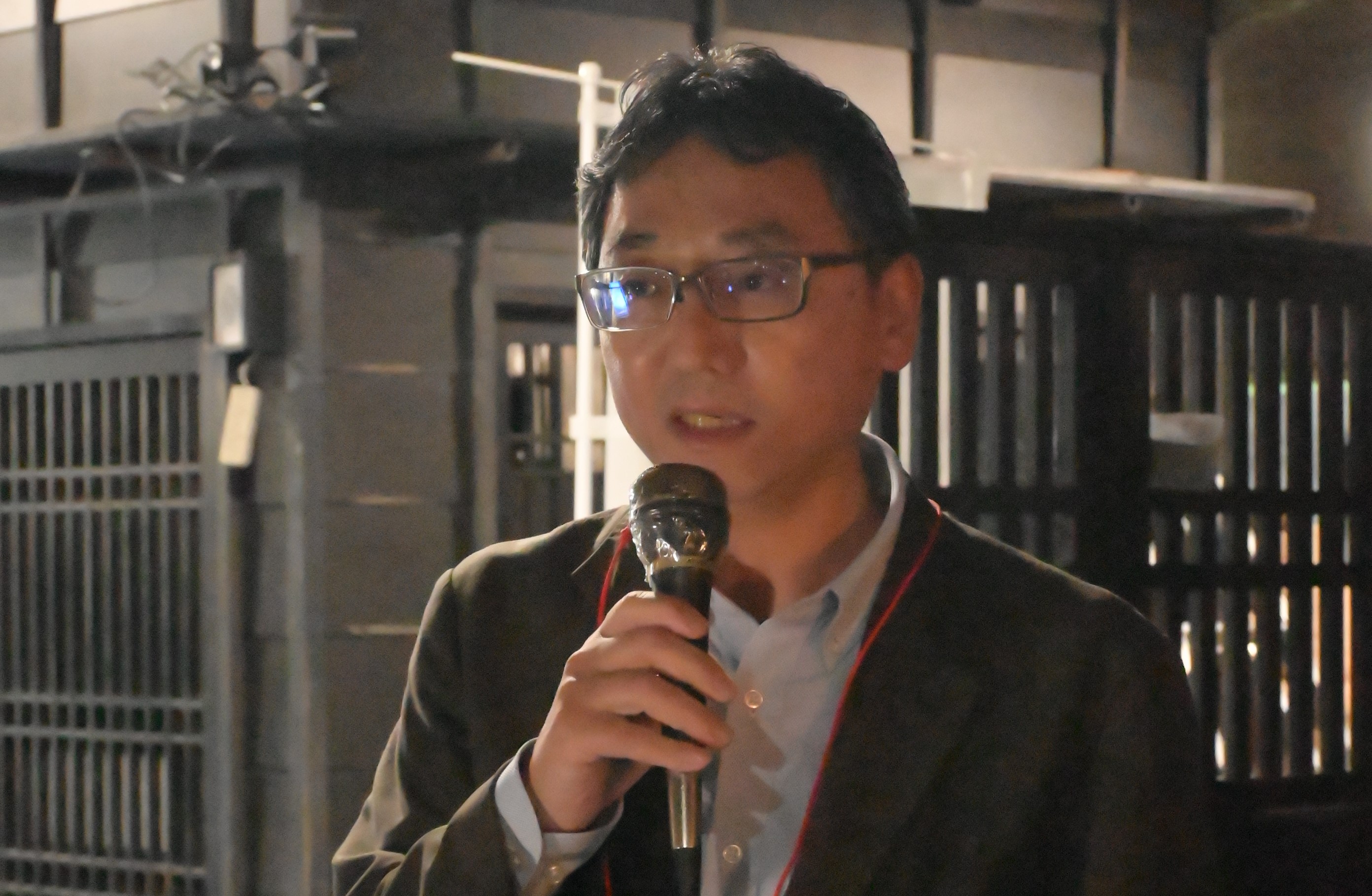
At 5:00 p.m., Villa d'Est Winery President and Head of Viticulture and Winemaking Chou Konishi welcomed the guests, opening an intense three-hour event.
“Good evening, everyone. Essayist and painter Toyoo Tamamura established Villa d'Est Winery in Tomi, Nagano Prefecture, in 2003. At the time there was not a single winery in Tomi, but over the past 20 years the number of people growing grapes and making wine has increased. In 2015, our sister winery Arc-en-Vigne opened as well, along with the Chikumagawa Wine Academy, where students can learn grape growing, winemaking and winery management. Today, five academy graduates who grow their own grapes, commission Arc-en-Vigne to make their wines, and then sell those wines are also participating. We have more than 30 wines available, so please take your time and enjoy them to your heart's content!” (from Chou Konishi's opening remarks)
With that greeting, the Japanese-wine lovers holding their glasses began making their way around the booths as they pleased.
■ Exhibiting booths
・Villa d'Est Winery
・Arc-en-Vigne
(Chikumagawa Wine Academy graduates below)
・Izawa no Hatake — Takahisa Izawa
・Tomorrow Wine — Minoru Tamura
・Stardust Vineyard — Yuma Hoshino
・Balder Orchard — Takumi Ota
・Hikaru no Hatake — Hikaru Suzuki
Enjoying terroir through side-by-side tasting
The graduate booths clearly reflected each producer's individuality. By moving from booth to booth and tasting the wines side by side, visitors could distinctly experience differences in the character of each vineyard and in the producers' respective approaches.
Tateshina — Izawa no Hatake, Takahisa Izawa (1st class)
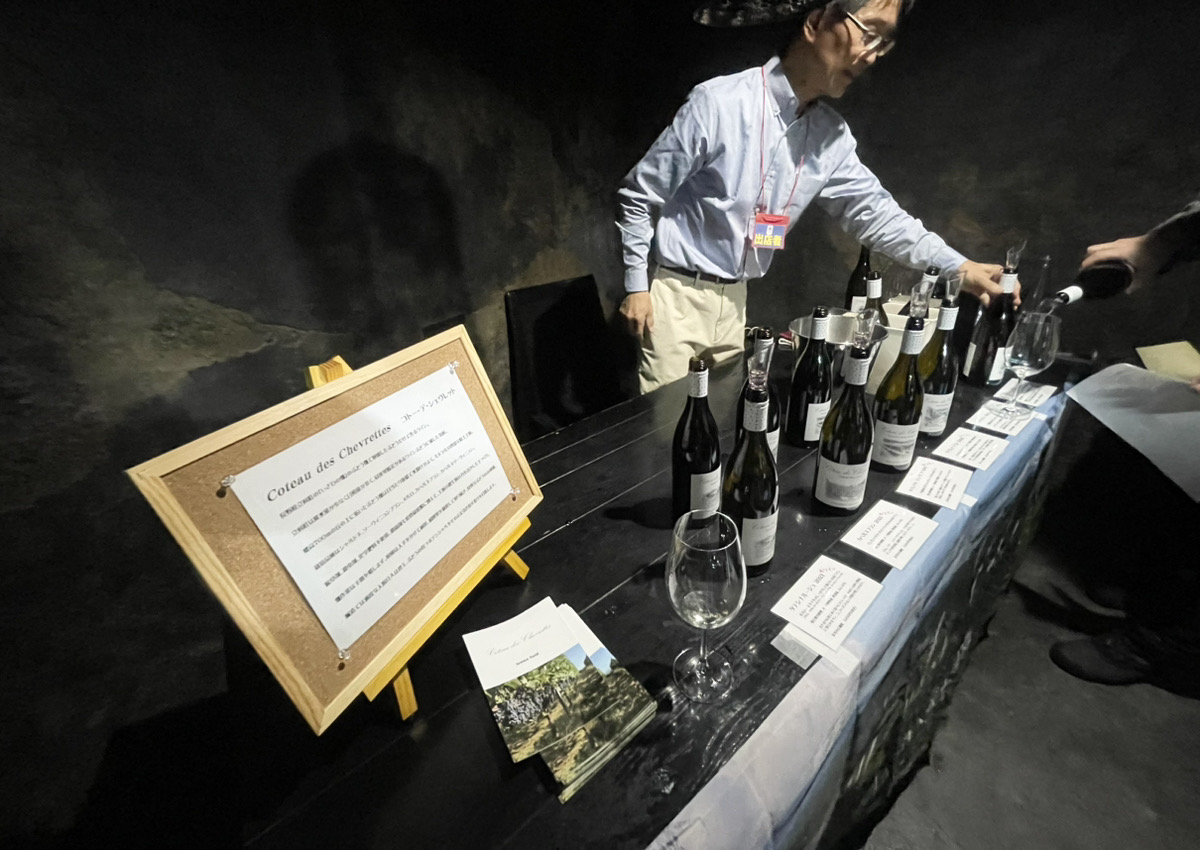
Izawa no Hatake, which focuses mainly on single-variety wines, grows five varieties: Chardonnay, Sauvignon Blanc, Merlot, Cabernet Franc and Cabernet Sauvignon. The wine name “Coteaux des Chevrettes” appears on every label. The minerality and clean lingering acidity of the first Sauvignon Blanc we tasted clearly conveyed the vineyard's terroir—the cool climate of Tateshina and its mineral-rich clay soil. According to producer Mr. Izawa, “We use no herbicides, insecticides or chemical fertilizers, keep fungicides to the bare minimum, and build the soil by making use of the power of soil microorganisms.” The aromatic, rich bouquet also suggested the ripeness of the grapes. At the booth, visitors could compare two Chardonnays from the same grape, one fermented in stainless-steel tanks and the other in barrels. Participants remarked, “When you compare them, the deliciousness is completely different,” visibly impressed by the depth of winemaking.
▼ Wines served (6)
(White) Sauvignon Blanc 2022
(Red) Tateshina Rouge Unique 2021: 100% Merlot, and others
Ueda — Tomorrow Wine, Minoru Tamura (1st class)
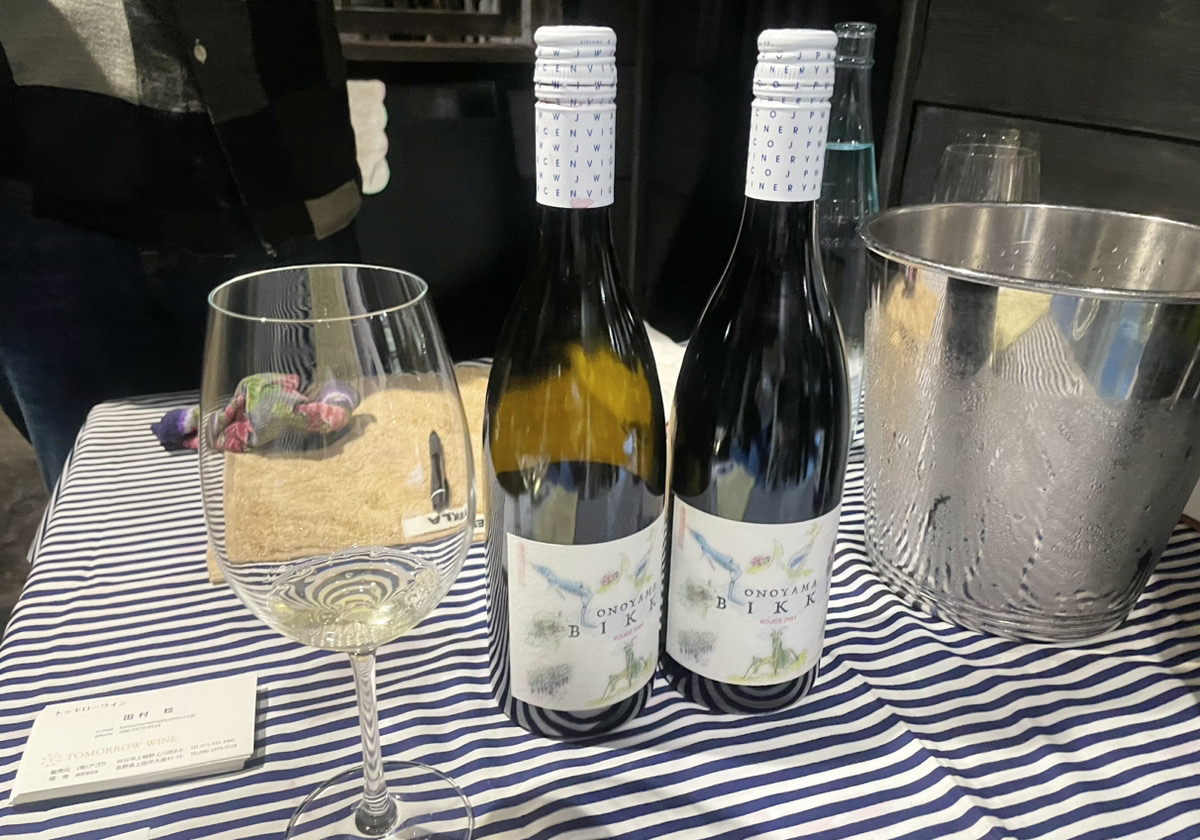
Minoru Tamura, who runs the yakiniku restaurant “Wine, Meat and Vegetable Shop Daisetsu” in Kyoto, began clearing land in Ueda, Nagano, in 2016. He says he read a magazine article in which Villa d'Est owner Toyoo Tamamura discussed the Chikumagawa Wine Valley concept, was struck as if by lightning, enrolled in the academy at age 53 and decided to make wine. Mr. Tamura practices cover-crop cultivation without insecticides, herbicides or chemical pesticides, and does not cut down all the weeds. He deliberately avoids eliminating insects as well, seeking to make wine while respecting the local food chain. “I am aiming to make wine with a touch of green character that pairs well with meat. This year I plan to open a gravity-flow winery—a winery that moves fruit, juice and wine gently and carefully using natural gravity rather than pumps. It will take a lot of work, but I want to do my best,” he said. We look forward to further news about the winery's opening.
▼ Wines served (2)
(White) Onoyama Bikki (Chardonnay, Sauvignon Blanc, Pinot Gris)
(Red) Onoyama Bikki (Merlot, Cabernet Franc, Cabernet Sauvignon)
Tomi — Stardust Vineyard, Yuma Hoshino (1st class)
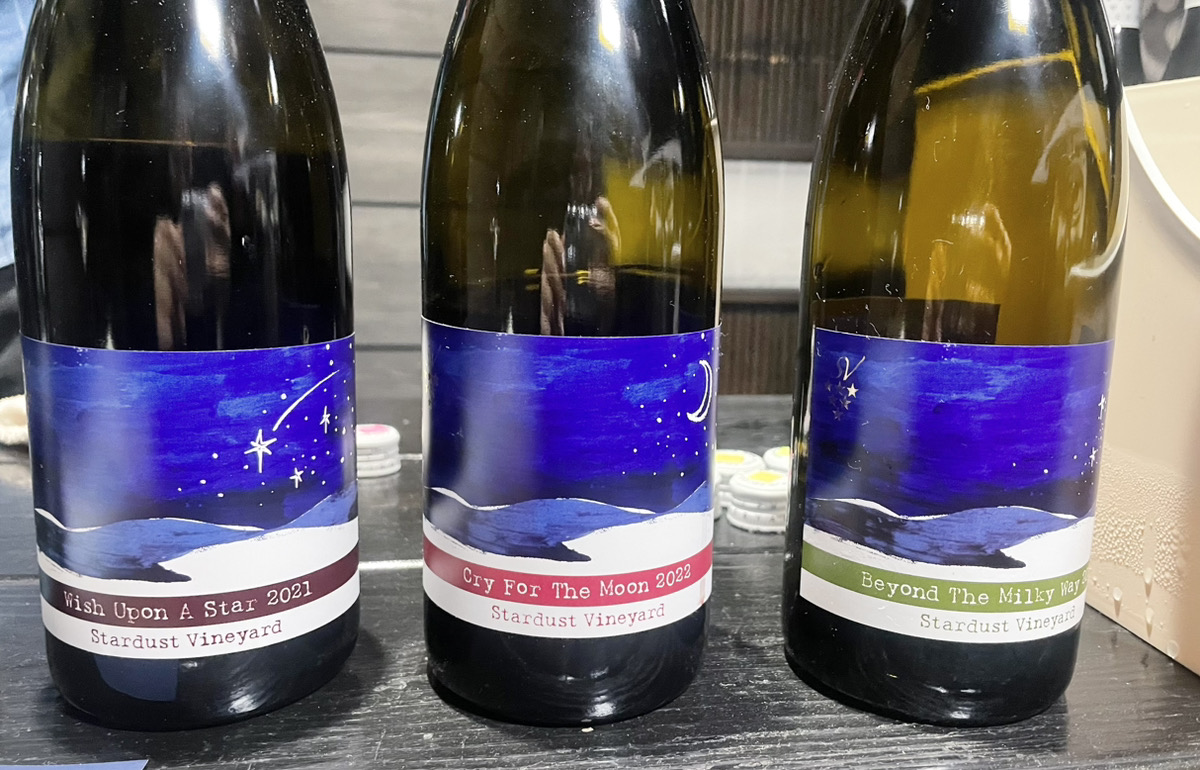
“Our concept is wine in which you can feel umami. We choose themes inspired by the night sky and think about blends that can express umami in line with each theme,” says Yuma Hoshino of Stardust Vineyard. Mr. Hoshino had worked as a physician in Kyoto, but a glass of red wine he tasted in Napa Valley, California, while attending a research meeting drew him into the world of wine. Eventually he reached the point of thinking, “I want to make wine myself!” and that path led to today. “On about 1.4 hectares, I currently grow 11 grape varieties, mainly Chardonnay and Pinot Noir. I'm the kind of person who wants to try everything myself, so when I drink a wine and think, ‘I really like this,’ I want to try growing that variety myself,” he says. He makes wines to enjoy casually with food rather than drink ceremoniously, including Pinot Noir (Cry for The Moon 2022), which spreads a gentle, dashi-like umami across the palate.
▼ Wines served (3)
(Red) Wish Upon A Star 2021 (Sangiovese, Merlot, Cabernet Franc, Petit Verdot, Mourvèdre)
(White) Beyond The Milky Way 2022 (Chardonnay, Pinot Noir, Pinot Blanc, Pinot Gris, Pinot Meunier, Sauvignon Blanc), and others
Ueda — Balder Orchard, Takumi Ota (1st class)
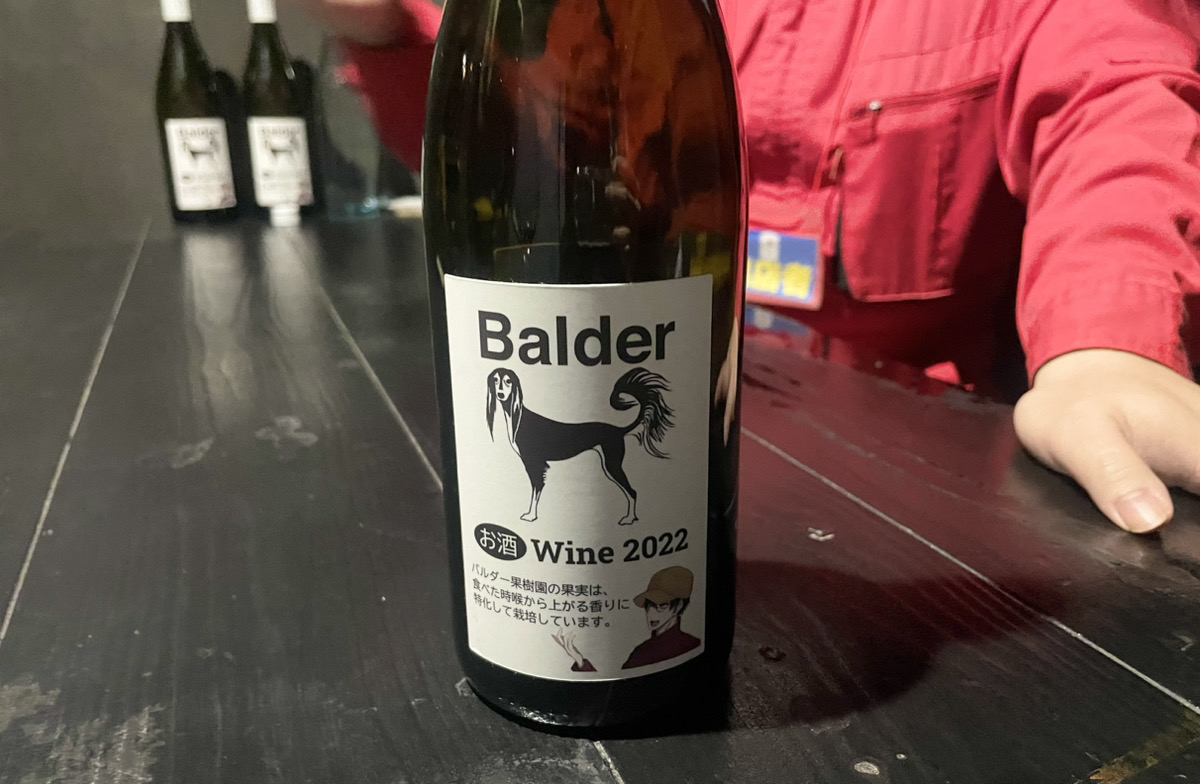
For grower-winemaker Mr. Ota of Balder Orchard, which released its first vintage “Balder Wine 2022,” aroma is the priority in winemaking. Grapes and apples grown for strong aroma tend to develop thicker skins, so rather than making white wine, where the skins are removed during vinification, he specializes in growing and fermenting fruit for red wine and cider. “I think aroma is a fruit's ‘fruit-ness’—its self-introduction. I also think people should be more themselves, and in the same way I want grapes and apples to be able to express their true fruit character without hesitation. So for me, if the aroma of a wine is good, that's enough,” he says. On approximately 2 hectares he currently grows Cabernet Sauvignon, Cabernet Franc, Syrah, and Fuji apples for cider. In the future he plans to add Pinot Noir and, for cider blending, apple varieties with higher acidity and bitterness.
▼ Wine served (1)
(Red) Balder Wine 2022 (Cabernet Sauvignon, Cabernet Franc, Syrah)
Tomi — Hikaru no Hatake, Hikaru Suzuki (3rd class)
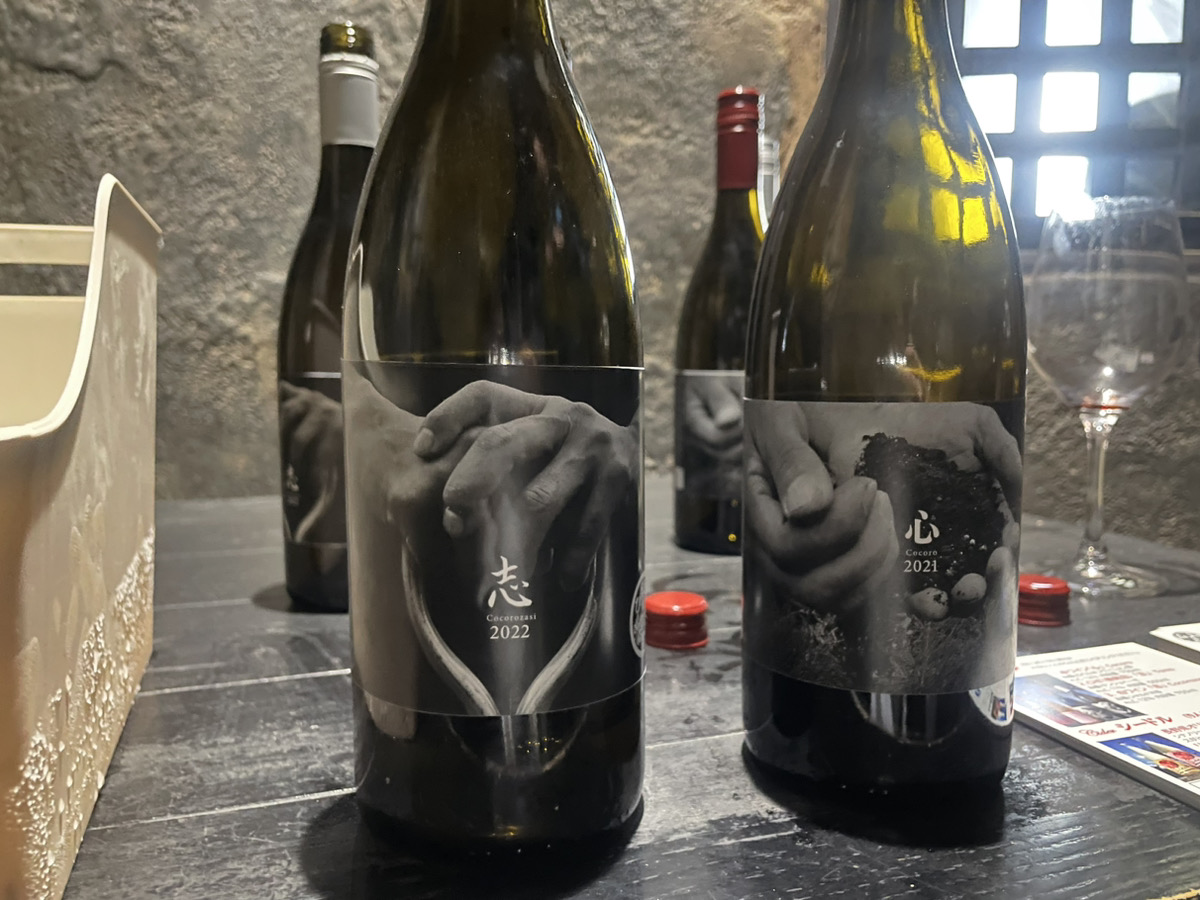
“Actually, that's a photograph of my own hand...” says Mr. Suzuki of Hikaru no Hatake, the only third-class graduate to exhibit a booth this time. Before he began farming, his hands were slender, but clearing hard clay soil and starting grape growing turned them into the strong hands of a farmer. He chose that transformation itself as the image for his label. “Because I had lived in France and the United States, I originally thought about making wine overseas. But one day I casually drank a Japanese wine at a bar in Ginza, and it was delicious. I felt enormous potential,” he says. While looking for a place where he could avoid rain and humidity as much as possible, he eventually arrived in Tomi. Learning by chance that the Wine Academy was also there gave him another push. “I aim to make wine that draws as much as possible on the power of nature. I don't want to add things or force the wine into a shape. I ferment with wild yeast, without filtration or fining, and age in old barrels. Sulfur dioxide is added only in an almost symbolic amount. I want to make wine that seems to soak into your body when you drink it,” he says.
▼ Wines served (2)
(Red) “Kokoro” Cocoro 2022 — Cabernet Sauvignon
(White) “Kokorozashi” 2022 — Chardonnay, and others
***
At the various booths, we heard that Arc-en-Vigne graduates keep in close contact because their vineyards are located near one another. They get along across different classes, checking in with questions such as “How are your grapes growing?” Many began farming without prior agricultural experience, and they say they support one another through a relationship in which they can exchange information and seek advice whenever they need it.
Indeed, as we tasted, we repeatedly saw conversations begin with remarks such as, “Actually, I attended the seventh class, and I'm thinking of clearing a vineyard,” or “I'm from the ninth class...” It gave us a real sense of how the Chikumagawa Wine Academy is expanding the community of people involved in wine.
“It's simply delicious”—together with 20 years of history
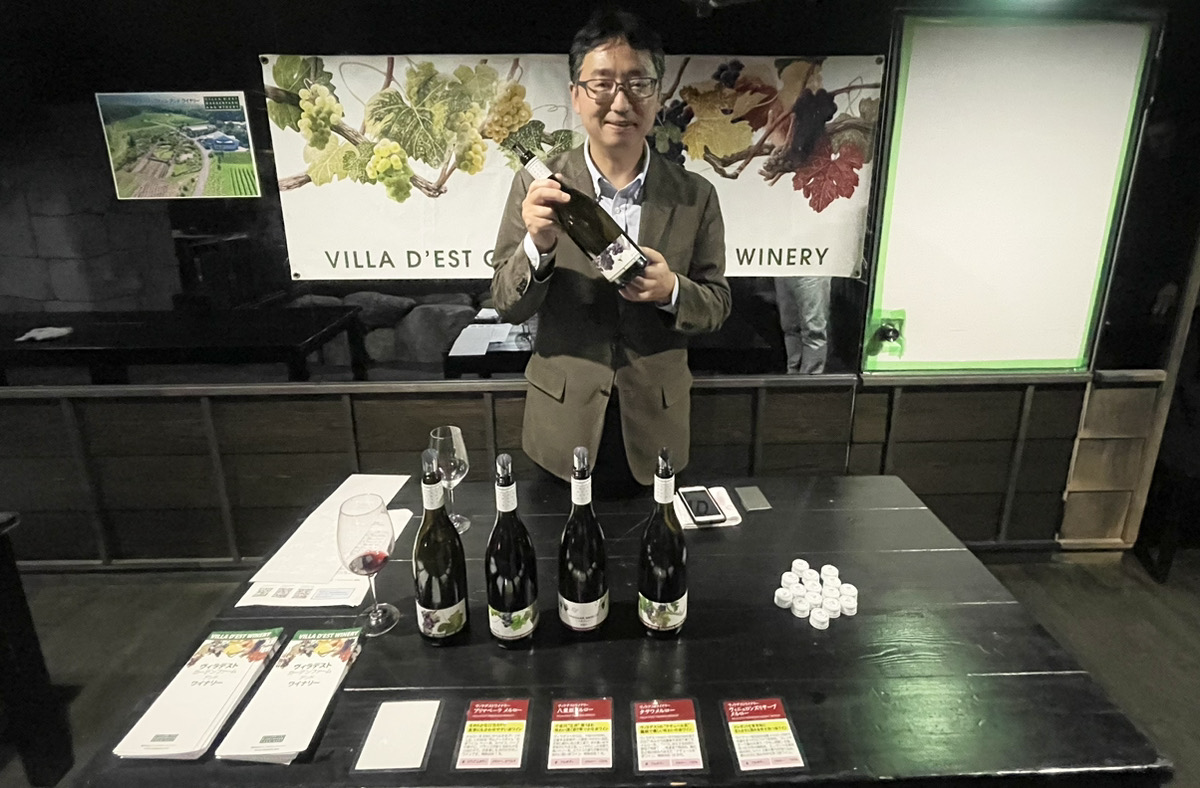
The booths of Villa d'Est Winery and Arc-en-Vigne, the stars of this anniversary event, were of course busy from beginning to end without a break in the flow of visitors.
At the graduate booths, we often heard people delighted by newly discovered wines say, “I was surprised by how delicious it was.” At the Villa d'Est booth, what we heard again and again was a simpler expression of pure admiration: “It really is just so delicious.”
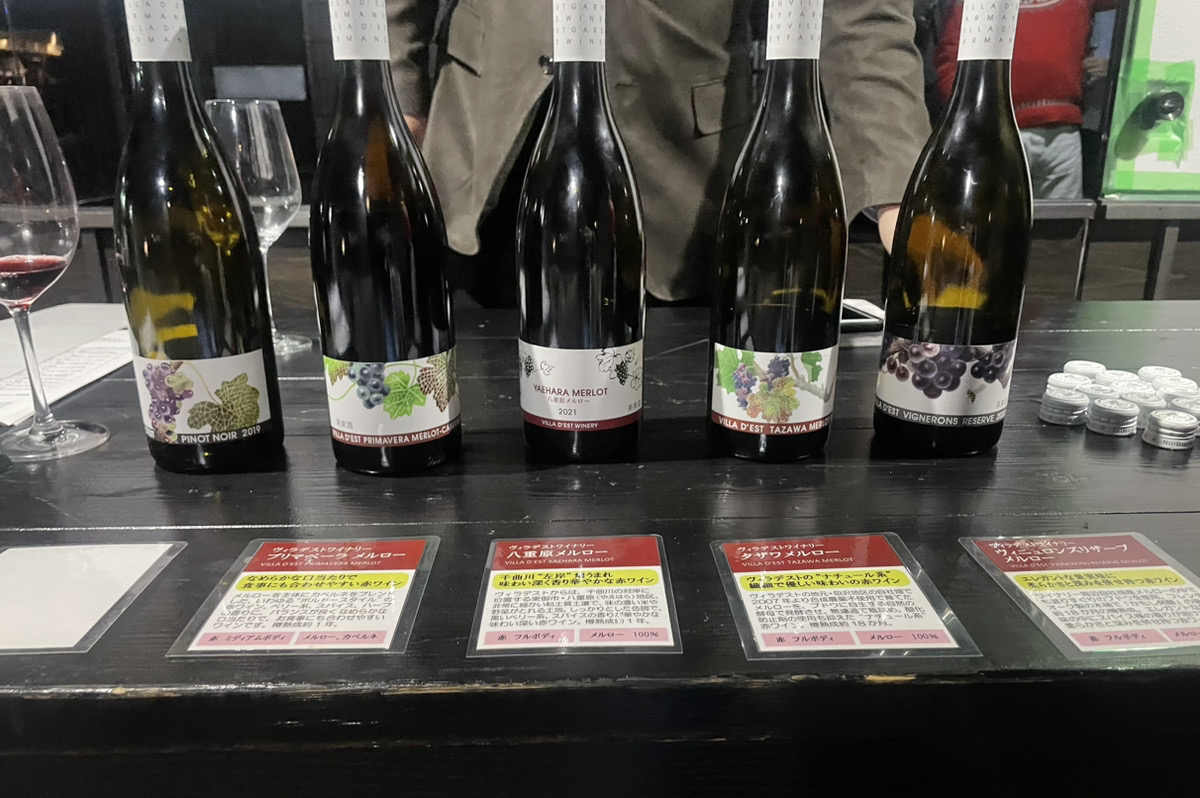
Those voices vividly conveyed the trust and reassurance Villa d'Est has cultivated over 20 years. And when we tasted the wines again with that history in mind, their quality still exceeded expectations. It was easy to understand why Japanese-wine lovers across the country are so captivated by Villa d'Est Winery. This was a lineup that made us feel deeply grateful for Villa d'Est's 20-year journey and its continuing spirit of challenge.
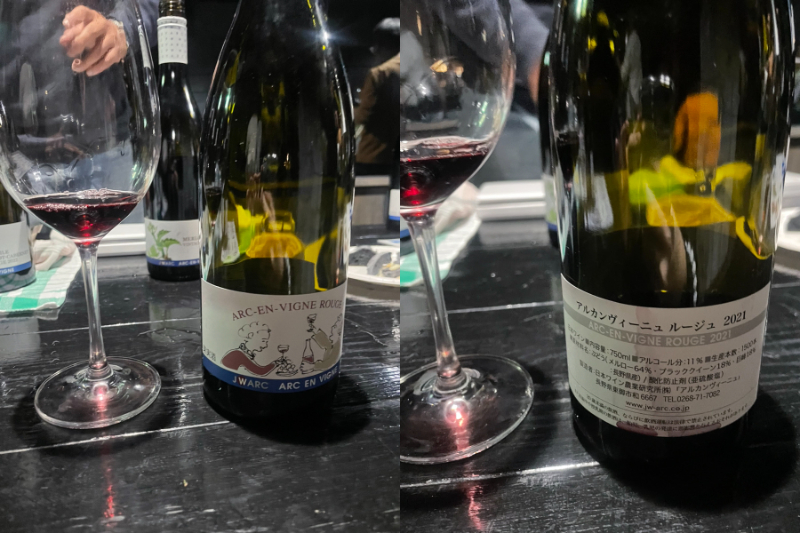
Arc-en-Vigne, which will celebrate its 10th anniversary next year, differs from Villa d'Est in that it makes wine using only Kai grapes grown along the Chikuma River. One example is a bottle based mainly on Merlot with Black Queen and Kyoho added—a wine that could only be Arc-en-Vigne in Nagano.
“We add acidity with early-harvested Black Queen and give the wine an aromatic bouquet with Kyoho. It pairs easily with Japanese dishes such as sweet simmered foods, so this is a bottle we would really like people to put on their dinner tables. Arc-en-Vigne makes wines to accompany home cooking, and we hope people will enjoy them casually at home,” Arc-en-Vigne explained.
Guided by the philosophy of contributing to the development of the Chikumagawa Wine Valley, Arc-en-Vigne also makes wines from grapes grown by its graduates. We look forward to its continued growth. And because those three enjoyable hours passed far too quickly, the event left us happily wondering whether they might hold another anniversary celebration next year as well.
Photography: NORIZO
Text: Yowami Asada
shop info
NINJA TOKYO
A creative-cuisine restaurant combining food and entertainment that opened in Akasaka in 2001. For 22 years, it operated as an extraordinarily popular restaurant with more than 150 seats filled every day. Following the closure of Tokyu Plaza, it relocated to Otemachi and reopened on December 22, 2024. Parts of the interior were created by shrine carpenters who worked on Meiji Jingu and staff associated with Tokyo Disneyland, producing a mysterious space where a ninja seems ready to leap out at any moment. Overseas VIPs including Steven Spielberg and Bruno Mars have visited privately, making it one of the places that communicates Japanese culture to the world. The menu consists exclusively of reservation-only course meals using premium Japanese ingredients. The restaurant carries wines from around the world, including Japanese wine.