
WINERIES
Your Very Own Winemaking Experience: Learning from Pros at Art Paysan Winery — Vol. 1

“Your Very Own Winemaking Experience” is a program where participants craft their own original wine under the direct guidance of professionals. Launched in September, this experiential winemaking program is a new initiative that allows drinkers to get involved right from the very first step of production.
"Your Own Winemaking Experience" is a program where you create your very own original wine under direct professional guidance. Released in September, this winemaking experience program represents a novel endeavor where "drinkers get involved right from the first stage of production." Designed to address challenges facing Japanese agriculture, such as abandoned farmland and a shortage of successors, it was planned under the leadership of Takayuki Tamura—who has years of experience in wine research, product development, and winemaking at Mercian Corporation—from the perspective of "increasing the involved population."
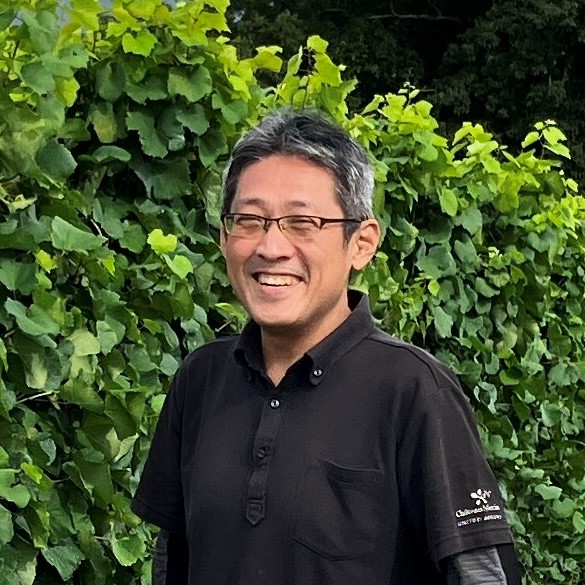
Mr. Takayuki Tamura, Mercian Corporation
For the first installment in October, participants gained hands-on experience—from harvesting to wine preparation—with the cooperation of Kazuya Takahashi, representative of Art Paysan Winery in Hanamaki City, Iwate Prefecture.
Beyond the winery's large windows lie the former sites of terraced rice paddies, creating a truly beautiful landscape. Although it is not far from the station, the reality is that farmland abandonment is progressing due to the aging population in the region. Mr. Takahashi is reportedly developing a concept to revitalize these plots as wine grape vineyards, and there are high hopes that this project will help propel those efforts forward.
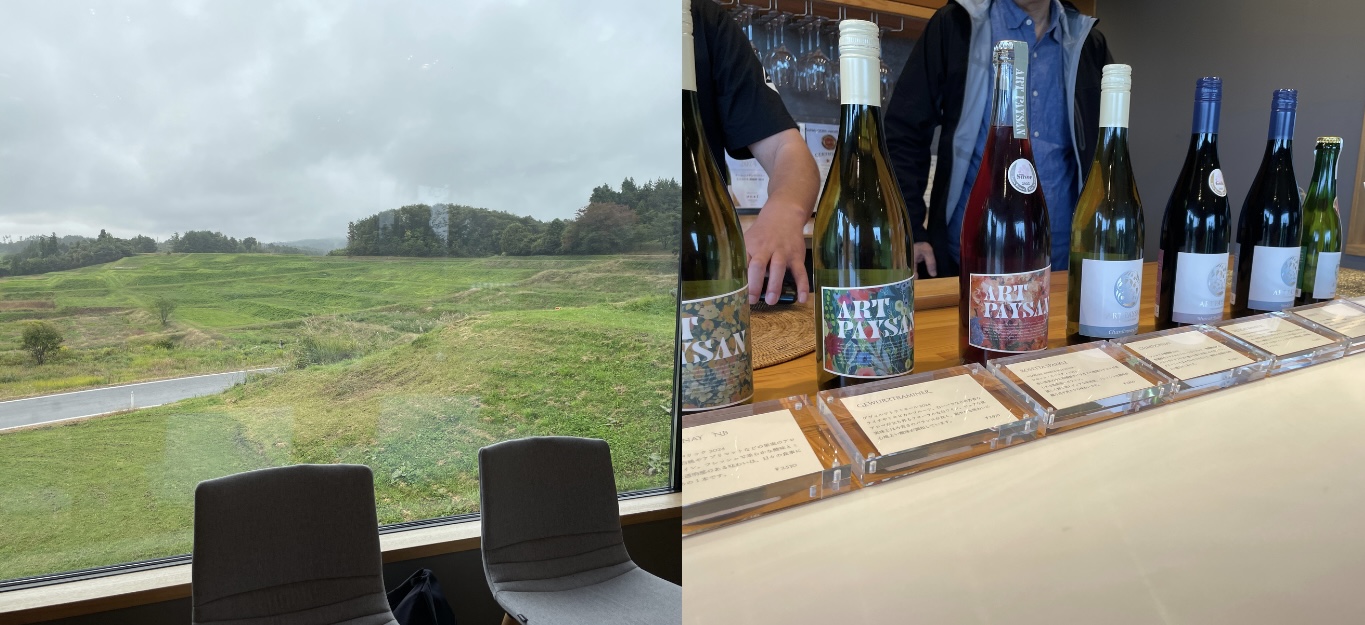
1. Grape Harvesting
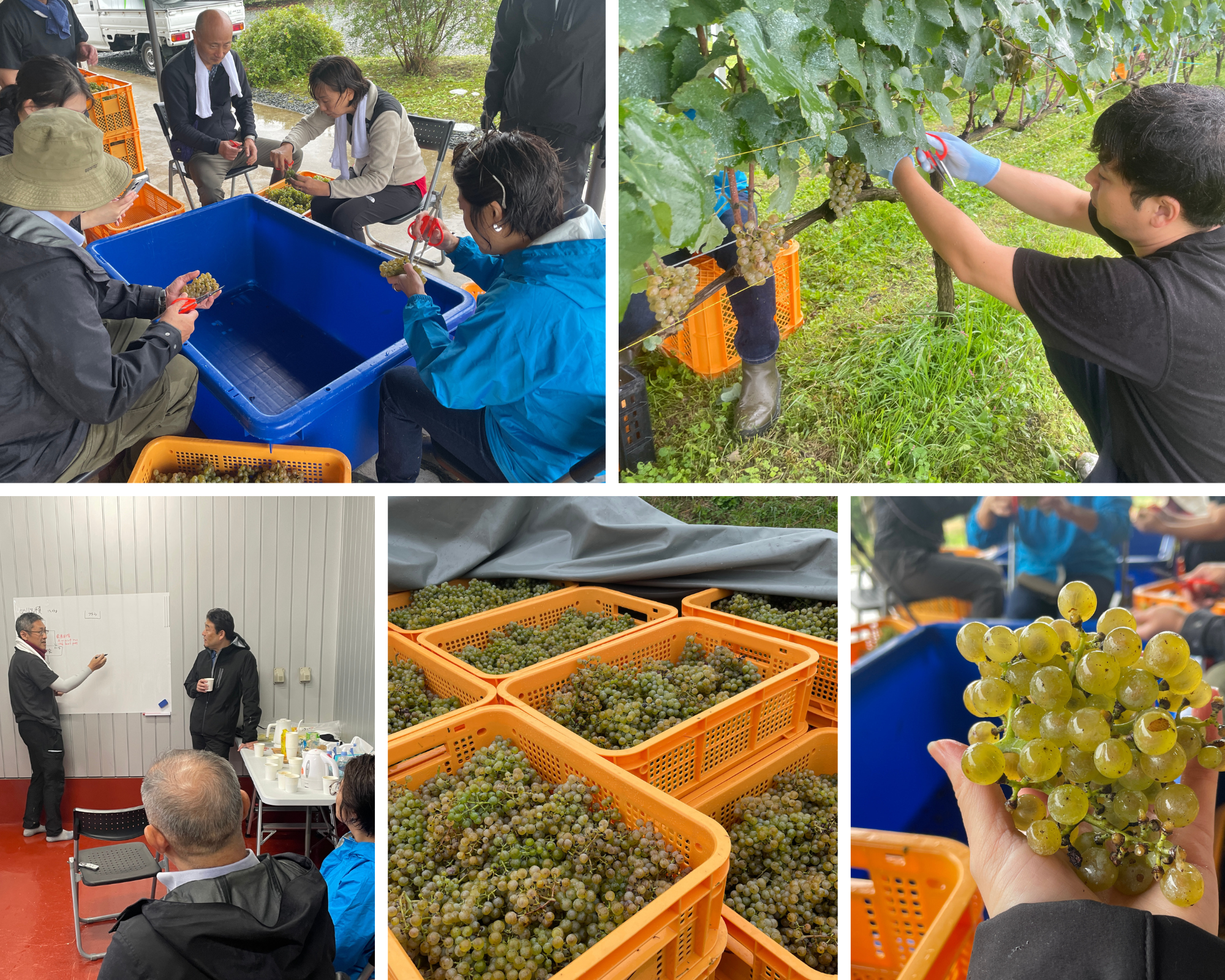
A section of the Petit Manseng vineyard at Art Paysan Winery was set aside for this project. Everyone harvested the grapes together, discussed what kind of wine they wanted to make, and engaged in actual winemaking, making it a highly practical experience.
In sampling conducted the day before, sugar content averaged 24 Brix. Growing conditions were also excellent, making for ideal timing. However, the weather brought pouring rain. Setting up rain tarps and harvesting while moving them along turned into a very rare experience. Even Mr. Takahashi of Art Paysan Winery remarked, "This is a first for me, too."
I thought the harvest would be over quickly, but it actually required more physical energy than expected. However, despite having tarps set up for us, everyone was so focused on harvesting that they completely forgot to take shelter under them, diligently working away while getting completely soaked.
Learnings at this stage:
✔︎ How to use harvesting shears and key precautions.
(Gently support the grape cluster from underneath to avoid cutting your own hand while clipping the stem. Also watch out for the hands of people on the other side of the row.)
✔︎ Even within the same parcel, grape conditions can vary from row to row.
✔︎ Determining the harvest timing—when weather, sugar content, and vineyard conditions align—relies on measuring sugar levels, but experience is also key. (Be mindful of bias, as it is easy to inadvertently choose berries that look particularly delicious when taking measurements.)

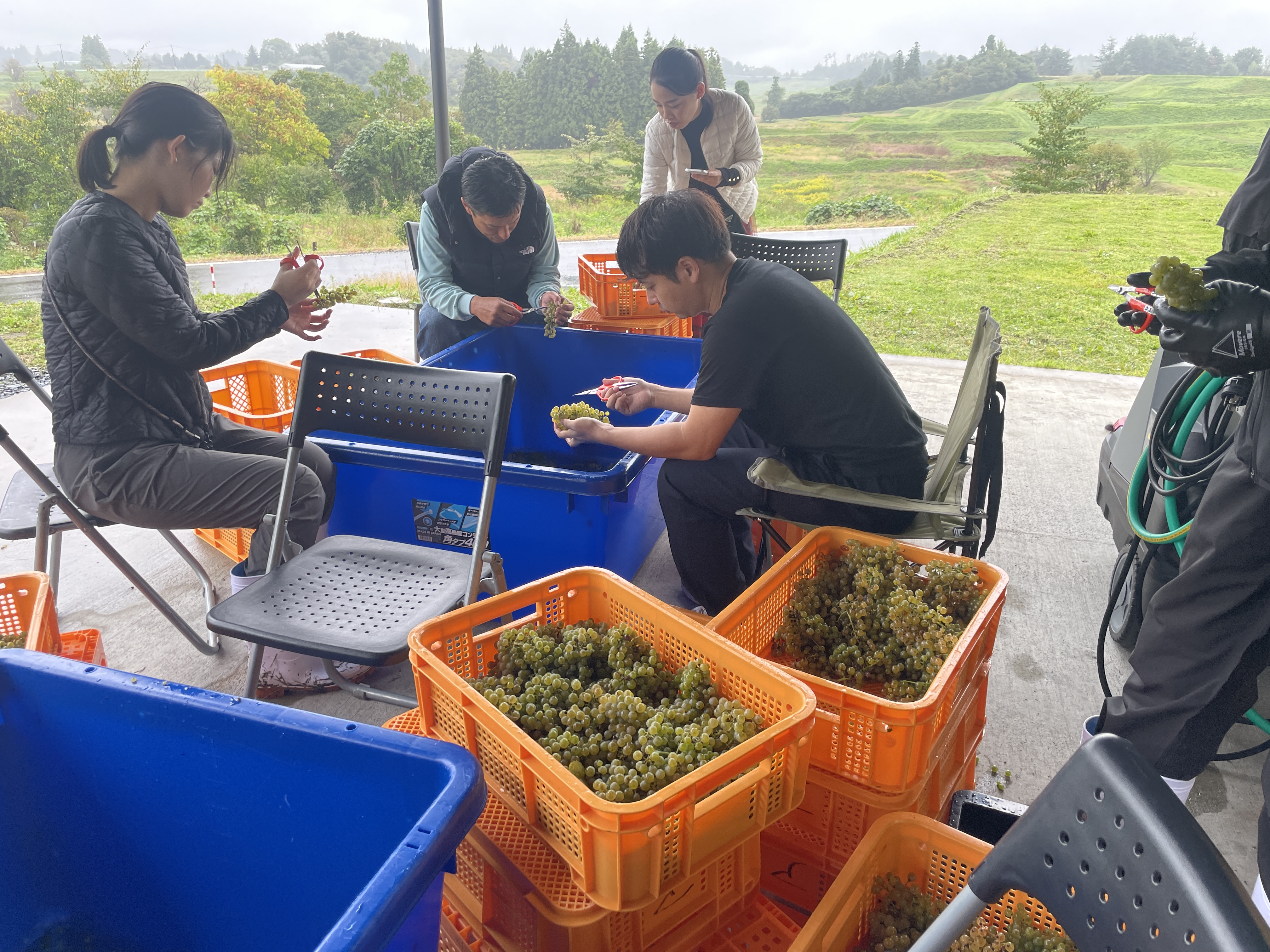
2. Sorting (Grape Quality Check)
Next was sorting, the process of removing defective berries from the bunches.
The berries to be removed are as follows:
- Diseased berries (discolored to black, brown, or pink)
- Unripe, hard green berries (overly green compared to other bunches)
- Shriveled or damaged berries
- Berries with leaking juice (a cause of off-flavors)
- Small, unfertilized berries
The batch size this time was small at just under 100 kg, meaning that quality variations at the individual berry level could easily affect the final outcome. Because of this, extremely meticulous work was required, and everyone approached it with utmost seriousness. As it was a first-time experience for almost everyone, sorting standards were a constant concern. Asking Mr. Tamura questions and observing those around them, they proceeded while wondering, "Is something like this okay?" or "Am I being too strict?"
Takeaways:
✔︎ Meticulous manual work is vital precisely because of the small scale, where flavor can vary berry by berry
✔︎ Apparently, there are ways to utilize rejected clusters rather than throwing them away, such as processing them into salad dressing
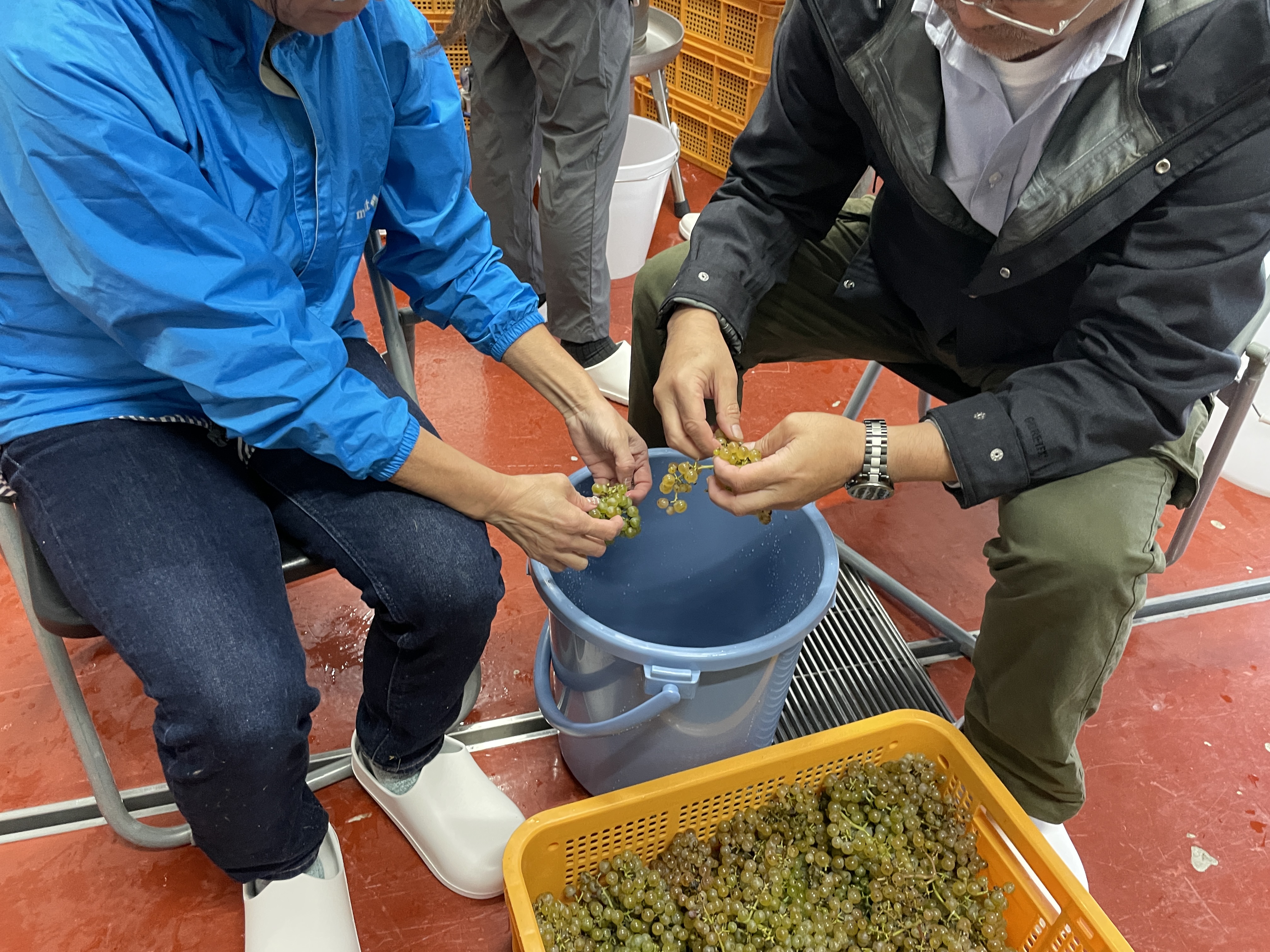
3. Pressing (The process of extracting juice)
There were two pressing methods used this time. First, Mr. Tamura explained each method, and then everyone experienced them firsthand.
| Pressing Method | Features | Resulting Tendencies |
| Whole-Cluster Pressing (Whole Bunch Press) | Pressing whole bunches with stems. Makes it easier to secure channels for juice flow. | Soft flavor, higher yield (approx. 60%) |
| Pressing after destemming | Destemming the clusters and pressing only the berries | Tends to produce a richer flavor, lower yield |
This time, we are doing half of each. I am looking forward to seeing how the difference in pressing method affects the wine, even when using the same grapes.
Additional note:
- We used a small hydraulic basket press (a size also used for testing).
- Juice extraction is completed in 3 to 4 pressing cycles.
4. Winemaking approach
Initially, only white wine was planned, but after exchanging ideas, we decided to use the same grapes to makeboth white wine and orange wine—two distinct styles. Through this comparison, we look forward to visualizing how differences in vinification methods are reflected in aroma and flavor, as well as how pressing techniques combined with yeast selection impact quality.
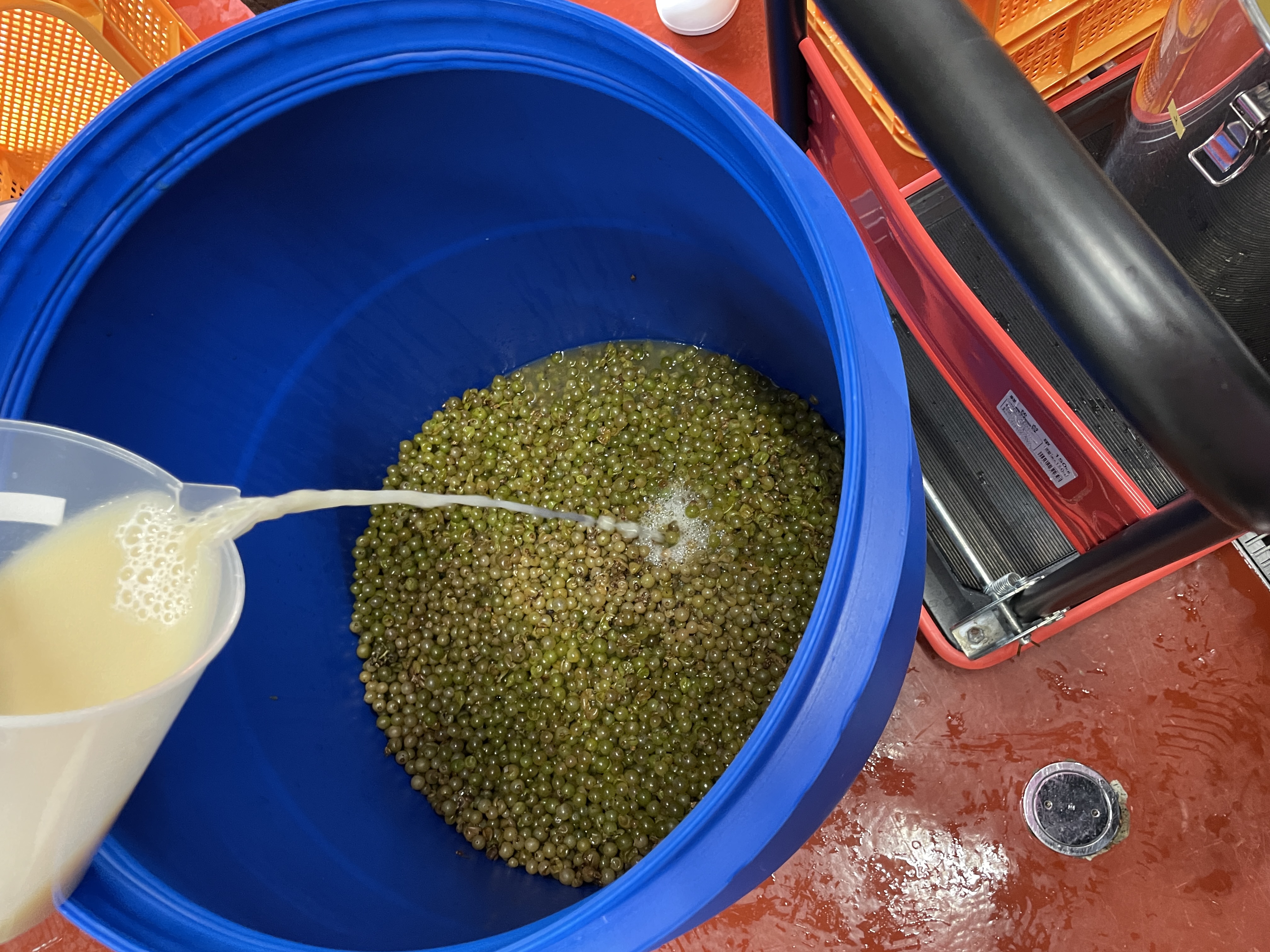
Summary
Although what we did on this day was only a small part of the entire process, it surely gave everyone a real sense of what it means to say, 'Good wine comes from good grapes.' Harvesting timing, sorting decisions, and choice of pressing method—we learned that every single choice directly impacts the final taste.
The next step is fermentation. Which yeast to use, which tank to manage it in, and how long to age it—depending on those choices, the exact same juice can turn into completely different wines. We will be experiencing all of this firsthand.
RELATED STORYhttps://nihonwine.jp/enjoy-nihon-wine/hanamaki-winemaking-report202512-2/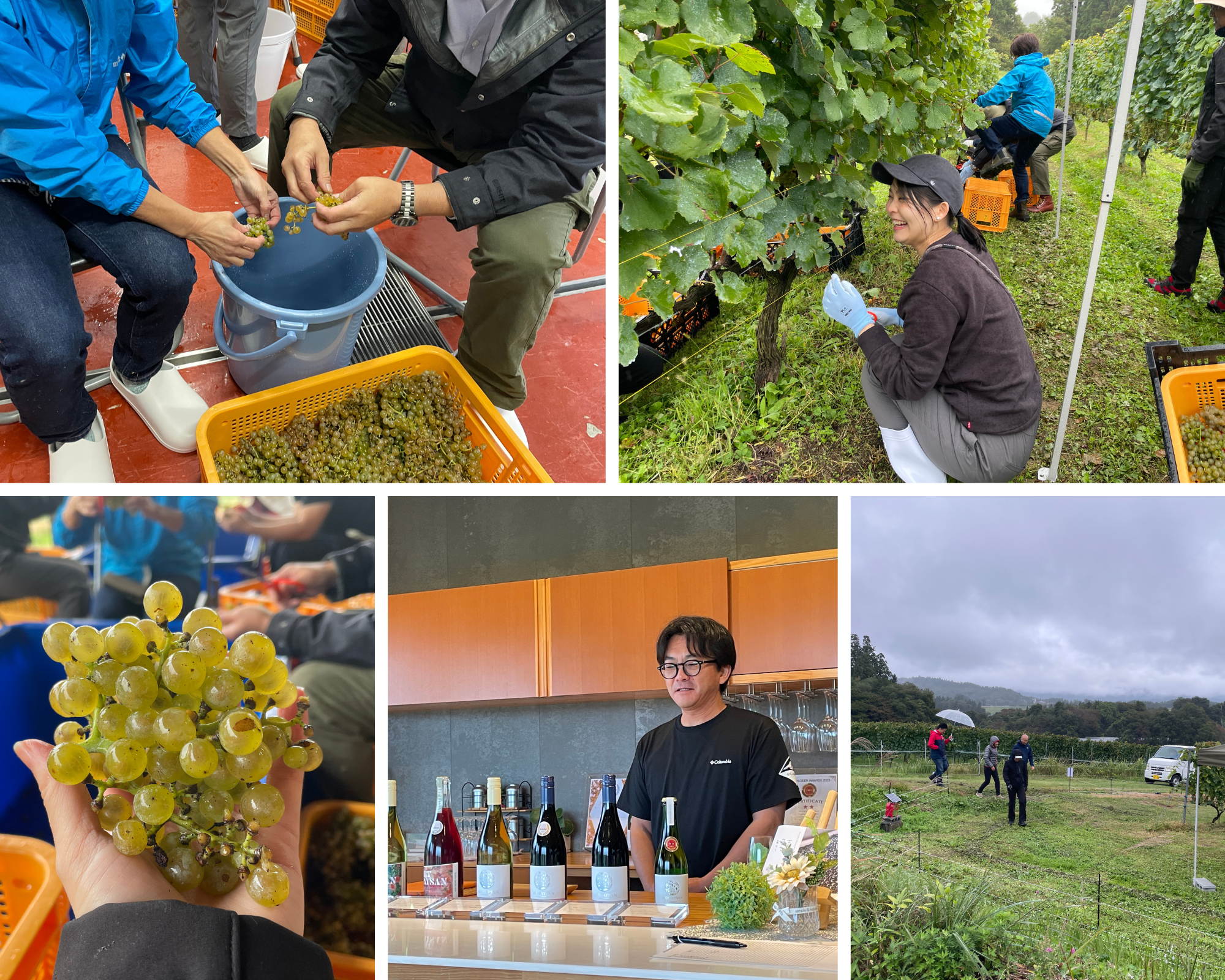
About the author
Stories covering the same region, newest first.
Wineries in this region
REGIONAL WINERIESRead → Know → VisitWineries in 岩手県. Find somewhere to visit.