
In the first part, we asked about the challenges facing Japanese wine and what initiatives Suntory is undertaking to resolve them.
In this second part, we ask about their initiatives in circular agriculture and the direction Suntory's Japanese wine aims to take.
Continuing from the first part, we spoke with Kohei Oyama, Chief Viticulturist at Suntory Tomi no Oka Winery, Wine Company, Suntory Ltd.
Interviewee Profile
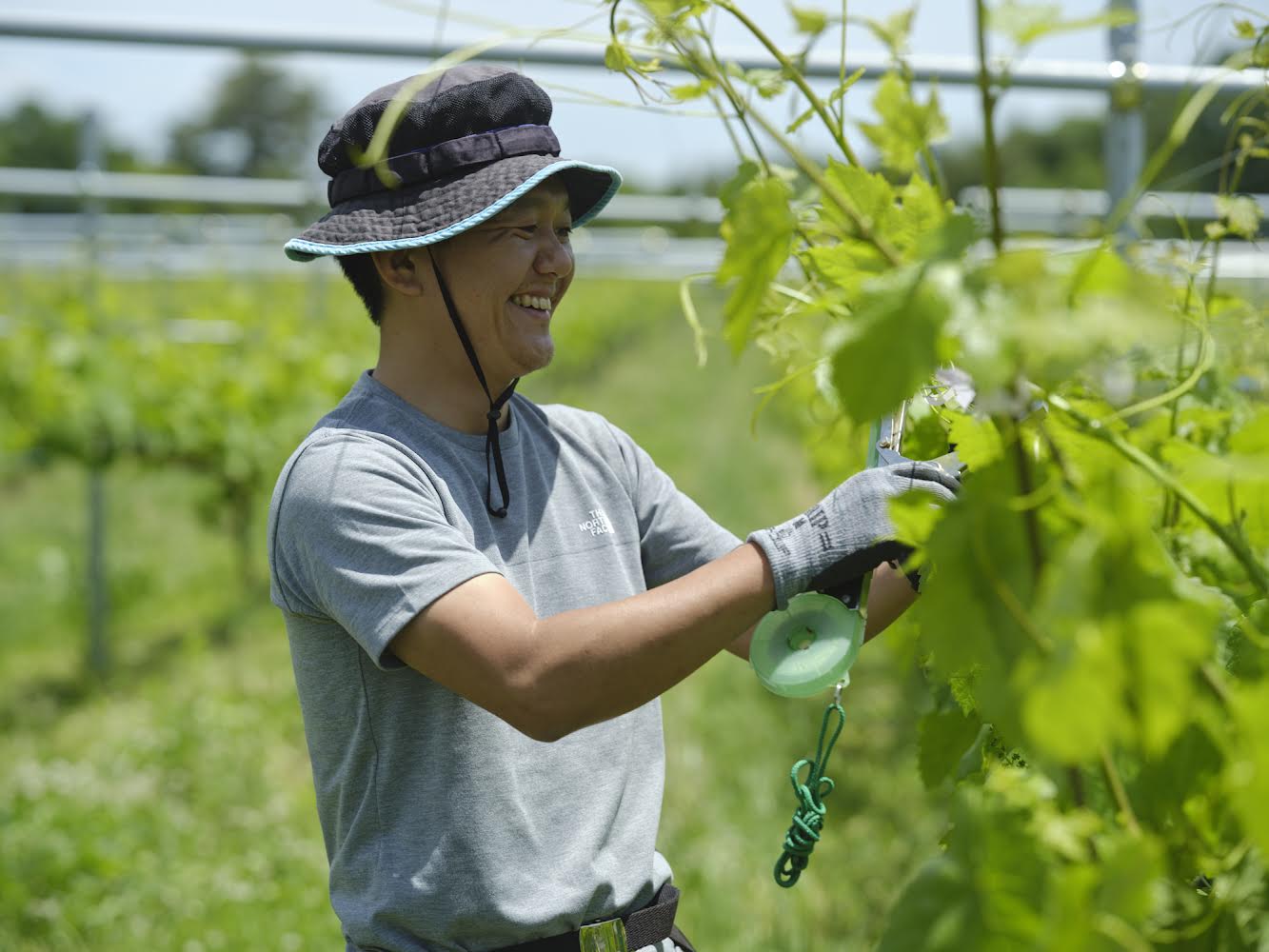
Kohei Oyama, Chief Viticulturist, Suntory Tomi no Oka Winery, Wine Company, Suntory Ltd.
Initiatives in Circular Agriculture
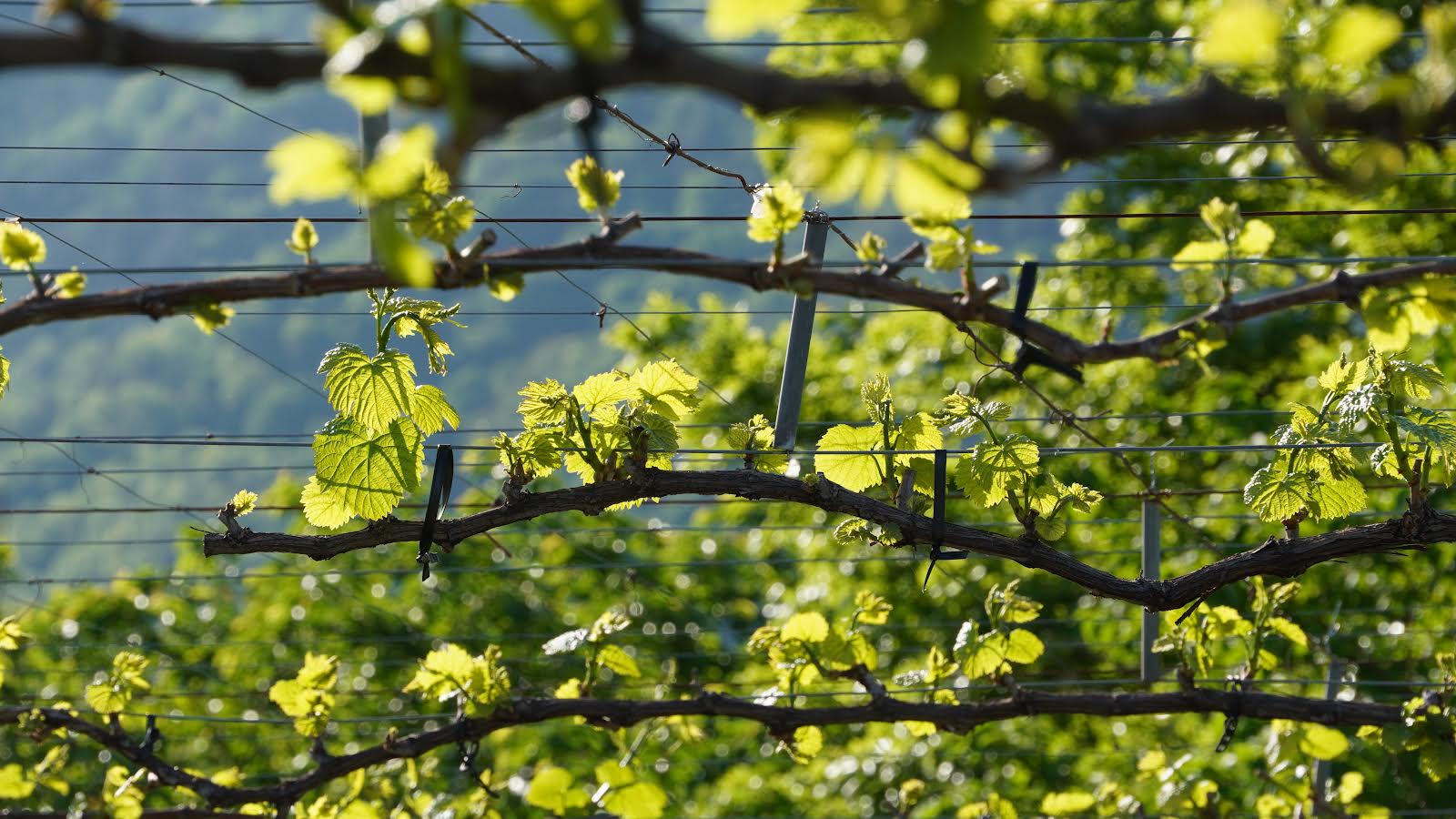
As part of its ongoing initiatives in circular agriculture, Suntory has embarked on a new challenge: the "Yamanashi 4 per 1000 Initiative ※".
We spoke with Mr. Oyama about their efforts regarding the "Yamanashi 4 per 1000 Initiative."
※ The "4 per 1000 Initiative" is an international initiative based on the idea that increasing soil carbon stocks by 0.4% per year globally can offset the increase of CO2 in the atmosphere and curb global warming. In 2020, Yamanashi Prefecture became the first local government in Japan to join, deploying this "Yamanashi 4 per 1000 Initiative" as its own unique framework.
Plants absorb carbon dioxide emitted through human economic activities and other actions, and release oxygen. However, as activities intensify in pursuit of further economic development, the amount of carbon dioxide naturally increases.
In response, the concept behind the "4 per 1000 Initiative" is that by increasing the amount of carbon in the soil by 0.4% each year, we can nearly offset the annual increase of carbon dioxide in the atmosphere.
Yamanashi Prefecture joined this initiative earlier and has been rolling out its own framework, the "Yamanashi 4 per 1000 Initiative," and in support of the prefecture, we have also participated in these Yamanashi Prefecture activities since March of this year.
Specific Details
Specifically, in what ways are you participating in the activities of the "Yamanashi 4 per 1000 Initiative"?
We began no-till sod culture about 20 years ago with the aim of improving the physical properties of the soil.
The idea is to allow other plants to coexist with the grapevines, improving drainage through the power of microorganisms attached to these roots.
In addition, we have been mowing the grass that grows in the summer and composting grape pomace to return it to the soil. These practices are regarded as part of circular agriculture and have ultimately served to increase CO2 sequestration in the soil.
Starting in 2022, to further increase this, we added a new initiative of "applying biochar made from pruned branches back into the vineyards."
If you simply leave pruned branches in the soil, they decompose and the carbon content is absorbed by plants, but by burning the branches and halting combustion midway to turn them into charcoal, they become semi-permanently non-degradable, allowing carbon to be sequestered in the ground.
Furthermore, because the charred pruning branches increase microbial habitats, we expect microbial activity in the soil to rise further, and burning the branches reduces the number of pathogens in the vineyard, resulting in fewer diseased grapes.
This will also lead to harvesting healthier and higher-quality grapes.
The "4 per 1000 Initiative" is a long-term initiative focusing on GHG. However, we believe that if an initiative requires people living today to endure hardships for the sake of the future, it becomes difficult to sustain as continuous agriculture.
In other words, the circular agriculture we are pursuing this time is by no means something whose benefits will be enjoyed only by future generations; it is an initiative from which positive effects can be expected for us living today as well.
In Order to Spread the Initiatives
Suntory focuses on "sustainable Japanese wine production" through supporting local agricultural revitalisation, addressing climate change, and participating in the "Yamanashi 4 per 1000 Initiative."
Just how are they planning to spread these activities?
By accumulating know-how on the merits of this initiative as well as points to be cautious about, we believe we can widely share it with other wineries that visit our winery.
Of course, we also want to convey, as mentioned earlier, that this is "an initiative with benefits not only for the future, but also for us today."
Additionally, Tomi no Oka Winery is scheduled for a renewal opening this September, and we are planning tours and other experiences for the general public to see the site. We also want to enrich our website for customers and communicate our message broadly and deeply.
Activities to Spread Japanese Wine
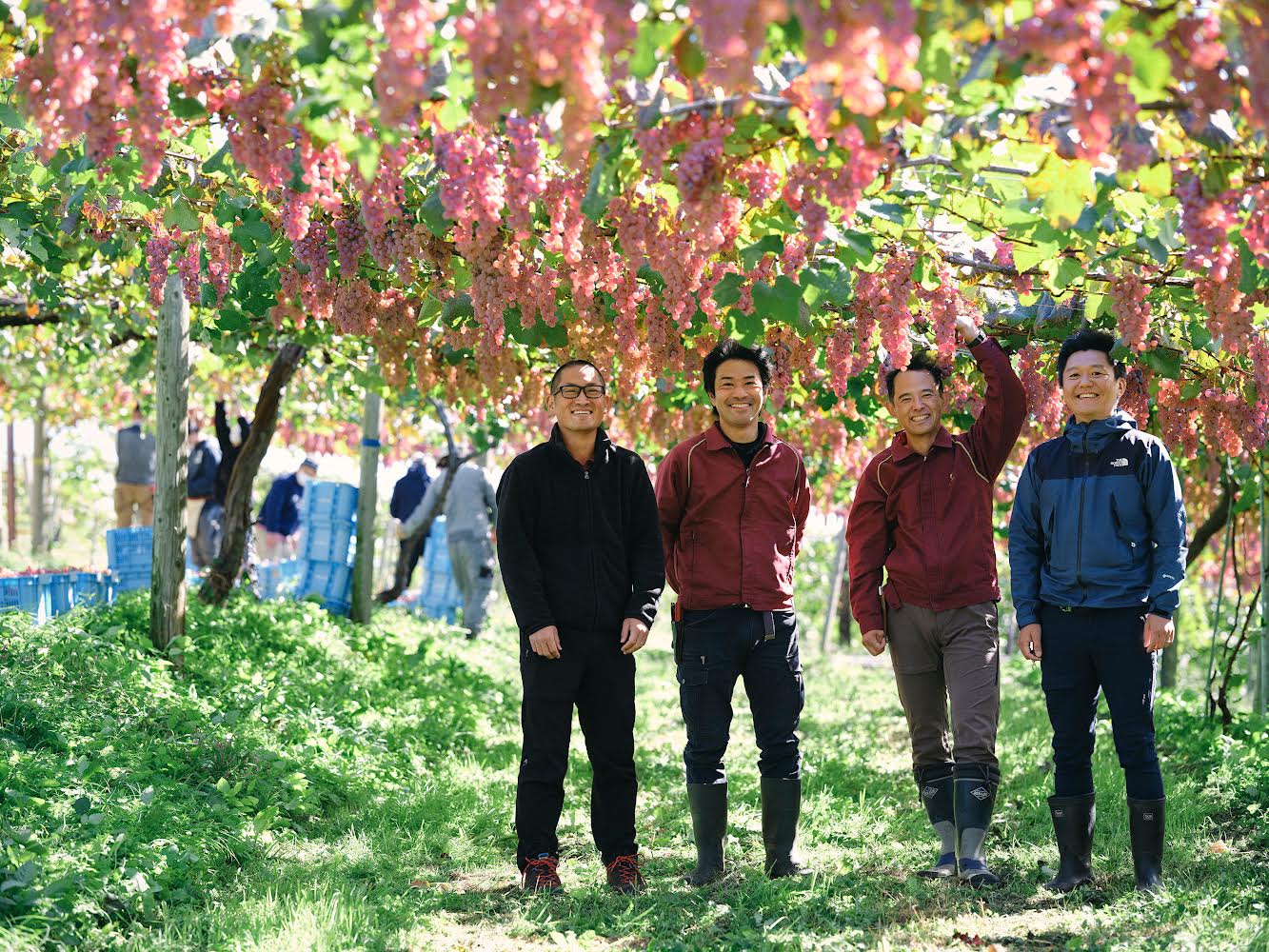
This September, Suntory's new Japanese wine brand, "SUNTORY FROM FARM," will launch. We asked Mr. Oyama how he would like to contribute to Japanese wine going forward.
We place great importance on opportunities to disseminate and exchange information, such as through discussions when other wineries visit us or seminars we are invited to speak at.
To begin with, the raw material of wine is grapes, which are fresh produce. Since it is impossible for every winery to brew using exactly the same ingredients, we operate on the premise that no two wineries can make the same wine. In reality, I believe the winemaking styles and philosophies differ depending on the winery.
For Japanese wine to develop in the future, I believe it is essential above all that wineries respect one another and engage in craftsmanship together.
About "SUNTORY FROM FARM"
We asked Mr. Oyama how he personally feels about "SUNTORY FROM FARM."
I feel that what Suntory excels at is the balance of flavour. Although it may not be immediately obvious, our ideal is a taste where no single flavour element sticks out, but rather each element comes together to "draw a perfect circle."
We also value typicity ("character").
The character of the region, the variety, Suntory, the maker of the wine... Respecting these aspects forms the foundation of my winemaking.
Regarding the new brand "SUNTORY FROM FARM," I see it as a new brand that returns to the roots, expressing that "character" of the land, the vineyards, and the grapes.
I believe our work consists of two things: making wine that is recognised globally, and getting as many people as possible—even just 1 more person—to know about Japanese wine.
Within the brand, there is a line called the Symbol Series, which represents the top range aiming to be Japanese wine recognised globally.
On the other hand, there are also casual lines like the Varietal Series, created with the desire to let customers nationwide learn more about Japanese wine and to have as many people as possible—even just 1 more person—drink it.
In recent years, domaine-style wineries have been increasing, but we want to focus firmly not only on the first point but also on the second point, and by exchanging information and sharing what we have gained with other wineries and growers as mentioned before, we hope to develop Japanese wine as an industry.
In Closing

"Why am I making wine in Japan? Sometimes, I find myself thinking about that," says Mr. Oyama.
When people talk about wine, terroir is emphasized, but Mr. Oyama says that alongside climate and soil, human beings are also an element of terroir, and that is what makes Japanese wine so interesting.
"Japan has high rainfall, typhoons, and high humidity. Under these severe conditions for wine grapes, the attitude of how to perceive those conditions and how to overcome them is fully reflected in the taste of the wine. In Japanese wine, the thoughts of the producer—that is, the human element—are extremely important, and that is the most fascinating part. Producing Japanese wine makes me feel all over again how appealing this aspect is."
Over the past 10 years or so, the quality of Japanese wine has improved dramatically, with many wonderful wines being produced from Hokkaido in the north to Kyushu in the south.
Lastly, Mr. Oyama spoke powerfully about wanting to build this era together with all wine drinkers, at a time when Japanese wine is undergoing great changes.
Tackling various challenges, Suntory aims for sustainable Japanese wine production.
Why not pay attention not only to the flavour of the wine, but also to the initiatives behind it?
Reference
About Suntory's Japanese Wine