
WINERIES
Depicting “Sapporo’s Terroir” Through 100% Estate-Grown Grapes: A Visit to Sapporo Wine

Contents
When thinking of Hokkaido's wine-producing regions, many people these days might immediately picture Yoichi or Sorachi.
Yet, did you know that in the city of Sapporo and the city of Ishikari located just to its north, there is a winery that owns around 10 to 11 hectares of vineyards focused mainly on European varieties, producing wine from 100% estate-grown grapes?
"Sapporo Wine" began in 2020. Today, it has vineyard plots in four locations: Yahata and Tarukawa in Ishikari City, and Teine-Maeda and Shinkotoni in Sapporo City. Among these, the main plot in Yahata, Ishikari City, spans about 8 hectares. The cultivated varieties number nearly 20 types, growing a diverse array of grapes including Pinot Noir, Chardonnay, Sauvignon Blanc, Kerner, and Riesling.
From the vineyards and winery to the shop and the wines themselves, let us take you on a complete tour through this column!
CHAPTER 01
Winds Blowing from Sea and Mountains: Vineyards Unique to Sapporo and Ishikari
To start, Mr. Yusuke Taniuchi, who oversees cultivation and sales, showed us around the vineyards.
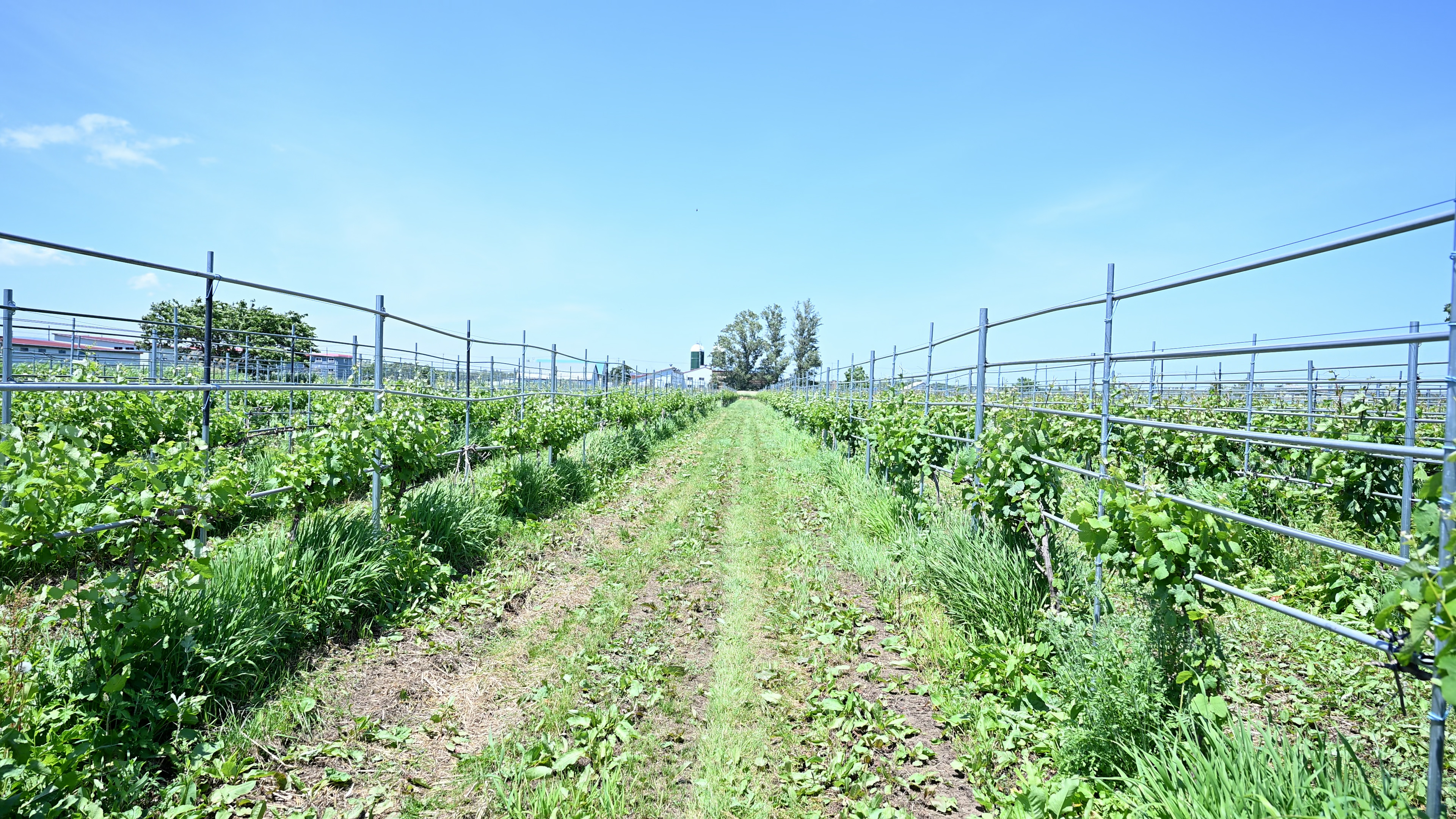
Standing in the vineyard, the very first thing that left an impression was the wind.
Even during our visit, a strong breeze blew through continuously. Wind turbines for power generation could even be seen in the surrounding area, and this wind is said to hold significant meaning for grape growing.
As the wind passes through the vineyards, it lowers humidity, helping to reduce the risk of disease. The cool climate typical of Hokkaido, together with the wind, is an essential characteristic of this land, especially for white wine grapes. In the Tarukawa plot in Ishikari City, which is even closer to the sea, the wind blows similarly, creating an environment where grapes can be grown easily despite the flat terrain.
Another aspect worthy of attention isthe sandy soil and excellent drainage.
The Ishikari vineyards are near the sea, with some locations displaying the features of coastal sand dunes. Moreover, while many areas generally require drainage measures like underdrains, this area is naturally blessed with good drainage.
What makes it even more unique is how they draw on their background in mushroom cultivation, applying spent mushroom substrate to the fields after harvest. In addition to grapes, they also grow asparagus and aronia, a fruit resembling blueberries.
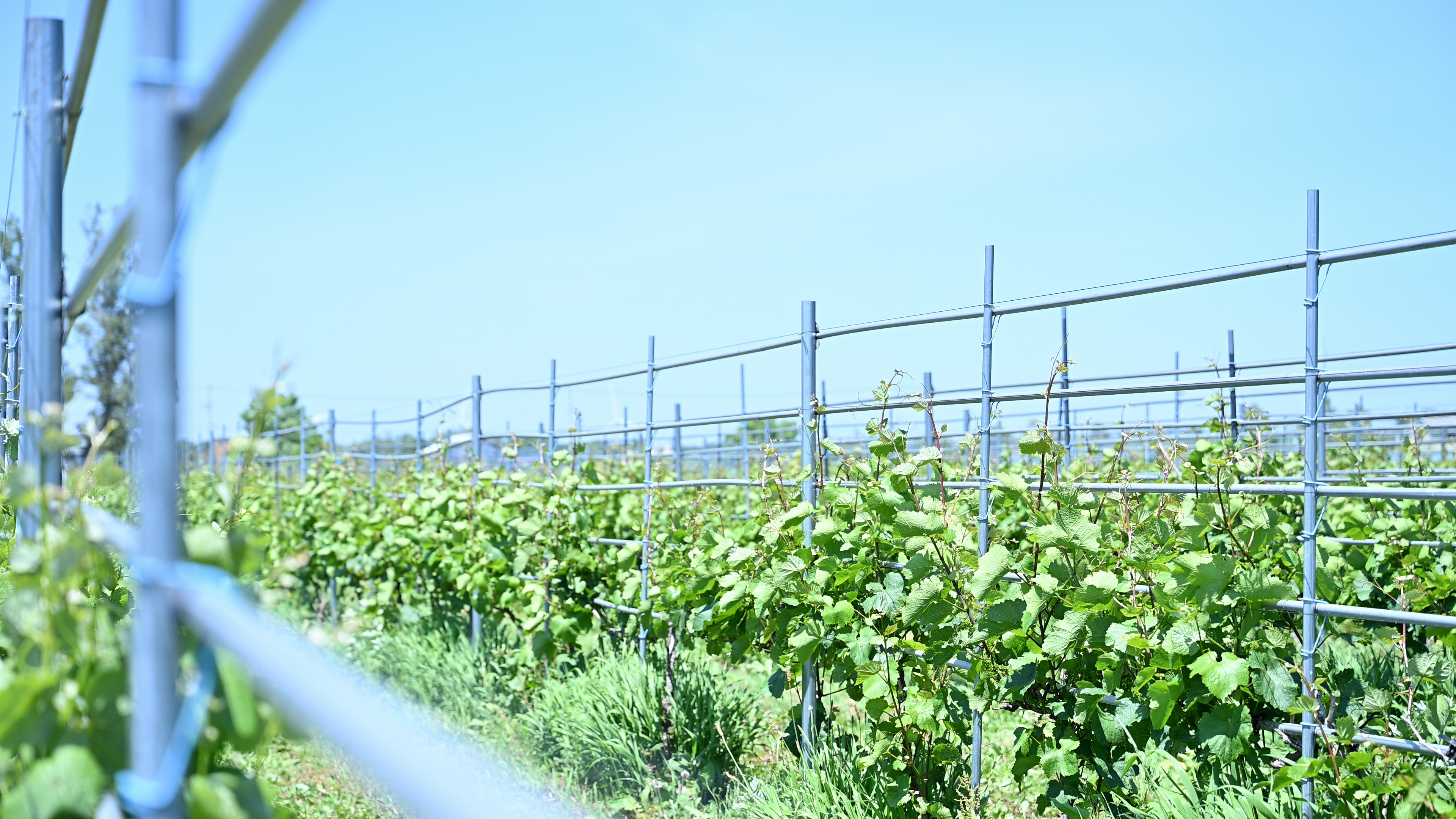
The vines are mostly grown using vertical shoot positioning. In Hokkaido, managing winter snowfall and cold is essential, requiring the work of unhooking branches and lowering them into the snow for winter protection. On the other hand, because it is flat land, maintaining a certain canopy height ensures ample sunlight and airflow, tailoring cultivation methods precisely to the local conditions.
CHAPTER 02
Searching for Grapes Suited to the Land from Around 20 Varieties
At Sapporo Wine's vineyards, a wide array of around 20 grape varieties is cultivated.
Although winery launched in 2020, grape cultivation began even earlier, with Yama Sauvignon having been grown for around 10 years. Today, they cultivate a broad range of varieties, including Kerner, Sauvignon Blanc, Chardonnay, and Pinot Noir.
Among them, a fascinating presence when looking at the future of Sapporo Wine isRiesling.
Because Riesling is a late-ripening variety, waiting for it to reach full maturity in Hokkaido can be challenging, so not many producers make it into single-varietal wines yet. However, partly due to recent climate shifts, its potential is beginning to emerge. At Sapporo Wine, by vinifying the Riesling harvested from Sapporo and Ishikari separately, they aim to express the distinct regional characteristics of each origin.
CHAPTER 03
Using Small Tanks to Express the Grape's Natural Personality in the Wine
Next, we head into the winery.
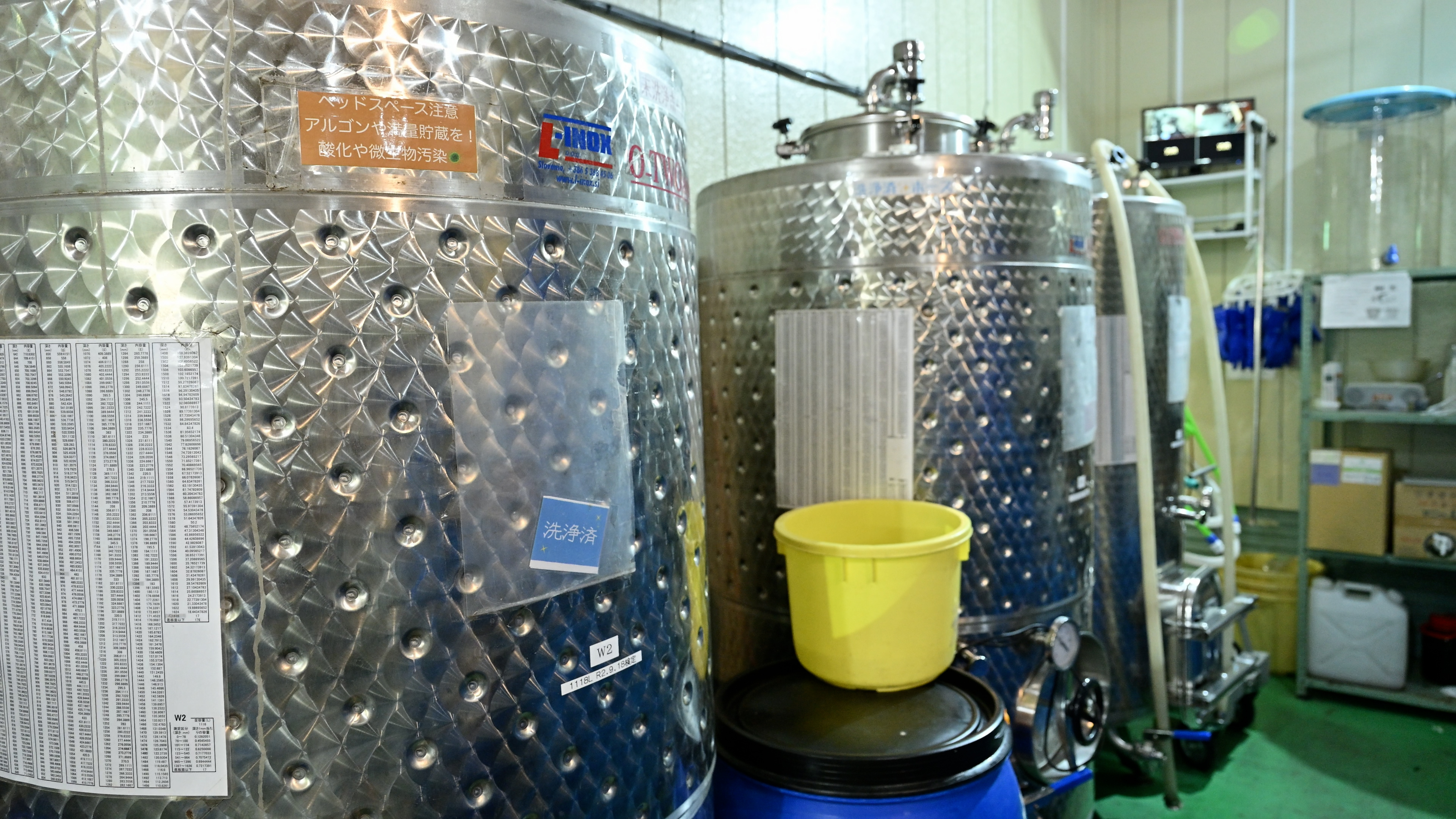
Mr. Kota Minami, the head winemaker, showed us around the compact winemaking facilities, which center around stainless steel and synthetic resin tanks.
What stands out is the row of small tanks lined up side by side. Because they handle many varieties and labels, they carefully select tanks according to the volume of each batch, minimizing dead space as much as possible. Mr. Minami handles almost everything from fermentation to bottling virtually by himself, crafting a diverse range of wines by skillfully utilizing the limited equipment.
What he values in winemaking is not intentionally crafting complexity, but ratherbeautifully expressing the fruitiness and varietal character of the grapes.
For this reason, he does not limit himself to a single approach when it comes to yeast, such as insisting that it "must be wild yeast." While using wild yeast for a portion of the wines, he generally selects cultured yeasts to bring out the specific characteristics of each variety. Aging is carried out mainly in stainless steel, while oak barrels are also used for Pinot Noir and a portion of the Chardonnay.
The same applies to sulfites. Rather than making "no added sulfites" the goal itself, he adjusts the amount while considering the time until sale and the condition of the wine. What Mr. Minami aims for isa state where the drinker can properly appreciate the charm of the wine the moment they open the bottle.
CHAPTER 04
The Difference Between Ishikari and Sapporo as Shown by the Same Riesling
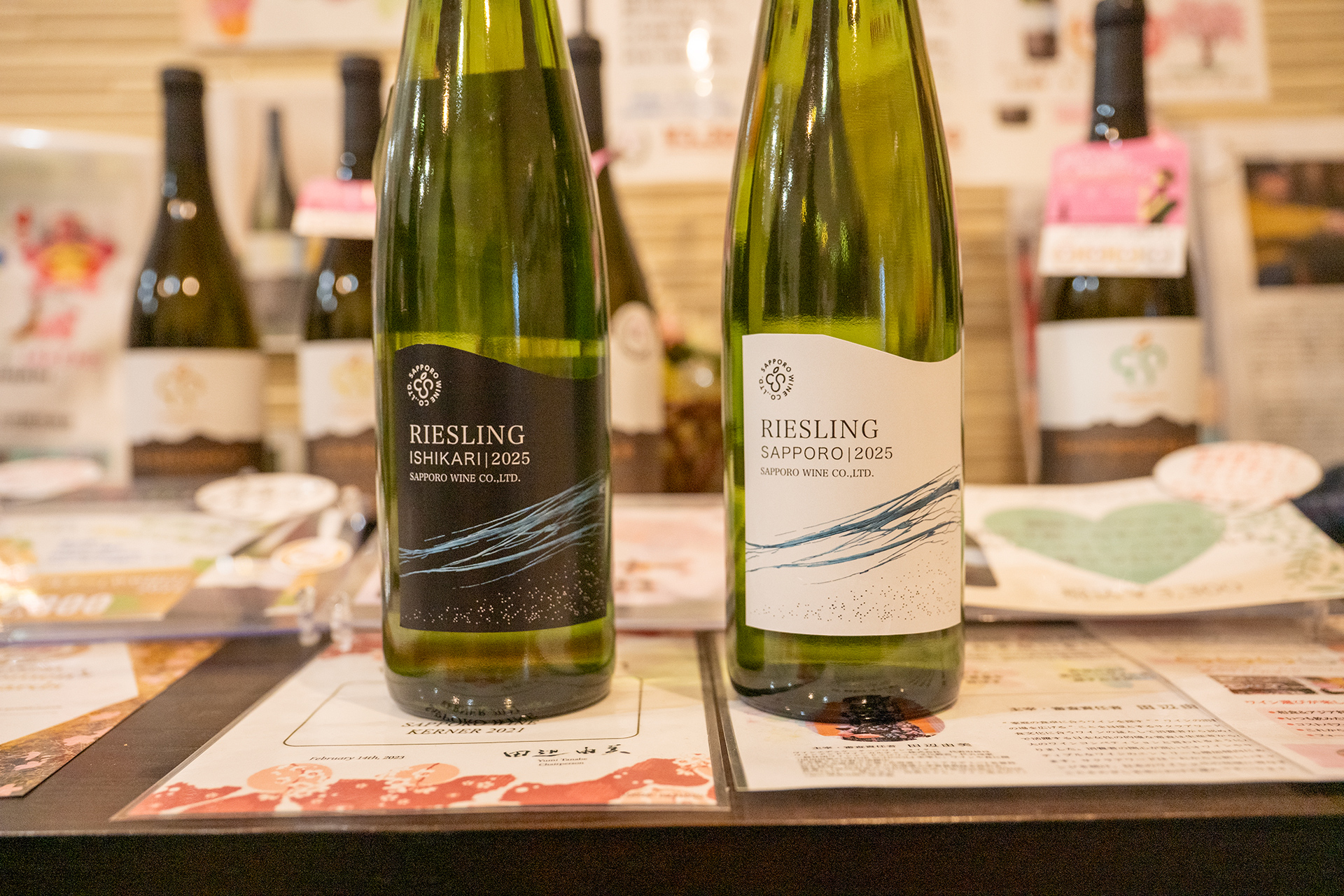
The clearest way to experience the differences in terroir and winemaking was through a side-by-side tasting of the two Rieslings—one from Ishikari and one from Sapporo.
The Ishikari expression was a pale lemon-yellow with greenish highlights. Refreshing aromas reminiscent of citrus and green apple were followed by crisp, fresh acidity. Befitting grapes grown in sandy soils near the sea, Mr. Taniuchi also pointed to minerality as a key feature.
On the other hand, the Sapporo expression had a bit more volume in its fruit aromas, showing nuances reminiscent of peach and apricot. The acidity was also rounder compared to the Ishikari bottling, giving a richer impression.
There were differences in winemaking as well. While cultured yeast was used for the Ishikari wine, the Sapporo wine was created by blending wines fermented separately with wild yeast and cultured yeast at the end. This is said to contribute to its complexity and richness. In the Sapporo vineyards, strong winds blowing from Mount Teine and generous sunlight are also said to affect the ripening of the grapes.
Even with the same variety and vintage, the character changes so much depending on where it is grown and how it is made. Comparing these two bottles was deeply intriguing when considering the potential of Hokkaido Riesling.
Additionally, in the Pinot Noir fermented using whole clusters, the aromas of red berries, earthy and forest-like nuances, soft fruitiness, and a lingering umami on the finish were memorable. Through careful trial and error, Mr. Minami continues to search for an expression true to Hokkaido Pinot Noir.
Sapporo and neighboring Ishikari—despite being located near urban areas, feature vineyards with distinct natural conditions of sea, mountain, wind, and soil, giving rise to diverse wines from the grapes grown there.
Sapporo Wine possesses around 10 to 11 hectares of estate vineyards and grows roughly 20 varieties, already beginning to express the differences between individual plots through its wines.
As Hokkaido's wine regions continue to expand, it will be exciting to see which varieties will reflect the local character even more clearly in the future. It is certainly a winery with a promising future.
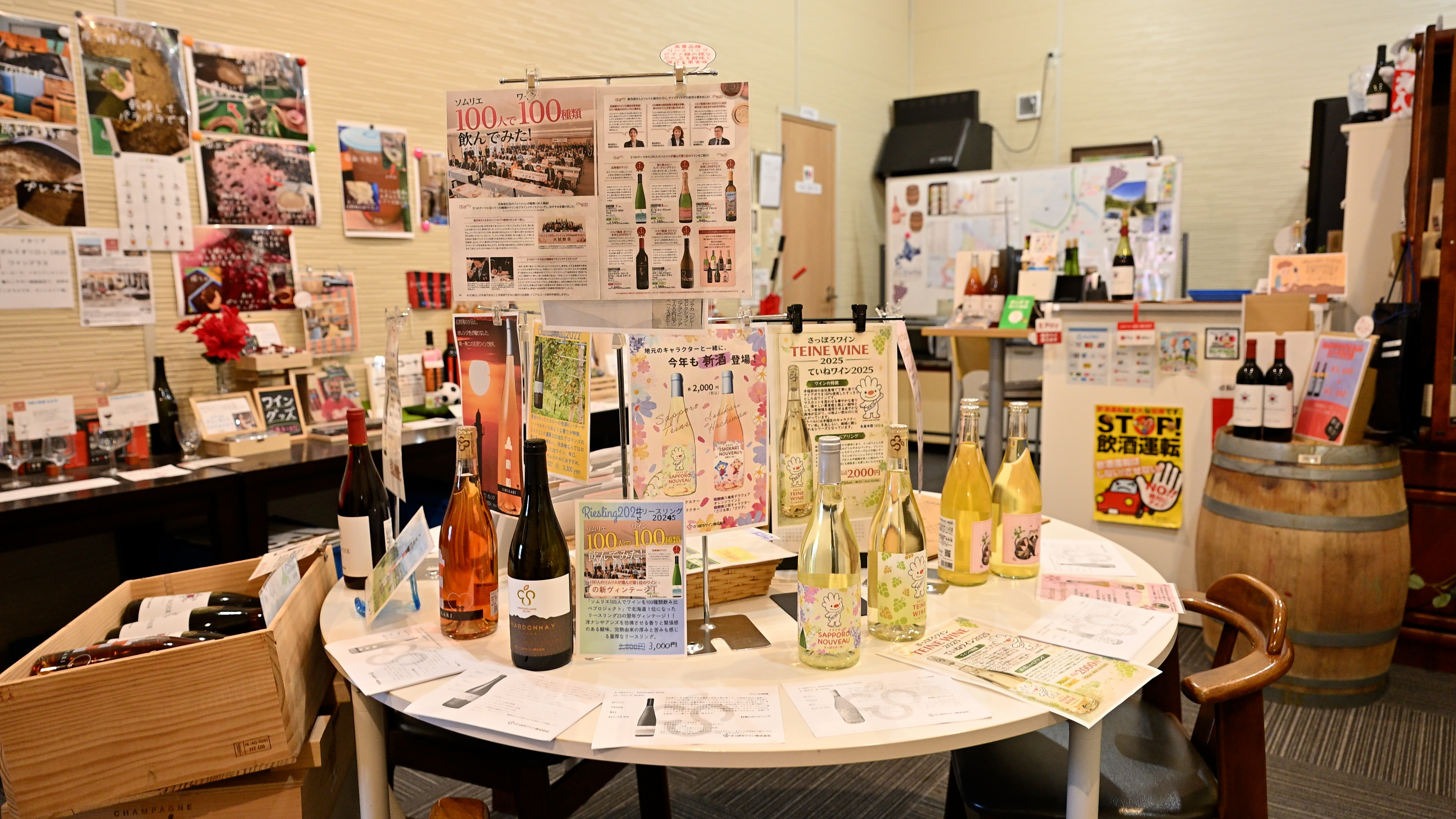
Sapporo Wine
About the author