
When people hear the word "wine," many likely think of wine regions, brands, grape varieties, vinification methods, or terroir.
On the other hand, wine also has aspects of economic activity, such as production, consumption, distribution, trade, and investment.
Looking from this perspective of "wine × economics," an unfamiliar picture emerges regarding the background behind pricing, winery management, and the challenges faced by wine regions.
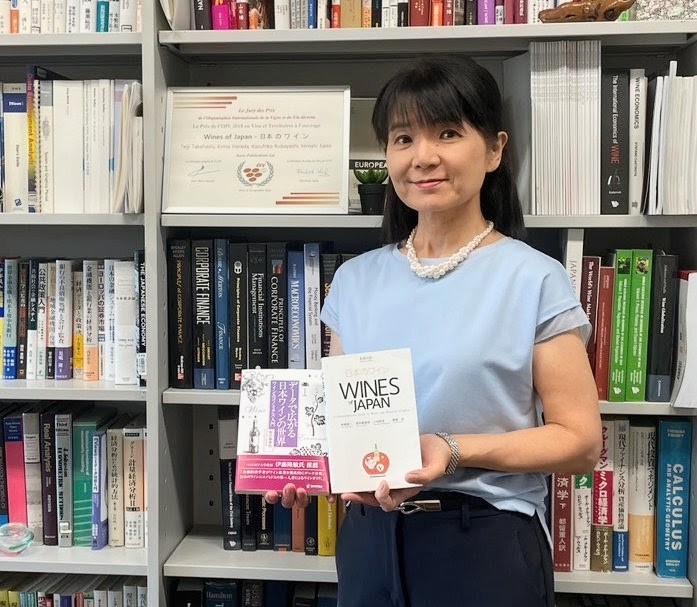
This time, we interviewed Kimie Harada (hereafter Professor Harada), a professor at the Faculty of Commerce at Chuo University who studies wine economics.
From the current state of Japanese wine to how prices are determined and the systems that support the industry, we explore the topic through the lens of economics.
What is wine economics?

Professor Harada is the author of "The World of Japanese Wine Expanding Through Data: An Introduction to Wine Economics."
While many books focus on grape varieties, winemaking, regions, and food pairings, this volume allows readers to understand wine from the perspectives of economics and management.
Even so, "wine economics" may still be a field unfamiliar to the general public.
First, we asked her what kind of academic discipline it is.
Harada: "Wine economics is a discipline that not only views wine as a beverage to be enjoyed, but also approaches its production, sale, and consumption as economic activities. In Japan, when people think of wine, their attention tends to focus on viticulture, vinification, laws, and regulations, offering few occasions to consider its connection to economics. For example, the taxable shipment volumes by prefecture published by the National Tax Agency also include wines other than 'Japanese wine' made exclusively from domestically grown grapes. Therefore, to understand the actual state of Japanese wine, it is necessary to verify the scope of the statistics and organize the target data. Analyzing the scale of production and consumption, as well as regional differences from that data, is also a part of wine economics."
She notes that looking at Geographical Indications (GI) from an economic perspective also sheds light on the utilization of the system and its relationship with pricing.
Harada: "Yamanashi, Hokkaido, Yamagata, Nagano, and Osaka have wine GI designations. For instance, using a method called regression analysis, we can examine whether wines with GI certification are sold at higher prices than those without. Furthermore, within the scope of my research, it became clear that the utilization rate of GI is remarkably high in Yamagata Prefecture. The existence of a GI and whether producers actually use it are two different matters. Considering why these differences in utilization arise is also a subject of research."
Overseas, a wide variety of studies are reportedly conducted, such as how wine prices change when a prominent winemaker moves to another winery, or how vineyard slope and sun exposure correlate with vineyard land prices.
The scope of wine economics research extends beyond prices and production volumes to consumer behavior and marketing.
What led to studying wine economics
Why did Professor Harada, who specializes in finance and economic policy, come to study wine economics as well?
Harada: "One of the catalysts was the late Professor Takatoshi Ito, who was a professor at Columbia University. He loved red wine, but when I mentioned at the time that 'white wine tastes better than red wine,' he told me, 'Then you can't call yourself a wine lover' (laughs). Wondering if that was really true, I used that as an opportunity to study wine in earnest and obtained the Wine Expert certification."
Afterward, she attended wine sessions at international academic conferences, deepening her interest in wine economics.
Harada: "I once wrote an article introducing wine-related academic societies for 'Sommelier,' the journal of the Japan Sommelier Association. As I interviewed society members for the article, I began to find it a fascinating field. Later, I was invited to participate in joint research projects, which led me to study it in earnest."
Management challenges facing the Japanese wine industry
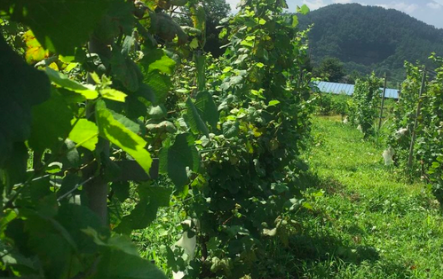
Professor Harada visits wineries throughout Japan, listening to the voices on the ground.
How does she view the current state of the Japanese wine industry from an economic perspective?
Harada: "When considering the Japanese wine industry, it is necessary to look at both the financial condition of wineries and the institutional frameworks that support them. Lately, I feel there are growing voices saying that 'management is tough.' On the other hand, there are wineries that make various adjustments to stabilize their operations, and we can also see a trend toward using custom crush (*1). However, operating a small winery remains challenging. While grape growing receives support through the agricultural sector, I feel the systems supporting winery operations—including winemaking and sales—remain limited."
*1 Custom crush: A system in which producers who do not own winemaking facilities make wine by contracting production to existing wineries or using their equipment and winemaker support.
Harada: "I think the expanding use of custom crush is a positive trend. In winery management, one must consider both fixed costs, such as capital investment in facilities, and variable costs, which increase according to production volume. For small wineries in particular, bearing the fixed costs of acquiring their own winemaking facilities is a heavy burden. On top of that, variable costs for yeast, corks, and bottles are also incurred. When the yen weakens, the costs of equipment and barrels imported from abroad also inflate. Utilizing existing facilities to hold down initial investments and fixed costs reduces the operational burden and may help sustain the industry as a whole."
Custom crush appears to be an option for small-scale producers to continue operations by mitigating the burden of owning facilities.
At the same time, Professor Harada believes that in addition to individual business efforts, institutional frameworks to support the industry are also necessary.
Harada: "Liquor tax accounts for approximately 1% of national tax revenue (*2). Of that, the tax revenue generated from wine is even more limited. Looking solely at the scale of tax revenue, it may be difficult to attract policy focus to the wine industry. However, wineries are linked to agriculture, tourism, and local employment. Amid increasingly difficult business conditions, I hope more attention will be paid to these roles and that support will be expanded somewhat."
*2 Reference: Ministry of Finance, "Materials on Liquor Tax"https://www.mof.go.jp/tax_policy/summary/consumption/d08.htm
As an example of a system supporting the industry, Professor Harada cites Australia.
Harada: "In Australia, wine is in principle subject to the Wine Equalisation Tax (WET), which equates to 29% of the wholesale value. On the other hand, there is a rebate system for this tax for producers who meet certain requirements (*3).
Major corporations and small producers differ in production scale and sales power. Establishing a mechanism to rebate taxes with an annual cap so that small-scale producers can continue their businesses might serve as a good reference for Japan as well."
*3 Reference: Australian Taxation Office, "Wine equalisation tax (WET)", "Producer rebate"
https://www.ato.gov.au/businesses-and-organisations/gst-excise-and-indirect-taxes/wine-equalisation-tax
https://www.ato.gov.au/businesses-and-organisations/gst-excise-and-indirect-taxes/wine-equalisation-tax/producer-rebate
The idea of adding something extra to wine
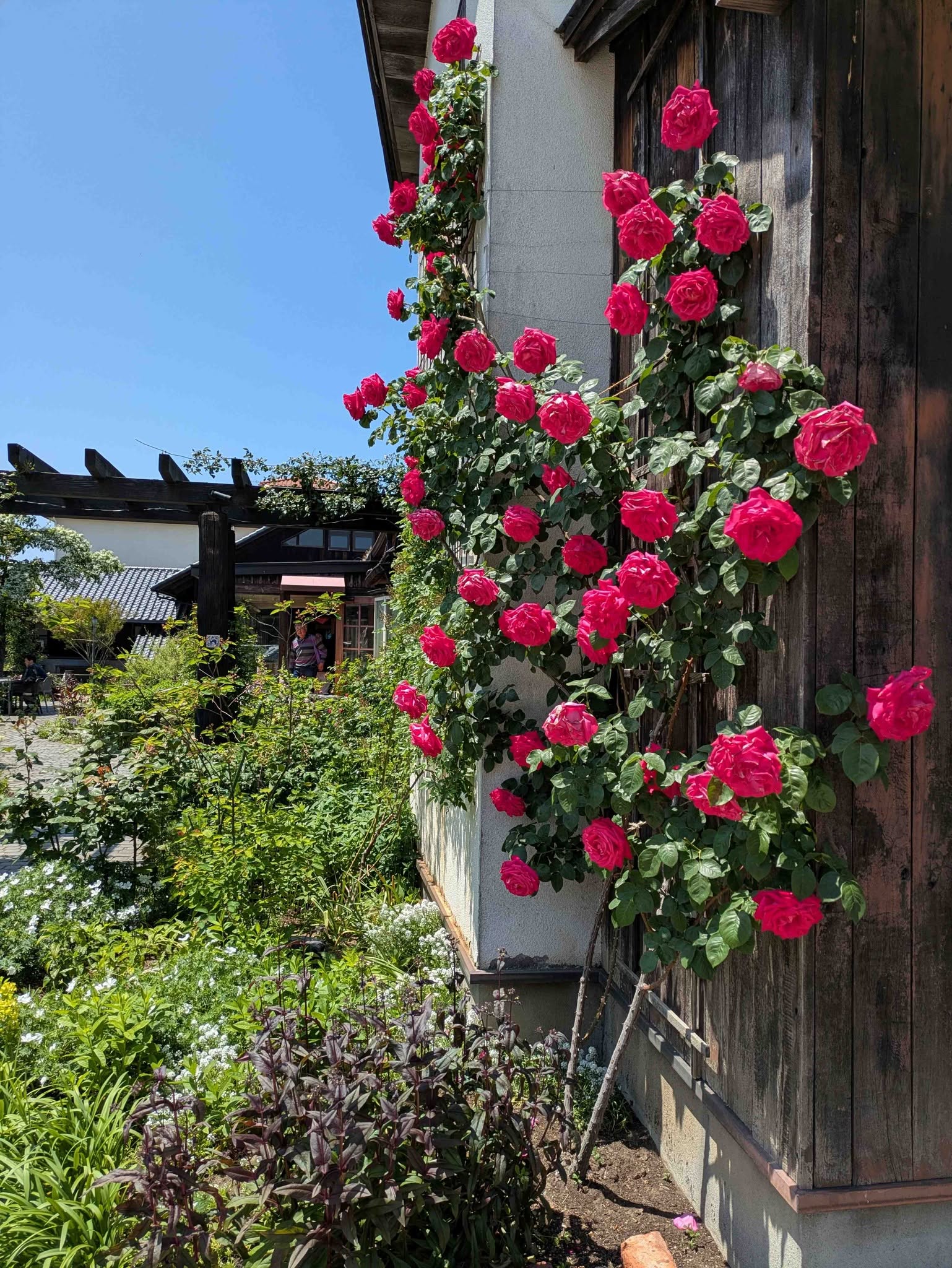
Amid a challenging business climate, how should wineries connect with consumers?
Harada: "While the shift away from alcohol among young people is widely discussed, even in France, opportunities for young people to buy wine by the bottle appear to be declining. Beyond simply crafting high-quality wine, it is necessary to consider whether it actually reaches drinkers. Recently, at an Australian wine tasting event, I visited a booth that exclusively handled bag-in-box and carton-packaged wines. When I asked, they told me, 'We sell only in cartons.' When I tasted it, the quality was good, which surprised me. They emphasized advantages such as, 'We're past the era of buying bottles, cartons are eco-friendly, and you can finish them completely.' While this does not apply to all wines, I think the attitude of grasping what consumers are looking for is essential."
It seems that innovations tailored to consumer lifestyles and preferences are called for, including packaging formats and sales approaches.
Harada: "At an international conference this summer, someone reported survey results on the purposes of visiting wineries. That report also left a strong impression on me. The primary purpose of people visiting wineries was not tasting wine. Many visited seeking enjoyment other than wine, such as enjoying live music or meals at the winery, having areas where children could play, or staying overnight to spend time with family and friends. I felt that providing 'something extra' combined with wine serves as the catalyst to draw people in."
In Japan, Cave d'Occi winery, where visitors can enjoy lodging, dining, hot springs, reading, and art, is likely an example of this. Offering diverse experiences centered around wine may lead to expanding the reach of visitors.
How to think about the price of Japanese wine
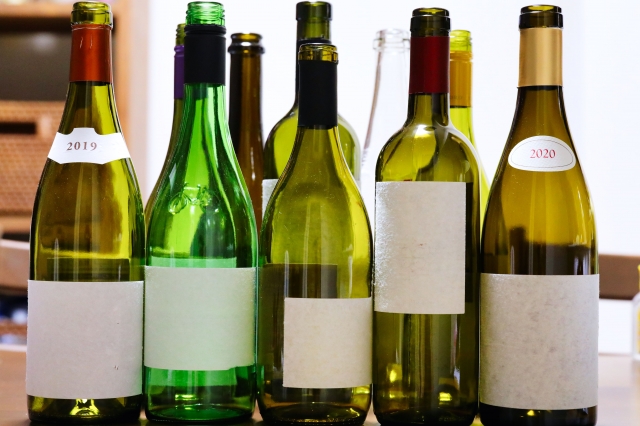
When considering the relationship between wine and economics, one of the most familiar topics is price.
Japanese wine is sometimes perceived as expensive compared to imported wine. What is the background behind its pricing?
Professor Harada shared an analysis focusing on the founding periods of wineries.
Harada: "Previously, I examined the relationship between the year of establishment and the average price of wine sold for wineries in Yamanashi Prefecture and Hokkaido. I plotted the founding year on the horizontal axis and the average price on the vertical axis to compare them. In Yamanashi Prefecture, there are long-established wineries founded in the 19th century, and the average price was relatively low. On the other hand, in Hokkaido, there are many new wineries, and the average price was relatively high. One possible background factor is that while equipment depreciation has progressed for long-standing producers, new wineries face the burden of initial investments. Of course, prices are not determined by that alone, but the correlation with the timing of establishment seems to be a contributing factor."
She also reportedly heard from long-established wineries in Yamanashi Prefecture saying, "We cannot set high prices."
The background of pricing differs for each winery, depending on relationships with longtime customers and the financial base. Newly established wineries must set prices while also factoring in the recovery of their investments.
Harada: "When consumers choose wine, price is an important clue. However, that price reflects various factors beyond quality, including production scale and capital investment. Communicating such background details is not easy. Among my acquaintances running wineries, there are those who handle everything from viticulture to winemaking and sales essentially alone, struggling to manage operations due to lack of bandwidth. I purchase their wine to offer support, but there are many moments when I feel the hardships of small wineries."
The world of wine expanding through an economic lens
Looking at wine through the lens of economics reveals that prices and markets cannot be treated uniformly.
For example, according to Professor Harada, the mechanisms of trading and the objectives of buyers differ greatly between the market for fine wines viewed as investment targets and the market for everyday drinking wines.
There are also indices like the "Liv-ex Fine Wine 50," which tracks wine prices of the Bordeaux First Growths. When trading wine as an investment asset, appropriate storage conditions, provenance verification, and trading by the case become important.
The impacts of economic conditions and income also vary depending on the market. Looking not only at trades of ultra-premium wines, but also at the behavior of enthusiasts who continue to buy wines they love, seems to allow for a more multifaceted understanding of the wine market.
Finally, we asked her about her expectations for the future of the Japanese wine industry.
Harada: "I would like to see wine tourism given greater emphasis. For example, Yamanashi Prefecture is close to central Tokyo, so ways could certainly be devised to make it easier to visit the producing regions, such as day-trip bus tours or tours that include an overnight stay. We could also consider programs that invite international travelers to tour Japanese wine-producing areas. If they can enjoy not only drinking and buying wine, but also the local cuisine and scenery, we will be able to convey the appeal of these regions. Furthermore, I hope for efforts that support the industry. I hope that producer associations will approach prefectural governments, prefectures will approach the national government, and stronger collaboration will build a framework that supports Japanese wine."
Reference Information
Image Information
Kimie Harada, Professor, Faculty of Commerce, Chuo University, Ph.D. in Economics
"The World of Japanese Wine Expanded by Data: An Introduction to Wine Economics" by Kimie Harada