
How Do the World’s MWs See Japanese Wine? Richard Hemming MW on Where Japanese Wine Stands Today and Where It Is Heading
Contents
- 01Why the World Is Taking an Interest in Japanese Wine
- 02Nagano: Regional Character Considered Through Three Wines
- 03Hokkaido: The Cool-Climate Region the World Is Watching
- 04Yamanashi: The Potential of Koshu, and a Red from International Varieties
- 05The Strengths of Japanese Wine as Seen in the Tasting
- 06Challenges in Entering the World Market
- 07Producers Respond to the View from Overseas
- 08What the Seminar Set Out to Do
- 09In Closing
- 10“The World Atlas of Wine”: Jancis Robinson MW Masterclass and Tasting
Japanese wine has been raising its profile at home and abroad in recent years as its quality improves. But how is it actually regarded by the world's wine experts?
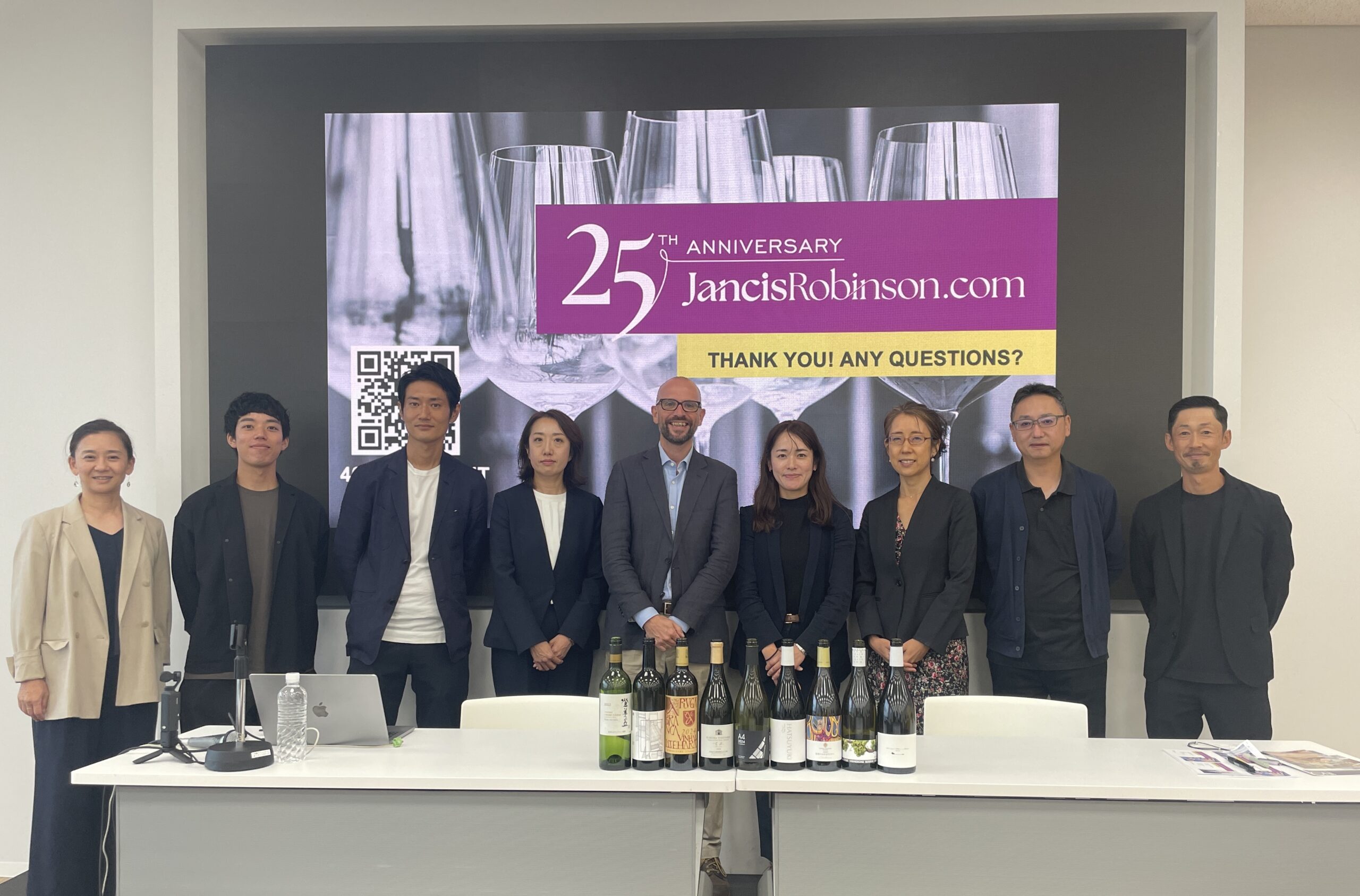
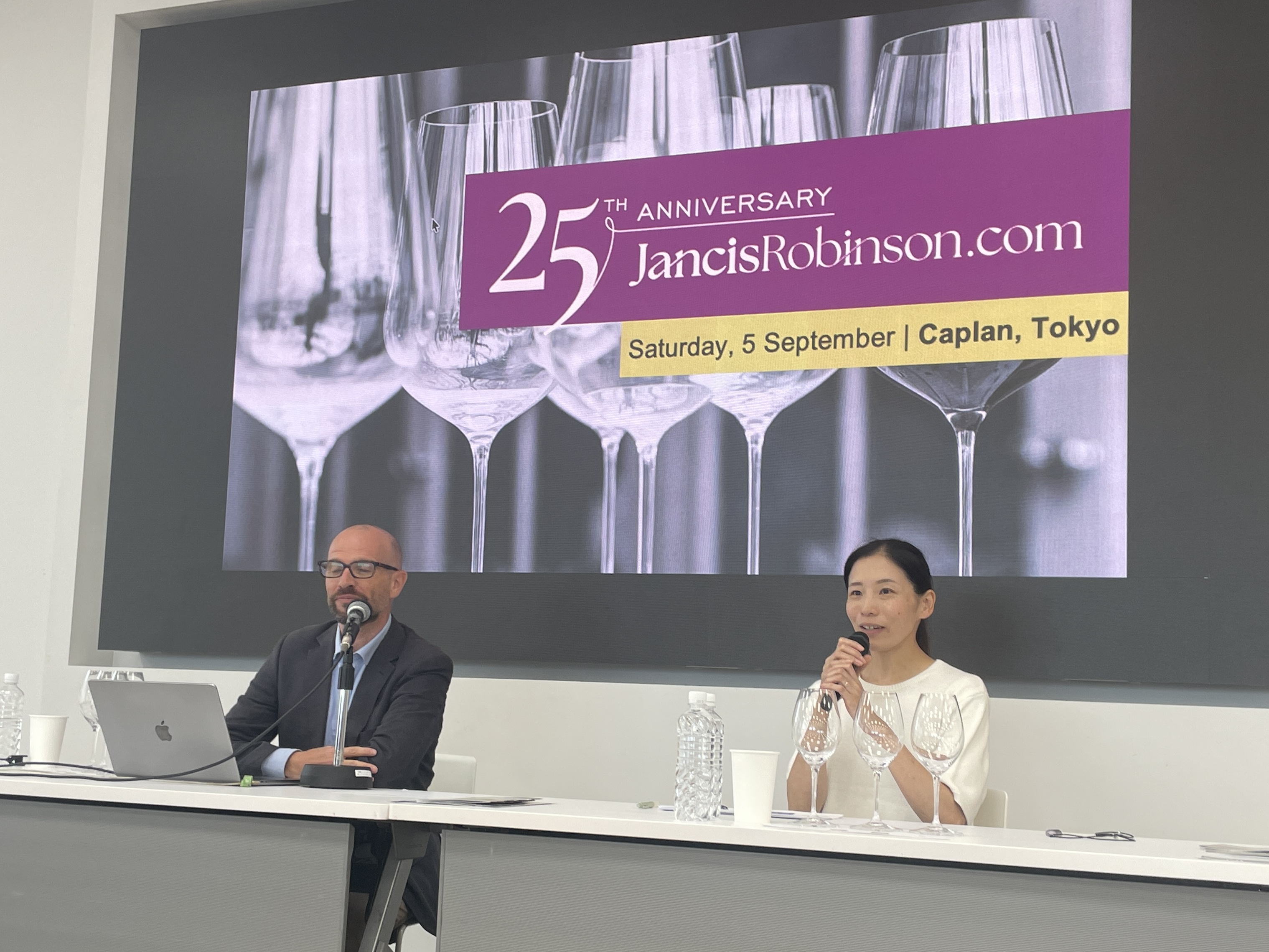
On 5 September, a seminar led by Richard Hemming MW was held under the title “Exploring the Present and Future of Japanese Wine with Richard Hemming MW.”
Hemming has written for many years for “jancisrobinson.com,” the wine information site run by world-renowned wine critic Jancis Robinson, and qualified as a Master of Wine (MW) in 2015. He is now based in Singapore.
In March 2026, 25 MWs including Hemming visited several of Japan's wine regions, touring wineries and vineyards and meeting producers. Drawing on what was learned on that trip, the seminar considered the quality and character of Japanese wine, and its potential in the world market, from the viewpoint of an overseas expert.
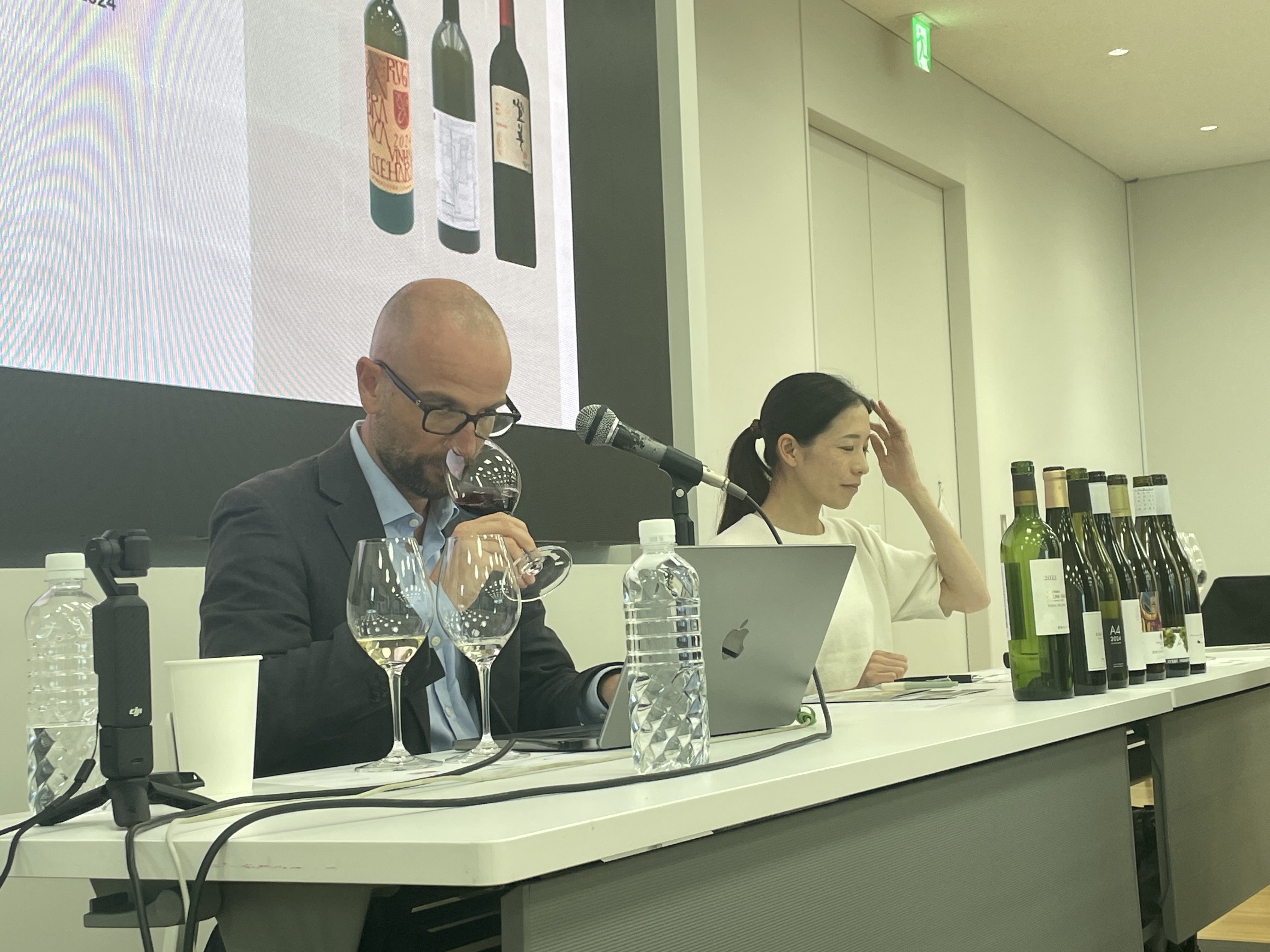
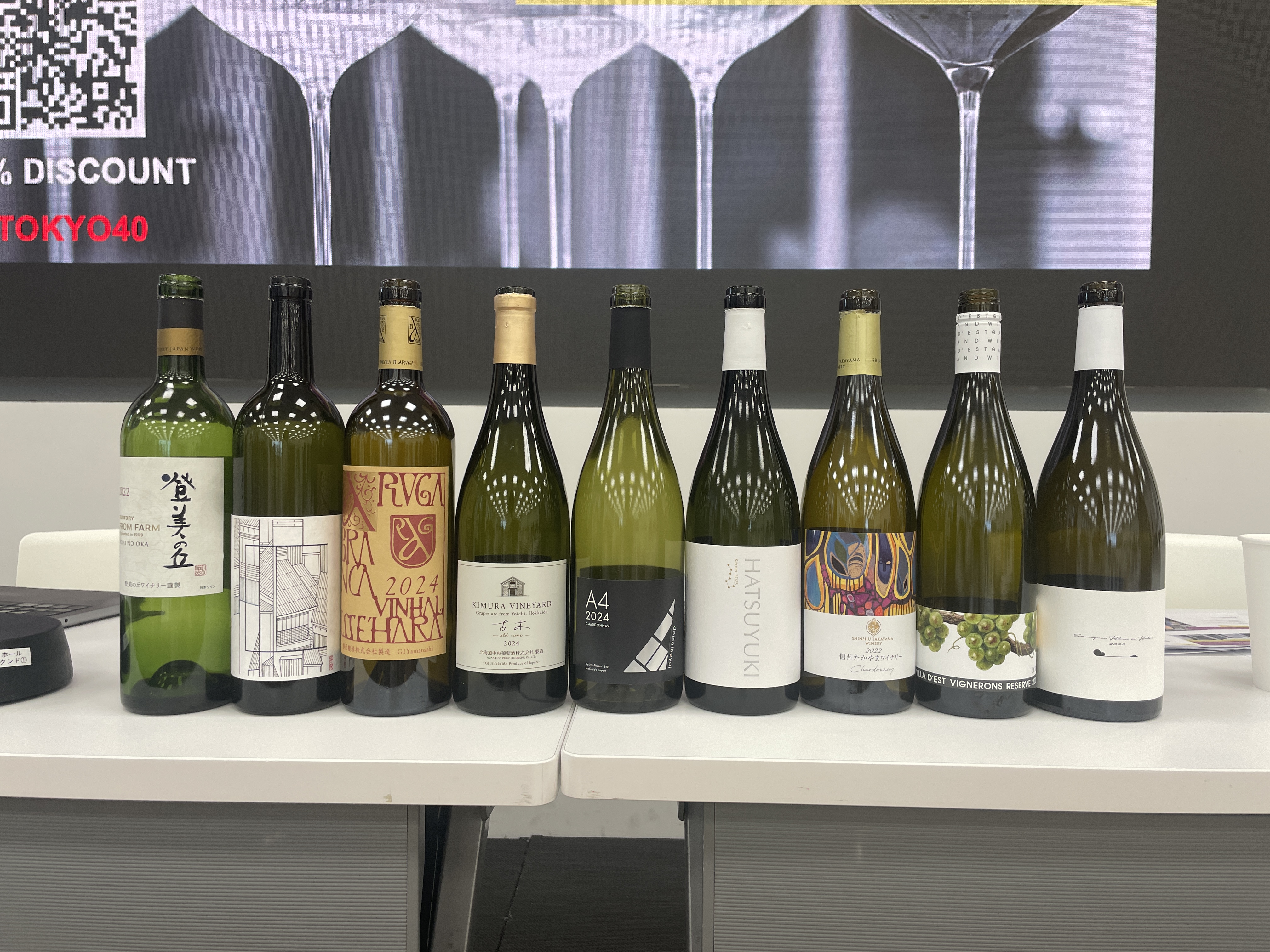
Nine Japanese wines were tasted, three each from Yamanashi, Nagano and Hokkaido. All were selected from wines scored 16.5 or higher out of 20 on “jancisrobinson.com.”
CHAPTER 01
Why the World Is Taking an Interest in Japanese Wine
As background to international interest in Japanese wine, Hemming first cited the cultural appeal of Japan itself.
With Japanese restaurants spreading around the world and interest in sake growing, Japan's food culture is already widely known overseas. For Japanese wine as well, that cultural recognition can serve as a gateway to overseas markets. He also said that the small scale on which much Japanese wine is produced appeals to enthusiasts eager to discover rare wines and new regions.
On varieties, his view is that Koshu, as Japan's signature variety, could be a gateway to overseas markets. At the same time, he pointed out that there is also great significance in being able to produce wines of internationally recognised quality from international varieties such as Chardonnay and Pinot Noir.
In particular, he commented that“looking only for varieties grown nowhere but Japan, or characteristics found nowhere but Japan, is not the only way to show the value of Japanese wine.”It was a remark that stayed with us.
So what, in practice, is the appeal of Japanese wine? The tasting took us through three regions.
CHAPTER 02
Nagano: Regional Character Considered Through Three Wines
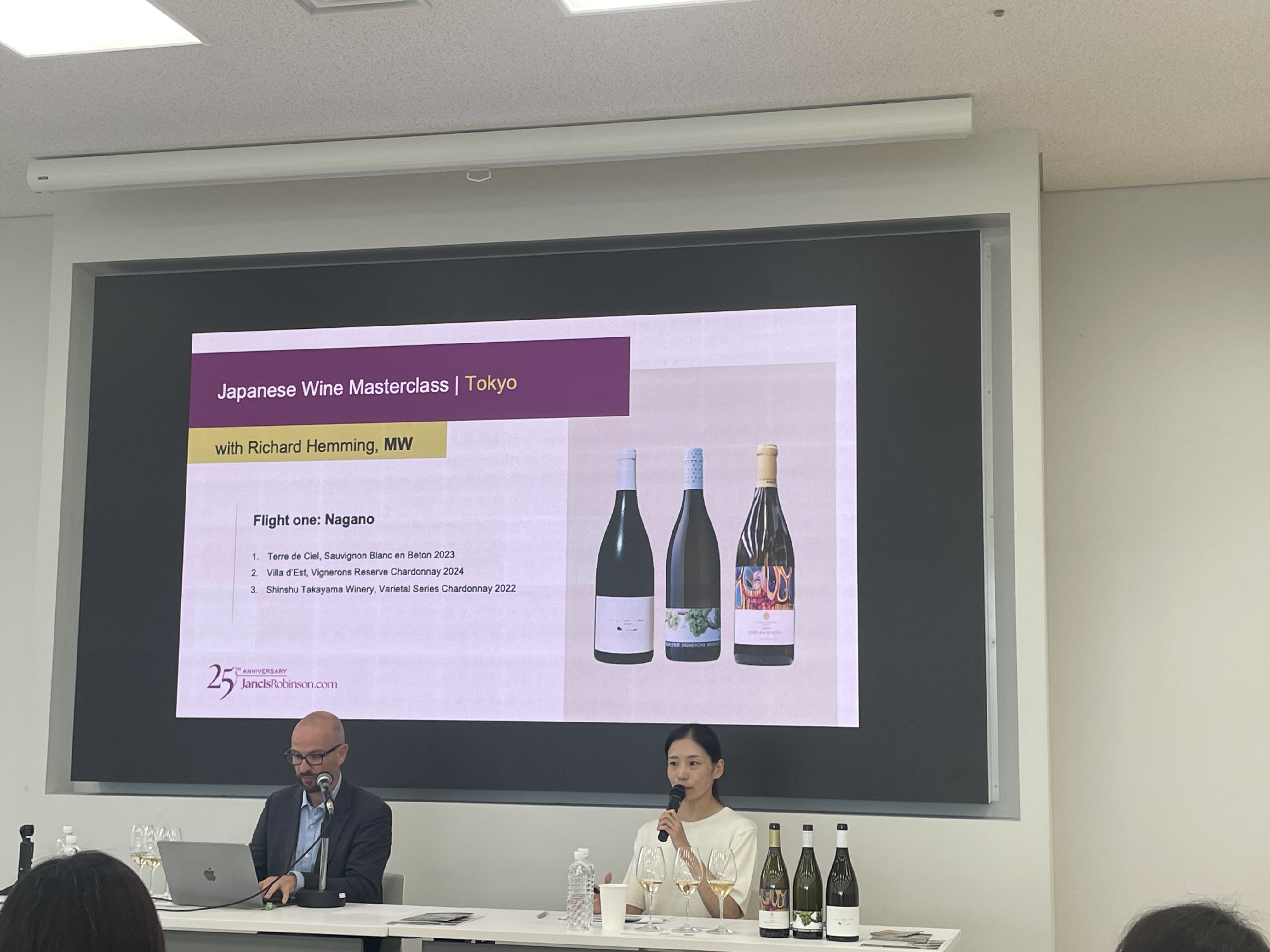
First came three white wines from Nagano Prefecture, each made with a different approach.
Terre de Ciel / Sauvignon Blanc en Béton 2023
A Sauvignon Blanc made in an egg-shaped concrete tank.
Hemming noted that, unlike a typical New Zealand Sauvignon Blanc, its grassy aromas are restrained, and that flavours derived from ripe fruit and lees can be found.
The fruit is rich enough to suggest sweetness, yet residual sugar is below 1 g/L. A completely dry wine that nonetheless has a rich texture and complex flavours beyond fruit.
Villa d'Est Winery / Vignerons Reserve Chardonnay 2024
Spice and creamy nuances from barrel fermentation and barrel ageing are layered with rich fruit reminiscent of pineapple and melon.
What particularly caught Hemming's attention was that, despite ample ripeness and a full-bodied palate, the alcohol is only 12.3%.
In general, the higher the sugar level of the grapes, the higher the alcohol produced by fermentation. Yet this wine combines rich fruit with relatively modest alcohol. This feature became an important theme that recurred throughout the seminar.
Shinshu Takayama Winery / Varietal Series Chardonnay 2022
Barrel fermentation and ageing account for 25% of the whole, with new oak making up 25% of that. Compared with the previous wine, the influence of oak is restrained and the fruit itself comes to the fore. Hemming also praised how remarkably youthful it is for a 2022.
He suggested that grapes harvested over about two months from plots at different elevations may be what gives it both freshness and the richness of ripe fruit.
“What Makes a Wine Nagano?”
After tasting the three wines, Hemming posed an intriguing question.
“Is there a common thread in these wines that marks them as being from Nagano?” All three are of high quality, yet they differ in variety, winemaking method and stylistic direction.
What is regional character? Defining it by a single flavour profile is not easy even in regions with long histories such as Burgundy and Bordeaux.
CHAPTER 03
Hokkaido: The Cool-Climate Region the World Is Watching
According to Hemming, when wine lovers overseas ask about Japanese wine, the first topic to come up is often Hokkaido.
The reasons he gave include the fact that Burgundy producers have begun making wine in Hokkaido, the growing worldwide interest in cool-climate regions, and the high quality of the wines themselves.
NIKI Hills Winery / HATSUYUKI 2025
The variety is Kerner. He remarked on its petrol notes and oily nuances reminiscent of Riesling, and its youthful, lime-like fruit.
As a point of difference from Riesling, Hemming focused on the texture of the acidity. Referring also to the figures—pH 3.5 and total acidity of 7.6 g/L—he judged it a wine that expresses Hokkaido's cool climate.
Domaine Yui / A4 Chardonnay 2024
A wine marked by richly ripe fruit, with a winemaking approach that recalls high-quality Burgundian Chardonnay.
Hemming likened the fruit to “grilled pineapple” he had eaten himself.
Here too, he drew attention to the alcohol. He cited the fact that it is 12.5% while offering concentrated, rich fruit as an attractive feature for wine lovers.
Chitose Winery / Kimura Vineyard Pinot Noir Old Vines 2024
A Pinot Noir from vines more than 40 years old. It is characterised by the light body typical of a cool-climate region and by lively fruit. Hemming described it in English as “crunchy.”
He said it has the freshness of biting into fruit, and the classic appeal of cool-climate Pinot Noir.
“Japan's Rain Is Not Only a Weakness”
While tasting the Hokkaido wines, Hemming also made an interesting observation about Japan's growing environment.
Looking at Domaine Yui's vineyard on Google Earth, he said that while scenes of parched vineyards have become conspicuous in Europe in recent years, Japan's vineyards are astonishingly green.
In Japan, rain and high humidity are often spoken of as challenges for viticulture. But the coexistence of ample rainfall with enough warmth to ripen grapes could, seen from another angle, become a strength in the future, he said.
Of course, plentiful rainfall does not in itself amount to an advantage in the vineyard. Even so, it was a very striking comment, viewing Japan's climate from a different angle than that of overseas regions.
CHAPTER 04
Yamanashi: The Potential of Koshu, and a Red from International Varieties
Last came three wines from Yamanashi Prefecture: two made from Koshu, Japan's signature variety, and a red made from Bordeaux varieties.
Katsunuma Jozo / Aruga Branca Isehara 2024
Koshu is sometimes presented as a light wine with gentle aromas. In this wine, however, partial barrel fermentation and ageing on lees add texture and body.
Hemming described the style as reminiscent of high-quality Grüner Veltliner. He sees it as a wine that shows new potential for Koshu, in a style relatively familiar to enthusiasts overseas.
98WINEs / Koshu
Fermented in stainless-steel tanks, this is a style closer to the more common image of Koshu. Because it is not a variety with strongly distinctive aromas like Sauvignon Blanc or Viognier, it can be hard to identify in a blind tasting.
On the other hand, he pointed out that this very restraint of flavour is what makes it go well with Japanese food, sashimi in particular. Not masking the delicate flavours of a dish is one of Koshu's attractions.
Suntory Tomi no Oka Winery / Tomi no Oka Red 2022
The final wine was a red made from Bordeaux varieties.
Given its rich black fruit, spicy oak and smooth tannins, Hemming compared it with the reds of Napa Valley rather than Bordeaux. But whereas a similar style from Napa would be expected to have an alcohol level of around 14.5–15%, this wine is 12.5%. The feature that had come up again and again—rich fruit with relatively modest alcohol—was confirmed once more in the last wine.
CHAPTER 05
The Strengths of Japanese Wine as Seen in the Tasting
There was one feature Hemming mentioned repeatedly throughout the tasting.
That isthe combination of rich fruit and relatively modest alcohol.
Villa d'Est Winery's Chardonnay, Domaine Yui's Chardonnay, and Suntory Tomi no Oka Winery's Tomi no Oka Red: all had ample ripeness and rich fruit, yet alcohol levels in the 12% range.
His view is that having flavour comparable to the styles of world-famous regions while being relatively low in alcohol could appeal to wine lovers overseas as well. (Hemming himself explained, however, that it is not possible to conclude from a handful of wines that this is a characteristic of Japanese wine as a whole.)
The other striking point in what Hemming said was the diversity of Japanese wine.
From an original expression of Sauvignon Blanc to Chardonnay in an international style, cool-climate Pinot Noir, delicate Koshu, and a red with rich fruit.
These nine wines, he said,show both how difficult it is to define Japanese wine by a single flavour or style, and that this is in itself part of its appeal.
CHAPTER 06
Challenges in Entering the World Market
At the same time, Hemming pointed to practical challenges for Japanese wine overseas.
One of them isthe small scale of producers and the fragmentation of the market.
For wineries with small production, simply securing the volume needed to export can be difficult. As things stand, even popular producers may be able to allocate only tiny quantities to retailers within Japan.
On the other hand, there are companies such as Suntory with relatively large production and existing international distribution networks. What Hemming identified as the key going forward is for producers and businesses to work together to create a system in which consumers overseas can actually buy the wines at the prices they expect.
Even if there are people overseas who are interested in Japanese wine, the market will not grow if there is nowhere to buy it, or if prices are far from what they expect.
For Koshu, efforts to build recognition overseas are continuing, including regular tastings already held in London. While it may open the door to overseas markets as Japan's signature variety, beyond that door cooperation between businesses will also be needed to deliver the wines reliably.
Given that the world wine market itself is going through a difficult phase, it seems that acclaim for quality and commercial success in the market need to be considered separately.
CHAPTER 07
Producers Respond to the View from Overseas
The producers who provided the wines for the tasting also took part in the seminar. We spoke to them afterwards.
◼️ “Seeing Japan's growing environment as a strength” (Katsunuma Jozo , Sho Aruga)
During the MWs' visit to Japan's wine regions in March 2026, Aruga himself met them. He says he explained how growing conditions differ from those overseas, the characteristics of Koshu as a variety, and how its character differs by growing area even within Yamanashi Prefecture. What he particularly conveyed was the relationship between Japan's heavy rainfall and the pergola training that developed in response to it.
He was also struck by Hemming's observation at this seminar that Japan's abundant rainfall and warm climate could become a strength for viticulture in the future.
“Until now, having a lot of rain was mostly seen as a negative. But our generation also sees parts of it positively. I was glad that came across well.”
Japan's climatic conditions differ from those of the major regions overseas. Rather than seeing that difference only as a weakness to be overcome, it can be reframed as a clue to a kind of winemaking unique to Japan. Hemming's words seem to have overlapped with the direction Aruga and his peers have been feeling their way towards in the field.
◼️ “Diversity itself may be what makes Nagano Nagano” (Terre de Ciel , Kazuto Kuwabara)
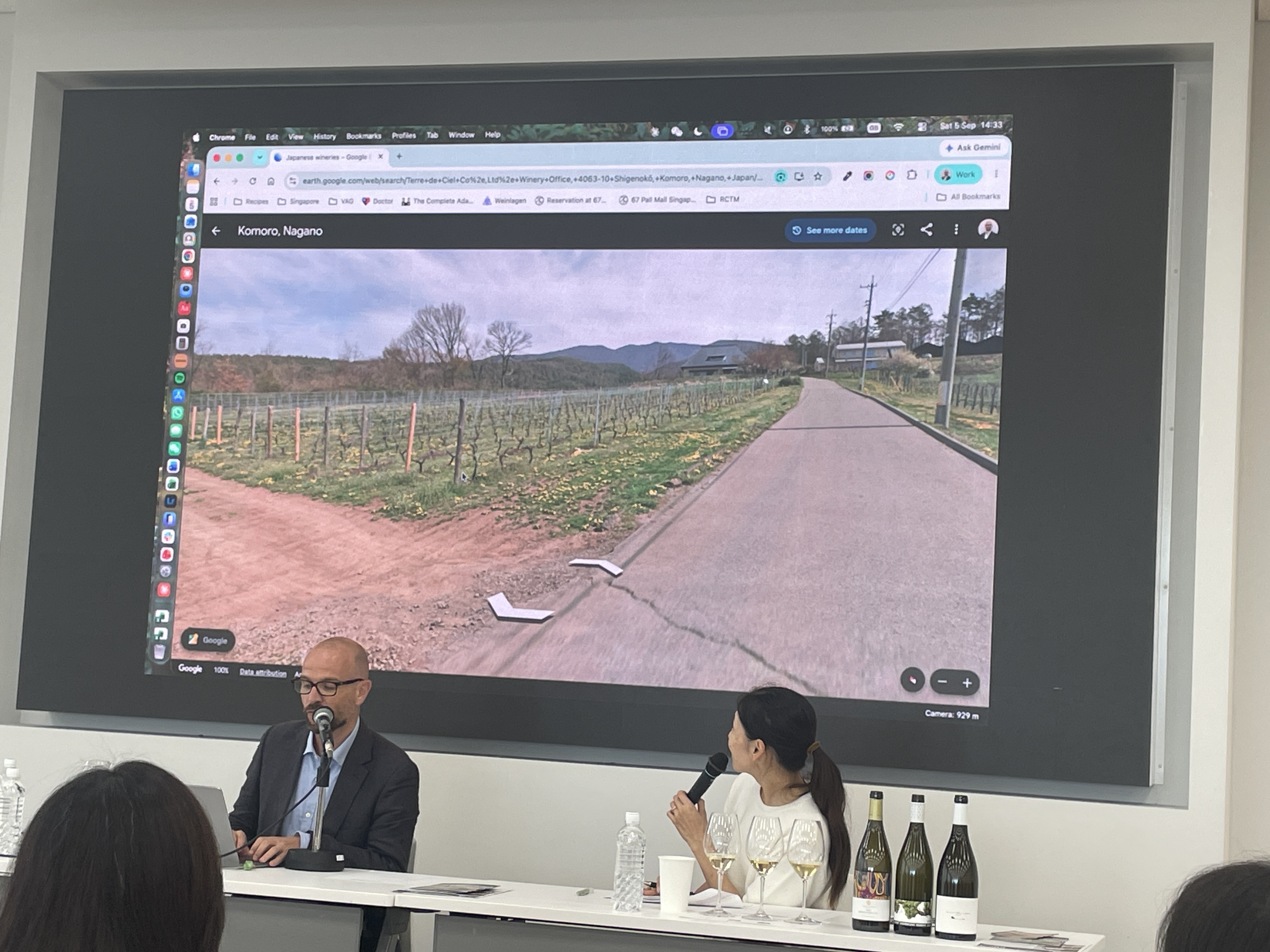
From Terre de Ciel in Komoro City, Nagano Prefecture, Kazuto Kuwabara also took part.“Talking with all sorts of people, tasting the wines and hearing the MW's comments helped me put my own thoughts in order. It will feed into this year's winemaking.”he commented.
What he was reminded of was the question of how to express in wine a flavour that can only come from that particular place.“How to express the flavour of the region and the vineyard: I reaffirmed that this is what I want to keep pursuing.”
His answer to the question of what makes a wine Nagano, meanwhile, was an interesting one. Even within Komoro City, he says, the same Sauvignon Blanc gives different flavours depending on the producer and the vineyard. And across Nagano Prefecture as a whole, growing conditions vary greatly with elevation.
“Even with the same variety, the flavour differs with elevation. I think Nagano is a region of enormous variety. That diversity may, in a sense, be what makes Nagano Nagano.”
After tasting the three Nagano wines, Hemming had asked what character a region's wines have in common. This could be seen as one answer.
CHAPTER 08
What the Seminar Set Out to Do
About 120 people, including members of the wine trade and enthusiasts, attended the seminar.
According to organiser Takenori Beppu, the event came about at Hemming's own suggestion, against the background of the MWs' visit to Japan's wine regions in March 2026.
Opportunities are emerging for overseas experts to visit Japanese wineries, see the vineyards for themselves and meet producers. Until now, however, there have not been enough opportunities to share with Japan's wine industry the assessments and insights gained from such visits. One aim of this seminar was to share that overseas perspective with Japan's producers and wine professionals.
Looking back on those who attended, Beppu says, “I think many of them were people who do not simply like Japanese wine, but want to look at wine from a more international perspective.”
Indeed, the seminar not only discussed the quality and style of Japanese wine through comparison with wines from overseas, but also extended to distribution, market size and sales strategy abroad.
Beppu says he wants to keep creating opportunities to connect overseas wine experts with the Japanese market. Overseas experts not only assess Japanese wine, but bring that perspective to Japan's producers and wine industry. And Japan, for its part, communicates about its own regions and wines.
The seminar also served as an opportunity to deepen that two-way exchange.

CHAPTER 09
In Closing
What was striking about the seminar was that Hemming was not necessarily looking for a single answer from Japanese wine in the form of a “Japanese flavour.”
The delicacy of Koshu, the polish of Chardonnay that can be called high-level by international standards, cool-climate Pinot Noir and red wine with rich fruit: each shows the potential of Japanese wine.
At the same time, acclaim for quality does not lead straight to success in overseas markets. How to deal with challenges such as production scale, distribution and price is also in question.
This seminar exploring the present and future of Japanese wine was an opportunity to look afresh at both that potential and those challenges through the eyes of one of the world's wine experts.
CHAPTER 10
“The World Atlas of Wine”: Jancis Robinson MW Masterclass and Tasting
And now, at last, Jancis Robinson MW is coming to Tokyo.
On Sunday 22 November, a special masterclass will be held in Aoyama, Tokyo, with Jancis Robinson MW, one of the world's leading wine critics.
The theme is
“The World Atlas of Wine”
Two hours with Jancis, who has watched the world's wine regions for many years, unravelling the changing world of wine while actually tasting.
A tasting will also be held after the masterclass.
In addition, the latest edition of “The World Atlas of Wine” will be on sale at the venue, and a signing session is planned after the event.
It is a rare opportunity to learn about the wines of the world in Jancis's own words.

Sunday 22 November 2026

Masterclass 13:00–15:00
Tasting 15:30–17:30

Caplan Wine Academy, Aoyama Classroom

¥19,800
Tickets are available here
https://jancisrobinson2026japan.peatix.com/
About the author