
How a Site Chosen 20 Years Ago Has Changed: The “Present Progressive” Terroir Facing Château Mercian Mariko Winery
Contents
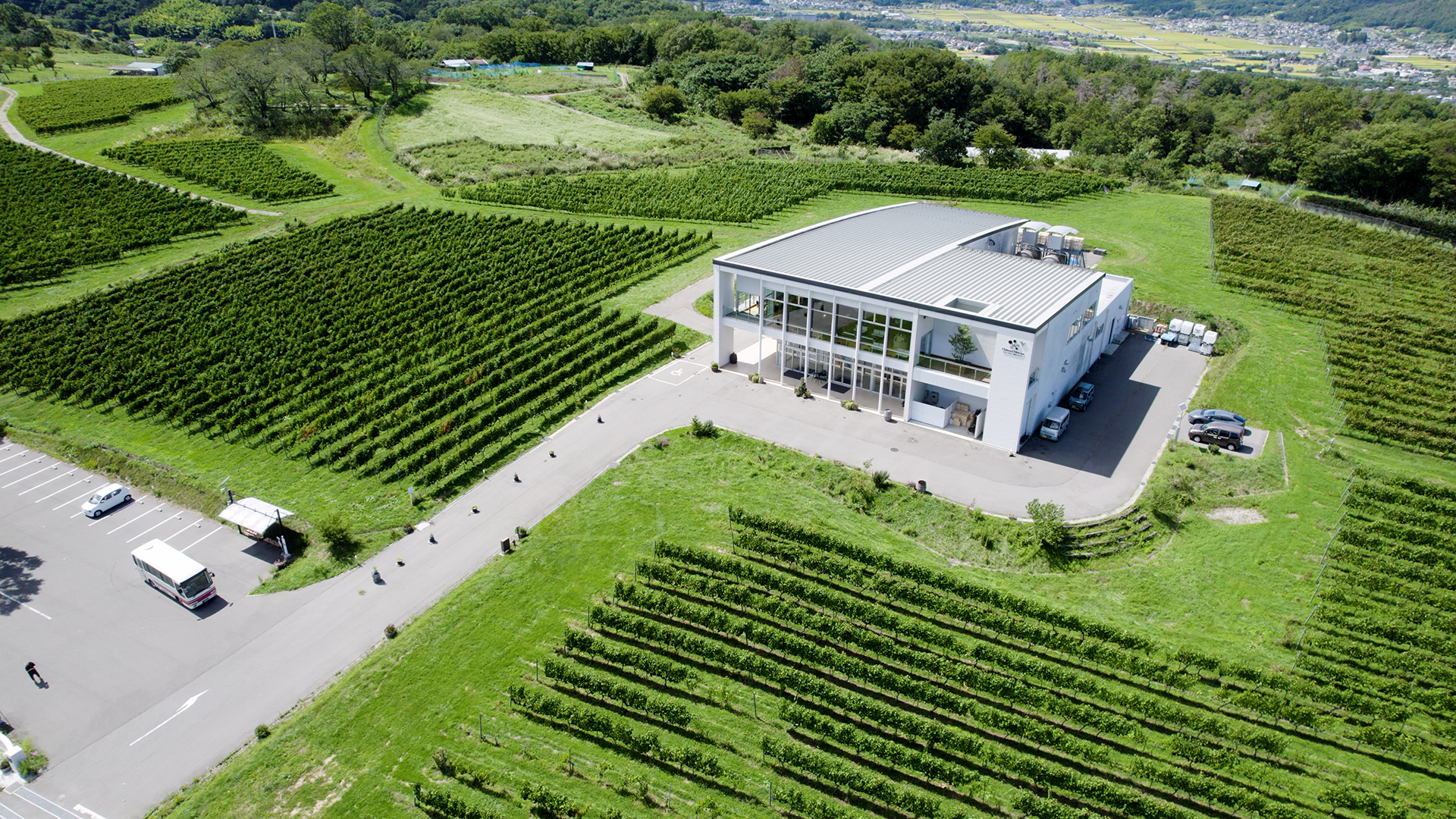
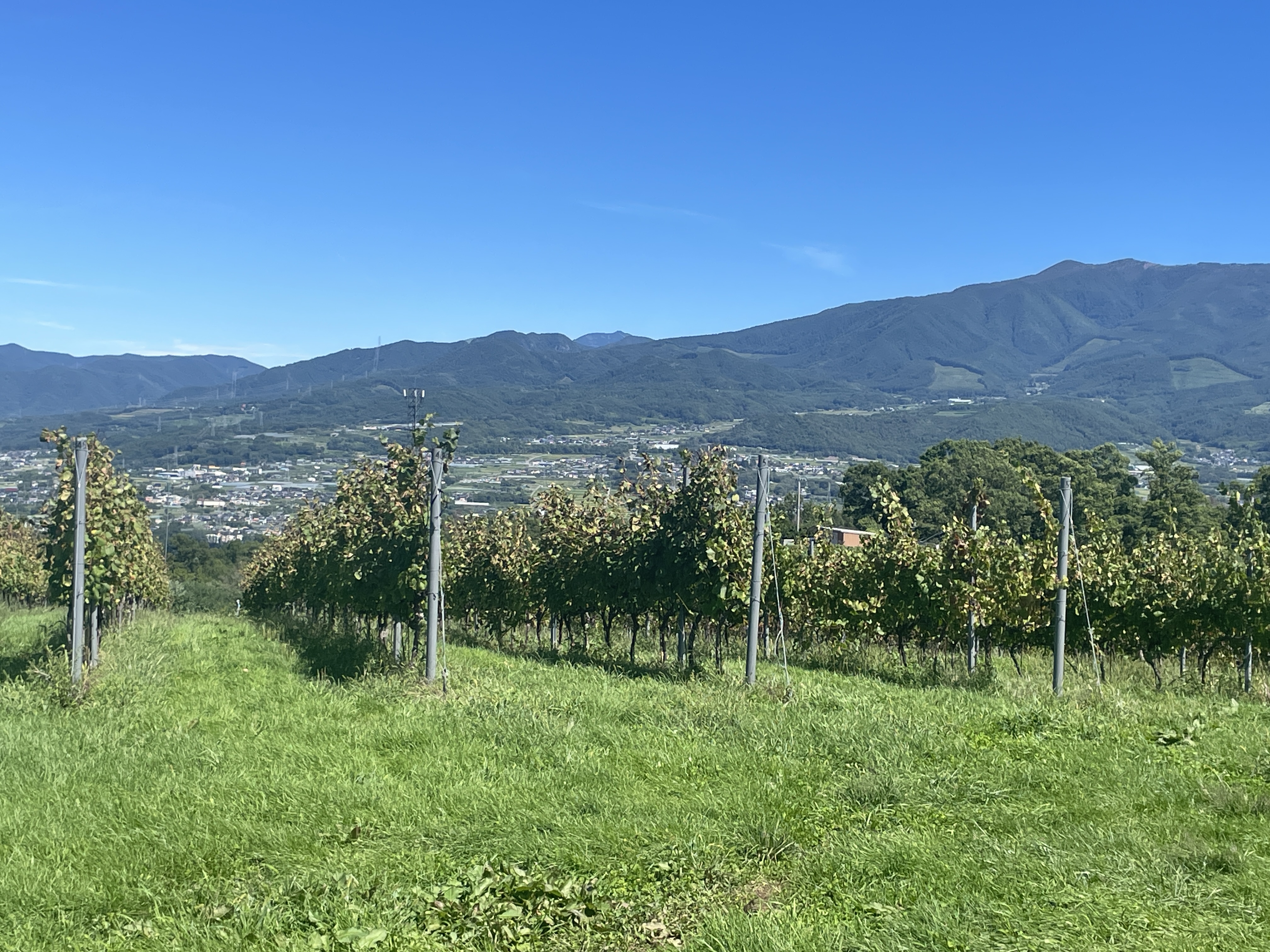
The Maruko district of Ueda City, Nagano Prefecture. In September, Château Mercian Mariko Winery, spread across the Jinba Plateau at an elevation of about 650 m, is swept by a fresh, pleasant breeze and filled with a sense of openness.
Although surrounded by mountains, the vineyard itself sits on high ground, so there is almost nothing to block the view.
According to Chief Winemaker Katsuno (勝野泰朗) of the Château Mercian Division, the great feature of this land is precisely that this “state of having nothing to block it through 360 degrees” brings the benefits of abundant sunshine and wind.
Mercian first planted vineyards here in 2003. It arrived at this site after searching for a place that would avoid as far as possible the rain that is such a major challenge for Japan's wine regions, and where elevation would secure cool conditions.
Annual rainfall is below 1,000 mm and the elevation is about 650 m. When the mix of varieties for the vineyard was being considered some twenty-odd years ago, the accumulated temperature over the growing season was said to be close to that of Bordeaux.
On the basis of those conditions, the plantings centred on Bordeaux varieties such as Merlot, together with Chardonnay and Pinot Noir with cool years in mind, and Syrah, which could also cope with hot years.
About 20 years on, however, Katsuno says, “Warming has progressed, and it has become considerably hotter here too.” Here as well, we are told that the very climate of land once chosen as a “suitable site” is changing.
In an environment that keeps changing, how are they reassessing this land?We asked Katsuno.
CHAPTER 01
2026: A Harvest Two Weeks Early
The change shows clearly in the timing of the harvest, too.
At the time of our visit, the Pinot Noir in one corner of the vineyard had already been picked. This year's harvest date was 29 August. In a normal year it would be picked after the start of September, so this was about two weeks early.
Picking of Chardonnay for sparkling wine also began around 24 August. And Petit Verdot, the latest-ripening variety in the vineyard, which normally takes until late October, was reportedly all in by around 10 October the previous year.
It does not seem to be simply a matter of leaving the fruit hanging and being glad that sugar rises sooner.
As temperatures rise, sugar goes up and acidity falls. Yet the ripening of phenolics such as colour and tannin does not necessarily proceed at the same pace. The result can be unbalanced grapes: enough sugar but not enough colour, or tannins that are still unripe.
CHAPTER 02
Responding to Climate Change Through Varieties
How should a changing climate be dealt with?
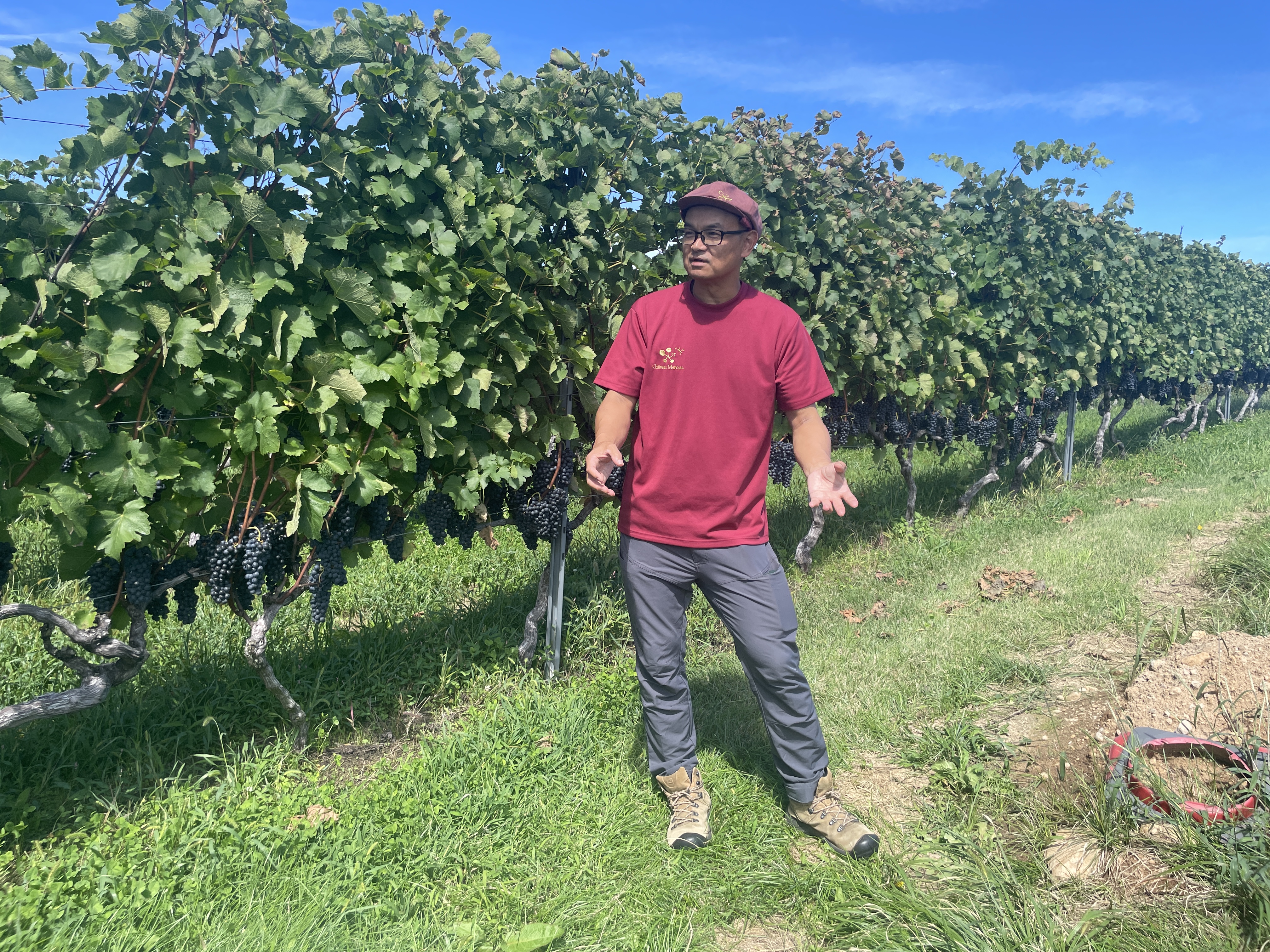
The first thing Katsuno raises is varieties. “Fundamentally, we will have to move towards replanting with varieties suited to those weather conditions.”
Mariko Winery currently makes its wines from eight varieties, but it has begun growing the next one. It is a choice made with adaptation to changing weather conditions in mind.
As for further varieties, Katsuno says, “The time may have come to turn our scope to varieties from warm regions, such as Malbec.”
When the climate changes, varieties and viticulture change with it. What is happening at Mariko now could be called a re-examination of “the right site, the right variety.”
CHAPTER 03
Mariko's Syrah, Born of Difficult Soil
On the other hand, among the varieties chosen 20 years ago, there is one that has shown its affinity with this land.
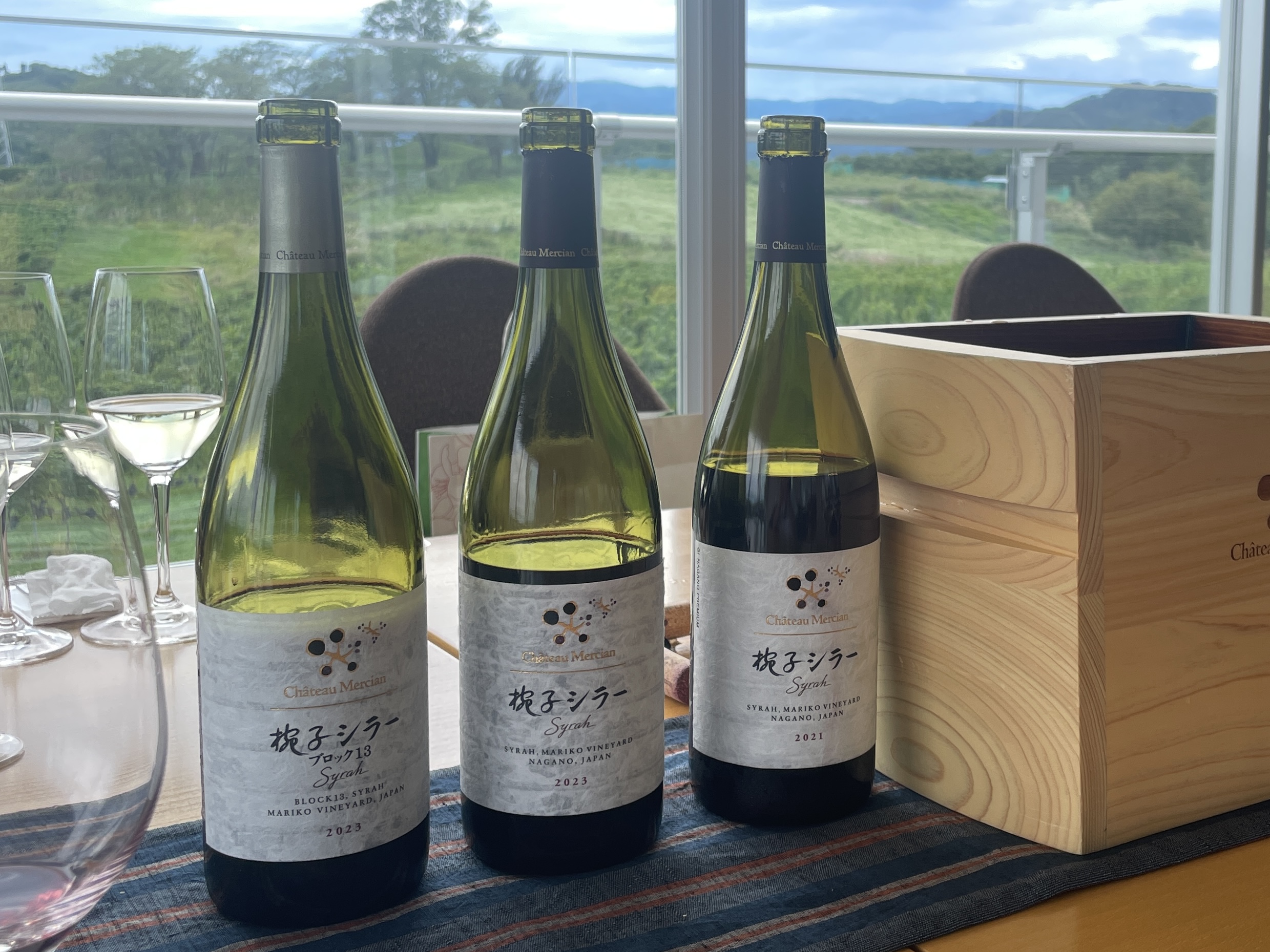
That is Syrah, familiar from “Mariko Syrah.”
The soil at Mariko Winery is extremely hard, so much so that a spade will not go in when it dries out. Even when it rains, water does not easily soak into the ground, and on the slopes it runs off across the surface.
It hardly seems easy land on which to plant vines. Even digging the holes at planting is said to be difficult, and it takes a long time for young vines to establish and reach maturity.
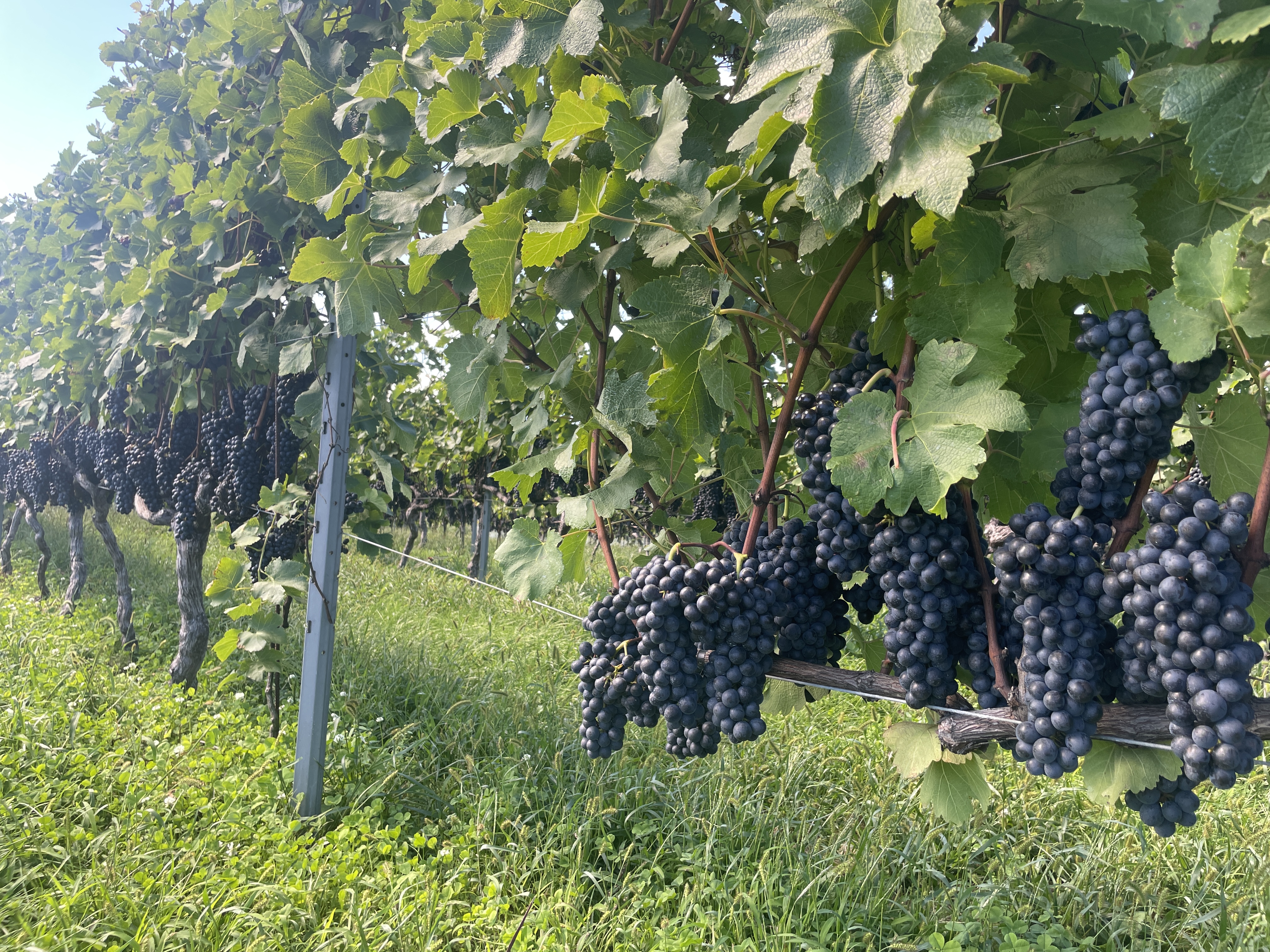
Yet for vines that have taken root over time, that very harshness apparently becomes an advantage. Because the roots cannot spread freely, the root zone is naturally restricted and vigour is held in check. Indeed, the Syrah planted in 2009 has slender trunks for its age and grows very slowly.
At the same time, vine and fruit are well balanced, and the berries do not readily swell suddenly even when it rains.
“It takes time, but vines that have established themselves bear fruit with a very good balance.” Listening to Katsuno, one begins to think that “land that is easy to farm” and “land that produces good wine” may not necessarily be the same thing.
CHAPTER 04
“White Pepper” and “Elegant”
Assessing Mariko's Syrah from the restaurant floor is Kazuki Nakajima, who accompanied us on this visit and is chef sommelier at ESPRIT C. KEI GINZA.
When he first tasted “Château Mercian Mariko Syrah,” what made a strong impression was reportedly its aroma of “white pepper.” The other was its elegance.
“When I introduce this Syrah to people from overseas, they always say it is delicious. That is the main reason I wanted to work with it!”says Nakajima with passion. In response, Katsuno says:“Being told it is elegant makes us very happy.”He continues:
“That is exactly what we aim for, balancing the wine as we make it.”
Some may associate Syrah with power and concentration. At Mariko, however, the aim is a style with gentle tannins and juiciness that prizes balance over weight.
The white-pepper nuance that sommelier Nakajima picked up is also something Katsuno himself describes as “a very distinctive aroma unique to Mariko.”
CHAPTER 05
Is Terroir Really Unchanging?
Mariko Winery, where the first vines were planted in 2003, has expanded its vineyards year by year and now covers about 30 ha. In 2019 the winery building itself was completed on the high ground that had been set aside for it from the outset.
Twenty-odd years ago, the reasons for choosing this land were its low rainfall and the coolness that comes with elevation. But the climate has changed.
Harvest dates have moved forward, and the temperature conditions once thought close to Bordeaux are shifting. At the same time, it has become apparent that the hard soil, at first one of the difficulties of growing here, may be restraining the vigour of the Syrah and contributing to a style unique to Mariko.
And now new varieties are being planted in search of a mix suited to the climate ahead.
The word terroir tends to be spoken of as “the unchanging character that a piece of land has always had.” But the terroir of Mariko that Katsuno's account brings to mind feels like something dynamic, something that goes on changing.
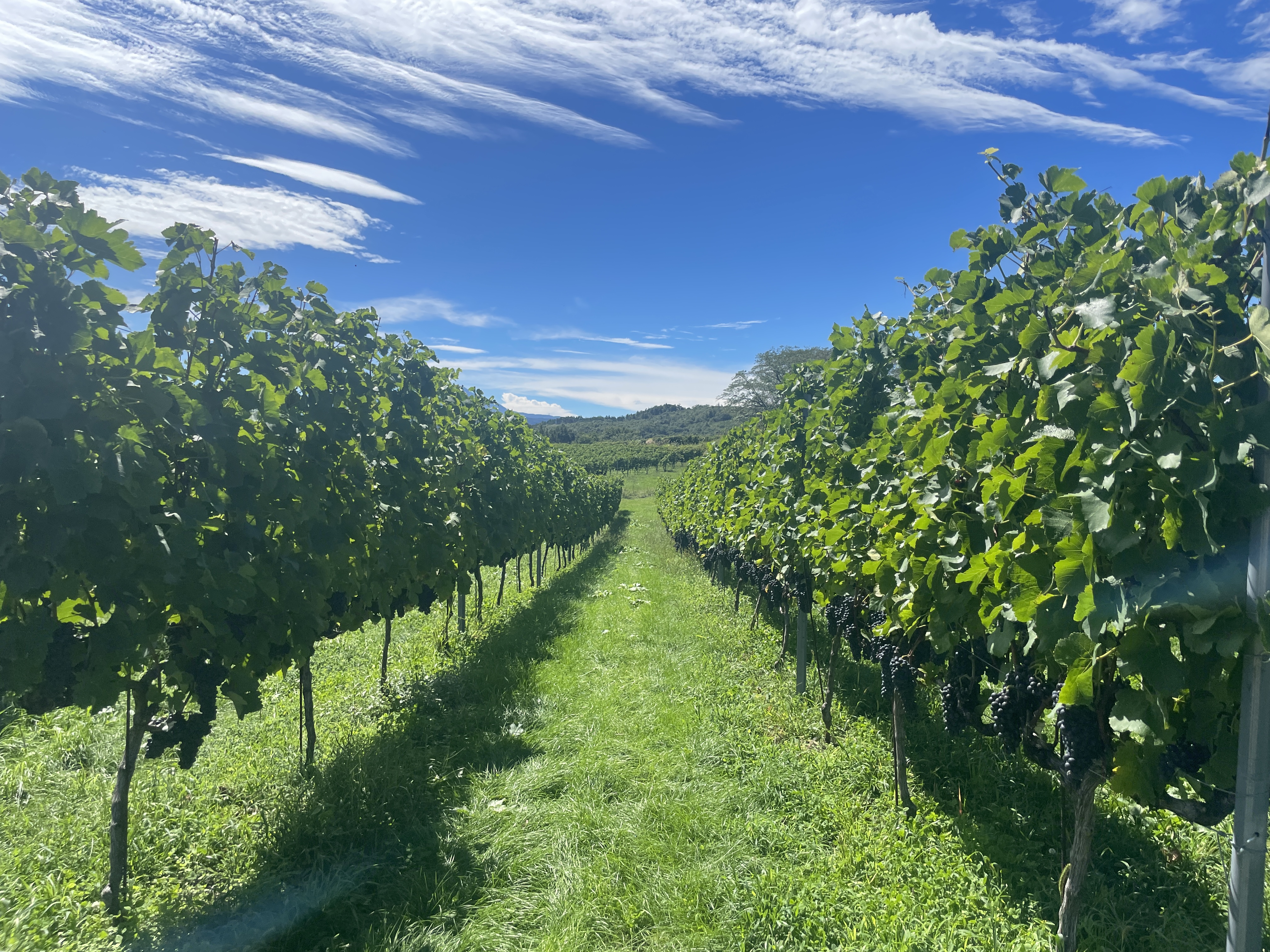
There is land, there is climate, and there people plant vines, observe them over a span of 20 years, and make the next choice in response to change.
What should be planted on this land? When should it be harvested? What kind of wine should be made from the grapes grown that way? The answers are not at all the same now as they were 20 years ago. And in ten years' time they will probably have changed again.
That is why Katsuno carefully records what is happening in the vineyard now, adapts to it and nurtures it.
And so, at this very moment, amid the great change that is climate change,“Mariko-ness” itself is surely being continually renewed.
About the author