

Nagano, Yamanashi, Shizuoka, and Niigata—each of these regions has established a solid reputation as an exceptional wine-producing area.
Backed by the history of Zenbei Kawakami, renowned as the "father of Japanese wine grapes," and the momentum of the Niigata Wine Coast, Niigata Prefecture also established the "Niigata Winery Association" last December. Nagano and Yamanashi are, needless to say, wine regions representing Japan, and Shizuoka is also home to characterful wineries.
This time, these four prefectures joined forces to hold the "Local Wine Talk Show & Tasting Event," showcasing the appeal of their regions using wine as a shared resource.
Media, travel agencies, and restaurant/distribution professionals gathered at the venue, where the terroir of each prefecture and the future of wine tourism were discussed across a three-part program comprising a seminar, a talk session, and a tasting session.
Where Japanese Wine Stands Today and Why Tourism Is Essential
Part one was a seminar by wine journalist Aya Mizukami titled "The Current State of Japanese Wine and the Potential of Wine Tourism."
While providing an overview of where Japanese wine "stands today," she discussed the positioning of the four prefectures and the significance of tourism, incorporating geological perspectives as well.
She spoke about the market's growth, noting that the number of wineries in Japan has exceeded approximately 500, roughly doubling over the past 10 years, that production areas have spread nationwide from Hokkaido to Okinawa, and furthermore that the "Japanese wine" labeling was restricted in 2018 to wines made using 100% domestically grown grapes fermented in Japan, greatly boosting brand credibility. On the other hand, pointing out challenges such as a low share in the overall consumer market and management hurdles, she proposed that "we are entering an era where 'simply producing and selling' is tough, making the perspective of tourism that combines experiences and added value indispensable."

The Key to the 4-Prefecture Collaboration Is the "Fossa Magna"?!
As the background for these four prefectures aligning vertically, Ms. Mizukami introduced the "Fossa Magna," a massive geological structure central to the formation of the Japanese archipelago.
She explained how the four prefectures line up along the Itoigawa-Shizuoka Tectonic Line, resulting in geological diversity across each production region.
Building on that, the tourism possibilities presented for each prefecture were remarkably concrete, evoking vivid images of actual travel.
Niigata Prefecture offers diversity spanning sea and mountains, collaborations with culinary and fermentation cultures, and opportunities to enjoy "designing one's stay time" as epitomized by Cave d'Occi. For Nagano Prefecture, proposals included "staying as if living there," complete with spectacular views, hands-on experiences (such as harvesting), and stays in traditional kominka houses. Yamanashi Prefecture allows visitors to feel the appeal of touring a densely concentrated production area centered on Katsunuma, where history, tradition, and innovation coexist. Shizuoka Prefecture boasts a unique "Volcano × Wine" narrative centered on Mt. Fuji, hot springs, and volcanic soils.
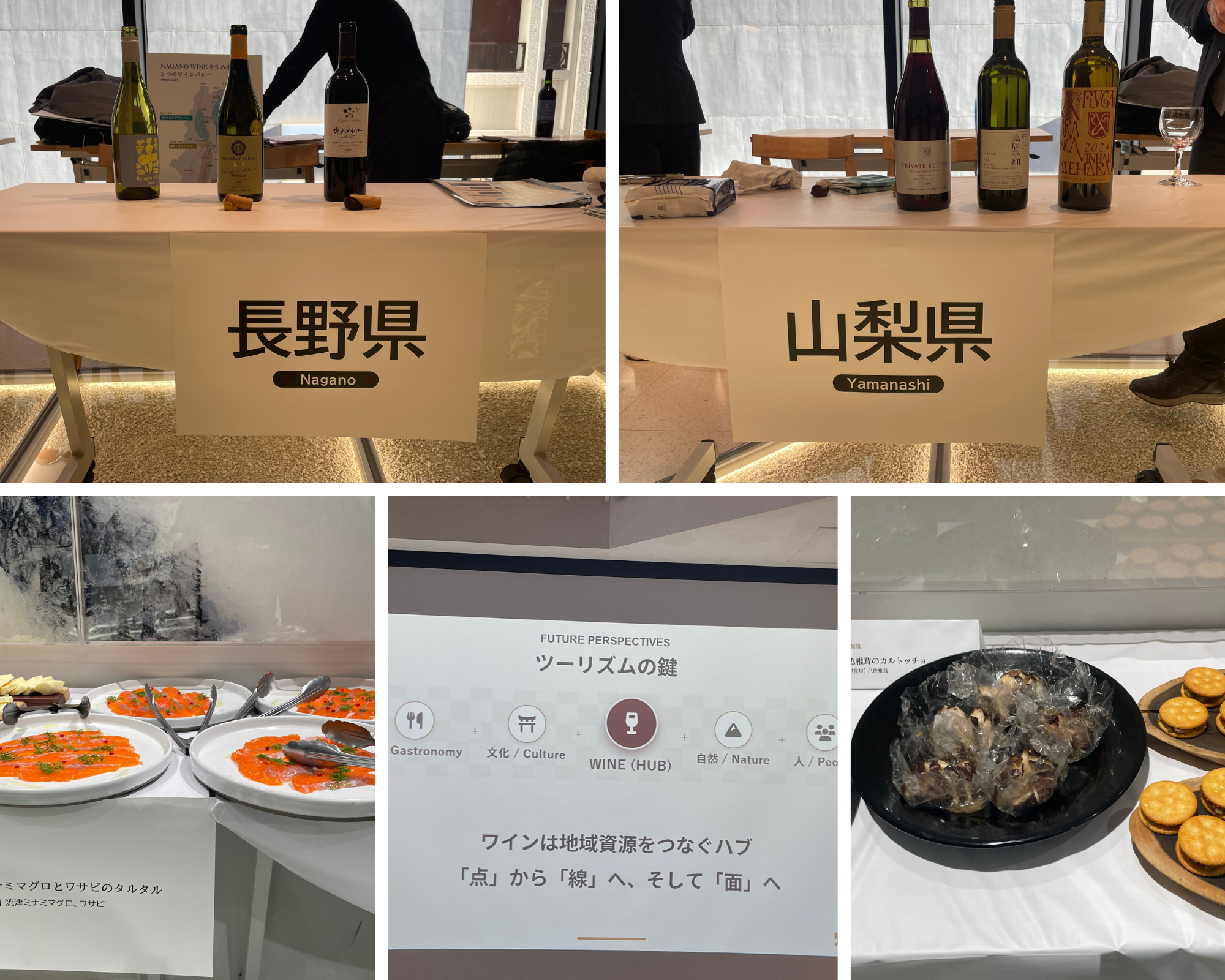
Ms. Mizukami concluded by stating, "Wine does not exist in isolation; it is a 'hub' connecting food, culture, nature, and people. Connecting dots into lines and lines into whole areas may well be the key to tourism."
Each Region Speaks from the Front Lines
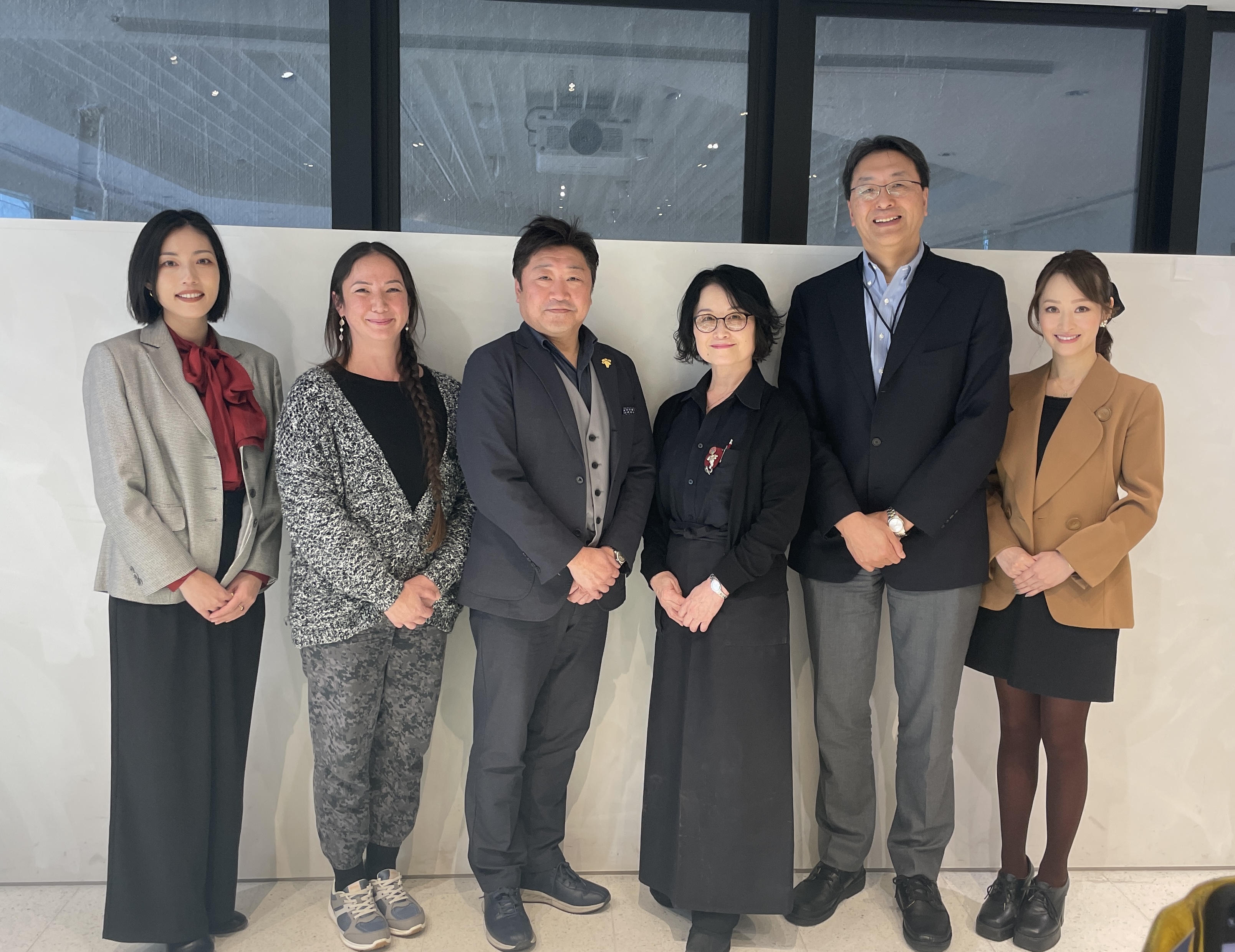
During the talk session, panelists representing each prefecture discussed regional characteristics and the potential for collaboration.
The facilitator was Azusa Segawa, Representative Director of Shokureko Co., Ltd.
Niigata: 10 Wineries Unite, Strengthening Outreach Through New Association
Seisuke Takaoka, Chairman of the Niigata Winery Association and Representative Director of Iwanohara Vineyard, remarked, "While Niigata has a strong image as a sake prefecture, it also produces diverse and captivating wines." He highlighted the diversity of climate and soils as strengths, such as whites born from coastal sandy soils, reds nurtured in the heavy snow interior, and Muscat Bailey A created by Zenbei Kawakami.
He also touched upon challenges, stating, "It is important to communicate not just as individual wineries, but in conjunction with food culture and regional resources," and "The richness of Niigata has not yet been fully conveyed."
The year 2027 will mark the 100th anniversary of the creation of Muscat Bailey A, which is sure to build excitement leading up to that milestone.
Nagano: Toward Wine Valley Concept 2.0; Mobility and "Storytellers" Are Key
Fujiko Saito, Event Manager of Ginza NAGANO, presented the evolution of the Shinshu Wine Valley Concept. According to her, the number of wineries increased from 25 in 2013 to 93 as of November 2025. Furthermore, under the banner of "wine-themed tourism area development," efforts are underway to enhance secondary transportation such as railways and taxis, facilitate event tours, and train interpreters who convey the region's charms.
Citing the adage "Don't make wine travel," she expressed her desire to continue conveying the value of savoring wine alongside the local landscape.
Yamanashi: Returning to Roots in the "Vineyard," Toward Multi-Layered Terroir
Ken Hasebe, from Wine Cellar HASEBE (Hasebe Liquor Store) and Managing Director of the Japan Sommelier Association, noted promotional efforts for Koshu wine in Europe, while explaining that the phase is shifting toward regional terroir. Even under the single label "Koshu," locally rooted wines highlighting which vineyard and which terroir they express are receiving even greater attention.
Additionally, introducing initiatives such as Wine Tourism Yamanashi (since 2016), he cited challenges like the lack of secondary transportation (such as few taxis and driving-agent services at night) and proposed reimagining the 4-prefecture collaboration as a unified "broad area."
Shizuoka: Mt. Fuji × Food × Diverse Beverages; Room to Expand Through Experience Design
Aimee Singer, head winemaker at Mt. Fuji Winery, stated that Shizuoka is a large area with relatively few wineries, making the establishment of touring systems a challenge moving forward. On the other hand, backed by features such as the altitude and volcanic soils at the foot of Mt. Fuji, alongside abundant tourism assets including hot springs, local ingredients, and tea culture, they are exploring "ways to enjoy the ambiance of wine within travel, rather than wine in isolation."
Hearing about the initiatives of all four prefectures simultaneously as a "community of shared destiny" bound by the Fossa Magna was above all the highlight of this event.
Through information sharing and collaboration, further expansion of wine × tourism can be anticipated.
The Allure of Wines and Ingredients from Each Production Area
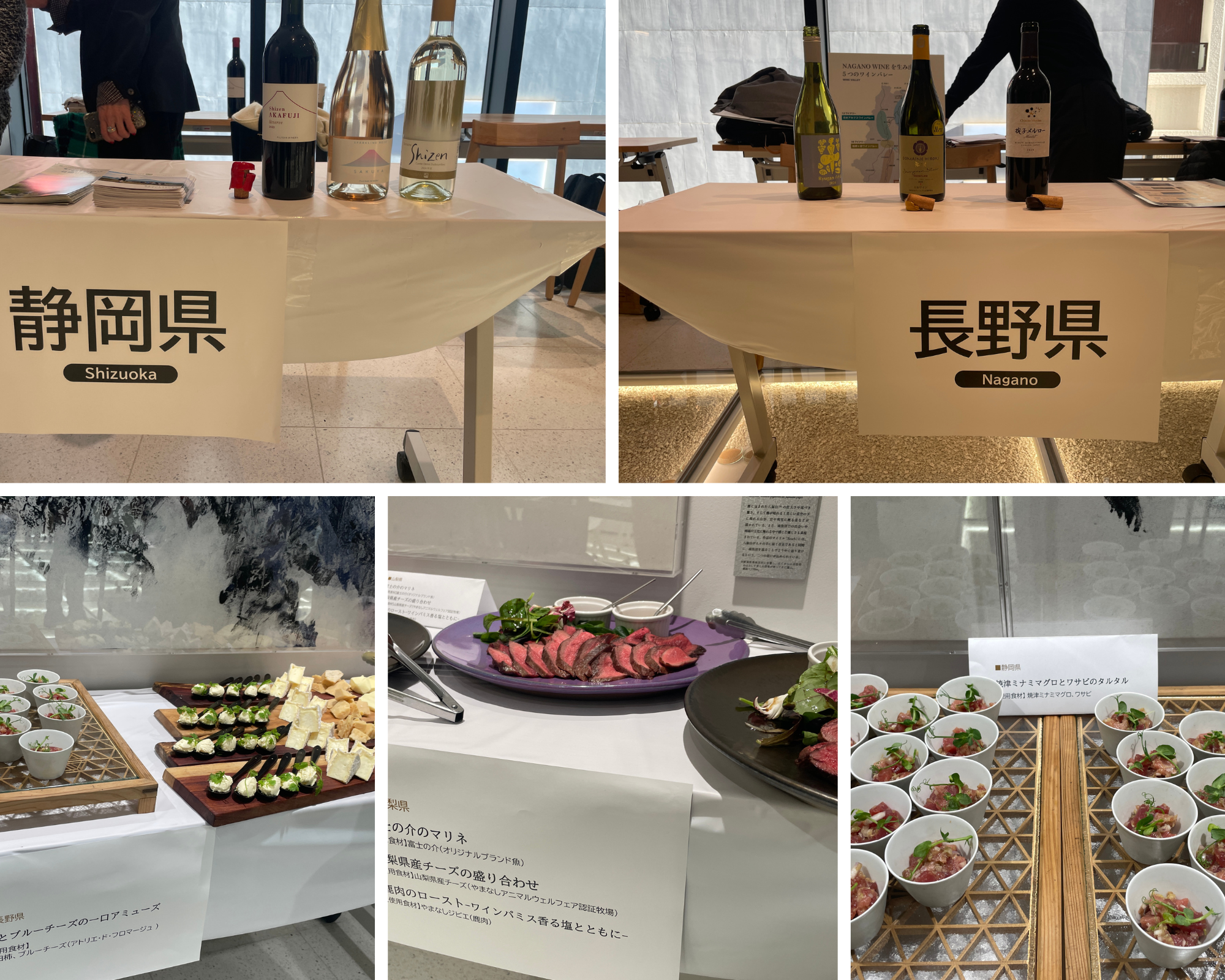
Representative wines and ingredients from the four prefectures were provided for tasting.
Here are the wines served:
<Yamanashi Prefecture>
Katsunuma Jozo / Aruga Branca Isehara 2024
Grace Wine / Grace Koshu Toriibira Vineyard 2024
Hombo Shuzo / Chateau Mars Private Reserve Hosaka Muscat Bailey A
<Shizuoka Prefecture>
Mt. Fuji Winery / Shizen Akafuji Reserve 2023
Mt. Fuji Winery / Domaine Shizen Koshu 2024
Mt. Fuji Winery / Sakuya Sparkling Rosé
<Nagano Prefecture>
Château Mercian Mariko Winery / Château Mercian Mariko Merlot 2019
Vignoble Azumino Domaine Hiroki / Sauvignon Blanc 2023 Mercure
Utatane Winery / Ryugan 85 2024
<Niigata Prefecture>
Iwanohara Vineyard / Miyukibana Red
Iwanohara Vineyard / Organically Grown Grapes Muscat Bailey A 2023
Cave d'Occi / 2024 Sable White
Guests were able to try pairings not only from the same regions but also various cross-regional combinations, eliciting cries of surprise and discovery throughout the venue during a moment that once again highlighted the profound depth of wine and food.