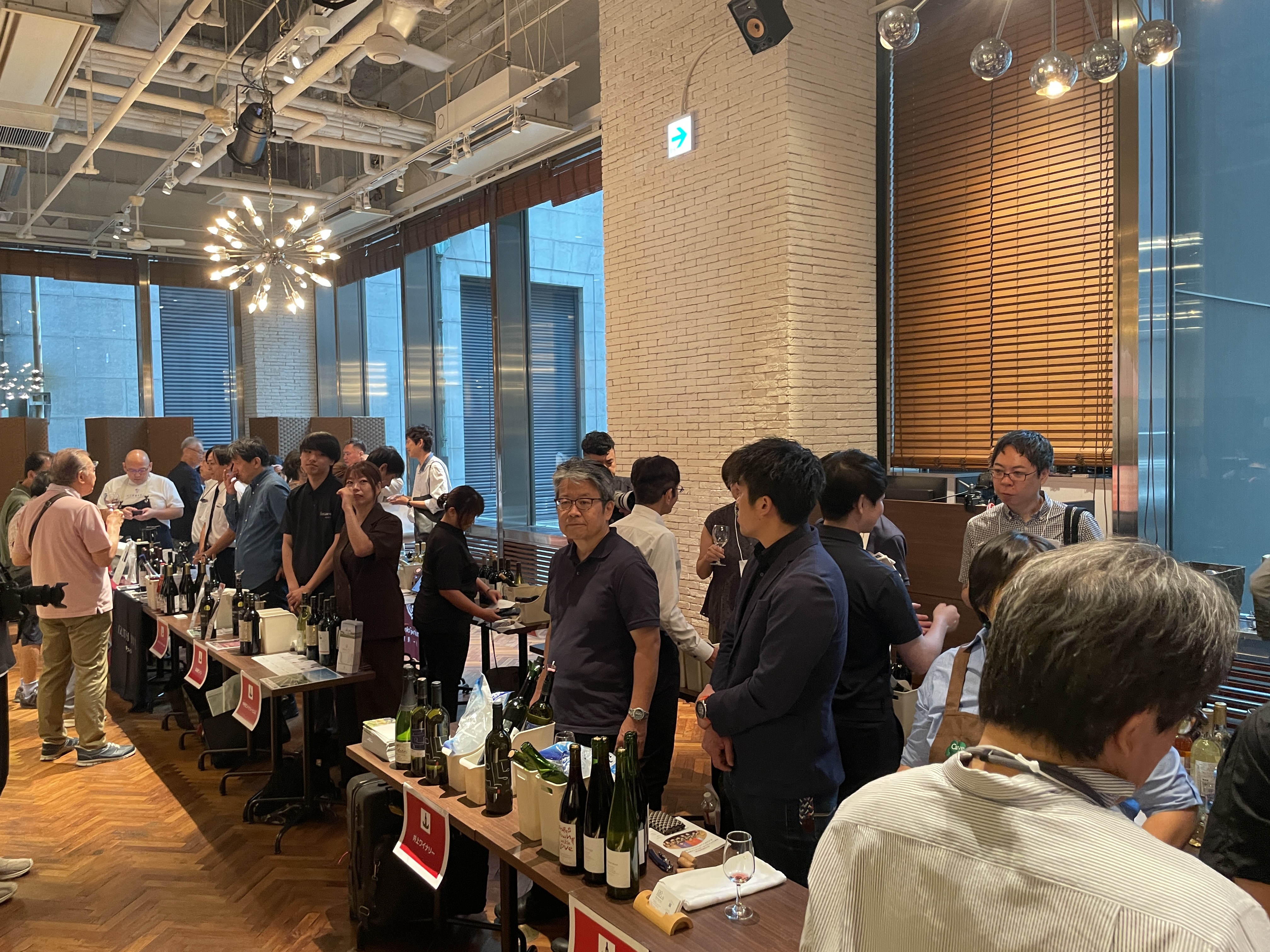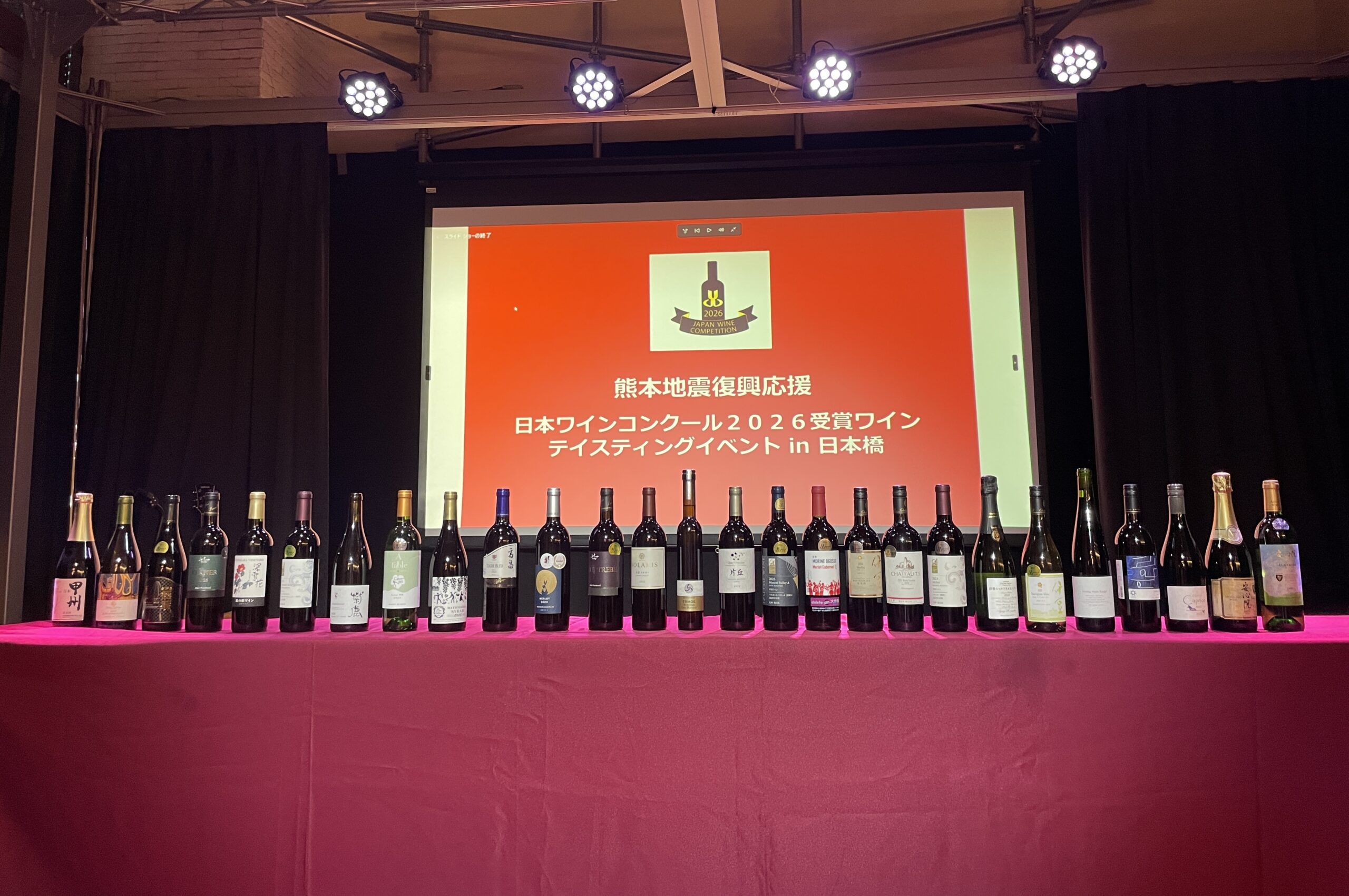
On August 29, a tasting event centered on award-winning wines from the Japan Wine Competition 2026 was held in Nihonbashi, Tokyo.
More than 59 wines from 24 wineries across Japan, from Hokkaido to Oita, were presented, and producers from many of the wineries attended in person.
The event ran in four sessions from 10 a.m. to 6 p.m., followed by a networking reception with light food. Organizers said roughly 150 tickets were sold in total, drawing everyone from general wine lovers to members of the trade.
Visitors were able to enjoy the rare opportunity to taste award-winning wines while listening directly to the people who made them.
Different Vintages of the Same Variety Win Awards — and Show Strikingly Different Faces
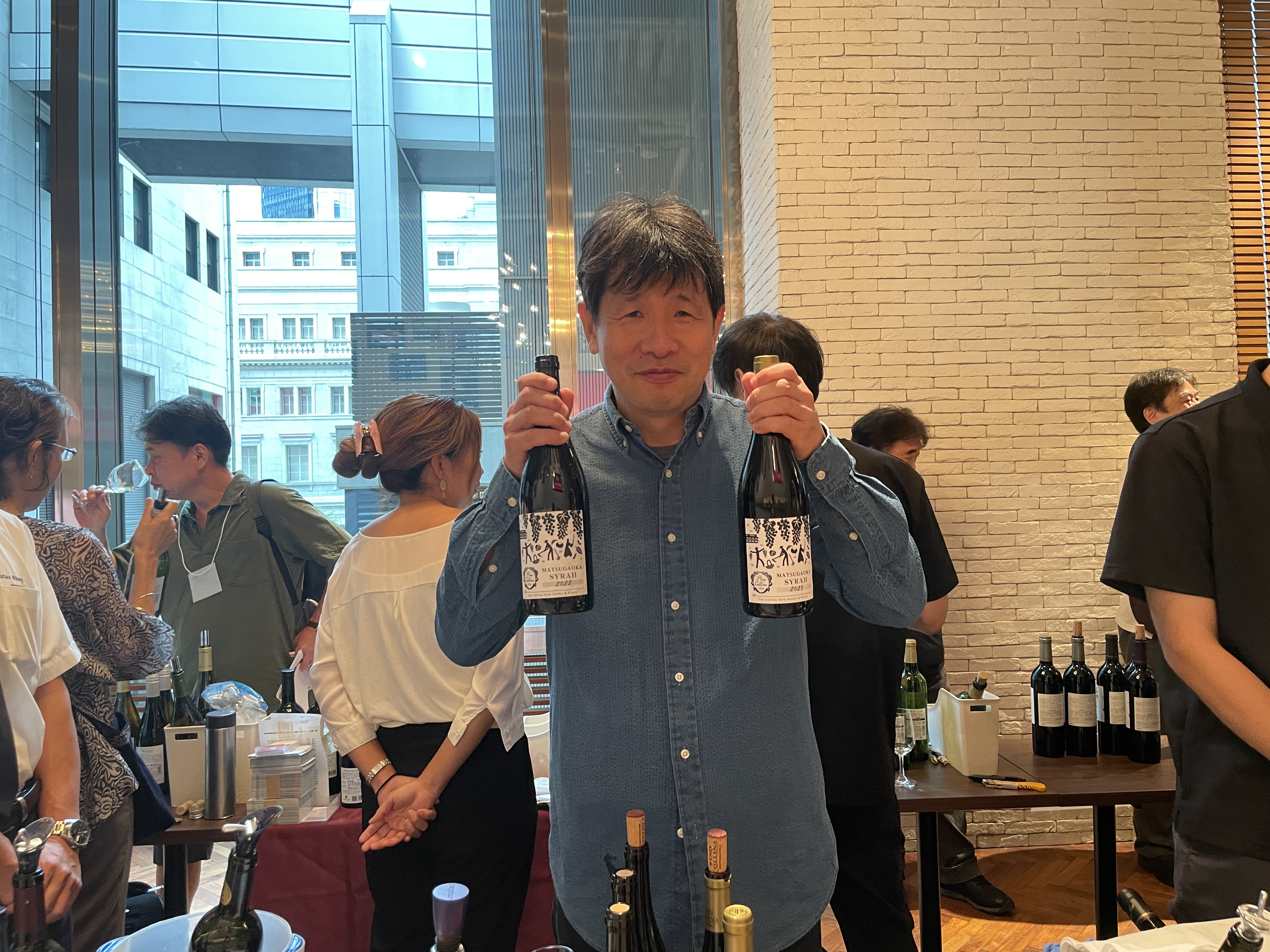
Pinot Collina Matsugaoka, joining from Tsuruoka in Yamagata Prefecture, presented two award-winning vintages: “Matsugaoka Syrah 2022” and “Matsugaoka Syrah 2023.” Guests could taste them side by side.
Although both wines were made from Syrah grown on the same vines, their characters were notably different.
The 2023 showed generous, expressive fruit and an approachable style. The 2022, by contrast, had a more pronounced acid profile and a more complex expression.
The producer explained that 2023 brought abundant sunshine and high temperatures, including the effects of foehn winds. In 2022, extremely hot days were less frequent and nighttime temperatures dropped more often, allowing the grapes’ acidity to change more gradually.
The vineyard lies only about 17 km in a straight line from the Sea of Japan. Westerly sea breezes arrive during the day, while dry easterly winds flow down from the mountains at night. The site also receives ample sunshine through the grape-growing season from April to October.
The event offered more than the chance to taste Japan Wine Competition winners in one place; being able to hear these stories directly from the producers while tasting the wines was part of what made the experience distinctive.
New Possibilities for Red Wine in Kyushu
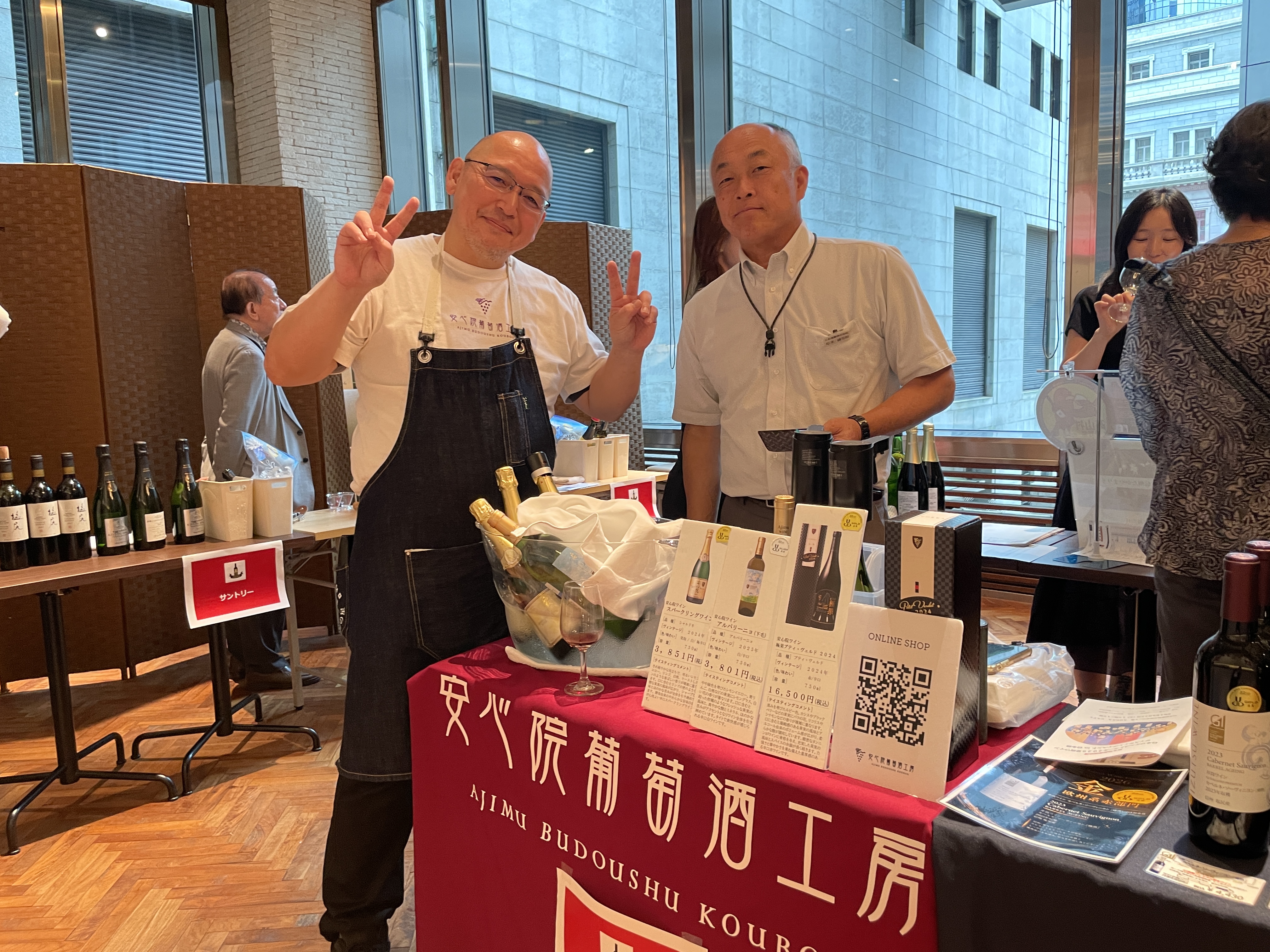
From Ajimu Budoushu Kobo in Oita Prefecture, “Ajimu Wine Kyokka Petit Verdot 2024” attracted considerable attention.
This was only the second vintage of the winery’s Petit Verdot. The grapes reached particularly high ripeness in 2024, and after monitoring the wine’s development, the team decided it would be “too exceptional to release as a standard product.” It was therefore bottled under the premium “Kyokka” series, reserved for especially strong fruit and vintages.
The wine went on to win a gold medal at the Japan Wine Competition 2026 — the company’s first gold medal for a red wine.
Ajimu Budoushu Kobo has long worked with a range of grape varieties, including Chardonnay. It now manages three vineyard sites totaling about 30 hectares and continues to explore the potential of newer varieties, including Petit Verdot.
That a wine from a project only in its second year received this level of recognition is an intriguing sign of what may be possible for red wine in Kyushu.
Beyond “Takahata Means Chardonnay”: Building Red Wine as the Next Pillar
The sense of possibility for Japanese red wine continued.
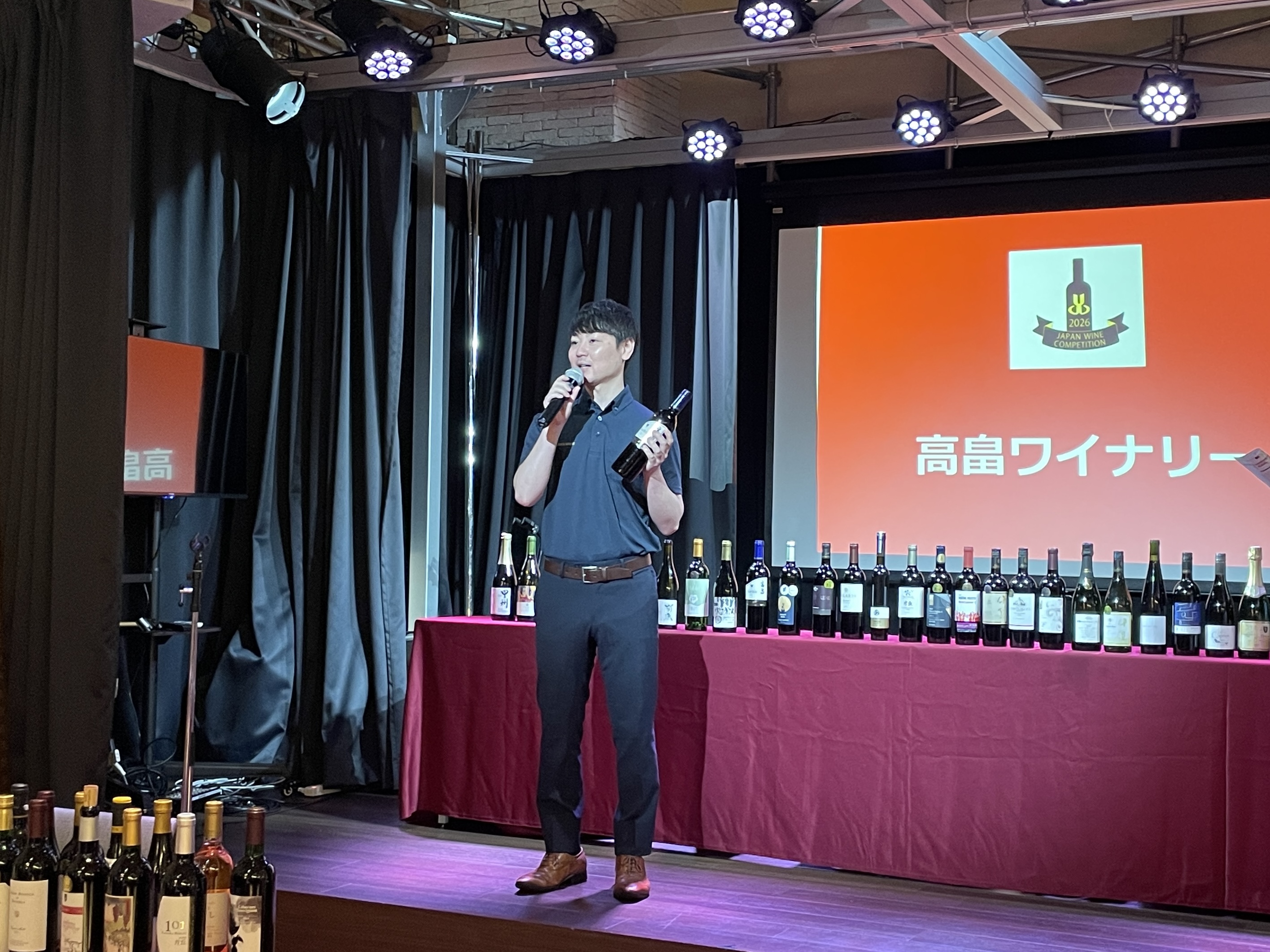
Takahata Winery introduced its gold-medal-winning red, “Takahata Rougle Bleu Ao-oni 2022”, a Merlot-led blend with Cabernet Sauvignon.
The winery has earned a strong reputation over many years for Chardonnay, but its winemaking team has also continued to invest in reds, with producers pursuing a Bordeaux-inspired style.
A producer said, “The image of ‘Takahata means Chardonnay’ has always been extremely strong, but we have also put a great deal of effort into red wine. We are truly delighted to receive this award.” The wine is delicious now, yet it also gives the impression that it can continue to mature, much like a fine Bordeaux red. At a retail price of around ¥4,400, that quality is striking.
Entering the Competition for the First Time Since Going Independent
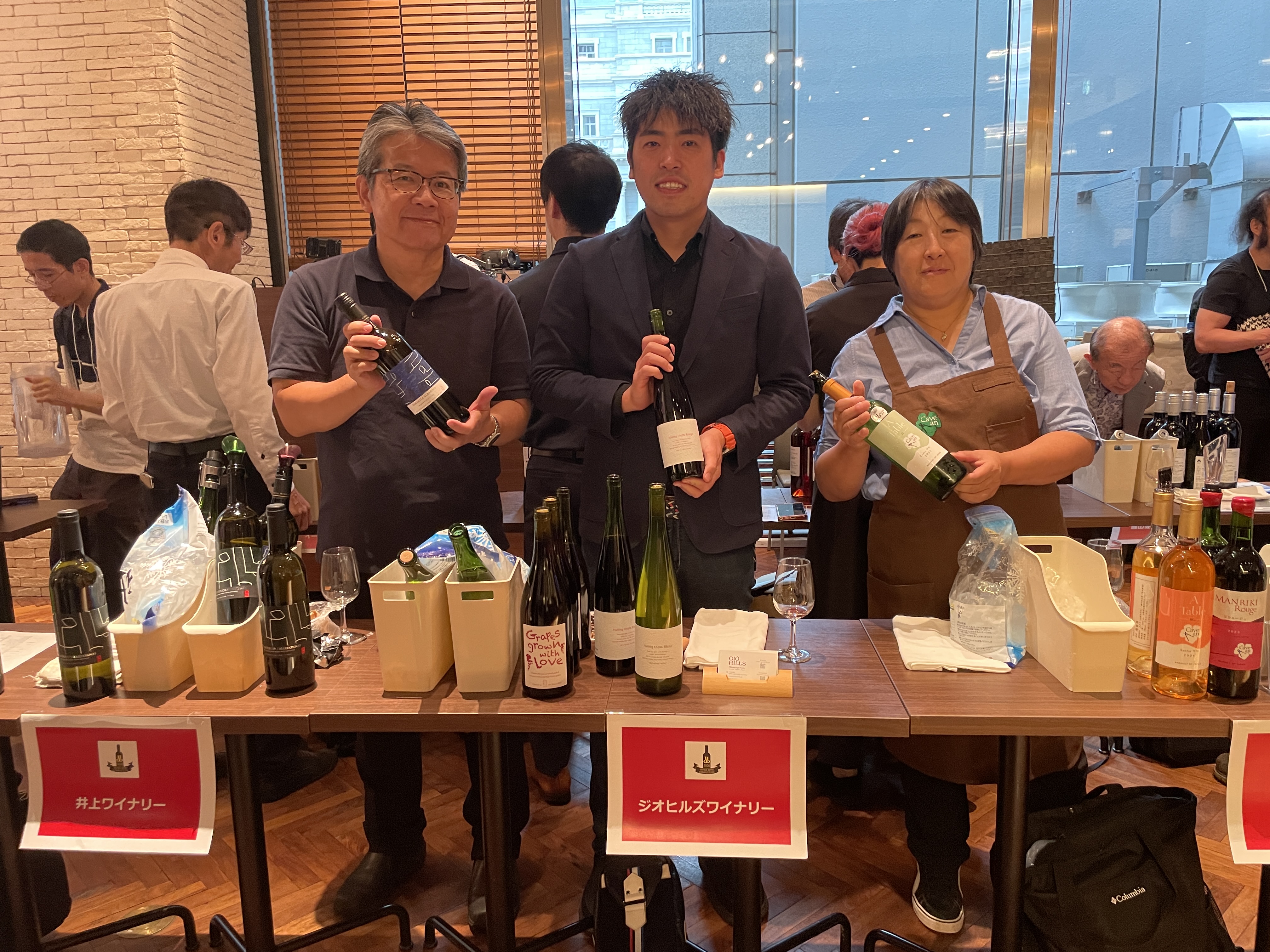
Yamanashi-based Cave An won a silver medal with “2025 A Table White.”
Masako Anzo has previously worked as a consultant and helped clients’ wines achieve competition success. Surprisingly, however, this was the first time she had entered one of her own wines in the Japan Wine Competition since becoming independent. She decided to begin with her flagship wine, of which around 4,400 bottles are currently produced.
“Winning a silver medal is very encouraging. Production is increasing, so I want to keep pursuing even better balance from here,” she said.
Her goal is not a wine reserved only for special occasions, but one that fits naturally with food: “A wine that does not make you choose the meal, and before you know it, the bottle is gone. That is the ideal.”
At the neighboring booth, Gio Hills Winery’s “Fan Tom Blanc 2025” was aromatic on the nose yet calm and composed on the palate — a white wine that seemed likely to work with many kinds of food. The grape varieties are undisclosed, though those who think they can identify them may be able to get a quiet confirmation from the producer.
Inoue Winery’s “Yamakita Albariño 2025” again showed why it is consistently highly regarded. It clearly expressed the character of Albariño, with vivid, expansive aromatics that invited you to keep returning to the glass.
Tasting these three producers’ wines in succession highlighted how differently each bottle might shine at the table and underscored the fascination of wine’s individual character.
Turning an Award into Confidence for the Region
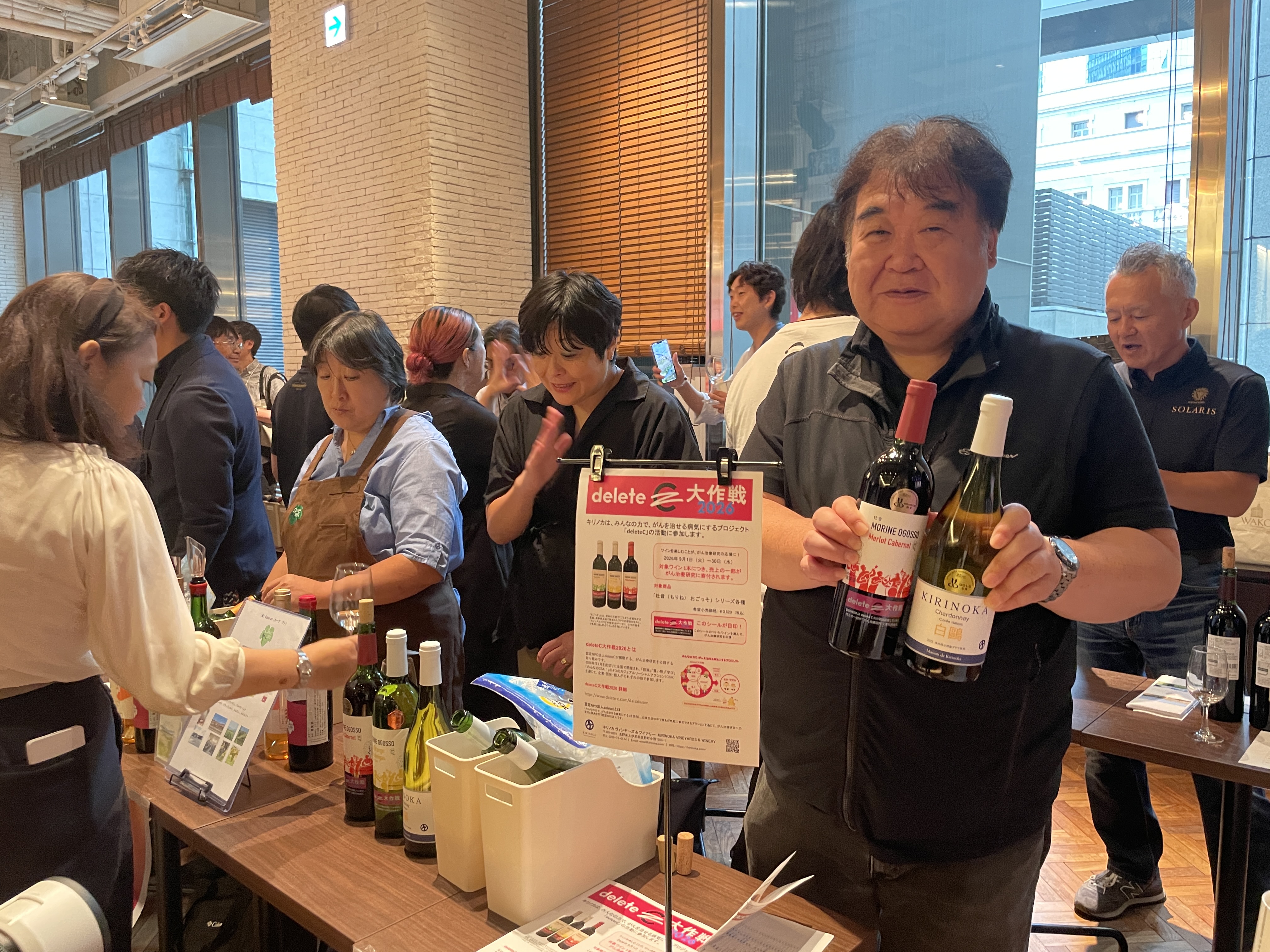
Kirinoka Winery, based in Kita-Ono, Shiojiri, Nagano Prefecture, won a gold medal with “Maison de Kirinoka Chardonnay Hakuo 2025,” a wine blending Chardonnay grown in Kita-Ono and Ono in the Ono Basin.
“Chardonnay is a European white variety with a large number of entries, so winning gold in that category makes me personally very happy. I also think it will give confidence to the people involved in grape growing throughout the region,” the producer said.
The winery does not view the award as a success belonging to the winery alone. One of Kirinoka Winery’s stated goals is “to have the terroir of Ono recognized around the world,” and the team sees this award as one step toward that goal.
Connecting with Society Through Wine
Alongside the tasting of award-winning wines, the event also featured several charity initiatives.
Kirinoka Winery participated in the DELETE C Campaign, which supports donations to cancer treatment research.
By purchasing wines from the relatively accessible “Morine Ogosso” series, customers help direct a portion of sales toward cancer treatment research.
Kirinoka Winery representative Minoru Numata said, “Wine is a drink that creates communication between people. Precisely because of that, I believe it can connect with many social issues — the environment, healthcare, local communities and more. I think the wine industry of the future also needs each producer to carry that kind of awareness.”
https://www.delete-c.com/daisakusen
A “2026 Kumamoto Earthquake Recovery Support Charity Wine” corner was also set up.
Participants purchased wine by the glass, and all proceeds were to be donated through the Red Feather Community Chest relief fund.
Referring to Kumamoto Wine Farm, one of the award-winning wineries taking part, an organizer explained the motivation: “When we think of Kumamoto, Kumamoto Wine Farm is here exhibiting today as well. We all want to do what we can to help.”
The event was therefore notable not only as a place to taste award-winning wines, but also for turning wine into small, concrete actions for society.
In Closing
According to the organizers, most participants this time came from Tokyo and nearby parts of the Kanto region. Looking ahead, however, they said they hope to develop the event into one that people will travel to from Yamanashi, Hokkaido, Kyushu and beyond.
The value was not simply that wines from around the country gathered in Tokyo. Through those wines, visitors could encounter the places they came from, the character of different vintages, and what producers are doing now. For many guests, the Japan Wine Competition awards became a gateway to experiencing the present moment of Japanese wine.