
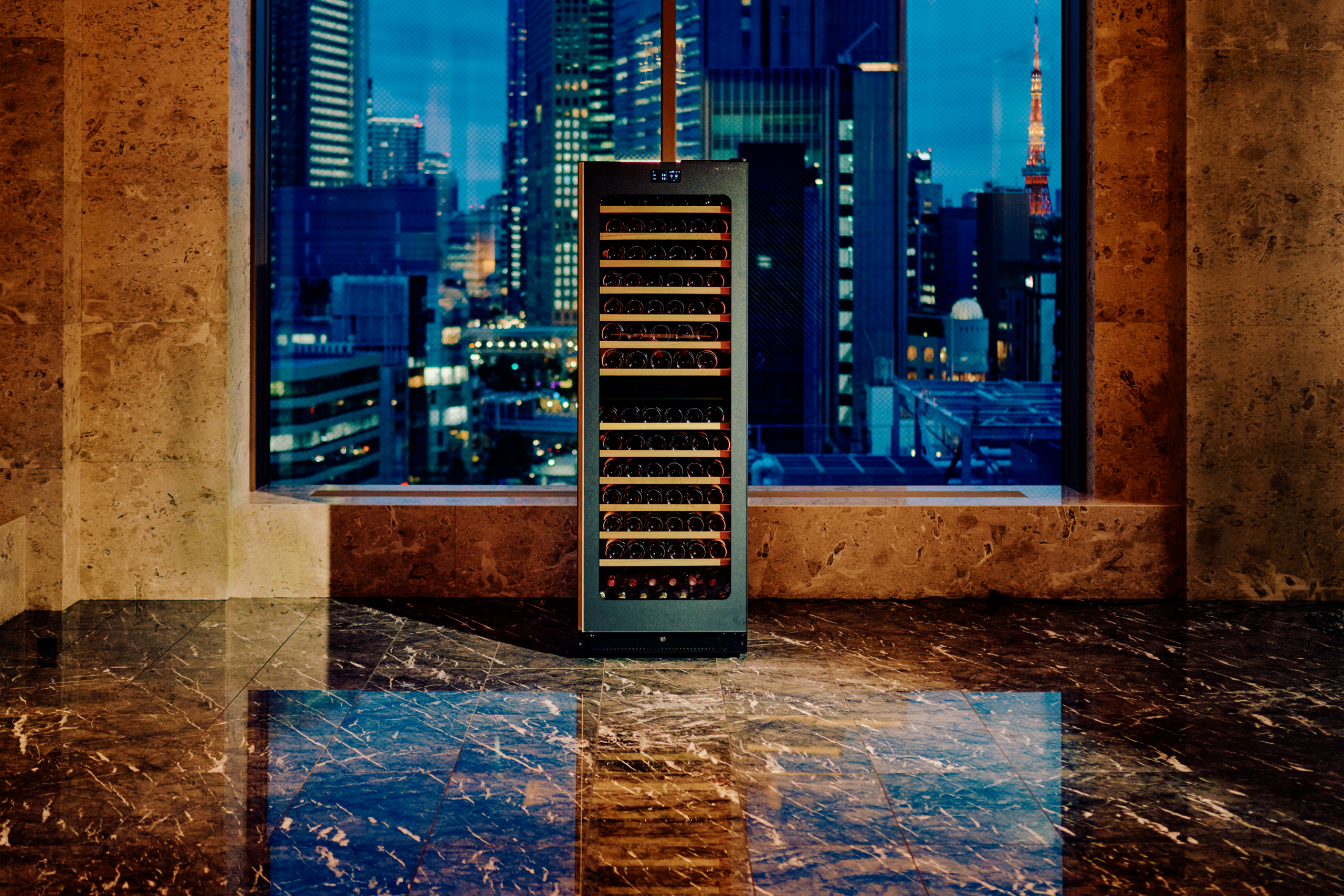
Whether you want to drink wine at its best or serve it in ideal condition, a wine cellar is the tool that makes that possible.
But there are countless types of wine cellars, and choosing the right one for yourself or your restaurant can be difficult.
This time, we introduce Sakura Works, a Japanese maker of wine and sake cellars that we especially recommend to Japanese-wine fans.
Sakura Works is a cellar manufacturer that wine beginners, enthusiasts, and restaurant professionals alike should know—a company that pursues every detail with unusual thoroughness.
We spoke with CEO Akio Hozumi about the newly launched Master Series MP170D525 (hereafter, “Master Series MP170”) and about how to choose a wine cellar.
About Sakura Works
Sakura Works is a Japanese wine-cellar manufacturer founded in 2014.
Although relatively new to the category, the company has become widely recognized by wine lovers and restaurants as a high-quality cellar maker, thanks to the functionality enabled by its proprietary in-house design and development, strong cost performance, and attentive customer support.
Founder Hozumi says his love of wine led him to launch a wine-cellar company.
Although he had no B2C experience, his background at a trading company handling electrical products helped him see an opportunity in wine cellars, leading to the launch of Sakura Works.
“Sakura Works is a rather distinctive player in this industry,” Hozumi says.
We asked him why Sakura Works has been chosen by wine enthusiasts and professionals.
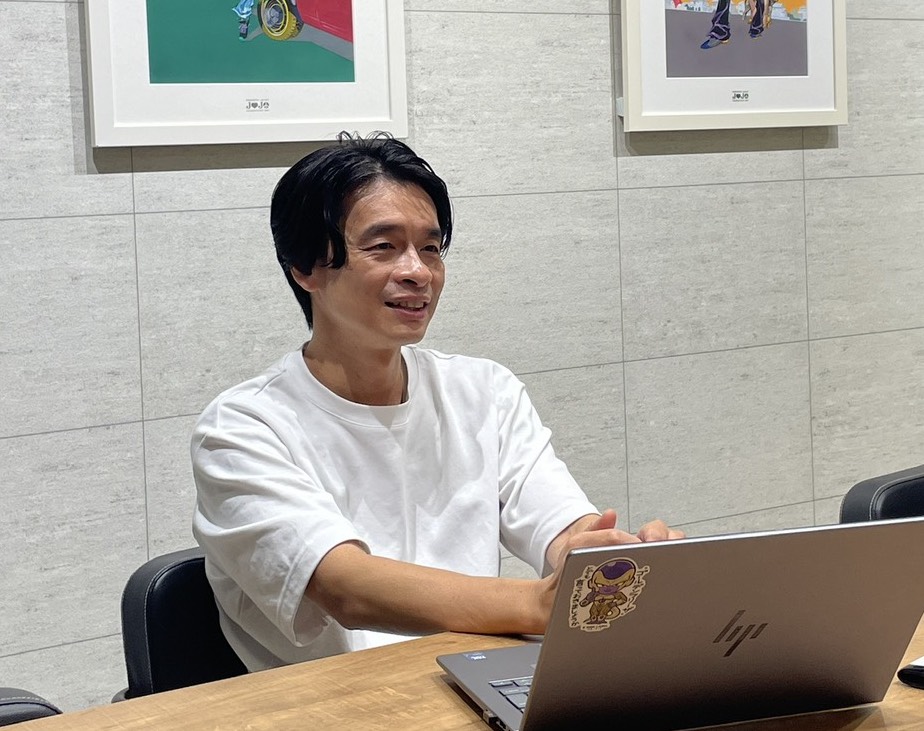
Hozumi: “The first thing we tackled was a cellar with dual-temperature control, allowing red and white wines to be stored at different temperatures.
At the time in 2014, there were no cellars that could keep reds and whites at separate temperatures in a single unit, so I believe it had a real impact on the market.”
Hozumi also focused on the question of what kinds of wines people would actually place in a cellar.
Hozumi: “I felt that most wine cellars were either built for long-term aging with Bordeaux in mind, or prioritized sheer bottle capacity over functionality.
Long-term aging is important, but your tastes may change twenty years from now, and many people simply drink their wine much sooner. I personally love Burgundy and Japanese wine, and those are wines I often want to drink without waiting twenty or thirty years.
‘Build a wine cellar around wines meant to be enjoyed relatively young.’ That idea became one of the starting points for Sakura Works’ design and development.”
Wine bought by individual consumers is often consumed relatively quickly, and restaurants likewise want to serve newly purchased wines promptly.
Meeting those needs requires strong cooling performance, and Sakura Works’ focus on that functionality appears to be one reason its products are chosen.
Hozumi: “Although our development starts from the idea of wines that will be enjoyed sooner, our cellars are also excellent for long-term aging. Aging is the accumulation of everyday conditions.
It is similar to managing human health: if you maintain proper habits day after day, that supports your health in the future. If a wine cellar manages temperature correctly today, I believe the wine can continue to mature properly years or even decades from now.
Many established cellar manufacturers focus primarily on long-term aging. Sakura Works approaches cellar design from the opposite direction.”
About the Master Series MP170
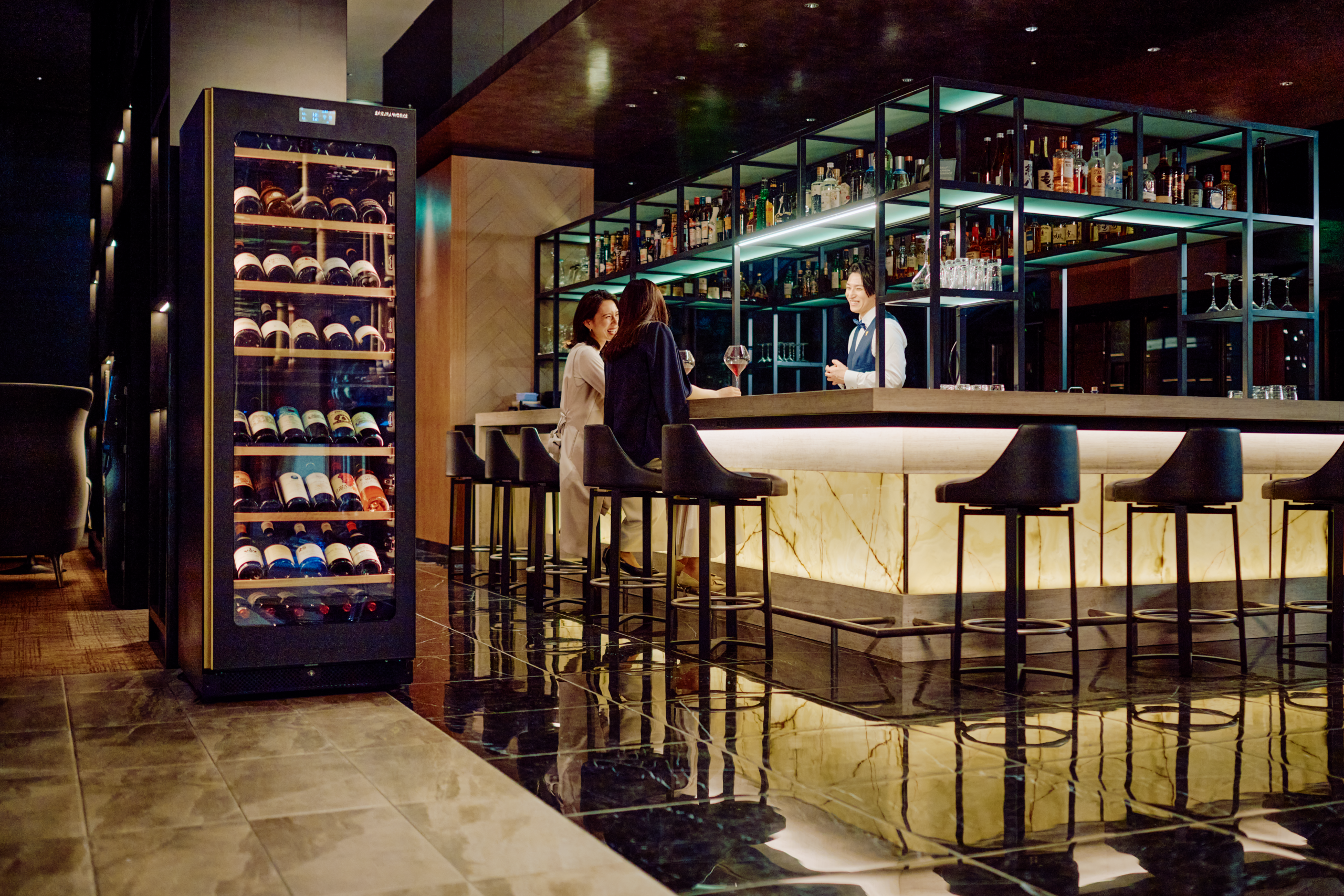
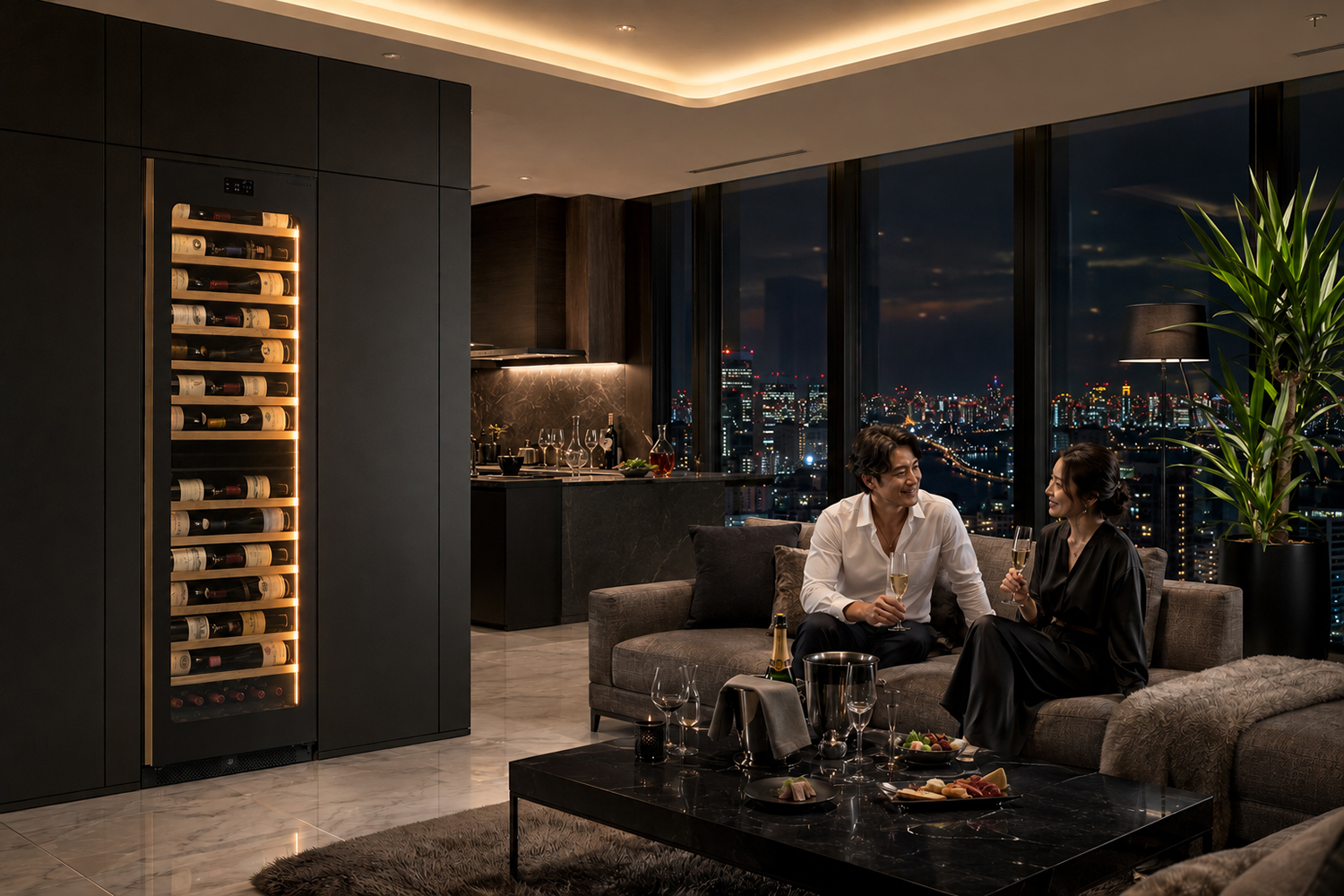
The Master Series MP170 is Sakura Works’ large-format luxury cellar.
Measuring 630 mm wide, 728 mm deep, and 1,876 mm high, it holds up to 170 bottles and provides independently controlled upper and lower temperature zones. An inverter compressor and highly insulated construction enable precise temperature and humidity management, combining in a single unit the kind of serious storage environment professionals demand.
It is a large cellar dedicated entirely to wine rather than a combined wine-and-sake model.
Hozumi describes it as “our answer to how far wine cellars can go today.” We asked him about the features Sakura Works focused on in the Master Series MP170.
Three-Way Smooth Shelf × Dedicated Cradle
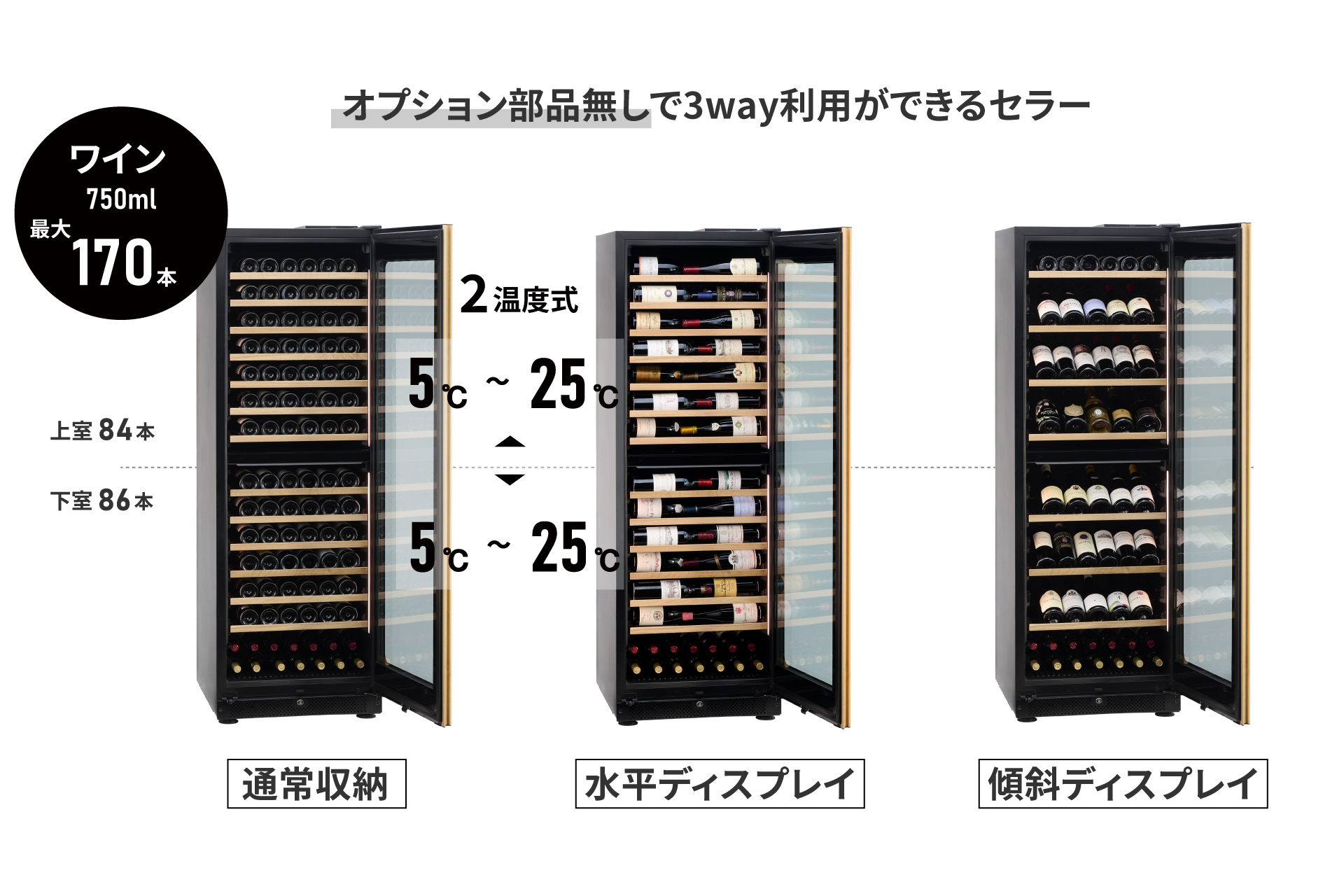
Two standout features of the Master Series MP170 are its Three-Way Smooth Shelf and dedicated cradle.
Hozumi: “The Master Series MP170 supports three arrangements: standard storage, sideways placement at the front, and angled display. With many ordinary cellars, you are locked into horizontal storage or must buy an optional accessory if you want angled display.
It was designed from a restaurant-first perspective, whether the need is to maximize storage or showcase bottles. Large cellars can also be more prone to vibration, and if sediment is stirred up it can affect the wine as a whole.
The Master Series MP170 includes a cradle made from dedicated resin and rubber materials that absorb micro-vibrations, helping suppress vibration thoroughly. We can recommend it for storing wines of any price range or style.”
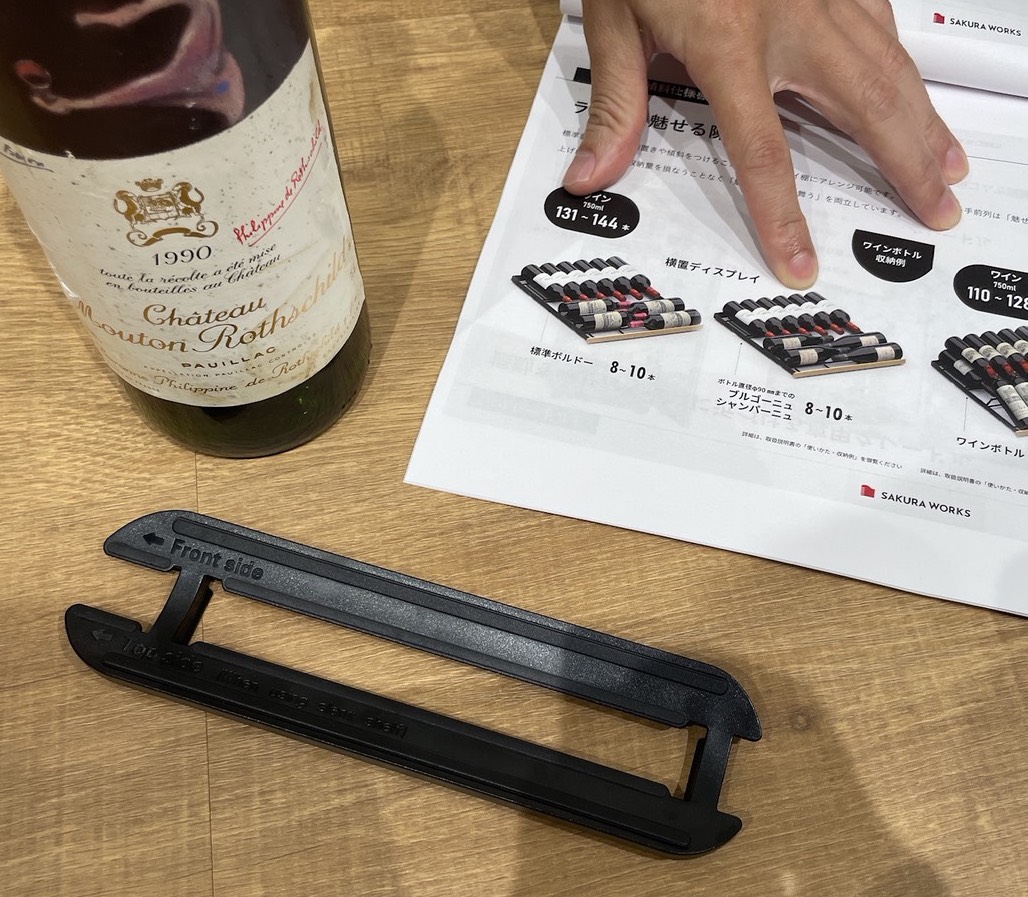
The millimeter-level attention paid to the cradle is one of the Master Series MP170’s distinctive features.
The shelves also use a soft-close mechanism, reducing concern about shock and vibration when they are closed.
Industry-First Dual Control Modes
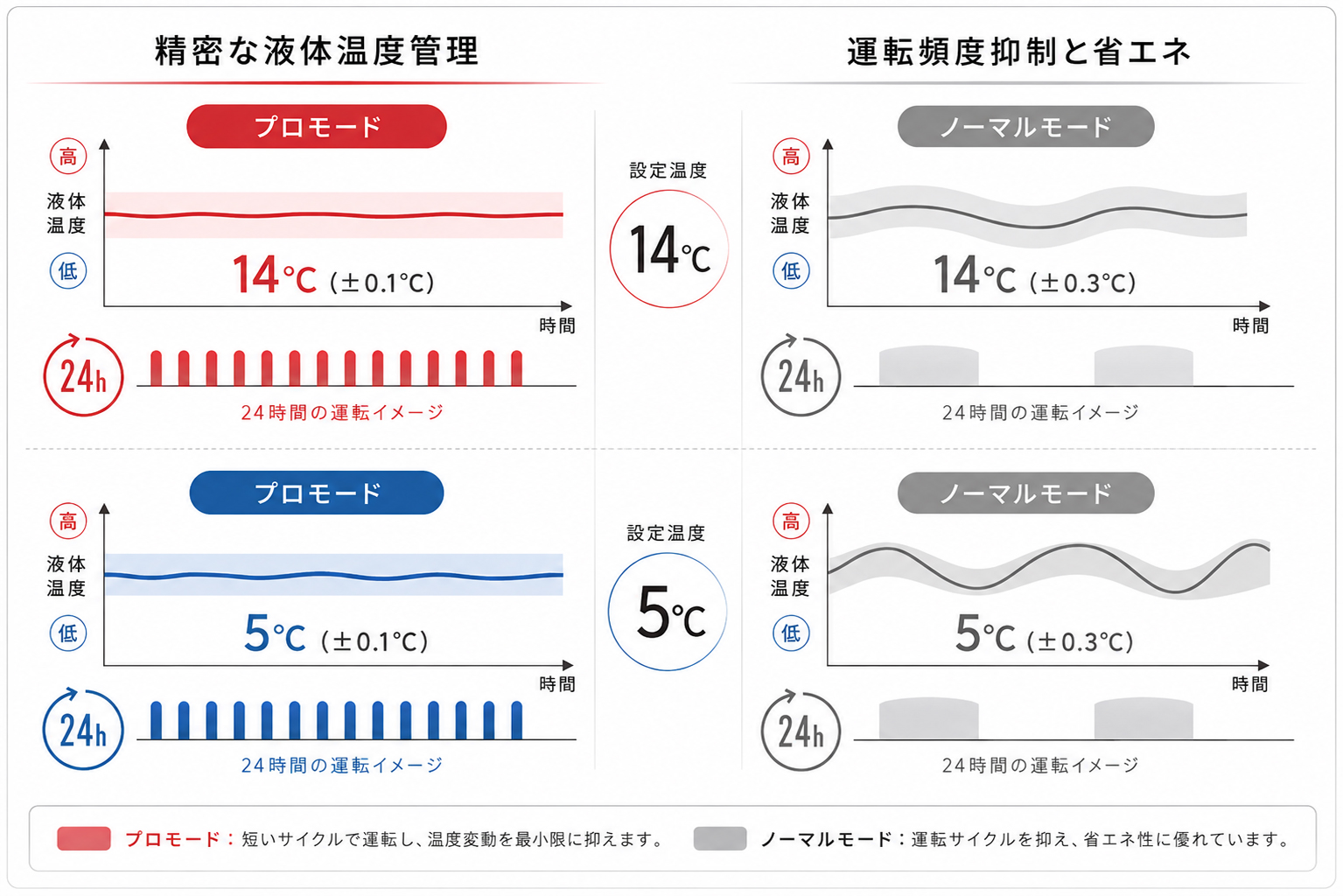
The Master Series MP170 divides its interior into upper and lower chambers, each cooled independently.
On top of that, one of its most notable features is what Sakura Works describes as an industry-first dual control mode.
The two settings are Pro Mode and Normal Mode, allowing users to choose according to purpose.
Hozumi: “For example, suppose the wine inside is at 14°C. In Pro Mode, the liquid temperature varies by only 0.1°C around 14°C.
In Normal Mode the liquid temperature variation is around 0.3°C to 0.5°C, but the unit runs less frequently and is more energy efficient. A restaurant might choose Pro Mode, while a home user might prefer Normal Mode.”
Unlike a natural cave, a mechanically controlled environment repeatedly cools and stops, so some temperature fluctuation is unavoidable.
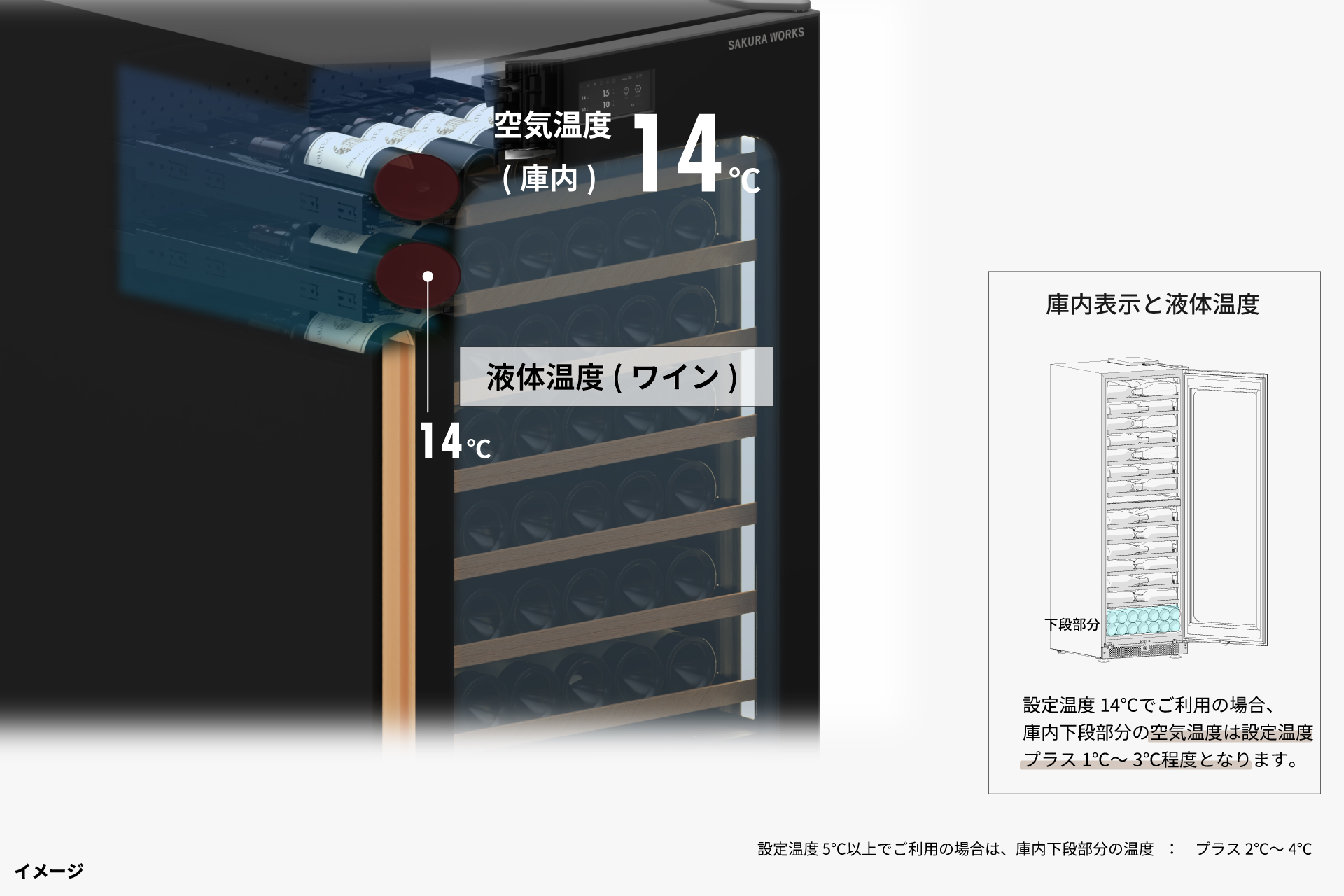
Sakura Works says that managing the liquid temperature itself is a feature not found in competing cellars, and it is another key appeal of the Master Series MP170.
Hozumi: “It may be easier to understand if you imagine a medical refrigerator used to store blood for transfusions. With the growing number of delicate wines and low-intervention wines, managing the liquid temperature is also essential for wine.”
A Wine Cellar Built Around Detailed Engineering
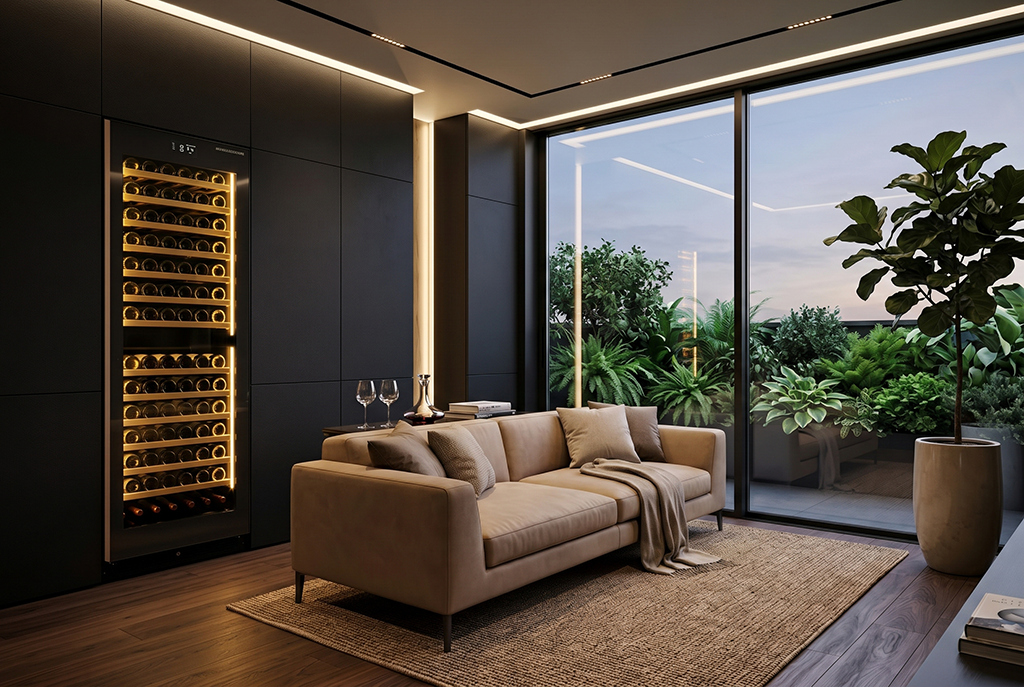
The Master Series MP170 includes many other carefully considered features.
These include silk-frosted top glass with ten-color LEDs and three brightness levels to adjust the atmosphere, plus a front-venting built-in design that requires only 5 mm of heat-release clearance.
Its three-pane glass door, inspired by the company’s sake-cellar door design, has undergone 300,000 open-close durability cycles—far above an industry benchmark of 100,000 cycles.
Annual electricity consumption is stated at just 223 kWh, with estimated annual electricity cost of about ¥6,913, or roughly ¥41 per bottle per year.
Hozumi: “We believe the specifications of the Master Series MP170 are among the best in the industry.
Beyond performance, we focused on a luxurious appearance and tactile quality unlike conventional cellars, and the interior is designed to accommodate the increasingly common thicker bottles.
If you are considering a purchase, I encourage you to compare it carefully with cellars from other manufacturers before deciding.”
For more information about the Master Series MP170D525, see this page.
Benefits of a Wine Cellar and How to Choose One
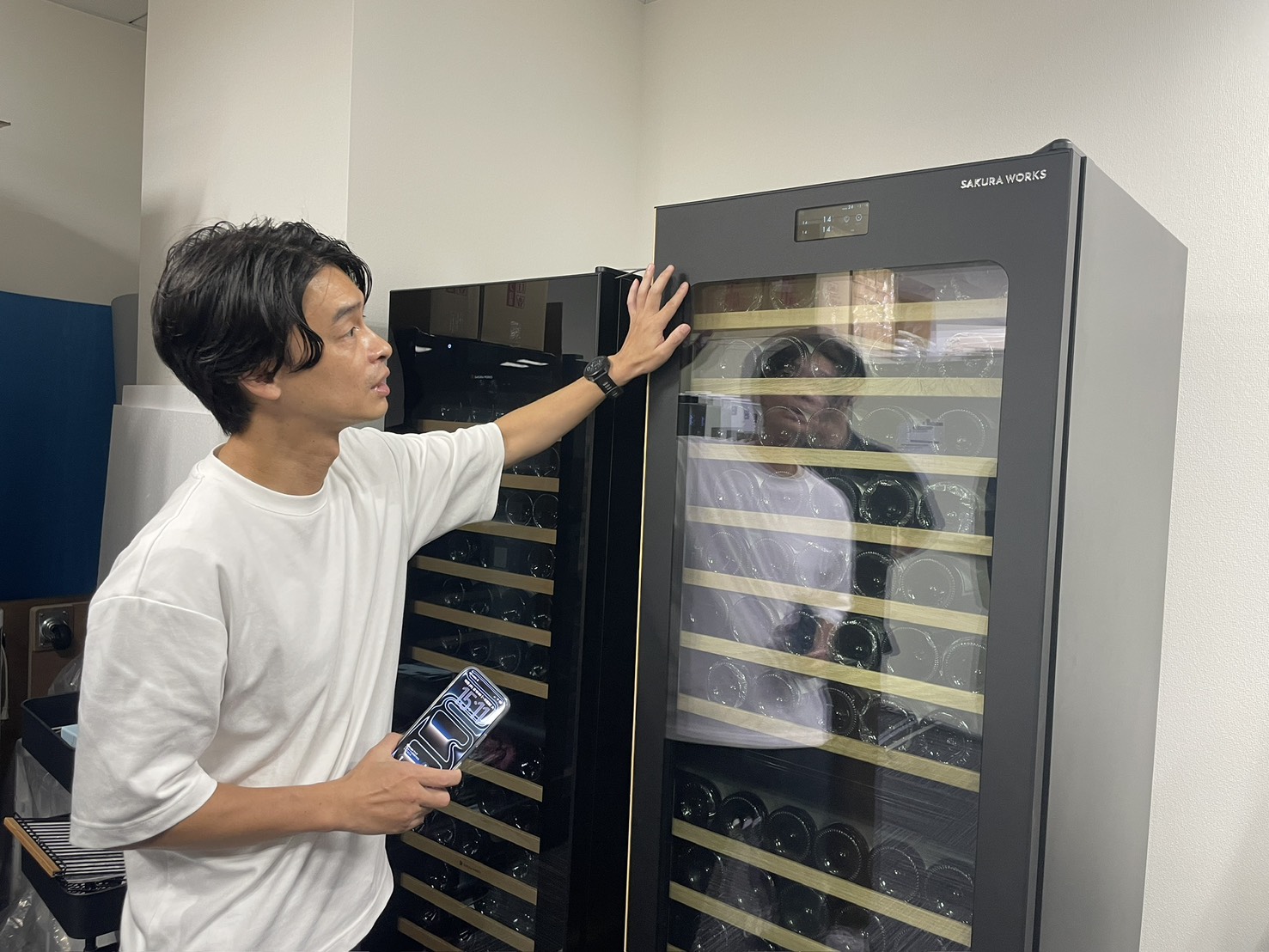
For people becoming more serious about wine, those planning to serve wine in a restaurant, and hospitality professionals generally, we asked for a cellar specialist’s view on the benefits of wine-cellar ownership and how to choose a unit.
Protecting the Producer’s Intent and the Expression of Japanese Wine
Hozumi: “To understand wine, I think it is important to drink it in good condition. The only way to learn what truly good wine tastes like may be to keep drinking wine that has been handled properly.
Good glassware matters, of course, but temperature management is also essential if you want a wine to show its potential. A wine cellar is what allows you to manage that temperature correctly.
If someone recommends a wine as exceptional, having the right storage environment helps reduce the gap between that expectation and what you actually taste.”
Japanese wine is prized for delicacy, while low-intervention wines with very little added SO2 and elegant styles are also increasingly prominent worldwide.
Because such wines can be more susceptible to oxidation, an appropriate wine-cellar environment may be essential for preserving their potential.
Hozumi: “I personally love Japanese wine. To me, part of its charm lies in the umami and dashi-like qualities you sometimes find, which is why it can pair so beautifully with delicate Japanese cuisine.
If poor storage or improper temperature management damages that expression, you cannot experience what the wine was meant to offer. Many producers also take great pride in expressing terroir.
Thinking of a cellar as a way to protect that expression may make its importance easier to understand.”
How to Choose a Wine Cellar
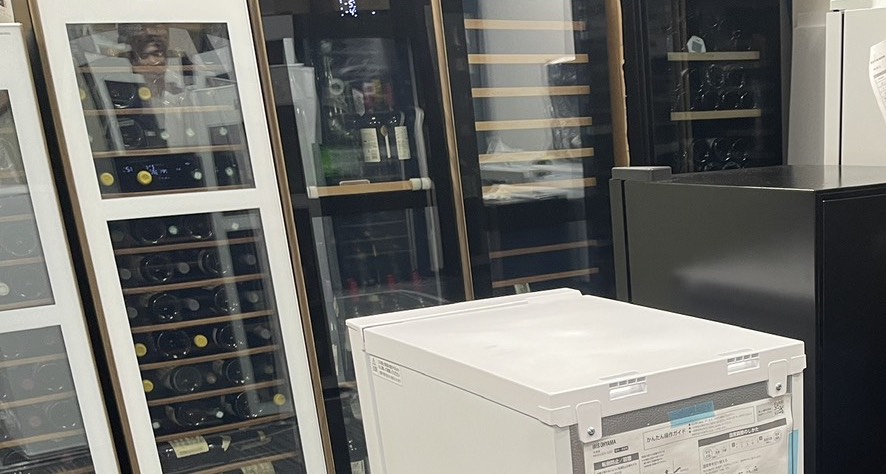
What should first-time buyers and restaurants pay attention to when choosing a wine cellar?
Hozumi: “For a first wine cellar, I think a compressor-type model priced around ¥50,000 is a good place to start.
I would recommend a model that can also chill other alcoholic beverages and soft drinks rather than one dedicated only to wine. Beer, highballs, and soft drinks all change dramatically with serving temperature, and you may find it hard to go back to ordinary refrigerator storage afterward.”
For restaurants, Hozumi says one of the most important criteria is how quickly the cellar can restore temperature.
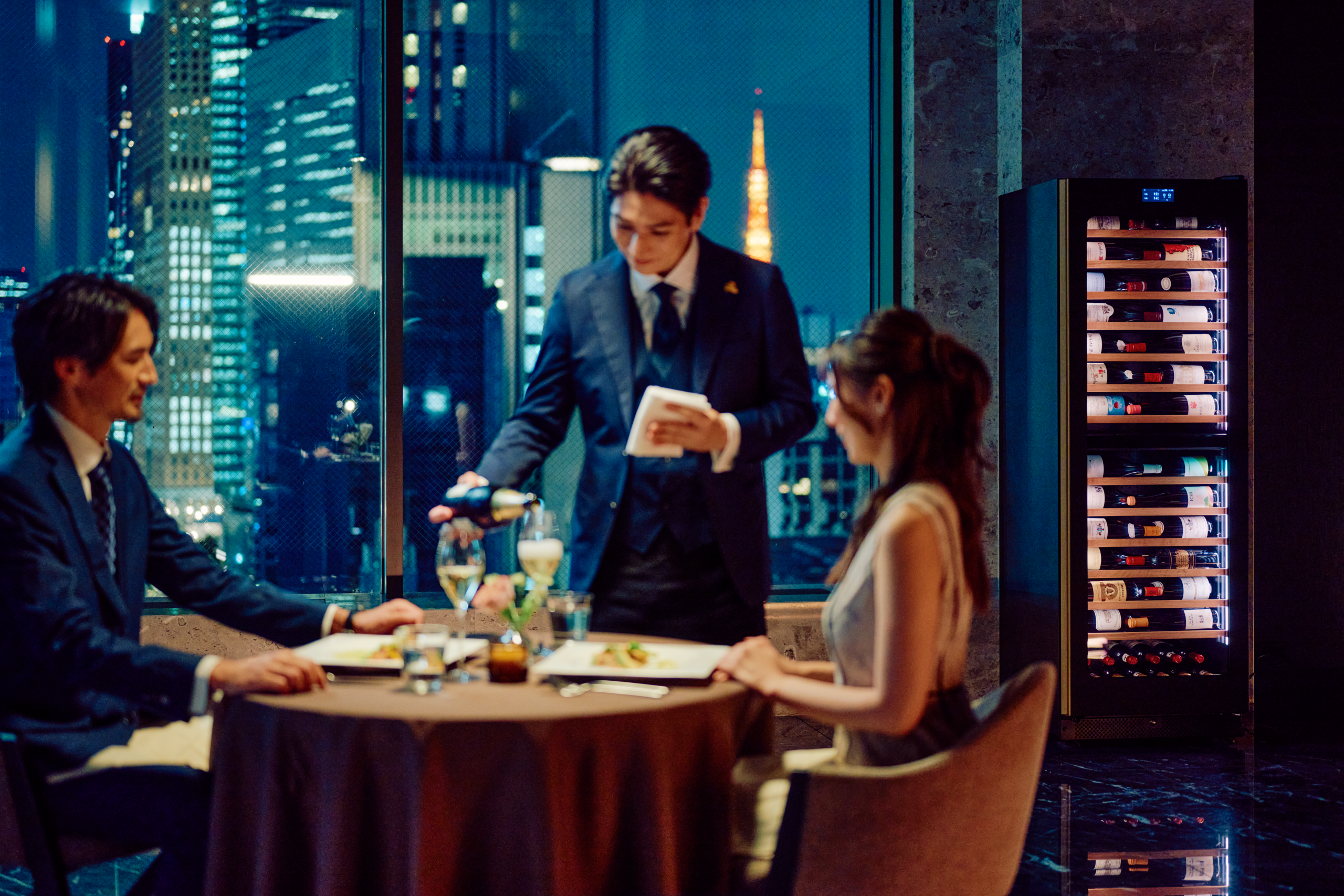
Hozumi: “In a restaurant, cooling power is a key point because the door is opened frequently. You want a model that can return to its target temperature quickly after the door is opened.
It is also better to have extra cooling capacity. Think of it like a car: between one whose maximum speed is 80 km/h and one capable of 160 km/h, the latter has more operating headroom.
Manufacturers can usually tell you things like the size of the cellar’s motor, so that is worth checking.”
Models with multiple temperature zones, such as Sakura Works’ wine cellars, are also worth considering.
Sakura Works also plans to launch a new IoT (Internet of Things) wine cellar in the future.
Because the unit will allow management and security functions to be handled from a smartphone, it could become a useful tool for restaurants.
Continuing with a Customer-First Approach
Sakura Works stands out for unusual ideas and the design and engineering ability to turn them into products.
The company says it places particular emphasis on user support.
Hozumi: “We continue to respond sincerely to customer requests and questions. Even for information not listed in our catalogs, inquiries are handled directly by our own staff, and we aim to respond quickly.
We place particular emphasis on repairs and maintenance.
Because we work with service companies that also maintain display cases for major convenience-store chains, we can provide fast repair support throughout Japan. We believe our customer-support structure is among the strongest in the industry.”
Hozumi is also personally a fan of Japanese wine.
Finally, we asked him for a message to Japanese-wine fans.
Hozumi: “I believe the Japanese-wine market will continue to grow. Put another way, if you do not secure good wines now, some of them may become difficult to obtain several years from now.
So I would first encourage Japanese-wine fans to buy and enjoy plenty of Japanese wine. Then, as you build a collection, you may naturally realize that you need a wine cellar.”
More and more delicious Japanese wines will surely appear, so I hope fans will keep buying them and help energize the Japanese-wine scene.”
References