
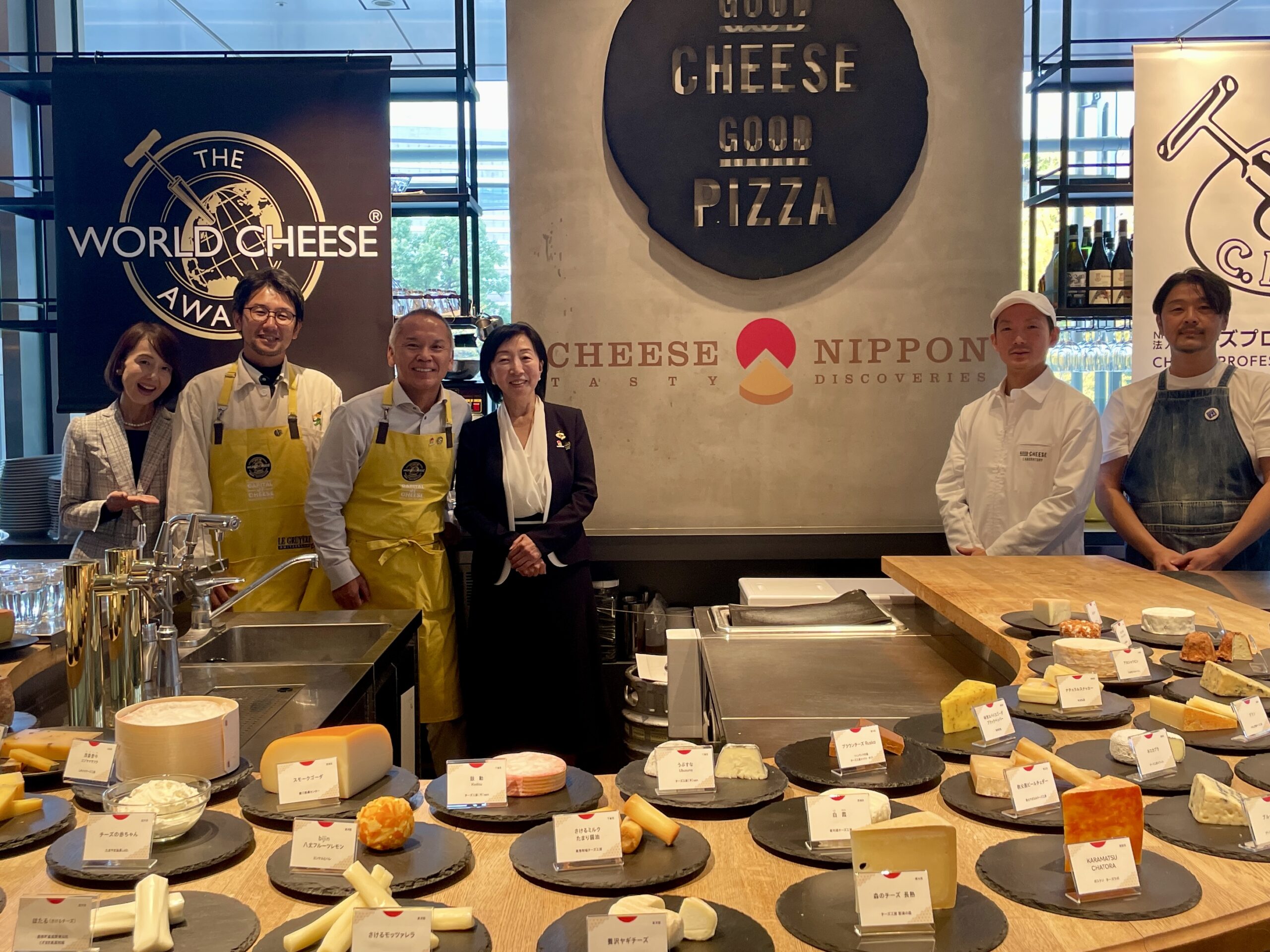
One of the world's largest and most prestigious cheese competitions, held from November 13 to 15 in Bern, Switzerland,World Cheese Awards 2025.
In this 37th edition,5,244 entries from 46 countrieswere registered, and from Japanese cheese dairies,48 domestic natural cheeses from 40 dairies across 17 prefectureswere submitted.
In addition, "Yozawa Goat Cheese" entered by Yozawa Goat Farm and "Yukiko" entered by Cheeses Story won Super Gold, with "Yozawa Goat Cheese" even being selected among the TOP 14 in the final judging!
Here is a report on the results debriefing event held at Tokyo Midtown Hibiya.
"Solid International Recognition" Earned on the Sixth Attempt
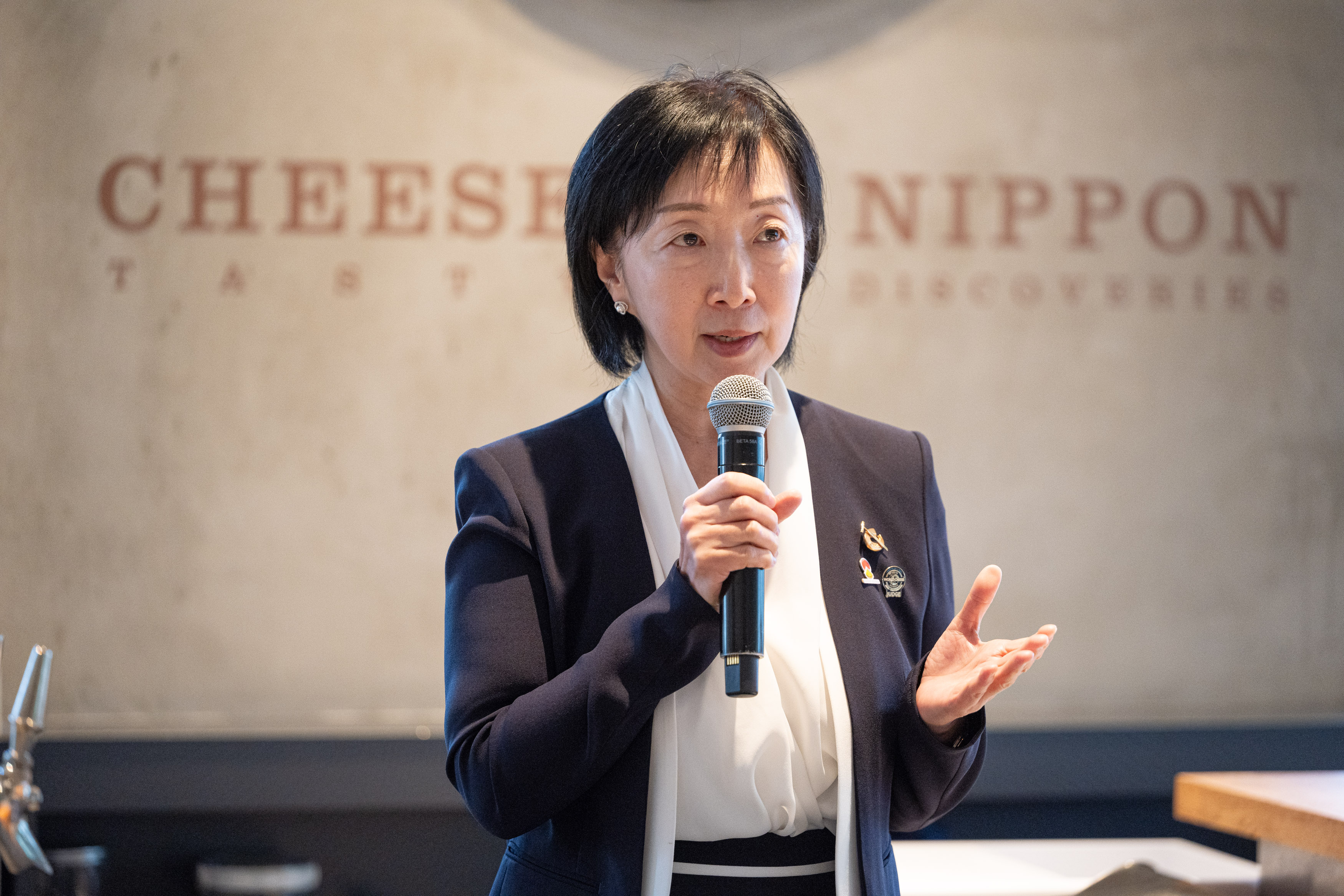
Representing the organizers, Aki Sakagami, Chair of the NPO Cheese Professional Association, gave opening remarks.
As part of the Ministry of Agriculture, Forestry and Fisheries' "Project for Strengthening International Dairy Competitiveness" and "Project for Branding and Expanding Consumption of Domestic Natural Cheese," which were launched following the entry into force of the Japan-EU EPA in 2018, the association has continued to support the entry of Japanese cheese into the World Cheese Awards and share the results domestically. Excluding 2020, which was canceled due to the COVID-19 pandemic, this year marks the sixth entry.
"Through these efforts, the excellence of Japanese cheese has become quite well known among cheese professionals around the world. On the other hand, my sense is that its true greatness and the high caliber of Japan's award-winning cheeses have not yet fully reached general consumers." "I want to bring the hidden appeal of Japanese cheese to as many people as possible.", they said, sharing their future outlook while interweaving the background and current situation.
World Standards Through the Eyes of a Judge
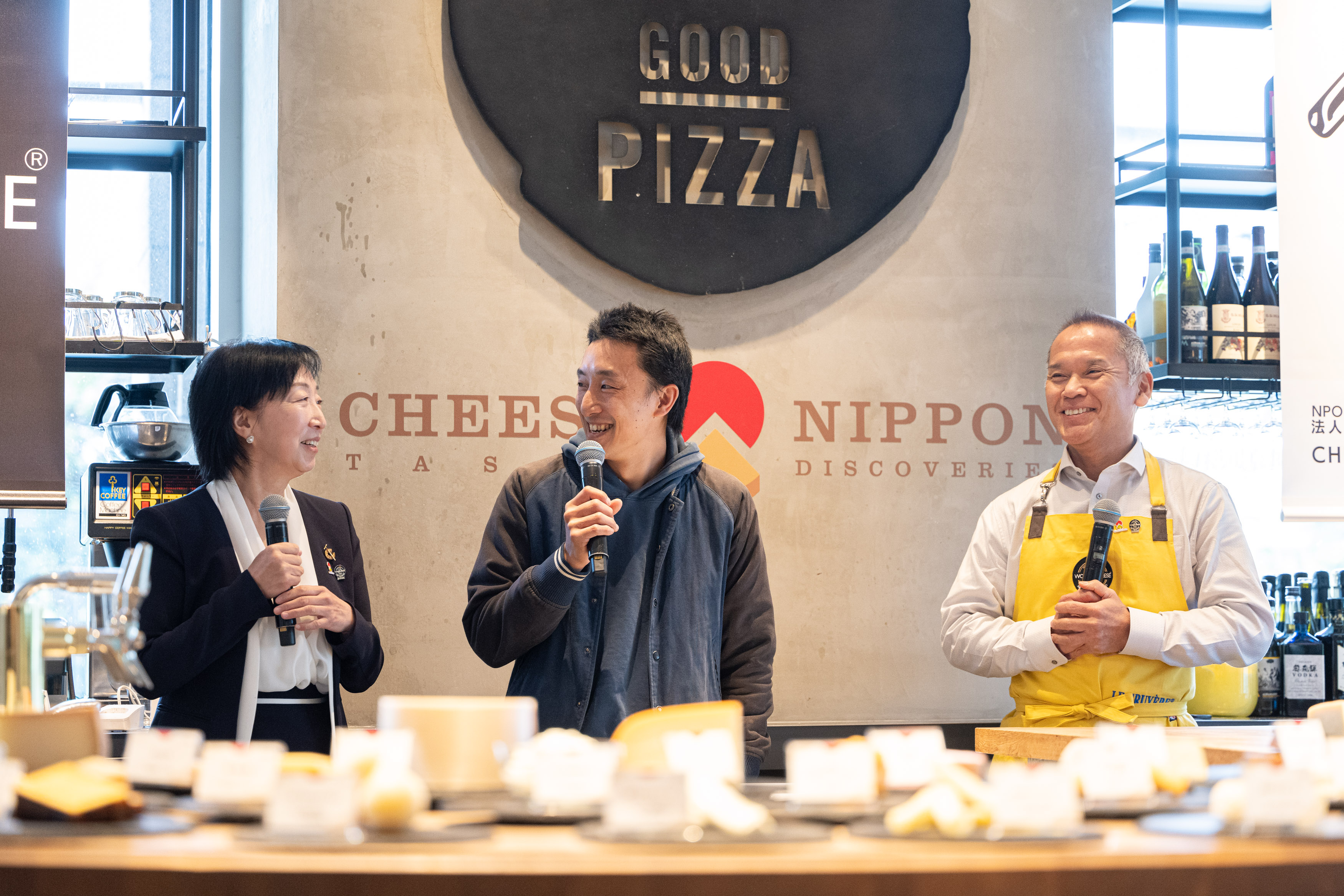
The local judging process was presented in the form of a dialogue between Ms. Sakagami and Koji Isobe, a cheesemaker at Tokachi's "Cheese Workshop NEEDS" who served as a judge at the event.
Mr. Isobe, who served as a World Cheese Awards judge for the first time, reflected on standing before the 5,244 cheeses tightly lined up at the venue, saying, "I was overwhelmed by the sheer scale of it."
Judging was divided among approximately 110 tables, with each table About 45 types of cheese are lined up. Judges form teams of two to three and evaluate them based on the following four criteria:
- Taste (Flavor)
- Texture
- Aroma
- Mouthfeel (impression in the mouth and finish)
The first three criteria are scored up to 5 points each, and mouthfeel up to 20 points, for a total of 35 points. Bronze, Silver, or Gold awards are determined based on the score obtained. The Gold-winning cheese with the highest rating at each table is selected as a "Super Gold," eventually resulting in the top 110 cheeses overall. In other words, making it into this top 110 alone must be an extraordinarily narrow gate.
It was also reported that during exchanges among the judges, international judges gave high praise to Japanese cheeses, stating that "their technique is remarkably high" and "their hygiene and quality control levels are extremely consistent."
Mr. Isobe stated, "In the near future, following in the footsteps of the creamery that won Super Gold this time, a Japanese cheese may emerge to reach the absolute top of the World Cheese Awards as a whole.," he stated forcefully.
Super Gold winner Shu Hori of "Yozawa Goat Farm" makes a surprise appearance! Applause for his joyful comments
"It still hasn't quite sunk in." Mr. Hori of Yozawa Goat Farm, whose chèvre advanced to the TOP 14 table in his very first entry, expressed his joy while commenting on this remarkable achievement:
""When I first received the news of the award, I had just woken up and couldn't quite understand what was happening. As it gradually sank in, my family and I were saying, 'Hasn't something incredible just happened?' I still haven't fully processed it."," he shared candidly, drawing enthusiastic applause from the audience.
The Appeal of Japanese Cheese: Perspectives from Production Sites and Urban Workshops
The second half of the presentation featured a talk session on the theme of collaboration between cheese and cuisine, again moderated by President Sakagami. The speakers were Masahiro Yamakawa of Cheese Koubou Nasu no Mori, cheese craftsman Shinya Sadamitsu of GOOD CHEESE LABORATORY, and Chef Masatoshi Umemura of GOOD CHEESE GOOD PIZZA.
"Japanese Milk and Cheese" as Seen from the Farm
Mr. Yamakawa, who raises grazing Jersey cows and operates a cheese workshop in Nasu Town, Tochigi Prefecture, described the appeal of Japanese cheese as "arising from the distinct climate and terrain of each region,the diversity of milk,”“and the trial and error of producerswho have explored styles to suit that milk one by one,”lies at the core, he explains.
“Nasu is rich in nature, yet easily accessible at a little over an hour from Tokyo. With the close proximity between producers and consumers, an environment is growing where people can enjoy cheese on a daily basis.”
He also has a strong sense of awareness regarding the utilization of whey. “Only about 10% of raw milk becomes cheese. Since the remaining 90% is discharged as whey, I believe it is important to adopt the mindset of using milk to the very end—even to the point of treating whey as the main star,” he says, as he currently takes on the challenge of creating new added value through developments such as brown cheese, sweets, and culinary applications using whey.
The Significance of Making Cheese in the Heart of Tokyo
On the other hand, Mr. Sadamitsu, who started at "GOOD CHEESE GOOD PIZZA" in Tokyo Midtown Hibiya and now bases his production at a workshop in Setagaya, shares his philosophy: "Turning Tokyo milk into cheese in TokyoUnder the concept of "...," he explains his commitment: ""During my training in Hokkaido, I was taught, 'Don't transport milk.' I still believe that making cheese as close as possible to the milking location is the best way to directly express the milk's individual character." For us city dwellers, this is something to be truly grateful for.
A Chef's Perspective on Delivering Cheese "As a Dish"
Chef Umemura, who crafted the collaboration menu served at the venue, drew on his long experience with Italian cuisine to share his thoughts on the differences between domestic and imported cheeses: ""At first, the 'differences' stood out and brought some difficulties. But once you understand the producer's story and the region's background, each cheese's distinct character expands your creative ideas for dishes. The fun lies in combining them as strengths, rather than focusing on differences."He explained how he approaches the appeal of Japanese cheese from a chef's perspective.
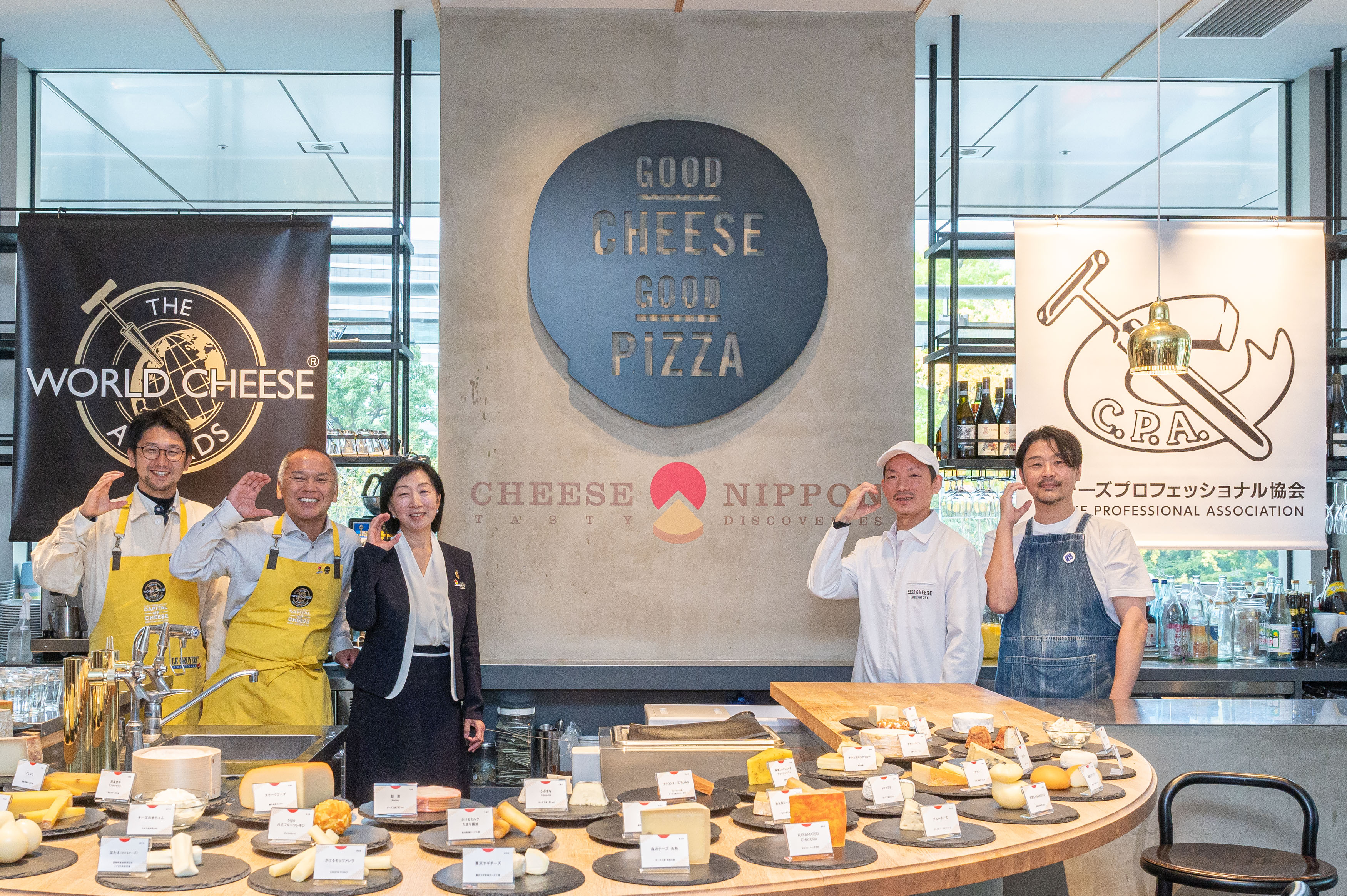
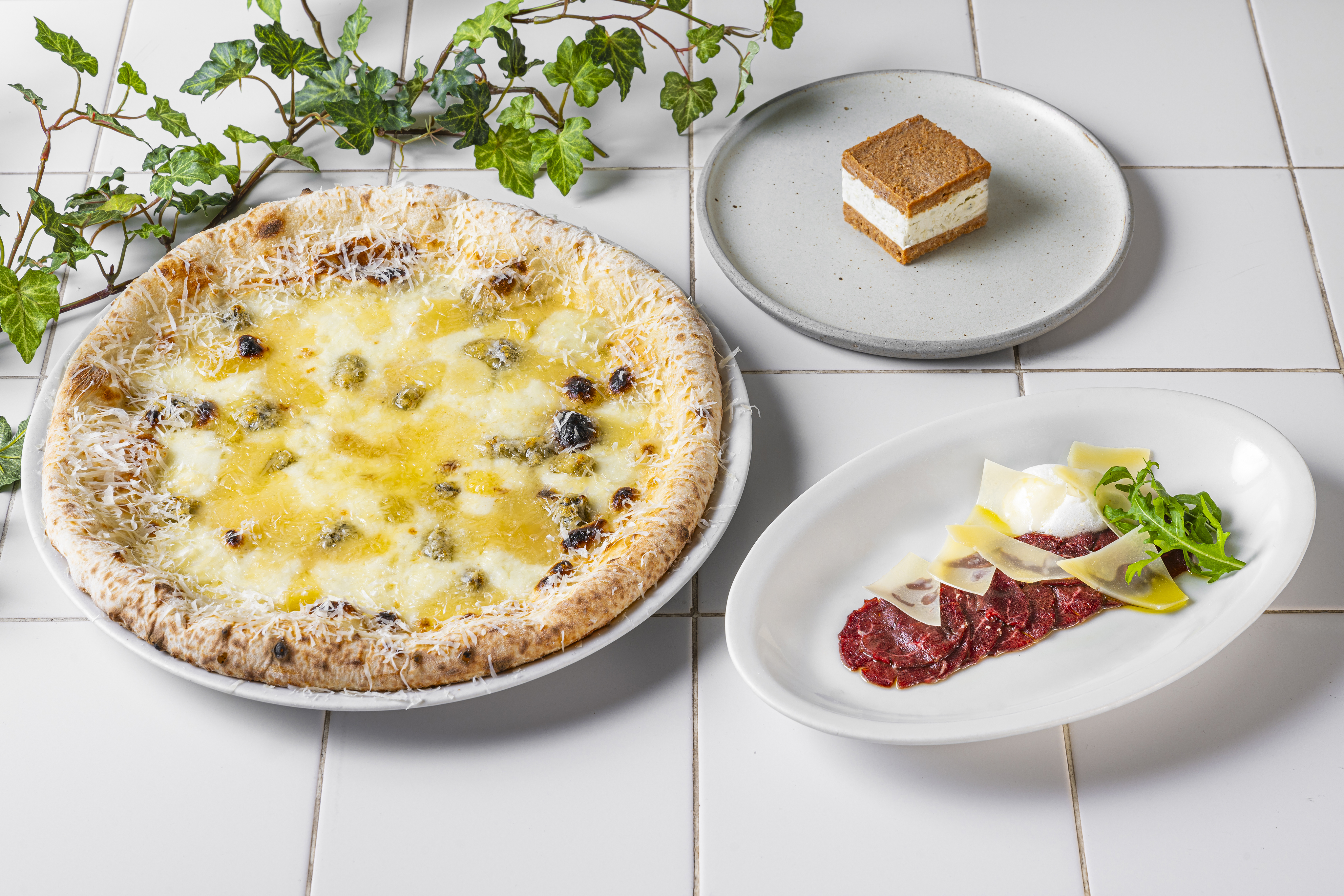
The menu served on this occasion, which included carpaccio, pizza, and ice cake, paired the featured cheeses with ingredients from various regions, allowing us to truly enjoynot just cheese as a 'product' (thing), but as an 'experience'and appreciate the full value of cheese.
This special collaboration menu will be available for a limited time until December 18 as part of the "Domestic Cheese Support Fair" at "GOOD CHEESE GOOD PIZZA" in Tokyo Midtown Hibiya.
In Closing
Reflecting on the competition, Mr. Sakagami commented that because the event was held in Switzerland—a powerhouse of authentic hard cheeses represented by Emmental and Gruyère—he was extremely pleased that many Japanese hard cheeses and raclettes won awards, standing shoulder-to-shoulder with authentic local entries, and that an acid-coagulated cheese, which faced disadvantages from the long transit from Japan, won a Super Gold award.
While Japanese cheese is positioned in the 'New World' compared to Europe, this debriefing session made it clear that an era has arrived where, thanks to the technical skill, ingenuity, and dedicated efforts of Japanese artisans, Japanese cheeses are no longer mere "imitations" of foreign products, but true "rivals."