
KNOWLEDGE
What Is "Riddling" (Remuage), One of the Steps in Secondary Fermentation in the Bottle?
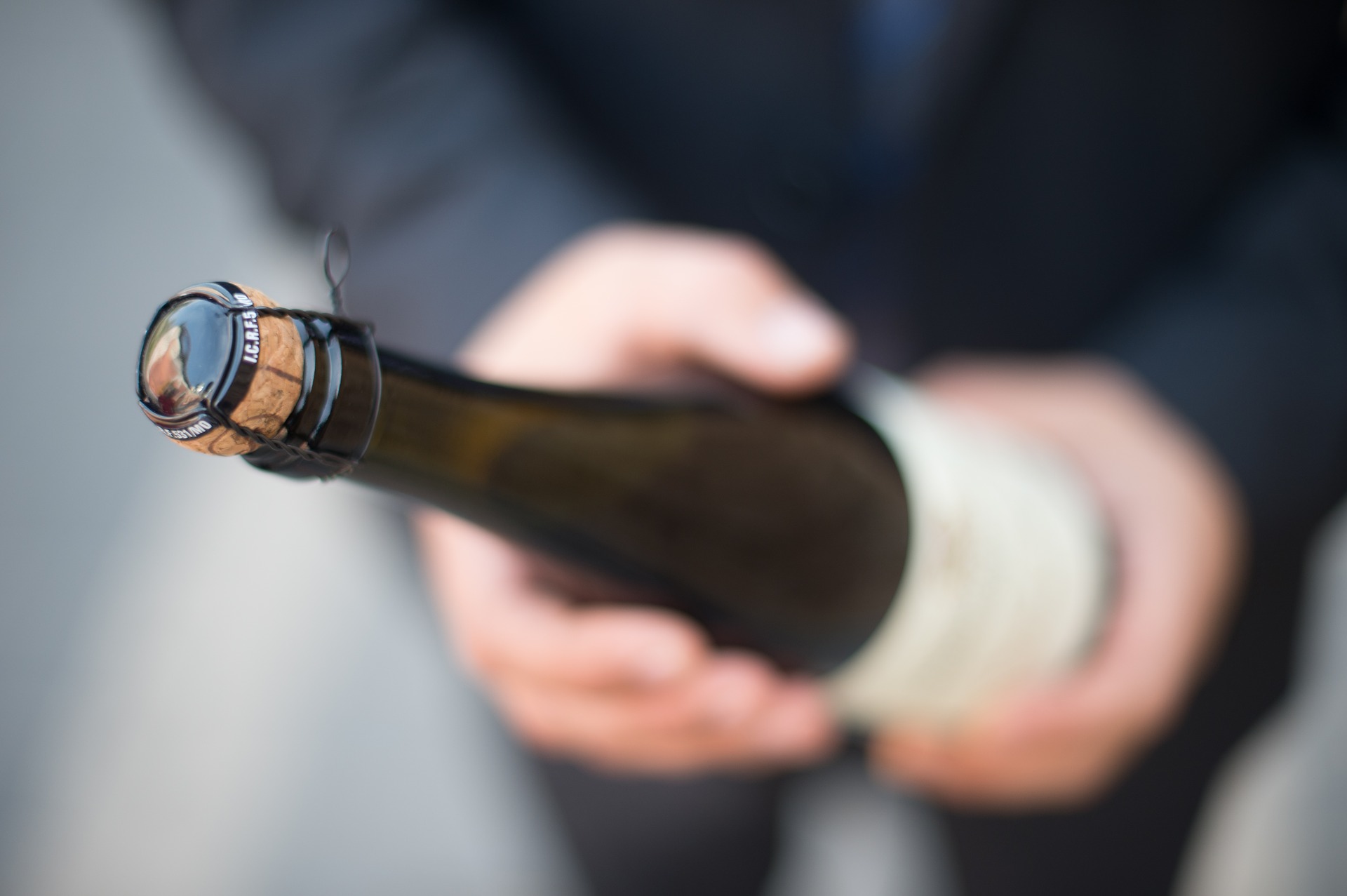
In recent years, we have increasingly seen sparkling wines made using secondary fermentation in the bottle among Japanese wines as well. Also known as the method used for Champagne, secondary fermentation in the bottle is a very labor-intensive process.
In recent years, among Japanese wines as well,"secondary fermentation in the bottle"is a method behind more and more sparkling wines we see today.
Also known as the method for making Champagne, secondary fermentation in the bottle isa very labor-intensive process.
Therefore, in order to share their story with consumers as much as possible, producers may explain each step of the process in meticulous detail.
For example,"remuage" (riddling).
When this is explained, if you find yourself thinking, "That sounds like an impressive process, but what does it actually mean...?" you might not be able to truly enjoy that sparkling wine.
Here, let us look at this"remuage"based on Takumi Onda's"Champagne Making in the Champagne Region (Latter Part, Part 2)".as a reference.
While it may be a bit niche, it is definitely a term worth remembering.
What Is Remuage?
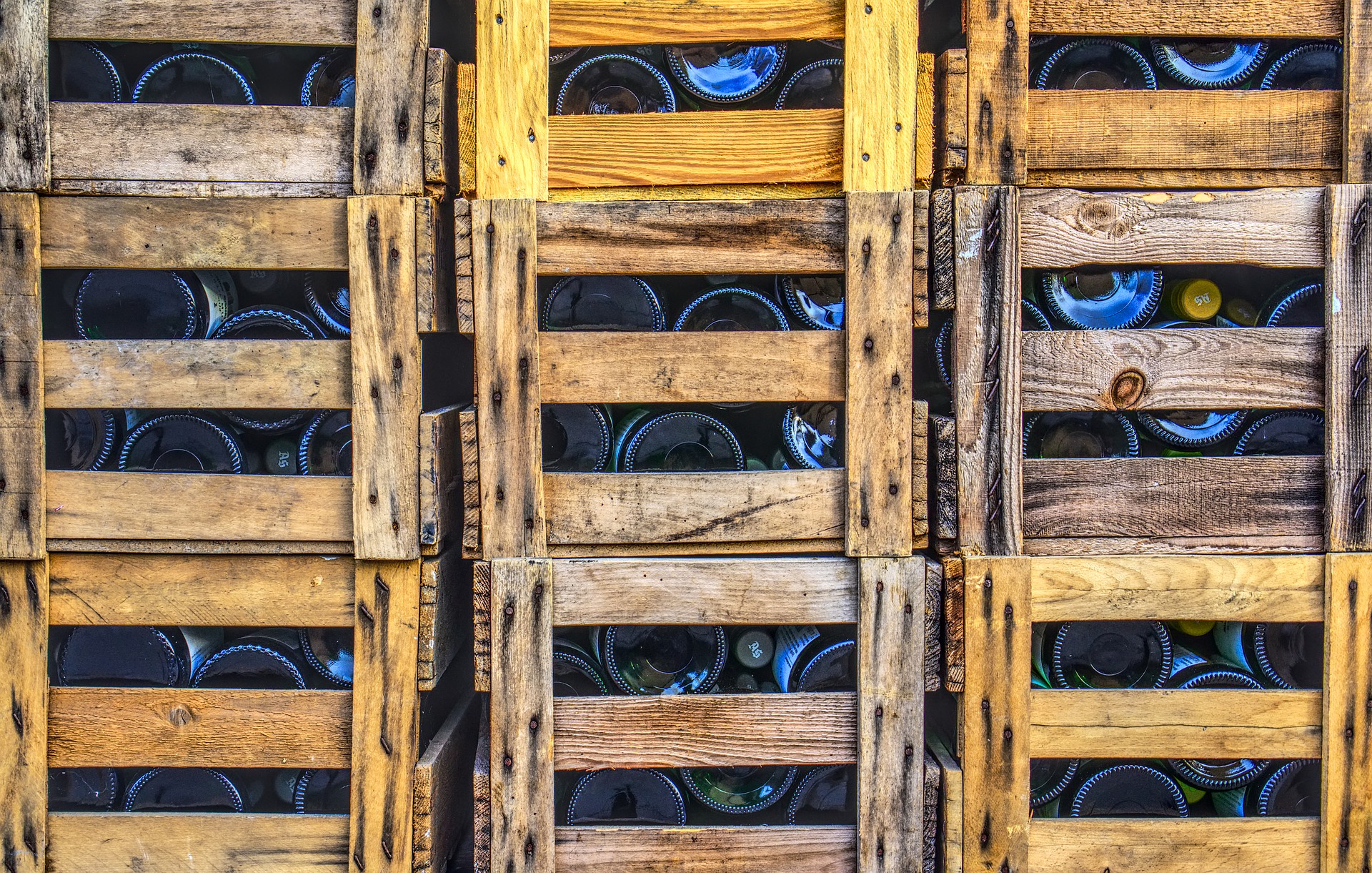
Remuage.
While those well-versed in wine will likely understand it, it is hardly a common term.
Remuage isa wine term translated as "dōbin" (riddling) in Japanese.
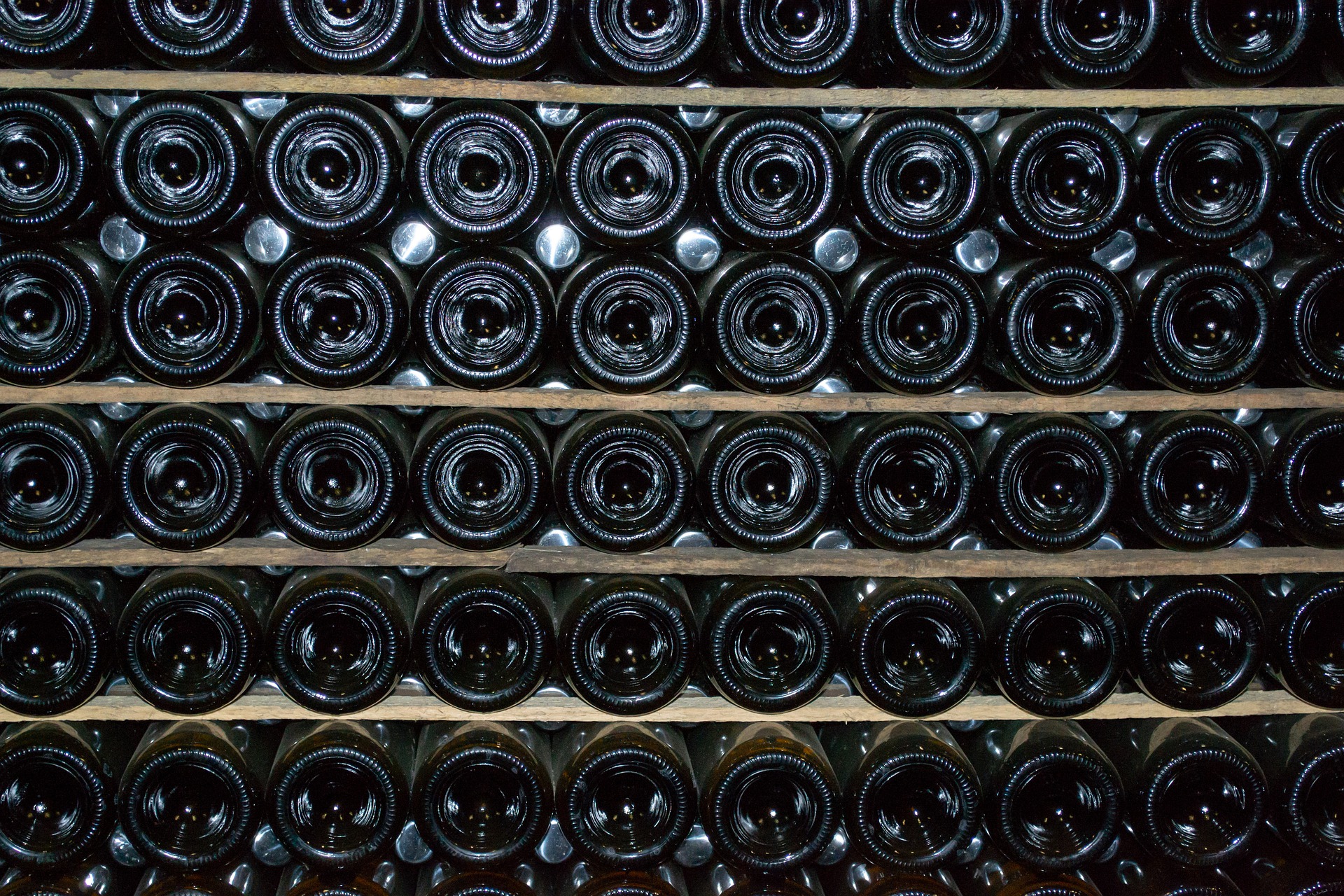
Due to the nature of the process, sparkling wine produced through secondary fermentation in the bottle leaves accumulated lees behind inside the bottle.
Although consuming the lees poses no problem at all, leaving them as-is can cause unstable bubble formation or severe cloudiness, preventingthe production of consistent, stable sparkling wine.
To address this,the technique known as remuage is believed to have been developed.
We will explain the details later, but remuage involves inserting wine bottles into a wooden rack called a pupitre and regularly rotating the bottles,The process of collecting sediment at the neck of the bottle.(Incidentally, the wooden rack called a pupitre mentioned earlier is set at an angle so that the sediment can collect easily in the bottle neck.)
In the method of secondary fermentation in the bottle, there is a process called disgorgement (dégorgement), and riddling (remuage) is performed to make this step easier.
By the way, riddling was invented by none other thanVeuve Clicquot Ponsardinand the cellar master who worked under her. (A famous story among Champagne lovers.)
Today, riddling tends to be automated, but small-scale producers and small Japanese wineries still perform riddling by hand.
The Riddling Process
Here, let's summarize the steps of manual, non-automated riddling.
- Shake the bottle to disperse the internal sediment into the liquid
- Mark the bottom of the bottle to clearly indicate the rotation position
- Insert the bottle neck-first into the hole of the pupitre (at a 20° angle from the horizontal)
- Left untouched for one week
- Shifting the bottle left and right to disperse the lees into the liquid without shocking the neck
- Concluded after dozens of riddling cycles
Described like this, it sounds complicated, but in short, riddling is simply the routine task of turning the bottle repeatedly over several days to slowly gather the lees in the neck of the bottle.
That said, when it comes to making truly high-quality sparkling wine, it is a critical process where no shortcuts can be taken, and in Champagne itself,strictly adhering to the riddling cycleis said to be crucial.
It is unclear whether any Japanese wine producers follow the riddling cycle so strictly, but for now, let's explain the riddling cycle.
Riddling Cycle
According to Mr. Onda, in Champagne, the riddling cycle is reportedly initiated one week after inserting the bottle into the pupitre.
According to this, bottles inserted into the pupitre are moved from the 1st to the 6th level depending on the cycle,A total of 45It seems to consist of a cycle like this:
- Stage 1: Rotate the bottle twice a day while applying vibration. (Cycles 1 to 12)
- Stage 2: Tilt the bottle one step closer to vertical and continue riddling. (Cycles 13 to 18)
- Stage 3: Tilt the bottle another step closer to vertical and continue riddling. (Cycles 19 to 24)
- Stage 4: Tilt the bottle yet another step closer to vertical and continue riddling. (Cycles 25 to 32)
- Stage 5: Bring the bottle to its final vertical angle and continue riddling. (Cycles 33 to 44)
- Stage 6: End of riddling. (Cycle 45)
In short,20° in Stage 1, 30° in Stage 2...This process of gradually increasing the angle so that the lees ultimately collect in the bottleneck is what is called the riddling cycle.
Some of these are automated, while others are done manually“There is no difference in quality,”some producers reportedly say, but others continue the process to preserve tradition.
While large Japanese producers might be able to automate, small-scale producers who value traditional methods are likely performing manual remuage cycles, even if not done in the exact same manner.
Remuage Trivia
Remuage is often glossed over in textbooks, but as you can see, it is a task involving a great deal of care and dedication.
Incidentally, when performing remuage, wearing protective goggles and glovesis reportedly considered standard practice.
In the past, because the quality of bottles and crown caps was insufficient, during remuage bottles could explode, leading to accidents.(Even though fermentation is finished, if live yeast continues fermenting, there is a possibility of explosion.)
Also, according to a report by Mr. Onda, in the past there were specialized craftspeople whose sole job was remuage,, turning about 50,000 bottles in a single day is truly astonishing.
Furthermore, the detail that specialists would unconsciously make bottle-turning gestures even after returning home was described as anoccupational habit anecdote heard from the locals...
Nowadays, someone doing that might be mistaken for a pachinko enthusiast, but it is proof of just how important that task was.
Knowing Even a Little Makes It Fun

Even if you don't know terminology for secondary fermentation in the bottle like remuage, sparkling wine isthoroughly delicious to drink.
That said, with the quality of Japanese wine improving in recent years, there is no doubt that more producers will be crafting sparkling wines made with secondary fermentation in the bottle.
While you don't need to study it at a professional level,it certainly doesn't hurt to pick up some “basic knowledge of secondary fermentation in the bottle.”
Starting with remuage, why not take a look into the various terms related to secondary fermentation in the bottle?
Reference
About the author