

In recent years, among the many Japanese wines available, wines brewed with wild yeasts (also called indigenous yeasts) have gained significant popularity.
Many wines fermented with wild yeasts tend to be highly evaluated compared to conventional wines, praised for having an "indigenous taste," "complexity," or allowing drinkers to "enjoy the authentic flavor of the grapes."
In fact, in recent years, research showing that "Non-Saccharomyces yeasts"—other than the "Saccharomyces cerevisiae yeasts" essential for alcoholic fermentation—contribute to the complexity of wine flavor has been drawing worldwide attention.
Because wild yeasts are particularly a treasure trove of non-Saccharomyces cerevisiae yeasts, some people even suggest that those unique flavors might be influenced by them.
Here, we would like to explain the effects of non-Saccharomyces cerevisiae yeasts that even natural wine lovers should know.
Saccharomyces cerevisiae Yeasts and Alcoholic Fermentation

Saccharomyces cerevisiae is a type of yeast well known for playing an active role primarily in alcoholic beverage production, including not only wine but also sake yeast, shochu yeast, whisky yeast, baker's yeast, and ale yeast.
To put its role simply, Saccharomyces cerevisiae breaks down the sugars contained in the must to generate carbon dioxide and ethyl alcohol.
It is an essential component for transforming non-alcoholic grape juice into wine.
Furthermore, because this yeast contributes not only to alcohol production but also to the aroma and flavor of the wine, strains are selected according to the grape variety, allowing winemakers to easily purchase them as selected dry yeasts for winemaking.
First, let us remember that many wine producers around the world carry out alcoholic fermentation using Saccharomyces cerevisiae selected specifically as wine yeasts.
About Non-Saccharomyces cerevisiae Yeasts

On the other hand, non-Saccharomyces cerevisiae yeasts are, as the name suggests, yeasts other than the Saccharomyces cerevisiae genus.
There are many non-Saccharomyces cerevisiae yeasts related to wine, but they mainly include...
- Candida yeasts
- Cryptococcus yeasts
- Rhodotorula yeasts
- Kloeckera yeasts
- Pichia yeasts, etc...
It is thought that these varieties, among others, exist.
These are yeasts that exist in nature and are believed to enter via grape skins, the vineyard environment, and the winery environment, making them yeasts that are almost certainly present in wild yeast fermentations.
Why Saccharomyces cerevisiae Is the Star of Fermentation

With so many yeasts involved in alcoholic fermentation of wine, why has attention focused solely on Saccharomyces cerevisiae?
First, in the early stages of alcoholic fermentation, the alcohol level is low, allowing various yeasts to be actively working in the must.
However, because most yeasts have low alcohol tolerance, once a certain alcohol level is reached, they perish one after another.
Ultimately, the yeast that survives alcoholic fermentation is considered to be Saccharomyces cerevisiae. (To use a marathon analogy, it is like a 50-person race where runners drop out one after another after the 20 km mark, leaving only a single runner.)
Additionally, with the arrival of "commercial cultured yeasts"—selected dry yeasts for winemaking—around the 1950s, winemakers worldwide became able to conduct alcoholic fermentation reliably and gained relatively free control over aroma and flavor. Consequently, it is also likely that attention turned toward "strains of Saccharomyces cerevisiae with new functions," leaving little interest in other yeasts.
The Actions of Non-Saccharomyces cerevisiae Yeasts

Non-Saccharomyces cerevisiae yeasts lose their stage along the way.
What kind of effects do they bring to wine?
First of all, in conventional winemaking, non-Saccharomyces cerevisiae yeasts have not been very welcome.
Fermentation becomes unstable and stops (stuck fermentation), they produce large amounts of off-flavor causes such as ethyl acetate and acetaldehyde, and wines made predominantly with non-Saccharomyces cerevisiae yeasts have dangerous flavors... Thus, it is believed that they produce results that are far from what could be called "sound wine."
As mentioned earlier, non-Saccharomyces cerevisiae yeasts enter the must as wild yeasts, so it may be easier to understand by imagining what is often called "faulty wine produced by neglectful winemaking mistaken for natural winemaking."
Non-Saccharomyces cerevisiae yeasts seemed to have almost no raison d'être in conventional winemaking.
Why have they come into the spotlight in recent years?
Beginning to Prove They Impart Complexity to Wine

In recent years, researchers around the world have focused on the effects on wine of non-Saccharomyces cerevisiae yeasts, which were originally thought to act mainly in a negative way.
According to researchers at Washington State University, when they selected and studied non-Saccharomyces cerevisiae yeasts, they found that they contribute positively to the final mouthfeel and flavor of the wine.
Furthermore, numerous studies have suggested that the final taste of the wine changes depending on the types and quantities of non-Saccharomyces cerevisiae yeasts. (Such as results from staged, stable fermentations where Saccharomyces cerevisiae yeast is added midway...)
What is interesting about this research on non-Saccharomyces cerevisiae yeasts is that "indigenous non-Saccharomyces cerevisiae yeasts" are having an influence.
Because the types and amounts of naturally occurring non-Saccharomyces cerevisiae yeasts vary depending on the terroir, it can be proven that even for grapes harvested from vineyards just 500 meters apart, the outcomes of wild yeast fermentation will differ.
Many producers say that "using commercial dry yeast is like erasing the taste of the land," and that opinion might not be entirely wrong.
If You Buy This Kind of Wine, Always Check the Producer
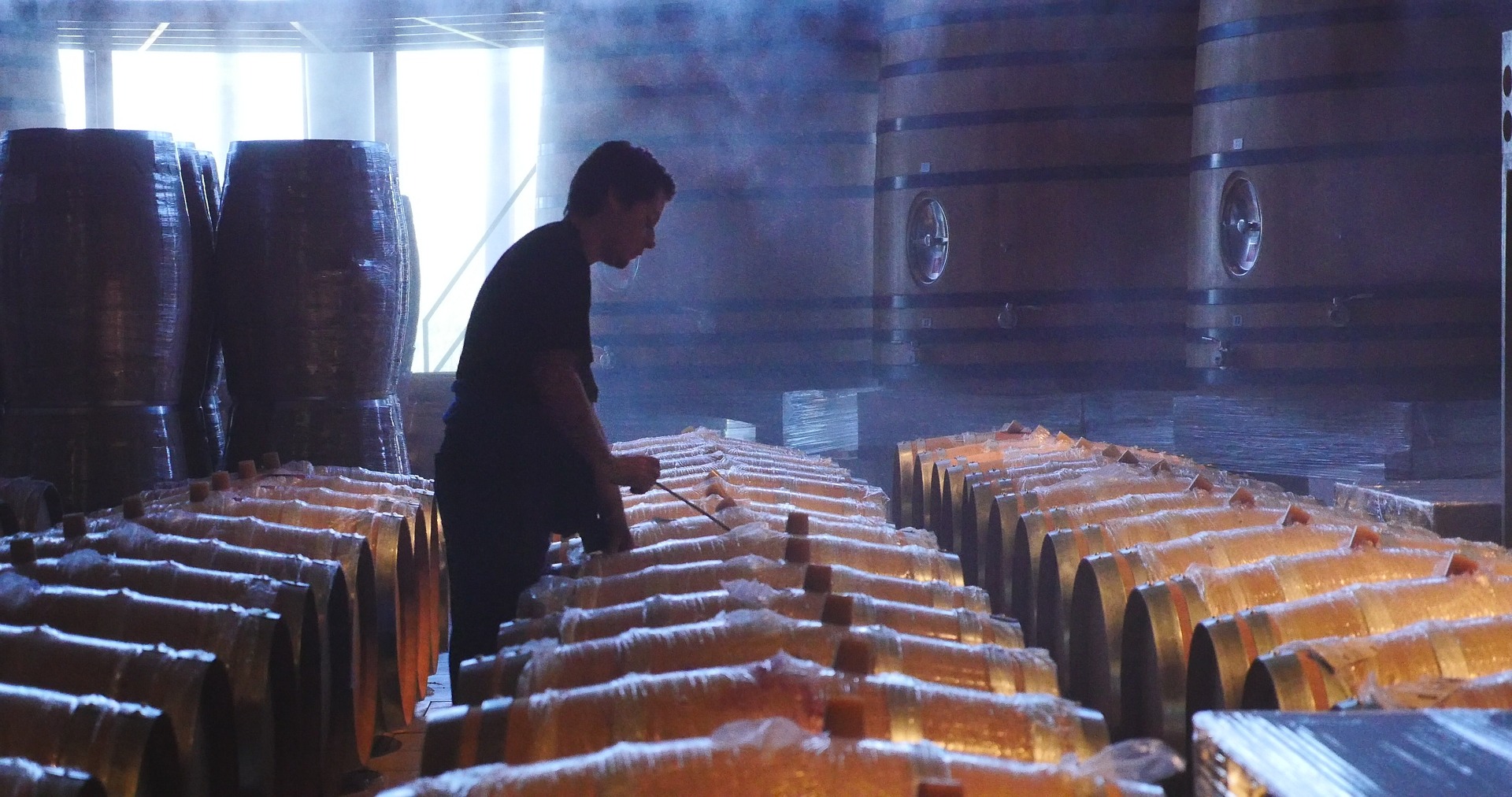
If non-Saccharomyces cerevisiae yeasts are used skillfully, they impart complex... and localized flavors to the wine.
Setting aside whether it tastes good or not, non-Saccharomyces cerevisiae yeasts may certainly be useful when creating an indigenous wine unique to that land.
However, on the other hand, what must not be forgotten is that without careful selection and thorough management of non-Saccharomyces cerevisiae yeasts, there is a risk of ultimately producing a faulty wine.
Most producers using wild yeasts who receive worldwide acclaim are people who "value quality," possessing scientific knowledge or rich experience in their background, and maintaining an attitude of closely attuning themselves to the wine.
As mentioned earlier, utilizing the power of non-Saccharomyces cerevisiae yeasts is a double-edged sword in winemaking.
For those who like this style of wine, rather than being swayed by buzzwords like "fermented with wild yeast," "accepting nothing other than natural winemaking," or "extremely rare with low production numbers because it's made with wild yeast," make sure to assess the producer's philosophy and technique before picking up a bottle.
Gaining Knowledge About Wild Yeasts Is Fascinating!

Much of the complexity of wild yeasts remains unexplained, and the mechanisms of non-Saccharomyces cerevisiae yeasts are not yet fully elucidated.
The fact that humans cannot completely control it is another fascinating aspect of wine.
Why not try drinking Japanese wine made with wild yeasts while keeping non-Saccharomyces cerevisiae yeasts in mind?
It might taste a little different from usual.
References
Verification of Various Winemaking Technologies for Improving Koshu Wine Quality
https://littlewine.co/blogs/editorial/natural-fermentation-in-win