
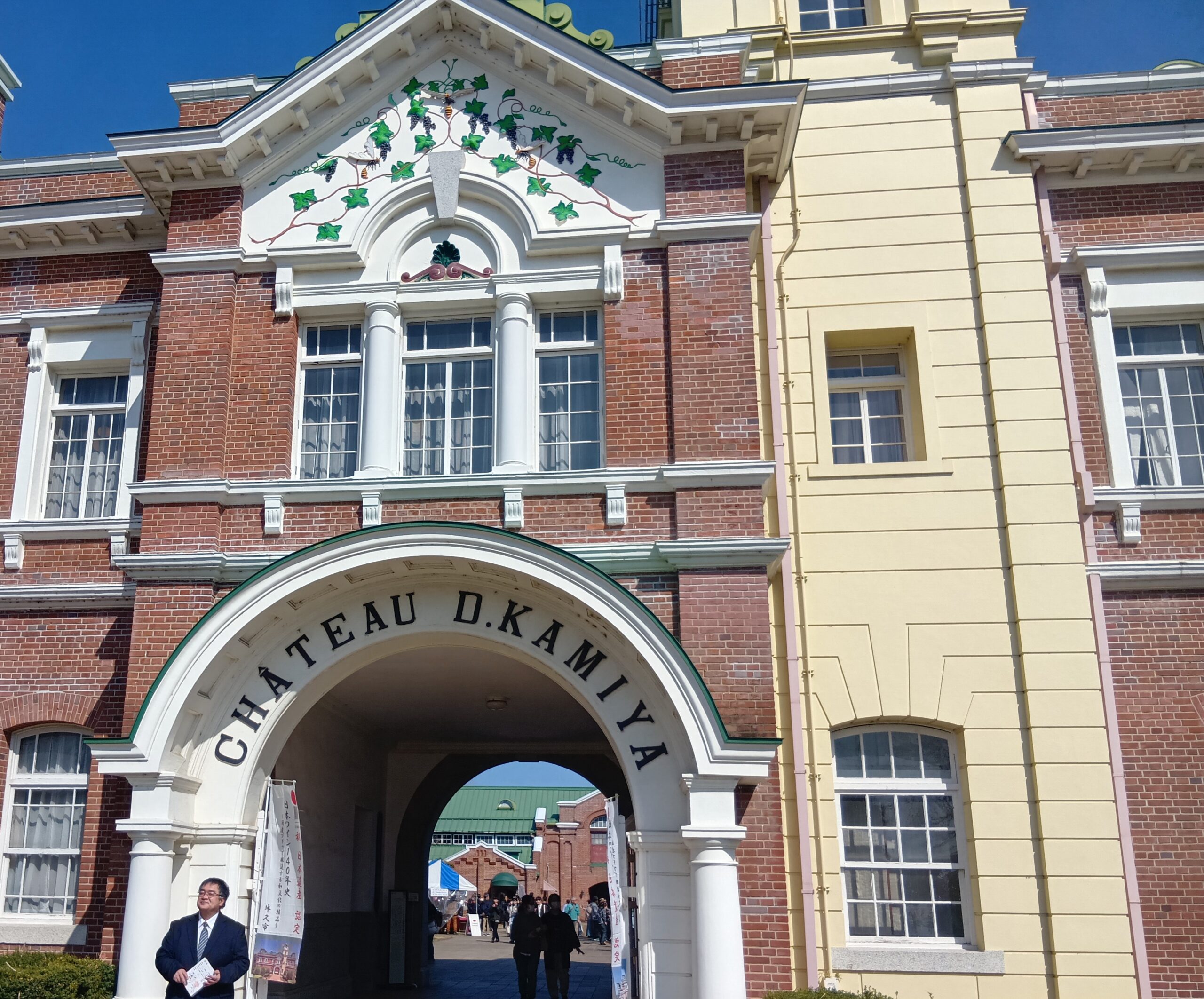
Recently, Ibaraki Prefecture hosted a tour for wine and restaurant industry professionals titled "Enjoying Ibaraki Wine and Local Ingredients: Special Chateau Kamiya Tour & Pairing Lunch."
Ibaraki Prefecture is one of Japan's leading agricultural powerhouses, boasting the third-highest agricultural output in the country.
Furthermore, endowed with the sea, mountains, history, and culture, it has also begun to draw attention in recent years as a sightseeing destination.
Yet, did you know that Ibaraki Prefecture is actually an outstanding wine region?
On this tour, participants toured Chateau Kamiya, an indispensable chapter in the history of Ibaraki wine, and enjoyed a pairing lunch featuring Ibaraki wine and locally produced ingredients.
Here, we report on the wines and ingredients that showcase a vital facet of Ibaraki's appeal.
The History and Present State of Ibaraki Wine
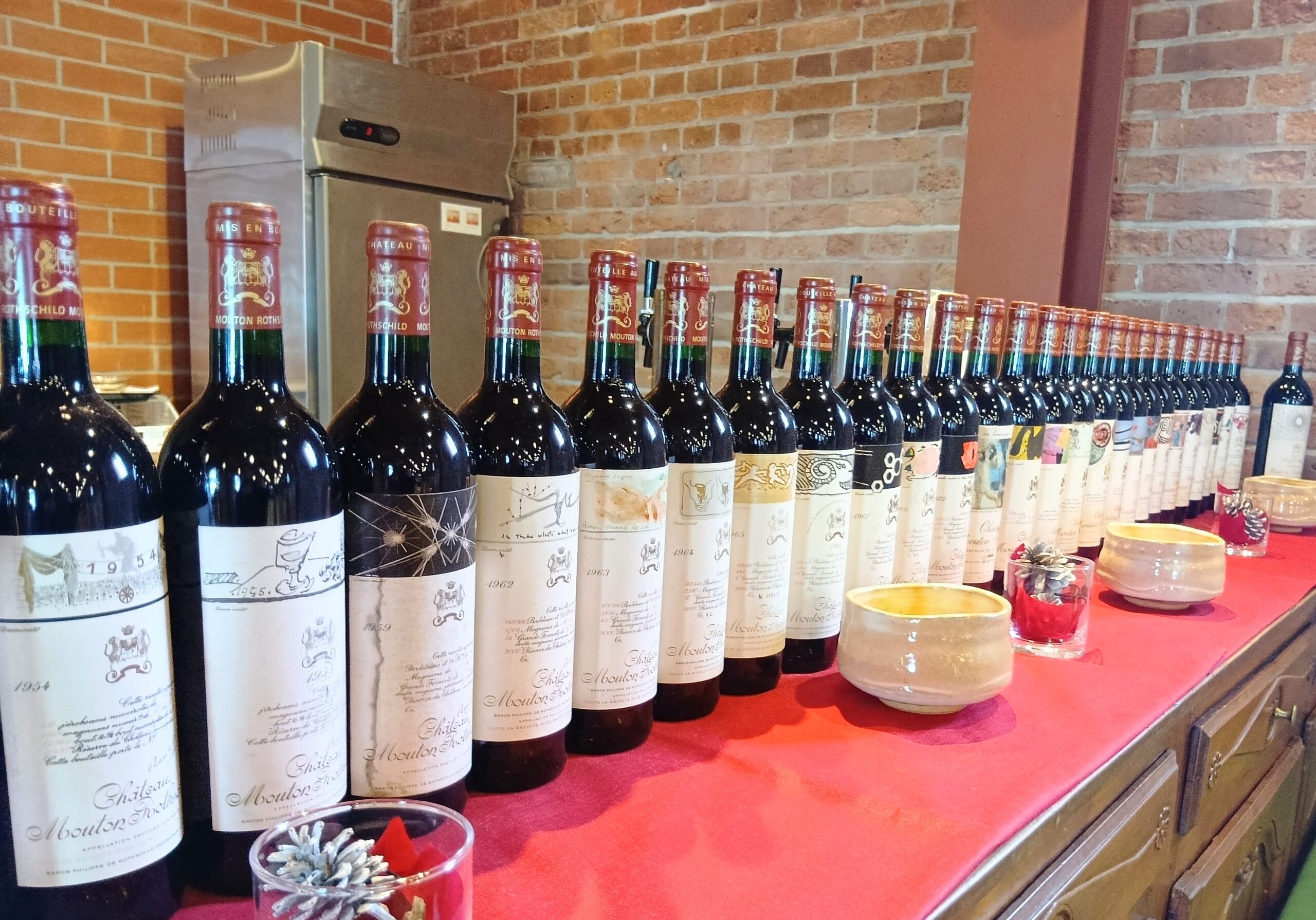
While many people might picture Ibaraki Prefecture as a new wine region, it actually possesses a long history of grape cultivation and winemaking.
Moreover, the history of Ibaraki wine is inextricably linked to the history of Chateau Kamiya.
It all began with the massive hit of Denbei Kamiya's "Hachijirushi Kozan Budoshu," which the Kamiya Bar founder created and launched in 1881.
Harboring the dream of "brewing this wine in Japan to turn it into a major industry," he completed Ushiku Winery (now Chateau Kamiya) in 1903.
Cultivating roughly 119 hectares of wilderness in Inashiki District, Ibaraki Prefecture (now Ushiku City) and planting 6,000 grape saplings, wine grapes were cultivated on a scale unmatched in Japan.
Equipped with a narrow-gauge railway connecting the vineyards, winery, and Ushiku Station, the facility enabled the transit of factory workers and high-volume transportation.
At the time, it was said to be the first winery in Japan to operate an integrated manufacturing process from grape cultivation and winemaking to cellaring, bottling, and shipping.
However, due to factors such as post-war land reforms, much of the 160-hectare estate vineyards turned into residential land, and Ibaraki Prefecture's wine industry temporarily declined.
Afterward, driven by the dedication of volunteers and experts who sought to make quality wine from high-quality grapes and grow Ibaraki into one of Japan's premier wine-producing regions, wineries began to proliferate throughout the prefecture.
Today, there are 13 wineries in Ibaraki Prefecture, ranking 6th nationwide in number.
Expectations are high that in the near future it may surpass Iwate Prefecture, which currently sits in 5th place.
Furthermore, with the establishment of the Ibaraki Wine Association in April 2025 aimed at promoting the prefecture's wine industry and fostering its culture, Ibaraki Prefecture is actively forging ahead as a distinguished Japanese wine region.
A Chateau Kamiya Tour Revealing the Depth of Its History

The tour began with a visit to Chateau Kamiya.
Three of Chateau Kamiya's structures—the Chateau Main Building (housing the former administration office), the former fermentation room, and the former storage cellar—are designated Important Cultural Properties of Japan, and it is said to be the only designated Important Cultural Property where grape winemaking takes place.
Guided by Chateau Kamiya Director Soda, the group toured areas usually closed to the public, such as the VIP guest rooms of the main building.
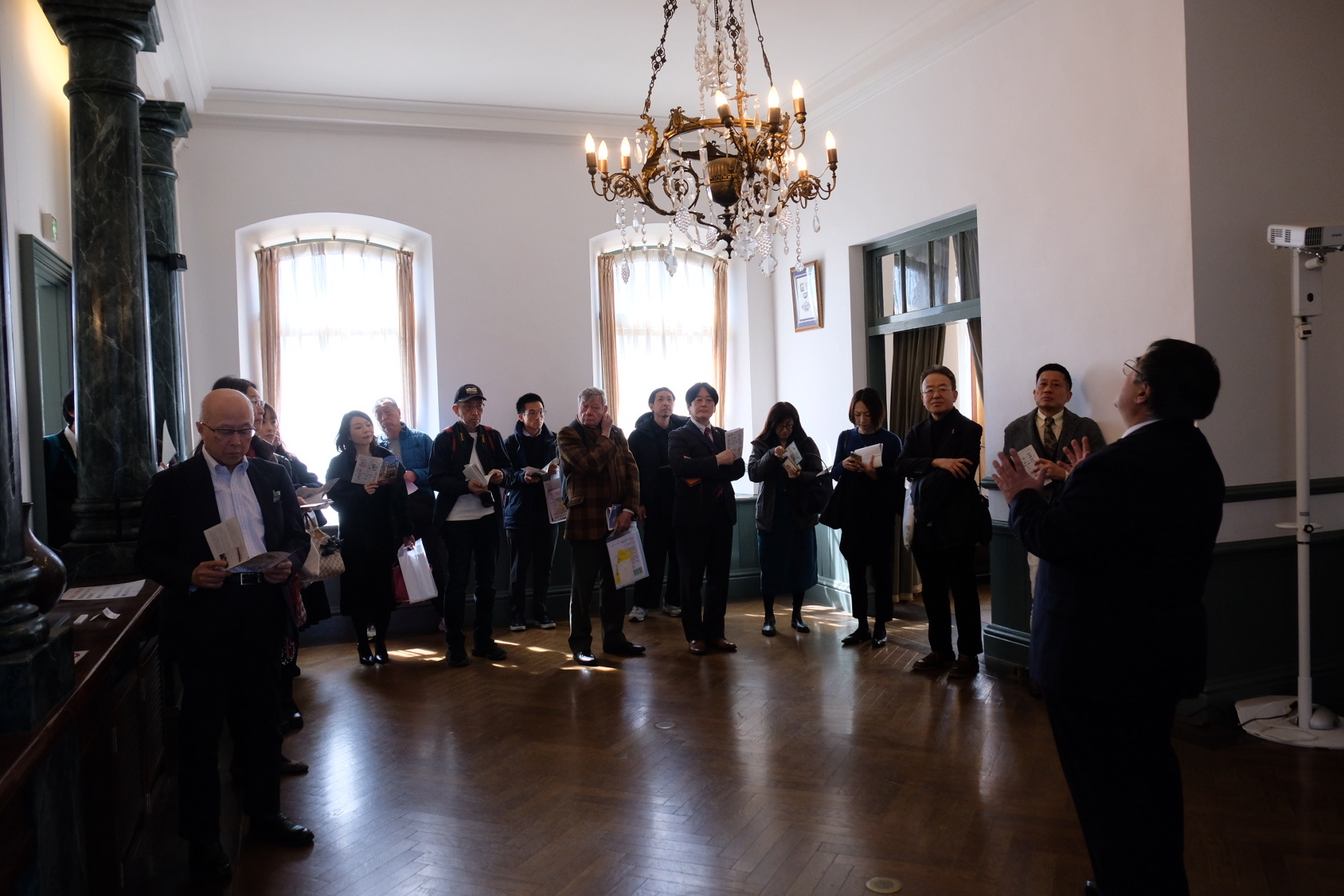
From the nostalgic presence of the main building reminiscent of a French chateau, to the meticulous appointments in every room and the historical weight of wine parties held with numerous dignitaries, the atmosphere felt here was an invaluable, one-of-a-kind experience.
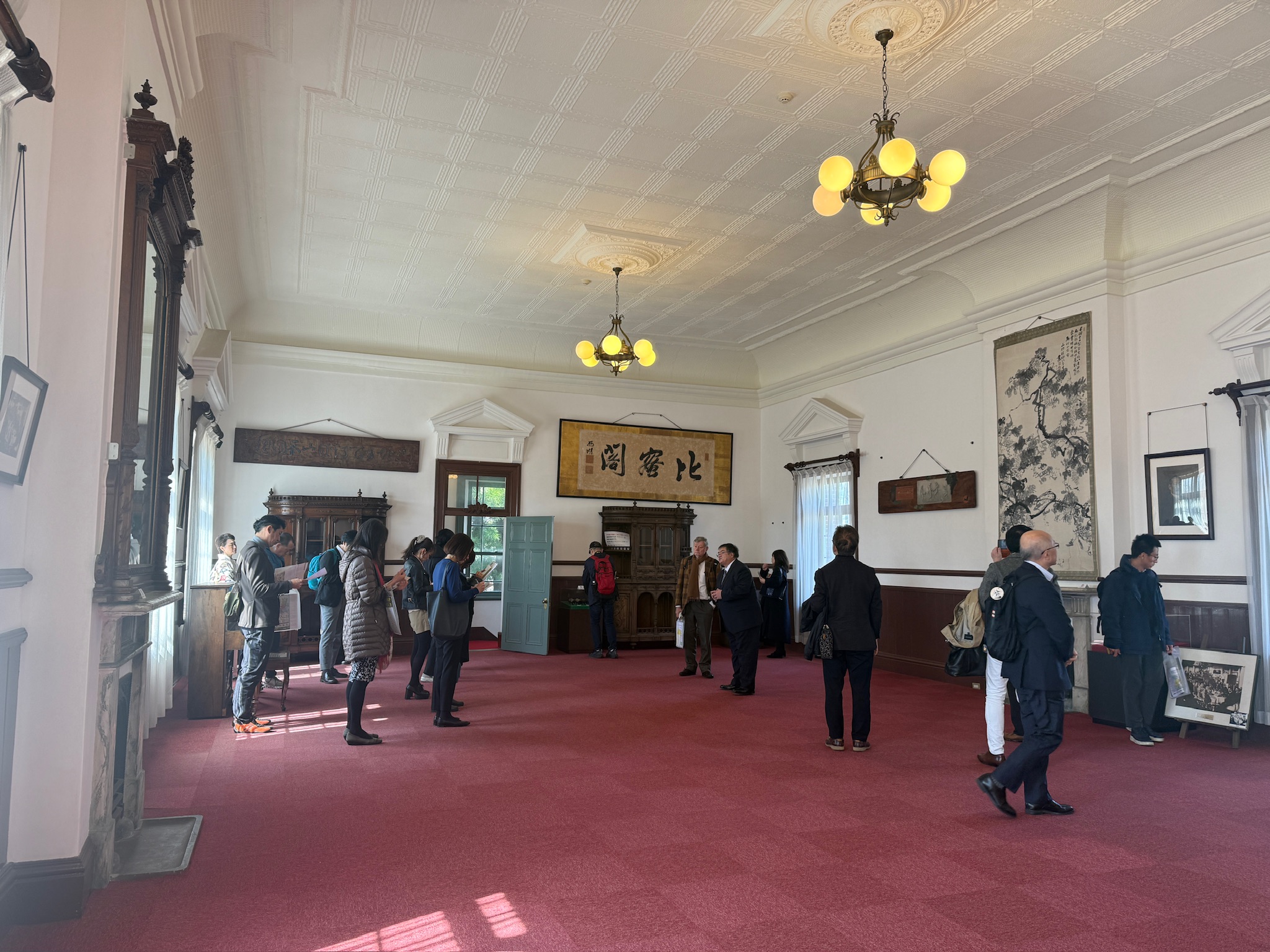
In the grand hall, Himitsukaku, which served as a social salon, exhibits include works by the artist and gourmet Kitaoji Rosanjin, a celebratory banquet photo with Taisuke Itagaki taken in 1913, and a receipt certificate from 1919 when Denbei Kamiya donated 668 art pieces to Tokyo National Museum in Ueno—strongly conveying how pivotal Denbei Kamiya was in the development of Japanese culture.
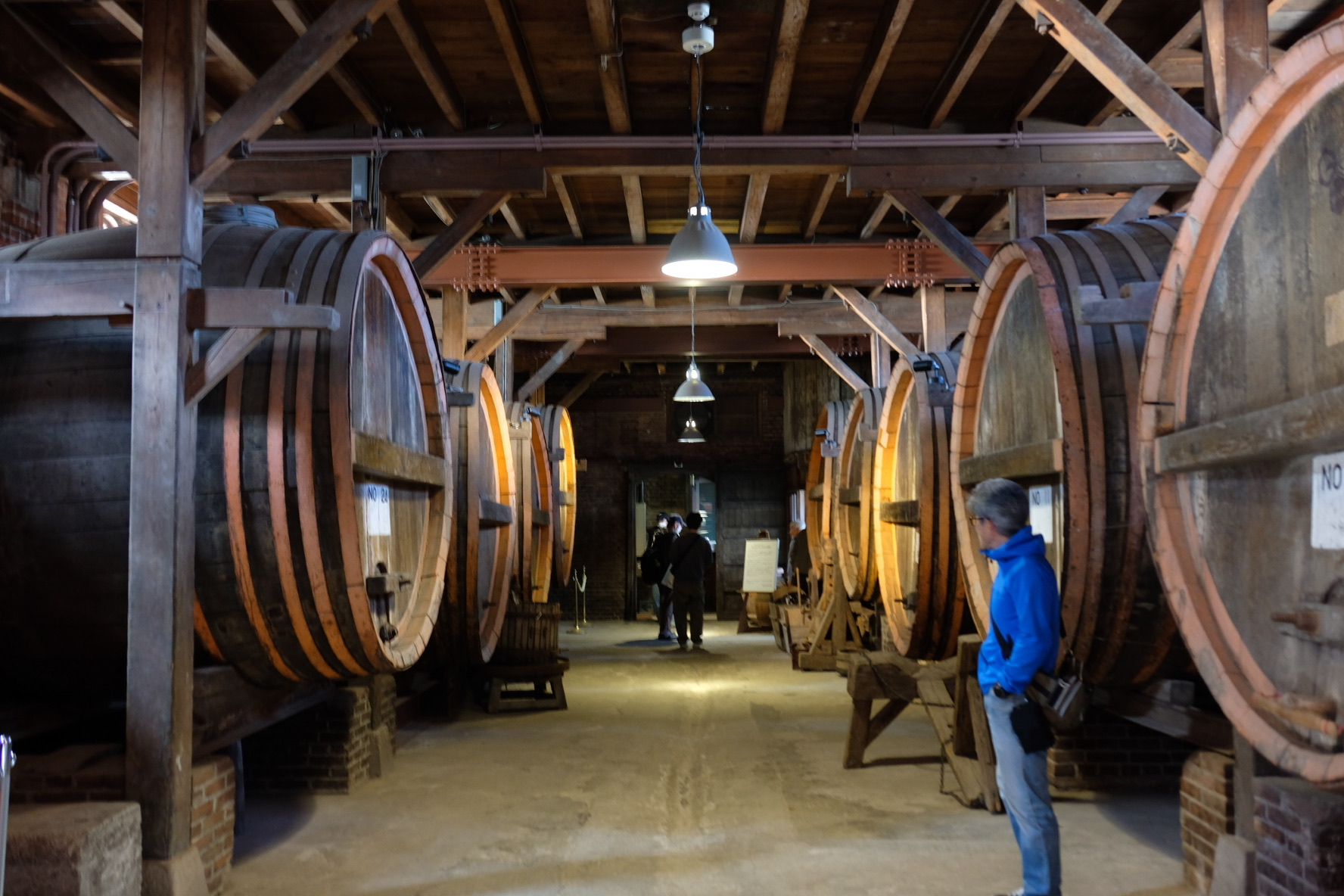
Afterward, the tour proceeded to the former fermentation room, tightly packed with massive vats.
Boasting a production capacity of 260,000 bottles, these vats must have been cutting-edge in Japan at the time.
A variety of tools used in winemaking back then were displayed in the former fermentation room; particularly striking was a pupitre (riddling rack) in the traditional-method sparkling equipment, crafted by Japanese artisans replicating authentic models.
One could sense Chateau Kamiya's commitment to adopting authentic, cutting-edge French technology right from that era.
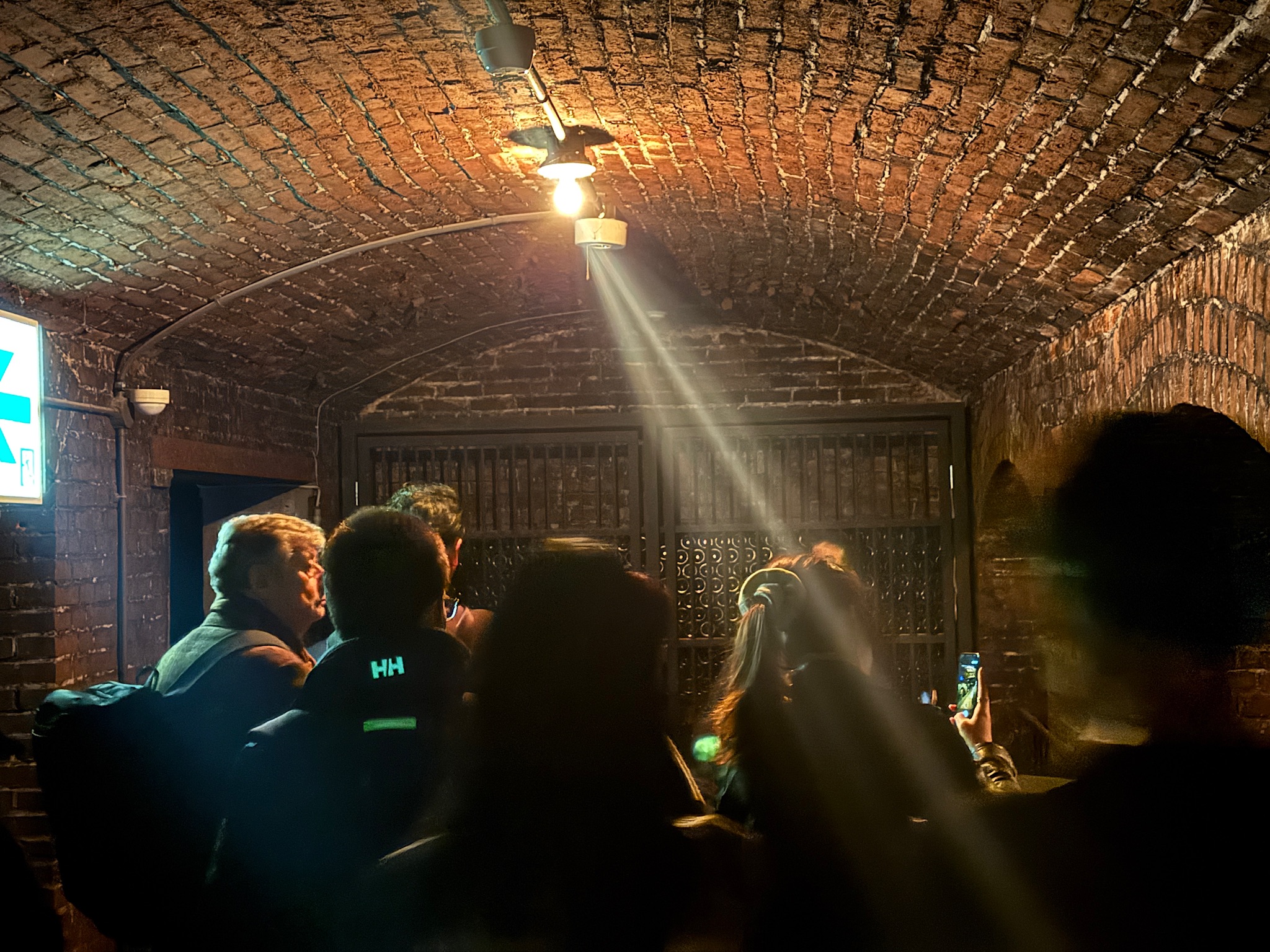
In the former underground storage cellar, wooden casks are lined in rows, their unique atmosphere overwhelming the onlooker.
Further inside the former storage cellar lies the winery of Chateau Kamiya, evoking deep feelings knowing that wine is still being produced in this very space today.
Concluding the tour, Director Soda commented: "Although Ibaraki's wine industry once waned, momentum to craft high-quality wine has surged, and we are moving toward becoming a holy ground for wine. We want to work hard through trial and error to create wines that express Ibaraki Prefecture's terroir."
A visit to Chateau Kamiya makes one realize how it has continually contributed not only to Ibaraki Prefecture's wine industry, but also to the development of its cultural industries.
Savoring Ibaraki's Gourmet Delights: Pairing Lunch
Following the tour of Chateau Kamiya, participants moved on to a pairing lunch themed "Discover Ibarakis Terroir," showcasing Ibaraki's gourmet offerings.

The venue was Restaurant Chateau Kamiya, which revived the former Chateau Kamiya winery storage cellar for modern times.
The modern-classic building creates a nostalgic ambiance.
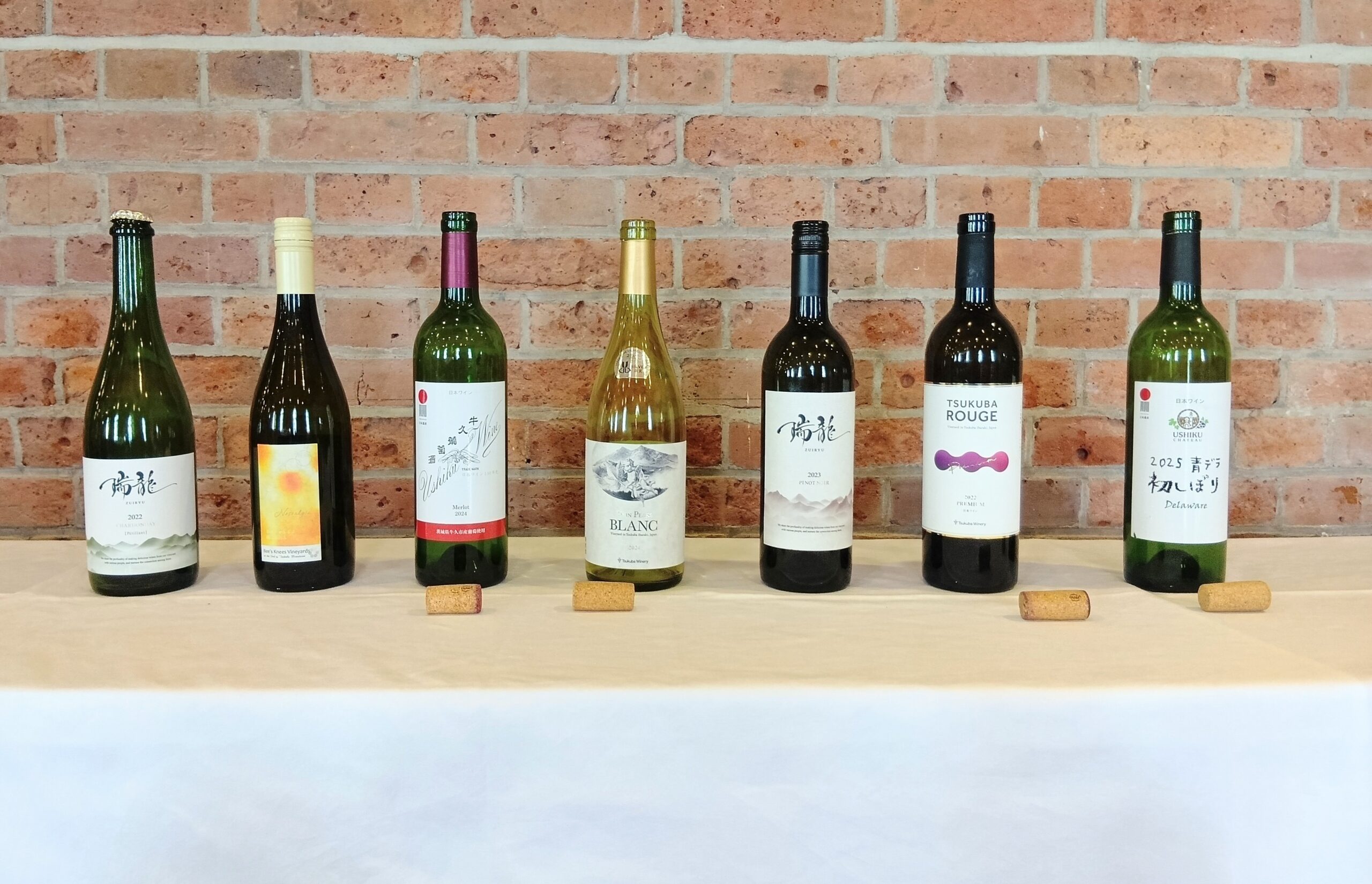
Seven varieties of Ibaraki wine were served during the pairing lunch:
- Buryu Winery / Zuiryu Chardonnay Petillant 2022
- Bee’s Knees Vineyards & Winery / Nostalgia 2023
- Chateau Kamiya / Ushiku Budo-shu Merlot 2024
- Tsukuba Winery / TWIN PEAKS BLANC 2024
- Buryu Winery / Zuiryu Pinot Noir 2023
- Tsukuba Winery / TSUKUBA ROUGE PREMIUM 2022
- Chateau Kamiya / 2025 Ao Dela Hatsu Shibori Delaware
The wines were explained by Mitsuhiro Anzo, Executive Winemaker at Mercian Corporation.
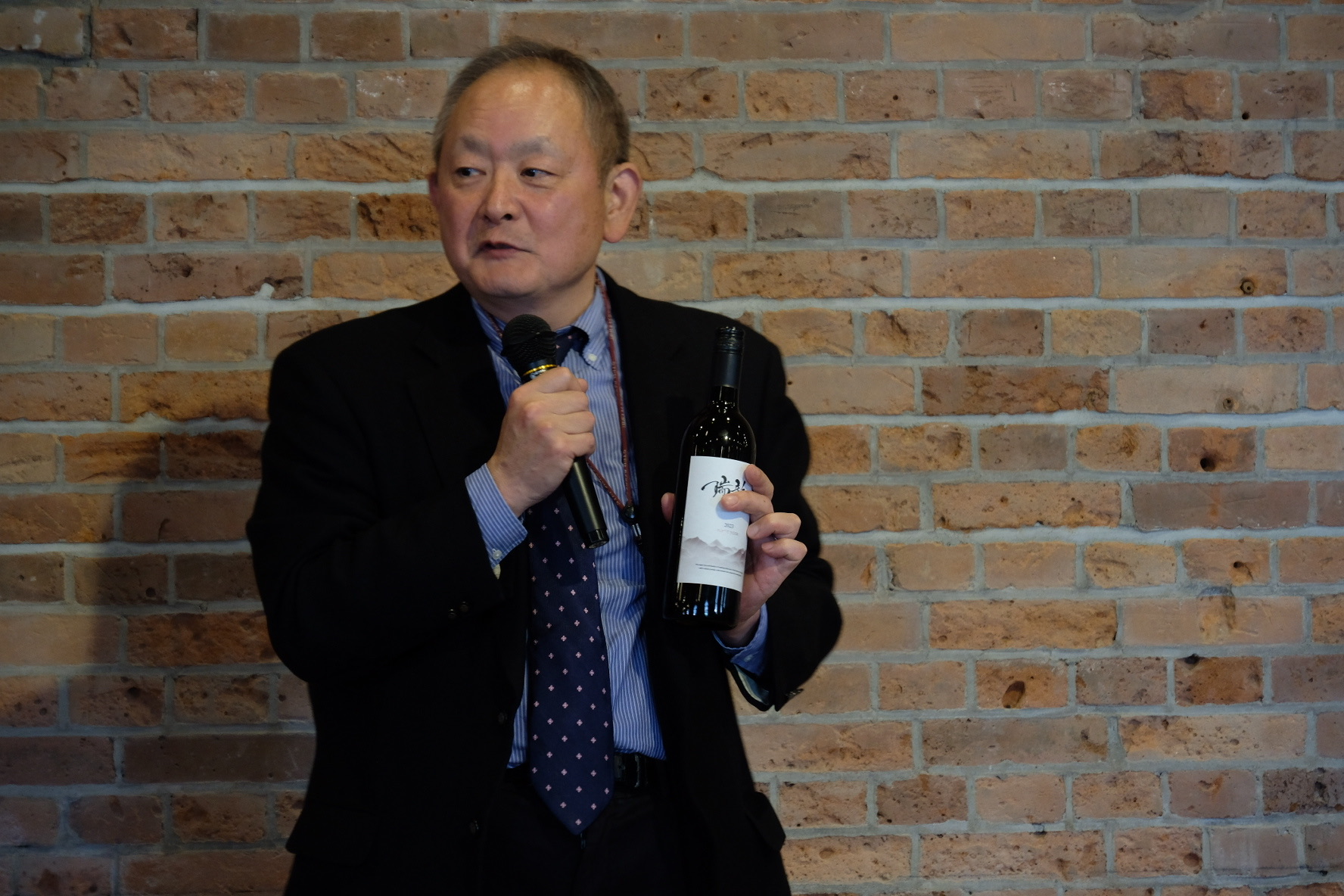
A native of Mito City, Ibaraki Prefecture, he was appointed an "Ibaraki Ambassador" by Ibaraki Prefecture in September 2023.
The meal was a full-course French dinner abundantly featuring ingredients produced in Ibaraki Prefecture.

The cuisine was prepared by Fumihiko Ohno, a food advisor and special lecturer of Western cuisine at Hattori Nutrition College, who is also a native of Ushiku, Ibaraki Prefecture.
The course consisted of seven dishes in total, with the pairing wines selected by Mr. Anzo through extensive trial and error to match the local Ibaraki Prefecture wines.
Carrot Mousse and Pork Rillettes x Buryu Winery / Zuiryu Chardonnay Petillant 2022

The first dish was Carrot Mousse and Pork Rillettes.
The carrot mousse was made using organic carrots, Okukuji Shamo chicken, and Kasumigaura caviar, topped with consommé gelee and fleur de sel.
The pork rillettes was an elaborate dish prepared by simmering Hitachi no Kagayaki, Ibaraki Prefecture's branded pork, for four hours.
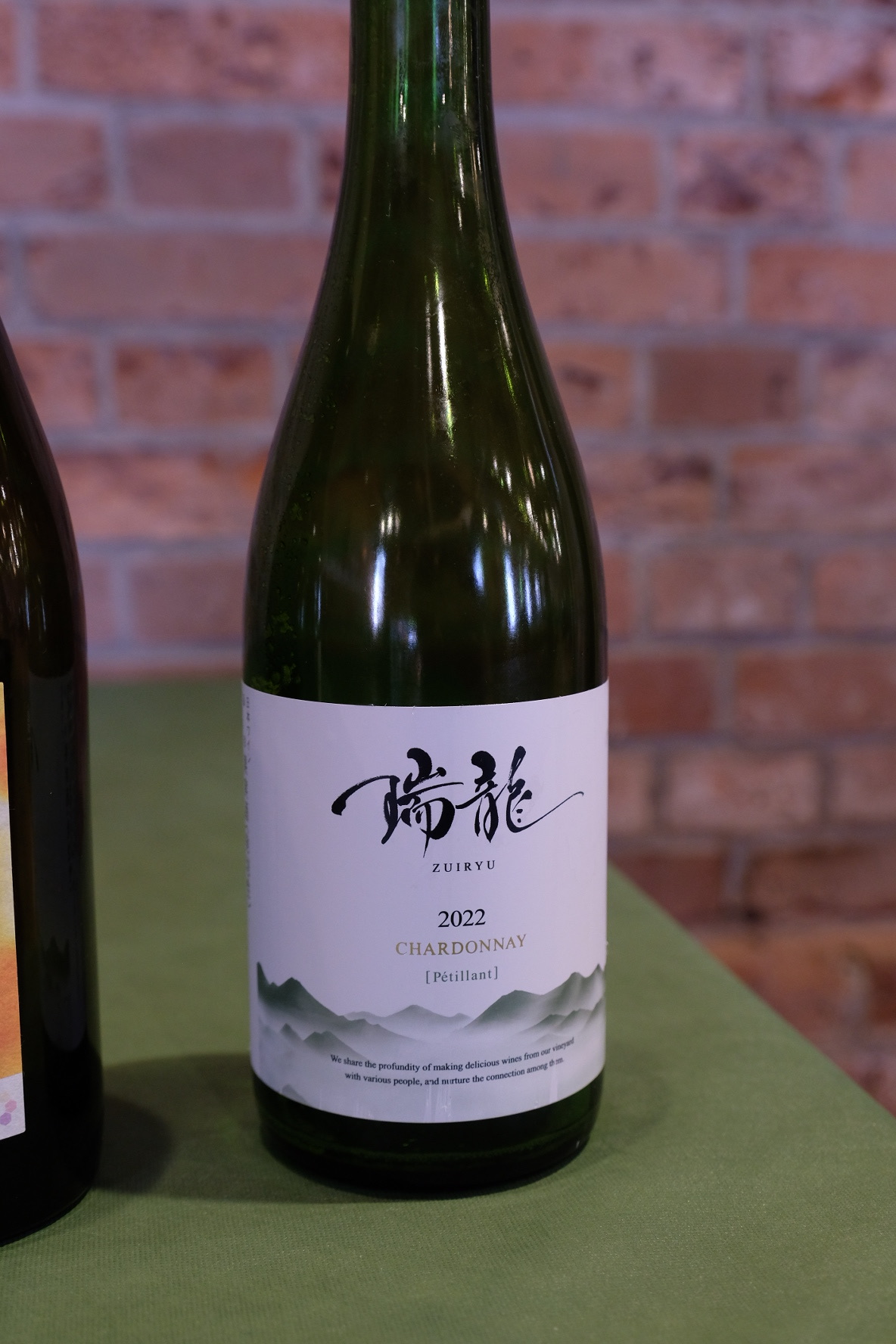
Zuiryu Chardonnay Petillant 2022 delivers aromas of green apple and citrus, a soft mouthfeel characteristic of a pétillant, and plentiful acidity providing a fresh, elegant impression.
Pairing
Pairing Zuiryu Chardonnay Petillant 2022 with the carrot mousse was a pleasant match where the savory nuance of the consommé lingered gently on the palate.
The soft mouthfeel harmonized smoothly.
Meanwhile, with the pork rillettes, Zuiryu Chardonnay Petillant 2022 gently expanded the savory umami, making for an attractive pairing.
Because the rillettes had no gamey smell whatsoever, the flavors did not clash, and the pétillant's plentiful acidity provided a clean, refreshing finish for a delightful pairing.
Hitachi no Kuni Mackerel with Hitachi Beef x Bee’s Knees Vineyards & Winery / Nostalgia 2023

Hitachi no Kuni Mackerel is Ibaraki Prefecture's first offshore marine-farmed fish, known for having an extremely low risk of Anisakis parasites, allowing it to be consumed raw.
The beef was Ibaraki Prefecture's pride, the branded beef Hitachi Beef Kirameki.
It was an innovative and unique dish combining the mackerel, seasoned with spices, herbs, and salt, with the Hitachi Beef, accented with summer orange and pomelo.
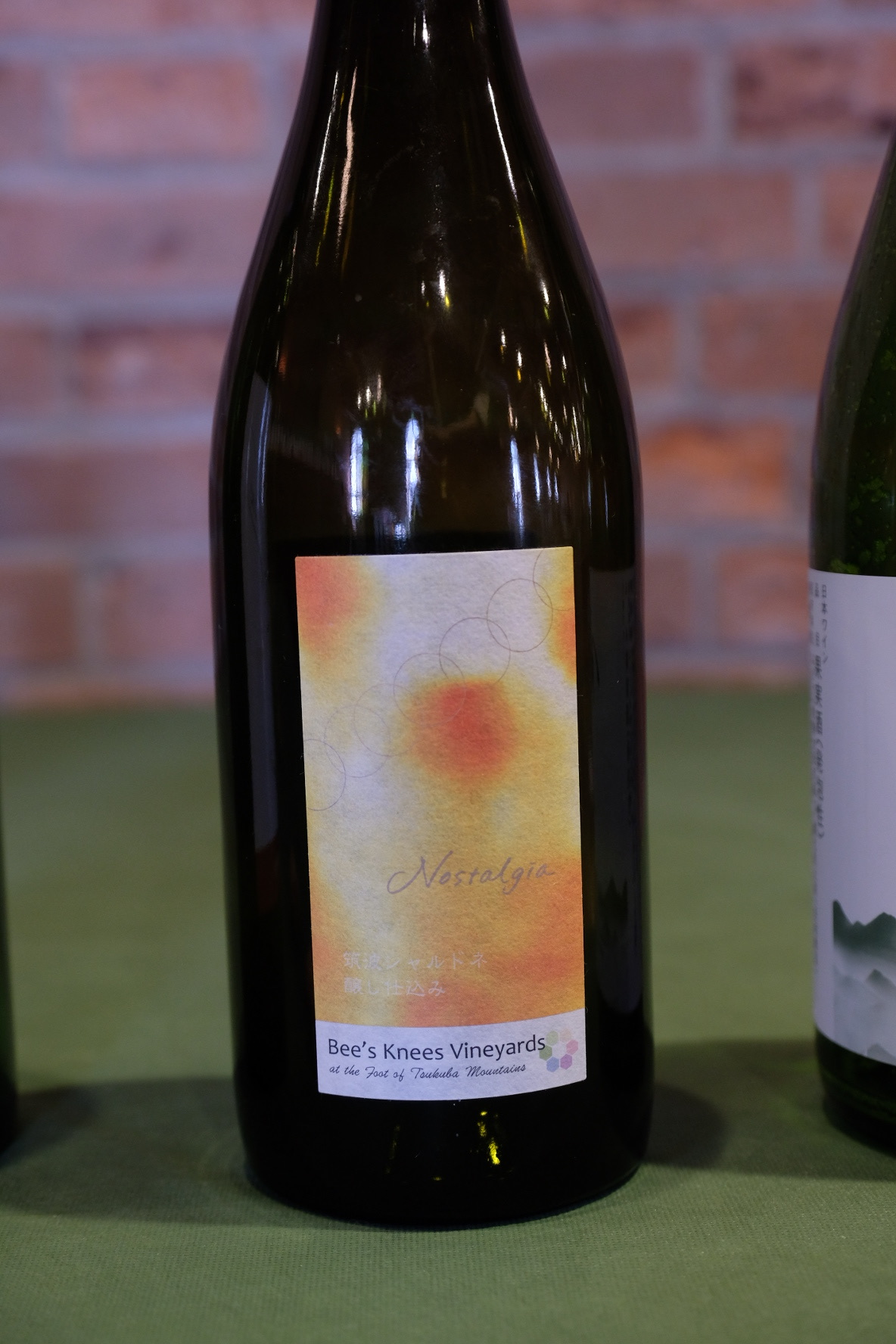
Paired with this was Nostalgia 2023 from Bee’s Knees Vineyards & Winery.
It is a refreshing orange wine revealing aromas of apricot and honey alongside herbal nuances.
Possessing subtle bitterness and umami, this unique wine reveals increasing fruit sweetness and salinity as its temperature rises.
Pairing
Hitachi no Kuni Mackerel and Hitachi Beef showed an unexpectedly wonderful compatibility.
Deep in umami, these two refined ingredients resonated together in a surprising dish.
Pairing Nostalgia 2023 with it further accentuated the complexity and umami of the cuisine.
The subtle bitterness harmonized with the citrus in the dish, and the fresh acidity cleanly washed away the richness of the ingredients, making for a marvelous pairing.
Neither red, white, nor rosé.
The delightful harmony with an orange wine made this a pairing that wine lovers must try.
Shabu-shabu of Hitachi Beef in Consommé x Chateau Kamiya / Ushiku Budo-shu Merlot 2024
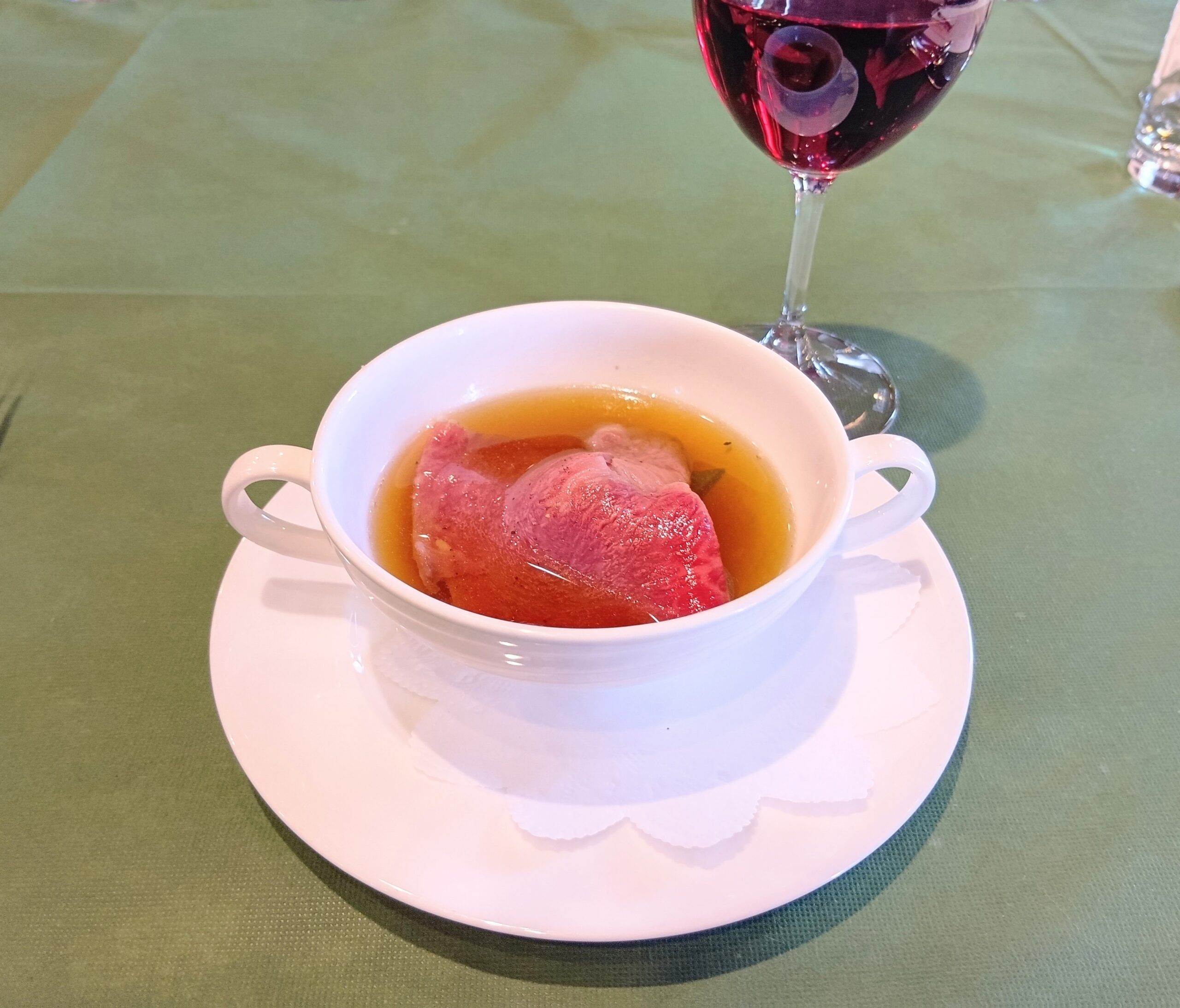
The beef featured was Hitachi Beef Kirameki.
Pouring consommé broth over it just before eating drew out an exquisite texture and umami in a dish that was simple yet profoundly deep.

The wine paired with this was Ushiku Budo-shu Merlot 2024.
Chateau Kamiya has had a long relationship with Merlot, and great expectations are held for the future evolution of this winery's Merlot.
Ushiku Budo-shu Merlot 2024 features distinctive aromas with a classically styled herbaceous note, complemented by spice and berry fruit flavors that create a complex impression.
It has a medium body with plentiful acidity and tannins, allowing one to enjoy an overall elegant flavor profile.
Pairing
The Hitachi Beef shabu-shabu was finished to melt-in-the-mouth tenderness.
It was an exquisite dish that felt as though one were savoring only the finest nuances of Hitachi Beef fat.
While delicate, the Hitachi Beef still possessed the inherent power characteristic of fine beef.
Balancing well with the tannins of Ushiku Budo-shu Merlot 2024, the consommé's umami harmonized with the wine's fruitiness to achieve a pairing far more well-balanced than imagined.
In addition, the vegetables used in the dish matched exceptionally well with Ushiku Budo-shu Merlot 2024.
By pairing it with the dish, the wine's appeal was beautifully highlighted.
Flounder and Hitachi no Kuni Spiny Lobster Mousse with Sauce Albert x Tsukuba Winery TWIN PEAKS BLANC 2024
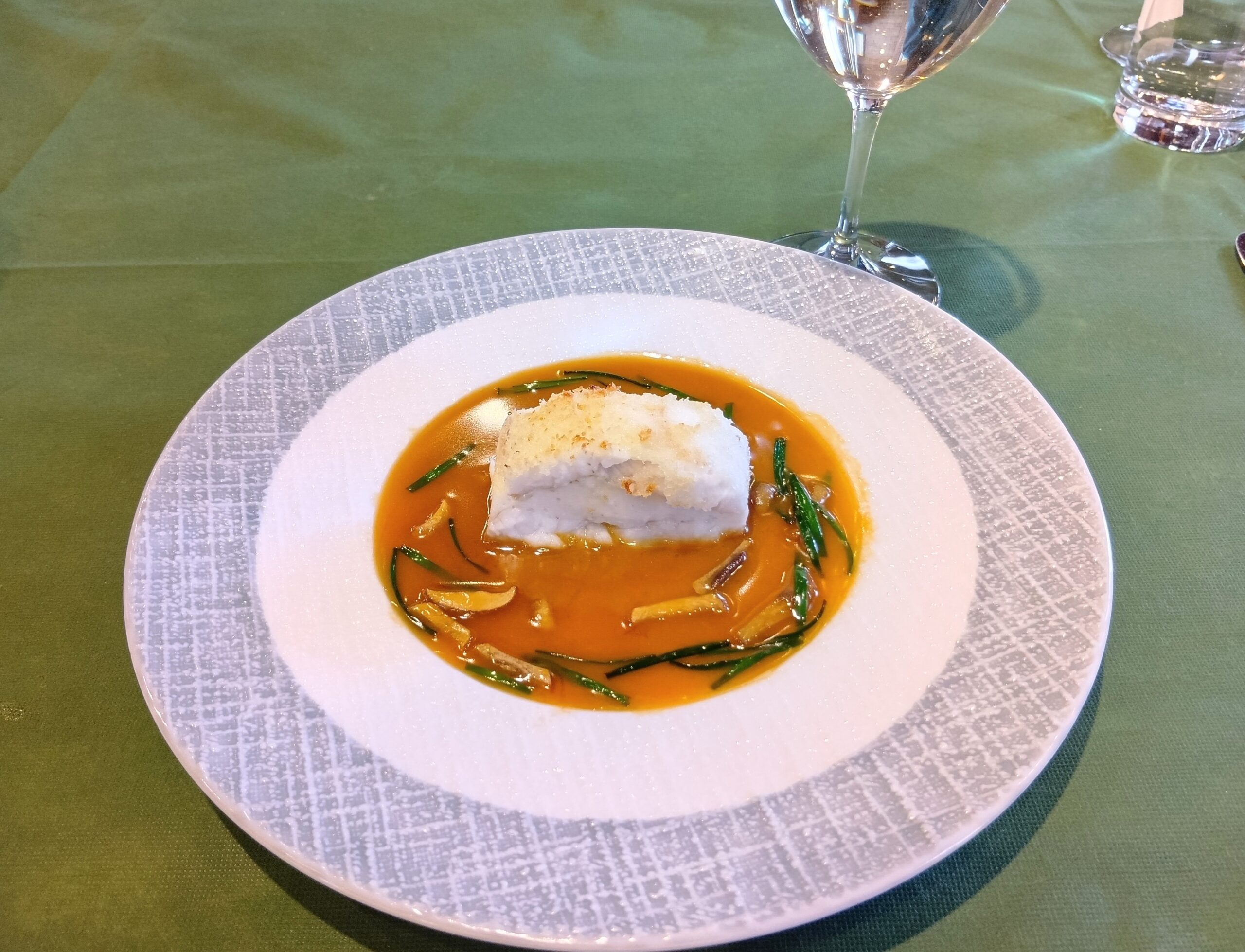
A luxurious dish featuring flounder and Hitachi no Kuni Spiny Lobster, known as the finest shrimp/lobster caught in Ibaraki Prefecture.
Using Hitachi no Kuni Spiny Lobster inside the flounder allowed the seafood's umami to be fully savored.
The Sauce Albert mousse, made using fish broth, veal stock, and a whole bottle of wine, was also superb.
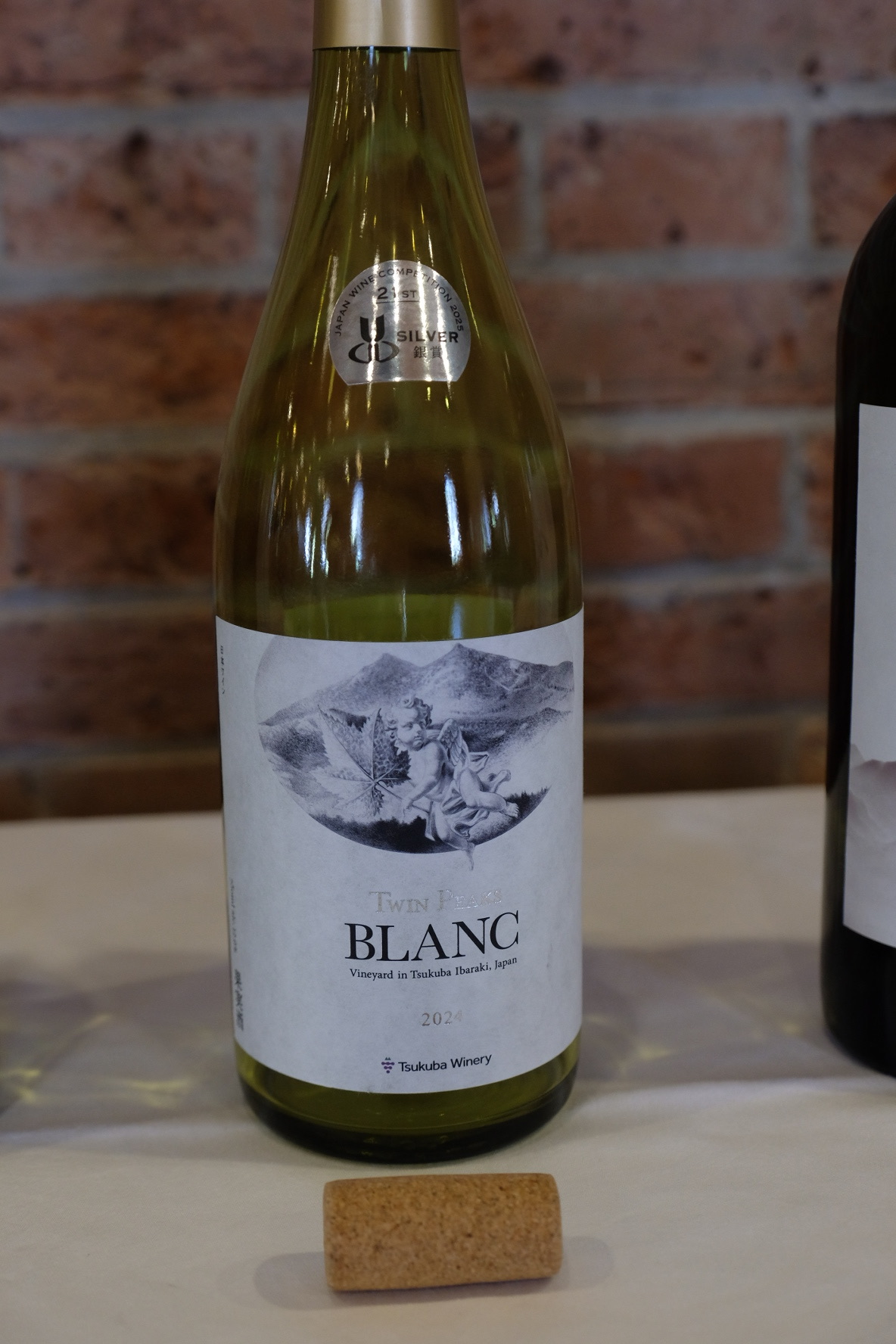
The wine paired with this dish was Tsukuba Winery's TWIN PEAKS BLANC 2024.
It won a silver medal in the "European Varieties White" category at the Japan Wine Competition, achieving the historic first-ever feat for a Japanese wine made with 100% Ibaraki-grown grapes.
It exhibits refined and gorgeous aromas of citrus, green apple, and flowers.
The moment it enters the mouth, umami spreads across the palate in this high-quality white wine.
Centered around Chardonnay, Petit Manseng is used to balance the acidity.
With Albariño also added, it has been crafted into an aromatic, sharp, and highly savory wine.
Pairing
The umami and sweetness of the flounder and spiny lobster harmonized with the fruitiness of TWIN PEAKS BLANC 2024.
The mellow sauce and the wine's mouthfeel were well balanced, resulting in a pairing that elevated both the food and the wine into a more complex, fragrant impression.
Aided by the sharp acidity derived from Petit Manseng, the palate was left refreshed without feeling heavy.
It was an artistic combination woven from Ibaraki-grown ingredients.
Roasted Wild Mallard of Hitachi with Quick-Smoked Mallard Confit, Beetroot Purée, and Mallard Jus x Buryu Winery / Zuiryu Pinot Noir 2023
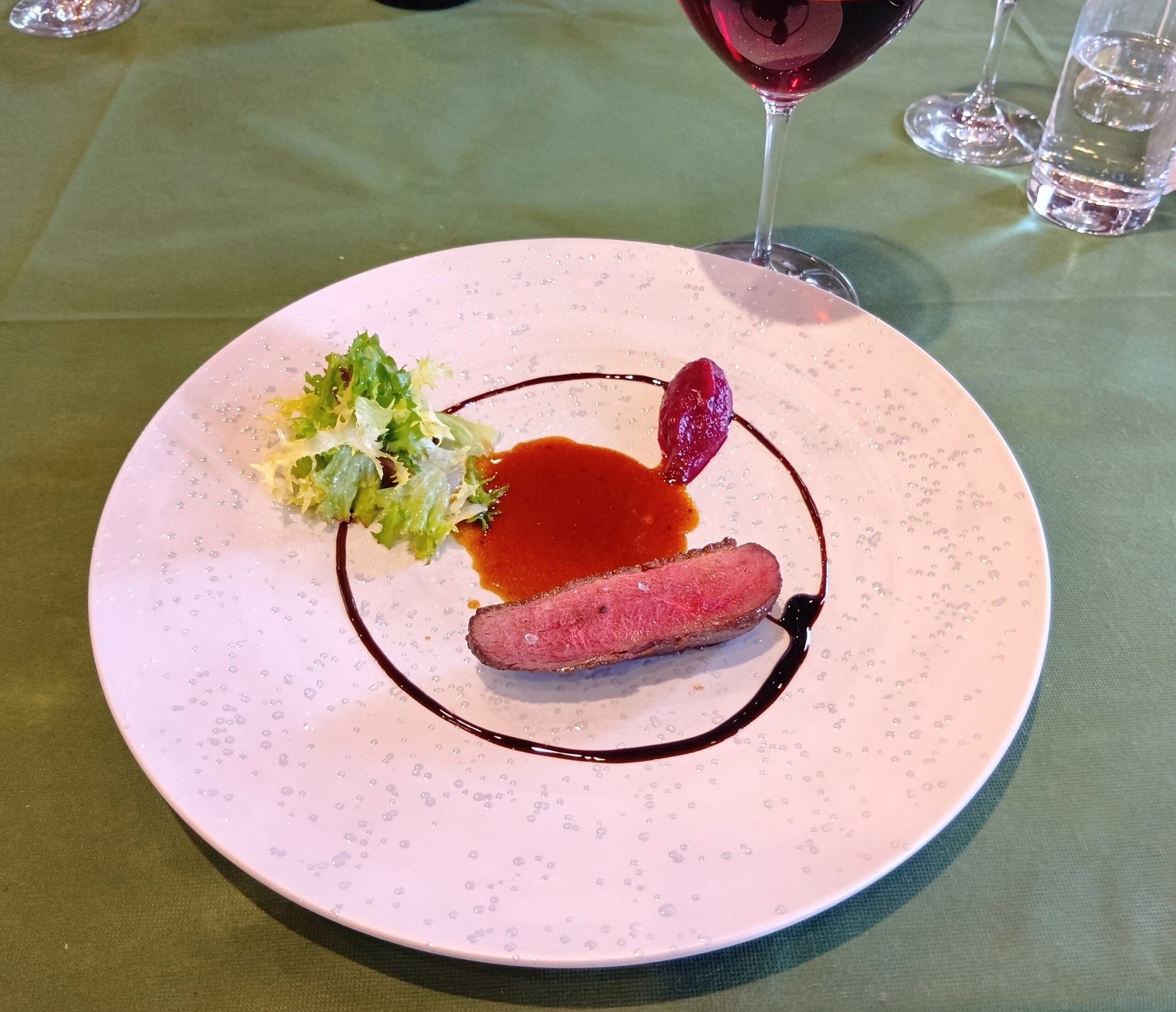
Wild Mallard of Hitachi allows one to savor the meat's umami directly.
It is said that many gourmets are enchanted by its gamey flavor devoid of greasiness.
This luxurious dish featured wild mallard from Hitachi flash-smoked over Ibaraki rice straw.
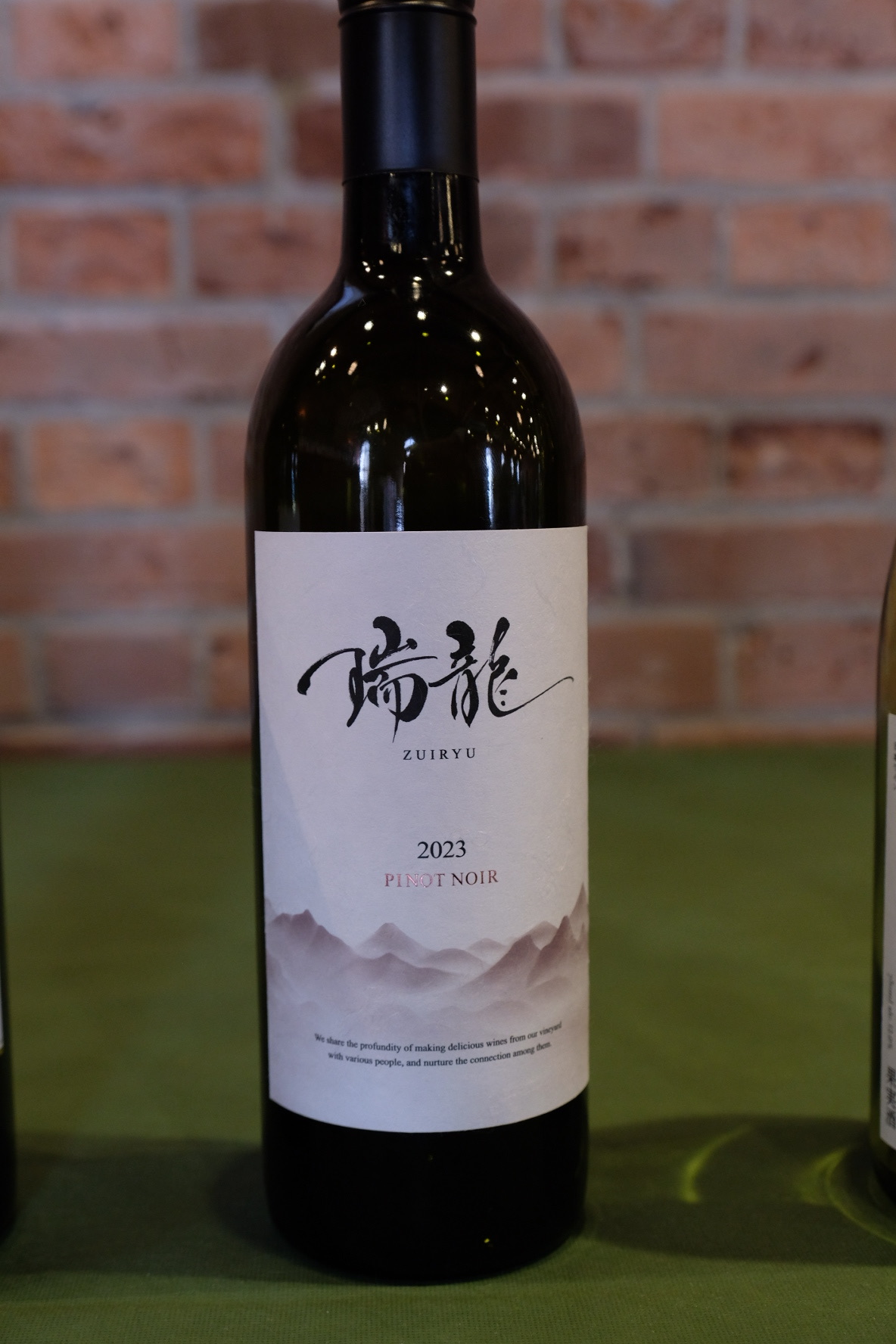
Zuiryu Pinot Noir 2023 is a red wine made from Pinot Noir, a grape rarely found even within Ibaraki Prefecture.
A dedicated bottling from Buryu Winery, which painstakingly cultivates Pinot Noir—considered difficult to grow in Ibaraki—it was brewed in a 1,000-liter cedar vat.
Red fruit, spice, and smoky aromas are present, and the palate features delicate yet sharp acidity, minerality, and silky tannins.
It is a glass that sparks anticipation of how Ibaraki Pinot will evolve in the future.
Pairing
Zuiryu Pinot Noir 2023 made for a simple yet profound pairing that complemented the dish.
The smoky nuances and red fruit flavors harmonized with the Hitachi wild mallard jus, and the gamey characteristics of both the Pinot and the mallard aligned beautifully.
The wild mallard's pleasant aroma wafting softly on the finish made this a compelling pairing.
Shintone Cheese Kobo "Tsukitone - Kamitsuki" & Hitachiota Cheese Kobo "Satoyama" x Tsukuba Winery / TSUKUBA ROUGE PREMIUM 2022

A pairing of Ibaraki-produced cheeses and Ibaraki wine.
Shintone Cheese Kobo's "Tsukitone - Kamitsuki" is a precious washed-rind cheese washed with Ibaraki sake and aged for an extended period.
On the other hand, Hitachiota Cheese Kobo's "Satoyama" is a semi-hard cheese aged for 3 to 6 months, offering a mild, savory flavor.

Paired with them was Tsukuba Winery's TSUKUBA ROUGE PREMIUM 2022.
A red wine blending Merlot with Yamabudo (crimson glory vine), it is characterized by an eye-opening concentration.
A high-quality red wine where Merlot's herbaceous and fruit characters are joined by Yamabudo's spiciness in a complex aroma, its mellow mouthfeel, sharp acidity, and moderate tannins harmonize seamlessly.
Free of off-flavors, it is crafted into a bottle that transforms one's concept of Yamabudo.
Pairing
The delicate yet powerful flavor of TSUKUBA ROUGE PREMIUM 2022 stood up well to the intense salinity and rich savoriness of "Tsukitone - Kamitsuki," resulting in a well-balanced pairing.
A pairing where "TSUKUBA ROUGE PREMIUM 2022" gently envelops the delicate flavor and mellow character of "Satoyama."
Another highlight is how the fruitiness of "TSUKUBA ROUGE PREMIUM 2022" comes through strongly in the finish.
Ibarakiss and Red Fruit Soup with Vanilla Ice Cream, Ibarakiss Romanoff x Ushiku Winery / 2025 Ao Dela Hatsu-shibori Delaware
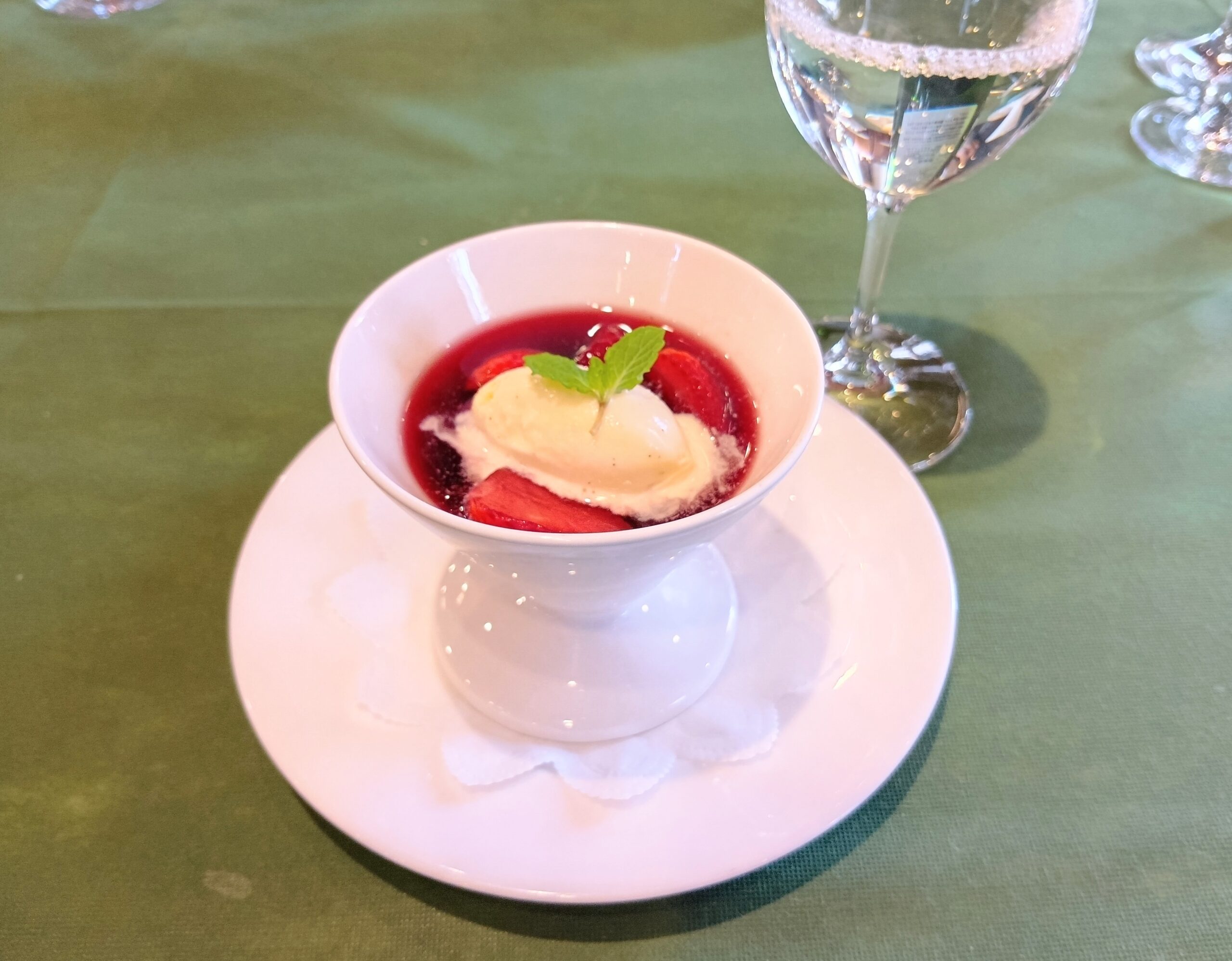
Ibarakiss is Ibaraki Prefecture's proud original strawberry variety, officially registered in December 2012.
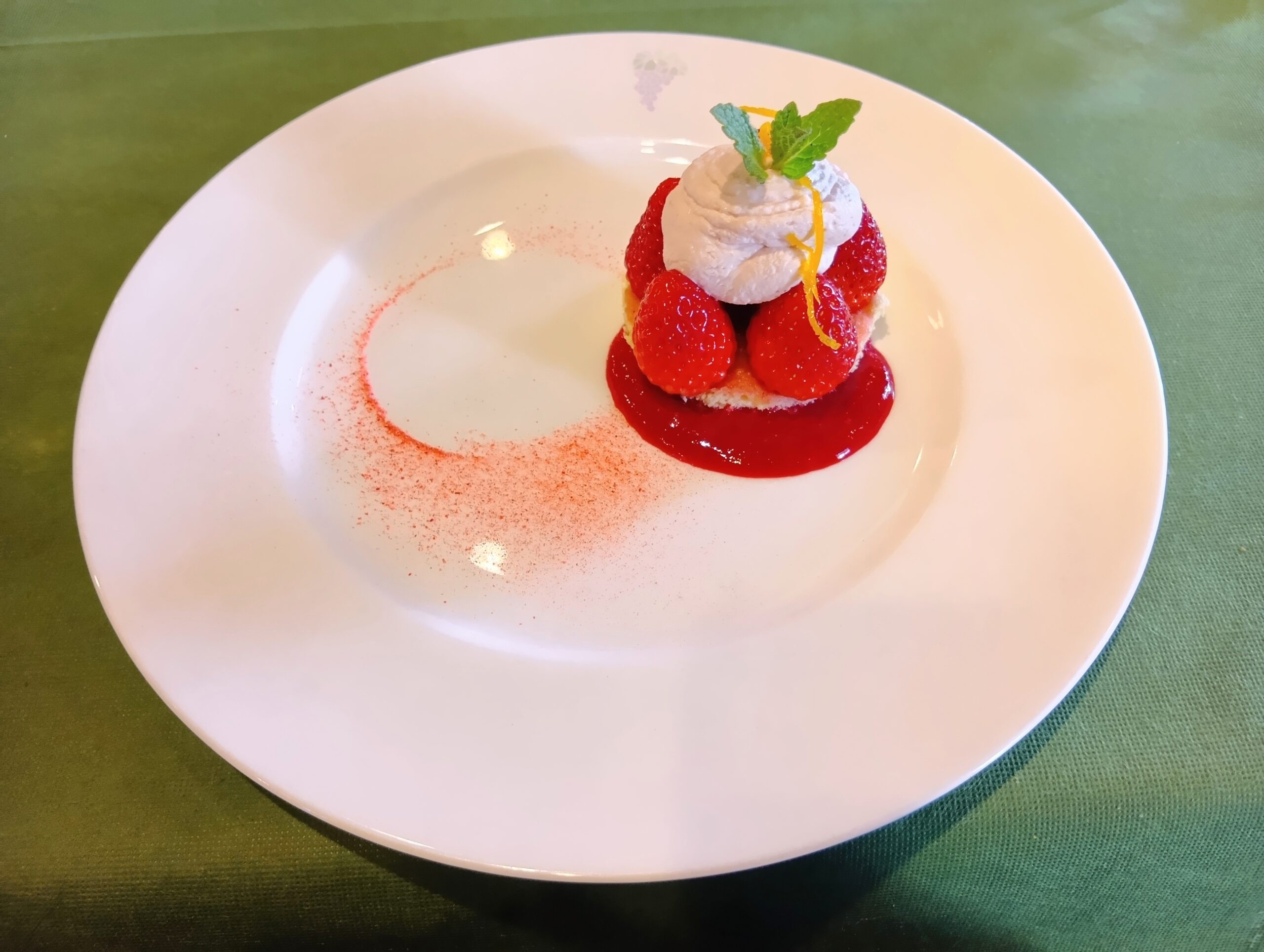
This time, a soup-style dessert and an Ibarakiss Romanoff were served.
A cross between "Tochiotome," "Red Pearl," and "Akihime," it is characterized by a rich flavor featuring a well-balanced sweetness and acidity.
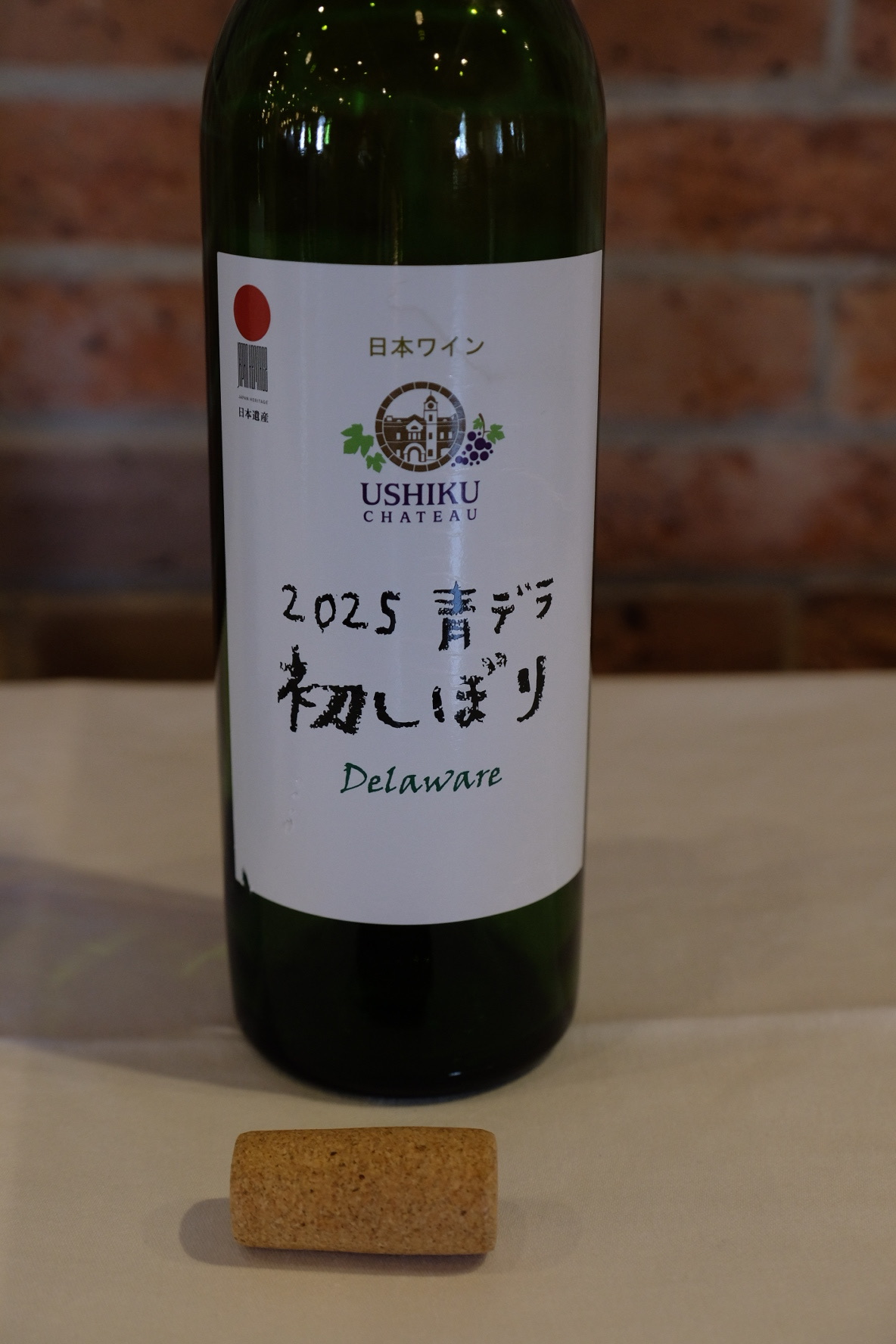
The wine paired with these desserts made with Ibarakiss was Ushiku Chateau's "2025 Ao Dela Hatsu-shibori Delaware."
Crafted using the grape variety "Delaware" from Koshu City, Yamanashi Prefecture—a fellow Japan Heritage-certified city—it offers a refreshing profile with aromas evoking the distinctive florality and sweetness of Delaware, a concentrated sweet-and-sour flavor, and crisp acidity.
Incidentally, with an alcohol content of 8%, its pleasant drinkability makes it easy to enjoy even after a meal.
It also seems well-suited to serve as an aperitif.
Pairing
A pairing where the sweet-and-sour profile of Ibarakiss harmonizes exquisitely with the characteristic sweetness and acidity of Delaware.
The sweetness of the desserts and that of "2025 Ao Dela Hatsu-shibori Delaware" are remarkably close, creating a deeply satisfying combination that feels as though a generous drizzle of wine sauce was added to the dessert.
While it pairs wonderfully with the desserts, its affinity with Ibarakiss on its own is also enjoyable.
Additionally, a petit Mont Blanc made with Kasama chestnuts was served at the end, and the pairing with it was also excellent.
Discovering the Appeal of Ibaraki Through "Gastronomy"
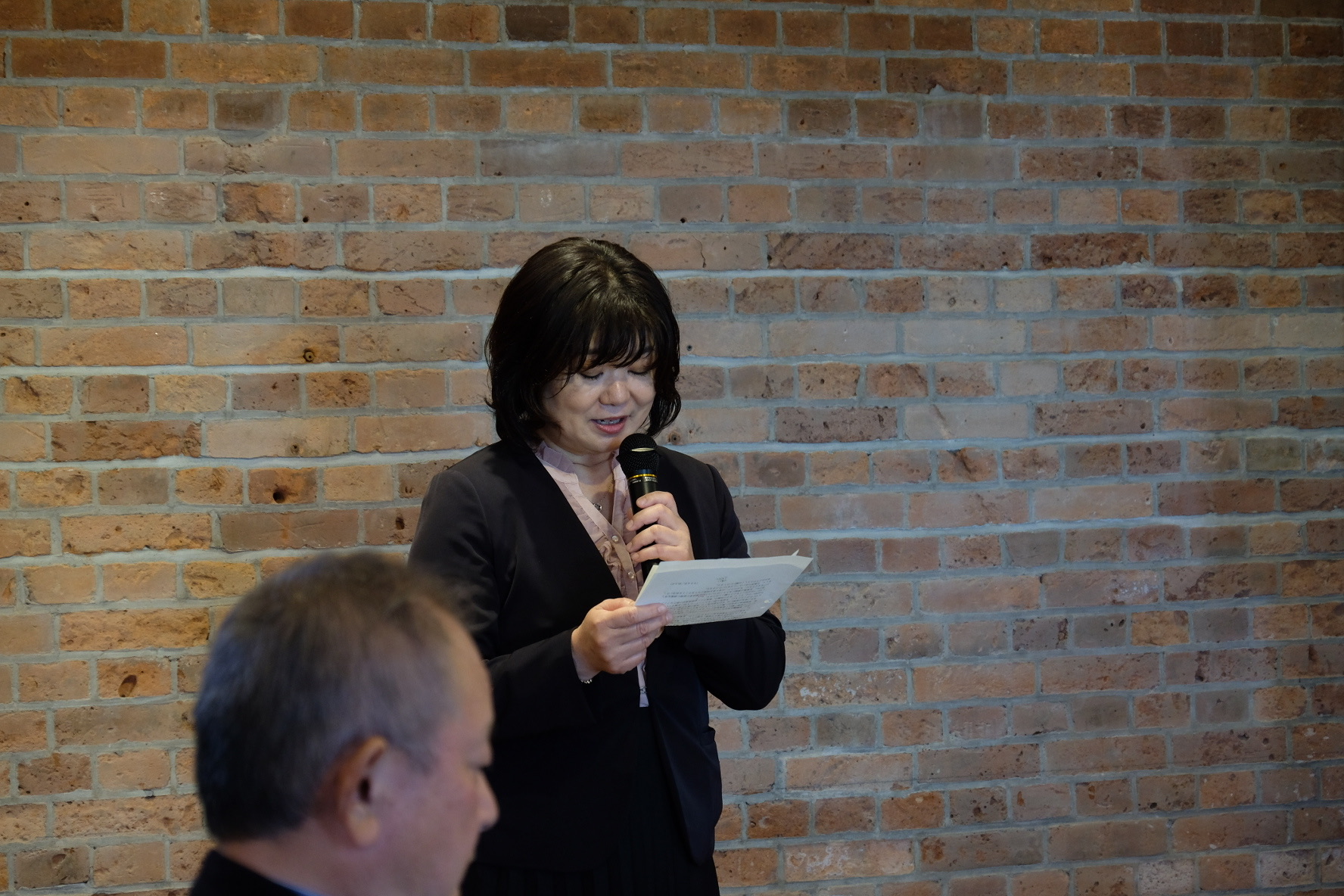
Sachiko Kataoka, Team Leader of the PR and Attraction Team at the Tokyo Public Relations Bureau of Ibaraki Prefecture's Business Strategy Department, commented, "Ibaraki Prefecture offers easy access from urban areas. While famous as a thriving agricultural prefecture, exceptional quality wines are also being crafted in Ibaraki, and the number of wineries is increasing. We would love for everyone to discover Ibaraki's proud ingredients and wines."
Ibaraki is an attractive prefecture where visitors can indulge in an abundance of treasures from both sea and land, enjoy activities that take advantage of its blessed natural setting encompassing mountains, the sea, and lakes, and visit sightseeing destinations that showcase its unique culture.
She explained that they hope to share the appeal of Ibaraki Prefecture with even more people by having them experience it through "prefectural ingredients" and "Ibaraki wine."

Furthermore, Kazutoshi Numata, Mayor of Ushiku City, also attended the tour, commenting, "This is a valuable event that broadly promotes Ibaraki wine and ingredients produced in Ibaraki Prefecture."
At the conclusion of the lunch pairing, Mr. Anzo expressed his hopes for the growth and wider recognition of Ibaraki Prefecture's wines and ingredients, saying, "Ibaraki wine is just getting started. The prefecture has only begun pouring its efforts into winemaking, and quality is bound to rise going forward. Although Ibaraki Prefecture's profile as a wine region is still developing, the journey of 'Ibaraki wine' has only just begun with its exploration of terroir diversity and the challenge of expressing it. I hope people will watch over it and continue to pay attention with a long-term perspective."
Ibaraki Prefecture is favorably located within a two-hour journey from Tokyo.
Why not take this opportunity to embark on a sophisticated getaway and discover the appeal of Ibaraki through "gastronomy"?