
On June 28, 2018, "Hokkaido" was designated as a Geographical Indication (GI) for wine.
It is the second case for wine in Japan, following "Yamanashi." Only Hokkaido-produced wines that meet various production standards and pass an examination are permitted to display "GI Hokkaido" (hereinafter referred to as GI Hokkaido).
There are numerous wine-producing regions in Japan, and Hokkaido's designation among them is truly significant.
Here, we would like to provide a brief summary of the production standards for "GI Hokkaido."
Please use this as a reference when choosing wines certified as "GI Hokkaido."
What Are the Production Standards for "GI Hokkaido"?
GI stands for "Geographical Indication."
A key characteristic of this system is that strict production standards are established because the geographical origin can be indicated on the product name, much like "A.O.C. ."
The production standards for "GI Hokkaido" are broadly divided into the following four categories:
- Characteristics of the alcoholic beverage
- Relationship showing that the characteristics of the alcoholic beverage are essentially attributable to its place of production
- Raw materials and manufacturing method of the alcoholic beverage
- Matters concerning management to maintain the characteristics of the alcoholic beverage
Since the content is somewhat technical, let us explain while highlighting the notable topics.
Characteristics of the Alcoholic Beverage
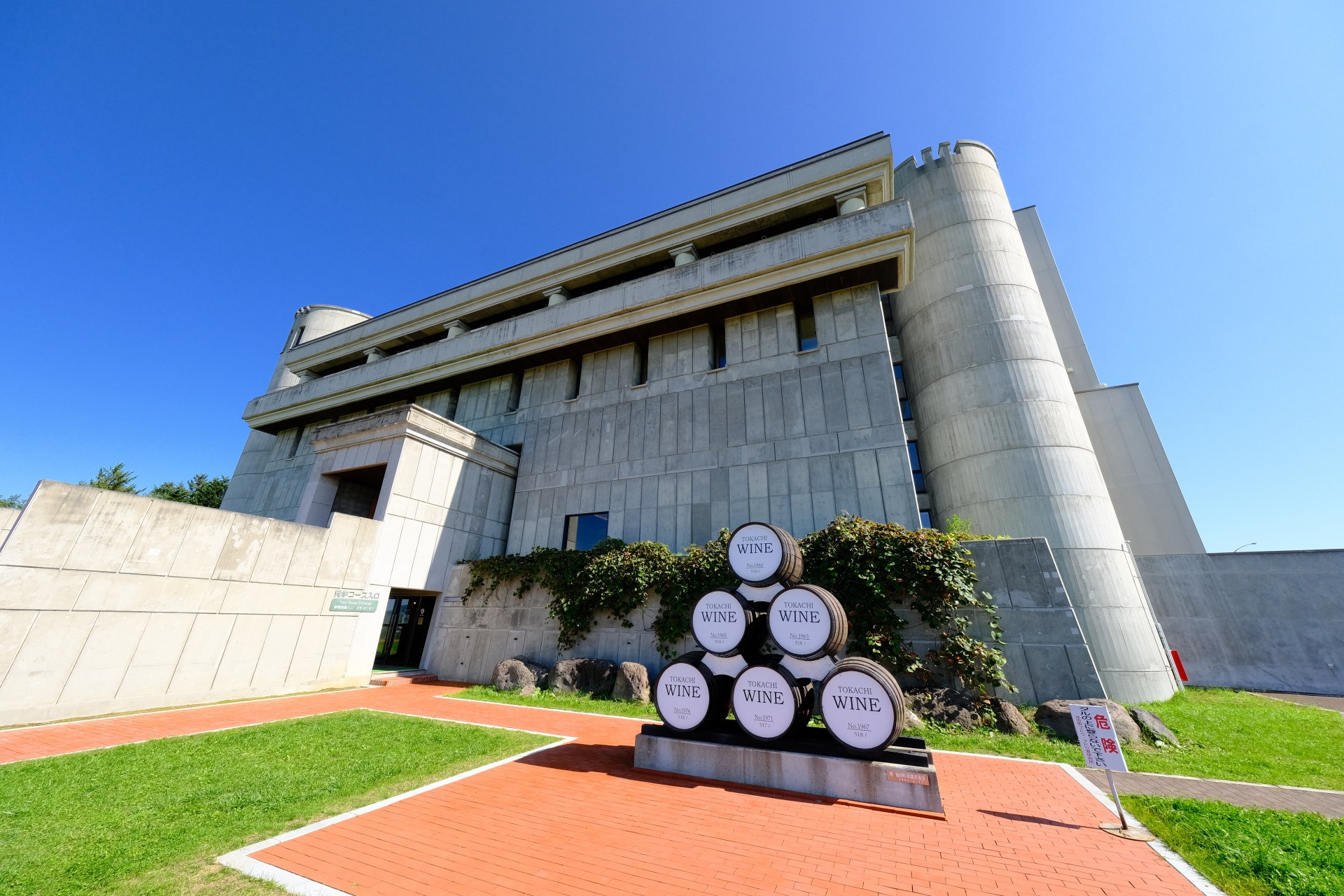
The characteristics of the alcoholic beverage refer to the properties and traits possessed by the wine. In order to display "GI Hokkaido," standards are established for both "sensory elements" and "scientific elements."
Sensory Elements
For the "sensory elements," the following characteristics are required:
White Wine
The color ranges from nearly transparent to pale yellow. It possesses rich, gorgeous aromas of flowers, green apples, and citrus fruits. Dry styles exhibit vivid acidity, while sweet styles are fruity and lively, with a harmonious balance between acidity and sweetness.
Red Wine
The color ranges from light bright red to slightly dark purplish red. It possesses aromas of spices and fruits, along with lively maturation aromas. The flavor is medium to light-bodied, with clear acidity and gentle astringency, retaining fruitiness even with aging.
Rosé Wine
The color is generally purplish to orangey. It possesses rich fruit aromas. Sweet styles offer a pleasant sweetness and acidity reminiscent of the source grapes. Dry styles feature vivid acidity, and both are fruity and refreshing.
Looking at these criteria, one gets the impression that "being a sound, fault-free wine" is a fundamental prerequisite for bearing the name "GI Hokkaido."
While wines with "rare flavors" or "unique profiles" are certainly charming, being "sound" may be seen as essential in order to bear the name of "Hokkaido."
Scientific Elements
While the aforementioned sensory evaluation relies on human smell and taste, "GI Hokkaido" also has scientific criteria covering parameters such as alcohol content, total sulfur dioxide, volatile acidity, and total acidity.
For example, the following criteria are required:
- Alcohol content: 14.5% or lower
- Total sulfur dioxide: 350 mg/kg or lower
- Volatile acidity: 1.5 g/L or lower
A distinctive feature of "GI Hokkaido" is its regulations regarding acidification.
When grapes with a juice sugar content of less than 21% are used as raw material without acidification, the total acidity must be 5.8 g/L or higher for white and rosé wines, and 5.2 g/L or higher for red wine.
On the other hand, when grapes with a juice sugar content of 21% or higher are used as raw material, the total acidity must be 5.4 g/L or higher for white and rosé wines, and 4.8 g/L or higher for red wine.
Relationship Showing That the Characteristics of the Alcoholic Beverage Are Essentially Attributable to Its Place of Production
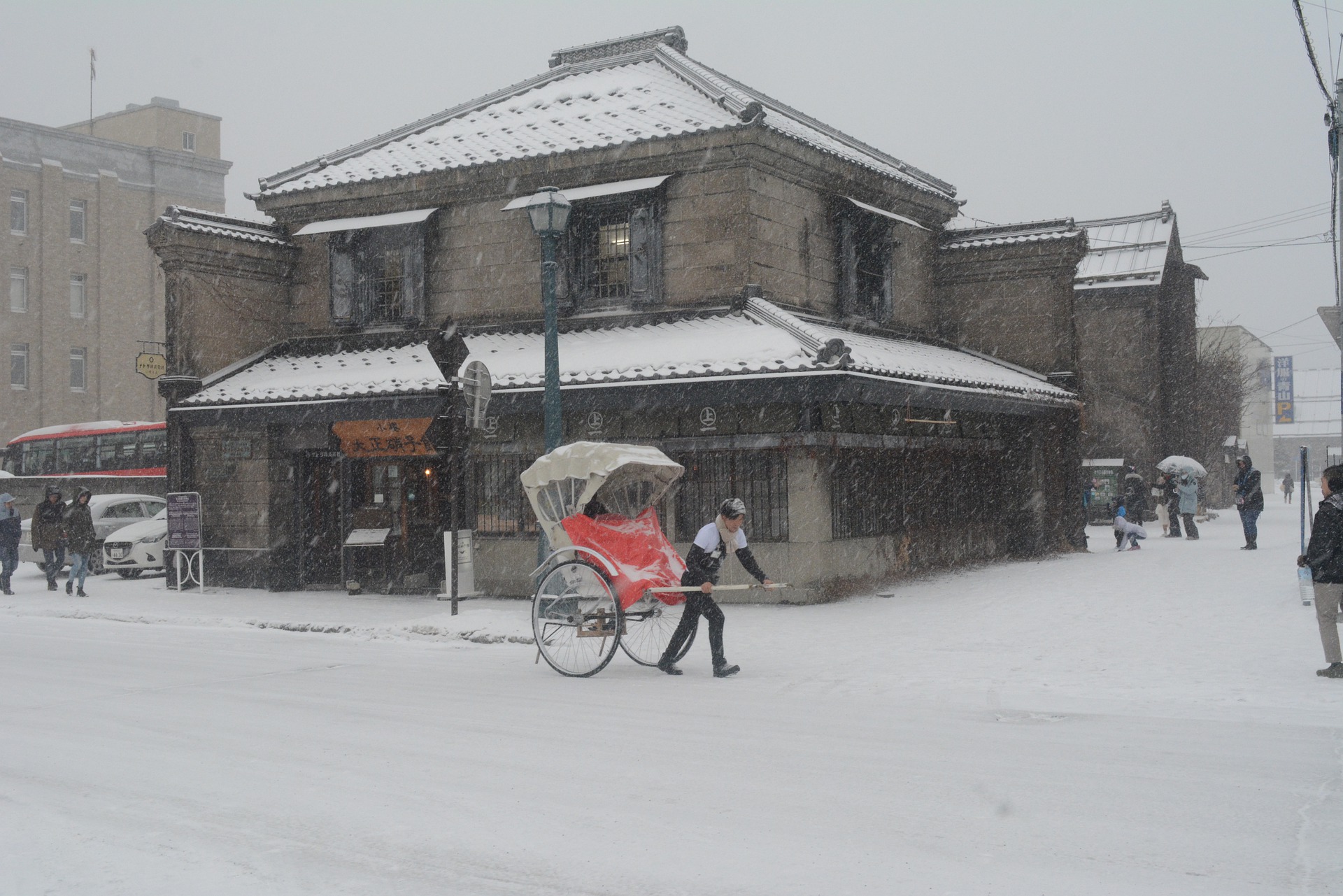
"Relationship showing that the characteristics of the alcoholic beverage are essentially attributable to its place of production."
While interpretations may vary, it may be easier to grasp as asking whether the characteristics of the produced wine genuinely reflect the essence of the region.
These production standards comprise "natural factors" and "human factors."
Let us briefly explain each of them.
Natural Factors
To be designated as a GI, a region must be blessed with natural factors suitable for harvesting high-quality grapes as a wine-producing region.
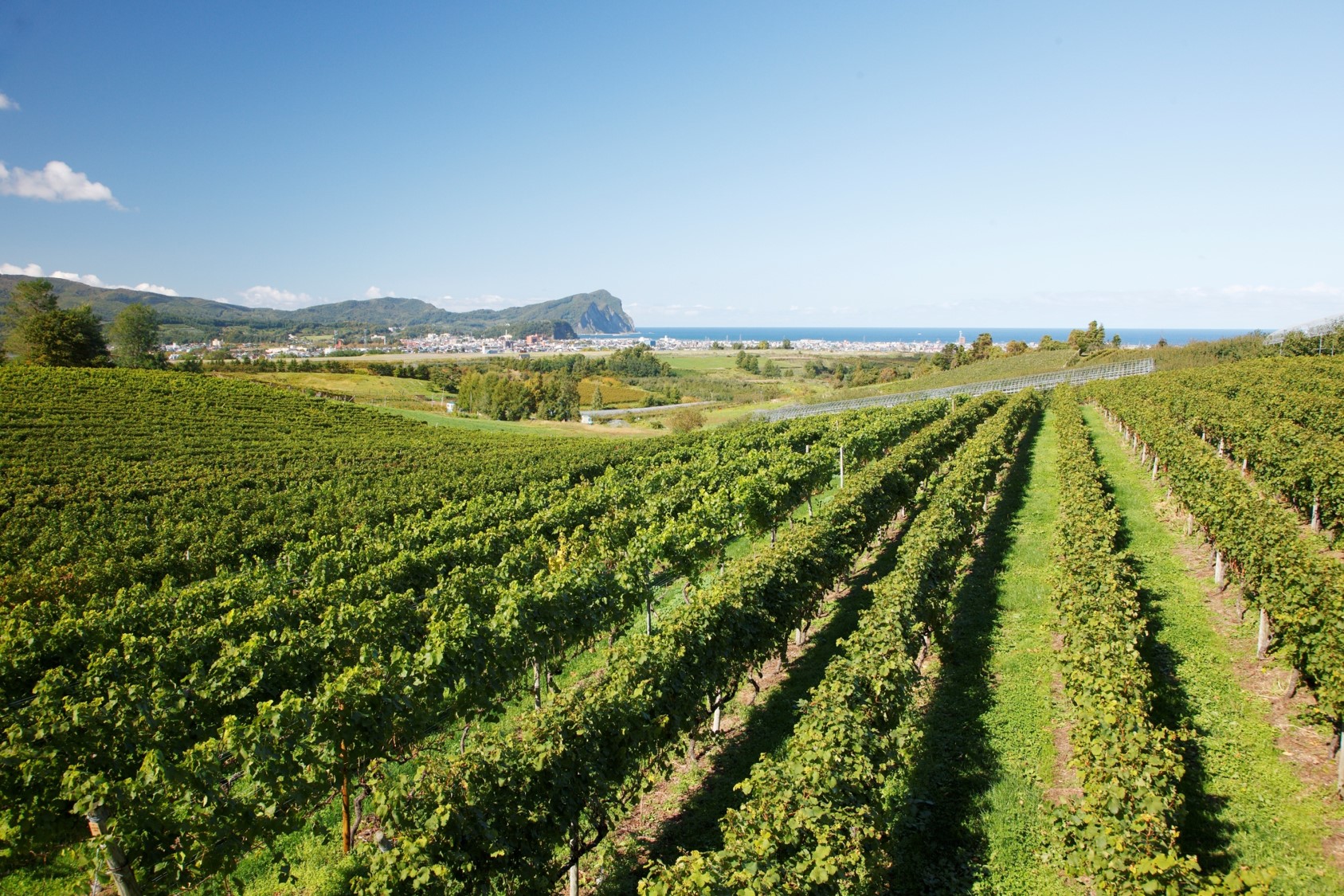
Hokkaido is cool, with a low cumulative temperature during the vine growing season, and is classified under the coolest climatic zone, "Region I." (Making it the most suitable climate in Japan for European white varieties.)
Furthermore, in Hokkaido's main grape-growing areas, sunshine hours from April to October are long and the diurnal temperature variation is substantial, enabling the harvest of grapes with high sugar levels.
In addition, because of the cool climate, grapes rich in organic acids can be harvested—a rare characteristic compared to other regions.
Another feature is that precipitation from April to October is low at 700 mm or less, allowing for the harvest of healthy grapes.
In recent years, many producers have opened vineyards at high elevations in search of clean acidity and fruitiness; however, in Hokkaido, such grapes can be harvested even at elevations below 200 m, which is a major difference from other wine regions.
Human Factors
The history of wine in Hokkaido is said to have begun in 1875 (Meiji 8), when American grapevines were transplanted to Sapporo, followed by the establishment of a winery in Sapporo in 1876 as part of the Kaitakushi's (Development Commission's) agricultural development initiative.
Although winemaking was suspended after experiencing various twists and turns, efforts to select grape varieties suited to cold regions, breed grapes by crossing with wild grapes (yamabudou), and explore winemaking methods began around 1965 (Showa 40).
In 1984 (Showa 59), the Hokkaido Wine Discussion Group was established, actively promoting information sharing among producers, through which grape-growing and winemaking techniques advanced dramatically.
Given that Hokkaido is fundamentally a cold region, producers have devised viticultural methods tailored to the area and actively developed cold-hardy varieties such as wild grape species and hybrid varieties suited to the natural environment, making human factors in winemaking a major characteristic.
Furthermore, because grapes naturally contain abundant organic acids due to the nature of the region, winemakers do not routinely acidify, adopting a brewing method where acidification is used only when pH adjustment is necessary for color stabilization or sulfur dioxide management—another unique aspect.
Rather than individual producers simply making excellent wine, the entire region possesses the natural and human factors (such as the history of winemaking) necessary to produce high-quality wine, which is precisely why Hokkaido was designated as a GI.
Raw Materials and Manufacturing Method of the Alcoholic Beverage
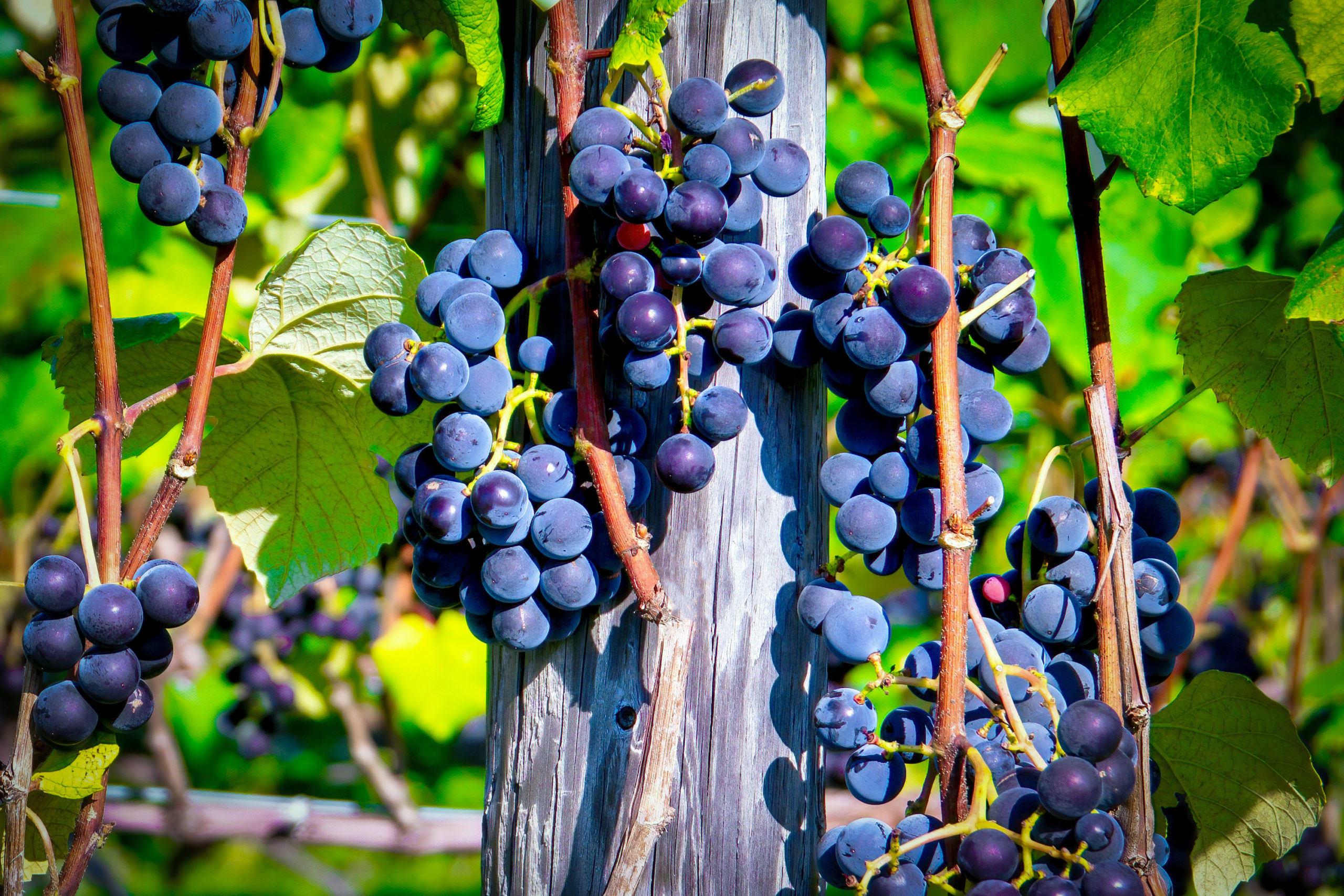
"GI Hokkaido" establishes production standards regarding the grape varieties used as raw materials and the manufacturing methods.
Here is a brief summary of each.
Grape Varieties (Raw Materials)
"GI Hokkaido" mandates that only grapes harvested in Hokkaido be used as raw materials.
For vinifera varieties, there are about 30 varieties, including Sauvignon Blanc, Pinot Blanc, Pinot Noir (Spätburgunder), Trollinger, and Dornfelder.
For labrusca varieties, there are 8 varieties, including Niagara, Portland, and Delaware.
In addition, wild grape varieties and hybrid varieties are designated.
Furthermore, the juice sugar content standards are established as 16.0% or higher for vinifera varieties, 13.0% or higher for labrusca varieties, and 15.0% or higher for wild grape and hybrid varieties. (In the case of unseasonable weather, each required juice sugar content may be lowered by 1.0%.)
Manufacturing Method
"GI Hokkaido" also strictly regulates the methods used in winemaking.
The wine must be produced within Hokkaido in accordance with the specified manufacturing method for "fruit wine," and furthermore, it must be "Japanese wine" under the regulations.
In addition, while the total weight of sugars and the weight of sugars contained in flavorings are also regulated, acidification is, after all, the most notable feature.
According to the manufacturing method production standards for "GI Hokkaido," if acidification is carried out when the total acidity of the juice prior to acidification is less than 7.5 g/L, it is considered to be for the purpose of "sensorially" increasing acidity, and is therefore not permitted.
However, when the total acidity is 7.5 g/L or higher, the minimum necessary acidification (up to 1.0 g/L) is permitted for the purpose of color stabilization and pH adjustment.
Conversely, there is also a standard allowing deacidifying agents to be added up to a reduction of 2.0 g/L in total acidity.
These production standards truly reflect a cool-climate region where grapes rich in organic acids can be harvested.
Matters Concerning Management to Maintain the Characteristics of the Alcoholic Beverage
Even if the aforementioned production standards are met, producers cannot simply use "GI Hokkaido" at their own discretion.
The display of "GI Hokkaido" is permitted only if the production standards are cleared following verification based on the operational implementation guidelines drawn up by the Geographical Indication "Hokkaido" Management Committee.
Incidentally, according to the "11th GI Hokkaido Certified Brands" announced by the Geographical Indication "Hokkaido" Management Committee on Monday, April 19, 2021, 31 brands from 6 companies were newly certified as "GI Hokkaido."
At this stage, a cumulative total of 426 brands from 18 companies have been certified as "GI Hokkaido."
These figures clearly show that the entirety of Hokkaido is proactively engaged with "GI Hokkaido."
Let's Drink "GI Hokkaido"!
"GI Hokkaido" certified wines can be identified by the words "GI Hokkaido" on the label display or logo mark.
As mentioned above, since this certification is governed by strict production standards, you can be assured of their quality.
Of course, it should be noted that a wine lacking "GI Hokkaido" certification is by no means low quality.
For those who are thinking, "I'd like to try Hokkaido wine," why not start with a "GI Hokkaido" wine first?
Learn the standards, compare various Hokkaido wines from there, and find your favorites.
References
National Tax Agency Geographical Indication "Hokkaido" Production Standards