

The act of swirling the liquid in a wine glass.
This is called "swirling".
Not only those well-versed in wine, but even wine beginners have likely experienced swirling a wine glass around at some point.
Actually, this swirling.
If not properly understood, it is an act that can potentially impair the flavor of the wine.
Here, let's discuss the basics of swirling that you may hesitate to ask about now, as well as important points to keep in mind.
What is the role of swirling?

To put swirling in a nutshell, it is "the act of swirling the liquid in the glass to bring out the aroma of the wine (or to soften the astringency of tannins)".
For those well-versed in wine, "awakening the wine"is another expression that may be used.
The main effects of swirling include...
- The wine's surface area increases by coming into contact with air
- The increased surface area allows more aromas to be drawn out
- Bringing it into contact with oxygen in the air changes the flavor
- Looking like someone accustomed to drinking wine (personal opinion)
Swirling is also recommended at wine schools when detecting wine aromas, and as mentioned earlier, some may be imitating the practice because swirling a glass at restaurants looks sophisticated.
However, this swirling.
If done too carelessly, it can potentially diminish the inherent appeal of the wine. Let's explain what this means.
Focus on molecular weight
First, the wine before swirling is called the "primary aroma", and the aroma after swirling is called the "secondary aroma".
Since aromas are molecules, it's understandable that their duration and intensity change depending on their abundance.
In essence,
- Before swirling, highly volatile aromas with lower molecular weight rise up
- After swirling, heavier aromas with higher molecular weight rise up
I mentioned the possibility of diminishing the wine, but the secret actually lies in this molecular weight.
Aromas get mixed together
Aside from those practicing proper tasting, it's not uncommon for people to swirl immediately after the wine is brought to them.
It might be almost like a reflex action.
However, since wine has highly volatile "primary aromas," swirling at an early stage mixes them with the "secondary aromas," potentially preventing you from catching the delicate aromas the wine inherently possesses.
Furthermore, some people take a quick sniff when the wine arrives and immediately swirl.
The human nose is highly capable, and even in that instant, the olfactory nerves immediately judge the aroma, but unless you're a highly trained taster, correctly judging the "primary aroma" is considered difficult.
First, it would be wiser to thoroughly enjoy the "primary aroma" without immediately swirling, and then swirl afterward to understand the wine's character.
The aroma disappears altogether

What requires the most caution with swirling is "over-swirling"and its effects.
While the manner and direction of swirling is up to the individual, generally it's said to be "counterclockwise, about two or three times".
That said, you may see people constantly swirling the wine poured in their glass, or vigorously swirling every time they drink even after time has passed.
While it might be effective for making aromas stand out, wine aromas are known to be highly volatile and quite limited in volume within the overall components.
"No, the aromas keep coming out. Let me persist!" some might say.
Well then, let's look at this research on Pinot Noir aromas.
Pinot Noir contains ethanol, isoamyl alcohol, and esters such as ethyl octanoate and ethyl hexanoate, and swirling causes these esters to rise up.
However, prolonged agitation resulted in a decrease in esters.
When drinking it, the aroma in the mouth disappeared and the flavor considerably declined...as suggested.
If you still feel the aroma strongly, it's either a wine containing a tremendous amount of aromatic components or you're enjoying it through imagination in your brain.
Is it necessary to think and explore that carefully?
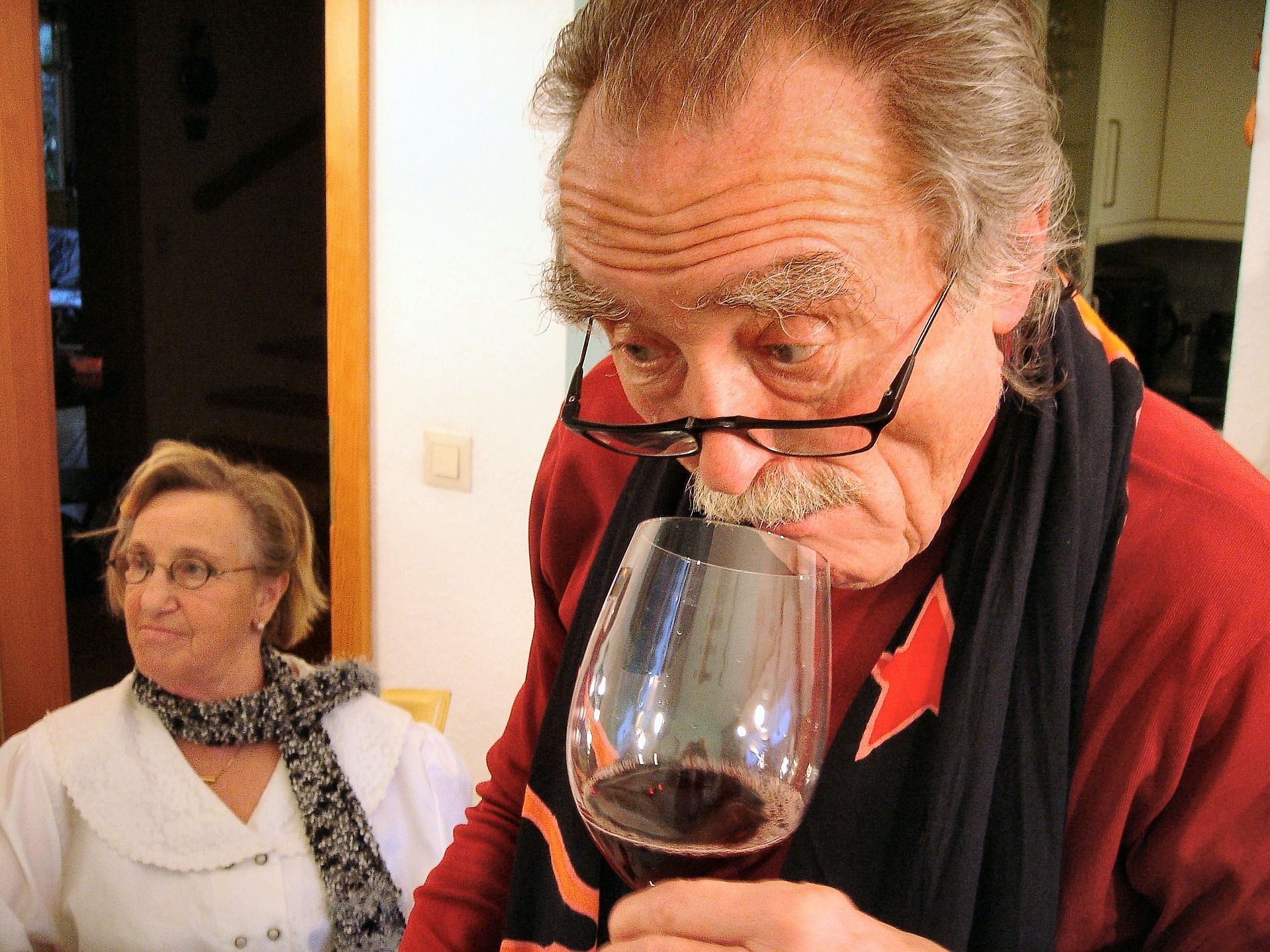
It's no exaggeration to say that wine is a beverage to enjoy for its aroma.
That's why such topics arise from swirling alone.
Now, while some people keep swirling their glass endlessly, others seem desperate to seriously detect aromas indefinitely.
If it's for wine study or an exam, that's fine, but if you're enjoying wine on a daily basis, I believe it's okay not to keep searching for aromas indefinitely.
First, it's said that humans can identify at most about 4 typesof aromas, whether they're mixed scents or single-molecule aromas.
In other words, the aroma itself changes after swirling from the aroma you sense when detecting the "primary aroma," so detecting (discovering) the "primary aroma" becomes quite difficult.
Also, the more you swirl, the more the aroma decreases. The aromatic elements become even fewer.
Previously, I pushed myself too hard and brought my nose too close to the glass, wine went up my nose and I choked, but it's only a matter of time before such an outcome occurs.
Incidentally, in the case of professional tasters, they have undergone considerable training and have stocked numerous descriptive words in their brain.
If you're someone who seriously drinks and studies an incredible number of wines or wants to study that way, it's fine to persist, but if you "just want to enjoy wine casually", wouldn't it be enough to simply enjoy the aromas you can easily perceive?
This delicacy and transience is great!

The aroma before swirling and the aroma after swirling, not swirling too much—wine may seem to have many troublesome elements.
However, it is precisely such a delicate and transient beverage, and that itself can be said to be one of wine's true pleasures.
Of course, how you drink wine is up to you, and what's most important is being able to drink it deliciously and enjoyably in that way.
That said, just knowing the properties of wine means the wine you always drink can actually taste even better.
Please consider the information about swirling as reference material, and I hope you'll lightly incorporate it into your future wine life.
Reference
The Aroma of Wine from the Perspective of Instrumental Analysis, Masanobu Onishi