

In September 2022, Suntory's new Japanese wine brand, "SUNTORY FROM FARM," will finally be released.
While the company's Japanese wine is drawing attention for its series lineup, high quality, and the renewal opening of Tomi no Oka Winery, its initiatives toward "sustainable Japanese winemaking" are also attracting significant notice.
In this article, we held an online interview with Kohei Oyama, Chief Viticulturist at Suntory Tomi no Oka Winery, Wine Company, Suntory Holdings Limited.
We asked him about Suntory's "sustainable Japanese winemaking" and the future direction Suntory's Japanese wine is aiming for.
In the first half, we introduce the challenges faced by Japanese wine and the initiatives being taken to resolve them.
Interviewee
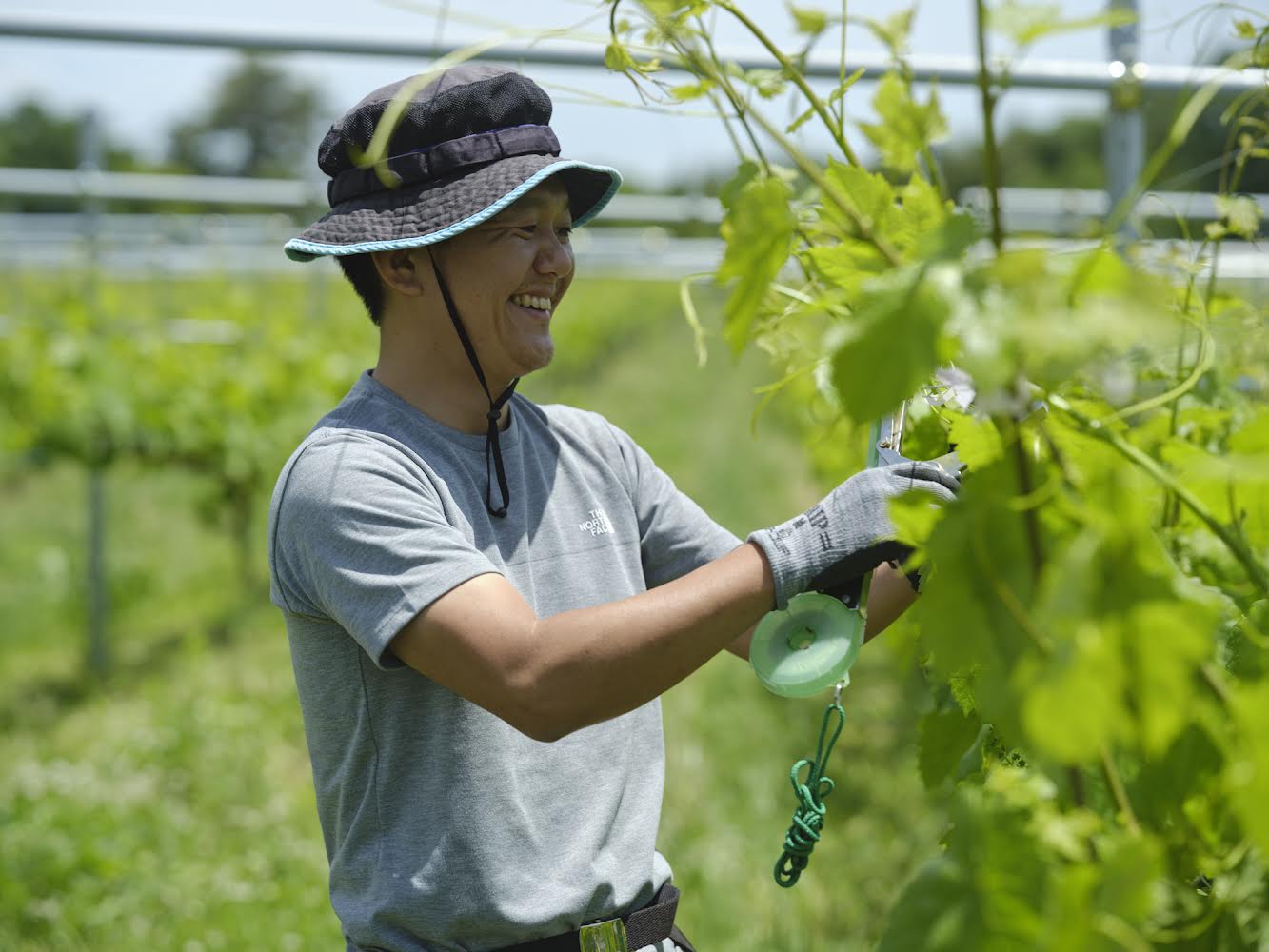
Kohei Oyama, Chief Viticulturist, Suntory Tomi no Oka Winery, Wine Company, Suntory Holdings Limited
Challenges Japanese Wine Needs to Address

The number of wineries in Japan is on the rise. However, on the other hand, the industry faces various challenges, such as the aging of farmers, people abandoning farming, and climate change.
We asked Mr. Oyama about the challenges currently facing Japanese wine.
Regarding the Decline in Grape Production
In recent years, while the number of wineries has been increasing, the overall volume of grapes harvested has been declining.
For example, Koshu had an annual harvest of 8,000 tons in 1998 and 1999, but now it is only about 3,000 tons. In roughly 20 years, the yield has dropped to less than half.
Various reasons can be considered, but first is the abandonment of farming due to aging. Furthermore, the shift of vineyards to Shine Muscat, which is consumed mainly as table grapes, may also have an impact.
Ultimately, I surmise that some wineries are finding themselves unable to obtain enough grapes, forcing them to narrow down their product lineups or reduce the number of bottles filled.
In addition, while many Japanese wineries in the past mainly operated under a style of making wine from purchased grapes, the majority of wineries increasing today follow a "domaine style" where they grow grapes, make wine, and sell wine themselves.
However, when it actually comes to growing grapes, it is more difficult than imagined, and it takes a lot of time until the first harvest, so they cannot obtain as much raw material as they would like.
As a result, some need to purchase other raw materials such as grapes and apples, and it seems this has created a situation where demand exceeds supply.
Suntory's Initiatives
To address this challenge, Suntory is partnering with Yamanashi Prefecture to support the revitalization of regional agriculture. What kind of initiatives are these?
First, we have worked on vineyard development, including abandoned farmland. We began planting in 2018, reaching 12 ha in 2021, and project 20 ha by 2030.
One of the things we value is moving forward together with the local government and the community. Just because it is abandoned farmland does not mean we can simply borrow the land as is.
In order to gain the peace of mind and trust of those around us—proving that we are people they can safely lease to—we place importance on working together with local government officials and communicating closely with the local community as we move forward.
Under such circumstances, we are putting our efforts into expanding the harvest volume of Koshu.
In 2021, the harvest from our own estate vineyards and company-managed vineyards in Yamanashi Prefecture was 35 tons. By 2030, it is projected to reach 297 tons, which accounts for about 10% of Yamanashi Prefecture's total production.
As mentioned earlier, the production volume of Koshu is declining, and if it becomes almost impossible to harvest Koshu, the production volume of Japanese wine will decrease accordingly, which could also diminish Yamanashi Prefecture's presence as a "wine prefecture."
Cultivating grapes in this region to increase yields. And making Japanese wine with those grapes, having many people drink it, and letting them experience the richness of its flavor.
We believe this is what we can do.
Regarding Climate Change
Climate change is a topic often heard about in recent years. In many wine-producing countries, visible effects are emerging due to climate change, such as earlier grape harvest seasons, cultivating varieties that had never been handled before, and impacts on quality.
The impact of climate change is by no means someone else's problem for Japanese wine either.
We asked Mr. Oyama about the situation Japan currently finds itself in.
When viewing the impacts of climate change, especially global warming, on Japan as a whole, I believe two things are occurring.
First, as the name implies, temperatures are rising. This can be considered to affect grape ripening speed, sunburn on fruit, and the occurrence of diseases and pests.
And the second, although presumptive, is the impact on rainfall.
Specifically, rising temperatures lead to higher water temperatures in the Pacific Ocean, which strengthens the Pacific high-pressure system, resulting in prolonged rainy seasons, larger typhoons, and the occurrence of "linear precipitation zones" that were unheard of in the past; I feel this is a serious issue for every producing region across Japan.
Climate change will likely continue going forward, and there is no doubt that harsh conditions for winemaking will persist.
Taking on the Challenge of Viticulture Adapted to Climate Change
As a challenge in viticulture adapted to climate change, Suntory is working on "lateral shoot viticulture." What kind of cultivation method is this?
To begin with, when dividing the major elements in winemaking into "the land one wants to express, namely terroir" and "the variety that can express that land," from the perspective of coping with climate change, approaches such as "fixing the region and changing the variety" or "fixing the variety and changing the region" can be considered.
In fact, at Suntory Tomi no Oka Winery, under the direction of "fixing the region," we are taking on new challenges in cultivating varieties from Southern France. Conversely, under the direction of "fixing the variety," we have also started initiatives such as shifting regions northward, for example cultivating Koshu in Nagano Prefecture.
However, what should one do when faced with a situation where they "do not want to change either the region or the variety" or "cannot change them"?
We are tackling lateral shoot viticulture with the mindset of changing the cultivation method.
In the Tomi no Oka vineyards that have continued for over 100 years, there is a continuous stream of history and various challenges passed down from our predecessors, and as a result, we are able to make grapes and wine here.
It is not a land that can be easily abandoned. In the first place, we believe there is charm in the flavor of wine born from this soil. I imagine there are many other wineries and grape growers in a similar environment.
Therefore, together with the University of Yamanashi, which had been conducting this research previously, we began initiatives with lateral shoot viticulture targeting Merlot last year.
Lateral shoot viticulture is a cultivation method that uses lateral shoots to shift the ripening period, and last year we were able to delay the harvest period by about 40 days.
By delaying the ripening period to late autumn when temperatures have dropped, secondary metabolites that determine the wine's flavor become easier to accumulate in the grapes, and grape berry sizes are optimized, allowing us to grow grapes with more concentrated flavor.
Among the varieties grown at Tomi no Oka, Merlot is a variety whose ripening period starts early, and thinking it was a variety susceptible to the effects of global warming, we tried it first.
This year, we are taking on the challenge by adding Chardonnay and Cabernet Sauvignon as targets. Eventually, our goal is to have those who, like us, are troubled by global warming learn about this activity, and have it recognized as one of the new measures for Japanese viticulture.
Summary
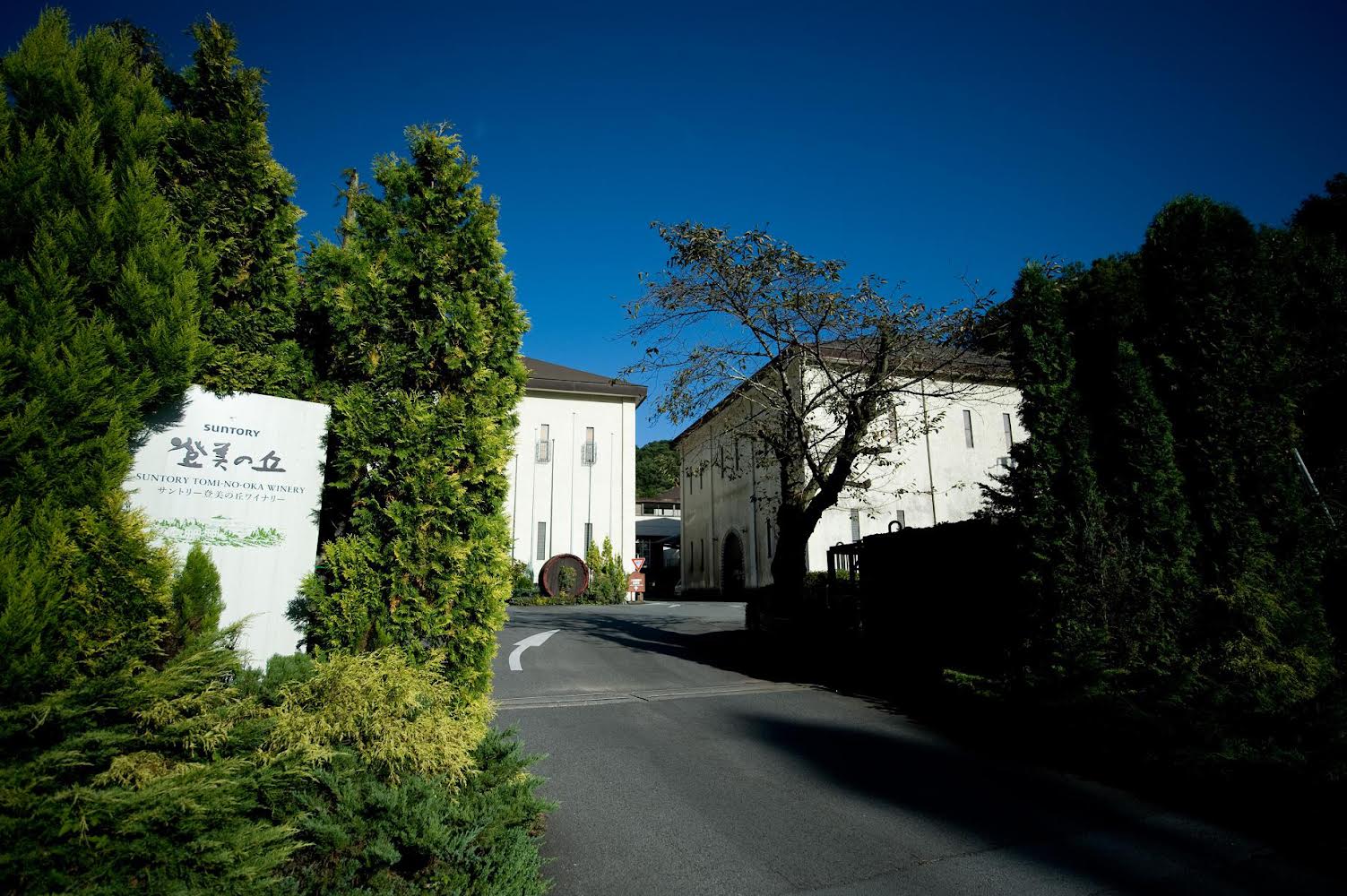
In the first half, we asked about the challenges facing Japanese wine and what kind of initiatives Suntory is undertaking to solve them.
In the second half, we will ask about initiatives in circular agriculture.
Reference
About Suntory's Japanese Wine