
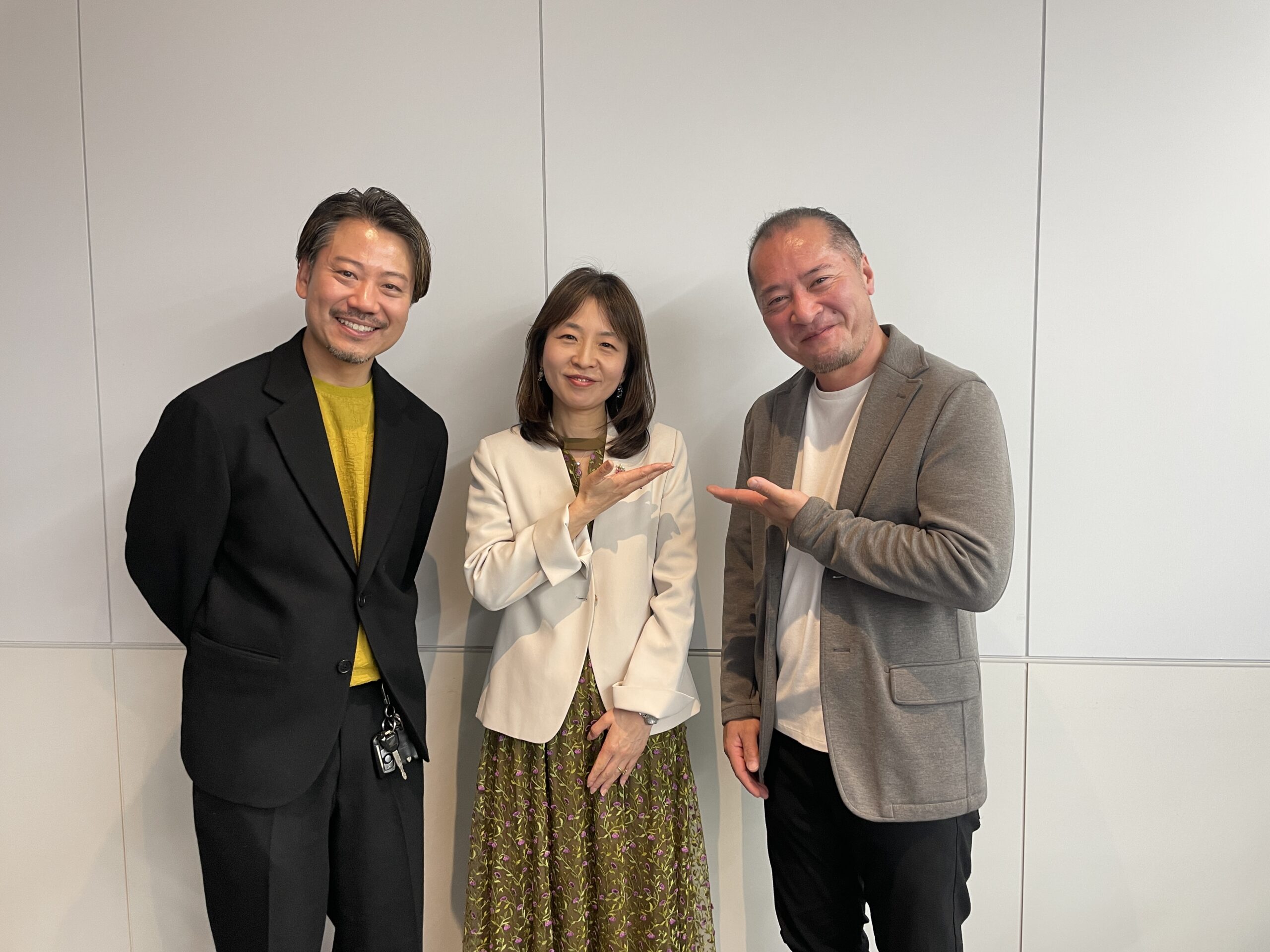
An exchange event themed around food and wine was held against the backdrop of a comprehensive partnership agreement between Miyazaki Prefecture and Kawasaki City.
Following last year's edition, this second iteration of the event consisted of two parts—a tasting session and a dining gathering—allowing participants to tangibly experience regional initiatives and the future of local industries centered around wine.
The program began with a talk session by producers and related stakeholders in the first half, followed by enjoying the actual cuisine and wine in the second half. Tasting after listening to the makers' words made each wine and dish leave a deeper impression, making it a truly experiential event.
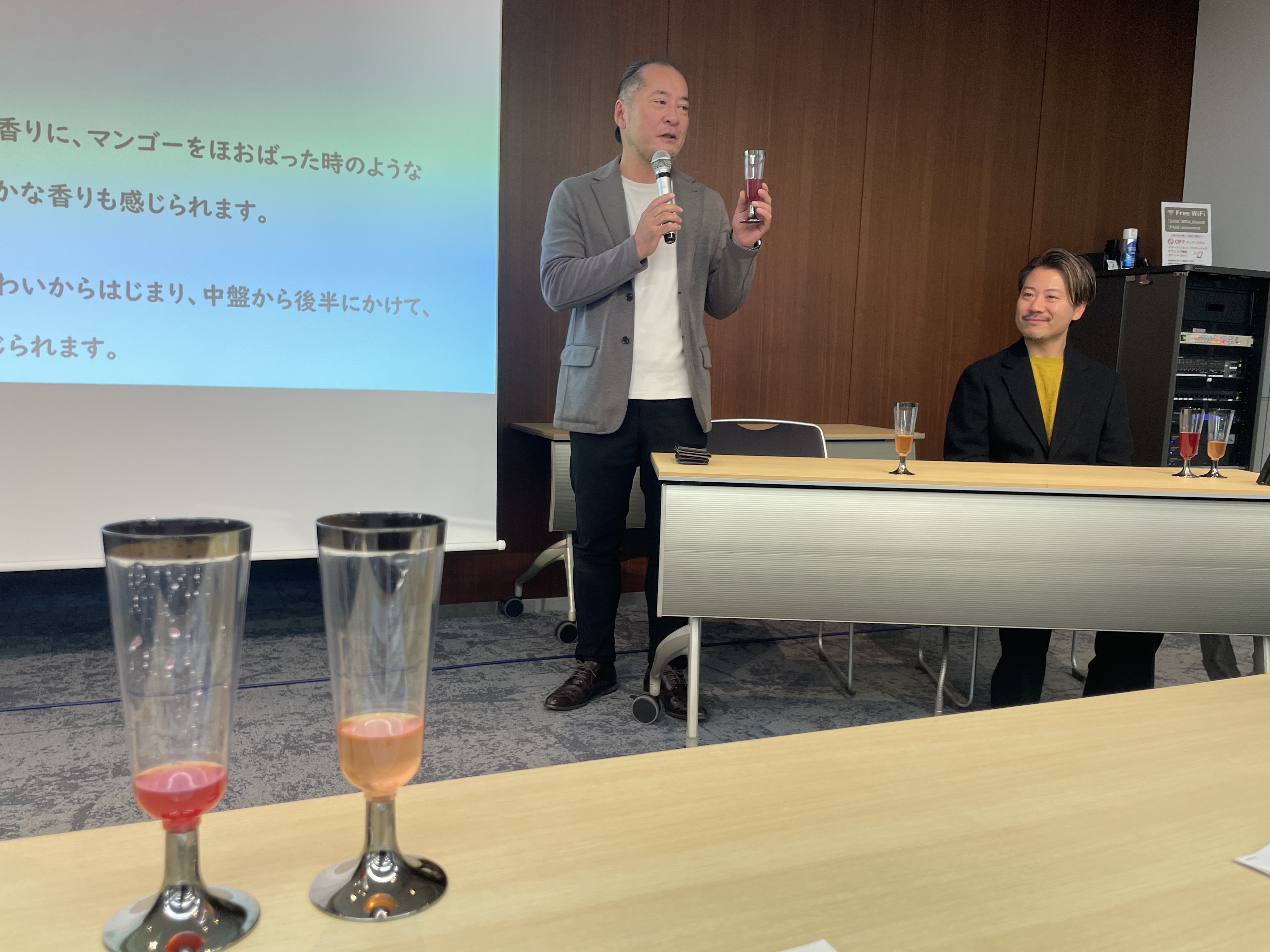
Tsuno Wine Shares Its 30-Year Journey and Present
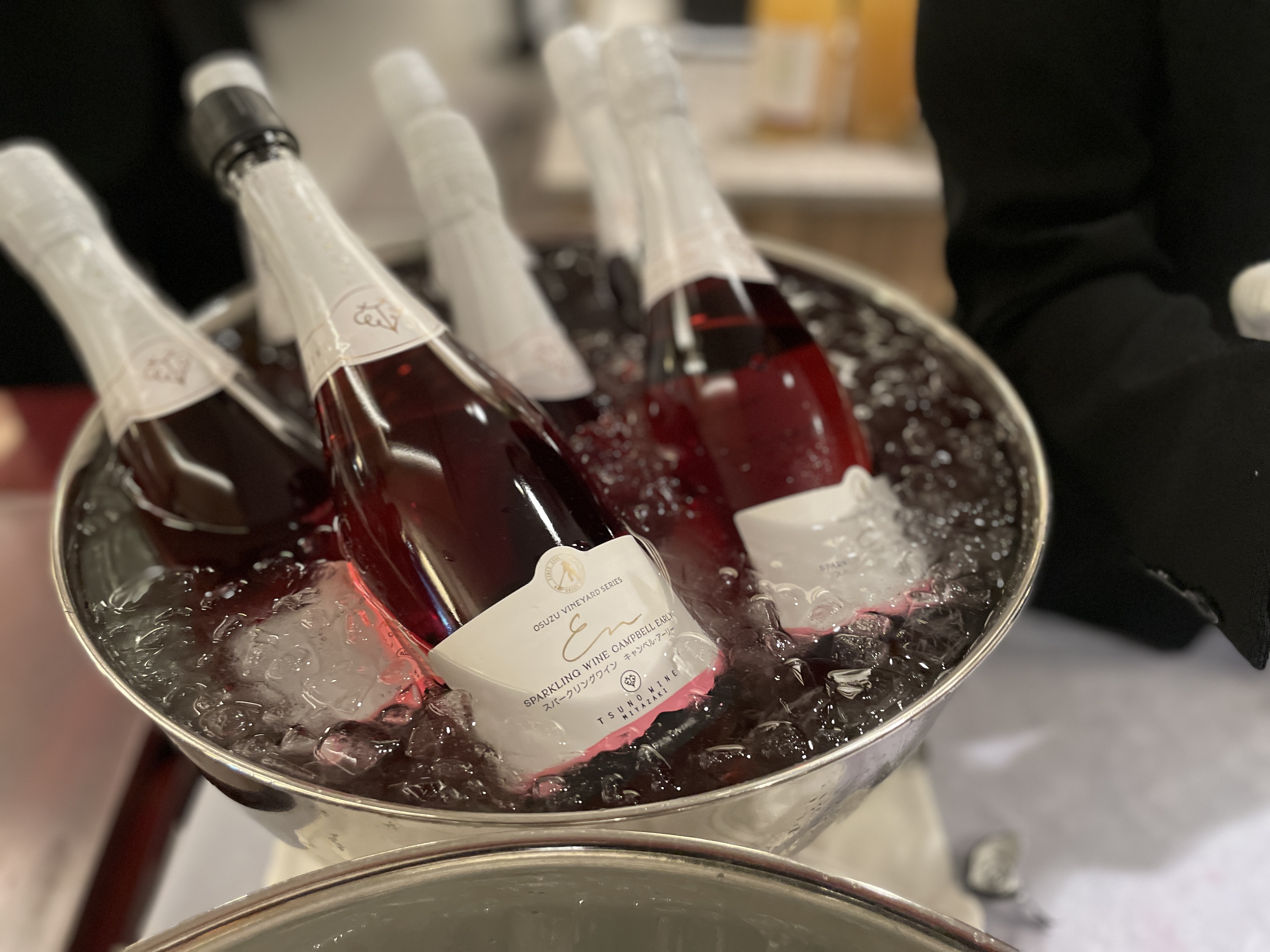
The gathering began with a toast using "Cambursco Rosé Pétillant" from Tsuno Wine in Tsuno Town, Miyazaki Prefecture.
This sparkling wine with a beautifully intense color is made from Campbell Early, one of Tsuno Wine's signature varieties.
Out of roughly 200,000 bottles produced annually, this Campbell Early rosé accounts for about 100,000, remaining a best-seller for 30 years. Although made from table grapes, it has been embraced as a partner that pairs seamlessly with local cuisine, including iconic Miyazaki dishes such as chicken nanban.
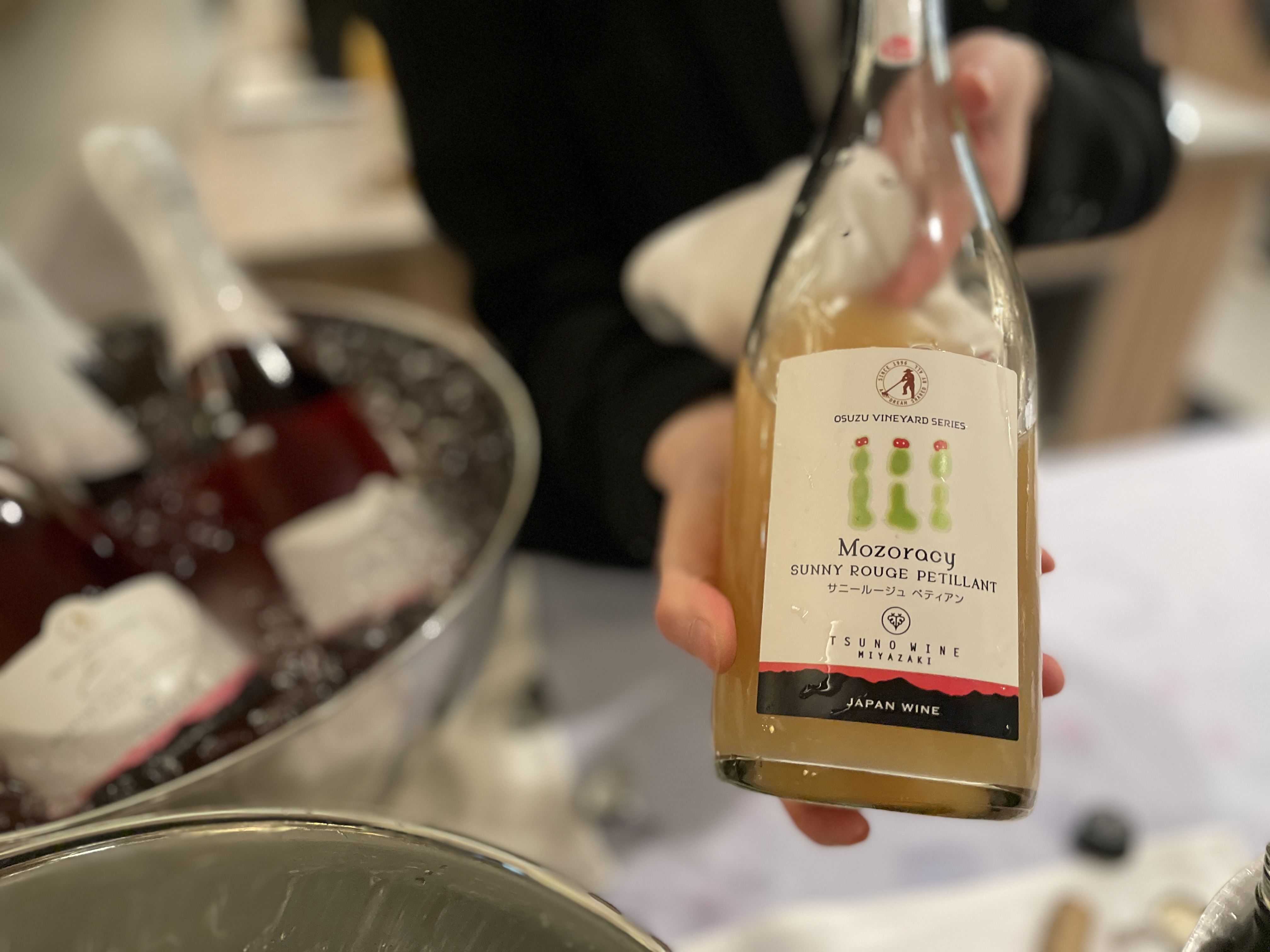
Furthermore, on this day, the lightly sparkling cloudy wine series "Momperassi" was also unveiled.
"Momperassi" is a word meaning "cute" in the Miyazaki dialect. Giving the product a name straight from the local vernacular reflects how closely Tsuno Wine connects with its region.
Tsuno Wine marks its 30th anniversary this year, but maker Mr. Akao stated, "Wine can only be made once a year. Even though it's our 30th anniversary, I still consider it a young wine that has only been crafted 30 times."
Even as experience accumulates, every year is a continuous process of trial and error; this attitude of seeing it not as perfection but as a history of renewal reflects Mr. Akao's utmost sincerity toward winemaking.
Tsuno Town is a wine region stretching across hills overlooking the sea, possessing conditions that are by no means easy for winemaking, characterized by a rainy and warm climate. Even so, it has a history of expressing light and terroir-driven flavors by capitalizing on well-draining volcanic ash soils.
Behind this lies the history of the dreams of the people who first planted grapes on this land, which bore fruit as a winery by their grandchildren's generation. In other words, Tsuno Wine may very well be a symbol of the community's aspirations.
The Creation of "Culture" Expanding from Wine
Tsuno Wine's presence seems to serve as the very core for nurturing regional culture.
During the COVID-19 pandemic, they launched a bakery business and engaged in developing processed goods such as breads that pair with wine, red bean paste made with rosé wine, and strawberry jam. Expanding elements like bread, dining, processed foods, and lodging accommodations around the winery can be described as crafting an "experience to taste the land."
In addition, the story of creating a recipe book of dishes that pair with Tsuno Wine as a town-wide effort was shared.
This project encourages people to enjoy ingredients bought at roadside stations alongside Tsuno Wine in everyday life through 52 recipes across 52 weeks. The idea of integrating wine into daily living rather than reserving it only for special occasions truly feels characteristic of Tsuno Wine, which walks hand in hand with regional culture.
The dream for 10 years down the road was shared as developing the area around the winery like a "farming village of private homes," embodying "All Tsuno" including cheese, ham, vegetables, and lodging accommodations.
The vision of aiming for a place where local food and culture culminate at a winery looking out over the sunrise rising from the sea is a wonderful initiative that elevates the region itself into a cohesive culture.
The Challenge of Making Wine in Kawasaki
Meanwhile, Mr. Mitsugu Yamada from Kuratei Winery in Kawasaki City took the stage.
He spoke frankly about the difficulties and possibilities of producing wine in the urban outskirts.
He recalled being told in the past that "making wine in Kawasaki isn't agriculture." Starting from that frustration, however, he launched the winery in 2020 and now conducts multifaceted operations including farms, food processing, restaurants, sales, a wine school, and an NPO.
What is intriguing is the point that the sixth industrialization of agriculture is treated as a "means for building a local community."
With new brewing facilities also established in 2025, the winery designed alongside university students and the "Okaue Wine Village," where people gather around agriculture and wine, have begun operations.
At this location, which just opened in February, a café using vegetables and rice from their own farm is also scheduled to open, steadily building the environment for wine to take root in the city.
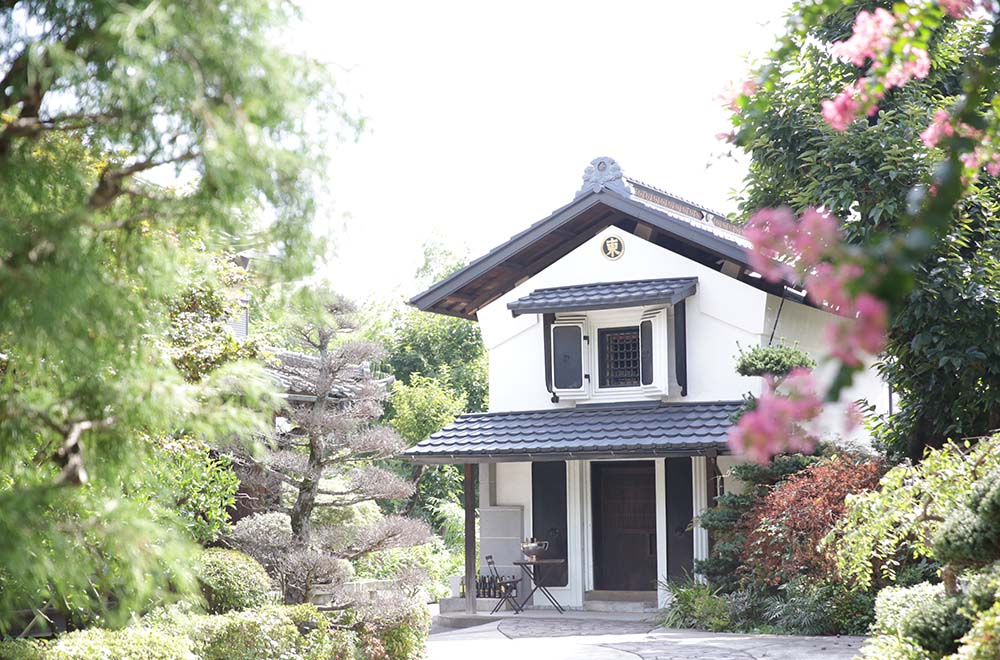
And specially prepared for this event was a rosé wine aged in barrels made of 100% cherry blossom wood from Miyazaki Prefecture. Using cherry barrels that impart gentle nuances to the wine, and furthermore using Miyazaki timber for tables and chairs within the facility, even the story of timber utilization was introduced through wine.
Wine Culture with Active Participation from the Younger Generation
Another highlight of the day was a presentation on the "Kawasaki Wine Project" by students from the Meiji University School of Agriculture.
The students grow grapes at the Meiji University Kurokawa Farm, harvest them themselves, and handle everything from producing original wine to label design and hosting unveil events.
The wine served on this occasion was a rosé made from Muscat Bailey A. Specific and ambitious approaches were introduced, such as 2-hour skin contact, the use of wild yeast, and a lower alcohol content.
It had charming and refreshing aromas reminiscent of cherries and acerola. It was explained that the acidity from early harvesting was maximized with the intention of pairing it with appetizers and sashimi.
Bringing Miyazaki to Kawasaki! Alluring Ingredients
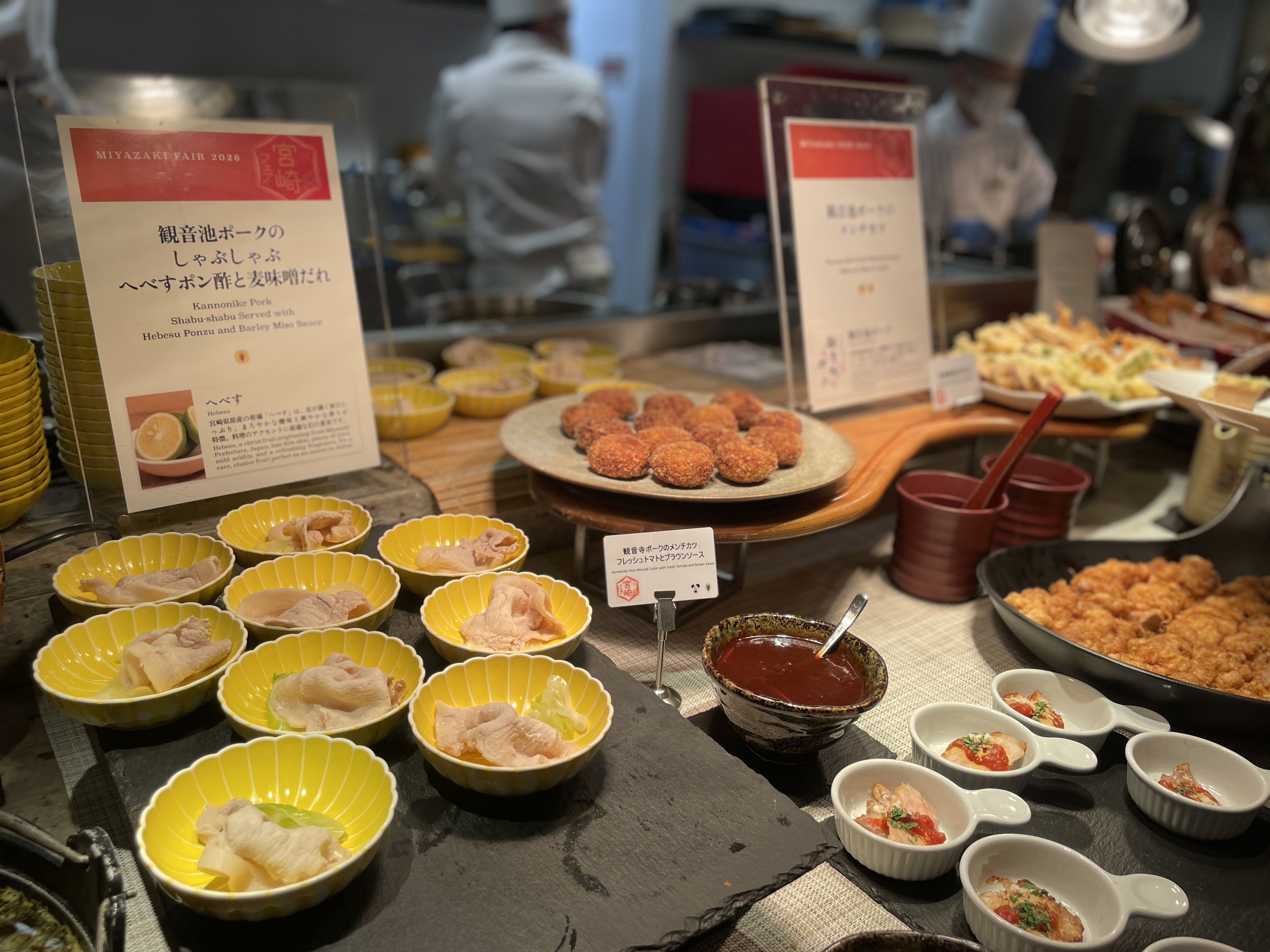
During the dinner in the second half, Miyazaki ingredients were featured, including Miyazaki beef, Miyazaki Jitokko chicken, giant grouper (a premium fish from Tsuno Town), and Tsuno tomatoes.
Miyazaki beef boasts the distinction of being named the best in Japan for four consecutive tournaments at the National Wagyu Competence Show, while Jitokko chicken combines tenderness with deep umami. The giant grouper is a notable fish farmed through a public-private partnership in Tsuno Town, characterized by the refined sweetness of its white flesh.
Chef Miyashita of Hotel Metropolitan Kawasaki prepared these ingredients, conveying their allure.
Everyone was amazed by the ingenuity linking ingredients and wine, such as giant grouper steamed in wine using Tsuno Wine's Chardonnay. The more one listened to the explanation of the dishes, the more one felt that the ingredients and wine are the very brand of the region.
In Conclusion
Agriculture, food, timber, tourism, education, regional revitalization.
While these elements appear separate at first glance, wine acts as a medium that naturally connects them to form a cohesive narrative. What is more, they can actually be tasted, smelled, and experienced.
This initiative, where challenges nurtured in distinct lands—Miyazaki and Kawasaki—meet and inspire each other, demonstrates such possibilities. It is truly a "Zaki x Saki" project whose future progress will be worth watching.
Still Going On! The Miyazaki Fair Runs Until April 14
RELATED STORYhttps://kawasaki.metropolitan.jp/feature/miyazaki2026.htmlBuy Here! Featured Tsuno Wine
RELATED STORYhttps://craftwineshop.com/collections/tsunowine