
Recently, have you started to become interested in Japanese wine?
There are probably many people like that.
Japanese wine is a category full of charm that draws you in deeper the more you learn about it.
That is precisely why acquiring basic knowledge is essential.
Here, we briefly summarize the basic knowledge of Japanese wine, including what "Japanese wine" is and where and how it is made.
Please use this as a review, not only if you are a beginner with Japanese wine, but also if you are already well-versed.
What is Japanese Wine?

Japanese wine refers to "wine made in Japan using 100% grapes cultivated in Japan as raw ingredients."
In Japan, there are also wines produced domestically using raw materials such as concentrated fruit juice imported from overseas, but such wines are classified as "domestically produced wine other than Japanese wine."
Because the labeling rules for Japanese wine came into effect on October 30, 2018, the legal definition of "Japanese wine" can be considered relatively new.
Wineries Producing Japanese Wine and Production Volume

Production regions for Japanese wine are scattered throughout Japan.
According to the manufacturer overview in the National Tax Agency's Overview of Domestically Produced Wine (FY2018 Survey), the number of wineries in Japan as of March 31, 2019 was 331.
The number of wineries themselves has been trending upward every year and is expected to continue growing.
Incidentally, the top 5 prefectures account for about 60% of the wineries producing Japanese wine.
- 1st: Yamanashi Prefecture 85
- 2nd: Nagano Prefecture 38
- 3rd: Hokkaido 37
- 4th: Yamagata Prefecture 15
- 5th: Iwate Prefecture 11
(Niigata Prefecture in 6th place has 10)
Yamanashi Prefecture in particular boasts more than twice the number of wineries of 2nd-place Nagano Prefecture, and continues to be active as a driving force behind Japanese wine.
Production Volume of Japanese Wine

Next, let us look at data related to the production volume of Japanese wine.
According to the shipment and production overview in the Overview of Domestically Produced Wine (FY2018 Survey), the shipment volume (taxable removal volume) of Japanese wine was 16,612 kl.
Although the production volume of Japanese wine has been trending upward year by year, its share in the production volume of domestically produced wine in Japan is about 20% compared to domestically produced wine other than Japanese wine, and in terms of overall production volume, it is still on the lower side.
Incidentally, the production volume of Japanese wine by type is 43.1% red wine, 45.6% white wine, 4.8% sparkling wine, and 6.4% other.
Japanese wine has a strong image of white wine, but when including sparkling wine and rosé, you can see that they indeed account for about 60% of the total.
Grape Cultivation for Japanese Wine

While Japanese wine production regions have wineries concentrated mainly in Yamanashi Prefecture, Nagano Prefecture, Hokkaido, and other areas, grape cultivation and winemaking are actually conducted throughout the country.
Now, Nayoro in Hokkaido, which is said to be the northern limit of grape cultivation in Japan, is at 44.1 degrees north latitude, and Soo District in Kagoshima Prefecture, the southern limit, is at 31.3 degrees.
Since the difference in latitude between Champagne, the northern limit of wine regions in France, and Corsica, the southern limit, is said to be about 6 degrees, you can see that Japan is considerably spread out from north to south as a wine-producing region.
Furthermore, Japan has high rainfall, a humid subtropical climate, and fertile soil centered on Andosols (black volcanic soil).
Since conditions favorable for cultivating quality wine grapes are said to include low rainfall during the growing season, abundant sunshine, dry conditions, and well-drained, lean soil, Japan is considered to have rather disadvantageous conditions for producing fine wine.
However, depending on the region, there is low rainfall and ample sunshine, good ventilation, or lean, well-drained soil, and there are quite a few locations suitable for wine grape cultivation.
In addition, as highly conscious growers have come to prioritize grape cultivation that respects the concept of "the right grape for the right land"—through soil improvement for grape growing, clearing vineyards in suitable locations, and advancing their knowledge and techniques for wine grape cultivation—many high-quality grapes have come to be harvested across various regions.
"Good wine grapes cannot be harvested in Japan, so the wine is not delicious either."
The era when people thought this way is likely already coming to an end.
Grape Varieties Used in Japanese Wine

A wide variety of grape cultivars are used as raw materials for Japanese wine.
According to the National Tax Agency's Overview of Domestically Grown Fresh Grapes for Winemaking (Accepted Volumes of the Top 10 Red and White Varieties), it appears that many varieties, ranging from Japanese indigenous varieties to hybrids with Vitis labrusca originating in the United States, are utilized as raw materials.
For red wine grape varieties, Muscat Bailey A, Concord, and Campbell Early are common, while for white wine grape varieties, Koshu, Niagara, and Delaware tend to be prevalent.
However, the 3rd most widely harvested red wine grape variety is Merlot, and Chardonnay ranks 4th among white wine grape varieties, following Delaware.
Because various regions in Japan are also focusing on cultivating European grape varieties, Cabernet Sauvignon, Pinot Noir, Sauvignon Blanc, and others are also on the rise.
As mentioned earlier, even within the same prefecture there are locations with differing growing conditions, which may also be related to growers increasingly selecting grape varieties suited to their specific land.
Vine Training Methods in Japan

Grape cultivation in Japan is mainly conducted using pergola training (overhead trellis).
While vertical shoot positioning (trellis) is standard for wine grape cultivation, pergolas seem to be adopted due to Japan's climatic conditions and ease of cultivation.
Of course, growers adopting vertical shoot positioning are also on the rise, and the landscape of wine grape growing regions is gradually beginning to change.
Incidentally, pergola training includes styles such as "X-shaped pruning," "Ichimonji (straight-line) short-spur pruning," and "H-shaped short-spur pruning," and Ichimonji short-spur pruning is said to be suitable for European varieties.
Organic Cultivation in Japanese Wine

In recent years, organic wines have been attracting attention in the wine market.
Producers aiming for natural winemaking are increasing worldwide, not only from the perspective of safety and peace of mind, but also to achieve sustainable grape growing and winemaking.
In Japan as well, there seems to be an increasing number of producers who cultivate grapes using organic farming or reduced-pesticide methods, and make natural wine using as few sulfites as possible.
Among producers who want to capture the charm of their land in wine, some create vin nature using even stricter cultivation and vinification methods. (*Currently, there is no official definition of vin nature in Japan.)
However, as mentioned earlier, because Japan has hot and humid climatic conditions, grapes are prone to fungal diseases, and the common consensus is that healthy grape cultivation is impossible without using a certain amount of agricultural chemicals.
Therefore, completely pesticide-free cultivation in Japan is considered difficult without exceptionally skilled cultivation techniques, and some say that "passion alone is not enough."
While it is expected that naturally made wines will increase in Japanese wine going forward, it might be wise to make purchases after thoroughly learning about the producers' practices, such as the specific initiatives they take in grape cultivation and winemaking.
Vinification of Japanese Wine
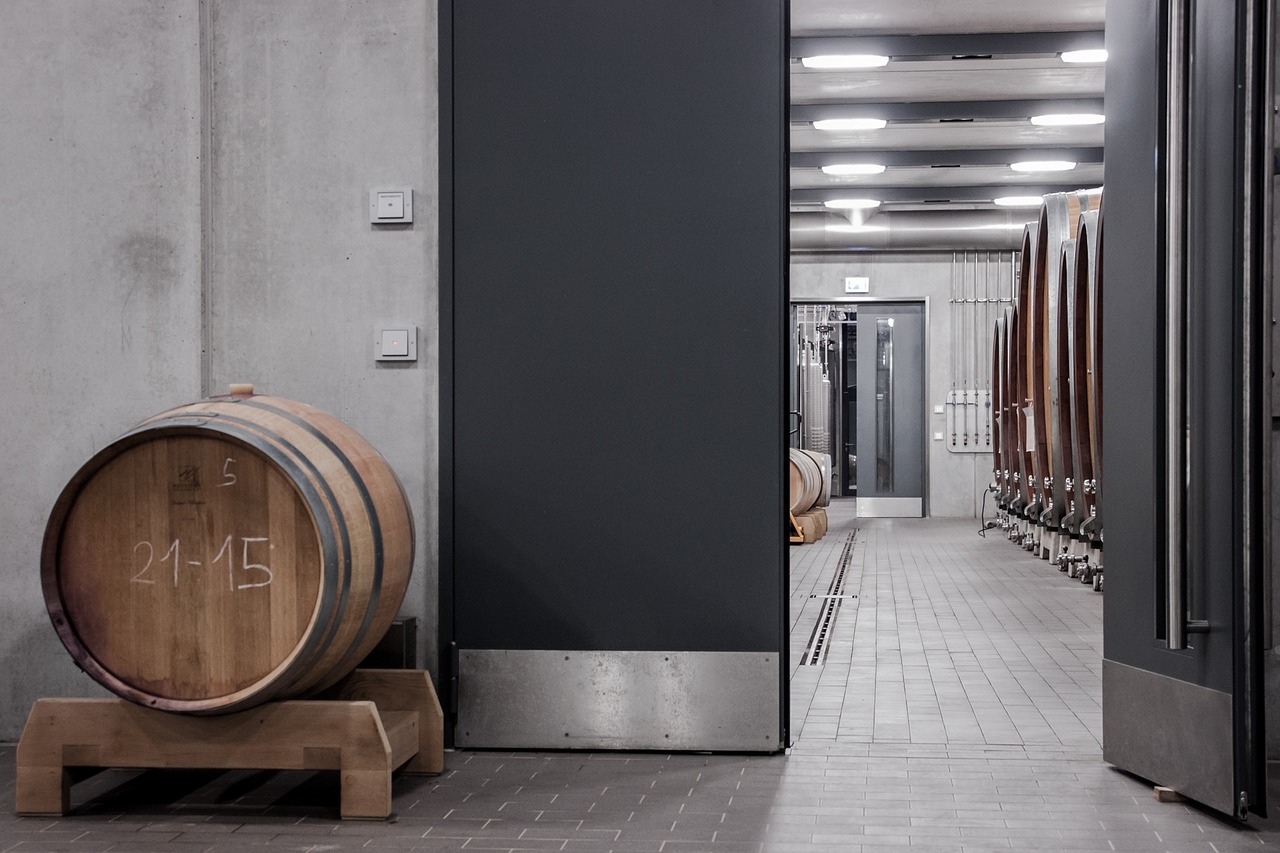
To reiterate, the definition of Japanese wine is "wine made in Japan using 100% grapes cultivated in Japan as raw ingredients."
In other words, because it involves vinifying Japanese-grown grapes in Japan, understanding winemaking is also necessary to understand Japanese wine.
About Winemaking

The basic flow of winemaking is the same anywhere in the world.
Crushing the grapes → Maceration of skins, seeds, and juice (for white wine, juice only instead of skins and seeds) → → Adding yeast to the juice only → Alcoholic fermentation → Malolactic fermentation (except for white wine, with some exceptions) → Aging in oak barrels or stainless steel tanks → Operations such as fining → Bottling → Labeling → To the market...
Although the process varies depending on the type of wine, it is completed more simply compared to sake, which is also a brewed alcoholic beverage.
Generally, red wines often undergo oak aging, while stainless steel tanks are used for white and rosé wines to preserve their freshness and fruitiness.
For sparkling wine, only some producers use the traditional method (secondary fermentation in the bottle) like Champagne, while most seem to use carbonation injection.
From sur lie aging to add depth to white wine, to barrel aging of white wine, to orange wine, Japanese wine is crafted using a diverse range of vinification methods.
New Winemaking
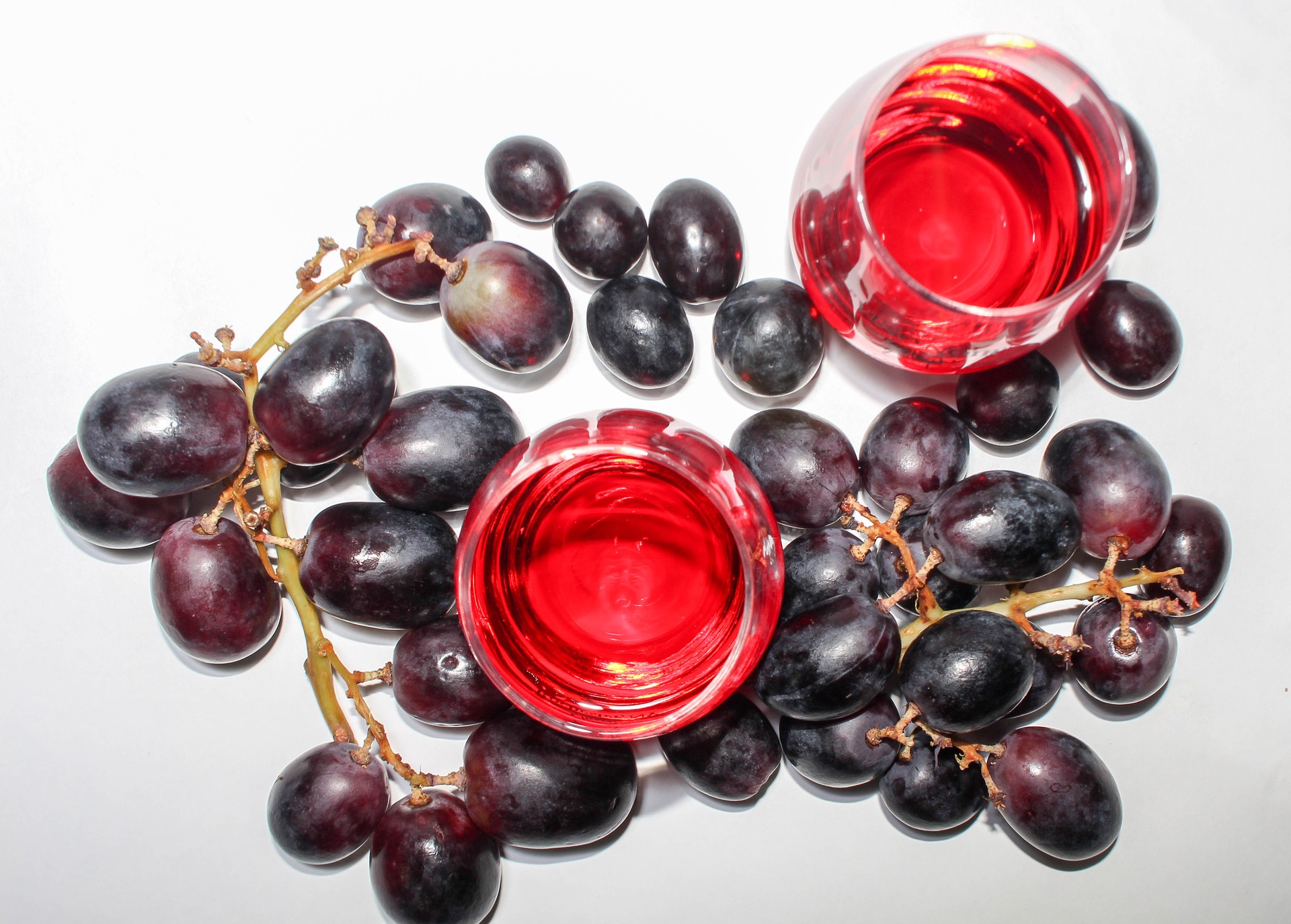
Behind the recent recognition that the quality of Japanese wine is rising, advancements in winemaking technology can be cited.
Reasons likely include an increase in producers who trained at overseas wineries or studied wine abroad, national support, and information disclosure by wine-related universities and major manufacturers. (Greater awareness of keeping winemaking facilities clean is also related.)
Furthermore, aided by an increase in small-scale producers who value the individuality of grapes, high-quality wines of diverse styles have begun to emerge.
In addition, while producers creating naturally made wines such as vin nature are increasing as mentioned above, and some wines pose quality concerns, such substandard wines seem to be steadily weeded out.
Global trends favoring not "full-bodied, heavy wines packed with fruitiness," but "elegant wines where the individuality of the grapes is delicately expressed," have also served as a tailwind, and the fact that Japanese wine has begun to be fairly appreciated may also be boosting producers' motivation.
Japanese Wine and Food Pairing

One of the reasons Japanese wine has become popular is "food pairing with Japanese cuisine (washoku)."
Because Japanese wine is characterized by delicate and elegant flavors, it pairs wonderfully with subtly seasoned Japanese cuisine, and has begun to be adopted by renowned Japanese restaurants, sushi bars, and traditional ryotei.
When it comes to citrus, instead of lemon or lime, it features Japanese nuances like yuzu or kabosu, along with flavors reminiscent of the umami of dashi broth, and the fact that it is no exaggeration to say "Japanese wine is washoku" is another part of its appeal.
While white wine tends to draw attention among Japanese wines, even red wines continue to expand their horizons by promoting pairings once unimaginable with foreign wines, such as sukiyaki, yakitori, and yellowtail teriyaki.
Since many people realize the appeal of Japanese wine through pairings, if you are skeptical about Japanese wine, why not start by trying a pairing of Japanese wine and Japanese cuisine?
Japanese Wine Is Even More Fascinating When Explored Deeper

We have covered the basic knowledge of Japanese wine here, but this is still only surface-level knowledge.
There are limitless elements to explore deeper, including winemaking in each prefecture, grape varieties, vinification methods, and the philosophies of various wineries.
First, master the basics.
If you enter the world of Japanese wine from there, you should be able to enjoy Japanese wine hundreds of times more intriguingly than you do now.
References