
Along the Yoichi River in Hokkaido, climb a small hill and a sweeping, beautiful vineyard comes into view. On May 19, 2026, the glass-walled lounge here at NIKI Hills Winery was filled with the energy of wine producers from Japan and France.
Visiting Niki that day was Philippe Troussier, the former head coach who led Japan's national football team to its first-ever appearance in the World Cup round of 16. Now making wine in earnest in Saint-Émilion on Bordeaux's historic Right Bank, he brought his own wines to Hokkaido to talk with producers in Niki—an increasingly acclaimed cool-climate wine region—around the theme of Merlot. It was a Japan-France “match” certain to stir the hearts of wine lovers.

“Know,” “Love,” “Enjoy”—the legendary coach's philosophy of wine

“As a coach, my job was to lead a team, instill discipline and maintain balance. A winemaker's job is very similar: you give precise instructions, draw out the best in each element, and bring everything together as a team to make a great grand vin.”
Troussier's approach to winemaking is, in many ways, his football philosophy itself.
The three words he emphasized most during his presentation were “know (knowledge),” “love (passion),” and “enjoy (joy).” They were written on a calligraphy board presented to him by Takashi Atsuta, honorary adviser to the Japan Sommelier Association, who attended the event.
“The fact that NIKI Hills owner Mr. Ishikawa started a winery here is possible only because he has passion. I think it truly comes down to ‘love.’ I began in Saint-Émilion with the same kind of passion. The other producers here today are the same. When everyone shares that passion and enjoys it together, the wine naturally becomes more delicious.”
His wines also contain a deep affection for Japan. The red wine “FLAT 3 by KANTOKU,” to be released this year, is a special bottle created as a bridge between the excitement of 2002 and the dream of winning the World Cup in 2026.
Passionate producers expressing the terroir of Niki
The Niki wineries welcoming Troussier were equally distinctive, each driven by a strong passion of their own.
Mamiko Ota, head winemaker at NIKI Hills Winery, which hosted the event, described the winery's engagement with its terroir: “In 2023, accumulated temperatures were extremely high and rainfall was low. We therefore imposed strict yield restrictions to draw out the aromas and beautiful acidity characteristic of Niki.”
Masamitsu Suzuki of North Creek Farm moved to the area with his wife after retirement and developed a vineyard from scratch. Digging just 20 to 30 centimeters into their soil reveals rounded stones everywhere, and he highlighted the excellent drainage characteristic of the Yoichi River's former riverbed. The cool air helps retain both sugar and acidity, allowing them to continue making what he describes as “a substantial wine at 14% alcohol—perhaps running counter to current trends.”
Then there is Domaine Bless, whose concept is “wine connects people” and whose company logo is inspired by the idea of musubi, or connection. Working in harmony with nature, the team deliberately grows as many as 15 grape varieties across 2.2 hectares to spread weather-related risk, producing clean wines as close to nature as possible.
When wines and players overlap: a tasting across borders
The tasting session in the second half was full of surprise and smiles.
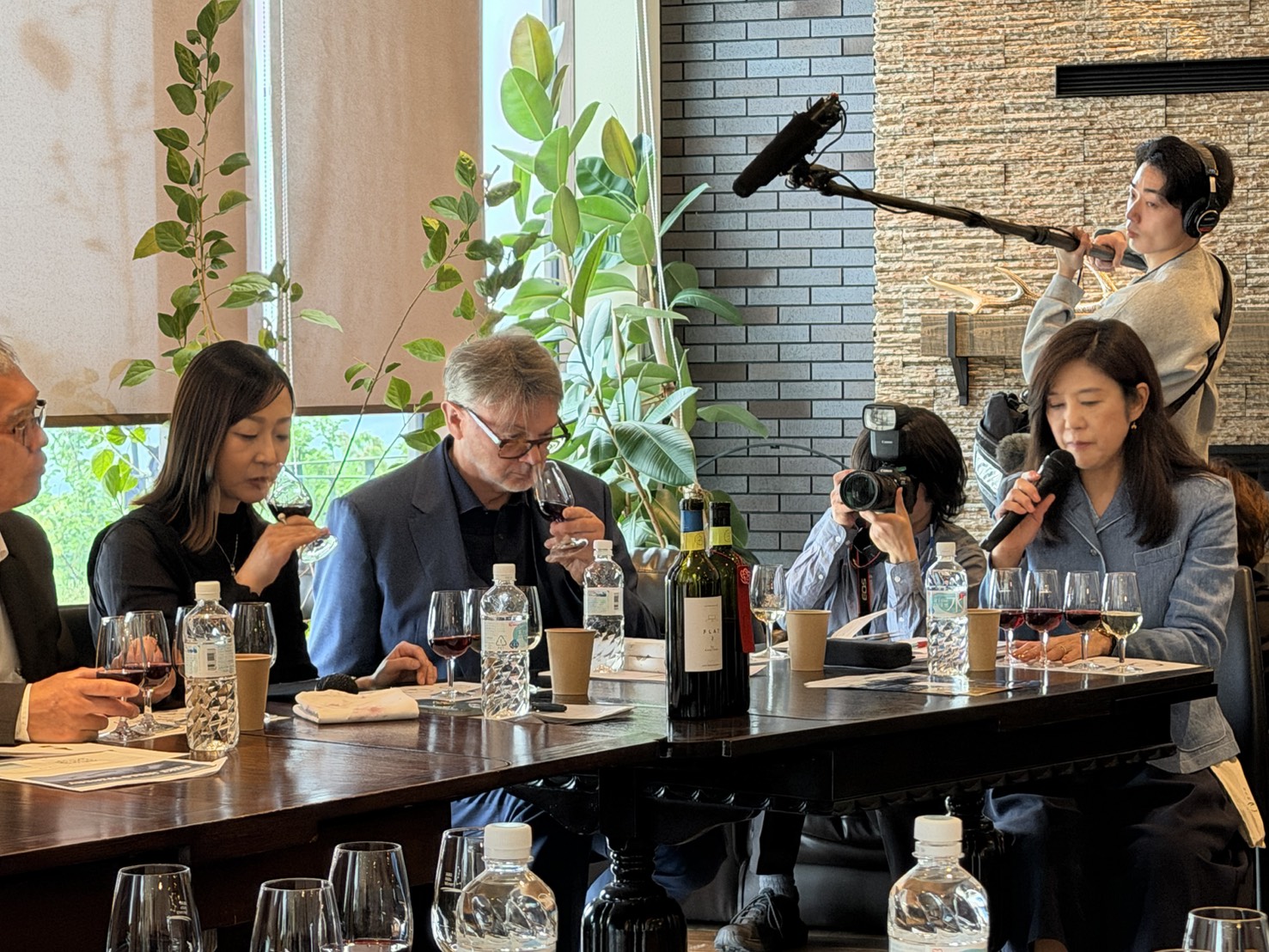
Troussier's “FLAT 3” conveyed Saint-Émilion's weight and suppleness even when tasted blind. North Creek Farm expressed the character of its land with a wild, tobacco-like aroma. Domaine Bless was elegant, with tea-like nuances. NIKI Hills Winery showed a harmony of beautiful acidity and fruit.
When a participant asked the playful question, “If you compared this wine to a current Japan national-team player, who would it be?” Troussier answered immediately with a smile. “The creative ‘Solbeni (No. 10)’ in the middle is Minamino. ‘Flat 3’ would be Ito or Doan.” The football fans and wine fans in the room erupted with excitement.
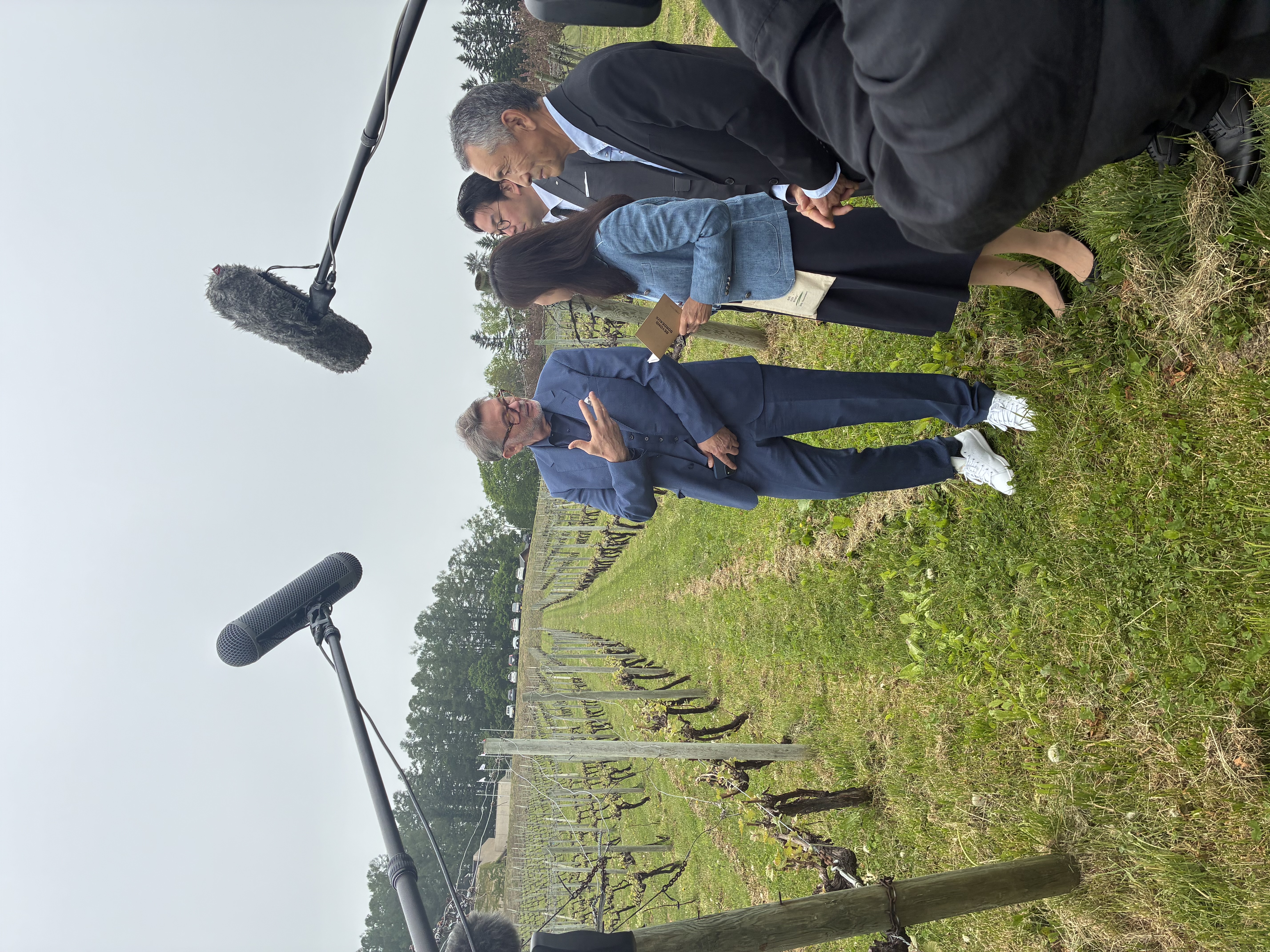
Troussier also spoke about the NIKI Hills Winery vineyard he had walked through himself: “It reminded me of Saint-Émilion. I felt the vines here are still young. And compared with Saint-Émilion, of course, there is more rain. But there are ways to compensate through winemaking technique, and I was glad we could exchange views on those points as well.”
The purpose is not battle, but discovery
“Thank you for arranging this match—this exchange of ideas. But the purpose is not battle. It is discovery.”
Toward the end of the event, Troussier delivered those words with conviction. “Even when the wines are different, they share the soil and passion behind them. I have decided that, starting today, I too will work to build a bridge between Saint-Émilion and Niki and to ensure that this relationship and bond continue.”
Niki, which is pursuing town revitalization through wine with the goal of reaching a “world standard,” and Saint-Émilion, one of the world's leading fine-wine regions. Though seemingly far apart, the two regions formed a tangible bond through the Merlot grape and their producers' “love of wine.”
Watching them raise their glasses and talk together with smiles, I was deeply moved by the sense that wine truly is a common language that crosses national borders. What kinds of wines will the friendship born between Japan and France that day mature into in the years ahead? It leaves us with great expectations for the future of Japanese wine.